Guido
-
Posts
3,242 -
Joined
-
Days Won
99
Content Type
Profiles
Forums
Events
Store
Downloads
Gallery
Everything posted by Guido
-
Meibutsu-cho (The most famous swords list)
Guido replied to k morita's topic in General Nihonto Related Discussion
I've seen a few pages, and have copies of some others in books, but your's is of special interest to me since I wrote an article about the Honjô Masamune (see articles forum). I would like to add a scan of that page to the article (with full credit of course) if you'd send me a high resolution scan. I'll PM you my e-maill address if you don't mind. -
Meibutsu-cho (The most famous swords list)
Guido replied to k morita's topic in General Nihonto Related Discussion
To my knowledge there's no reprint per se, but Tsujimoto Tadao 辻本直男 published the Tōken Meibutsuchō 刀剣名物帳 in 1970; this book contains all swords listed in the Kyōhō Meibutsuchō (and a few more) with descriptions in modern Japanese and Oshigata of (almost) all the swords. Long out of print and hard to get, but contains a wealth of information. The Kyōhō Meibutsuchō 享保名物帳 ("genealogy of famous things of the Kyōhō era") was compiled by Honami Mitsutada 本阿弥光忠 in 1719 at the behest of Shōgun Tokugawa Yoshimune 徳川吉宗. It was the first time that other items than tea utensils, lacquer work, paintings and ceramics were listed as Meibutsu; the swords recognized as such are described in three volumes and an appendix: 1. (上) 68 swords by the Sansaku 三作 (“three [greatest] makers”) Yoshimitsu 吉光 (Tōshirō 藤四郎), Masamune 正宗 and Yoshihiro義弘 (Gō 郷), 2. (中) 100 swords by other smiths 3. (下) 80 Yakemi 焼身 (blades that lost their Hamon due to being exposed to fire), and 4. (追記) 25 additional blades. All swords in the Meibutsuchō are made not later than the Nambokuchō period, and only about one hundred of them are still in existence today. Of the 168 Meibutsu in volumes I and II, 6 were made in the Heian period 平安時代 (all Tachi), 99 in the Kamakura period 鎌倉時代 (36 blades are over 2 Shaku 尺, 63 under 2 Shaku in length), and 63 in the Nambokuchō period 南北朝時代 (35 over 2 Shaku, 28 under 2 Shaku). -
Menuki comparison/ help with translation
Guido replied to Mantis dude's topic in Translation Assistance
Free beer? Count me in!!! And not to lessen your achievements, but I totally forgot to mention Harry Watson and Gordon Robson (but the latter lives in Japan and therefore doesn't count :D). -
On the Japanese site of Aoi Art it says 松代 - which I would have read "Matsushiro", a town name.
-
Menuki comparison/ help with translation
Guido replied to Mantis dude's topic in Translation Assistance
I hope Markus doesn't mind a little "gomasuri" 胡麻擂り , but honestly, in my opinion there's nobody outside Japan who's as qualified as him to translate Nihontô related texts. Being corrected by him (or Moriyama-san or Morita-san) isn't a shame at all. Among Markus' credentials are the translations of all three Itô books on Higo tsuba - quite a formidable undertaking! Just thought I mention it so you guys know where he's coming from, he's much too modest to mention it himself. "Modest" as in an expression I had to look up in a dictionary since it doesn't apply to me ... Edit: I was made aware that the last sentence is yet another failed attempt at making fun of myself (not of Markus!) - won't happen again! -
Don't hold your breath ...
-
Opinion wanted on Wakizashi for the Sydney Shinsa
Guido replied to Peter M's topic in General Nihonto Related Discussion
Nambokuchô period Shinogi-zukuri Wakizashi? Now, that would be some groundbreaking new development in the study of Nihontô ... -
What an unbelievable coincident: my wife brought back home a flyer today from a shop here in Beijing that's specialized in Japanese arms and armor; she stumbled upon it while being on one of her legendary shopping sprees (much to my and my bank account's displeasure). The owner doesn't speak Japanese, so communication was somewhat limited. Anyhow, looking at their website, flyer, and background of the photos of the eBay listings, it seems to be the same shop. I'll check it out next weekend and will report my findings here.
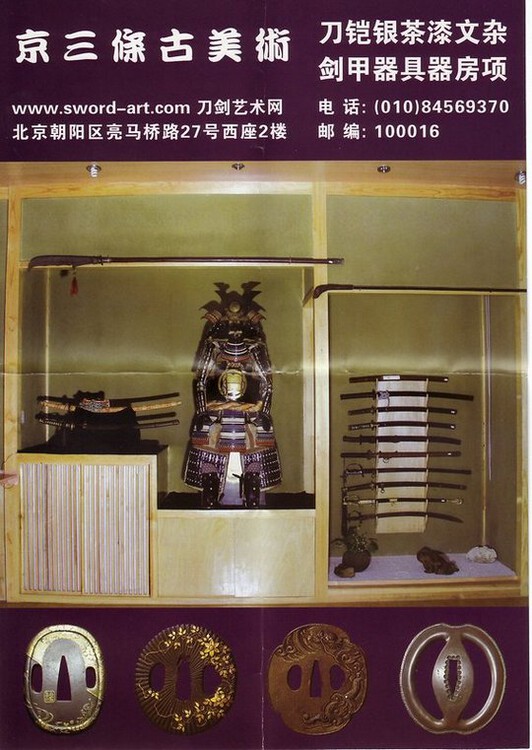
-
The Kenmakiryû looks looks o.k., and probably contemporary to the blade, but I'm not so sure about the lotus Horimono. Looks like a later addition to me, and kind of odd. I have never seen something like it (which of course doesn't mean they aren't out there), and I don't find the design convincing in an artistic sense.Just my 2 Renminbi.
-
O.k., group-hug! Didn't know that it's politically incorrect to make jokes at one own's expense. I'll go back to rediculing others while drinking lots of beer and wearing my lederhosen! Guido "l'Allemand fou" Schiller

-
Those Krauts ... no sense of humor ...
-
help would be much appreciated: seal? translation
Guido replied to jim12345's topic in Translation Assistance
Stephen, you are aware of the fact that Ken Kesey took phsycodelic drugs (especially LSD) and wrote "One Flew Over the Cuckoo's Nest"? -
help would be much appreciated: seal? translation
Guido replied to jim12345's topic in Translation Assistance
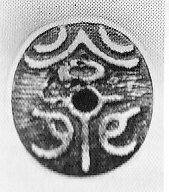
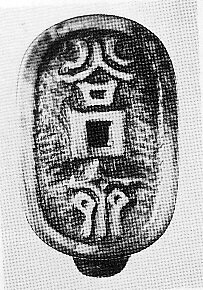
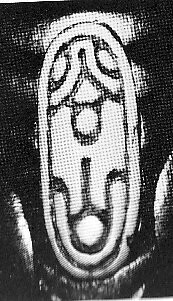
Brian, with all due respect, I think you're being paranoid! Just because I'm feeling the sudden urge to read Mao's "little red book" while singing "the east is red" doesn't mean they're out to get me! Anyhow, after I escaped the attack of the mutant ice patch, being back at the safety of my video-monitored, microphone-peppered apartment, I scanned a few Kokusai (and one rare Kokuzan, since John seems to be on the right track) seals for comparison: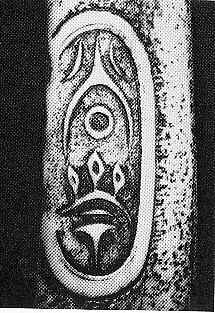
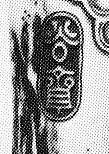
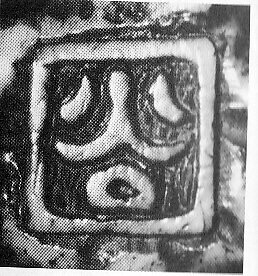
-
help would be much appreciated: seal? translation
Guido replied to jim12345's topic in Translation Assistance
That's my observation, too, as stated in my above post. And looking again at the Koshirae, I'm not sure anymore it's stag horn, might well be bone. Maybe someone was cashing in on the fame of the Kokusai carvers (thus the emphasis on that school, even carried into the Nakago), or the horn was "cleaned" and lost its yellowish patina - hard to tell from the small pics. And my noggin still hurts, I got a cartoon-like bump on the back of my head ...
-
help would be much appreciated: seal? translation
Guido replied to jim12345's topic in Translation Assistance
Being cautious is always good, but it seems like we're now seeing a Chinese fake behind every corner ... The blade looks perfectly legit to me - Hadatatsu, yes, but I'm willing to bet some non-vital organs that it was made in Japan. The Koshirae appears to me being carved from stag horn, a hard to work with material favored by a group of Netsuke and Kiseruzutsu carvers in Asakusa, Edo (Tôkyô), in the 19'th century and into the Meiji period. Many signed their pieces "Kokusai" in Tensho (stylized Chinese characters mostly used for seals) in an oval reserve, and I'm pretty sure that's what the seal says. I'm at the office now, so I'm working off of the back of my head, but some research into this direction should be worthwhile. I have no idea why the seal was inlayed into the Nakago as well, especially since there it's done upside-down (although in the same direction as on the Saya). Quite interesting. OTOH I slipped on the icy streets of Beijing today, and hit my head (I'm not making this up! :? ), so I might be totally off. -
Advice on buying a sword in Tokyo
Guido replied to poacher69's topic in General Nihonto Related Discussion
Most Japanese museums (as well as the NBTHK and Aoi Art) are closed on Monday . -
http://pages.prodigy.net/tlbuck/tsuka/tsuka.htm (page 6)
-
Malcolm, I guess this is what you're looking for?

-
Reinhard, Sôsho is kind of an abriviation of Kaisho, and later developed into Onnade, now called Hiragana - see attached chart.

-
If that's a fake, it's the best fake I ever saw - it even convinced me ...
-
That goes against everything I ever heard / read (in widely available books) / was told. Care to name sources?
-
Interesting ... in another thread things like egg yolk and whatnot is being promoted ... maybe I should have suggested the molten fat of a black cat burned at midnight at a graveyard ... seems to be more in the spirit of the obviously "academical" advise being presented here ... ... nevermind my own experience, be on the safe side, use Uchiko mixed with Chôji-abura because it's soooooo traditional .... (not, but everything remotely sounding Japanese is to be preferred, no?) ...
-
Carlo, Eric saved me from quoting myself . But to answer your question: a blade with a Yokote is probably more often seen with a Nagamaki mounting, but not all Nagamaki blades have it. Sometimes the "Western" need to put everything into a neat little drawer stands in the way of appreciating Japanese art. There actually is no definite answer, and in my experience Japanese collectors don't have a real problem with that (including me, who by no stretch of the imagination could be called "Japanese" ). Calling a blade Naginata or Nagamaki is more or less just semantics, and shouldn't detract from our ultimate goal of judging the quality and not the label. Sorry for this short rant, but as a dear friend of mine once said: "Appreciating Nihontô is like a glass wall: some don't realize that there's a wall, look through it, and think they understand everything. Some (actually a few) realize the obstacle, and either give up or are able to climb the wall into the promised land". I don't really know if I climbed the wall, am still looking through it while thinking I left it behind, or just tore it down but obviously I don't get hung up with the desire to carve rules into stone. But be this all as it may, monetary considerations do play an important role (as Reinhard rightfully pointed out), like it or not. Some time ago Ted had a Jûyô Nagamaki/Naginata-naoshi Katana by Masamitsu for sale on his website. I had seen it in Japan a couple of months before he got a hold of it, and it was/is an amazing blade with so many activities that it'll last you a lifetime to study. I, too, own a Masamitsu Jûyô, and it's a Katana. To be totally honest, my blade is a phantastic piece, and I paid considerably more for it, but it's not as good as the Naoshi blade. However, I probably will be able to sell it with a substantial profit if I decide to do so (however unlikely), while Ted's piece won't appreciate in value due to the rules of the market. No, it isn't fair, but a reality. But whoever bought it got a great bargain if he's into art and not investment. Well, I thinky I'm now at the point where I don't really remember anymore which point I tried to to make , so please view my post in the tradition of the typical Japanese "random thought" contribution.
-
Although I'm usually a purist when it comes to "cleaning" swords and fittings, I found that well patinated Shakudô is pretty resistant to all kinds of mild chemicals, including benzine or thinner (but of course not abrasives). I therefore would hazard to try using a Q-Tip soaked in thinner to find out if it's indeed paint or silver - it wouldn't harm the latter, and remove the first. However, your mileage may vary, so don't sue me if it results in ruined Menuki . Other than that, I think this pair of Menuki (Hôô and Sakura?) would look very nice if mounted, especially if the Tsukamaki-shi knows what he's doing and can hide the rubbed off gold under the Ito (which shouldn't be too difficult).
-
That's their "policy", for quite some years now you won't find the description "Nagamaki" in their papers. Since Nagamaki is indeed first and foremost a style of Koshirae (although certain blade types are more common in this mounting), the NBTHK papers the blades always as Naginata(naoshi).