All Activity
- Past hour
-
Metallurgy of Japanese Swords Making
Subayai Kitsune replied to Subayai Kitsune's topic in General Nihonto Related Discussion
Yes, I’ve seen that one before. It’s very interesting. -


.thumb.jpg.0aaa25ca9414233eda565cae6095a6e4.jpg)
-
2 partially mounted Waks for sale one has a semi damaged tip of the kissaki from incorrect handling, the other is out of polish and has had a repaired kissaki $700 for the both


-
Thank you for your assistance, Thomas; and for the lead! I'll add 5297 to the list. John C.
-

Sharing a sword I recently acquired
drb 1643 replied to Nicholas's topic in Military Swords of Japan
Wow, what a great score! Tom -


-
another fast sale partially mounted o-suriage tachi with shakudo foiled habaki, and saya good hada and hataraki, old polish, boshi appears to be hakikake. very low price of $650 USD


- Today
-
Another nice example posted by @Nicholas HERE
-
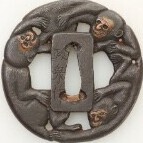
One thing missing from most Soten tsuba battle scenes - the lack of blood splatter!
-

Metallurgy of Japanese Swords Making
John C replied to Subayai Kitsune's topic in General Nihonto Related Discussion
If you search Metallurgy on NMB you'll get 286 results. Just to get you started: John C. -

Sharing a sword I recently acquired
Nicholas replied to Nicholas's topic in Military Swords of Japan
Appreciate it @John C. -
And yes when a koto blade undergoes suriage, a lot of time it is very obvious from a mile away without removing the tsuka. This is my biggest problem when purchasing a late kamakura/nanbokucho blade. Their sugata is greatly altered and many of them just looks strange
-
Im not exactly sure of the reason why it was frowned upon. Swords and swordsmithing have always been considered sacred so perhaps the altering of it was considered a bit tabboo. I dont think shinto suriage/osuriage is unattractive most of the time but they certainly stand out and looks obviously altered. We have to also consider that a lot of koto swords were probably suriage in a very short amount of time due to the edict restricting the length of blades during the edo period. Edit: Great article by Mr Sessko as always and basically answers this in his own view which I always trust.
-
I was reading the way it was written on the tang. Here's some info from Sesko: AKISUKE (明督), Shōwa (昭和, 1926-1989), Tottori – “Shikon Akisuke” (士魂明督), real name Yata Monji (矢田門二), born August 26th 1899, he was working as a swordsmith from about 1942 onwards, the prefix shikon (士魂) means “Samurai spirit” (see picture right) John C.
-
Sharing a sword I recently acquired
Nicholas replied to Nicholas's topic in Military Swords of Japan
Kore Saku? I took the translation from the Japanese swordsmith index -
saku kore??? John C.
-
An interesting idea, but I’m not convinced by the thesis. After all, can you tell a blade has been shortened without removing the tsuka and inspecting the nakago? It doesn’t seem so thus who’d know other than the owner of the shortened sword and thus make a shortened sword widely ‘taboo’? It’d take very little effort to reshape the nakago jiri into an aesthetically pleasing form so it seems more likely it was a conscious choice, but why? Is a new tsuka easier to fashion with a cut-off jiri? I don’t think so. Is the balance of cut-off jiri more advantageous. I can’t see how such a tiny length difference would be perceptible in the hand. Could it just be lazy swordsmiths who simply couldn’t be bothered refiling the nakago’s shape after the careful rejigging of the ha/mune machi especially when very few would actually see the nakago? Having a bit of an understanding of human nature, I think this is a more likely, albeit disappointing, scenario!
-
Sharing a sword I recently acquired
Nicholas replied to Nicholas's topic in Military Swords of Japan
-
Sharing a sword I recently acquired
Nicholas replied to Nicholas's topic in Military Swords of Japan
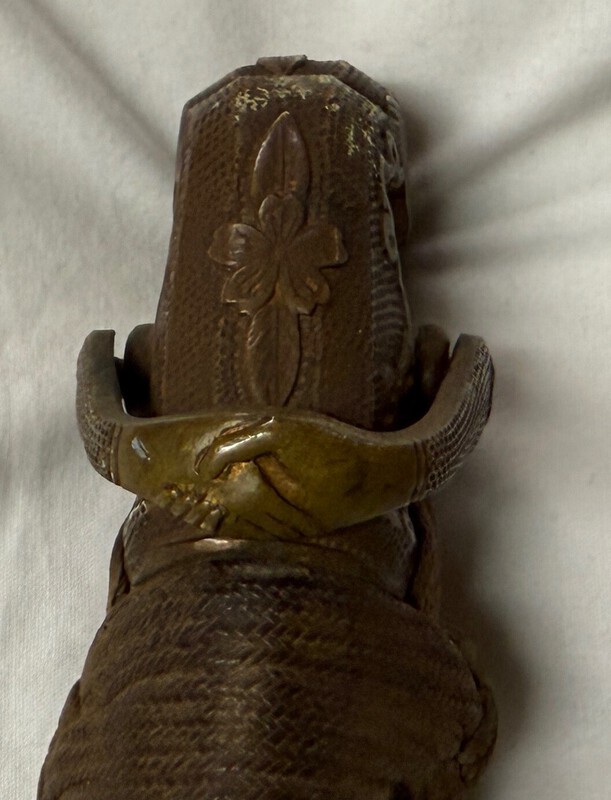

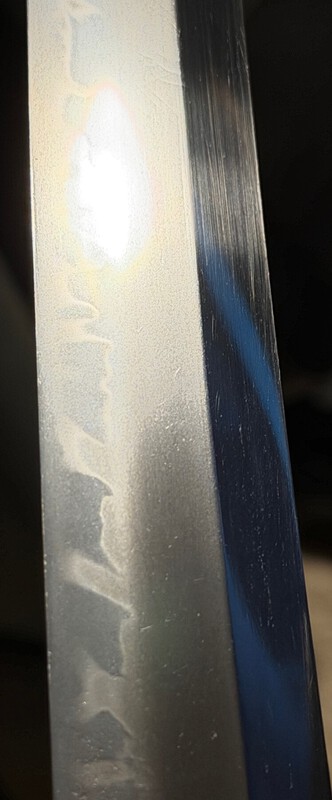

-
open to offers, wanting a quick sale
-
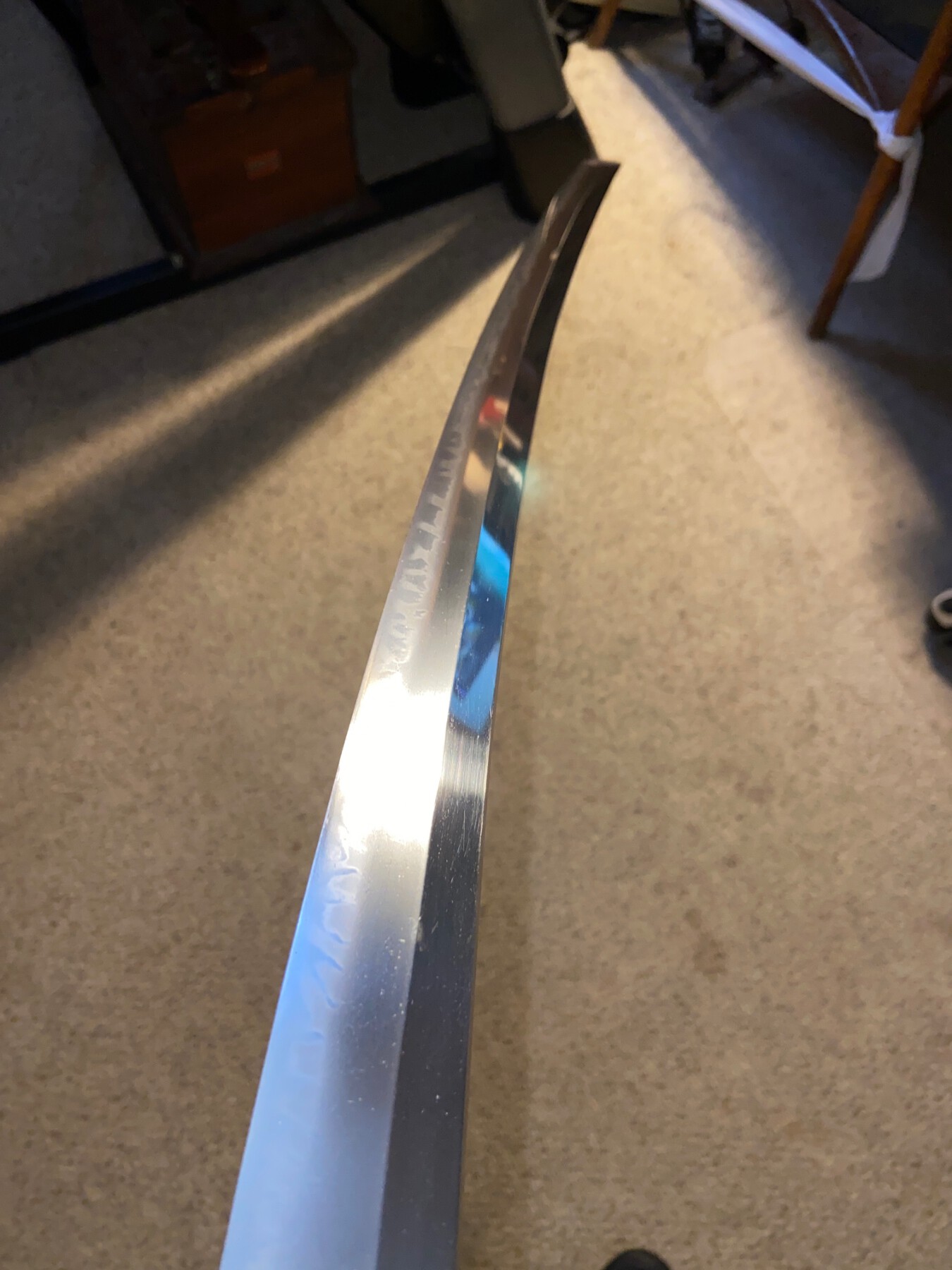
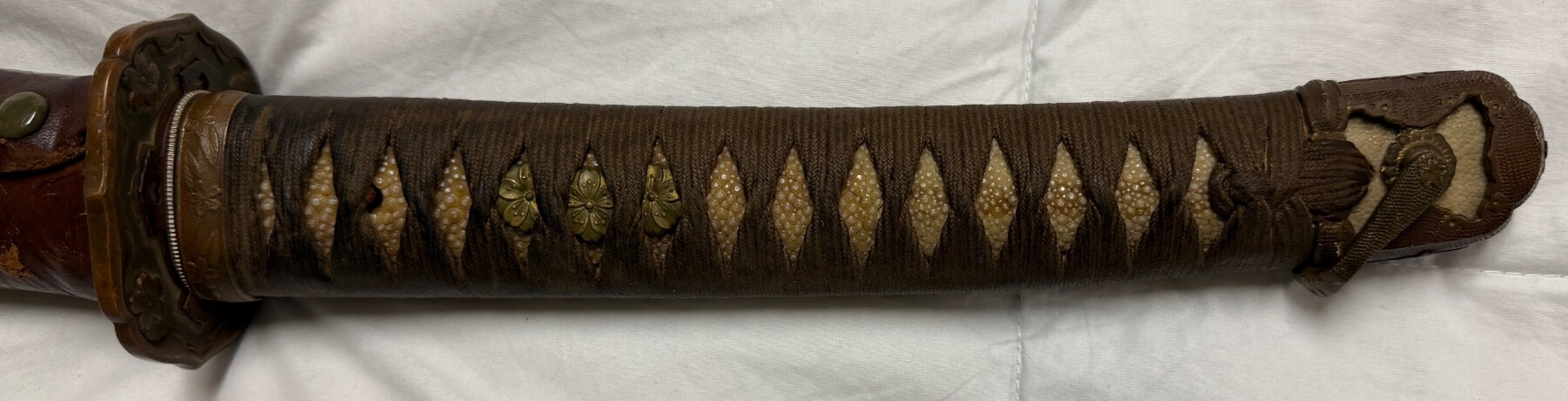
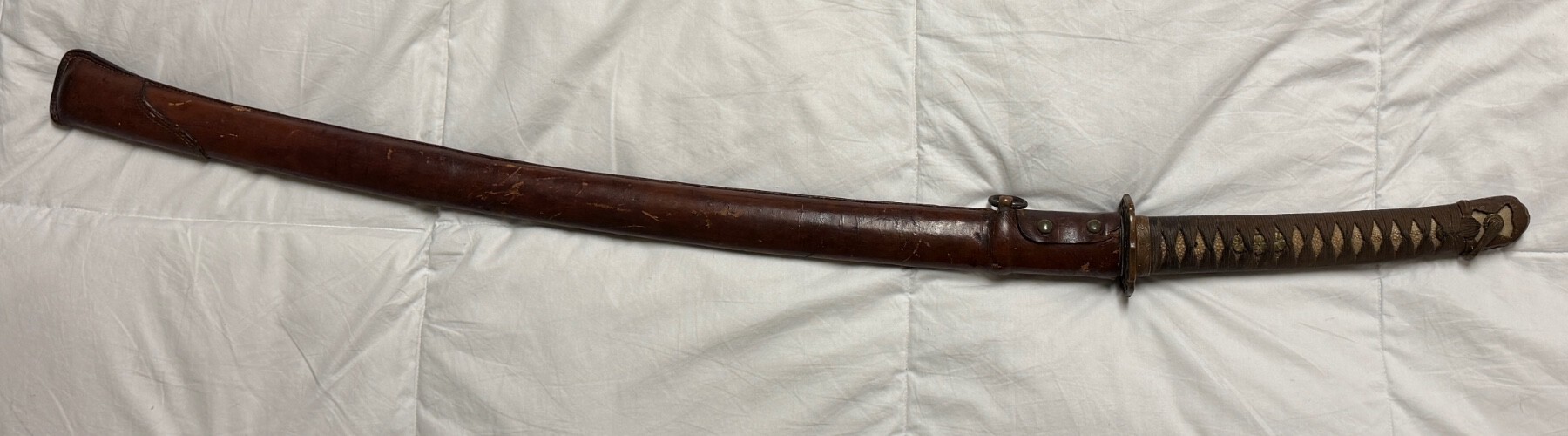
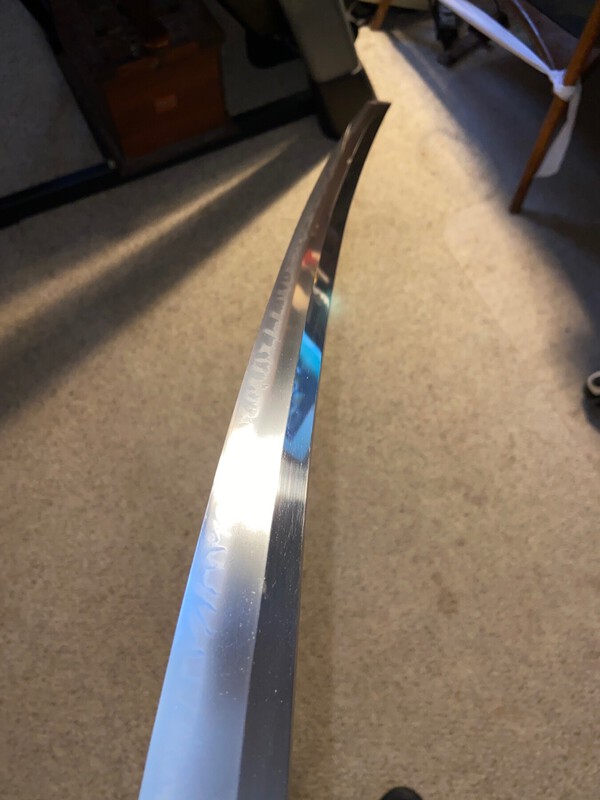
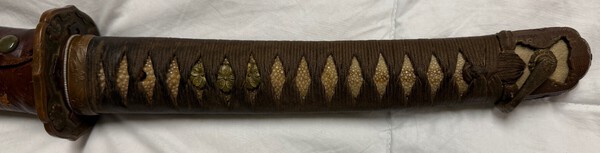
Just want to share.. I took a gamble and picked up this sword a few months ago from the son of a WW2 veteran practically sight unseen. The vets son told me the sword has sat in the closet since he could remember. The sword is signed 士魂明督之作 Shigon Akisuke No Saku and dated 1945. A smith I’ve never heard of before nor have I seen another sword made by this smith. The polish and fittings are in excellent condition. The hamon is flamboyant the jigane is tight. any comments are welcome.

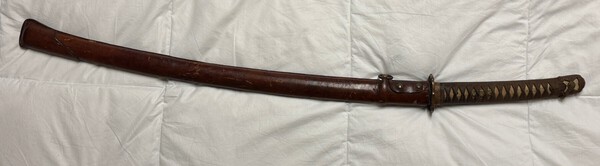
-
I think we all watch too many videos about Japanese swords! I wonder why it was frowned upon? The repurposing of blades kept them in use, but reduced new orders, I suppose… I’d still expect the meticulous Japanese to do it ‘beautifully’.
-
Useful article here from Markus Sesko on Tensho vs Keicho suriage: https://markussesko.com/2018/04/25/tensho-suriage-and-keicho-suriage/
-
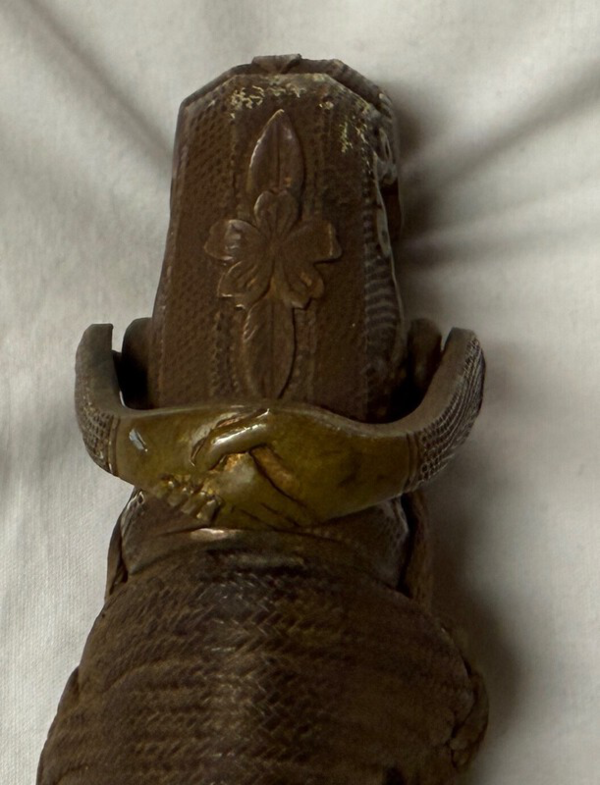
I spent some time looking into this and I am uncertain exactly what this sword is. It could be a European sword or a Japanese prototype. The construction is unlike the final form taken by the Meiji 25th Year Cavalry Sword 明治二五年騎兵刀. However, the Meiji 25th went through several design changes before adoption. There is just not enough factual information available to make a judgement at this time. Ran across serial 5297 over at Worthpoint. Pre WWI Japanese Army Type 25 Cavalry Sword ... Cross-Reference Sword Identification Help Needed
-
I don't see a crack which would be a KIZU. It looks more like a fissure to me between the cross-shapped inner part and the MIMI. Certainly from the manufacturing process as it is not one single piece.
- 1 reply
-
- 1
-



.jpg.7f6921cd269c198cb4d65e6a0e128129.jpg)