
All Activity
- Past hour
-
Thanks Ray. Very kind of you.
-
 I'm curious why NW shows my Senjuin as Juyo when it has TH papers https://nihontowatch.com/artists/senjuin-SEN12?listing=4317
 -
I would hang on to that and if they dont want it then im positive many others will, me included Post a pic of the koshirae when you get time. Cheers
-

I would like to hear your opinion on gunto with showa stamp
Kiipu replied to Rawa's topic in Military Swords of Japan
I have not looked into that topic but you might want check with @Jussi Ekholm first. -
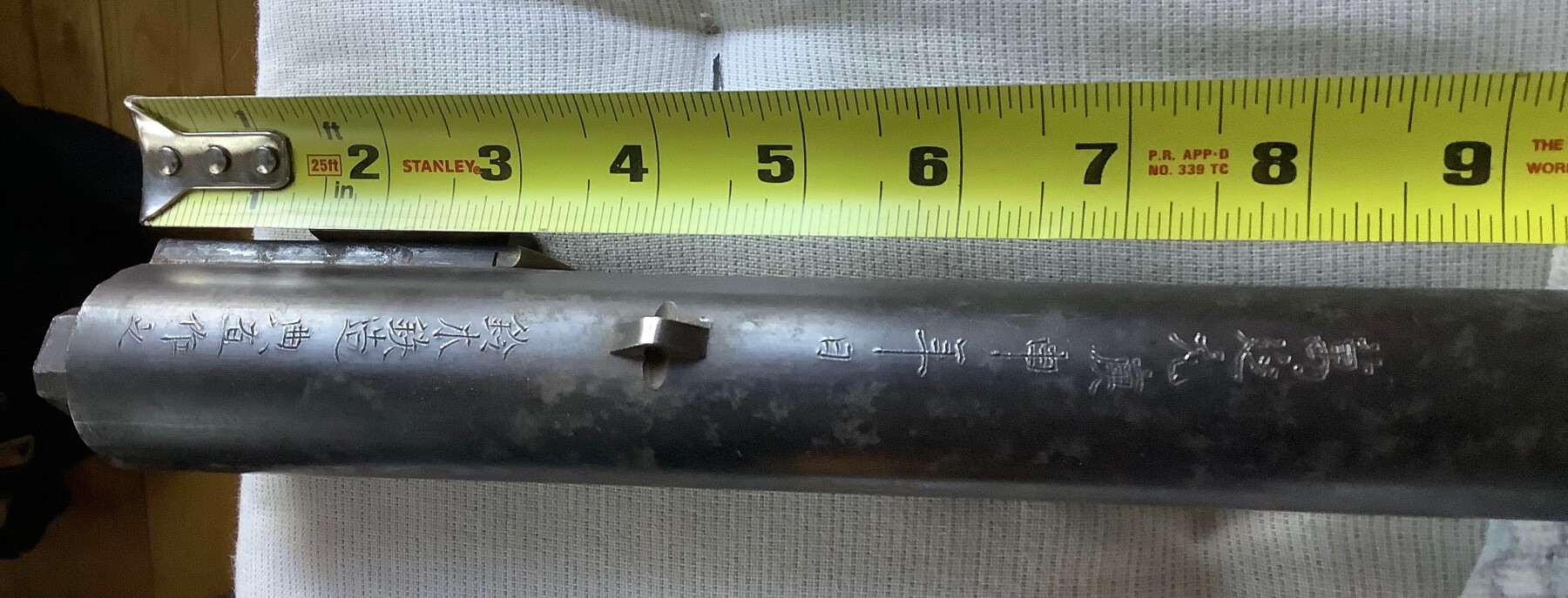
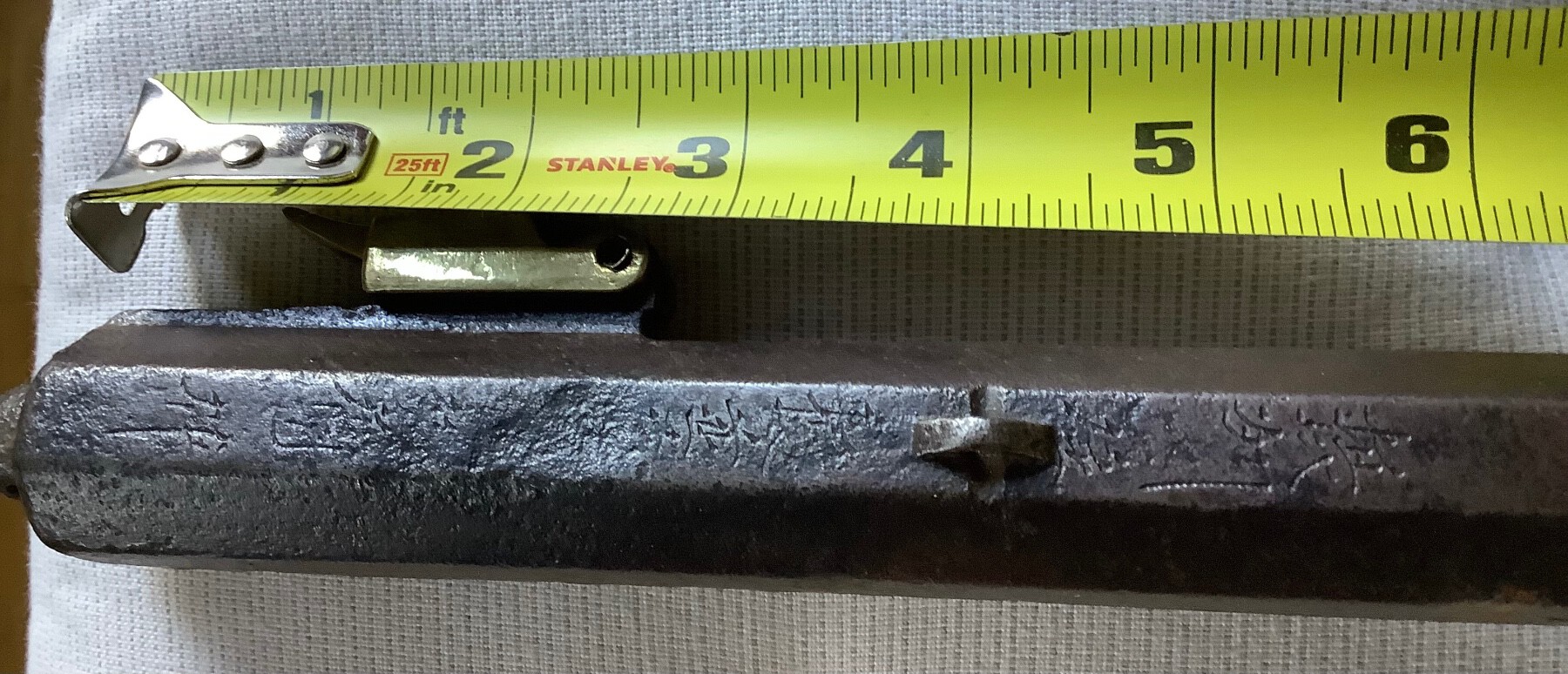
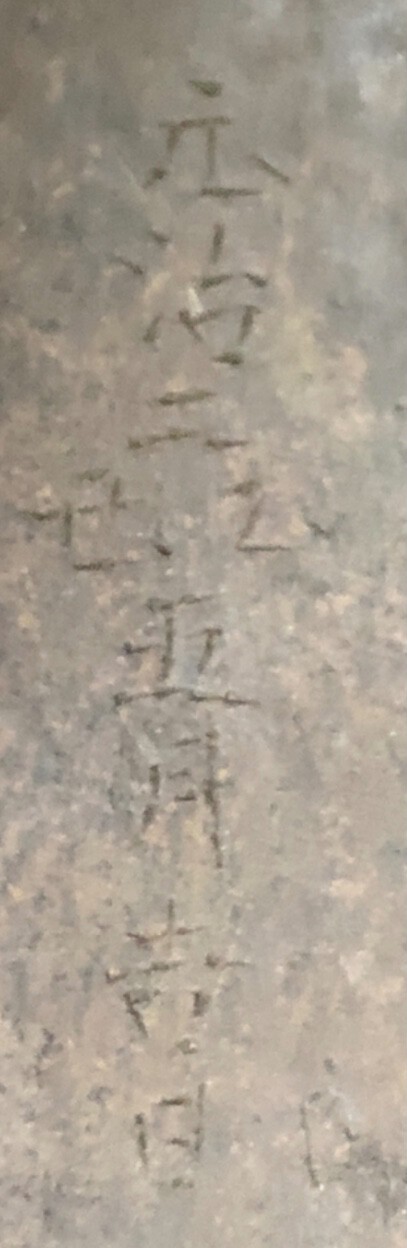
An auspicious day in the fifth month of Genji 2 (1866).
-
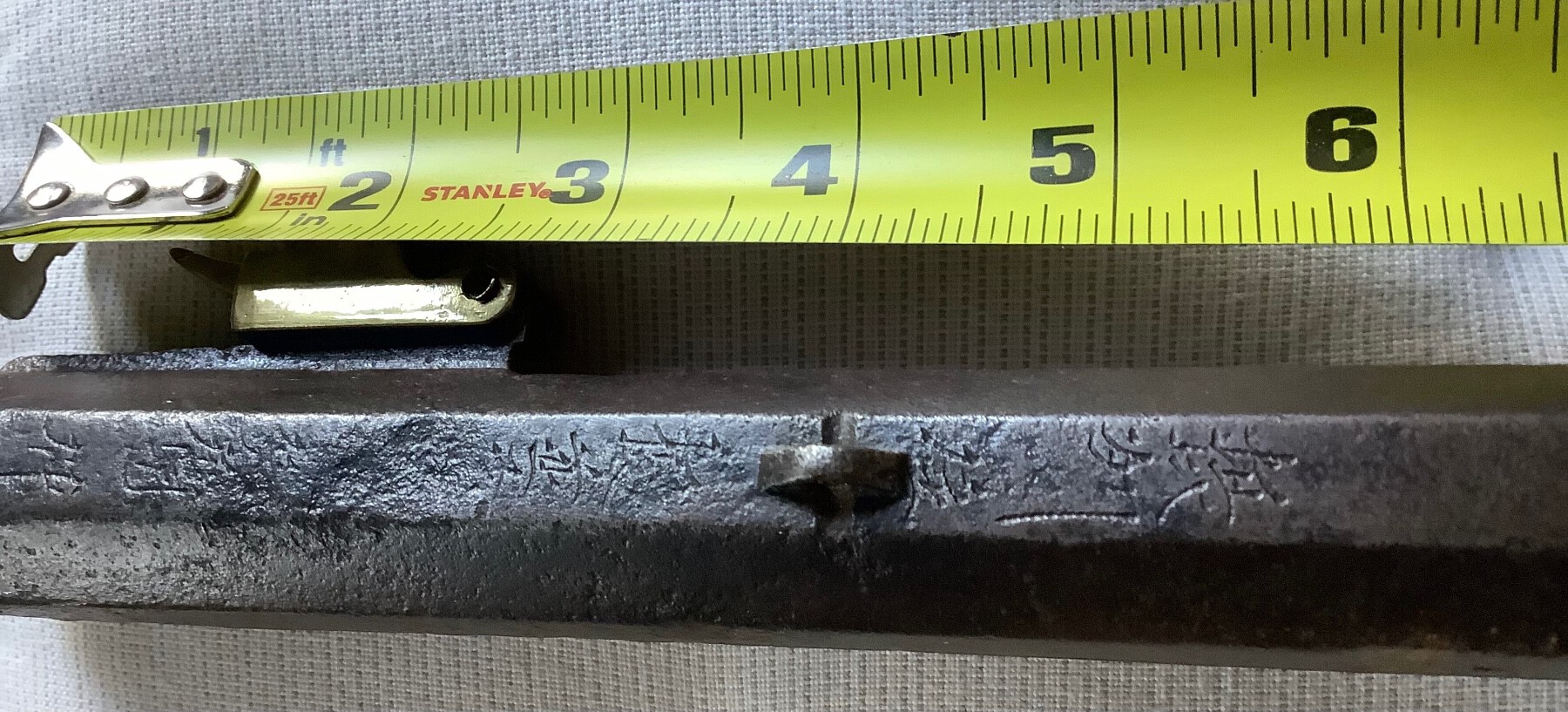
I think I can see “? Ji ni ? Month ?lucky? Day” …..I’m confused again. Is this a date? Any help greatly appreciated! Sorry to be useless on kanji! Many thanks.

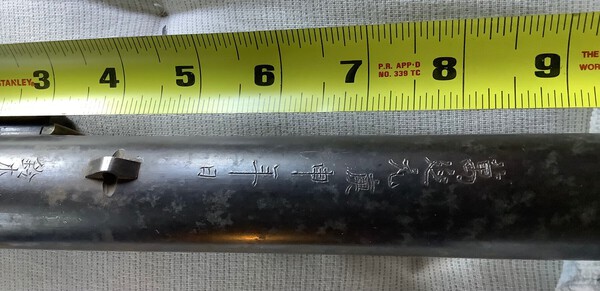
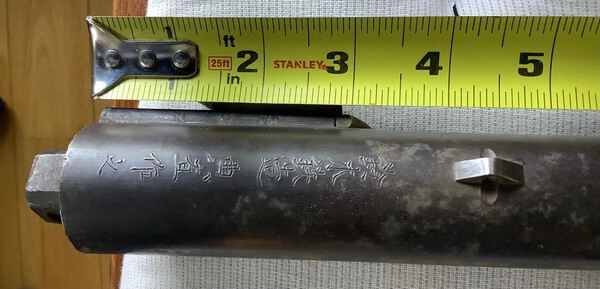


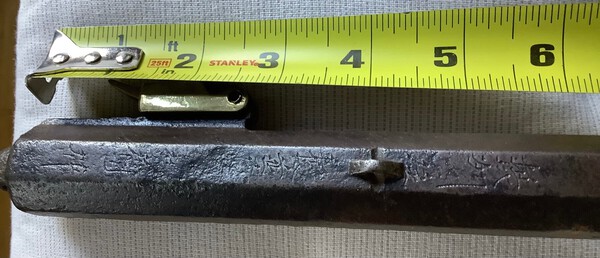

-

I would like to hear your opinion on gunto with showa stamp
John C replied to Rawa's topic in Military Swords of Japan
@Bruce Pennington @Kiipu You guys might find this interesting. Through a discussion with a dealer, I commented on showato getting torokusho. I was told that this dealer was commisioned to gather swords to be sent to Japan for resale. The Japanese dealer had several shops and would ask the swords be sent to his Osaka location and not his Tokyo location because the regulations were less strict (or at least less enforced) in Osaka and getting a torokusho for gunto was easier. I bring this up because I was thinking about...gulp...doing some research on registered gunto by location and frequency - unless you guys have done that already. John C. -

New Arrivals - Touken Takarado April 2026
eternal_newbie replied to Nicholas Fu's topic in TOUKEN TAKARADO
That's a lovely little Taima blade with a classy koshirae to boot. I'd be sorely tempted if I had the funds for another purchase! - Today
-

New Arrivals - Touken Takarado April 2026
Nicholas Fu replied to Nicholas Fu's topic in TOUKEN TAKARADO
We have added three additional items to our website, continuing to expand our inventory across Koto and modern works. Tokubetsu Hozon Token — Mumei (Attributed to Taima) Naginata-Naoshi Wakizashi A late Kamakura to early Nanbokuchō period naginata-naoshi attributed to the Taima school of the Yamato tradition. The blade shows a sharp and elegant sugata with characteristic curvature toward the tip and no yokote. The jigane is a tight itame with areas of nagare, transitioning to masame toward the kissaki, a noted Taima feature (Taima-hada). The hamon is a refined chū-suguha in nie-deki with fine kinsuji and inazuma. Accompanied by an aikuchi koshirae with peony and warabi motifs, and a vermillion mushi-kuinuri lacquered saya. 🔗 https://www.toukentakarado.com/item-tk042-mumei-taima-wakizashi Tokubetsu Hozon Token — Harima Daijō Fujiwara Tadakuni Wakizashi A powerful naginata-naoshi wakizashi by Harima Daijō Fujiwara Tadakuni of the Hizen tradition, a direct relative of the first generation Tadayoshi. The blade is ubu with a wide mihaba and a large ō-kissaki, giving it strong presence. The jigane displays fine konuka-hada, while the hamon is a precise nie-deki notare with bright, consistent nie and a well-formed boshi. Accompanied by an aikuchi koshirae with unified dragon motif and aogai mijin-nuri lacquered saya. 🔗 https://www.toukentakarado.com/item-tk041-harima-daijyo-fujiwara-tadakuni-wakizashi Sasshū-jū Minamoto Morikazu Katana A modern katana by Morikazu (Fujita Kazumasa), a disciple of Moritoku Minamoto and member of the All Japan Swordsmiths Association. Designed for practical use, the blade features masame hada and a gunome-midare hamon with visible sunagashi and kinsuji. Mounted in a practical koshirae with black leather tsuka wrap, offering excellent balance and handling. The well-cut bō-hi produces a clear tachikaze, making it well suited for iaidō and martial arts practice. 🔗 https://www.toukentakarado.com/item-tk043-sasshu-ju-morikazu We hope you’ll take a moment to explore these new additions. Please feel free to contact me if you have any questions. Warm regards, Nicholas Fu Touken Takarado 🌐 www.toukentakarado.com -
Ahh got it! My first thought was choji oil but than thought it might be a term for dressing up a bad blade. Like a US term "lipstick on a pig"
-
What I find interesting is no where in that listing does it use the word Japanese. It states a Japanese time period but that’s as close to Japan as it comes. Was this purposeful, I wonder? Can’t see how it would prevent fraud claims, since the “edo period” claim is wrong as well.
-

73.93cm Katana attributed to Gassan Sadayoshi with Koshirae
singh13 replied to singh13's topic in Swords and Edged Weapons
@ROKUJURO@Rawa Here’s the spot on the munemachi. Not bad at all in my opinion and could be removed through less abrasive methods. I haven’t done anything to the blade other than oiling it
-
Many moons ago, when collecting nihonto was almost unheard of and in its infancy some people thought that some blades were perfumed. Later they found out that it was the choji oil than gave the blade its aroma. The smell seems to linger a bit more on some blades than on others, and the Kunitoshi was one of those blades. There are many myths that stem from this period. There is a section in Alfred Dobrées Japanese Sword Blades , which was originally printed in 1905.
-
The Koshiraé is Inaba Koshiraé typical of Tottori on the Japan Sea, black lacquer with silver chrysanthemum fittings. I bought it because it straddles the two Ikeda Daimyo strongholds of Okayama and Tottori, the wife being from Tottori. I thought one of the offspring might want it but thankfully 😅 not, (“I don’t like black”) so I get to keep it.
-
I believe Seki Kunitoshi was Mori Kunitoshi. What is a perfumed blade?
-

73.93cm Katana attributed to Gassan Sadayoshi with Koshirae
Rawa replied to singh13's topic in Swords and Edged Weapons
i would go with isoprohyl alcohol 100% first. You can't do damage with correct aplication. @singh13 I know You posted more photos somewhere at facebook or sth like it. Please add picture for munemachi. It wasn't anything scary. Thanks for photo. I don't want to spam more but it's great long sword from great lineage. Sadayoshi was The One who reinvented ayasugi hada If I remember correctly. Koshirae with fresh NBTHK evaluation. I have it saved from the start :] -
Funnily enough, that's also how I found the sword initially; I had been searching for an iaito online for my own practice, and because the story about the iaido sensei was in the seller's description, the listing showed up in my search results. The koshirae is very nice for a fatally flawed blade, albeit rather low-key, which lends some credence to this story (as does the blade being extremely thin and light due to having taken so many polishes - suitable indeed for an elderly practitioner). I was particularly fond of the tsuba, which has some subtle detailing reminiscent of Kagamishi school work. At any rate, I am pleased that both you and the previous owner were both upfront and well-informed about the blade's condition, and that it has found its way to someone who can appreciate it for what it is and the centuries of history behind it.
-
Thanks guys, this explanation makes sense. I've seen a video about the use of this eye technique in larger statues. Setting the pupil from the back would certainly align with the practice as it exists today and make a lot more logistical sense. I am still chasing down a picture of that kashira in the description I posted above... As it turns out the digital copy i was using ended up being a blended mash of Naunton and Behrens. If anyone reading has a copy of the W. L. Behren's Collection (Part 3) and could take a picture or scan of plate LXXIII (73) where I believe the potential sister kashira can be found, it would be much appreciated.
-
73.93cm Katana attributed to Gassan Sadayoshi with Koshirae
ROKUJURO replied to singh13's topic in Swords and Edged Weapons
.....some slight corrosion on the Munemachi and some spots on the cutting edge which can be removed with carefully applied Uchiko.... Subegh, did you remove the corrosion with UCHIKO in the meantime? -
Jake, usually, URUSHI is liquid; it is natural lacquer.
-
Hi Jake, I think the most likely explanation is that someone used a pin to see if it was glass…..and doubtless found out that it was not glass! My comments are based on having made a huge number of these eyes in a variety of materials when I used to restore pieces (netsuke, shibayama, okimono etc.) During that time I have never encountered a glass eye nor any where any type of pupil had been created by dribbling anything internally (except from the reverse as described above). Once you get the hang of it and have the right tooling they are not that difficult to make…..just a bit fiddly - which tends to mangle your fingernails (miniature diamond drills and cutting discs on flexi drive jewellers machines).
-
 Thank you both, John and Bruce. The chu kissaki is exceptionally well executed un my opinion.












.thumb.png.4c5df79fec171b2dc4a23af38e280a4d.png)