Search the Community
Showing results for 'oiling'.
-
 @Bugyotsuji my mistake. I meant oiling with choji oil.
 -

Type 98 Shin Gunto and Kai Gunto - Ancestral blades?
xreflections replied to xreflections's topic in Nihonto
What do you recommend oiling it with? By damascus I mean the ripply pattern on the metal--I read that it could be seen on some Japanese blades: https://swordis.com/blog/jihada/?srsltid=AfmBOoqQV8Rd1ndSd0Nuh3JnMIQP0-w3LOH6N00WGqUKJgCOAmIf1-lG thanks! -

73.93cm Katana attributed to Gassan Sadayoshi with Koshirae
singh13 replied to singh13's topic in Sold Archive
@ROKUJURO@Rawa Here’s the spot on the munemachi. Not bad at all in my opinion and could be removed through less abrasive methods. I haven’t done anything to the blade other than oiling it
-
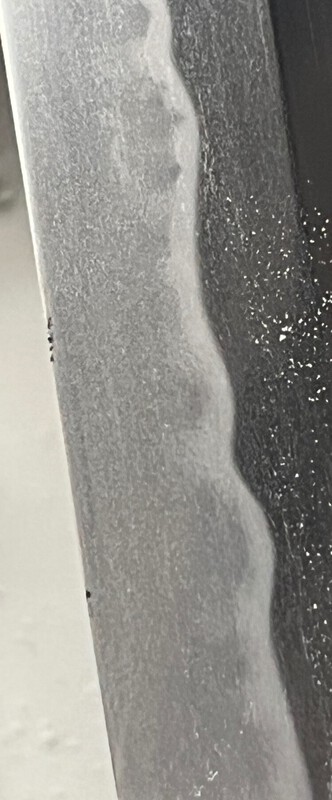
In my opinion only oiling living rust spots just helps break further already loosen rust crumbs. In my case area with black dots changes to big chunk of rust in just 3 months. Adding more photos of other „bad actors”
-
Quite an interesting thread this has turned into but trying to attach historical importance based only on who/when a particular sword was made is I think a bit over romanticizing. Swords were made for a thousand years. While I believe all of them are deserving of respect and preservation , 99.9% of them are not historically important. This blade in particular may or may not even be genuine since it hasnt been submitted and gimei are frequent for well known names. Add in the diy restoration and it may or may not have been rendered worthless. Yes oiling it and leaving it covered in the stable black rust is an infinitely better choice.
-
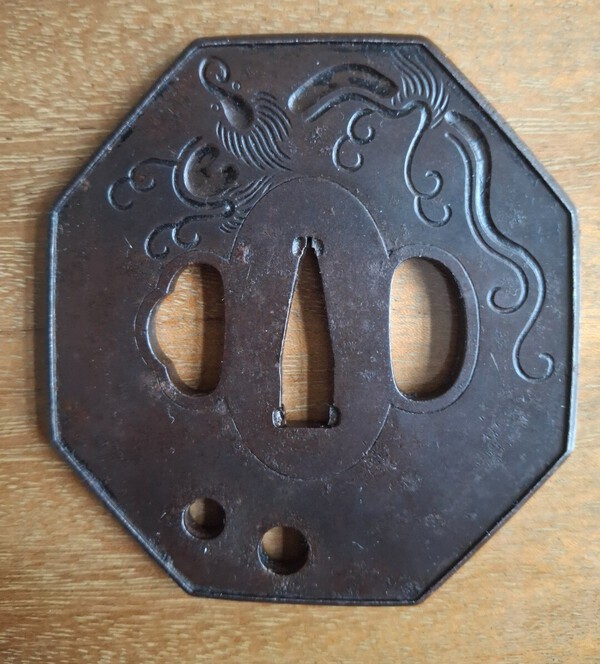
Bruno, for some reason that anecdote ended up being rendered as very large text in a very small scrollable area, so here's a transcript that's hopefully easier for people to read: To lighten the mood a bit, I'll tell you a story. In 1990, Dr. Sempé passed away, and his widow, fearing theft, hid his Andean archaeology collection, along with 70 tsuba and kozuka, behind a platform in their country house. Thirty-five years later, their daughter-in-law undertook renovations and rediscovered these completely forgotten collections. Naturally, all the tsuba and kozuka were corroded with numerous spots of red rust. Last Friday, I bought three of these tsuba at an auction. Here are photos of one of them before and after the cleaning I performed (washing with soapy water, scraping off the rust with bone, then lightly oiling). No corrosive products were used, of course.
-
To lighten the mood a bit, I'll tell you a story. In 1990, Dr. Sempé passed away, and his widow, fearing theft, hid his Andean archaeology collection, along with 70 tsuba and kozuka, behind a platform in their country house. Thirty-five years later, their daughter-in-law undertook renovations and rediscovered these completely forgotten collections. Naturally, all the tsuba and kozuka were corroded with numerous spots of red rust. Last Friday, I bought three of these tsuba at an auction. Here are photos of one of them before and after the cleaning I performed (washing with soapy water, scraping off the rust with bone, then lightly oiling). No corrosive products were used, of course

-
Hello everyone. Just a few question on "proper" oiling of the nihontou:1)What type of material do you use to apply the oil? 2)How do you properly remove the excess oil, and how do you know the aforementioned has been accomplished correctly. I have the all of the bells and whistles for nihontou care, just some of the details I need to clear up. Thank you.
-
 Thank you so much, I'll do that tonight. I typically clean off/re-apply Tsubaki oil every month and a half to my nihonto (I live in the valley in VA, USA, so it's mildly humid year-round). Oiling a surface with rust is something I had not dealt with thus far, so this will technically be a new experience. If there's anything else I need to keep in mind, I'm all ears Thank you for your help!
 -

Green Papered 1977 Wakizasi 脇差 “ Terukado ” 照門
eternal_newbie replied to Rhizosphere's topic in Nihonto
Yes. And depending on what your local climate is like, it may not even need to be oiled that often (I live in a place with constant droughts and hot, dry summers and I can get away with oiling every 1-2 years). -

Still need help. Military WW2 sword, Japanese
Carlyl3 replied to Carlyl3's topic in Military Swords of Japan
Thank you, Bruce. The museum (run by non-professionals more interested in Australian memorabilia) is not going to sell the 2 swords, so in a sense the oiling of the blades and rust limitation will not diminish the value. I will try to talk them into leaving the blades out of the saya as it can't help with their preservation to have them enclosed. Again, thank you, from countryside Victoria in Australia. PS this is the sword that would have been used everyday.

-
Wow! thank you so much Piers! A lot of great information and advice you have provided me with😊. It gives me something to research further too. Very interesting to learn the barrel could be made from Nihonto grade steel . I have tried to track down a decent book on Tanegashima - I will definitely look at your suggestions of books . Piers you mention trying to contact “ Mito” - could I ask have you got contact details ? Also , is there a “ sticky” or thread which gives information on best way to care for your Tanegashima ( ie - cleaning and “oiling “ the Barrel and parts - removing rust - etc ? ) Thanks Lars for the compliments of my new gun. Yes that swallowtail butterfly is same - or very similar.. one thing I do not come across - well here in the UK is Japanese black powder flasks .. love the one you have ! Thanks again guys😊
-
Very many polishers believe they do. Reasons provided vary - "water trapped inside steel during polishing", "micro-erosion of weaker particles which still held out during polish". Some polishers will request a specific oiling schedule, a few older polishers would recommend continuous uchiko application.
-
World War II Sword, Maybe?
Brian replied to garbage finds's topic in General Nihonto Related Discussion
Regular high grade isopropyl alcohol. Wipe as many times as necessary, then a light oiling on a soft cloth or tissue. Minimal is fine. -
 I likely will just fix the original tsuka and leave it there. Personally even if I learned how to polish, it'd feel same as refinishing a milsurp gun. Professional is the way to go as far as that goes, but again likely going to leave the blade and just keep oiling it. Yes some red rust did come off!
 -
Thank you, just another question. For the nakago oiling. Some said no some said yes, but I believe it’s necessary to lightly oil it to prevent red rust. What is your recommendation for oiling the nakago ?
-
Hi, I’ve seen a number of threads on oiling but I am still unclear on several points. I live in quite a humid area, mean annual humidity of 83.9% and frequently reaches 100% (during long rains). This may mean different requirements and methods of taking care of nihonto than those mentioned in other posts. My questions are: - Oil needs to removed every once in awhile but how do I remove oil from the nakago? I assume a cloth would rip bits of the nakago or vice versa, and alcohol would trap moisture in its porous structure. - If a blade doesn’t have shirasaya, should I leave it unmounted or in koshirae? - Should tsuba be oiled? - What’s the best method to remove oil? 99.9% Isopropyl alcohol with tissue, microdear or a combination of both?
-
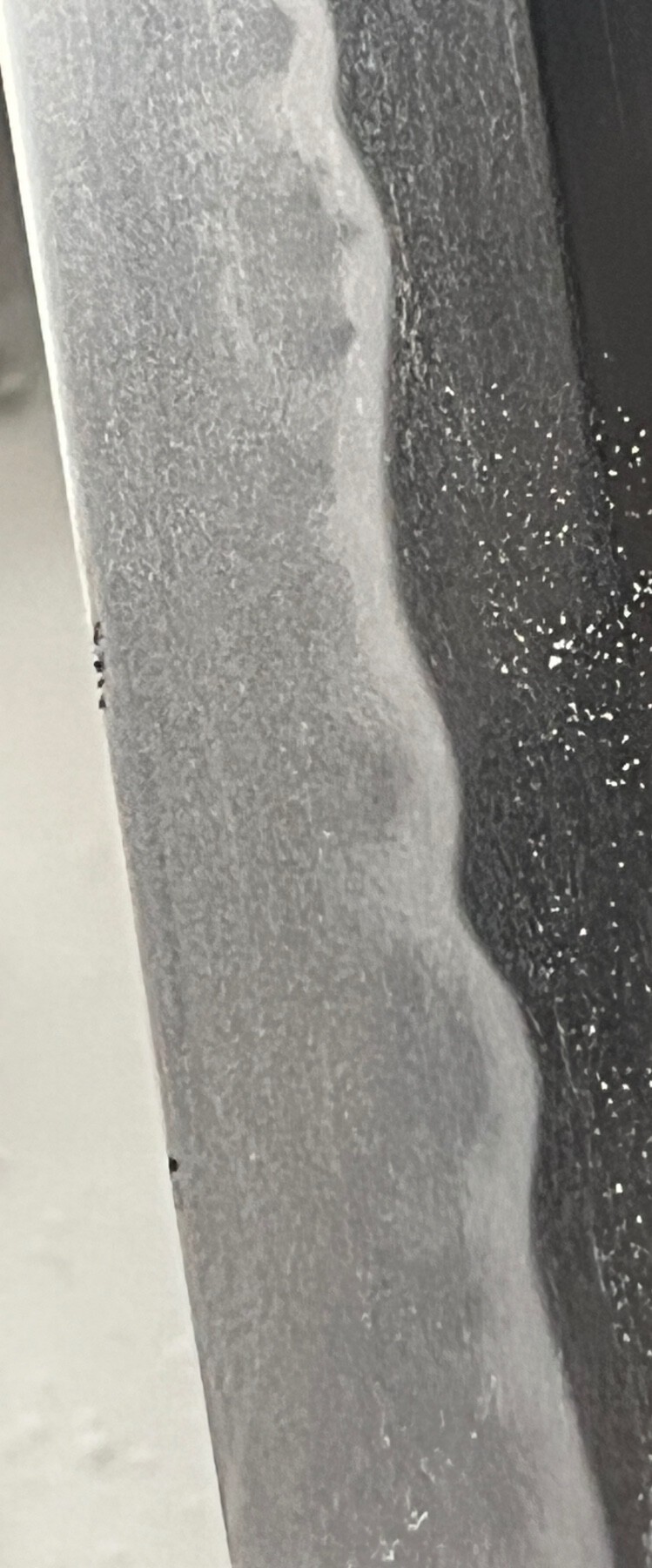
Hi all, new owner of a shin gunto. I like to display the sword just out of its saya like in picture. I don't trust what's inside of saya wood liner looks a bit manky... I'm currently oiling once a week, I'm a bit paranoid that I'm going to end up damaging the blade leaving it open to elements and oiling once a week... Is there a more hard wearing protection I can put on the sword such as renaissance wax? Seems some say it's fine on some blades but perhaps not Japanese ones? Thanks. Also can someone confirm what type of hada this is please? Thank you.


-
First and foremost, do not do anything to the tang (nakago). It’s very important that area remains unmolested. Otherwise, just a light cleaning and oiling is what you will want to do. https://www.militaria.co.za/nmb/faq/1-care-and-maintenance/ I would skip any use of uchiko. It ends up causing more harm than good unless you’re very familiar with what you’re doing and have high quality uchiko. Best of luck, -Sam PS. When in doubt, do not hurry. The blades have survived long before we were alive, and they will survive through our lifetime and beyond. So if you are uncomfortable with anything above, don’t feel bad to wait until you can do more research. If Nihonto has taught me anything in life, it’s patience
-

Is this rust normal or should I be worried ?
Robert S replied to Bosco's topic in General Nihonto Related Discussion
I agree with oiling to stabilize the rust areas. My technique has been to apply a heavy oiling, to get the oil down into the dips and any micro crevices, and then careful repeated dabbing (not rubbing!) with a tissue to remove most of the oil on the surface. -

Help with Mei Translation, Comments on Gunto & Hamon
SteveM replied to Klink's topic in Military Swords of Japan
The inscription is 濃州関住後藤兼廣作 Nōshū Seki-jū Gotō Kanehiro saku (Made by Gotō Kanehiro from Seki in Noshu province) Don't worry about restoration or polishing or sharpening. The potential to ruin the sword is too great, and there will be no value added to the ensemble by making anything shiny. Beware of hucksters and self-taught polishing enthusiasts with a YouTube channel, who try to convince you that polishing swords is totally doable with ordinary household tools and products you can get from Home Depot. Maybe you can clean up a leather-covered scabbard, or very gently get some dirt out of the crevices of the tsuka and the fittings, but, honestly, I would leave the whole thing alone and resist the temptation to do anything. WW2 militaria is best left looking like it was from WW2. Swords require specialist knowledge and materials. Arsenal blades are a different subject, but I would still refrain from doing anything other than oiling them. Not sure about Hoppes #9. I'm sure there are a few on here who can comment on that. -
I recently purchased a couple Nihonto and also own a kaigunto, and I want to care for them in the best possible way to preserve their longevity. I attended Mr. Grey Doffin's wonderful care and etiquette lecture at the Token Kai, and the JSS/US packet he handed out has also been useful. However, I had a few quick questions. 1. Grey mentioned using microfiber cloths for removing oil instead of uchiko. Can one also use a microfiber cloth to apply the oil to the swords? Or should that be a clean tissue for application, switch to microfiber when removing the excess, and finally using a microfiber when cleaning everything off for study/appreciation? 2. Gunto - Is the oiling of a gunto the same as a Nihonto? Thank you for the help!
-
Many here are proponents of rubbing a bit of oil over the nakago with finger tips after oiling for long term preservation. https://www.militaria.co.za/nmb/topic/15202-nakago-oiling/
-
Hello, I'd appreciate some guidance on how long I can safely leave blades in shirasaya without re-oiling them. Usually I do this quite regularly, but I only currently have one functional hand and as such will need to either coach my wife through the process or arrange for a friend to visit to carry out the maintenance. I might end up sending my collection of blades to a friend, to take care of them for the time being. I realise that climatic factors and the like will affect this, but all the same, I would appreciate some ballpark estimates from your own experience. If anyone is curious, I can share what happened, but it's not directly relevant to the thread. Thank you. Mark
-
Jean, correct. I guess I should have clarified. I don't just mean throwing on a layer of oil and leaving it. I mean a repeated process of oiling, wiping off all the red rust that loosens, then oiling and wiping..leaving to set, then wiping. It's a long process but is continued until the red rust is not active anymore and you are left with the more stable black rust.