


watsonmil
-
Posts
1,406 -
Joined
-
Last visited
-
Days Won
4
Content Type
Profiles
Forums
Events
Store
Downloads
Gallery
Everything posted by watsonmil
-
I would like to relate an interesting story regarding an 8 monme Tanegashima that I purchased in Canada in May of 1989, as the story of this gun is almost as interesting as the gun itself. It was my first Japanese Matchlock, and I was quite thrilled. It was in lovely condition and quite heavy at 12 pounds. On dis-assembly I found as I had hoped that the barrel was signed. I noted too that the stock was also signed, and even the inside of the lock bore a distinctive Kakihan. The top of the barrel was covered in nunome - zogan inlay. From the rear sight forward to the front sight, the barrel was inlaid in silver with gold highlights of Wisteria leaves and flowers. Behind the rear sight were inlaid two Mon. One easily recognizable as the Paulownia mon of the Shogun. The second mon I did not recognize, nor could I find it in any of the few reference books I owned at the time. I did know that during the late Edo period it was not un-common to find two mon on an item, and consequently assumed it was the mon of someone associated by relation, or in the employ of the Shogunal Government. Being a bit of a red neck ( and proud of it ), ... I figured go right to the top. I therefore wrote Tokugawa Yoshinobu, Museum Director, Tokugawa Museum, Nagoya, Japan ... sending him a physical description and a couple of rather poor polaroid photos along with a rubbing of the signature, and a hand written facsimile of the stock kanji, and a drawing of the kakihan on the lock plate. Imagine my surprise to be asked to meet with a Mr. Toyozo Sato a curator of the museum. He was to be in Montreal in August ( a mere 1136 miles by air from where I live ). This of course at the time was quite impossible for me both financially and time wise. I wrote Mr. Sato and he translated the signatures and agreed the second mon was most likely closely associated with the Tokugawa, and would have been the actual owner of the firearm. He of course was most gratious in his letter and indicated his great disappointment that we could not meet so that he might examine the firearm. For the next few years I simply enjoyed the gun and did manage to obtain a couple of good 35mm photos of the gun and mon. On a business trip to Europe in March of 1993 my wife and I were in London, and took in a side trip to visit Gray's Mews down on Davies Street to take in the various Antique Stalls. It was here that we happened upon a dealer in Japanese Swords and accessories. After a nice visit, I showed him the photos of the Tanegashima. He immediately asked to buy the gun, and upon being advised that it was not for sale, he became absolutely hysterical, .... demanding that he would buy the gun and fly over to Canada to pick it up. When I again declined to sell, he became verbally abusive, and both my wife and I decided to leave. Believe it or not, ... I still do not but my wife assures me it happened, ... he started chasing after us ( we were actually running at this point ) down Davies Street heading for the Bond Street Tube, our Japanese dealer in hot pursuit cursing us for being in possession of an artifact that according to him belonged in Japan and not Canada. It was not until we arrived home some weeks later that I started some serious research into the second mon. It was through personal communications and a decent book on mon that I discovered the second mon belonged to none other than Ii Naosuke the Shogun's strongman who signed the treaty with Harris of the USA, along with other treaties opening the doors of Japan to the West, ... and who was later assassinated in 1860 while on his way to visit the Shogun. A painting of the assassination can be found in the book ... Samurai Warriors by Stephen Turnbull ... pages 151 - 153 ( note the mon on the sleves of Ii's bodyguards ). Did this gun actually belong to the " Tairo " Ii Naosuke, ... or did some enterprising artisan add the two mon, plus the other inlaid embellishment to aid in a sale ?? I do not know. It all looks quite original to the gun, and I am told ( private communications ) that after the fall of the Shogunate the Ii family fell on hard times, and many personal belongings were sold off to junk dealers and Europeans. Whatever the case may be it is a very high quality gun. Here are photos and specifications for those interested. Kunitomo 8 Monme Tanegashima Signature of Barrel Maker : Goshu Kunitomo Tobeh Ateyoshi Signature of Stock Maker : Kwase Kitaro Masayoshi Kakihan of Lock Maker : UNKNOWN Barrel Length ..... 28 3/4 inches Barrel shape : Tapered round with flat top with bubulous 8 sided muzzle Caliber : .625 inch ( 8 monme ) Decoration : Nunome - Zogan in silver and gold Lock : Double inside spring with three trigger adjustments OA length of gun : 39 inches Weight of gun : 12 pounds Condition : Excellent working order / would be safe to fire Respectfully posted for the enjoyment and study of our NMB members, ...... Ron Watson
-
Is this a good sword for the dollar?
watsonmil replied to jason_mazzy's topic in Auctions and Online Sales or Sellers
Dear Jason, Hmmm, ... I see your rational, ... if you buy a sword with enough flaws, ... like an ugly woman, ... no one else will want to hold her / it, .... makes perfect sense to me I forbid anyone to buy this man another .... Ron Watson -
Dear Justin, I have collected and dealt in Arms and armour for at least 35 - 40 years. Many weapons show damage, and yes they are still collectible. They have not lost their intergrity, ... they have simply been part and took part in history. If the Japanese sword is to be looked upon sticktly as a weapon then yes in that context it is still collectible. Some collect factory made Japanese Swords of WWII as an example. The problem with the true Japanese Samurai sword is that it was a hand made weapon that if not identifyable to a specific maker then almost certainly at least to a specific school and time. Now once a sword has become damaged, and reshaped as well as re-tempered, ... it is no longer an example of the original maker's work, and quite often even the school can no longer be ascertained with certainty. It is now simply a weapon of UNKNOWN provenance. The re-tempering has changed not only it's shape, but the original hamon ( unless that of an early documented blade ) cannot be even closely duplicated. It would be like collecting a fine Sharpes Rifle but with a Remington barrel, and a Winchester buttstock, ..... not very desirable at all. It is often hard to accept this, ... and we all try to rationalize and thereby change the rules to suit OURSELVES. How ever we rationalize it, .... we cannot change the facts. In the long run we lose credibility. Sooner or later you will find that special Nihonto that has your name on it whether or not it is a $ 20,000.00 sword or it is a $ 1500.00 sword. It will be a treasure never the less. The main thing if you want to stay in this game is to accept error as a learning experience, and strive for the best you can afford, whether or not you are wealthy is totally irrelevant. ... Kindest regards, ... Ron Watson
-
Dear Thomas, Welcome aboard, .... although primarily a Japanese Sword and Fittings Forum, .... the board does make allowance and welcomes dialogue on all aspects of Japanese Samurai Arts / Weapons incl. the Tanegashima ( firearms ). Many of us have an interest in all forms of Japanese Art / Weapons. I think you will learn much. ... Ron Watson
-
Dear Rich, Few if any of us will recommend one polisher over another. It really is best to do an Internet search looking for Japanese Sword restoration. Take a look at their profile, and qualifications, where they are located, etc. Some of the retail sword dealers can also help you locate a polisher or make arrangements. Again the sword dealers can be found by doing an internet search or looking thru the list of advertisers at the top of the NMB Home page. ...... I hope this helps, ... Ron Watson
-
Dear Damien, That perfect sheen you're talking about often costs $ 125.00 an inch or more depending upon the quality of polish, and the polisher. Never use the words .... sand blasting .... sand paper .... emery cloth .... steel wool .... around here. That's akin to singing rugby songs in a church choir ! You can use a good quality oil ( even 3 in 1 ) with a soft cloth to remove a little of the rust, ... and clean that off with again a soft cloth and then re-post photos trying to capture the tempering in the point ( boshi ), and another trying to capture the tempering in the hamon ( along the cutting edge ). It will go a long way to getting you some expert advice as to the quality of the blade etc. Many Japanese swords are historically important objects and often serious works of art, and should be shown deep respect. Most are simply high quality weapons, ... but their study is a long and tedious task albeit for most of us enjoyable. Your best bet is to buy a couple no make that a dozen books on the subject and READ before you commit yourself to the masochistic mystique of collecting. Kind regards, ... Ron Watson
-
Dear Rich, I believe it is too far gone to invest in a polish. Whenever a polish is done, .... metal is removed. In order to get the shinogi back to a sharp line, ... a lot of metal is going to be removed. If it is possible to have a polisher look at it and give an opinion, ... without having to purchase it first, ... that would be ideal. Since this is not always possible, then one has to look at the blade very critically, and decide for themselves taking into account what are the obvious problems ... and try to imagine the amount of metal that will have to be removed to obtain suitable results. Often the answer is too much metal. This is my opinion, ... and someone else may differ, ... but in this case I would be surprised. ..... Ron Watson
-
Dear Rich, The roundness of the shinogi, and overall appearance give the impression of a very tired blade. It reminds me of a koto sword I once owned. It had at one time been a very elegant Tachi, .... later cut down to wakizashi, and although relatively free of rust or pits, the polisher took one look and said " put the old man to rest ", .... He has a little skin, ... but what is left is merely covering his bones. Regards, ... Ron Watson
-
Tanto Pistol History with photos
watsonmil replied to watsonmil's topic in Tanegashima / Teppo / Hinawajū
Hello Doug, The largest caliber I have see or read about was .32 inch. The problem with making a larger caliber was exactly as you surmised. The Saya would have been too chunky ( fat ) to accomodate the extra barrel size and still appear to be a Tanto. ... Ron Watson -
Tanto Pistol History with photos
watsonmil replied to watsonmil's topic in Tanegashima / Teppo / Hinawajū
I once owned a pair of Smith & Wesson # 2 army revolvers in .32 rimfire long. For a black powder Rimfire cartridge they packed a pretty good punch, .... and great fun to shoot. A limited amount of ammo was produced for a US company called Navy Arms a few years ago. Expensive but, .... isn't everything ! A neat mock up photo to be sure. :D ... Ron Watson -
Hello Eric, I just finished making a Yari Pole, .... I wish you had posted this information a couple of weeks ago. It would have made my task much easier. It only goes to show, ... there is always something new and interesting to learn. A great piece of shared knowledge. Thank you for posting. ......... Ron Watson
-
Tanto Pistol History with photos
watsonmil replied to watsonmil's topic in Tanegashima / Teppo / Hinawajū
Dear Ian, I used the example of a Daimyo as the extreme example, not as a hard and fast rule. Certainly any high ranking government official of the time was at great risk of assassination. The idea that these pistols are a " novelty or trinket " of the wealthy is my point of contention. The example I picture gives us a very serious glimpse at this short period of turbulent Japanese history. The time frame does not fit a period of frivality, ... but rather a period of great fear not only for the future of Japan, but also for one's personal safety at the time. Personally I doubt the rich Japanese merchant theory, .... He would have been more afraid of being caught by the government or ordinary samurai .. carrying a concealed weapon ... especially a pistol. I'm certain it would have meant his head. Besides the merchant was not so much involved with the politics of the day as were the samurai, and consequently not so much a target of assassination. I think it is too easy to write these items off as aberant items. Rather I believe they served to address a real and immediate threat of the time. ...... Ron Watson -
Tanto Pistol History with photos
watsonmil replied to watsonmil's topic in Tanegashima / Teppo / Hinawajū
For those interested in further study of the Tanto Pistol, .... Two examples are housed in the Metropolitan Museum in New York and can be seen in the book : Pistols of the World by Claude Blair. One example is in the Eddie Reider collection and can be seen in the book : Firearm Curiosa by Lewis Winant An example was sold by Greg Martin Auctions in November 2008. An example was sold by Christies in London ... lot 620 / sale 4991 June 1993. An example was sold in one of the famous Haynes autions a few years back. ............ Ron Watson -
Tanto Pistol History with photos
watsonmil replied to watsonmil's topic in Tanegashima / Teppo / Hinawajū
PHOTOS of TANTO PISTOL KOSHIRAE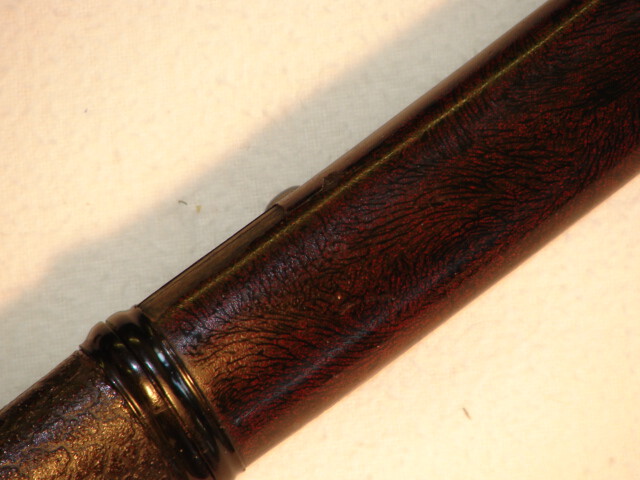
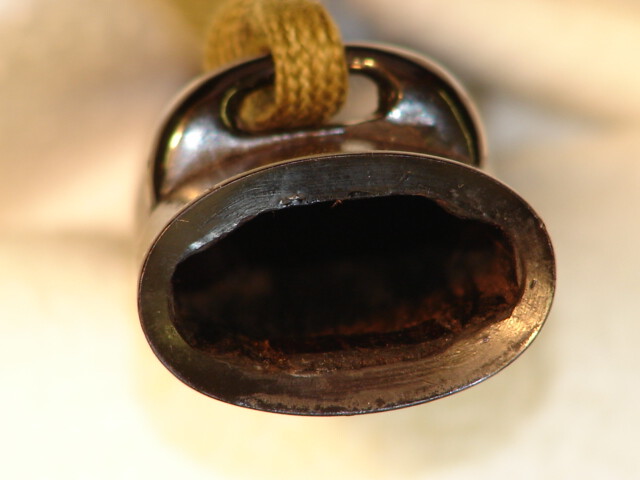
-
Tanto Pistol History with photos
watsonmil replied to watsonmil's topic in Tanegashima / Teppo / Hinawajū
Here are the photos: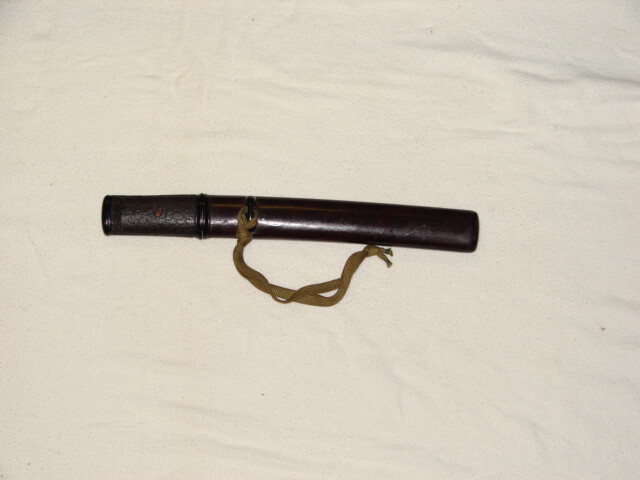
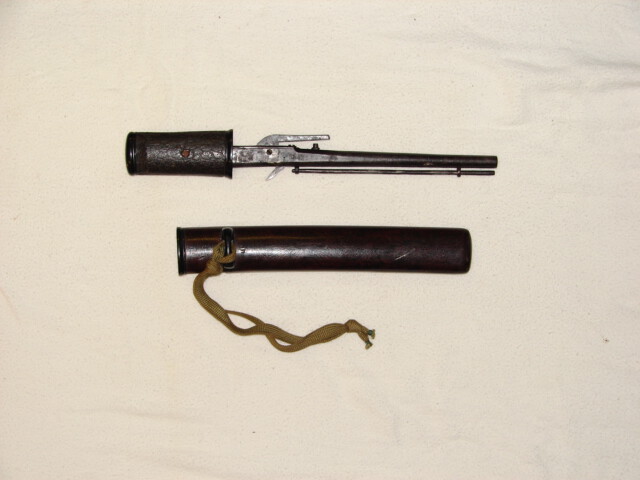
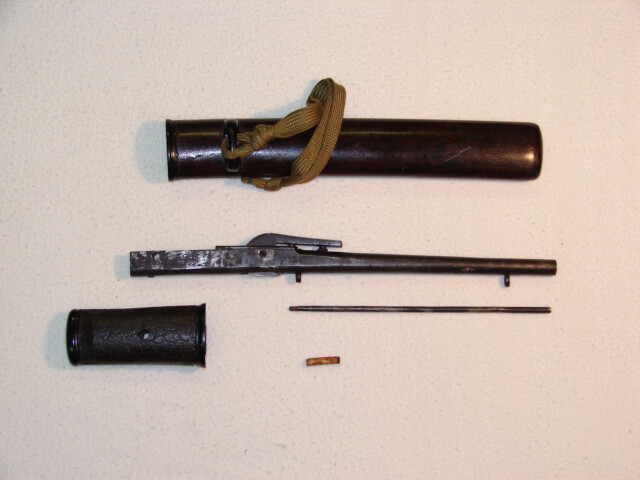
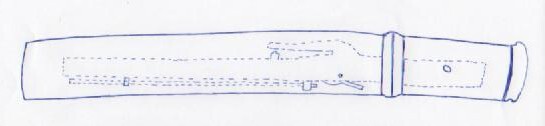
-
In order to understand how the Tanto Pistol fits into the history of Japan during the fedual era, it is necessary to have an understanding of the Political situation in Japan circ. 1790 - 1877. The whole might be summed up as a nation in panic, and a leadership split on what course of action the nation should take when faced with outside interference in domestic affairs. Although the Russians and British had made half- hearted attempts at intimidating the Japanese into opening up their ports, Japan managed by use of limited force and threat of force to hold off these intrusions until finally on July 8, 1853 Commodore Perry of the USA sailed into what is now known as Tokyo Bay. Demands were made of the Japanese for access and trade and by the time of Perry's return in 1854 the Shogunate was deeply divided between rejecting the US demands, and those who realized that Japan must capitulate , and accept the opening of her doors to the West. For the next number of years the two factions carried on the internal squabble as " terror and assassinations " between opposing Daimyo, and spilling over to the occasional killing of foreigners. It was not un-common for neighbouring Daimyo to be on opposing sides, and not trusting their feelings to one-another caused many Daimyo to become quite paranoid. For a Daimyo to receive an invitation from another Daimyo for a visit could well be viewed as a trap, and since one could not lose face by refusing, and since you left your long sword at the entrance to your host's home, you were at considerable risk being armed only with a tanto. A few of these Daimyo ordered a little extra insurance in the form of a Tanto Pistol. No one would suspect the tanto you wore was in reality a pistol. Being percussion they were instantly available for firing as opposed to the old matchlock system. High ranking politicians ( Daimyo ) were no different than politicians everywhere, ... sacrificing a retainer was no big deal, but when it's the politician ( Daimyo ) himself who has a pistol pointed at him, he will think twice, giving the proposed victim an avenue of escape back to his own retinue of well armed and loyal samurai. Many believe these Tanto Pistols were simply a novelty item for the rich. A trinket to show off your personal wealth. This theory in the case of the Tanto Pistol is in this student's opinion hogwash ! Here's why : 1. At the time these rare pistols were made circ. 1855 - 1875 was a time of intrigue in Japan, not a time of Daimyo living the luxury life of the past. It was instead a time of great uncertainty for Daimyo on both sides of the " opening of Japan question ". 2. It was a time of political assassination when having the advantage of a pistol in a world of swords was advantageous. 3. The pistols are almost all ( except for one that I know of ... which may well have been a novelty item ) of the Percussion system. At the time the fastest ignition system of a firearm known. 4. None of the very few I have examined, and very few of the examples I have seen photograhed are elaborate or decorated on the barrel or frame .... they are plain and very purposeful in their design and reason, ... that being to injure or kill. Certainly not to impress your neighbour with a fine inlaid or engraved barrel or frame. A couple I have seen bearing decoration on the barrel or frame are the exception. The decoration on these are modest but elegant as would befit a Daimyo. They certainly are not ostintatious. 5. The mounting is invariably also simple but of high quality as would be expected of a tanto belonging to a Daimyo. 6. I personally know of only one that is signed by the maker, and one would expect if they were simply works of art or an expensive novelty that they would be signed. In closing this short article, I would like to point out that the greatest advantage of carrying a concealed pistol is not the actual firing of a bullet into your opponent, but rather the psychological advantage it gives to the " pointer ", and the psychological disadvantage it instills in the " pointee ". This I know from personal experience having witnessed a " pointee " piss himself on a failed theft of my property many years ago ! Now to the Tanto Pistol. It is mounted as Aikuchi. The koshirae: Tsuka is of brown lacquer in imitation of leather. The saya is brown lacquer with black striations. The Fuchi / Kashira / Kurikata are of rich black horn. The pistol is steel of the percussion system. It is .30 inch caliber. On cocking the hammer, the hidden trigger drops down. Squeezing the trigger causes the hammer to rise well above the cocked position, and then drops with considerable force upon the percussion nipple. The action is refered to as a box lock. OA length of the tanto pistol is 13 inches. I hope you will find some interest in the above ramblings. Photographs are attached as a reply ... Ron Watson
-
Dear Jean, The " Tanto " Pistol which is in my collection is strictly a gun. The only reason it is called a "Tanto Pistol " is due to the mounts ( Aikuchi ) ... concealing the fact it is actually a gun rather than a tanto. In the case of this Tanto Pistol, .... NO blade is involved. I will if I may, post a short article in a day or two with photos. All will be much more clear. A picture is worth a 1000 words. The story behind them is really very interesting. Kind regards, ... Ron Watson
-
I was being somewhat facetious, ... of course it could kill you. I was simply pointing out that if you're going to a gun fight, ... take something a little bigger. The comparison between a Navy Colt of.36 cal and this .30 cal pistol is not comparable. The .36 Colt had a rifled barrel, ... this Tanto pistol is smooth bore. The .36 firing a round ball of 70.26 grains is nearly 75% larger than a .30 cal ball which weighs in at 40.66 grains ( the equivalent of a .22 long rifle rimfire 40 grain slug ) Remembering that a .22 rimfire is being fired from a rifled barrel, ... the .30 cal Tanto pistol ( smooth bore ) did not even have the punch of a .22 short let alone long rifle cartridge. Conical projectiles ( more weight than round ball ) were never used in a smoothbore, as they would only tumble, ... there being no rifling to stabalize the projectile. The .36 Navy could use either a round ball, or conical ( slug ) as they were rifled. The purpose of the Tanto Pistol was pretty much psychological, .... no one wants to be shot period, ... whether it kills you outright or not. .... Ron Watson
-
Hi Eric, Tell you what, .... if time permits me I will post an article in the next few days. Yes, ... I still own the Tanto Pistol. It is probably interesting enough for the members to get my son to do some photos which I can post. It fired a .30 cal ball, .... might not kill you outright, ... but sure as hell would get your attention ! .... Ron Watson
-
In the case of some items, ... not exactly the same type of instance as Erick points out, I have quite often found that people doing a " Google " search will contact me for items I sold as many as 5 years ago ! It would seem Google is so big as to use whatever they please without consideration for obtaining permission. Please do a search for TANTO PISTOL using Google. The first item that comes up is a Tanto Pistol I have owned for a goodly number of years, ..... and I didn't pay $ 1975.00 US. I cannot remember if this is the same dealer I purchased the item from or not. I do know it is the same pistol ! By the way it is NOT Flintlock it is Percussion. ... Ron Watson
-
This Week's Edo Period Corner
watsonmil replied to Bugyotsuji's topic in General Nihonto Related Discussion
Dear Piers, Being that I have a deep interest in these firearms, .... I too must say I enjoyed the photos very much. Keep your powder dry. .......... Ron Watson -
An Early Japanese Cannon
watsonmil replied to watsonmil's topic in General Nihonto Related Discussion
Jesus, ... Ian .... they must not only have invented Black Powder ( low pressure ) .. but Smokeless ( high pressure ) as well :lol: .... regards, ... Ron Watson -
An Early Japanese Cannon
watsonmil replied to watsonmil's topic in General Nihonto Related Discussion
Dear Piers & Carlo, I will try to answer you in this single post. Firstly to answer Piers, ... I believe the patches ( repairs ) were entirely to do with the inherent problems of casting. I am not an expert in metal casting, but I think whenever one casts a thick object, the problem of tiny air pockets arises. These if tiny enough can be overlooked because they will not significantly weaken the overall structure. I know I've seen these same faults on European brass / bronze cannon ( usually un-filled ). I think the Japanese filled these tiny flaws more for aestetic reasons than for worry about barrel failure. To answer Carlo, ... There are only two explanations for the Chinese gun you picture. 1. Is that this barrel was designed to throw a grenade ( exploding projectile ) over a very short distance. 2. Is the " Claymore Mine Effect " of directing a large number of projectiles in a short but wide dispersal in a controlled direction. The second is the more plausible explanation, and the most effective. I most certainly do believe that man whether in the East or the West used the new Firearm technology to its best advantage, and until the advent of the " rifled barrel ", .. grape shot at close range was your best option in these small guns. .... Ron Watson -
An Early Japanese Cannon
watsonmil replied to watsonmil's topic in General Nihonto Related Discussion
Dear John, Generally speaking, ... going back in time the term " gun " was used when speaking of an artillery piece used in the " direct fire mode " .. ie you could visually see your target and aim at it. It was rather long in barrel caliber so that as much velocity could be obtained as possible thus somewhat reducing the effect of trajectory. It was soon learned that although one might see the target, the range was such that a much higher angle of fire was needed to gain a hit. It was soon learned that a shorter barreled gun ( less calibers of length ) with a much lower velocity was more effective in " lobbing " a shell thru a high arch than a high velocity gun with it's flatter INITIAL trajectory. It is hard to explain without drawing trajectory curves, ... so our readers will have to take my word. Now then if you cannot see the target at all, but you have a damn good idea where he is ( possibly on the other side of a hill ), ... you need a " Mortar ". The definition being an " indirect fire weapon ( usually muzzle loading ) having a barrel caliber length of 10 or less calibers. Now we're looking at firing at a rather short distance so that we need even less velocity than a howitzer but an almost vertical drop at the end of our high angle trajectory so as to drop our shell over the hill but not past our target. This would be the " classical " application of artillery. In the case of these small Japanese cannon, ... although of sufficient barrel caliber to meet the definition of mortar, I do not believe they were used for " indirect fire ", but rather in the role of " direct point blank fire " much like a sawed off shotgun. To take it one step further what the Japanese had with these little short barreled cannon were the MODERN equivalent of the " Claymore Mine ". The directing of a large number of projectiles in a SHORT but WIDE dispersal in a CONTROLLED direction. A most effective weapon requiring in the case of the Claymore ... only 1 caliber of barrel length ( the ball diameter ). John you are quite right to say the Japanese cannon does not really fit the classical definition. If anything it surpasses anything we used up until the 20th century ( the claymore mine ) for the purpose they desired. Much like their swords surpassed European swords ! The Japanese were indeed experts at casting, ... but the casting of cannon has ALWAYS been a problem even for the Europeans. Casting a perfectly straight tube of concentric diameter increases in proportion to barrel length. The longer the barrel the more likely it is not going to be perfect. Later the Japanese did cast barrels of greater length ( but never comparable to the European ) with lesser wall thickness in comparison to caliber. This is one of the ways I used in assigning an age to this specific barrel. Taking into account it's size, the casting flaws, it's barrel caliber length, and what few photos exist of original dateable specimens, ... I'll bet I'm bloody close. I want to thank you John, ... for a most interesting observation ( re: caliber length ) and how it fits into Classical context of artillery. I hope my response is not too long winded for the membership ( a proper treatise would be much longer ). Never-the-less I hope I have answered your question. Thank you, ... Ron Watson -
I only met Col. Hartley on one occassion, ... that being a JSSUS show quite a number of years ago in Chicago I was honoured that he would take the time to discuss Nihonto with a neophyte. It will be a sad day when all the " old timers " are replaced with " wannabe's ". It was a pleasure not to be rudely corrected, ... but gently albeit firmly set in the correct direction to form a logical conclusion, and see the smile of satisfaction on a teacher's face, ..... reading .. " by God I think he got it " ......... Ron Watson


