Sukaira
-
Posts
272 -
Joined
-
Last visited
-
Days Won
2
Content Type
Profiles
Forums
Events
Store
Downloads
Gallery
Everything posted by Sukaira
-
This is the exact analysis from the Bensons:
-
@Hoshi have been using your site every day since it launched. Really great stuff. I am a software engineer myself so I appreciate having a modern implementation to use on our ancient hobby I did notice some bugs with classification of some smith ranks, like Yasumitsu for example being rated as Saijo-saku plus some others. Sorry if that's been reported already.
-
Long time - I think his waiting list is like a year or two at this point
-
Exactly, spot on.
-
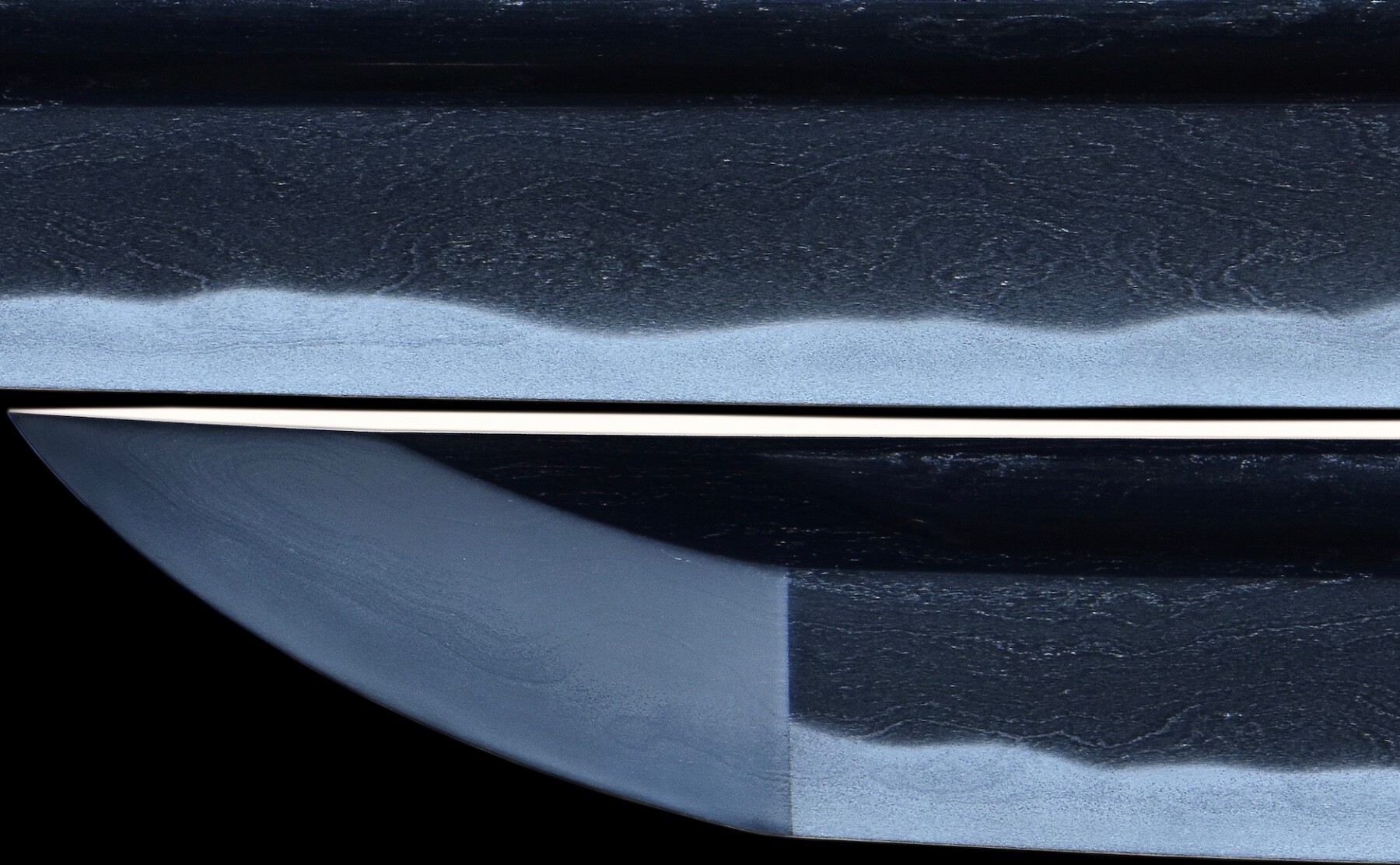
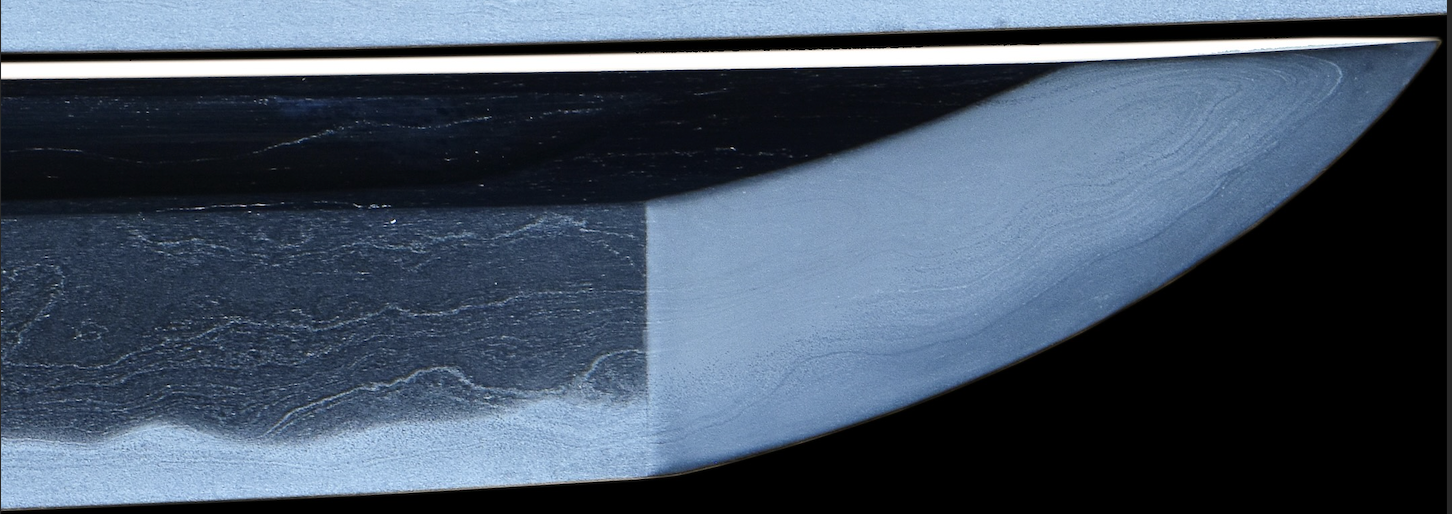
Thank you! I can tell you the old polish was bad, for certain. Confirmed by both the Benson family and Moses in their evaluations. If you look in the picture I posted of it you can actually see a finger stone marks left in the hamon (bottom one that has the kissaki, look on the right side, you'll see an arc line in the hamon, top one you will see a semi-circle in the hamon). It was full of surface scratches on the ji and kissaki, finger stone marks left in the bohi and hamon and the habuchi was hazy and shrouded.
-
As far as I know Moses is not an amateur polisher. Unlicensed does not equal amateur in the same way that an un-papered blade does not mean a fake blade, the paper (or license) simply de-risks it. Amateur is generally a metric of skill, or a word to describe someone who is a hobbyist, a dabbler. That is not Moses as far as I know. I believe he also has sat on the panels of NTHK shinsa in many cases alongside the Yoshikawa family, from whom he studied polishing with and had close relationships. I totally get the direction of your post though and appreciate the nuances of something like this, but here is the kicker...you can also get bad work from licensed togishi in Japan. In fact, many of them use acid as a shortcut. This sword is actually great proof of that. It was previously polished by a licensed polisher in Japan, but full of hazy jigane, finger stone marks and scratches. I also had the Benson family evaluate the polish before Moses, so I could compare their assessments. They were essentially identical. I am not telling anyone to go to Moses over a licensed polisher, only that based on my experience that his work (at least this one) can be recommended. I have not seen any of his bad work personally so I can't really comment on it. FYI Taikei Naotane has many Juyo already. This blade is certainly a candidate as well, as you can see it was sold previously here: https://eirakudo.shop/683712
-
No problem and thank you - I imagine people like Tanobe sensei have mastered that ability - 'abstract away the state of polish' as I also had the sayagaki for this blade done by him when it was in the previous state of bad polish and he enumerated all the great qualities in the description.
-
As to the main question of the topic - I think it’s hard to specifically quantify such a broad question. I lean towards “mostly anecdotal” I think the general notion of koto is better functionally is probably not super scientific. Great swords across all eras, bad swords across all eras would be my take and the Gaussian approach is probably not far off. Much of the more scientific testing probably just proved what I said above though: form follows function - and when they tested old swords meant for killing and battle, gasp, they performed like they were meant for that. When they tested swords forged for looks, gasp, they broke as if strangely they were forged by smiths that weren’t living in dangerous times. Also agree with Jacques on that comment.
-
I don’t think this is mind blowing news, but I think it boils down to the old saying “form follows function”. The smiths that genuinely tested their blades, both locally themselves and through users bringing them back from battle, and forged them to endure battle, created features (forms) that were born from the functions they had to perform. A gymnast’s tendons are like iron because they are forcing their body to hold insane positions on rings everyday. Likewise, swords created as talismans or art pieces are going to exhibit forms that follow the function of those needs. If you forge a sword with a bunch of sparkles and complex hataraki just for the sake of making it look really cool and dynamic, chances are you might have lost some of the features that made it function well for full spectrum battle. Masamune was a master of nie, like ink paintings and so on - that’s great and all, but how does that translate to efficacy in battle or durability? Is the steel springy, durable and homogeneous or is it hard, brittle and inconsistent internally? I’m not saying I know which but I think the core of the question is, which swords are truly chasing function and which are chasing something that is removed from pure function.
-
@Rich Thomas This one still available?
-
For the future, try to use UPS when shipping to USA. In my experience it is highly reliable and much easier to get through to customer service of a company that is run for profit, sensitive to public sentiment and can be hit easier with lawsuits than a government entity that has no impetus to do anything. Recently, UPS has started pre-clearing packages for customs before they even leave Japan, much like DHL does. Had a sword come from Japan to my door in 2 days just a month ago.
-
Here was the original before polish

-
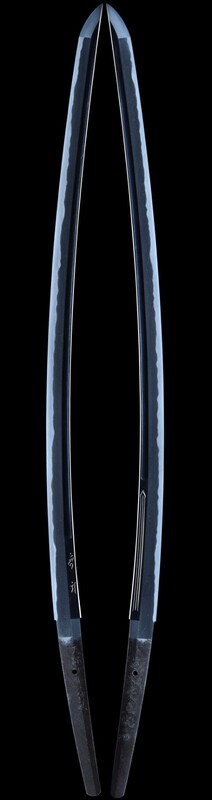
Just wanted to share this for anyone looking at Moses for polish - I recently received back a Taikei Naotane that was originally polished by a very elderly togisihi in Japan that had many problems. Finger stone marks left, hazy ji, a very scratchy surface etc. Now it looks incredible to say the least. The pictures do not do it justice, but I would highly recommend Moses. These pictures are very much a blue tone as his camera white balance must have been on the cooler side, but to the naked eye in real life, the hamon has a beautiful shade of light blue to it.
-
That white, forward bent line is the blade, if you slow down the video to 0.5x or screen record and slow it down even further it definitely flexes. But I guess it's not surprising as flexible blades are actually desired as the beginning of this thread elaborated on via Ohmura, it bends or it breaks. Also possible its just a really good optical illusion given the old video, but at 0.25x speed it is quite a convincing flex.

-
I had no idea katanas flexed like a whip on downward strikes like that. If you slow it down it really bends and snaps back right before contact.
-
Thank you @2devnul! The sugata on this blade is super aggressive and sleek when held in hand. The 2.5cm sori, extended Kissaki and the fact that it has a wide mihaba, slightly thins out in the middle section but widens out again at sakihaba, gives the effect of an imposing and devastating sweeping cutter. It is a form that you would not want to see on the other side of a battlefield.
-
@matsuya this blade is now with Moses at NihontoAntiques (Miami area). I have it on commission sale with him now. You can either DM me or simply contact Moses about it. Thanks
-
Does anyone know when dates will be announced? Seems they were announced much earlier in the years prior.
-
Looking for Ko Mihara, Hokke, Kongo Hyoe, Sue bizen
Sukaira replied to klee's topic in Wanted to Buy
If you’re looking for a Sue Bizen… -
Looking for Ko Mihara, Hokke, Kongo Hyoe, Sue bizen
Sukaira replied to klee's topic in Wanted to Buy
Isn't the red lacquer usually used to hide or fill in flaws or damage though? What is underneath it would be my worry.