Bruno
-
Posts
1,193 -
Joined
-
Last visited
Content Type
Profiles
Forums
Events
Store
Downloads
Gallery
Everything posted by Bruno
-
It's a shame (most of) all these stainless steel showa-to have so poorly done yasurime. Even done by a smith like Fujiwara Kanenaga who was able to produce real hamon with this steel, he did not pay attention or maybe was not able to do neat yasurime.
-

Looking for any infos about WW2 smith Tanabe Kuniyioshi
Bruno replied to Bruno's topic in Military Swords of Japan
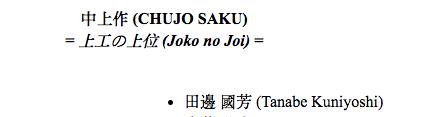
Hi George sama! Long time no talk you and me! Here is attached a pic of the ranking of Tanabe Kuniyoshi. You can find it on Rich Stein's great website. It has been said that Tanabe Kuniyoshi could have signed some of his late and/or military swords by using the name Sanemichi. Tanabe Kuniyoshi was a student of the Kato smiths (please see attached oshigata) and the SANE of Sanemichi looks the same than the one on Sane/Masakuni, so it is thought Sanemichi and Kuniyoshi were maybe be the same person. Sanemichi cannot be found among the RJT list as he probably entered the program in 1944 so too late to be recorded. Just a guess. I bought the star stamped Sanemichi because it was a steal and also because I thought (without being sure) that he was connected in some sort to the Kato clan, and I am a fan of the Kato work. Regards Oshigata of a gassaku sword made by Kato Masakuni and his student, Tanabe Kuniyoshi-converti-converti.pdf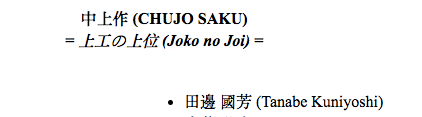
-
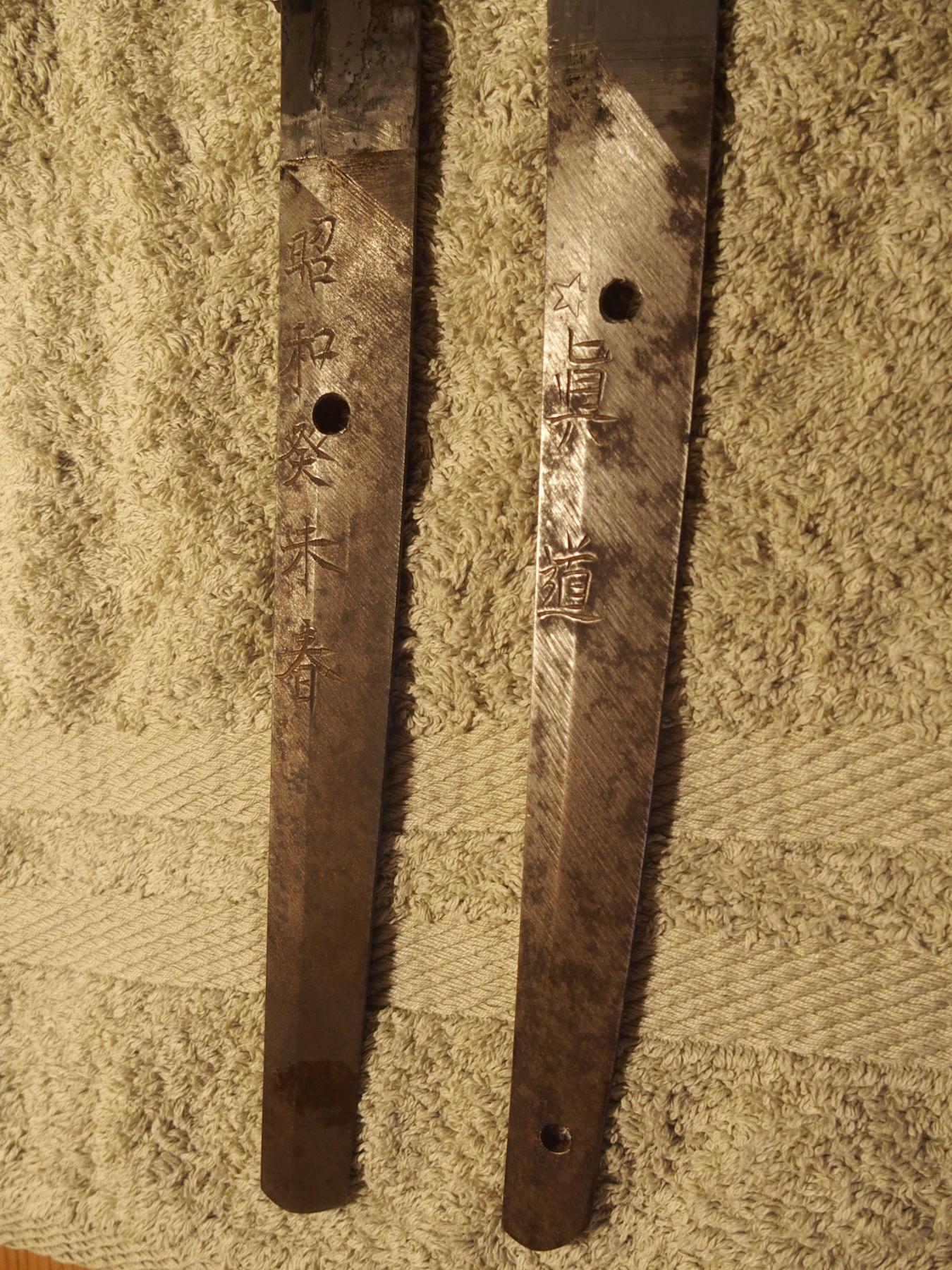
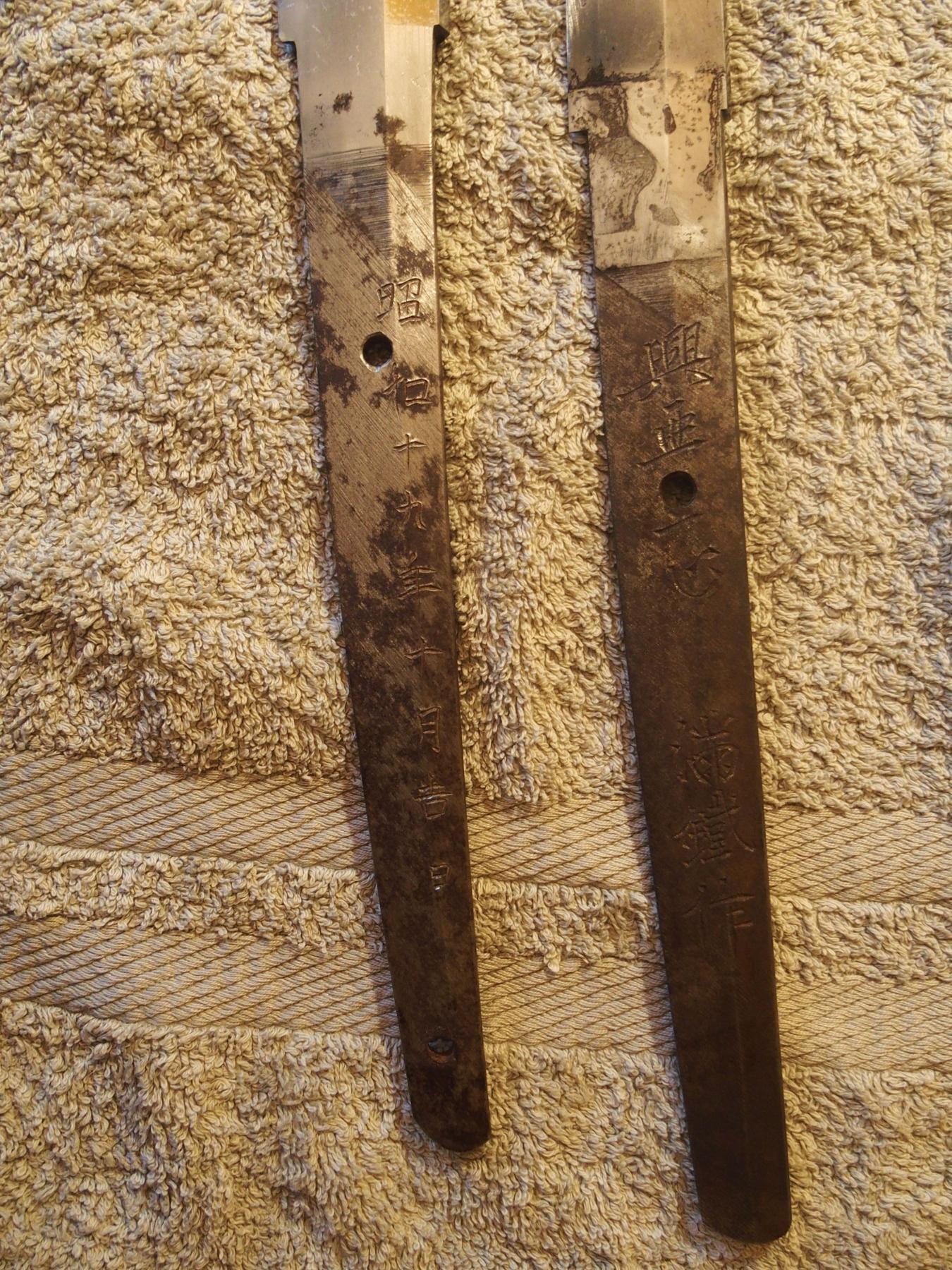
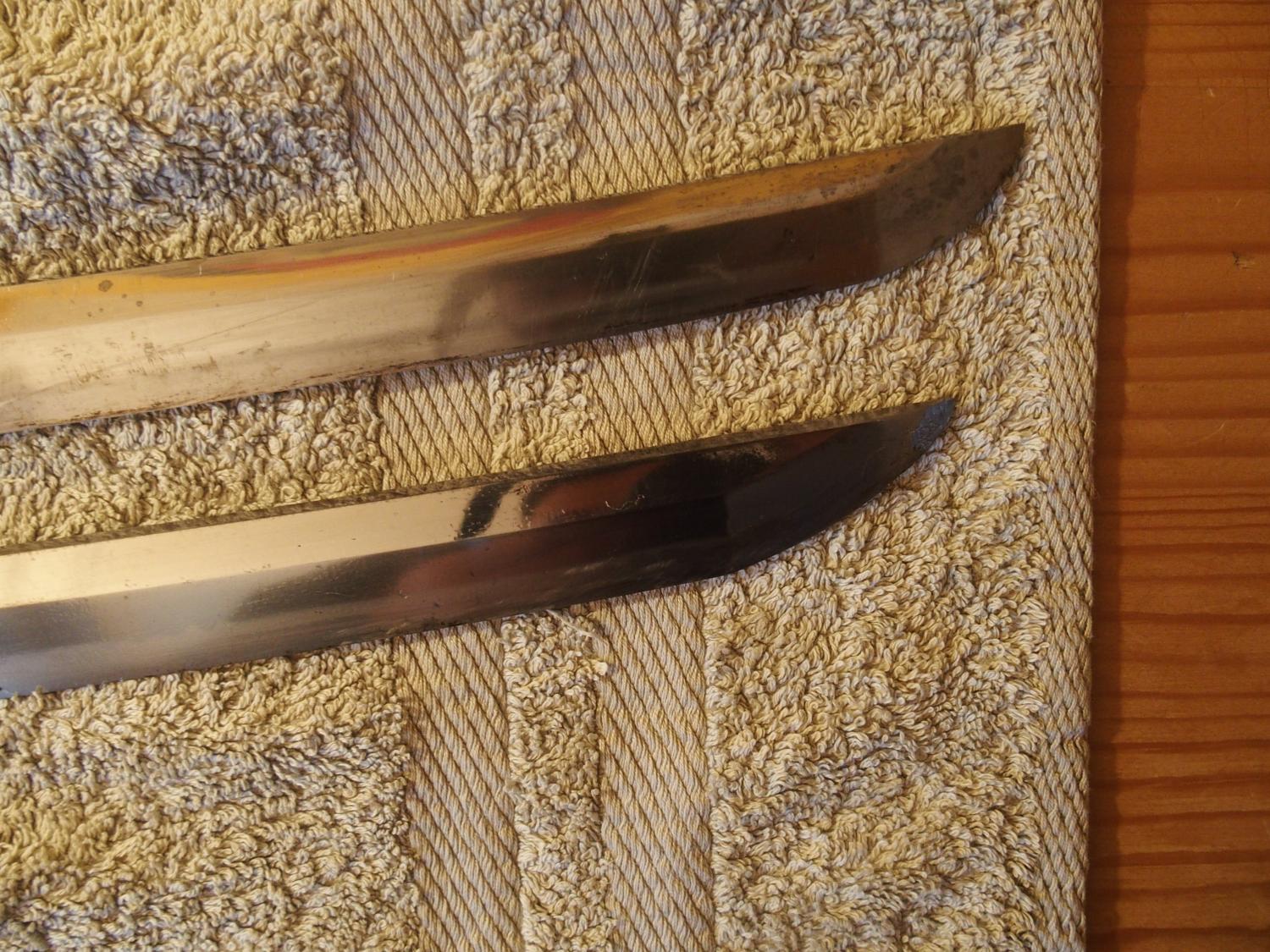
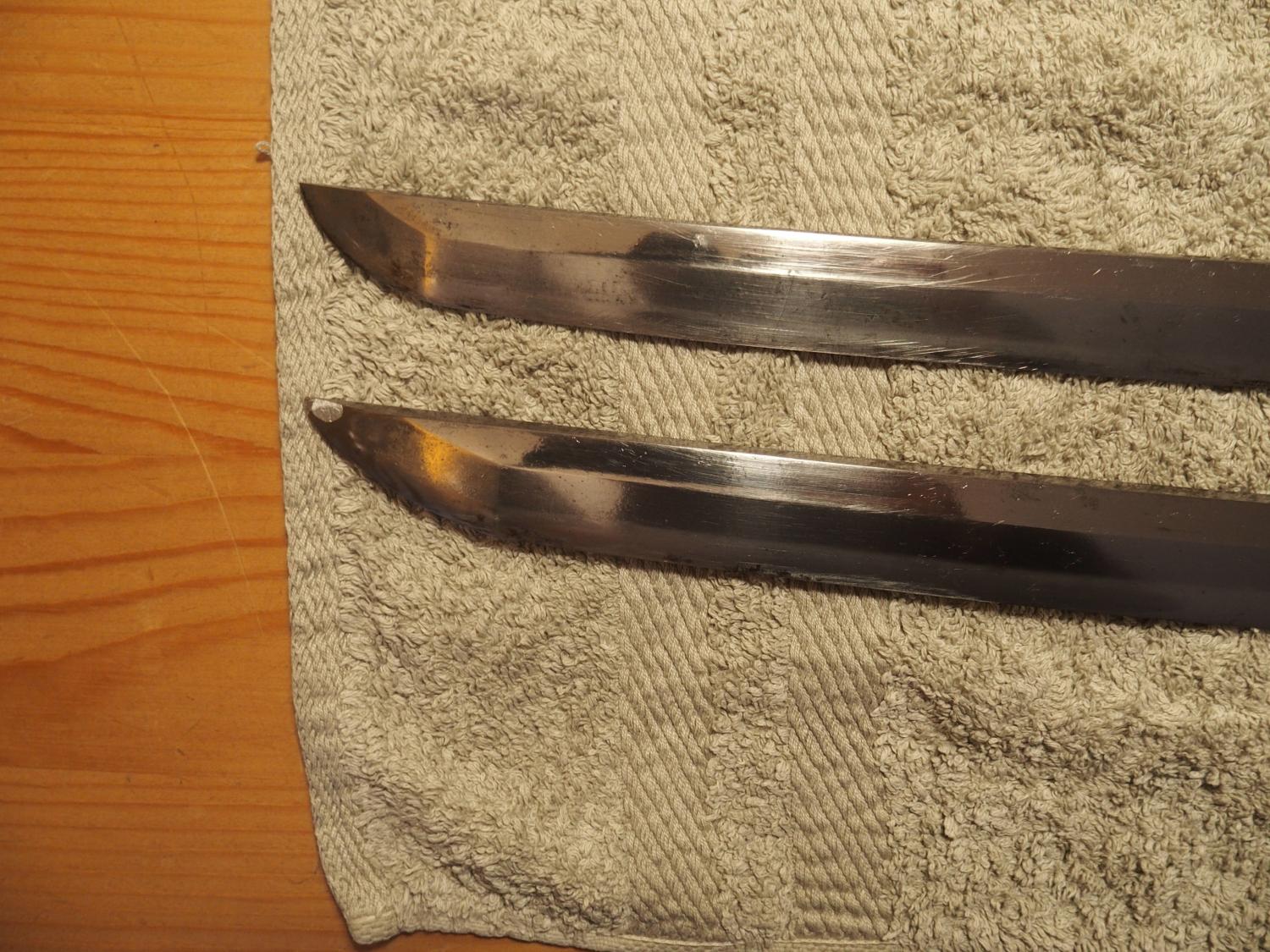
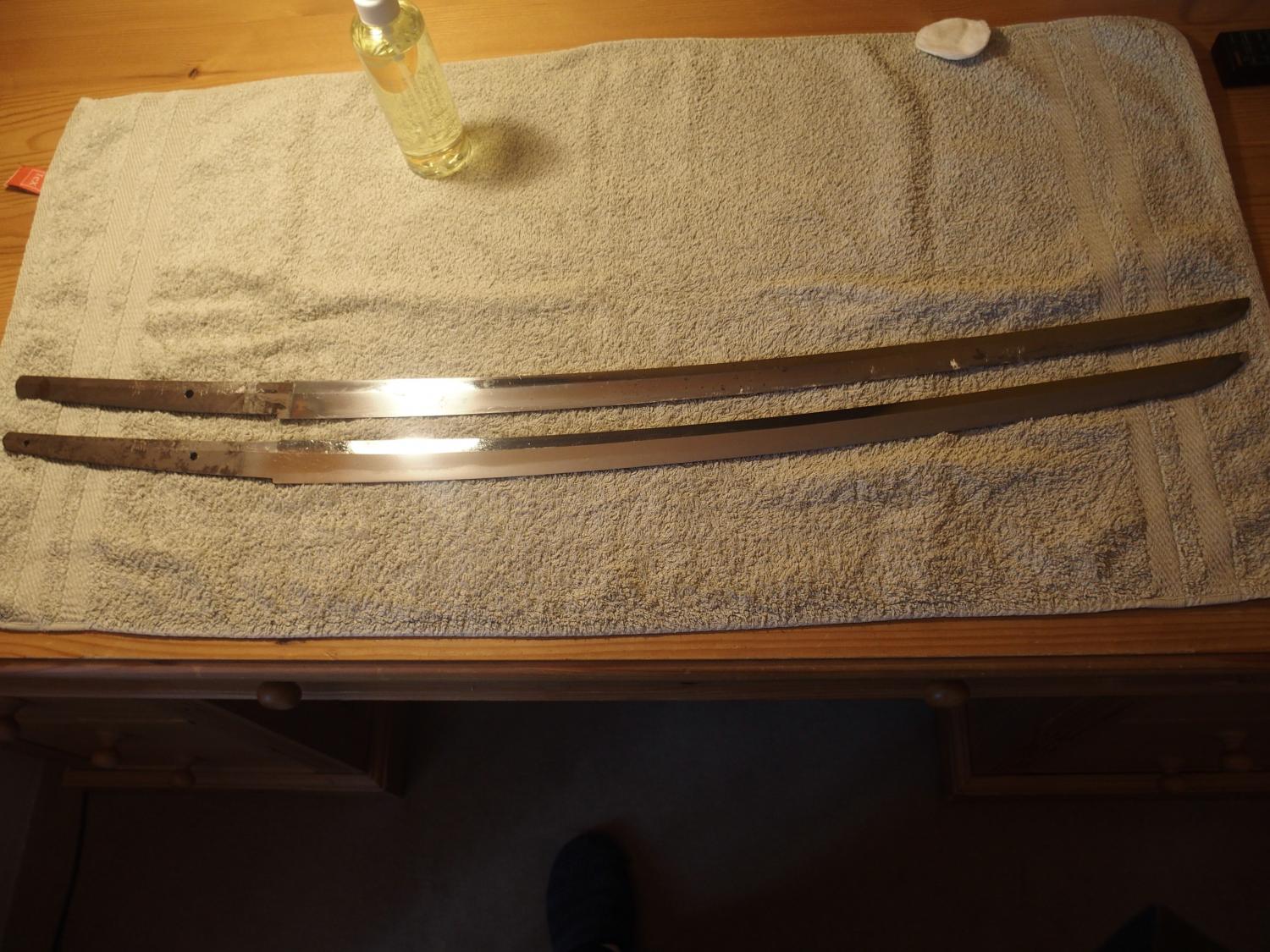
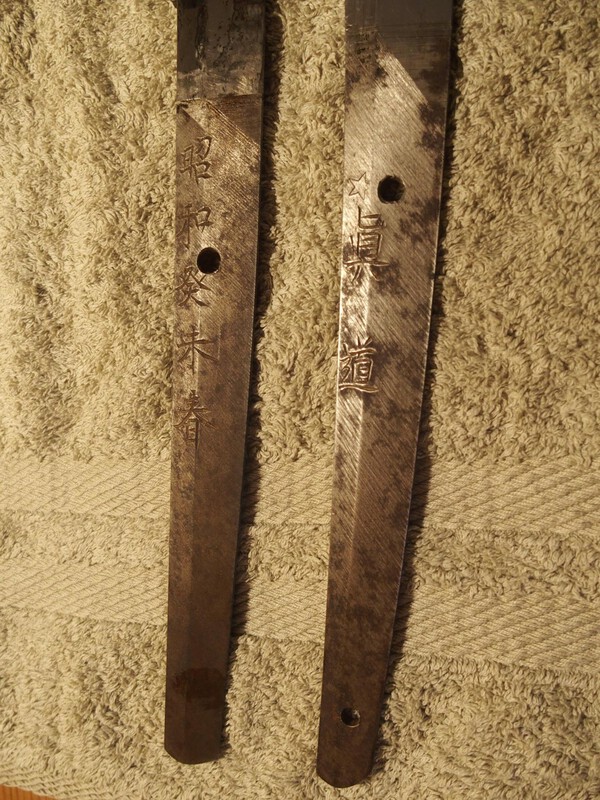
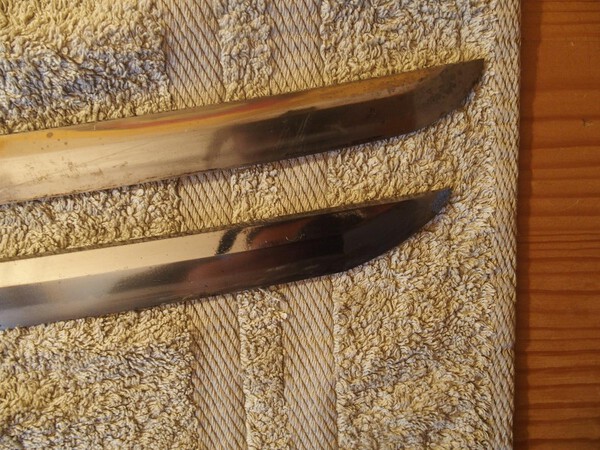
Hello, I am re-posting here. I am looking for any infos (oshigata, photos of blades, nakago, backgroung...) about this smith who signed Sanemichi. There is already an old post here from 2013 mentioning him. He (Tanabe Kuniyoshi) was ranked chujo saku in the Tosho Banzuke, 1942. I am trying to find out if Tanabe Kuniyoshi and the RJT smith Sanemichi were the same person. Also, was he a student of the Tokyo Kato smiths? Infos about him seem quite scarce or inexistant so I am looking for help here. Thanks in advance Here are a few pics (along with a Mantetsu-to...).



-
Looking for any infos about WW2 smith Tanabe Kuniyioshi
Bruno replied to Bruno's topic in Military Swords of Japan
Hi Bruce, OK I will re-post on the Nihonto forum soon. Regards -
Looking for any infos about WW2 smith Tanabe Kuniyioshi
Bruno replied to Bruno's topic in Military Swords of Japan
OK, so the second sword is well a Mantetstu-to that I pictured with the Sanemichi, just to compare. Yes Bruce, you have already the date, mei and serial number of this Mantetsu-to. The star stamped sword is signed Sanemichi but I suspect he is in fact Tanabe Kuniyoshi using a different name. -
Looking for any infos about WW2 smith Tanabe Kuniyioshi
Bruno replied to Bruno's topic in Military Swords of Japan
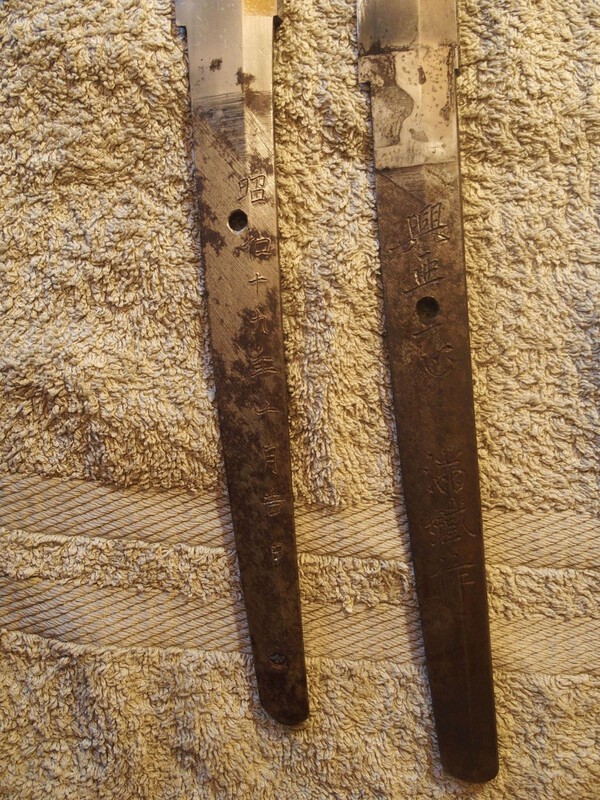
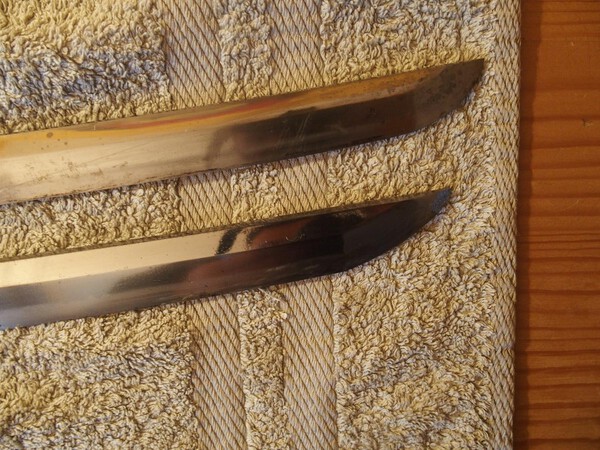
Just a few photos of the Sanemichi.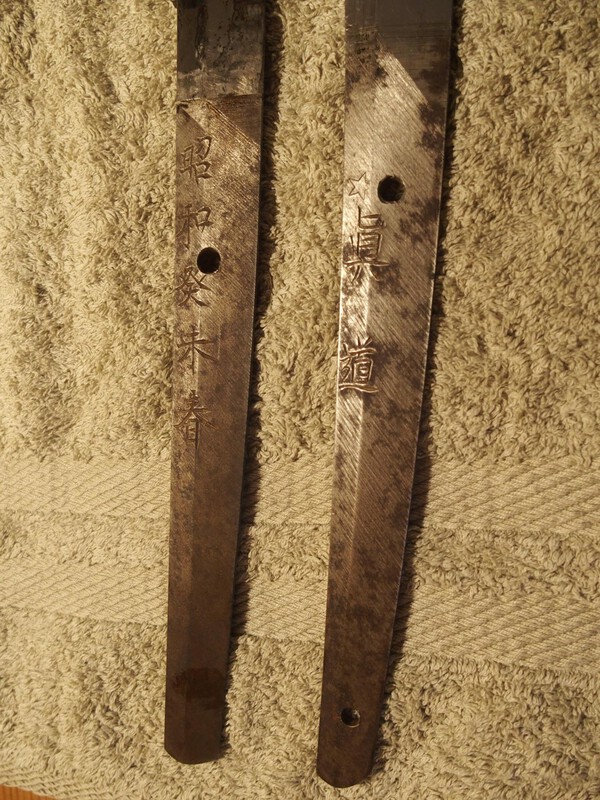
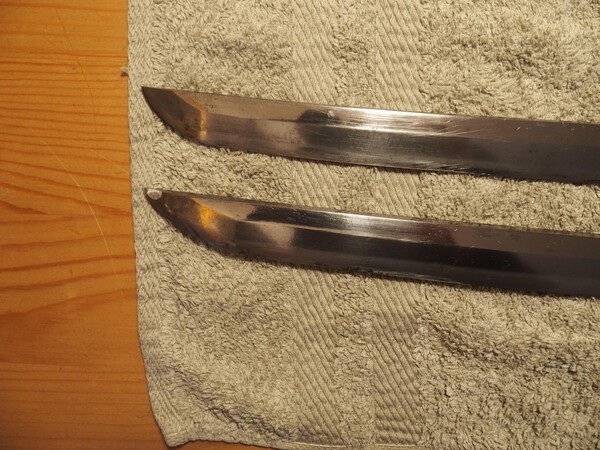
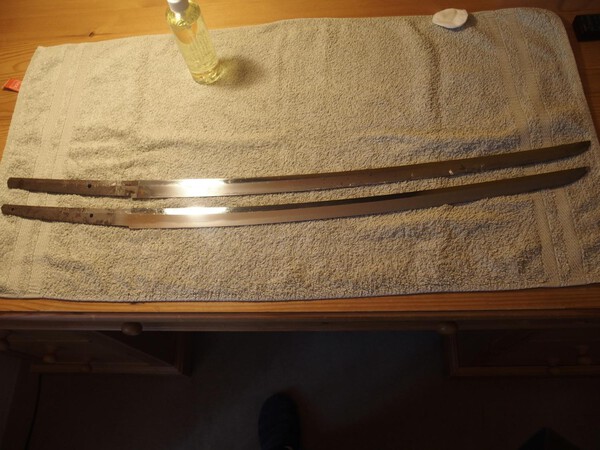
-
Sorry you could not get this sword for the price she sold it.
-
"The brightest bulb on the three"; thanks Ken, I did not know this english expression, it made me laugh!
-
Hello, I am looking for any infos (oshigata, photos of blades, nakago, backgroung...) about this smith. There is already an old post here from 2013 mentioning him. He was ranked chujo saku in the Tosho Banzuke, 1942. I am trying to find out if he and the WW2 smith Sanemichi were the same person. Infos about him seem quite scarce so I looking for help here. Thanks in advance
-
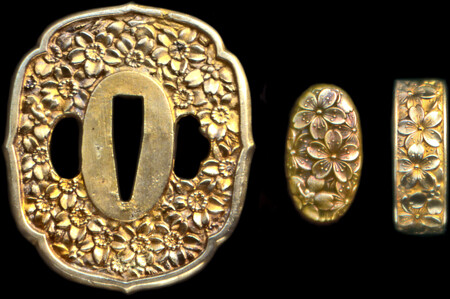
I am looking for a set or partial set of this civilian gunto fittings. If anyone has something, he can contact me.
-
Literature about resistance tests on WW2 blades
Bruno replied to Bruno's topic in Military Swords of Japan
Added to my favorites. Thanks Bruce. -
Literature about resistance tests on WW2 blades
Bruno replied to Bruno's topic in Military Swords of Japan
Austus, I second you about the difficulty to understand the translation on Ohmura's page. However I understood the same as you did. Interesting to note that Chris Bowen mentioned that as all soldiers were not all swordsmen, the IJA had to made "strong" showato to not break in "novices" hands. -
Literature about resistance tests on WW2 blades
Bruno replied to Bruno's topic in Military Swords of Japan
Thanks for the link. let's see if we can find out more with this thread. :-) -
Literature about resistance tests on WW2 blades
Bruno replied to Bruno's topic in Military Swords of Japan
Hi, Yes it is an interesting topic I think. Here is what I found till now: http://www.nihontocraft.com/Nihonto_cold_weather.html?fbclid=IwAR0SpK0sbafyjwaXgn2CIuHuqYzEfD6GxpCQTV6AsvMILKLTmm6bAXV-qL0 http://ohmura-study.net/994.html Not much but it seems Mantetsu-to and Gunsui-to are among the best "weapons" probably stronger than older blades. Also showato seems more resistant than older swords, but I don't want to open a can of worms! -
Literature about resistance tests on WW2 blades
Bruno replied to Bruno's topic in Military Swords of Japan
Hi Stephen, Done it but he still has to unpack after moving to his new house. Let's wait... -
Hi guys, I am looking for articles regarding resistance tests done on WW2 blades and if possible in comparaison with older swords. I have already found some on Mantetsu-to and Gunsui-to and would like to read more of them. There is one on Ohmura's website but translation is so so. I'd like to find out which Showa era blades were particularly known to be great cutter and more resistant to shocks than the average. If you have some literature in english, feel free to share! Thanks!
-
Bump & happy New year to all!
-
Hello bazza, Yes I am referring to this kind of sword: http://www.nihontocraft.com/Gunsuihagane.html http://www.nihontocraft.com/Kanetomo.html http://ohmura-study.net/994.html(bottom of the page)

-
No I guess yours is Gensui-to, I am talking about swords made by Gunsui-ko, which was an electrolytic iron made by a hydroelectric power company in Gumma prefecture as a substitute for tamahagane.
-
Only 25 made?! Really?
-
Thanks Arnold. I'd like to find out if they were made with the same uniform level of care and finish that most Mantetsu-to were, or if there are various levels of quality among them like traditional gendai-to. It seems only an handful of smiths made them in Gunma.
-
Hello, I am looking for pictures of Gunsui-to (nakago & blades), as I did not find much online. If you own one and have pictured it, I would be interested in seeing them. Thanks in advance Edit: Gunsui-to, not Gensui-to
-
I asked him once, it was years ago, about his polishes. I get no answer but been blocked since.
-
Bump
-
What Ed said. I tend to believe the same. Maybe Morita sama knows more about this?