Hokke
-
Posts
702 -
Joined
-
Days Won
2
Content Type
Profiles
Forums
Events
Store
Downloads
Gallery
Everything posted by Hokke
-
Very true, thank you for your candid reply.
-
With Rawa’s post in mind…….. We can all agree that early koto nihonto were primarily purpose built for war, not beauty. Beauty was secondary unless specifically ordered as such by the emperor or other high ranking samurai. So, here’s the second hypothetical: You have two mumei blades from the same school, same time period. Let’s say Hokke, nanbokucho. Both of them are currently in excellent condition. One blade shows beauty and displays careful forging specific for hataraki, BUT, has none of the “markings” postulated in my first post. The second blade is more subdued and shows some activities but is mostly tight and unremarkable, BUT, it has six of the “markings” alluded to in my first post. Which has more value in the market of today? The beauty of the blade in its construction, or a blade that has seen war and remains in excellent condition, proof of its superior construction. Yes, I understand the blade itself is only half the equation, and the skill of the samurai would matter, but this discussion is considering all things equal. On a side note, it’s interesting that most have not dared to answer the question of ownership. Is this because by saying you would like to own a blade known to have taken a life, that it is somehow perceived as a negative reflection on your character?
-
Yes, but this is assuming that blades would show flaws, which isn’t necessarily the case. Taking a head, slashing an appendage or thrusting through soft tissue may cause blemishes easily sorted with a polish.
-
So then……No, you wouldn’t buy such a blade. Fair enough That said, if the blade is never going to be used as a weapon, only art, why would care if there were microcracks? Just curious
-
5 minute job with the laser welder, visually no heat and very clean. Technology.......
-
I am very much of the same mindset in that I believe it would add to the selling price of any weapon. But remember gents, this is a hypothetical, since these marks dont actually exist and part of this hypothetical is that the markings would be a true accounting of the kill record, even though in reality this is impossible. The question isnt whether or not the markings are genuine, but rather, whether or not each of you would pay a premium to own one, assuming the consensus is correct and it would add value. There are two sides to this: As Alex mentioned there will always be people drawn to the idea of something that caused death, regardless of what it is and then there are those who would be drawn to the history of it, especially as John said, if it could be tied to a specific battle or to the death of a specific historical person. So again, the real question here is, would you personally choose to own this kind of nihonto.
-
We all know that value of nihonto is, by in large, based on the smith who forged it, the time period when it was forged and the condition of it today. But what if there were another factor introduced? Hypothetically, if it were a custom of samurai to mark the nakago every time a life was taken with his sword, and lets assume in a perfect world these were legitimate and marked honestly, how do you think it would affect the value of those blades today? Blades with recorded cutting tests certainly fetch a premium in the market, but is that because these tests were rare, or because of peoples fascination with documented proof of blade to skin contact? Nihonto made from the handful of "masters" will always be rare and valuable because of their beauty and the skill in their construction. But it seems to me that if a mumei blade from the nanbokucho were found with a dozen "marks" confirming kills, even a relatively unremarkable blade would fetch a premium just based on the macabre factor. Last question is the bugger........how does everyone here "think" they would feel about actually owning these blades? For the market as a whole, would there perceived bad juju, or would availability of these blades make nihonto more popular in today's society?
-
Another variation in texture, This is one out of the Haynes catalogue described as a Saga tsuba, ito sukashi work.

-
 Hey Bobby, not sure if its a typo on the flyer you posted or if Hilton hasn't updated their page, but according to the Hilton page, special rate bookings can be made through May 27th.
 -
At the end of the day, I guess it’s at the discretion of the agent who pulls the item and just how much of a knob he or she wants to be. I’ve heard there have been cases where a sword in shirasaya has been pulled for the small ivory accent on the mekugi-ana. All the more reason to appreciate and support your local sword shows.
-
Do you or anyone else happen to know the specific reason for same’ or certain fish products to be flagged for shipment? Is it some kind of potential for infestation or disease? Or was the regulation put forth by a militant vegan?
-
It would seem the member who started this thread, has now requested for his account to be deleted. Perhaps, had he received the information requested here in a more timely manor, he would have given NMB the distinguished honor of providing him with further free translations as it has in the past, representing the bulk of his participation.
-
My guess would be they have come into contact with other items that are mildly irradiated over the years. That's the real the problem with radiation, it cant be seen so we have no idea when we are in its presence unless its being measured. Anyone remember fiesta ware? Colored plates made in the 30's where uranium was used to give its color containing about 4,5g in each plate. Im no scientist, so im not sure how radiation can be transmitted between objects, but I believe if someone were wiping something down that was irritated and used the same cloth for tsuba, there would be transmission to some degree.
-
Fred W. has this one up on his site:
-
I think you will likely have the answer, not us. Did Aoi charge you any additional fee over shipping? When your package arrives, please update us as to your experience, i.e. if any additional paperwork was necessary or fees incurred at the time of package delivery.
-
You heard him translation monkeys, get to work…..and don’t forget about the johanna, whatever the hell that is. Tell me again why you don’t charge for this service Brian? Ridiculous
-
That’s unfortunate…..makes auction houses seem more like just expensive garage sales. I could see if they simply described it as a “tsuba”, the rest would be up to the customer to judge authenticity and age, but to date a piece and auction it under that premise is just fraud, period.
-
As someone who has never been to an antiquity auction, does anyone know what kind of liability auction houses have for this kind of stuff. Did Colin just potentially save them from being sued, or do they have loop holes in the fine print of their auction agreements?
-
What I find interesting is no where in that listing does it use the word Japanese. It states a Japanese time period but that’s as close to Japan as it comes. Was this purposeful, I wonder? Can’t see how it would prevent fraud claims, since the “edo period” claim is wrong as well.
-
And another.....
-
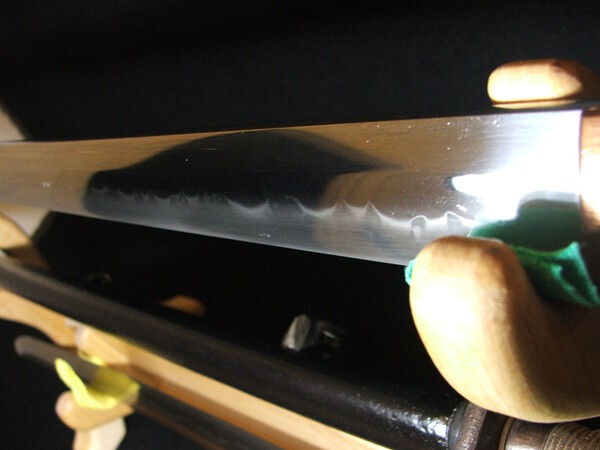
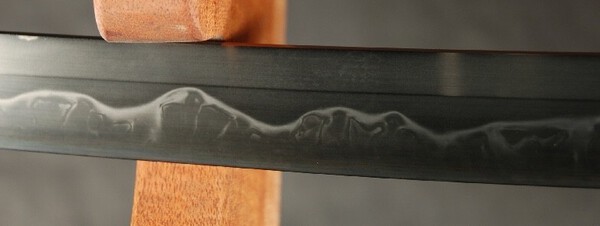
I cant show you any showato that look like, but I can show you a modern steel that has been oil quenched
-
I think it has more to do with what he finds to be notable about the blade. If the work is exceptional or remarkable, his description will be written accordingly.
-
You may consider a laser welder. I can weld stainless and mild steel but have never tried iron. The problem will be getting the defect clean enough, or perhaps even filing it out before introducing the fill. You may see if there is a jeweler in your area with a LW, but make sure they also have argon or it will likely fail.
-
The vast majority of Hokke blades from the Nanbokucho period were Kaneyasu.