rematron
-
Posts
1,059 -
Joined
-
Last visited
-
Days Won
2
Content Type
Profiles
Forums
Events
Store
Downloads
Gallery
Everything posted by rematron
-
This is a photo I took of the mei of tsuba #3. Does it read: KONOBU MUNEMASA ? I’m struggling a little with the first kanji. It looks a little like ‘ko’ on the right and ‘nobu’ on the left. Sorry for my ignorance. Also, what is the meaning of “Hachiman Taro Hatomaru”?

-
4 different daisho? Wow!
-
Oh, is that a shikomizue I see?!
-
One last thing: On the side so as not to distract from the original purpose of this post in getting a better idea of what I was looking at, I asked George Miller ( @Tanto54 ) for further information on the mei. This was my last priority since the mei was furthest in my mind when I saw the tsuba. I merely acknowledged that it had a mei and left it at that. George was quite generous with his time and cross referenced three books: the Haynes Index, Wakayama, and Sesko's Signatures to narrow down the possibilities to three different Tomohisa circa 1800. One of those three seems to be the most likely as it is noted that he typically worked on plate with Chinese landscape as the theme. I'd like to give a big thanks to George here in this thread for his time. He was kind enough to take photos of the entries in the books and I am now on an active pursuit of those books so that I may begin to do my own mei research and learn even more. Thank you all who have contributed to my little quest here. Best regards, Jeremy
-
It's so true, Piers. Regardless of the intended purpose of that 'sail/shade', that thing would catch wind. I was trying so hard to find another example that I didn't stop to consider the appropriateness or implication of the design. So again, staring me in the face, was another clue that the place was a mythical paradise. Also, if it is a shade, it's not very utilitarian at that angle. It would only provide shade at a certain position so the oarsman would need to constantly adjust the boat to keep the sun behind it. And this shade would do nothing for rain. But there's no rain in paradise... In paradise you can have the sunny open sky above you and still have shade at your back with the boat staying perfectly aligned. I admit that when I saw the 'Three Mountains of Dewa' tsuba in the older thread, the composition is so similar to mine that I drew a parallel and began to try to justify the differences. Another learning experience in the fascinating world of tosogu.
-

My first attempt at NBTHK Newly Made Tsuba Contest 2023
rematron replied to Manuel Coden's topic in Tosogu
Inspiring! Very nice work, Manuel! Congratulations! -
Dear George, Thank you so much! That is such a great and logical explanation. The temple shape was right there staring at me in the face. And it makes sense with the size of the canvas that only three mountains and no more would be depicted if that’s what the artist was trying to get across. I will refrain from repeating all of your insightful observations. Just, thank you so much for coming in and clarifying this for me and anyone else who encounters this motif. Do you think that the cave in the ura side represents the mystery of the location of Mount Penglai/Horai? My best, Jeremy
-
Picked up the tsuba today at the post office. A lovely little old utilitarian piece tucked inside nice protective packaging. Looks great in hand and feels great in pocket. Thank you, Marius!
-
Vitaly @GoldenDrachen, nice find with that scroll! Thanks for adding to the conversation and giving me a new path to investigate! That's the closest we've come to finding a similar boat. In the literal sense, a boat with passengers on my tsuba and perhaps a bit of cliff on the ura side, are the only things that match up to the Red Cliff story. There is much more evidence aligning with the Dewa story. The tsuba posted in the thread above (Fishiing in Springtime Kofu Tsuba) which I have pasted an image of below has many of the same evidence elements of mine, with the exception of the added cave scene (and small cliff) on the ura side. Notice that the boat is different from the one on my tsuba as well, in that it is more traditionally Japanese looking and without the added shelter embellishment. Now, it is very possible that the tosogi who created my tsuba (please excuse the repeated "my tsuba" - it's just the easiest way to refer to the one I'm playing custodian to and trying to understand) ... the tosogi wanted to invoke a story within a story with the carving and depiction of a similar boat to the Red Cliff scroll you posted above. It would not be the first time in my short time studying that I have come across a tsuba depicting more than one story. And that is why they chose to carve a boat and passengers with obvious Chinese characteristics among a scene more in line with Japan? The three mountains carved on both sides of my tsuba could be symbolically referring to the "Three Kingdoms" (Wikipedia link and excerpt below). Records of the Three Kingdoms - Wikipedia As is the case with many Japanese mythos, there is often a congruence to a Chinese story. A direct example is the Mount Horai of Japan compared to the Mount Penglai of China, which is what I originally thought my tsuba was depicting. I'm wondering if George M. @Tanto54 who offered the Dewa theory on the pasted thread might have some more information or images? Specifically, I'm curious about the teahouse on the lake being part of the Dewa story/scene. I haven't been able to find that reference except for in tourist info but the teahouse is not on a lake. In fact, a lake is never mentioned in tourism facts that I can find. There is definitely a pagoda sticking up from the forest above the temple on the tsuba below. Unfortunately, that obvious reference is missing from my example. In its place is a mysterious pole with a cross beam... Perhaps my tsuba is depicting three stories: 'Mount Horai' and 'The Three Mountains of Dewa' and 'The Red Cliff'... While I'm entertaining the possibility of multiple stories in my tsuba, that brings with it another possible explanation to the mysterious pole. Perhaps it is a combination of 3 things: Nabori, Tori and Christian cross... Just thinking out loud now.


-
Hi Carlos. It's possible, I suppose. My reasoning for my thinking that it's not a sail is spelled out above. I'd also like to add to the list that if it were a sail, it appears to be on the aft side of the boat making it look as though the boat is sailing backwards. With the level of detail on the rest of the tusba, it's hard for me to believe that the artist could not carve a definite sail if they wanted to and carve the boat in a way as to show the bow of the boat congruent with the sail. Chinese sampans do have shades similar to this as the photos above show but the tsuba depiction (if it is a shade/shelter) is distinctly different. This is all my opinion, of course. And my rationale behind it. I could absolutely be wrong. What I'd like to see is some old scroll or painting that depicts this scene. From examining my tsuba and others like it (like the one in the thread above) I feel like it is based on another prior original image or story which could be a clue to what we are actually looking at, including my assumption about the nabori armature.
-
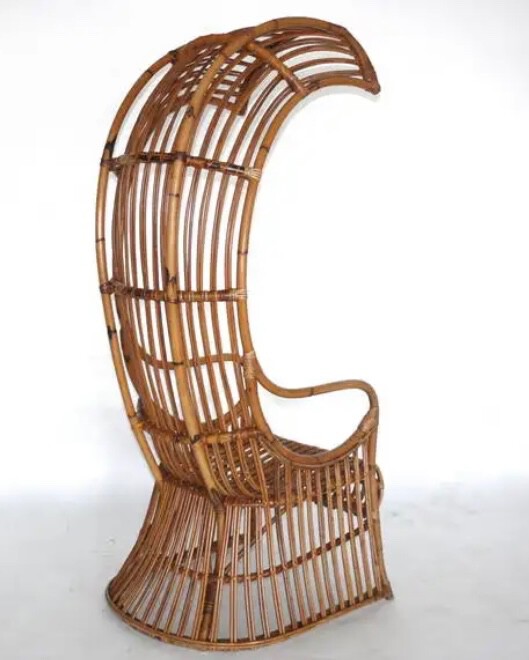
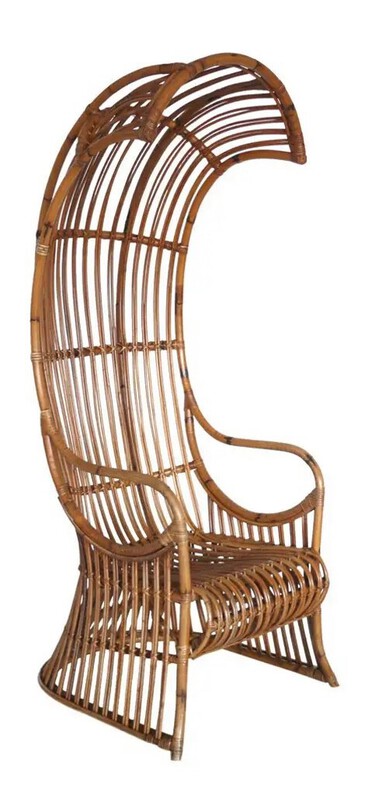
I have yet to find a picture of any old boat structure that is curved like this. After scouring the internet for a couple hours, I was able to find this contemporary chair example. Obviously, rattan and bamboo have been used for a long long time in this manner. Even though the chair itself is not that old, the technique and even perhaps the design certainly are. But, from where?

-
Hi Sam. It's not taboo at all to switch out sword furniture. If you're sentimental (like me) you can always keep the tsuba or other furniture that came with it as part of its history. My best, Jeremy
-
That's an interesting tosogu theme, Barry! I like it! At this point I'm thinking the tusba is depicting a large nabori armature as pictured in the photos above. However, it would not be far-fetched to think that a pulley was used to hoist the nabori.
-
Hi Teddy, I appreciate you posting this. We all have to start somewhere. Personally, I find it inspiring when people post their creations regardless of skill level. Getting set up to do this kind of work is an endeavor in itself and what you have done makes it seem more obtainable to me who hasn't even started yet but would like to some day. Keep it up! My best, Jeremy
-
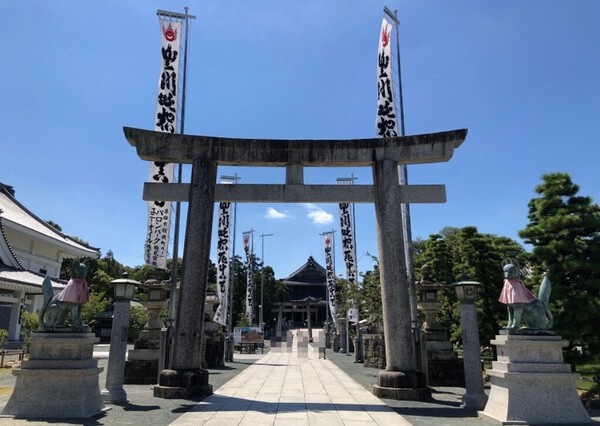
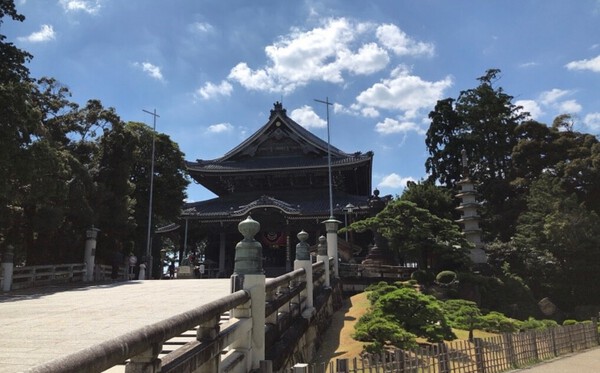
I found a couple of temple nobori images on the web. The poles are bare in the second image.
-
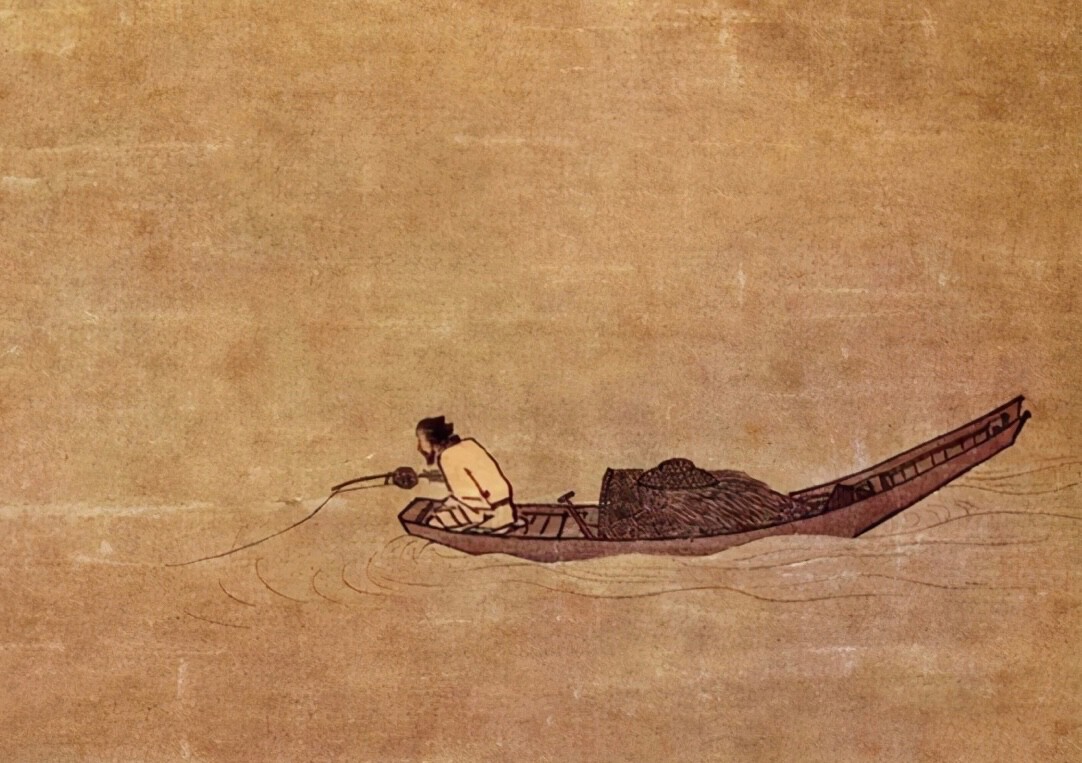
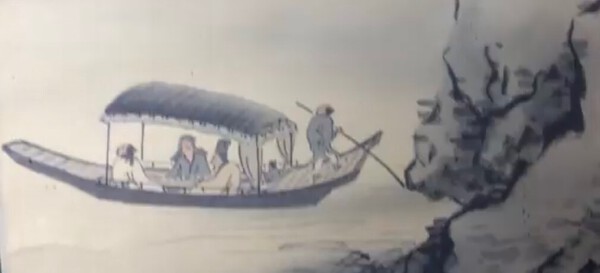
Similar boat scene on an old Chinese scroll. Notice the trim on the shade.
-
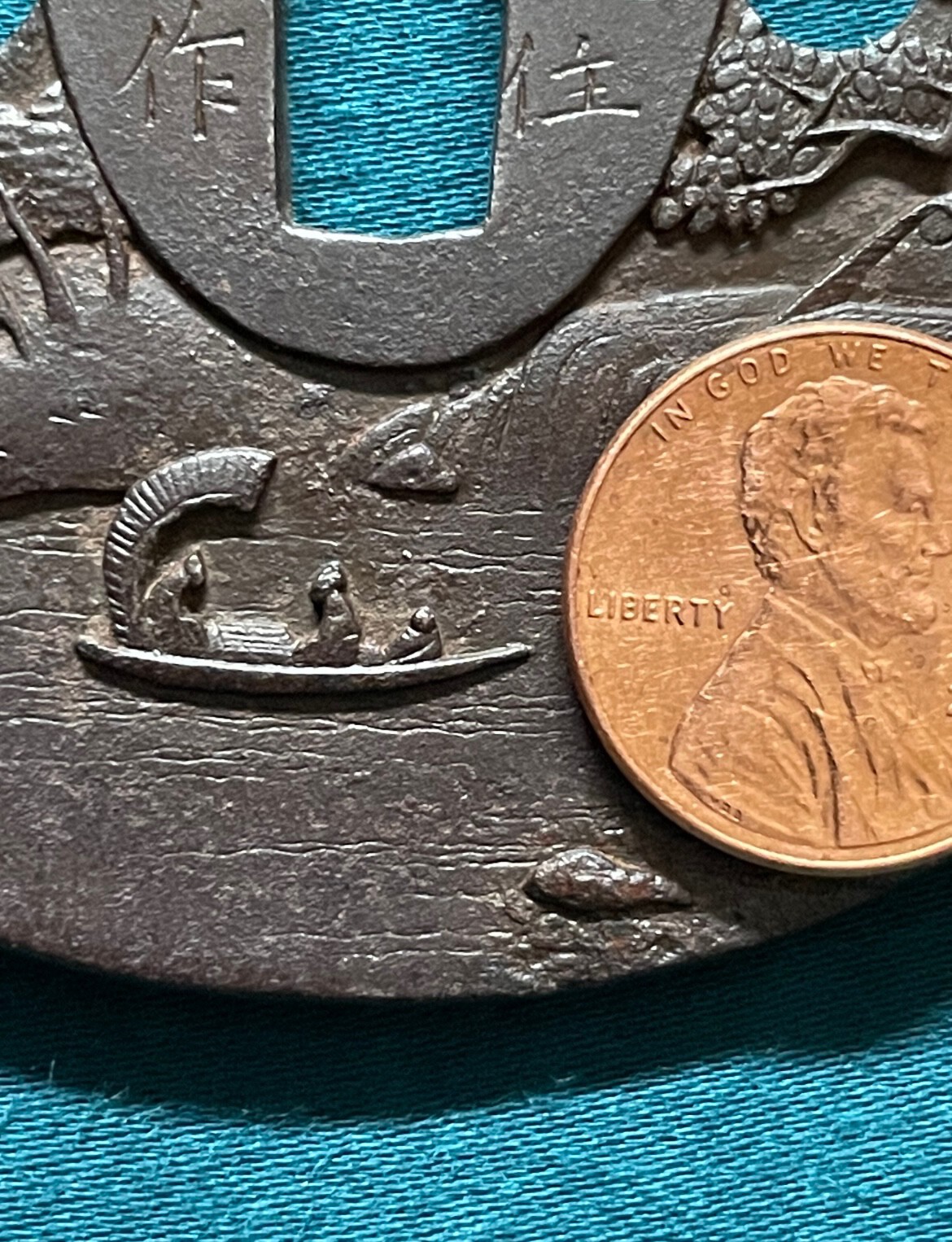
Photo showing scale of detail. Sorry to use American currency on an international forum. The coin (penny) is about the size of your thumbnail.


-
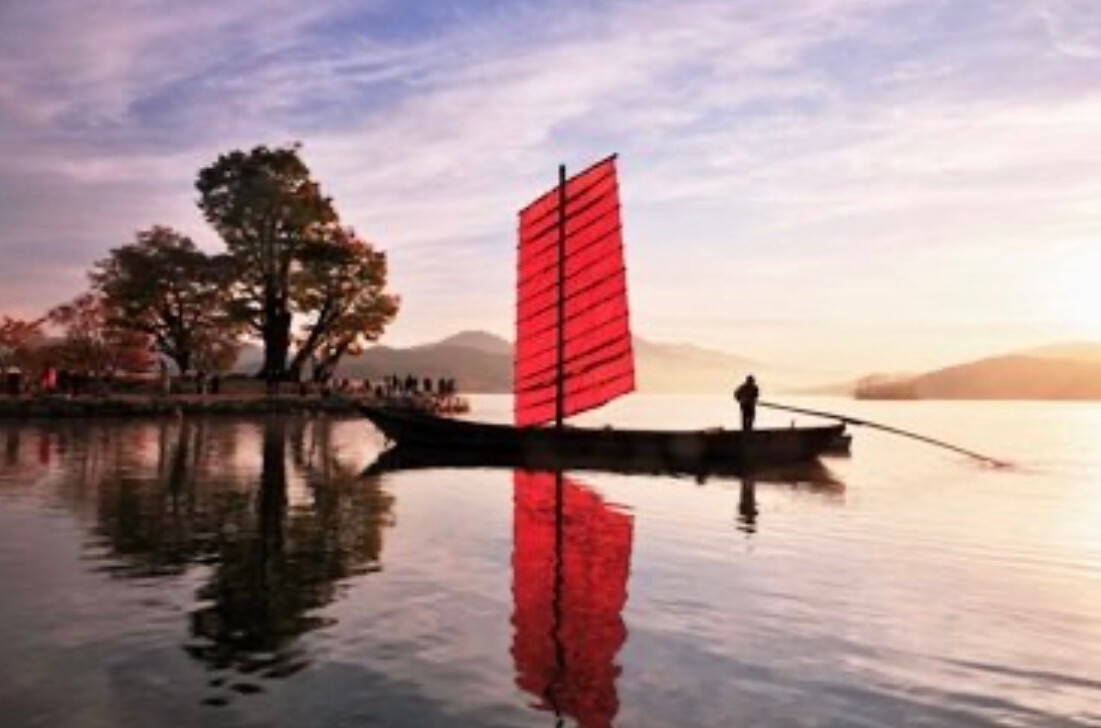
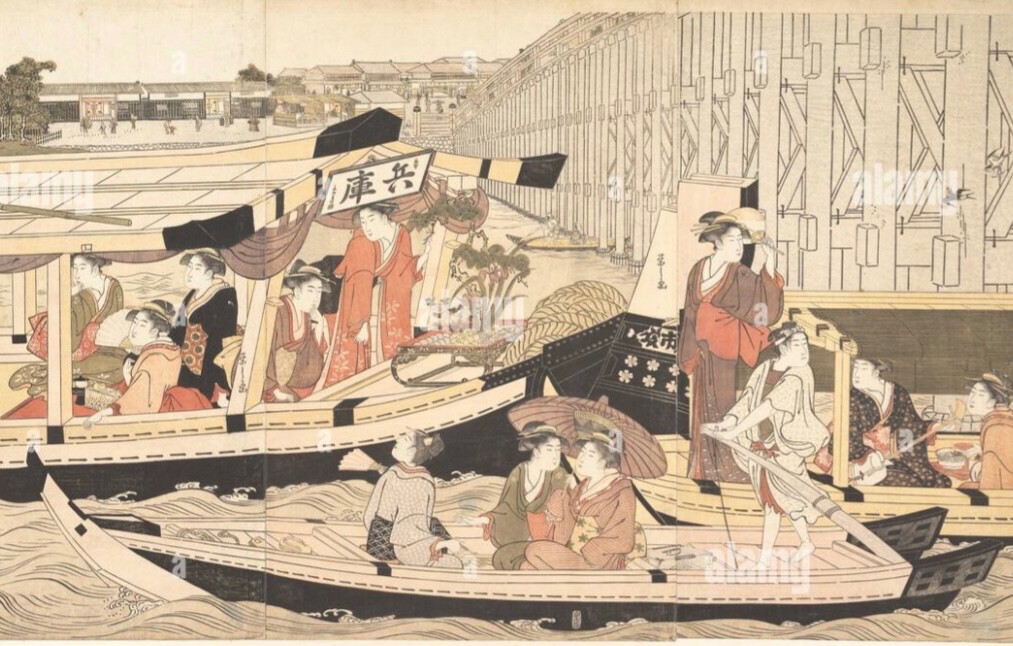
1. Korean skiff with sail 2. modern shade apparatus 3. Korean painting 4. Chinese skiff 5. Japanese woodblock print 6. Japanese woodblock print 7. Japanese woodblock print 8. Japanese woodblock print


-
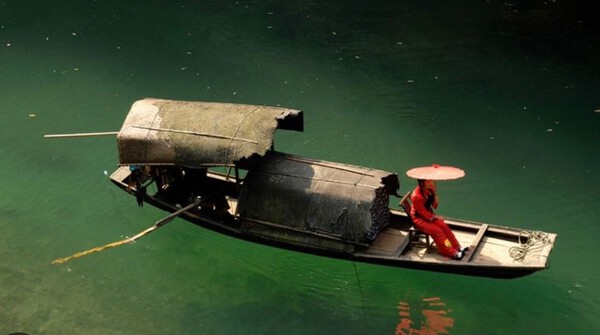
I believe the basic structure of the boat is the typical donko-bune that we see on many tsuba and wood block prints. It is long and narrow and slightly curved. It sits low in the water. The bow of the boat is slightly squared off but can also be pointed. The design is very similar to river skiffs in both China and Korea. Below are pics of examples from all three countries. I think the structure behind the GO player on the left is a sun shade and not a sail. I think the boat is controlled via long pole by the third person in the boat who happens to be sitting at the bow at the moment (for comfort perhaps) but would move to the stern when they are ready to return to shore. He doesn’t seem to be doing anything at the moment but maybe watching the game. My reasoning is that the purpose of the boat ride seems to be one of leisure and to play a game of GO and not to reach a destination. It would be difficult to play GO and sail at the same time. Especially in such a narrow boat. My other reasoning is that the entirety of the shade structure seems to join to the boat and does not seem movable. A sail would need to be able to rotate or have some sort of freedom to catch wind. There also appears to be decorative trim on ‘sail’ which is more indicative of an awning. 1. tsuba with cormorant on skiff 2. Chinese skiff with cormorants 3. Chinese painting 4. Korean painting 5. Chinese skiff 6. modern sun shade apparatus 7. Japanese skiff 8. Japanese skiff 9. Japanese woodblock print




-
I hadn’t considered the boat design, Piers. That’s a good observation. I’m not at all fluent with ancient Japanese boat design. Perhaps this is a Chinese design that fell out of popularity in Japan? 592 was pretty long ago.
-
If it were a banner post without a banner, it would be interesting to learn what the artist felt that symbolizes though I could take a guess. Perhaps it means that this place was not to be claimed by any particular ruling party or to be in any particular time period. Timeless and resided over by the kami. According to the linked thread, the theme and images are traditional and based on ‘something’ which is why I am interested in learning the source which I believe could possibly be a print but that’s just a guess. Anyways, supposedly at the base of the mountain with the temple there is a teahouse. However, from my own research and looking at google maps and actually following the roads and looking at tons of tourist photos, there currently isn’t a lake with a tea house at any of of the three mountains of Dewa Sanza. So, I’m wondering if this is more story/myth mixed with reality like the cave, which if it were on the coast is very far away from Dewa Sanza. The photos were taken outdoors in late morning sunlight with my 2+ year old iPhone12 on 5x magnification mode.
-
Thanks, Dan. I'm still really curious about the pole sticking out of the forest by the temple. Maybe it's a banner pole without the banner?
-
It’s an interesting point, Roger. I think about this difference between handmade and pooped out in one of my own hobbies: embroidery. I started off 20 years ago doing it all by hand. As time went by I realized that if I ever wanted to make a business out of my art, I would never be able to charge people for the time it took me to finish a piece. So, I bought an industrial embroidery machine and software and learned how to digitize images. Now there are two different kinds of products. I can look across my room at two objects that wouldn’t exist without me. One of them is something I did completely by hand and if it were damaged it would be a real loss because it was one of a kind and I put my heart into it. Next to it is an embroidery that I printed via machine. If this piece of art were to be damaged, it would be okay because I could just print another one. Now the value isn’t in the piece itself but in the process. The part that is valuable is now the software and digital file that enables me to create another one. The time I put into digitizing is the real work of art.
-
Just want to say this is a great thread and although I don't plan on making armor anytime soon, I do like to make things and like to see other people making things. It's inspiring. I also appreciate the drawings and showing the works in progress. Good job, people!