rematron
-
Posts
1,059 -
Joined
-
Last visited
-
Days Won
2
Content Type
Profiles
Forums
Events
Store
Downloads
Gallery
Everything posted by rematron
-
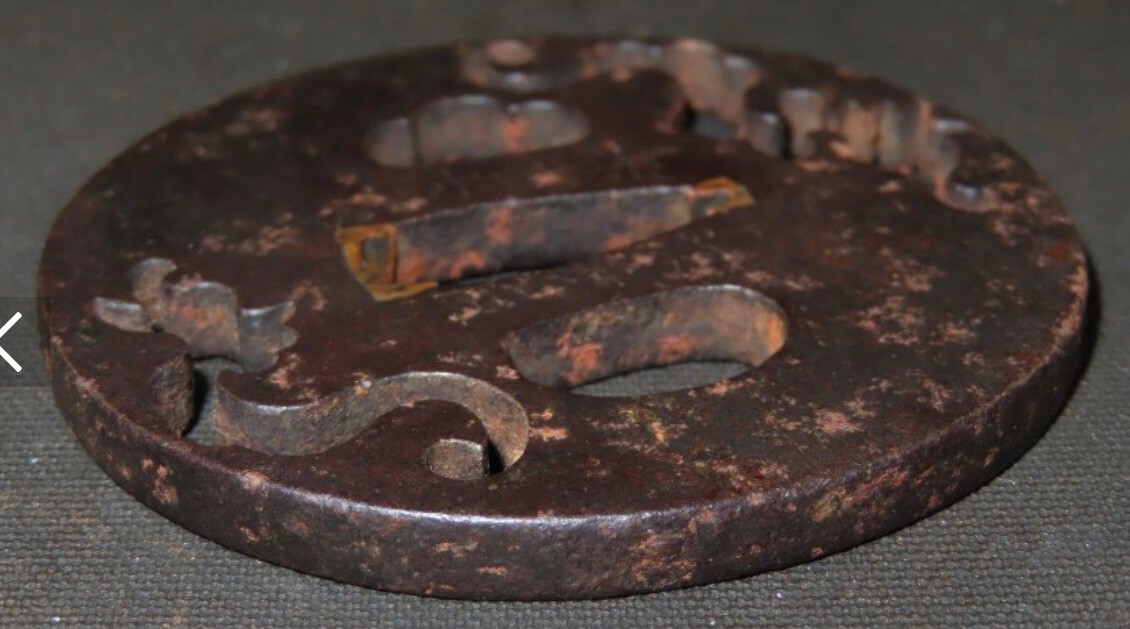
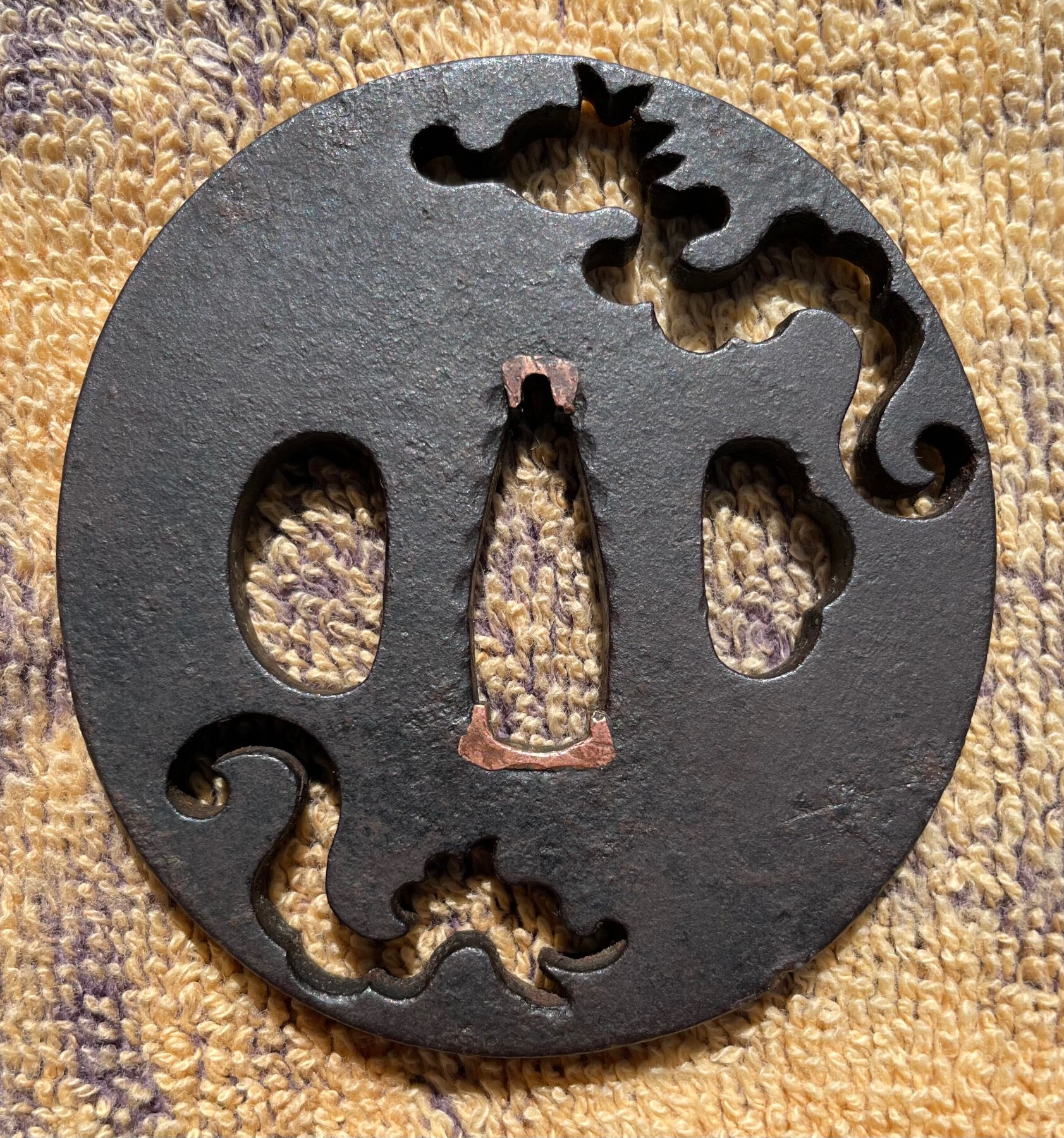
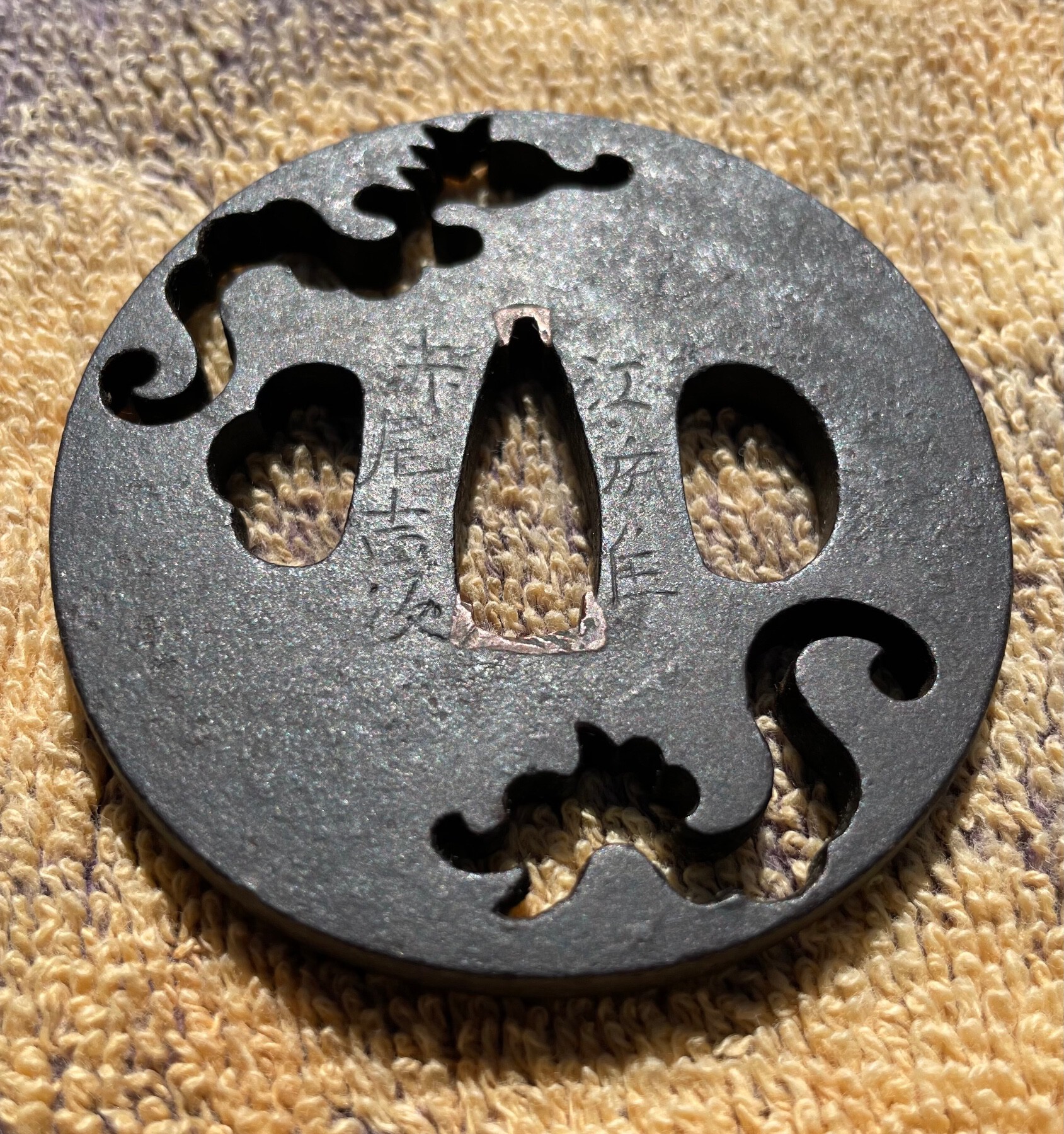
Thanks, @Larason2 . I used a small bone awl for the great majority of it. I also used (extremely carefully) a sewing needle directly in stubborn pockets of red rust. I know this is controversial. I have used a fiberglass pen on a different tsuba project and have found the needle to be immensely more precise and far less damaging to the patina. Also the fiberglass pen is very messy and takes some forethought to contain the constantly flying glass particles. I used q-tips to remove rust dust from the sukashi and pockets while cleaning and also to apply sewing machine oil for preservation.
-
Before and after. I got this tsuba from yahoo auction. It received some much needed TLC by way of methods I learned from experienced members here in NMB. Thank you to all who have contributed to tosogu restoration threads. 7.2x6.7x0.5cm Mei (according to the seller): Kofuzumi Akao Kichiji. I don’t pretend to know who that is or if it is legit or gimei. Comments and questions are welcome, of course.
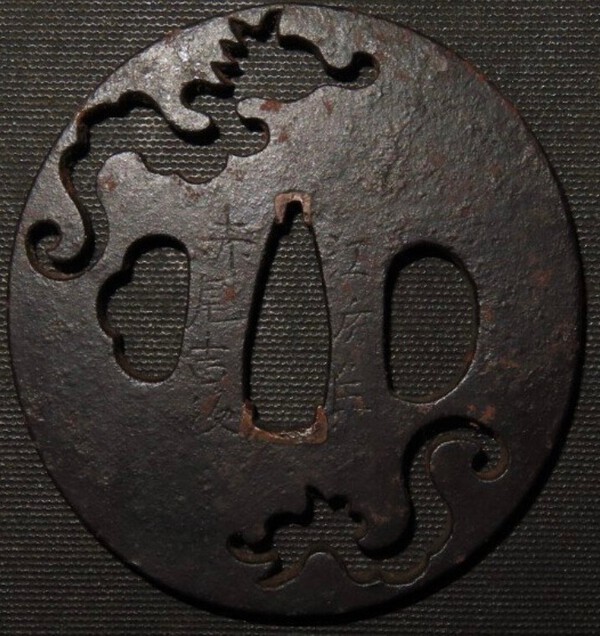
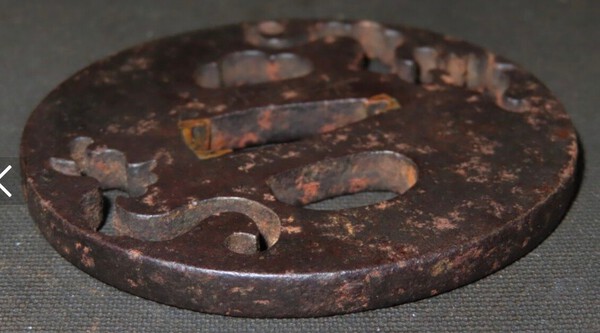

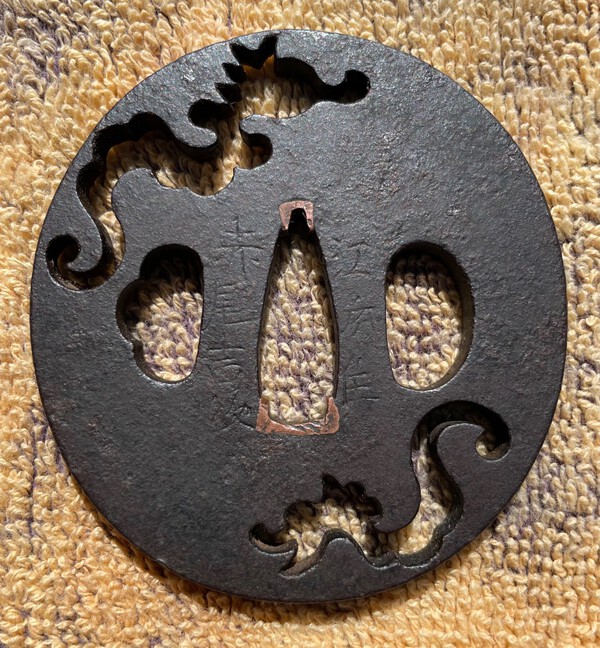
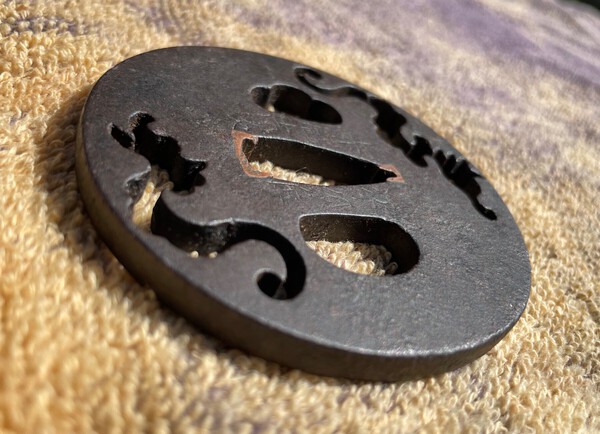

- 22 replies
-
- 15
-

-

-

-

-
Hi Amber. A great and inexpensive book I was recently turned on to by another member here is “Lethal Elegance” by Joe Earle. It’s available on Amazon so it was very easy to obtain. It has wonderful large full color photos and covers many different styles and schools of tsuba and other fittings. Welcome to the hobby. It’s a fun one! -Jeremy
-
@sabijiThank you, Thomas! Fascinating. I love learning this history. It's very interesting that the sword/weapon hunt in the Momayama period and then later the U.S. occupation didn't include firearms. I had no idea. So basically, only weapons whose sole purposes were for the taking of human life were confiscated.
-
It was well-loved. That's for sure. Mounted on at least two different swords... Got some history, that one!
-
Fair enough. I see your point.
-
@Brian, what do you think about having a 'kyudo/Japanese archery' section under the "Related Subjects" area along with 'Katchu' and 'Military Swords of Japan'? In such a designated space, we could explore and learn more about this fascinating subject. It would also be a good place for people to show pics of their arrowhead collections and how to spot real ones from fake, etc. - as well as other related collectible items on the market.
-
Thank you, Thomas. That is very interesting. Your analysis clarifies a lot for me. So, the yumi grip placement is indeed where it is primarily to not feel the residual energy of the bow as much after release of the arrow. The clearance available when shooting from horseback is sort of a convenient byproduct of the design and not the primary reason for it. Were Japanese hunting bows made in a similar way as the yumi, as a composite of bamboo and hard wood?
-
I’m curious as to when tosogi started to depend on optics. I’m guessing some schools depended on them more than others.
-
It’s the Covid Shogun stronghold!
-
I have read that both maple and plum are good woods for bow construction. However, maybe it was taboo to use those woods? Bamboo was certainly available and fast growing. It seems like tradition played a big part in the continued use of the long yumi.
-
I saw on a documentary that the reason the yumi evolved into its asymmetric form is that with the grip lower down, the vibration after firing is much less than if it were centered. Is that the primary reason? Are there others? I'm guessing that because the yumi is quite long that having a shorter distance to clear your horse's neck is beneficial. The alternative is a shorter bow.
-
Piers, I really enjoy reading this thread. It gives me a tiny taste of what it would be like living in Japan. Thank you.
-
For my own contribution to this thread, I was simply offering a rebuttal to the posted opinion that the tsuba Ron posted was cast. It was simply a response to something I didn’t agree with. I surely hope that the term “cast iron” isn’t thrown into the conversation of tsuba as much as the term “gimei” is tossed into the nihonto posts. But when it is, you can bet that it won’t stop there. The opinion that this tsuba was cast was definitely going to be addressed by at least one if not many members. Ron, I think it’s a lovely tsuba. Thank you for posting it.
-
For what it’s worth, to me the tsuba posted by Ron looks forged and carved. The detail of the foliage is crisp and precise. The edges of the nakago-ana, mimi, and hitsu-ana are sharp. The mimi has a different smoother texture than the hira which leads me to believe that the hira was textured like it is to add depth and character. The flat surfaces of the foliage in general are even smoother than the mimi but there are a large amount of finely carved details to add realism to the the leaves and branches: enough to add a rough appearance to the whole of the relief so that these three different textures of the tsuba are congruent yet differentiated. The high contrast of the soft metal inlays further subdues the subtlety of the three different textures of the iron.
-
A valid question, Jean! I guess I'd feel out of place setting up a forum on a subject I know very little about. I've enjoyed archery in the past but it's been a few decades since I shot a bow. Also, I'm not very computer oriented so that would stand in my way as well. The NMB is already here, though. But I'm only 50 years old and perhaps I could start small...
-
Just want to say, I'm not bored at all. I love this thread. Thanks to everyone who is jumping into the conversation. I'm learning a lot. If I had my way, there would be a whole new section on NMB dedicated to kyudo and Japanese archery in general!
-
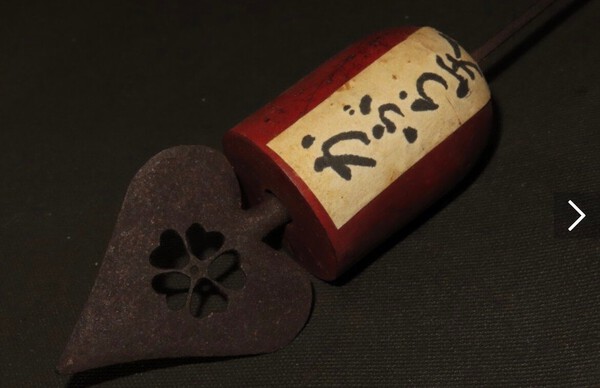
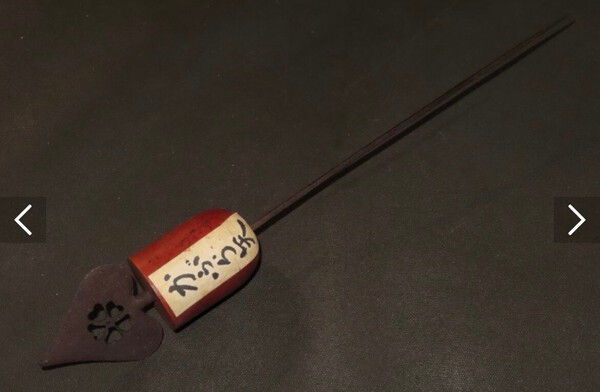
Thanks for the responses, people. I'm going to pass on this item. Although, I was relatively sure it wasn't a kaburaya, I was still curious as to what it actually was. @Shugyosha, I guess ultimately, I'd be happiest with the whole arrow for display but I wouldn't turn my nose up at an unattached kaburaya arrowhead in the meantime.
-
Very nice detail of the plum/apricot tree and blossoms!
-
I’ve been keeping an eye out for a kaburaya and this item is named as such but it doesn’t look like the typical whistle-holed, turnip shaped device. In fact, it looks extremely non-aerodynamic. So what is this? Anybody seen something like this? https://www.jauce.com/auction/q1090227449
-
Hi Mark, Two things that stand out IMO: 1) The area of the mei seems to have a different (lesser) amount of corrosion than the rest of the nakago, being a symptom that it might have been done at a later time after the original forging and polishing. 2) The mei itself is sloppily done. A true mei done with expertise by the smith would typically look a lot smoother and without sign of hesitation, ie strokes changing direction slightly where they should be fluid.
-
Thanks, Malcolm. That follows.
-

greasing and cleaning nihonto
rematron replied to Zaia86's topic in General Nihonto Related Discussion
Are the terms ‘tosogu’ and ‘kodogu’ synonymous? If so, why the two terms? Did one of the terms fall into or go out of fashion at a particular time? -
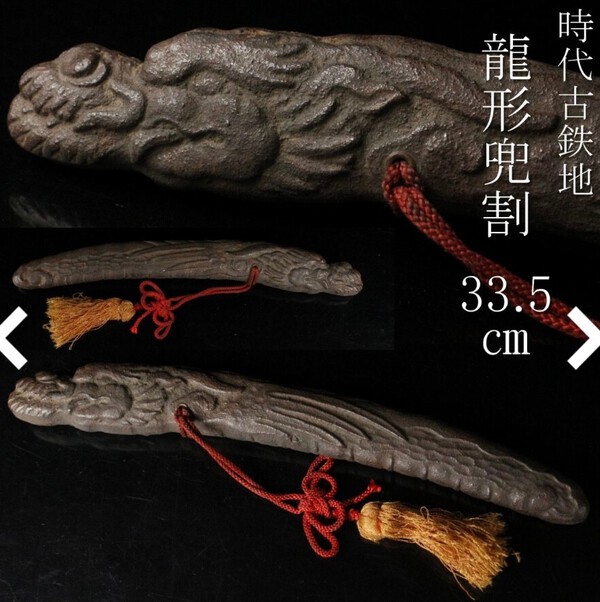
Thank you, Piers. Now I’m trying to imagine the context in which someone would be carrying one of these around… Doesn’t seem useful on a battlefield. A little something for self defense for someone who didn’t want to (or wasn’t allowed to) carry around a blade?
-
What is this thing classified as a “helmet split”? Is the translation off and it’s more like ‘head smasher’? Is it a Japanese billy club? https://www.jauce.com/auction/m1089208613