rematron
-
Posts
1,059 -
Joined
-
Last visited
-
Days Won
2
Content Type
Profiles
Forums
Events
Store
Downloads
Gallery
Everything posted by rematron
-

Katana_Boutique - Kunimichi?
rematron replied to rematron's topic in Auctions and Online Sales or Sellers
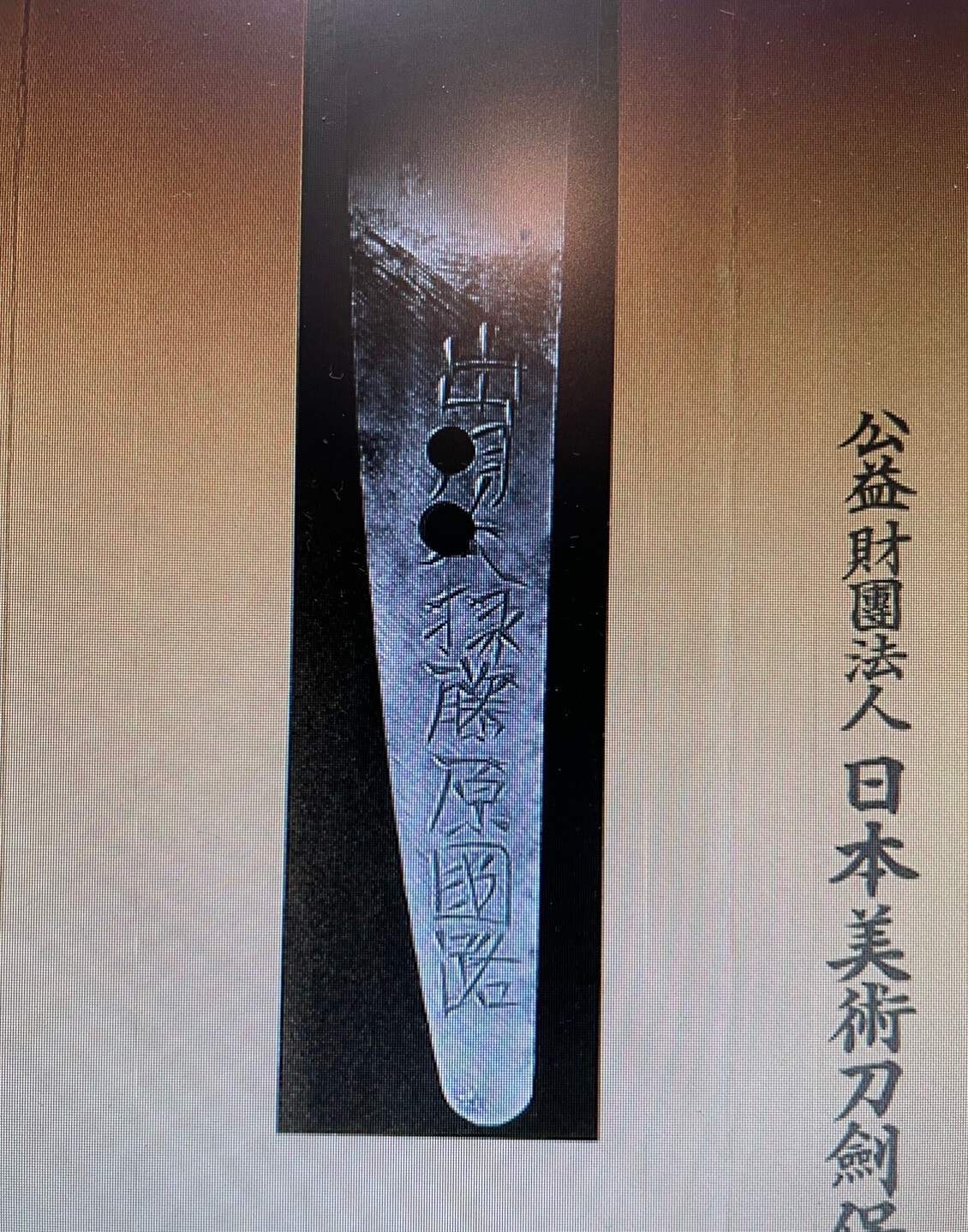
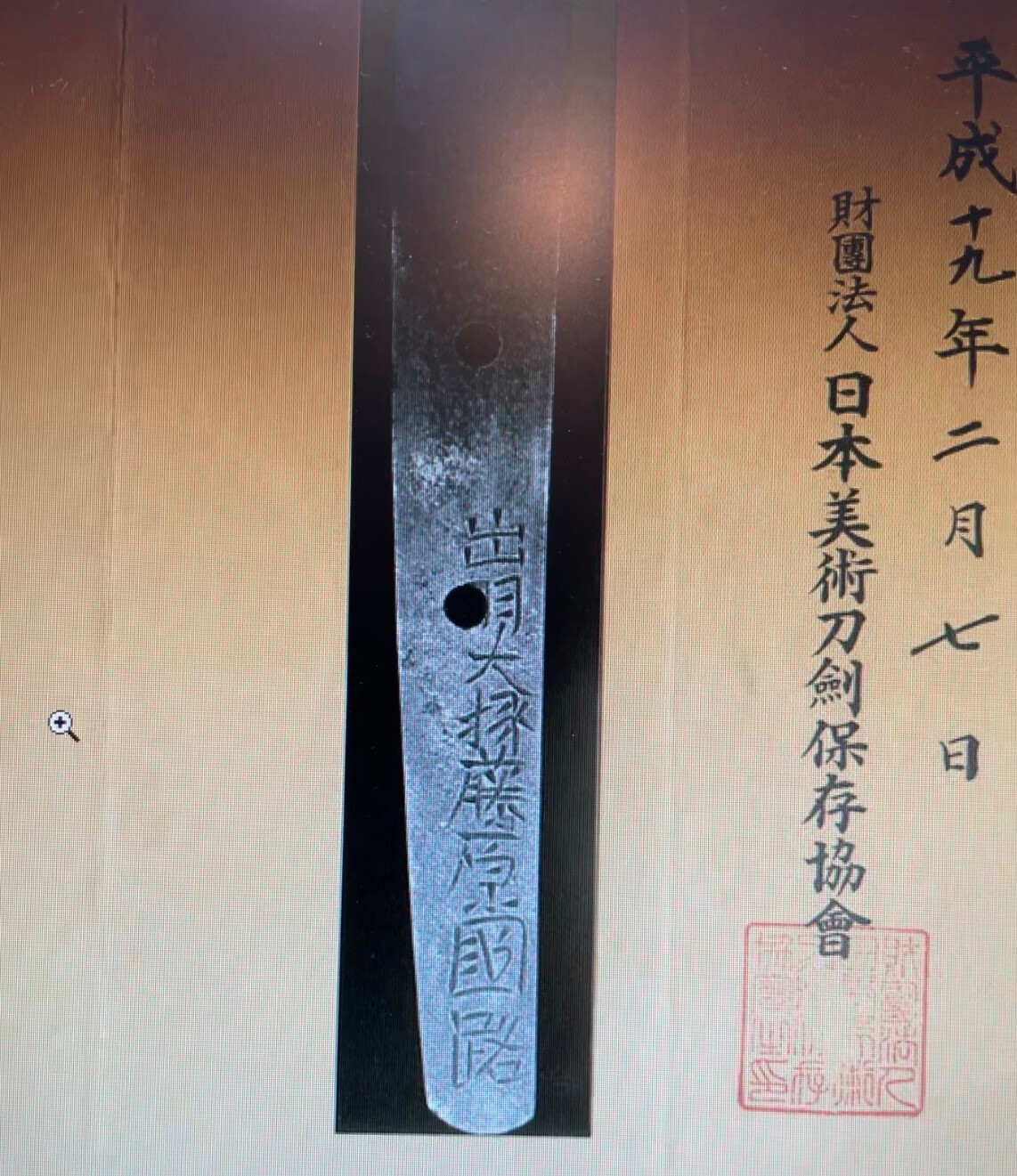
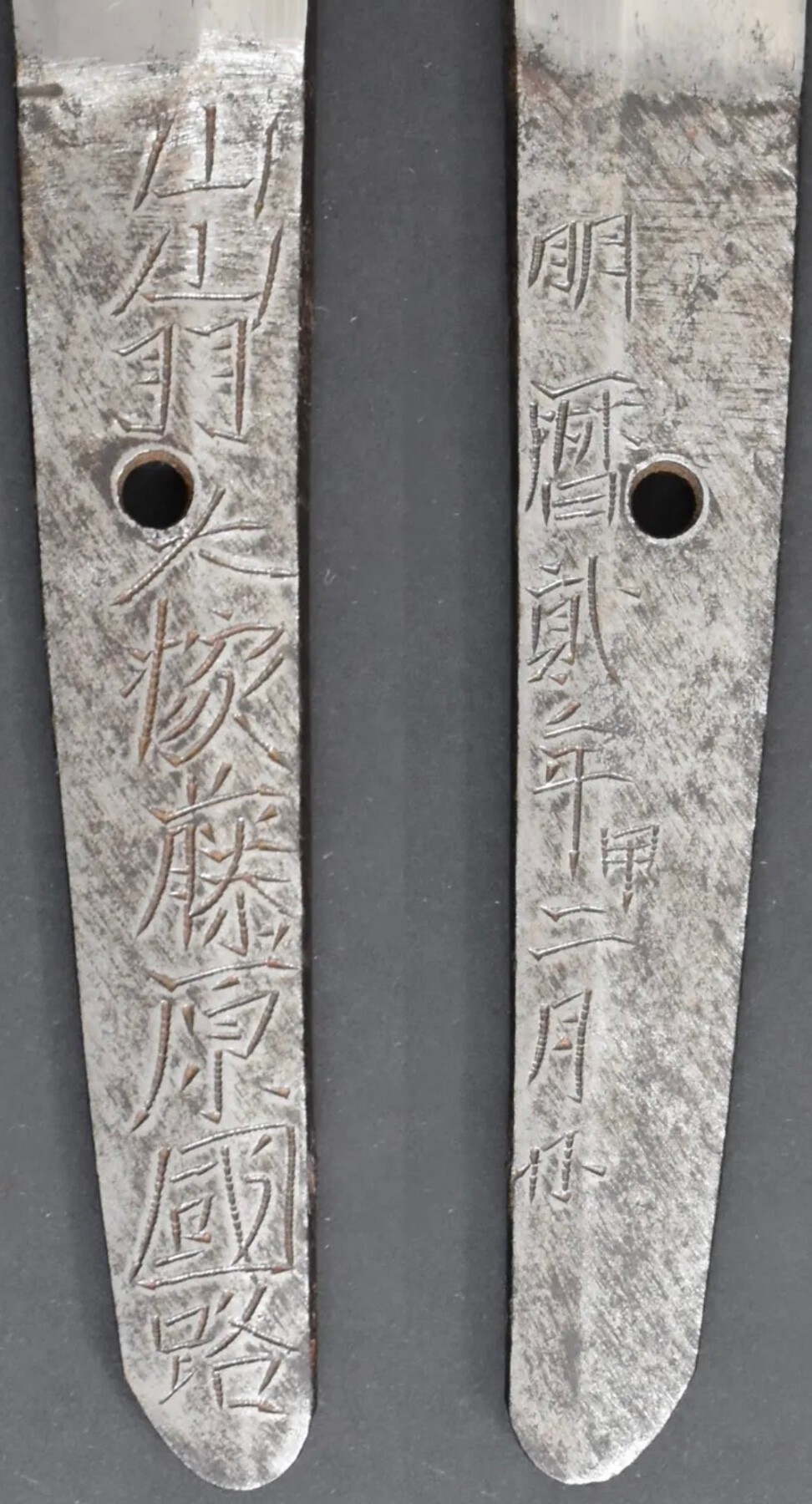
Thank you for the further examples, Chris @cju777. Now I'm 99.9% positive it's gimei. There are subtle changes between the real examples (5 of them now) but the mei in question has extreme differences from those, beginning with the first kanji. Yeah, I also think the nakago has been cleaned. -
Easy peasy. Chose the 'buy now' option, paid with PayPal and was immediately given the option to download.
-
Katana_Boutique - Kunimichi?
rematron replied to rematron's topic in Auctions and Online Sales or Sellers
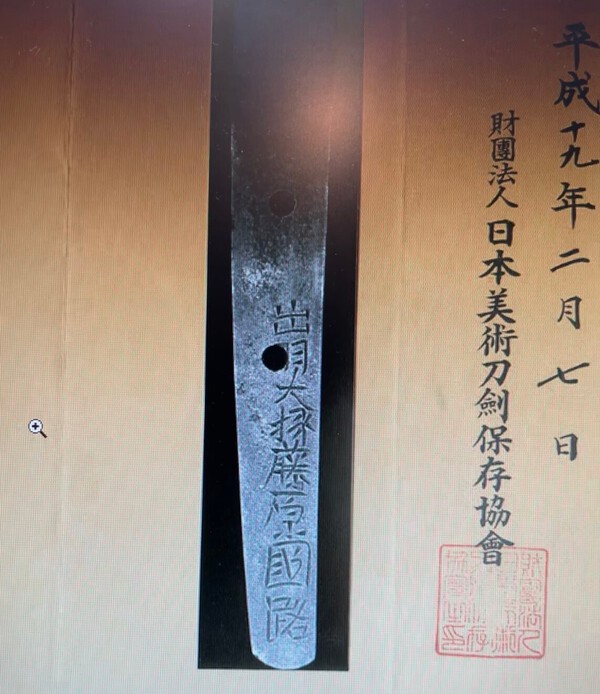
I think I have answered my own question. These papered examples are very different but consistent with each other.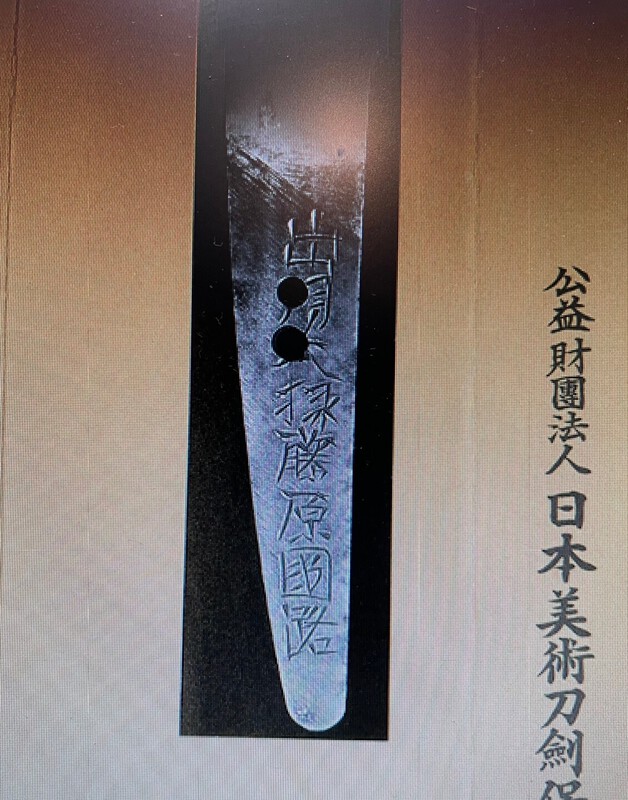
-
I prefer yours. It's more true to nature with being able to see the tunnel behind the break. One could potentially but a tiny carved surfer in there!
-
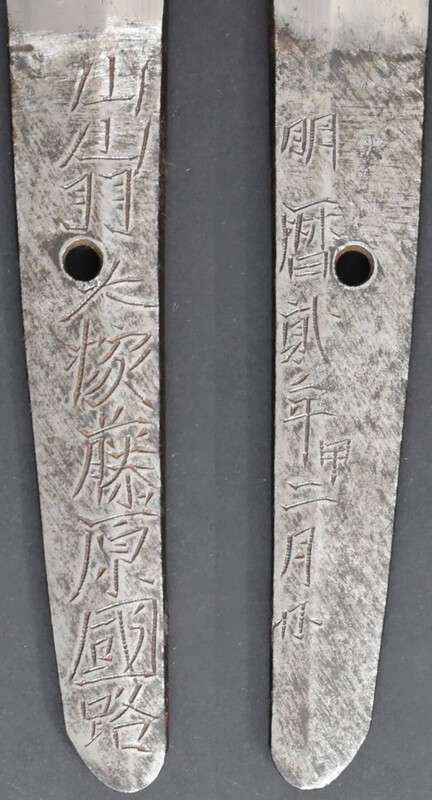
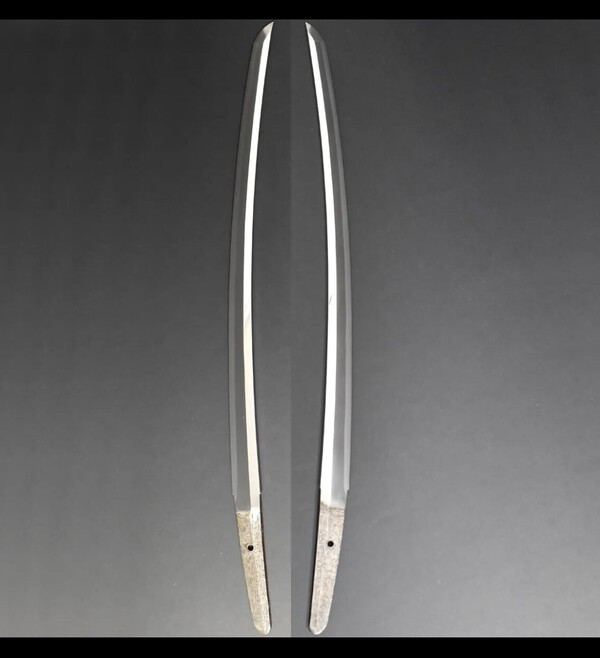
Dewa Daijyo Fujisawa Kunimichi February 1656 Anybody have any opinion as to the validity of this Mei? My initial search tells me this would be papered if it were not gimei. Also, the nakago looks to have been cleaned.

-
Wow. There's actually space beneath the curls? That's beautiful. Good acquisition. (Great photos BTW)
-
Mumei Nihonto — Seeking the knowledge of the experts
rematron replied to AffectionateShop's topic in Nihonto
Yes, Chris. My mistake for saying “never”… I should have known I’d get called out on that. Never say never. It definitely was not the preferred method of shortening a sword but could be done in a crunch. -
Mumei Nihonto — Seeking the knowledge of the experts
rematron replied to AffectionateShop's topic in Nihonto
Hi Olin, swords are never shortened at the tip. The nakago is cut and the blade above the cut is reformed into a new nakago. If a blade were cut at the tip, it would no longer be hardened up there. That is considered to be a fatal flaw. I think you mean “hamon” in the boshi. The boshi of the katana is where the blade suddenly curves sharply to the point - the last inch or two (sometimes longer) of the sword. The kissaki is the actual point. regards, -
Is the terminology difference between 'gold leaf' and 'gold foil' being confused here or in the article? I only recently learned that they are not synonymous.
-
Modern Shikomizue Koshirae
rematron replied to rematron's topic in General Nihonto Related Discussion
Yes, I know. I can own one, I just can't walk around with it. -
@ROKUJURO, yes like the photo examples I posted at the beginning of this thread.
-
Yeah, I've decided not to follow that suggestion of multiple steps just yet. I'm taking a different, more direct route that is much less scholarly and I think more appropriate for people that want some quick answers which is most often the case. They'll need to provide a few more pictures up front but will only have one photo shoot. We'll get all the information we need for a jump start. My experience on the forum thus far has told me that the biggest problem we have with these requests is bad photos from the start. Once there are good specific photos, the information rolls in. So, I'd like to experiment with the 'express' method first and we'll see how it goes. I feel like the step method will be too long and drawn out, which in turn will invite clutter of the thread due to member back-and-forth and members jumping the gun on speculation.
-
Anybody know of a person who will make modern shikomizue koshirae for a blade?
-
Follow-up opinion: If I'm an average Joe wanting to know more about my sword, I'm only gonna want set up for a photo shoot, disassemble my sword, and take photos one time. If I get great news after that, I might be more inclined to take some more.
-
I'm tending to agree. This process is starting to be more lengthy and less likely to be followed by the average attention span. So, the whole point of making simple instructions is being lost. I'm going to go back to a more basic approach. I think one set of instructions and photo examples will be good for the vast majority of what we get. Follow-up questions and answers can be case by case. Really what we want is a good start with quality photos and a couple measurements. It won't be the end of the world if the person takes a bunch of pictures of a blade that turns out to be non-Japanese. Those pictures will be good reference on the forum for people to learn how to distinguish non-Japanese or fake blades from real nihonto. I'll work on a complete draft and post it here when it's ready. Then we can build from there.
-
@DoTanuki yokai, while I think your idea is valid, that is a completely new direction I won’t take on. You’re welcome to make a video. I look at this like a cure for hiccups. Everyone has their own idea of what works and different things work for different people. And sometimes something will work for that person but they won’t try it because they like the idea of another way better. I will continue my idea of written instructions and photos. The forum has room for more than one way to do things. cheers
-
@ShukoYeah that’s probably a good idea. Thought about it too. The beginning response is already a little more wordy than I wanted but I guess it can’t be helped. A few more sentences to summarize the steps would be prudent to explain why the steps. Will do. 👍🏻 Edit: These edits have been added to the original post of the draft. Thanks everyone for your continued input.
-
Edits I can think of after staring at this a few times: 1) Gonna steal a quote from @b.hennick : "We also from the start state that we are not expert enough to state categorically that the signature, if present, is genuine. We leave that to shinsa teams". I will word it slightly different. 2) I misread another of @b.hennick suggestions and will ask for the blade length only (not the overall length) 3) I will add a short sentence advising the person to place the blade on a soft surface etc. 4) Add a statement that the photos and measurements are required for our ability to speculate. The above changes have been implemented into the original draft I posted.
-
@Matsunoki Thank you. I'm on the fence. While it seems like only one more measurement, it also complicates the process and isn't really necessary for the 1st step of just simply seeing whether or not the blade is Japanese. Again, streamlining the process. One more step is one more step and one more instruction to read. They all add up. That's my thinking anyways. The second step would be where the real measurements come in and the person would need to bust out their measuring tape again anyways.
-
Here is the first draft of 'STEP 1' (minus the photo examples). Your constructive criticism is welcome and encouraged. The key word here is "CONSTRUCTIVE". Thank you. STEP 1 Hello and welcome to Nihonto Message Board! So, you would like more information about your sword. This forum is full of wonderful and knowledgeable people that can help you. Firstly, it is important to say that the opinions you will receive on this forum are educated with a combined experience of hundreds of years. But these opinions are not to be taken as fact. Also note that photographs can only convey so much. And if it is warranted, conclusive information will require your sword to actually be held in hand by one or more experts. Additionally, if your sword has a signature, the NMB are not expert enough to state categorically whether or not it is genuine. That would also require being evaluated in hand by one or more experts. Secondly, the opinions you get in this process will be for neither the purpose of establishing a monetary value for your sword nor as a platform in which to sell it. This will be purely for the education of yourself as well as the members following your post. Thirdly, for the sake of simplicity, these instructions will be mostly using English terminology. The Japanese terminology is wonderfully descriptive and specific and the forum encourages you to learn it; especially if you continue to educate yourself about nihonto following your inquiry about your sword. Lastly, we will require clear photos and accurate measurements for us to give you the best opinions that we can. We will do this evaluation in 4 steps (give or take). STEP 1: We will simply determine whether or not your blade is Japanese. If it's not, we'll stop right there. STEP 2: We know it's Japanese but want to speculate on its history. STEP 3: We look for problems and give advice on next steps to be taken. STEP 4: We take a look at the sword furnishings: handle, guard, sheath, etc. So, let’s get started! In the first step of this process, we simply want to see if your sword is in fact Japanese. Things we need: 1) We need you to be careful. Japanese swords are notoriously sharp even if they are out of polish. 2) We need the length of the edge of the blade. Please measure from the tip of the blade to where the edge ends at the tang. Please see the photo below on how to measure. 3) We need to see a few photos. When taking photos, please lay your sword on a soft surface to avoid damaging it. Please see the examples of exactly what we are looking for below. Your photos should be cropped and oriented in order to look as much like the examples as possible. Please remove all furnishings from your sword so that we only see the bare blade and tang. If you need help figuring out how to do this, there are plenty of youtube videos and articles. In your browser search “remove mekugi”. Sometimes the collar between the blade and the tang is difficult to remove. Do not force it. In this first step, the collar can remain unless it’s easy to remove. If you can remove it, please do so. Once you have the measurement and photos ready, please post them in this thread and wait for the replies. It will be apparent whether or not we will proceed to the next step of evaluation.
-
Adam, I agree. My first nihonto is a 450 year old katana bought for $500.00 USD and sold as a ‘polishing project’. I love it and probably will never have it polished or send it to shinsa. I’m confident in the sellers’ well regarded opinion and that’s good enough for me. There’s not a lot I can learn from it but I also don’t have to worry about it too much. I can keep it in its current old Edo koshirae and don’t have to baby it. I certainly would never throw it away. I’m amazed that someone told you to do that. I disagree with some member’s views that you can’t enjoy nihonto unless you own a perfectly polished sword or better yet an art sword. The history is important to me and when I hold something old in my hand, it’s condition is only one aspect of its importance and the effect that it has on my senses. There are many levels to the enjoyment of this hobby that some people have either forgotten or never managed to grasp in the first place.
-
@b.hennick I like this. Why ask for everything up front when the first simple photo or two will show that it’s not worth going forward. So perhaps still have ‘stock replies’ but different levels of them. Good stuff. Thank you.
-
Hi Adam. When a nihonto collector tells you to “enjoy it as it is” they are simply taking ‘investment versus reward’ into consideration and trying to give you the best advice. Do you want to spend $500.00 USD for shinsa or $2,000.00 USD fixing up an average mumei blade or do you want to take that same money, maybe add a little more to it, and buy a blade that’s already polished, possibly papered, and one you can already distinctly see a hamon style that you enjoy? In the end the choice is yours and there are lots of reasons (sentimental being a large one and it’s perfectly valid) to fix up a sword that perhaps some one else wouldn’t. You’re the only person who can make that choice. They’re trying to give you perspective on how they would approach it. And their perspective and opinion is exactly what you asked for. However, I do agree that PMing you with straight up negativity is inconsiderate. That is unfortunate and unfortunately every public forum has people that do crap things like that.
-
Thank you @Michaelr. I think it needs to be a lot simpler to read but I understand your intention and will try to compromise within my first draft. As far as how this will be presented, I’m still gonna push for trying Brian’s idea of ‘stock replies’. I think it will be the most straight forward to the person asking for opinions and will be easier for them to grasp right there rather than being redirected. The idea is to make these instructions as easy as possible with tasks easy to perform and wording easy to understand. The simpler the tasks, the more likely they will be completed, which will in turn help the members of the forum get to their speculations. I believe using photos and diagrams to help explain what we are after will be easier to understand than paragraphs of instructions. Example: we don’t need to ask someone to pose their sword next to a long straight edge. They will fumble around their home looking for something to put next to their blade or they’ll put it next to the edge of a table and that’s dangerous. All we need is a flat undistorted photo taken from above. We as members can stick a credit card on our phone screen or a ruler on our monitor to check the sori. As far as furnishing goes, I’ll simply show a photo of furnishings how we would like to see them and say something to the degree of: “please take photos of your sword furnishings like this.” Thank you all for your input - with the exception of the troll who believes you have to be an Olympic skier in order to enjoy going downhill on some skis.
-
Give me a #&$@ing break @Jacques D. . We’re trying to give people general information about their swords. No one is expecting NBTHK on their smart phone. You don’t like this idea? Fine. Go away, TROLL.