
Soshin
-
Posts
2,910 -
Joined
-
Last visited
-
Days Won
3
Content Type
Profiles
Forums
Events
Store
Downloads
Gallery
Everything posted by Soshin
-
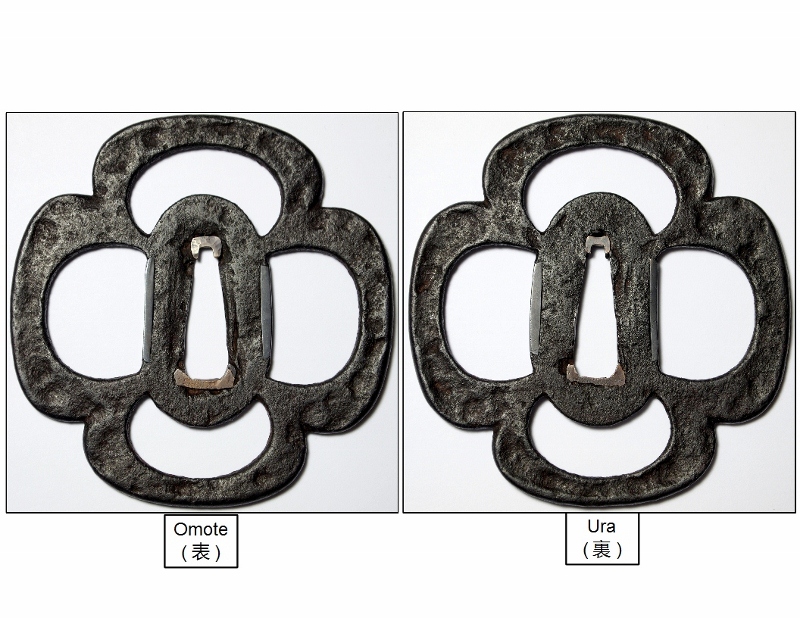
Hi Henry, I like that tsuba you posted as I have seen it in hand this photo is poor but I am not sure it is a Christian Cross for the reasons given by John L. and which are also discussed in Fred G. article. Here is the photos of my tsuba and the fine granular tekkotsu along the rim. The black arrows are to highlight the small tekkotsu (i.e. iron bones) I hope the photos also show the fine turn back of the rim edge as well. P.S. Pete, thanks for letting me know about another term used to describe this design. I will check both Sasano's books on my bookshelf. Yours truly, David Stiles

-
Hi Everyone, Thanks for the replys specificly Curran and John L. with the helpful information. I think now the question of the design is answered. I will post more photos of the rim which display a nice turnback once I have a chance after work. The thickness range from 3.5 mm at rim to ~2.5 mm at seppa-dai. I have nice Sanada Tenpo tsuba closely related to the Saotome school in time and place from the late Edo Period that originally lead me and others into thinking it was older then what it was. The really good late ones will do that. Therefore the question of age might not be that easy to answer. :D Yours truly, David Stiles
-
Hi Everyone, Just read through the four pages of comments about a fairly poor looking tsuba. No disrespect to the original owner as we all must start some where and I have spent 1,000s of dollars on low end tsuba and nihonto when first starting out. Here is a nice tsuba to discuss. I am hoping to maybe get one complete page of replies about what the openwork design is or isn't. I love the hammer work on the surface and iron is also very hard. The rim displays fine grained tekkotsu not the large size ones observed in many Owari tsuba. The measurements are 7.2 cm ✕ 7.0 cm, 3.5 mm at the rim and 2.5 mm at the seppa-dai. It reminds me of Saotome school work circa the Momoyama Period. The design is simple but bold. I was thinking it was a mokko design but when you consider it mounted on a sword with the nakago-ana filled it reminds be a Christian Cross. I remember talking about this to one of message board members at the Florida Show this year after purchasing the tsuba. Yours truly, David Stiles

-
Hi Brian and Eric H., Thanks for the replies and Eric H. for his kinds words about my article. It is a good summary of what is currently available on the subject of Tosho tsuba makers in English. I will contact the newsletter editor and Grey D. who is a director about posting the article here on NMB with high resolution color photos of each example. Above is a good example. I will let everyone know once I hear from them. Yours truly, David Stiles
-
Hi Chistian M., I stand corrected the inlay technique used does look similar to the tsuba posted. But like I said in the beginning this is not my area of focus. I am not going to comment any more on this tsuba. Yours truly, David Stiles
-
Hi Lance, Not the right direction that is a signed Umetada tsuba. I would need to look up the mei but it likely dates from the late Edo Period circa 1770-1868 based upon the Kanji used for Ume. The quality of the inlay work is also much better. The surface treatment is similar. Yours truly, David Stiles
-
Hi Peter F., I sometimes see this on rusted tsuba so your tsuba is not strange or unique. The classification of unsigned tsuba from the late Edo Period or Meiji Period can be problematic. Mainly due to similarly of the techniques used by many of of the tsubako from that time period. Yours truly, David Stiles
-
Hi Peter F., The iron doesn't look like it is in the best condition nor some of the inlays. I agree with the late Edo/Meji Period age estimation. As for school I would like say Shoami. This is just my opinion. Yours truly, David Stiles
-
Hi Peter F., Could you post the measurements? Having a photo of Ura side would also be helpful. Yours truly, David Stiles
-
Hi Christian, Grev, and George T., I don't see any Nishigaki Higo school (if that is what Christian is referring to) influences on Grev's tsuba. I could be wrong I often am and would always welcome more information about a school I don't know much about. Yours truly, David Stiles
-
Hi Jeff T., Sorry for the late reply. I have a Fudo Myo tsuba that some of the senior members hate but I keep it in my collection because I like the theme of the tsuba. I will not submit it to shinsa but I will keep it in my collection for rest of my life. If you like the fuchi gashira set because of the tiger design please keep it and enjoy it for what it is. Keep a look out save your money and really nice set of tiger menuki or even a tsuba might come up for sale on NMB or one of the dealer websites and you can purchase it. Yours truly, David Stiles
-
Hi Everyone, I published my first Tosogu related article in the Japanese Sword Society of the United States (JSSUS) volume 44, number 3 this month. The title of the article is "Overview and Development of Tsuba made by Japanese Swordsmiths". The article contains highlights from my collection and Mariusz K. who is also a member of the NMB spanning from the middle Muromachi Period to the middle Edo Period. I would like to post a archive copy of the article at the NMB if possible but I should talk to JSSUS leadership first before doing so. Some of leadership are also members of the NMB. Please feel free to comment if you have had the chance to see the article. Here is a color photos of one of the Tosho tsuba from my collection featured in the article. Yours truly, David Stiles

-
Hi Jean C. and Bob H., For your information the Ko-Tosho tsuba I posted above has just been published in the Japanese Sword Society of the United States (JSSUS) Newsletter Volume 44, No. 3 page 25 figure 2. Yours truly, David Stiles
-
Hi, I would say low end for export piece like circa the Meiji Period. Just my opinion. The inlays look like they were very poorly done. Check out this nice one on eBay of all places http://www.ebay.com/itm/261043349609?ssPageName=STRK:MEWAX:IT&_trksid=p3984.m1423.l2649#ht_4326wt_1270. It is a good examples at a fare price. The seller is good to deal with. I have purchased NBTHK papered tsuba from him before. Yours truly, David Stiles
-
Hi Steve, I hope you don't live in a "red" state. :lol: Yours truly, David Stiles
-
Hi Everyone, I agree this is a good idea for NMB members and dealers in Japan like Aoi-Art. Yours truly, David Stiles
-
Hi Pete, Got to love the autocorrect spelling on my Iphone while riding on a Washington metro. Yours tunely, David Tiles
-
Hi Franco, I agree a very good point. In regard to the original work that is the topic of the tread I would say it is modern reproduction. Yours truly, David Stiles
-
Hi Jean C., Here is a black and white photograph I have of one Ko-Tosho tsuba I have. The ko-sukashi design is clearly of a war fan or gunbai. An identical tsuba was in Sasano's second book on Sukashi tsuba page 48. Yours truly, David Stiles

-
Hi Curran, Sounds like me talking about some of my Owari tsuba. :lol: For me the search continues for the book. Yours truly, David Stiles
-
Hi Curran, Am I reading your post correct. Are you selling a copy of Owari To Mikawa No Tanko by Sugawara? I am currently looking for a copy of that book to buy. I already have two tsuba made by Norisuke one of which might be a Yagyu, Ko-dai tsuba. Yours truly, David Stiles
-
Hi Colin, I also sometimes come across the same Yagyu design done in openwork (ji-sukashi) and another time in solid form (ita). Also sometime a common design like the shippo-mon is found in the Yagyu design book. I remember reading like in some of the American Branch of NBTHK publication that some early design from the Ono school were added Yagyu design books early in there development as many of the early Yagyu tsuba were made by Tsubako of the Ono school in Owari. Yours truly, David Stiles
-
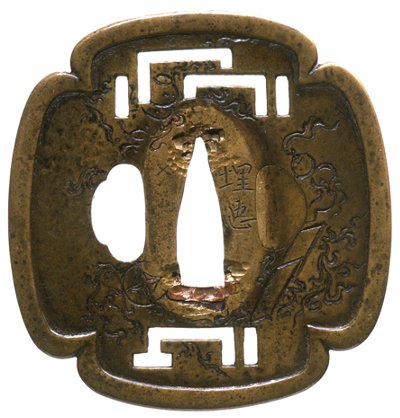
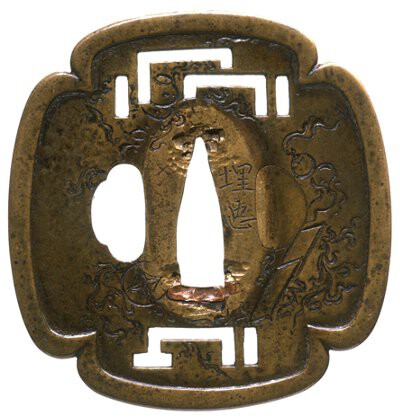
Hi Jean C., I don't think anything can be done for my Umetada tsuba short of having the surface completely cleaned and a new patina applied. The end result might not look much better then its current state. I was able to control any active rest on the tsuba surface to prevent pitting. I am not sure about the ko-sukashi design of your Ko-Tosho tsuba. I have two Ko-Tosho tsuba in my collection and one the design was a bit hard to figure out while the other was very clear. Please let me know and I can post photos of them as well. Here is a scan of a famous Umetada Myoju tsuba done in brass with a Genji-mon ko-sukashi design. Yours truly, David Stiles
-
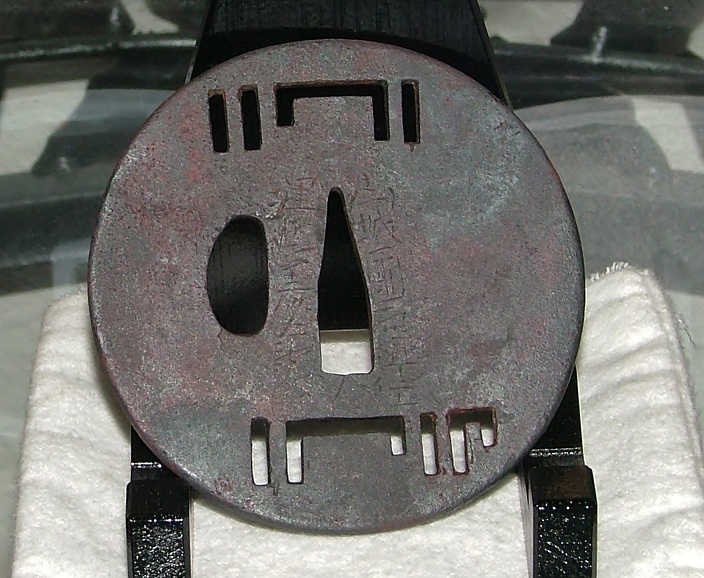
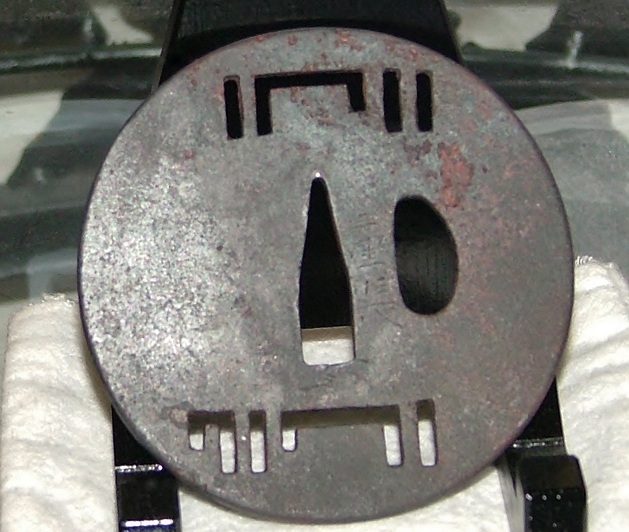
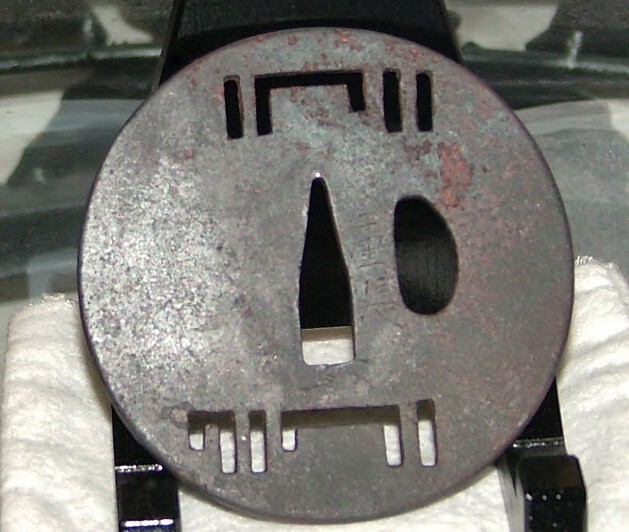
Hi Everyone, Here is the Umetada Myoshin who would sometimes sign his work Umetada Hikojiro (埋忠彦次郎) like my tsuba. The second mei on the ura side is for Umetada Myoei who's artist name is Shigenaga (重長) the son of Myoshin. This tsuba was likely made by both father and son. Notice the two large Kodo Genjishiko symbols above and below the nakago-ana. The only problem is the surface of the tsuba has been burned. It was added to my collection like that as I focus my collection on the Umetada school. The multi-layer construction of the plate is also clearly visible because it was in a fire. Yours truly, David Stiles

-
Hi Everyone, The design is called genjishiko in Japanese. They are symbols associated with different sections of the Tale of Genji. I have a Umetada Myoshin tsuba made with this design. The symbols are for different aroma used in Kodo to tell the stories such as the Tale of Genji. There are many fine Umetada Myoju with this design. I will post photos of the tsuba after work. Yours truly, David Stiles