
Soshin
-
Posts
2,928 -
Joined
-
Last visited
-
Days Won
3
Content Type
Profiles
Forums
Events
Store
Downloads
Gallery
Everything posted by Soshin
-
Hi Chris B., I have read about this phenomenon it is referred to as Filter bubble. Here is more information about it from Wikipedia: http://en.wikipedia.org/wiki/Filter_bubble. Generally I think people's ego becomes the algorithm that selectively picks information that supports their ideas and also separates them from information that disagrees with their viewpoints (i.e. shinsa results), effectively isolating them in their own ideological bubbles. Here is an appropriate model of me while in a filter bubble created by my own ego at shinsa. P.S. Henry, very nice tsuba! Let me know if you ever get tired of it. :lol:
-
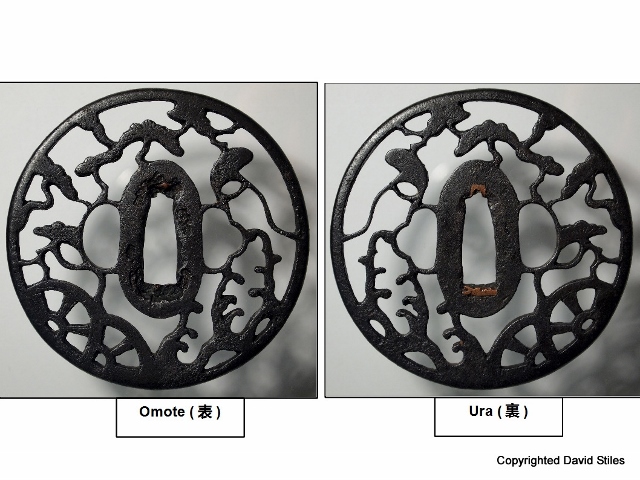
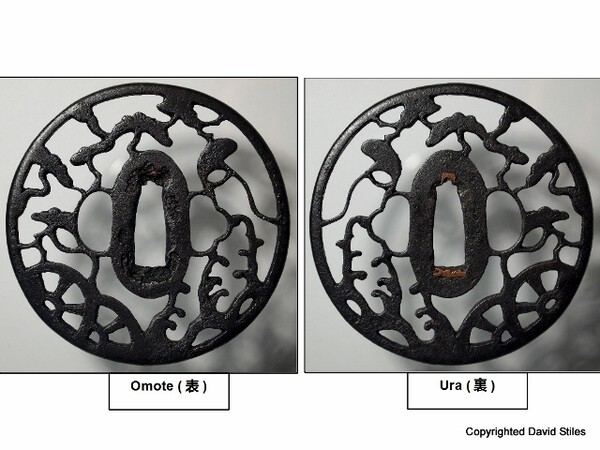
Hi Christian M., You need to write a book of your English funny one liners like this from your time on NMB. Hi Jean, I been thinking about your question this week. I have a really nice Owari Sukashi tsuba with a Hakogaki by Dr. Kazutaro Torigoye. Dr. Torigoye every states in the Hakogaki that the tsuba displays excellent workmanship. I purchased this tsuba from a long time collector that felt that a tsuba with such a high profile Hakogaki didn't need shinsa papers. Attached is a photo of the tsuba in question for your reference. I consider it one of my best tsuba in my collection and have received many positive comments from other collectors. The measurements are 8.1 cm X 8.1 cm with a thickness of 5.0 mm. Sukashi design tells the story of a famous Noh play titled Matsukaze. Can you see the older sister, Matsukaze, wears Yukihira’s eboshi headdress because she misses him so much?
-
Hi Everyone, Just wanted to update everyone that this tsuba passed Hozon at the NBTHK shinsa in December 2013. I don't have the details of its attribution for some strange unknown reason. I hope to have more details later this month and will post then as soon as possible. P.S. It was also written about in another article "Follow Up: On Japanese Dragons" by Robert Earhart in the Japanese Sword Society of the United States (JSSUS) newsletter volume 45, no. 5, pages 6-8.
-
Hi Brian, While replying to your post I am messing with a tsuba that was already messed with.:lol: I was just looking for John S. to better develop his ideas which he later did in response my and Mike Y. posts. Curran also added some important point to consider which was raised by Mike Y. I consider the issue closed with the exception I would like to see the tsuba in question. You made some good points but how we communicate to new collectors that make mistakes is important and I think the aggressive and hyperactive nature of a public forms isn't something I would consider a natural part the Japanese sword culture inside or outside of Japan. If I would go on to say my local sword club as some people approach this forum in such a aggressive, condescending, and egotistical way I would likely asked to leave in about the first 15 minutes. True study is with the tosogu or sword in hand with a teacher or mentor as a guild and if that not possible fellow collectors in an atmosphere of mutual respect. P.S. Feel free to delete my account. :|
-
Hi Stephen, I am glad I can help. Hi Curren, See below from a castle museum collection in Japan. Enjoy...
-
Hi Mike Y., Very good point. I have been around the block a few times and know just to ignore such baseless comments as the noise of a public message board. With that said I can see how it would discourage new collectors in continuing the hobby and investing any more time and/or money.
-
Hi Brian, I will give it a try. Three points that make me think 5th generation Hayashi. The first is the thickness of the kebori lines to highlight the design. They look to be wider then my Kamiyoshi tsuba up for shinsa at the end of the month. The second point is the balanced shape of the seppa-dai. The 3rd generation often made tsuba with strange shaped seppa-dai that were oversized and often over incorporating openwork design elements. The color of the patina is also what I have seen on examples of the 5th generations work. Here is an example of 3rd generation work from Ito Sensei book. Shigefusa was one of three names used by 3rd generation Hayashi master. Notice the shape of the enlarged oversized seppa-dai. Hayashi Matahei, 5th Generation Master, Dated APR 1810.jpg[/attachment]
-
Hi John S., Relax no problem. I never seen the yôkan like patina discussed in the context of Nobuie tsuba just the iron of Hayashi and Kamiyoshi schools. I am interested can you provide more information or a reference via PM or reply? Thank you.
-
Hi John S., To me the patina of the iron is typical of Hayashi School in Higo Province in my honest opinion. This type of dark patina found in Hayashi and Kamiyoshi schools is referred to as yokan.
-
Hi John S. Gorinto (五輪塔) is one type of Buddhist stupa often found near or in old graveyards in Japan.
-
Hi Mike Y., You have already likely read on Facebook my "likes" and comment very nice tsuba! Will it be on display at your table at the upcoming Tampa show later this month? Please say yes because I would just like to take a look at it if possible. Thank you very much. :D
-
 Hi Everyone, Thanks Mike Y. I learned something that I wasn't aware of in regard to the shinsa of tosogu.
 -
NBTHKAB lecture Tampa show
Soshin replied to raiden's topic in Sword Shows, Events, Community News and Legislation Issues
Hi Mike Y., Consider me trying to get in the doors at 12:50 PM. :lol: I read somewhere or was told that Bob Benson is running the lecture on Ko-Kinko. A low key guy Captain Jack from my local area I hope will be presenting some fine pieces. -
Hi Justin, Good question. I was looking over Robert Haynes student's website Elliott D. Long and across a intresting tsuba labeled as Sendai from Haynes collection. Here is the URL:http://www.shibuiswords.com/haynesTsu40.html.
-
Hi Everyone, I completely agree with Curran's statements about Eric Molinier.
-
Hi Everyone, Curran is a great guy to buy from in my experience. If I ever win the lottery I would like buy a Juyo level Nihonto from Darcy as I have heard goods things about him. Ted T. is a very knowledgeable in Nihonto. I recommend visiting a NBTHK-AB lecture he is doing if you get a chance.
-
Tsuba Otaku Website Updates
Soshin replied to Soshin's topic in Auctions and Online Sales or Sellers
Hi Everyone, I made some major redesigns to the flow of my website based upon feedback I have received on NMB. Please take a look when you have some free time. Comments and questions are welcome. -
Hi Mariusz K., I am still waiting for a tsuba like that to show up on eBay... :lol:
-
Hi Grev, This was just my qualitative assement of the iron by touch and feel from having the tsuba in hand and comparing it to a few Choshu tsuba, nothing more nothing less. This is what Haynes was referring to not a scientific quantitative mesaeurment of hardness that would require a destructive test. This comes handling many different iron tsuba.
-
Hi Boris, I not much of a fan of "Ezo" tosogu hence my lack of participation on the topic. I really liked your website and I am always interested in seeing and possibly adding to my collection one nice Ko-Tosho or Ko-Katchushi tsuba. :D Just wanted to add my name to the record of fans of your website who can't wait to see it active again.
-
Tsuba Otaku Website Updates
Soshin replied to Soshin's topic in Auctions and Online Sales or Sellers
Hi Jean C., Thank you so much for the reply. I change the format of the site a bit. The tetsugendo tsuba was sold on eBay. That is the page where I list things that are sold at eBay auction. The other tsuba some of which are for sale are under the "Japanese Sword Guard" tab. The tsuba are arranged by Japanese historical Period (ex. Edo, Muromachi) with the exception of tsuba from Higo and Owari Provinces which is a specialization of my collection and have their own webpages. In regards to software I have been developing the website and testing it on the Google Chrome web browser. I do also know that the website uses HTML version 5 technology. -
Hi Everyone, I have made some updates to my website "Tsuba Otaku: Reflections of a Not So Empty Mind". Here is the direct link: http://dastiles1.wix.com/reflections- There are two new tsuba listed for sale on my website. One is a Owari Sukashi tsuba with a Hakogaki and the other is a early Yamakichibei tsuba with very nice ko-sukashi design of twin dragon flies as well as wonderful plate with many iron bones. Let me know if you have any questions about the website or anything I have on it. Thank you for taking the time to view my website and any consecutive feedback is appreciated. P.S. All proceeds of website sales will 100% be reinvested into my hobby of collecting and studying tosogu. This does include donations to NMB. :D
-
Hi John, Thanks for presenting your reasoning for the Choshu attribution. Right now I am about 80% confidante in my Shoami attribution. This might be a good tsuba to submit for the upcoming NTHK-NPO shinsa next month. I might leave the tsuba I was going submit that was once in the collection of Dr. Kazutaro Torigoye with Hakogaki by him to the other NTHK group. The problem with having so many nice tsuba in one collection it might be hard to pick out two pieces to submit. :lol: P.S. If I do submit this tsuba to shinsa I will be sure to post the translated details of the worksheet write up after the shinsa for informational purposes.
-
Hi Everyone, More on this issue of iron and differences between early Shoami (circa Momoyama Period to early Edo Period) and mid to late Edo Period Choshu school work. Here are a few examples of classical Choshu work for comparison purposes. Every example show a homogenous iron characteristic of Choshu school. The first example which is signed is taken from Grey's website: http://www.japaneseswordbooksandtsuba.com/store/tsuba-%26-kodogu/t174-exceptional-choshu-tsuba-kawaji. The homogenous iron is necessary to allow the tsuba artist to cut such intricate openwork designs. The second example is a whole page of Choshu tsuba the text written in Japanese: http://www.finesword.co.jp/sale/choshu_tsu/choshu_tsu.htm. Keep in mind that in the appreciation of Choshu school tsuba it is not the quality or texture of the iron but the composition and execution of the design. This is where the first example I gave excels in my opinion. This is in contrast to early Shoami which would often show a much more heterogeneous iron with surface texture and iron bones along the rim. Logically the openwork designs would often not be as complex nor the use of inlaid soft metals such as brass in my example.