Scogg
-
Posts
2,230 -
Joined
-
Last visited
-
Days Won
28
Content Type
Profiles
Forums
Events
Store
Downloads
Gallery
Everything posted by Scogg
-
I'm probably one of the biggest skeptics of AI. That said, what Chandler and Hoshi are doing with it is genuinely impressive, and in my opinion, the right way to use the technology. I'm continually impressed by their work. That's where I think AI shines; gathering source material, organizing large amounts of data, and helping researchers study more efficiently. Not replacing the research itself or becoming a substitute for learning. What drives me crazy is when people use it to copy and paste questions and answers, then treat its output as unquestionable fact. We've all seen it on this forum, "But ChatGPT says otherwise!" As if the rest of us couldn't ask ChatGPT the exact same question ourselves. That's neither here nor there. I also agree with Chandler regarding photographs and that images are the limiting factor. Unless the AI is working from 100% clear, high-quality photographs, and even then it will inevitably have to make assumptions based on incomplete visual information. That doesn't make it useless, but it does mean its conclusions should be treated as a starting point for investigation, rather than the final word. When photos get that good, I'll stop traveling around to see swords -Sam
-
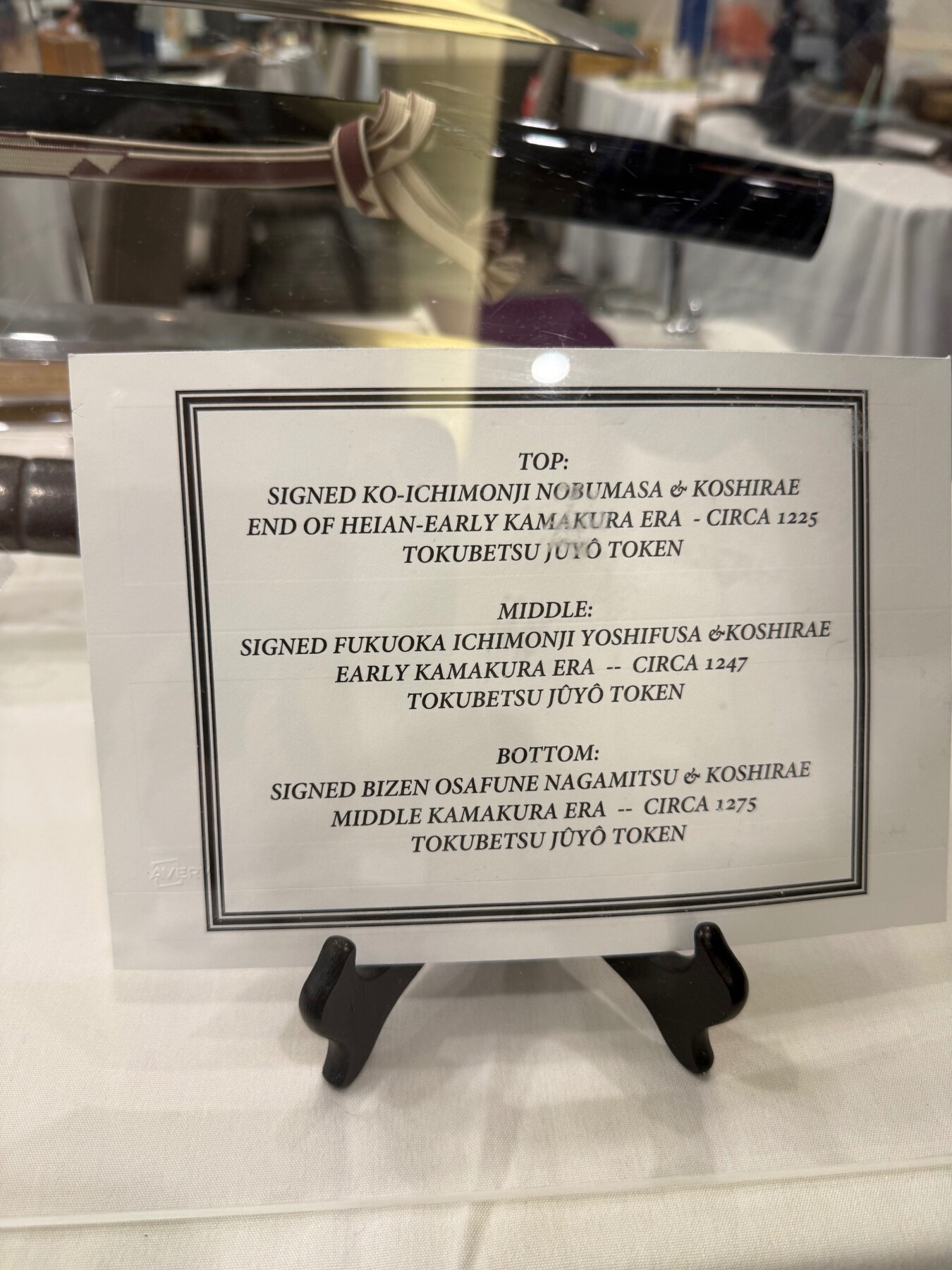
 Indeed. I wish I could have taken better photos, but being behind that plastic barrier made it difficult. Those blades were also right at the entrance, and I didn't want to get in peoples way taking a bunch of photos . Those three amazing blades were on Fred Weissberg's table. Best, -Sam
 -
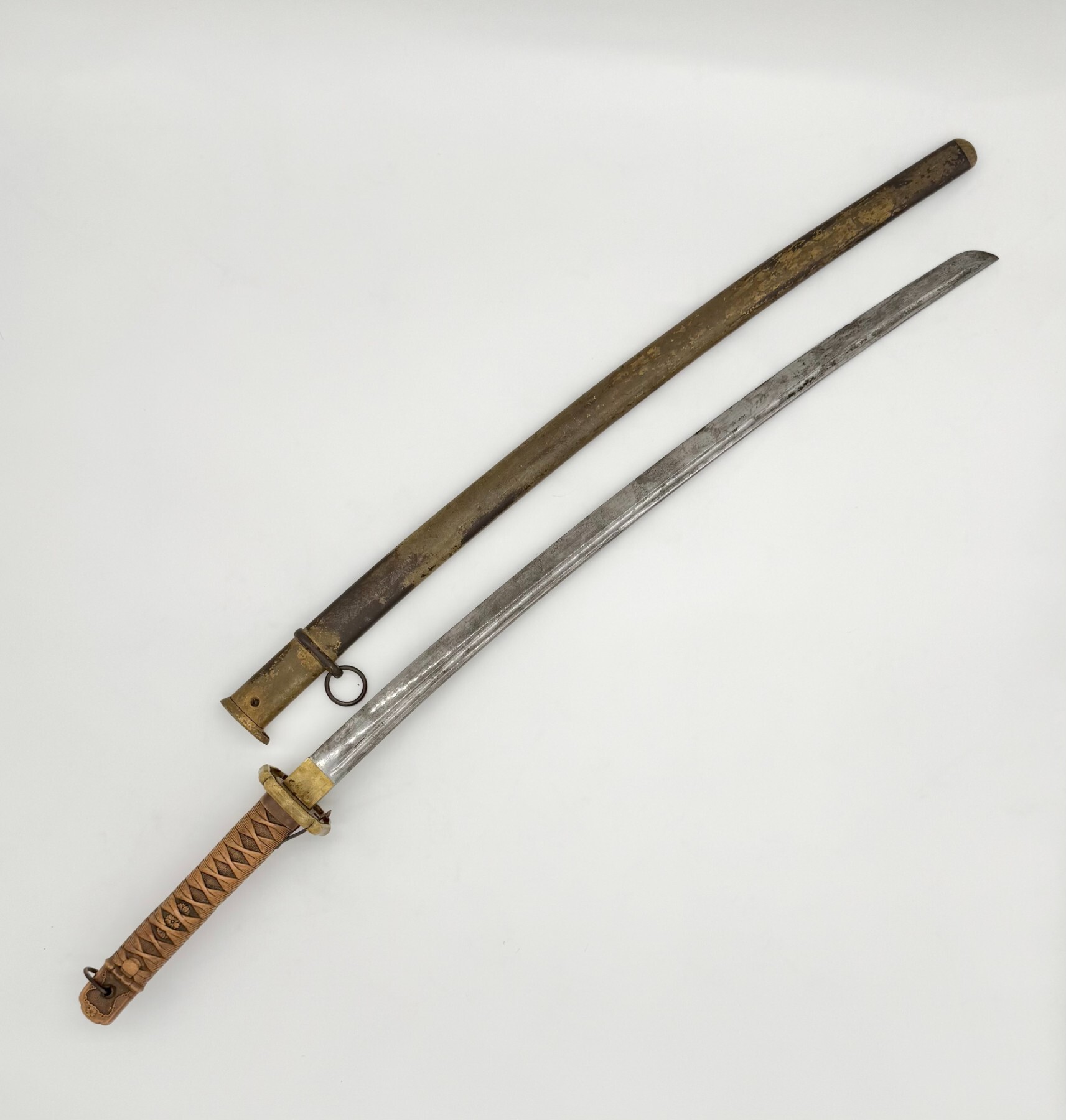
Type 95 Guntō. Copper Hilt. Japanese NCO sword, Variation #1
Scogg replied to Scogg's topic in Swords and Edged Weapons
Comes with leather buckle tassel. I think it's real, and it looks the part. It has been suggested to me that the strap may be a more modern replacement, but the knot is real. Makes for a good display, and I'll include it with any sale.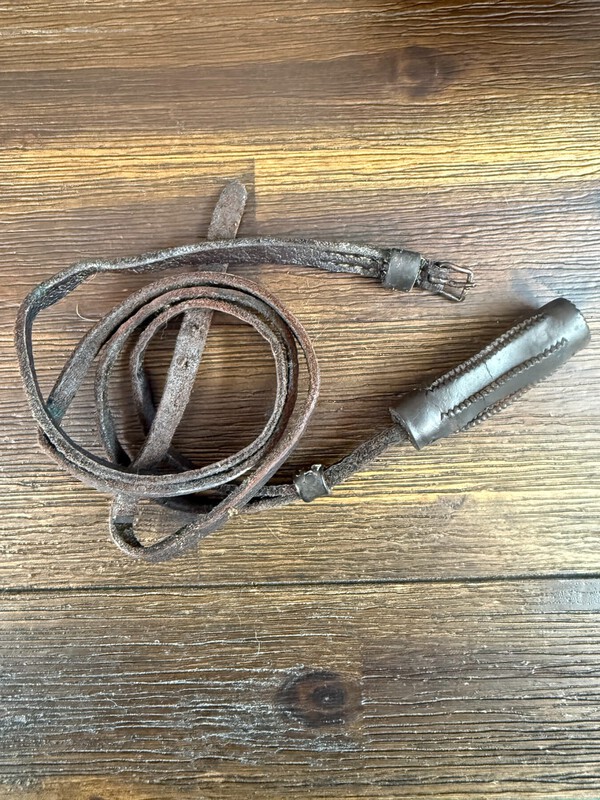


-
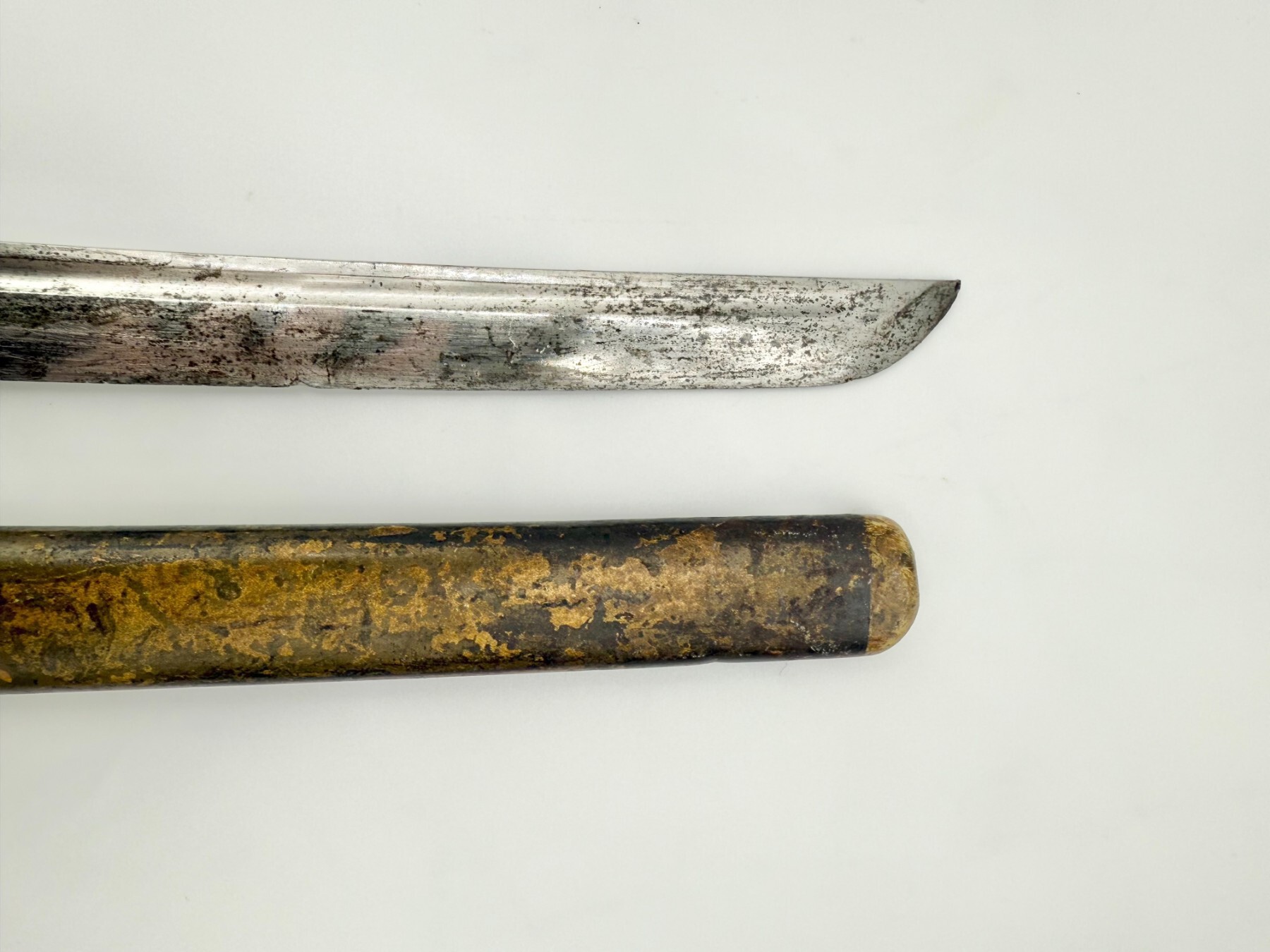
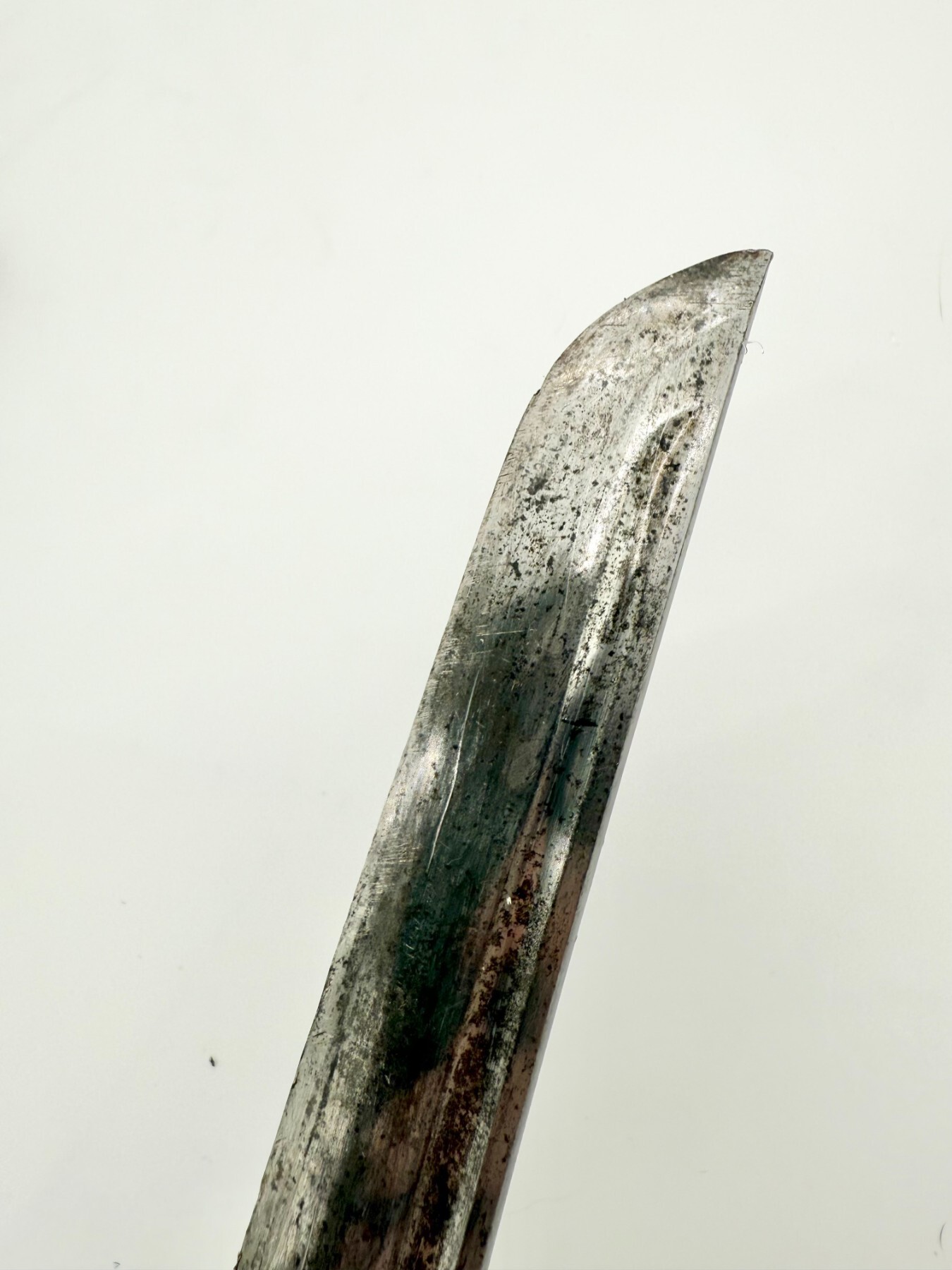
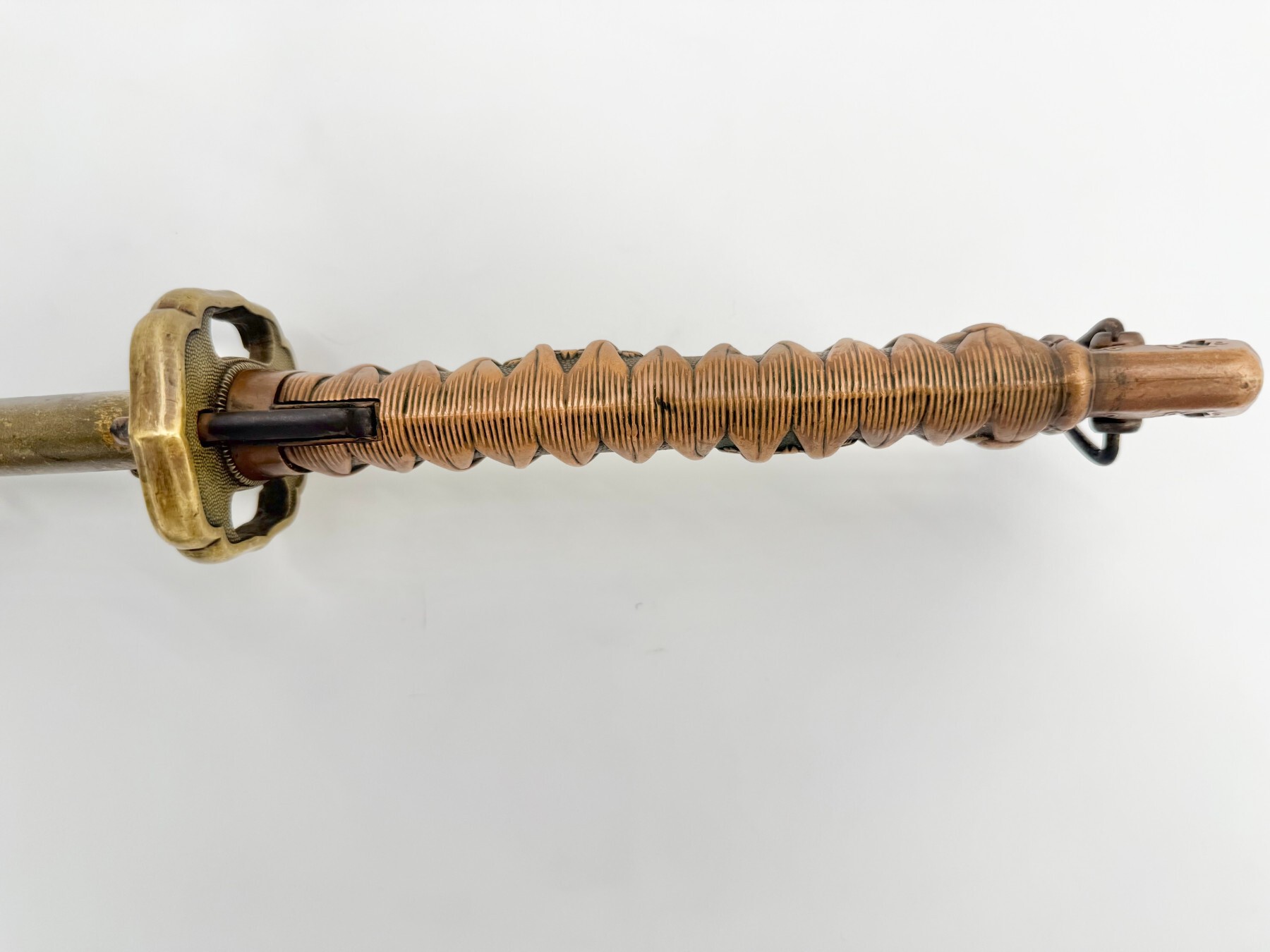
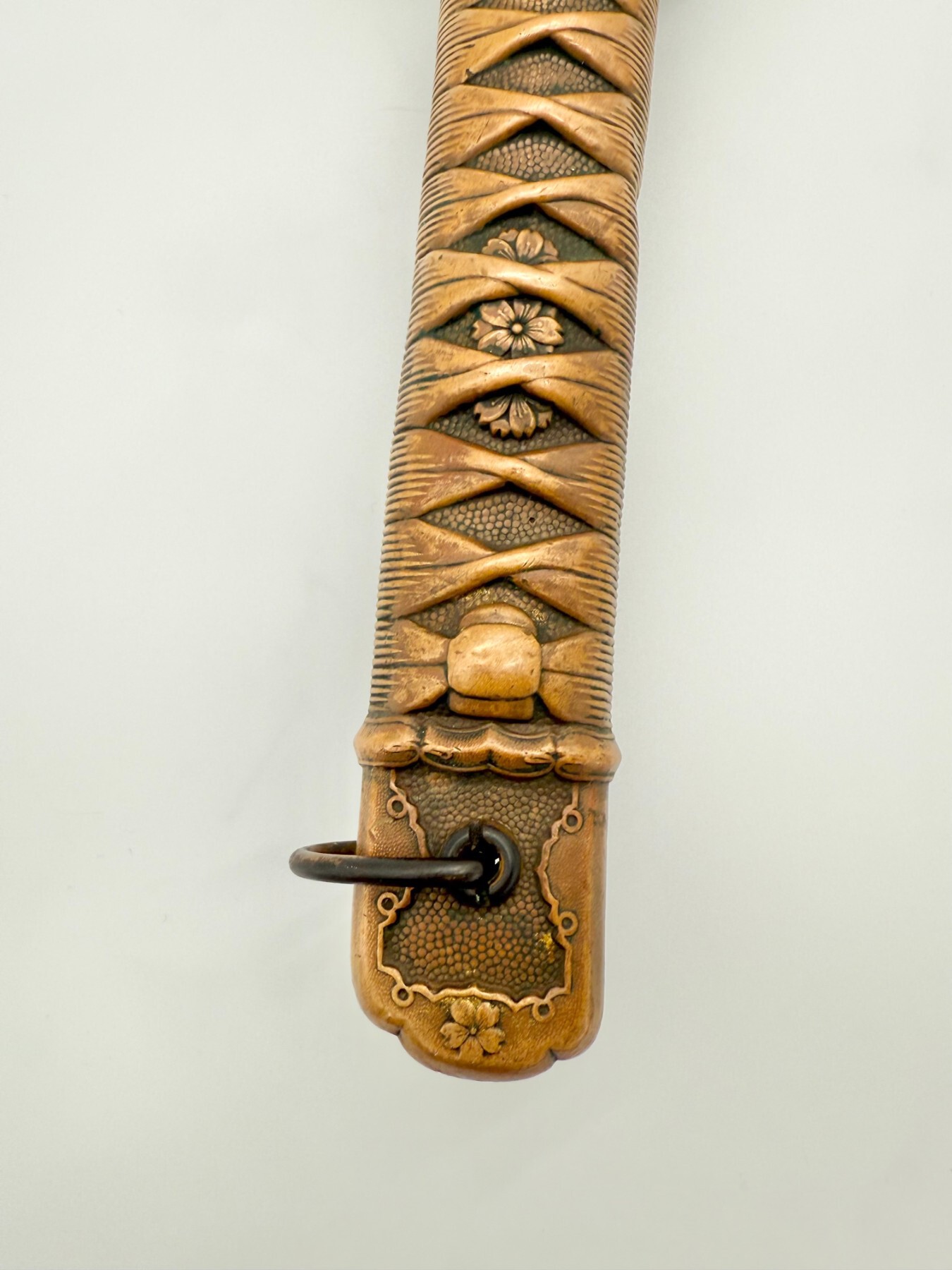
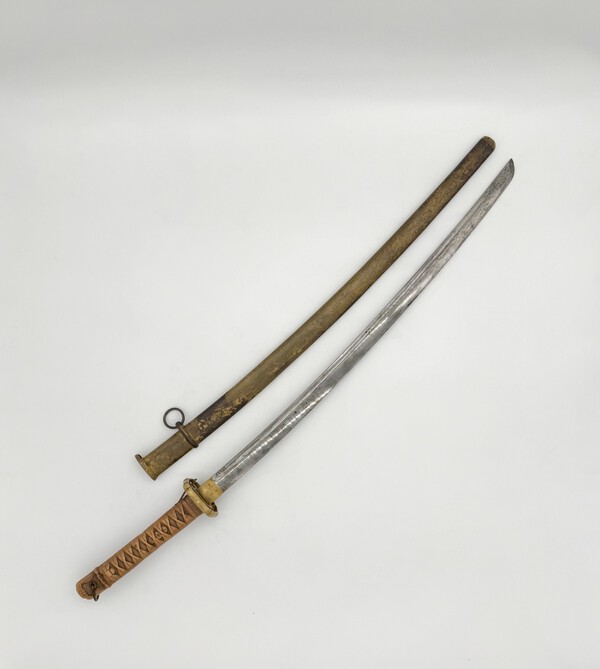
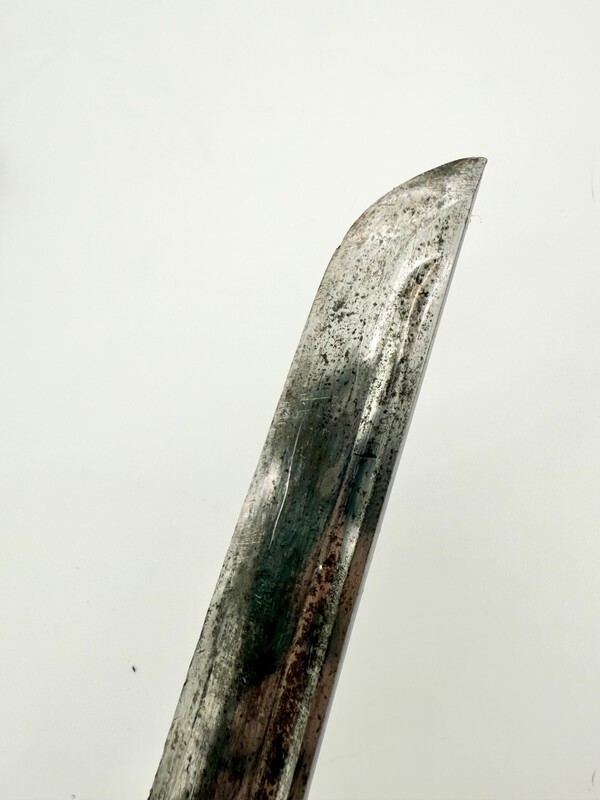
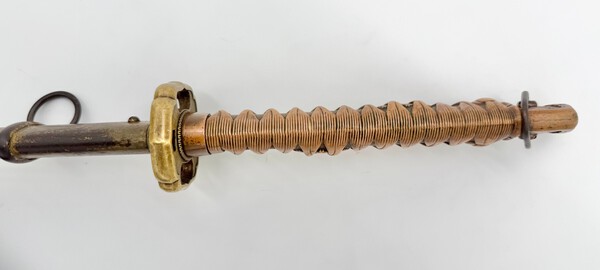
This is a machine made military sword of Japan. It's generally recommended not to disasemble this type of sword. The nakago is bare, and it's not worth risking damage to the fittings. Type (Tachi, Katana, Wakizashi, Tanto, Naginata, Other) : Katana, (Machine made) Ubu, Suriage or O-Suriage : Ubu Blade Serial Number: 東 3125 Scabbard Serial Number: 3125, Matching Ferrule (Fuchi) Stamps: Suya Harp Logo = 株式會社壽屋商店 = KK Suya Shōten = Suya Shop Co., Ltd. 東 = TŌ = 東京第一陸軍造兵廠監督課 = Tōkyō 1st Army Arsenal Supervisory Section. Stacked Cannonball Stamp = 造兵廠小倉工廠標識 = Army Arsenal Kokura Factory trademark. Era/Age : 1938 Shirasaya, Koshirae or Bare Blade? : Original military koshirae. Nagasa/Blade Length : 670mm Hamon Type : N/A: Machine made blade, no hamon or jihada. Flaws : Blade has rust and very slight warp. Fittings have some rattle. Sword Location : USA, Oregon Will ship to : USA Payment Methods Accepted : Paypal F&F preferred. Or Zelle. Can discuss other methods. Returns Policy: I would like to avoid returns on this one. Please ask questions and see photos and description to avoid such a scenario. Other Info and Full Description: This is my copper hilt Type 95 military sword that I would like to sell to fund an upcoming Nihonto restoration. Fewer than 7,000 Type 95 swords were made with a copper hilt before switching to aluminum, making this first variation rare and very desireable to collectors. The copper tsuka shows wear and tear, and the blade is not in perfect condition. Type 95 swords often show wear and tear; as they are pieces of militaria and should show their age, history, and frequent handling. Overall it's a great representative example, and a rare opportunity to purchase a genuine copper hilt Type 95. Price and Currency: $5,500 - USD - Free Shipping within USA.








-
Great show, great company, and some wonderful swords. Thanks Tom. Already looking forward to next year. Back to the PNW for me, Best, -Sam

-
These late war Ito wrapped examples do not have serial numbers on the blades. Some have been observed with 3 or 4 digit numbers on the nakago. It looks good to me too. If it’s not coming from China, I think you’re still safe for now. Soon here, that may no longer be the case, once the very convincing fakes weed themselves into the market. There is some debate whether these “last ditch” unserialized Jinsen swords were for NCOs or for officers. I’m of the opinion that they were made alongside the serialized jinsen NCO swords in the 300k range, but these Ito wrapped unserialized examples were instead for officers. Just theory, -Sam
-
A great show every year. I'll be in attendance on Saturday. If you see me, please say hello! Looking forward to it, -Sam
-
Cross posting Trystan’s thread here, for future reference.
-
Photos are not good and I cannot see the ferrule stamps. Without better photos, I cannot say whether or not it’s genuine with a high degree of confidence. From what little I can see; It looks like the early rare copper hilt variation, although there is a lot of things that are not factory original: 1. The early copper variation did not have a mekugi, and was secured to the tang by the grommet screw alone. The grommet screw is the screw that’s in the pommel. That said, the presence of an added mekugi have been observed on examples before, scattered throughout their serial number range. It is my belief that this feature on variation#1 copper hilt swords is representative of a wartime repair. 2. Usually the clip and the housing for the clip are attached to the ferrule (fuchi). 3. I have never seen a tsuba that was serialized, but that does not really concern me. 4. Unserialized scabbards are indicative of it being a unit armorer replacement. Combine all that together, and it looks a lot like one of the swords that went through some type of rework/repair. Probably done during wartime, but hard to know for certain. Similar configurations have been observed before. All that said, better photos may reveal otherwise. Grain of salt… -Sam
-
My Grandfathers Sword from WWII
Scogg replied to Andygove12's topic in General Nihonto Related Discussion
Here’s a resized version for easy viewing. Interesting. Looks like the tsuba and fuchi are from what is often called “Type 3” or “Rinji Seishiki” gunto fittings. Best, -Sam
-
Disclaimer As of August 2026, I'll be significantly slowing my efforts to catalog Type 95 sword serial numbers and production features. The reason is: the recent emergence of highly convincing 1:1 Chinese reproductions. They're becoming good enough that I can no longer be completely confident identifying swords from online photos alone. Rather than risk unknowingly introducing reproductions into the archive, I'd rather be more cautious, and take a much slower approach into the future. I'll continue adding swords when I'm confident they're genuine or when they surface from friends old collections; but many new auction and sales listings simply don't provide enough information to make authenticity determinations with certainty. My goal has never been to build the largest database possible; it has been to build one that I can reliably trust. If that means cataloging fewer swords in order to preserve the integrity of the archive, I think that's the right tradeoff. Thankfully I've built an impressively large list so far; and I can continue adding detail to it. Open to thoughts, but I think this is probably the best course of action. Best, -Sam
-
Who was looking for a Type 32?
Scogg replied to Bruce Pennington's topic in Auctions and Online Sales or Sellers
I think maybe @Nazar perhaps? -
I believe Konno is in Washington State. I'm not sure if he's still taking commissions, but I hear he is mentoring a younger fellow. I only learned about them both recently. Keep in mind that whatever polisher you choose, the waiting list will likely be pretty long. Most USA polishers are around a 2 year wait, the last time I called around. Best of luck, -Sam
-
Indeed; it has always made logical sense from a manufacturing standpoint. That said, I keep coming back to the same issues/questions: do we have any contemporary source material, or JACAR documents, that explicitly supports these ideas, or are they conclusions drawn from informed observation and collector experience? The same applies to idea that these swords were assembled at the arsenals rather than by the subcontractors themselves. Is there documentation that confirms this, or is it an idea based on surviving examples and what we know about broader IJA manufacturing? It makes the most logical sense, but I would love to read the source behind the idea if that source exists. One of my goals has been collecting and organizing as much primary source material on this type of sword as possible (organized by the date of the documents). I've accumulated quite a bit already mainly thanks to Nick Komiya's warrelics discussions, Kiipu's direction, and archived material. But these particular questions don't seem to be addressed directly in anything that I can find, even though the conclusions are often repeated on forums. If there are contemporary documents that speak to these points, I'd very much like to add them to my collection of study material. I don't mean to be a pain in the a**, ; but I'm committed to learning everything I can about the Type 95. Sincerely, -Sam
-
I once had an item lost in shipping via eBay. eBay provided a full refund, even though it was not the fault of the seller (luckily for us both, it was a low value item). I hope it works out for you! That's money that could be spent on another sword Best of luck, -Sam
-
Indeed. Also, if ebay shows it as "delivered" but you have evidence that it was not the item you bought, eBay should provide a refund. Even if it's the fault of the shippers
-
I was hoping that you'd receive more input; although it's challenging to say much from what little we can see. I guess I'll do my best, and throw out some speculation below: There does not appear to be much sori; and I suspect much of it's original form was lost if/when it was shortened. I suspect your sword is o-suriage; and when I use my imagination to extend your blade to what may have been it's original length, I get the impression of early to middle Muromachi period. If your sword is not shortened, and retains it's original length and nakago, I would think shinto period. Some measurements may help those who are more knowledgable; and please understand I'm merely guessing here: https://japaneseswordindex.com/measure.htm Best of luck, -Sam
-
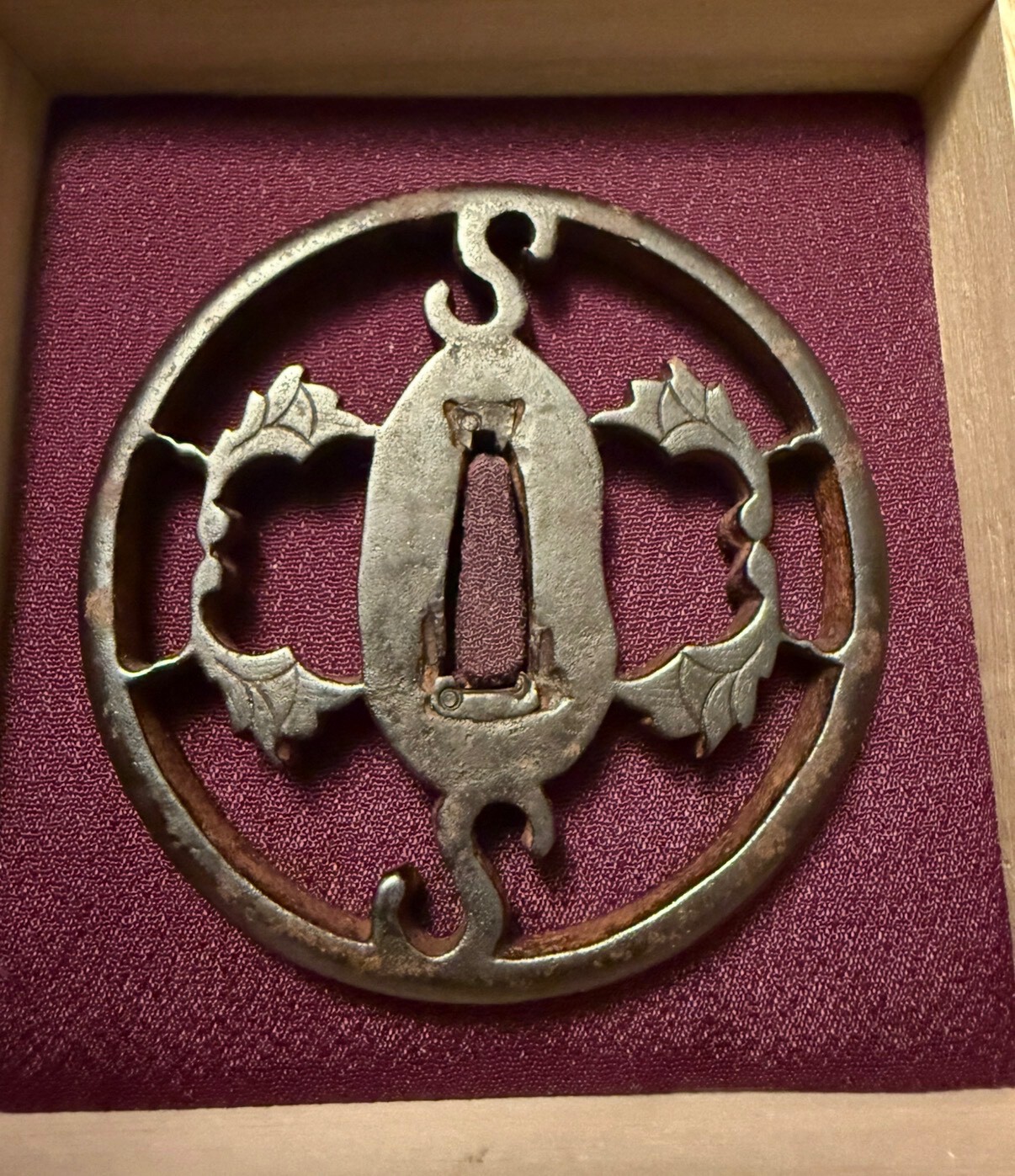
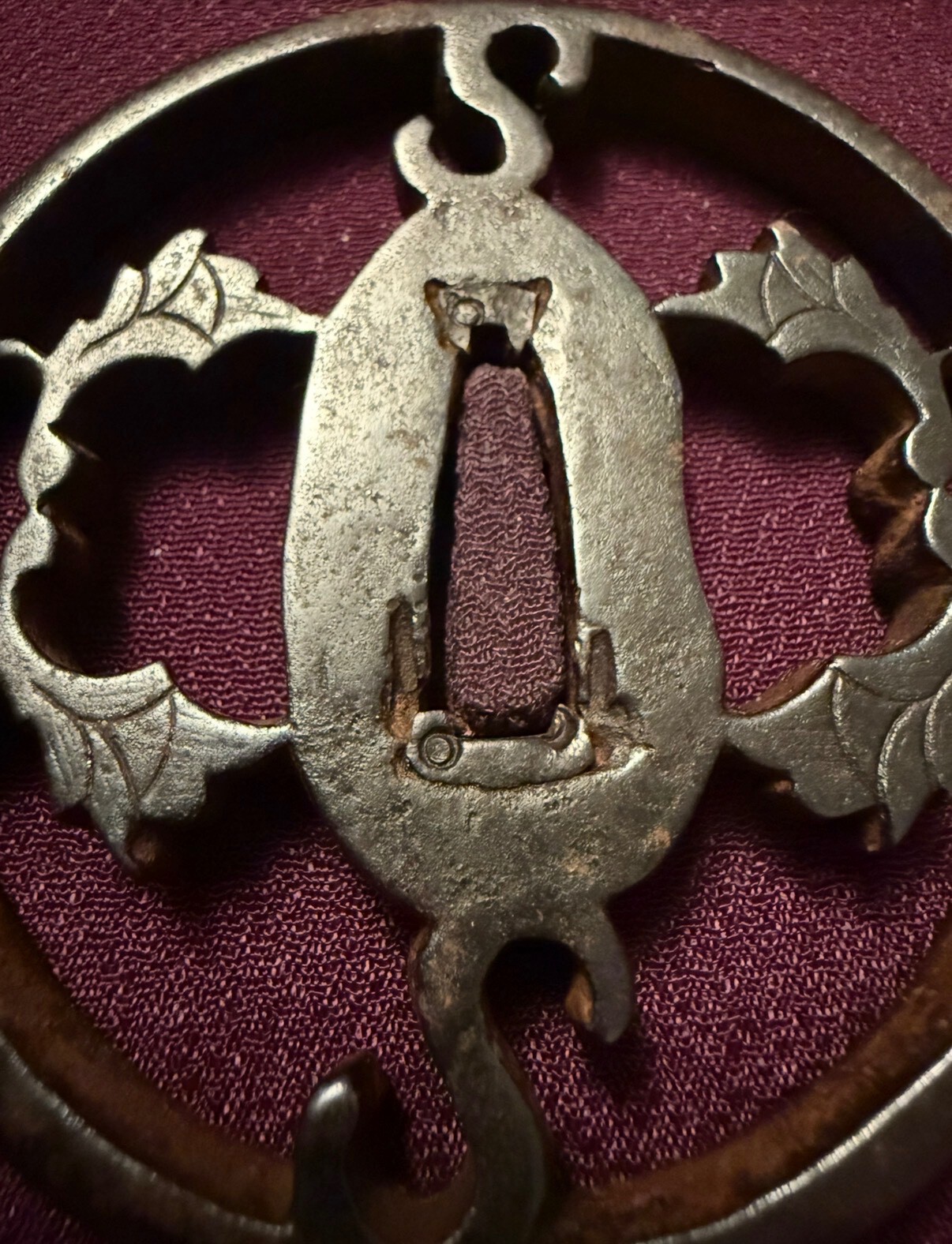
Hi Nicolas, nice piece. I have a similar tsuba depicting myoga from the Akasaka school. Akasaka was also the first thing that came to mind when I saw your piece. It’s good to see others are leaning that direction also. Mine also has those grooves; although mine are smaller/shorter. It was my understanding that the punch marks and grooves surrounding the nakago-ana are artifacts from fitting the tsuba to a blade. Manipulating the metal so it fits “just right”. I’m no expert, so I’d be curious if my thoughts here are in-line with the more knowledgable tosogu guys. All the best, -Sam


-
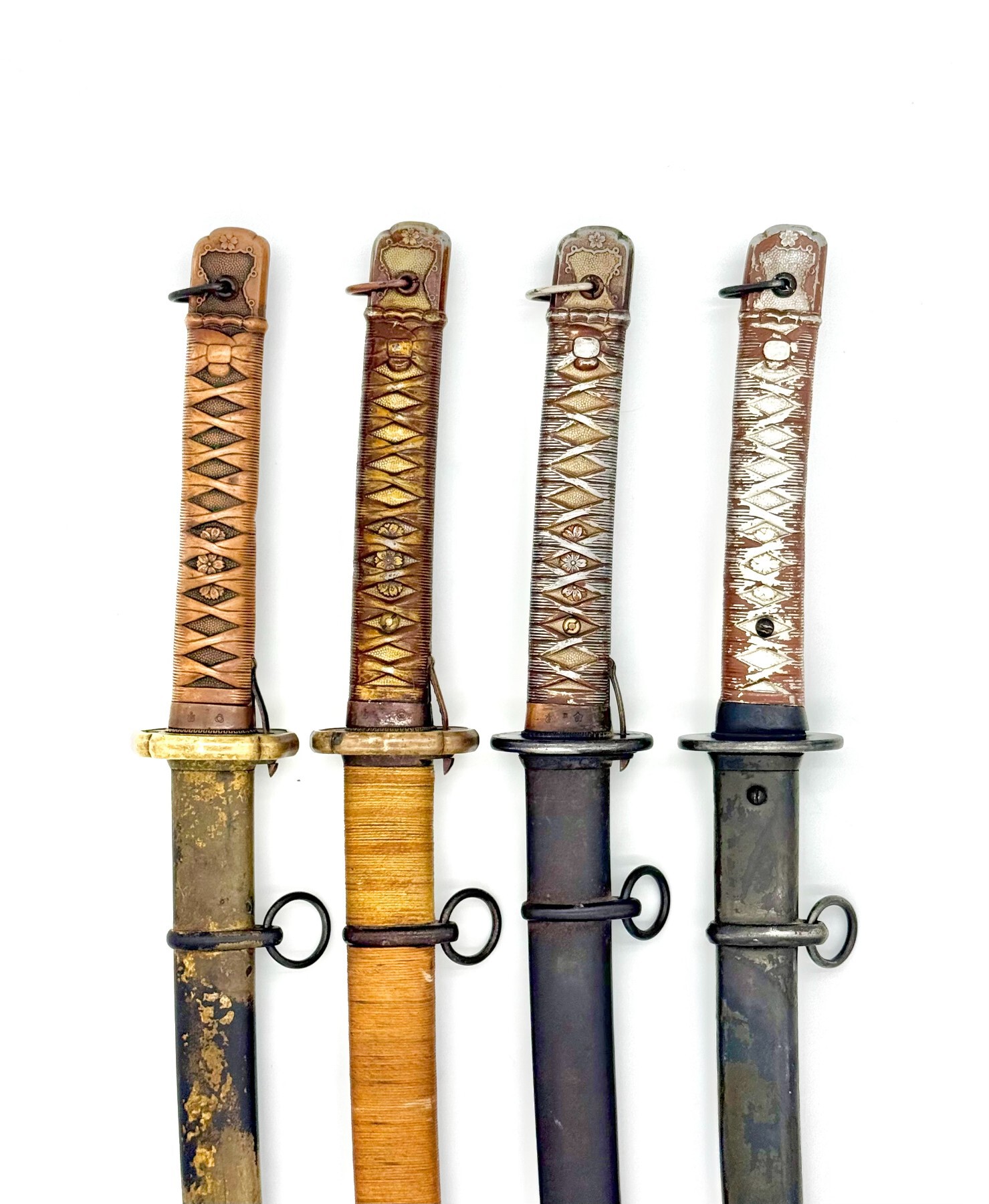
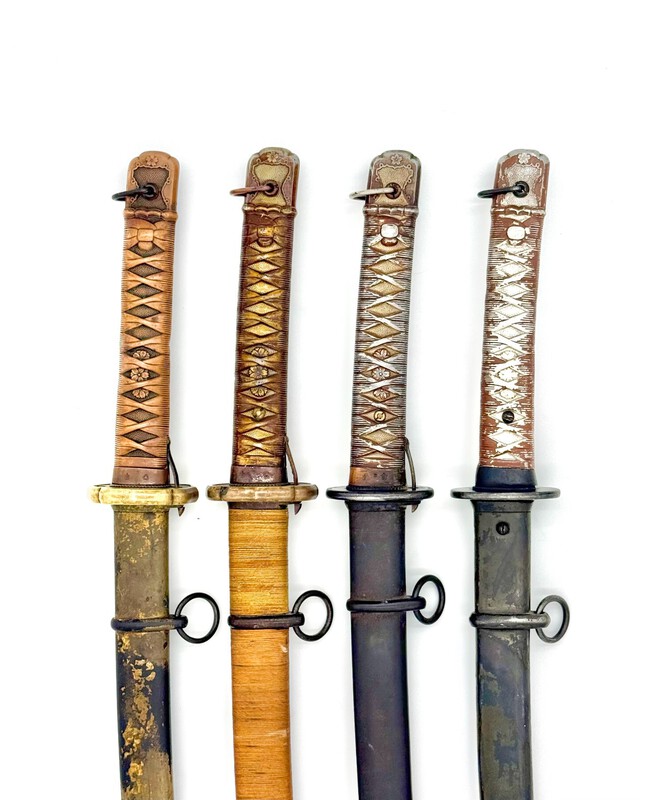
I have seen both steel/iron and copper sarute for the aluminum hilt variations. We have also seen wartime photographs with Type 95 swords without sarute. If it would help, I can take some close measurements later today, and send you the results in a message. Best, -Sam
-
It is not something that I remember having heard. The focus of my study has been mostly on the physical characteristics of gunto and their manufacture, rather than the regulations surrounding their carry and surrender. All the best, -Sam
-
Thanks Colin, @Javier Royo, I split your topic from the new member introduction section, and created it's own topic in the Nihonto section. Best of luck with your sword, -Sam
-
Spoils of War or War loot?
Scogg replied to MassiveMoonHeh's topic in General Nihonto Related Discussion
As someone who’s involved in the militaria collecting side of things, I think it’s a really complex issue. I’ve spent a lot of time thinking about it. I generally agree with David’s take that they are spoils. That said, I think each and every item and situation, can and should be viewed individually. Personally speaking, I do not see myself as an owner of my Nihonto, but rather a temporary stop on their journey. My goals are to preserve, study, and learn from what I have while I have it. To me, these swords represent a time and culture that I admire, but is not my own. If a sword could be associated directly with a family who lost it during World War Two, and who wanted it back, I would seriously consider trying to repatriate it. I’ve never encountered a sword personally where that was a realistic option. There’s a local non profit organization near me, who returns good luck flags and non biological remains to Japanese families. It’s widely considered a humanitarian effort, and is run by some very kind and wonderful people. https://www.obonsociety.org/eng/ The way I see it, is if I’m the one most likely to preserve the item for future generations, then I have no problem owning it and collecting it whether it be considered spoils or loot. Especially if the alternative is putting it back into the market where anything could happen to it. To me it’s about intention, and respect, because it is a sensitive topic. -Sam -
@Patinamax, I'm going to move your post to the Nihonto section. In my non-expert opinion, your sword is does not show signs of being fitted for World War Two, but rather shows signs of being considerably older. One thing that would really help, is an image of the SUGATA on a dark nonreflective background. That's the entire sword, without fittings or habaki, photograph taken centered from above. To determine age of a blade, generally we observe the SUGATA. Additional photos, if possible, would be of any hamon activity, or jihada, or if you could capture an image of the boshi. These will be very hard to capture on a sword that's out-of-polish, but if you are able to, it would help the more knowledgable offer input. Edit: I see that you're in California. If the owner could bring this sword to the upcoming San Francisco sword show; they'll be able to get some really valuable input from in-hand observation. If you plan to attend, I would read up on sword handling etiquette just so you don't inadvertently offend anyone. I re-read it every time I go to a show: https://swordsofjapan.com/nihonto-library/nbthk-etiquette/ Best, -Sam