Surfson
-
Posts
2,964 -
Joined
-
Last visited
-
Days Won
18
Content Type
Profiles
Forums
Events
Store
Downloads
Gallery
Everything posted by Surfson
-
There appear to me to be an increasing number of guards made to look like old tosho or katchushi guards. They are showing up in the Yahoo.jp auctions. I think that the forgers (pun intended!) are getting better and better at simulating the ravages of great age. I also agree with Grey and take comfort when I see convincing evidence of previous mounting, including not only sekigane and modifications of the nakago hitsu ana but also signs of irregular staining or wear on the seppa dai where the seppa once resided.
-
As I learned in my high school Latin class; "de gustibus non est disputandum", which roughly means "of taste it is not to be disputed". As to the tsuba put up by the OP, I would call them "gaudy". There is an interesting discussion of the derivation of this word. It is not derived from Antoni Gaudi, the famous Catalan artist that helped to make Barcelona the beautiful city it is. i found this little blurb about the word. http://blog.barcelonaguidebureau.com/wp-content/uploads/2014/04/GaudyIceBar.jpg Gaudy: tastelessly ornate or showy As you say, it is “hard to believe.” Probably what you really mean, of course, is “Get that ridiculous story away from me before I call the cops.” Nobody minds a little creative conjecture every so often, but trying to trace a word such as “gaudy,” which has been in common usage since the 16th century; to a 20th century architect whose name just happens to sound like “gaudy” is a bit much. http://blog.barcelonaguidebureau.com/wp-content/uploads/2014/04/Gaud%C3%AD_1878.jpg Antoni Gaudí (1878) That’s not to say that there hasn’t been a bit of a debate about the origin of “gaudy,” meaning “tastelessly ornate or showy.” One theory traces “gaudy” to an old Middle English term, “gaudy-green,” which was evidently a sort of bright yellowish-green. Gaudy-green dye was made from the weld plant (Reseda luteola, for you botanists out there), whose name in Old French was “gaude,” so that’s where “gaudy-green” got its name, anyway. But most etymologists doubt that “gaudy-green” was the root of our more generally tasteless, Elvis sort of “gaudy.” A more likely source is the obsolete English word “gaud,” meaning “joke, toy, or showy ornament.” This “gaud” came from the French “gaudir,” meaning “to rejoice or jest,” which came in turn from the Latin “gaudere,” meaning “to rejoice or delight in.” (That Latin “gaudere,” by the way, is also the source of the English word “joy.”) I think that the “joke, toy, or showy ornament” definition fits the description of these items.
-
Gassan Sadakatsu with Imperial ties
Surfson replied to Surfson's topic in Auctions and Online Sales or Sellers
Well, I am used to ayasugi or masame with Sadakazu and Sadakatsu Volker, but they do branch out. I have a blade done by Sadakazu that was done in Soshu style as a Masamune utsushi, and it looks nothing like the typical sword of his. -
Gassan Sadakatsu with Imperial ties
Surfson replied to Surfson's topic in Auctions and Online Sales or Sellers
Looks more like Norishige, right Volker? Or Uda. It may just be the polish. -
Tessier-Sarrou sale, second round on October 8
Surfson replied to PietroParis's topic in Auctions and Online Sales or Sellers
Glad to hear that Luis. Do you live anywhere near Paris? I seem to recall that you live in Europe. -
Yes, just looked through catalog. It looked like there were a couple of "sleepers" though.
-
Tom, the mei looks good enough to submit to shinsa to me.
-
A skinner on Skinner Auction house.
Surfson replied to Stephen's topic in Auctions and Online Sales or Sellers
That piece went for a hammer price of $8000.00. Big bucks without seeing the mei! Could easily be cut down with an ugly tang or what have you. Or, could be Kiyomaro (or so the hopeful buyer may be thinking....). If anybody on NMB bought it, please share results when you get it in. -
Tessier-Sarrou sale, second round on October 8
Surfson replied to PietroParis's topic in Auctions and Online Sales or Sellers
Does anybody live in France? I am tempted to bid on an item or two, but the auction house says that the buyer is responsible for getting the export paperwork etc. -
Wow, I live in Chicago and was completely unaware of this auction. Were there some high end swords?
-
The koshirae were restored in the 70s, according to the above. I presume that the sword was polished at that time. All the DNA from Truman and Krueger is likely long gone and the sword appears to be properly handled now.
-
Gassan Sadakatsu with Imperial ties
Surfson replied to Surfson's topic in Auctions and Online Sales or Sellers
Thanks Bryce. I think that this likely also supports that the blade in question is shoshin. -
Gassan Sadakatsu with Imperial ties
Surfson replied to Surfson's topic in Auctions and Online Sales or Sellers
I have heard that circular carving pattern on the habaki referred to as Gassan pattern. -
Steve, "big guns" is relative. To me, you are one of our "big guns"!!
-
Thanks Steve. Tom, you should know that Taikei Naotane is one of the most famous Shinshinto smiths, and if yours is genuine, it will be very valuable if it is healthy. If you post clearer close up photos of the signature you can get advice as to whether it is clearly a false signature or has a chance to be genuine, in which case it would be worth submitting the sword to shinsa for authentication/appraisal.
-
I suppose it could be a one body cutting test.
-
Looks like a machine made arsenal blade in nice samurai mounts Jon. Usually insurance appraisals run a little high, so I think that around $2,000 ought to do the trick.
-
The other side has a date: Bunka Ju nana nen (1818). Then it appears like maybe there is a horimono date or something. Does it have a carving?
-
With my limited skills, looks like Dewa Kuni Junin Taikei XX Naotane (Kao)
-
Looks like it's trying to be Taikei Naotane.
-
Gassan Sadakatsu with Imperial ties
Surfson replied to Surfson's topic in Auctions and Online Sales or Sellers
Volker, I prefer the one that you helped me to buy! Teishitsu Gigein and it was his father. -
Gassan Sadakatsu with Imperial ties
Surfson replied to Surfson's topic in Auctions and Online Sales or Sellers
Luis, I knew that you really didn't mean it!!! If you did, I have a Masamune for you...... Cheers, Bob -
Gassan Sadakatsu with Imperial ties
Surfson replied to Surfson's topic in Auctions and Online Sales or Sellers
Luis, you are one of the few that don't care about papers. Even those who have 100% confidence that a piece is shoshin. Selling unpapered blades with big names is problematic. -
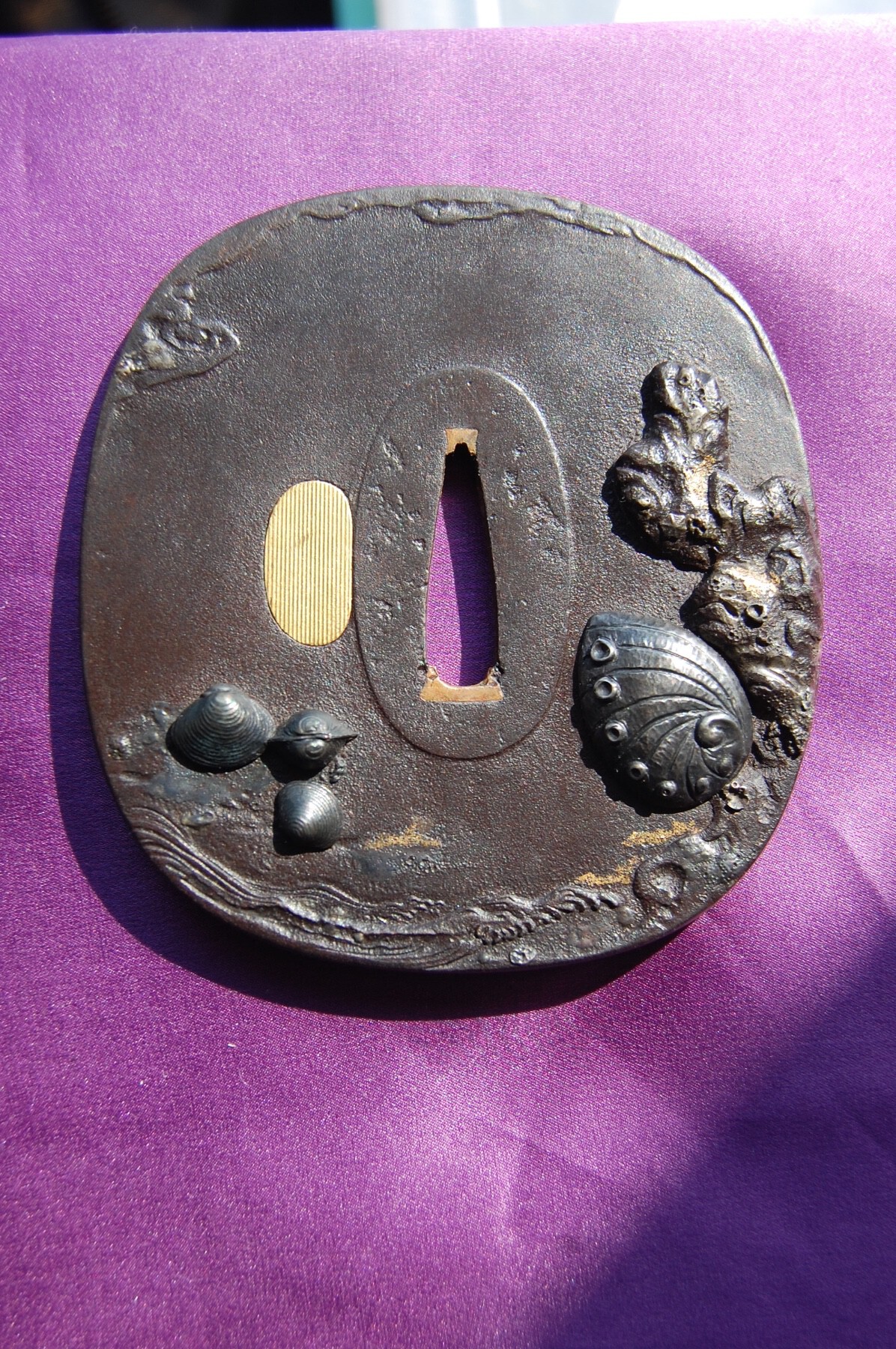
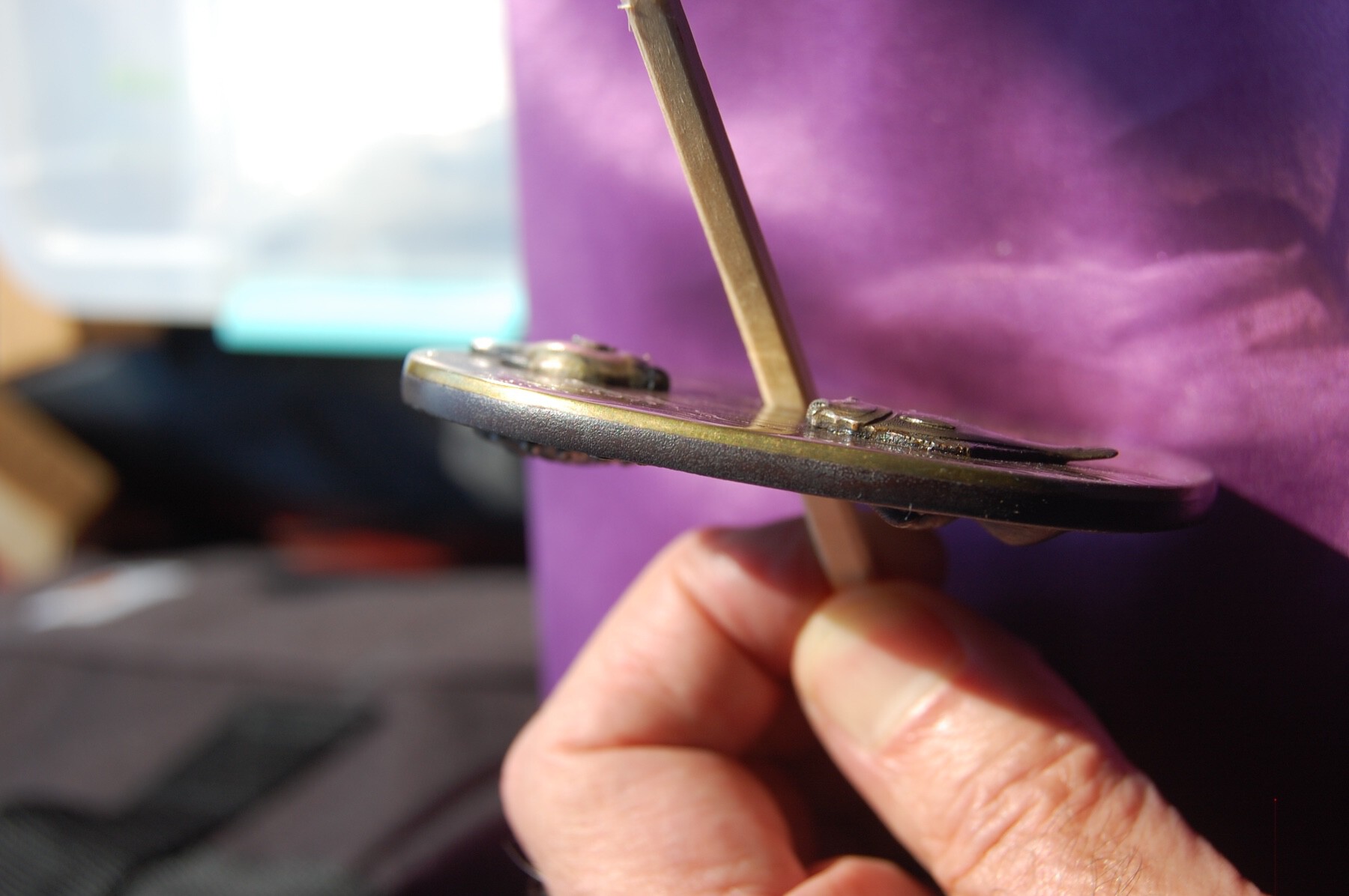
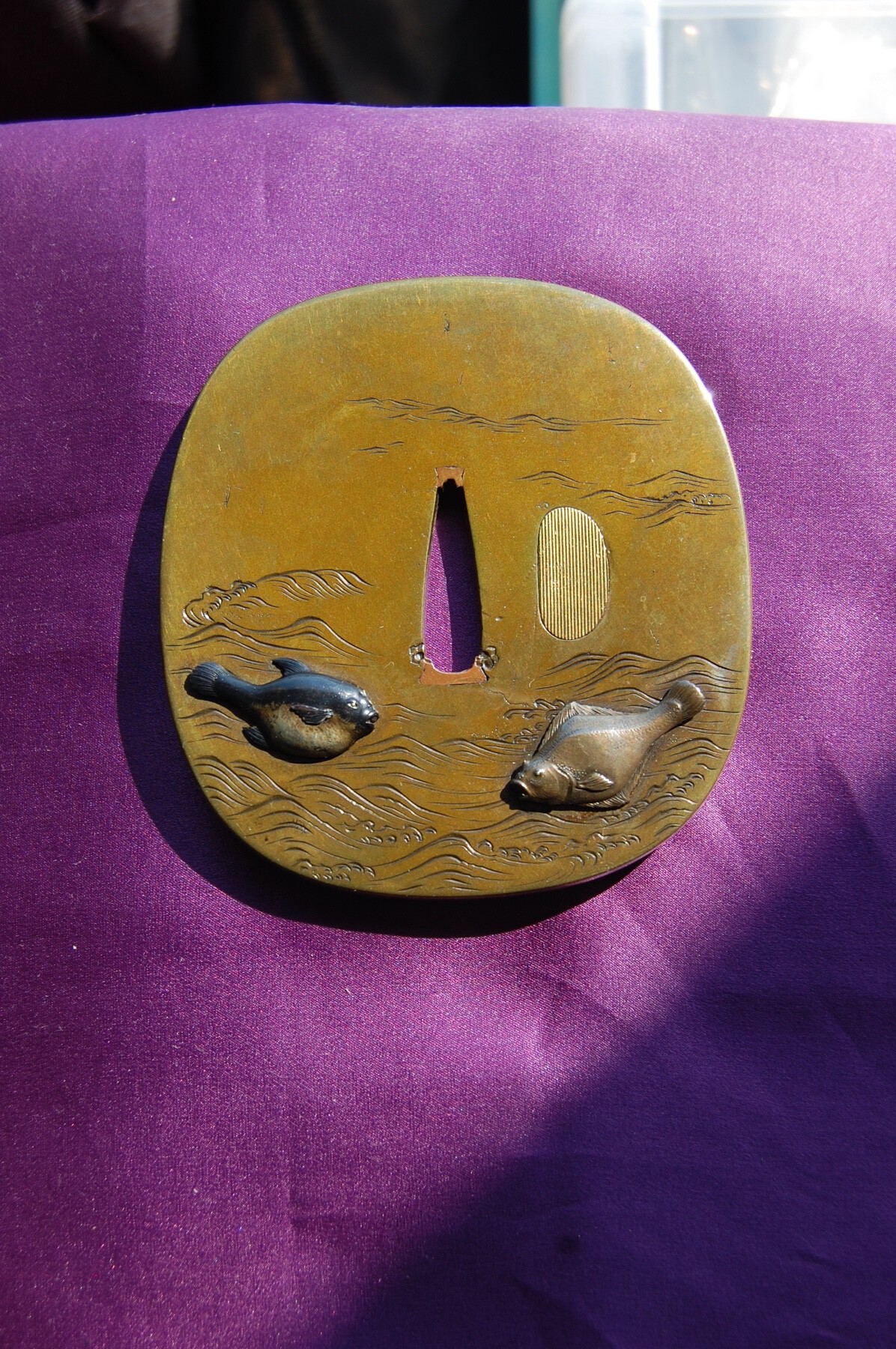
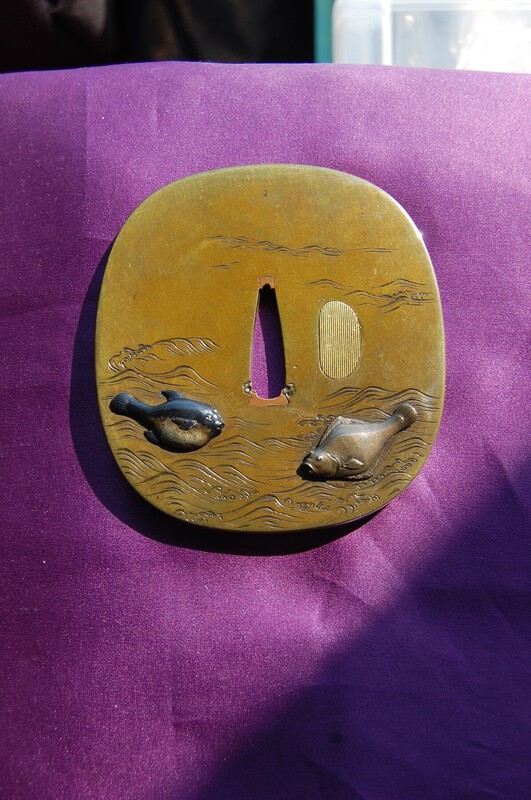
Sorry it took me a while. Here are a few shots of both sides and the mimi, showing the welding of the two metals.


-
Gassan Sadakatsu with Imperial ties
Surfson replied to Surfson's topic in Auctions and Online Sales or Sellers
Oh, sorry Stephen if I missed that!