
Dan tsuba
-
Posts
841 -
Joined
Content Type
Profiles
Forums
Events
Store
Downloads
Gallery
Everything posted by Dan tsuba
-
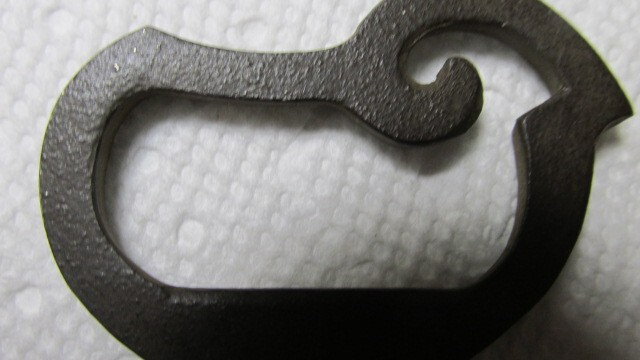
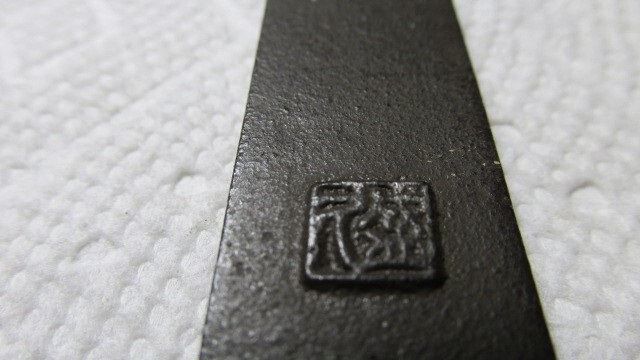
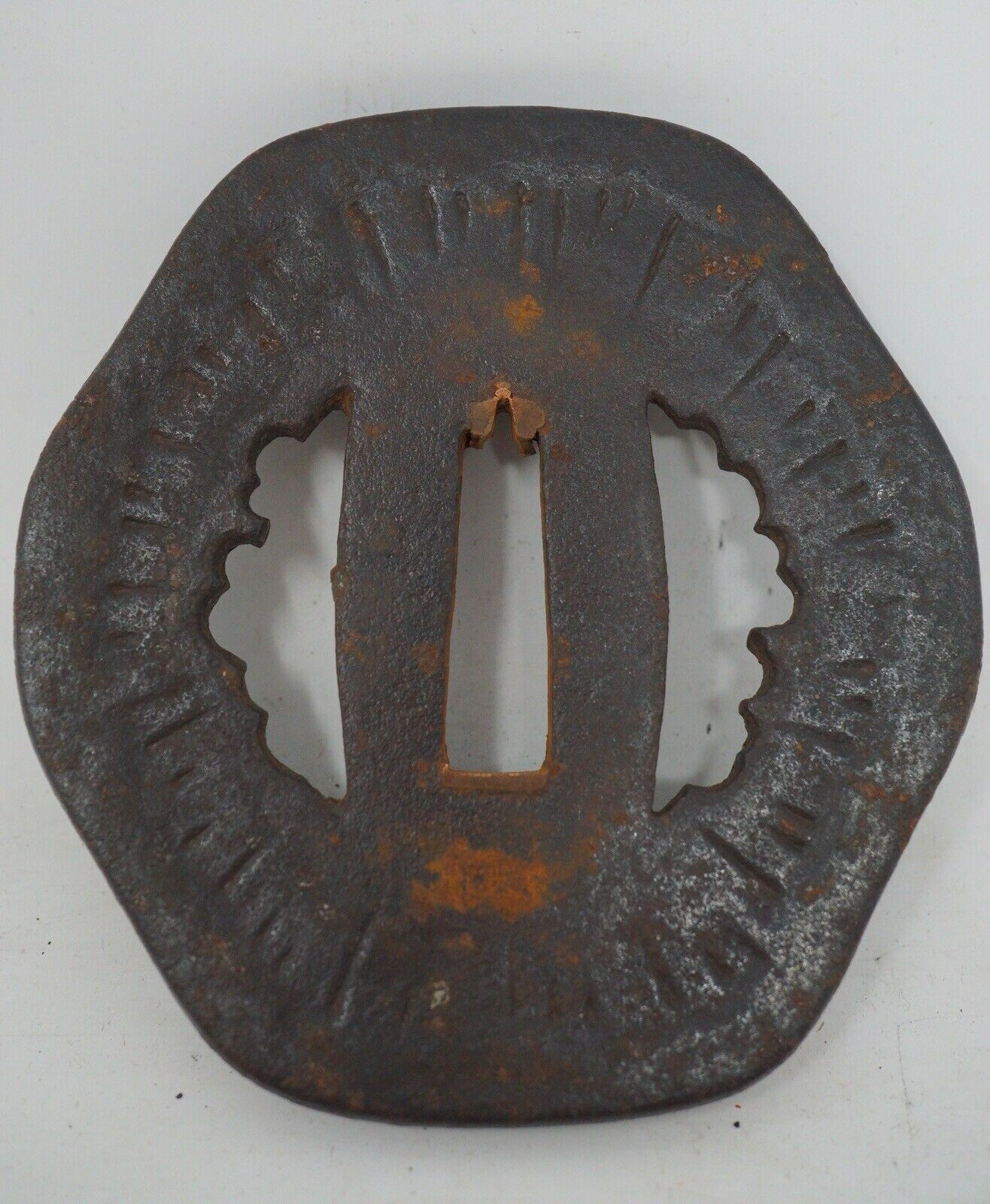
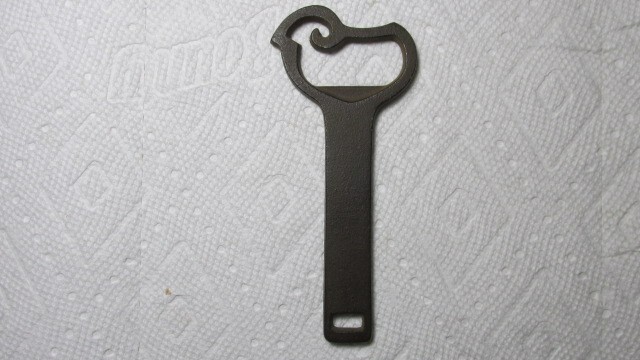
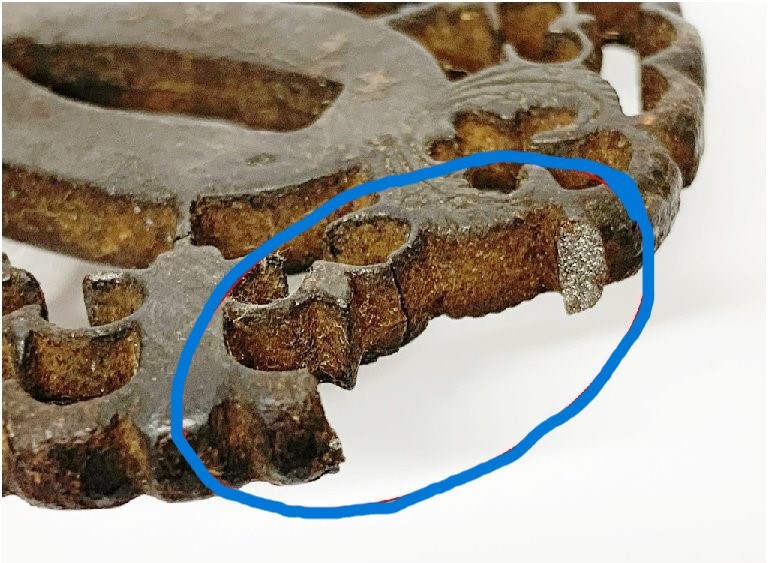
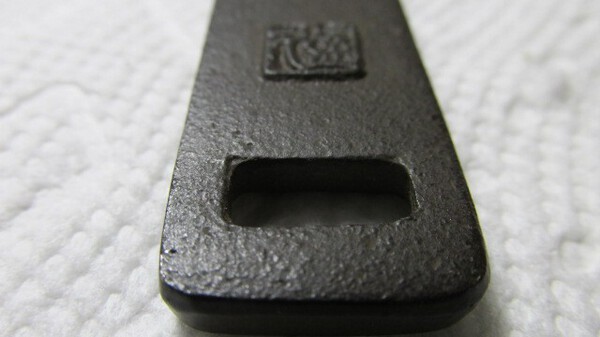
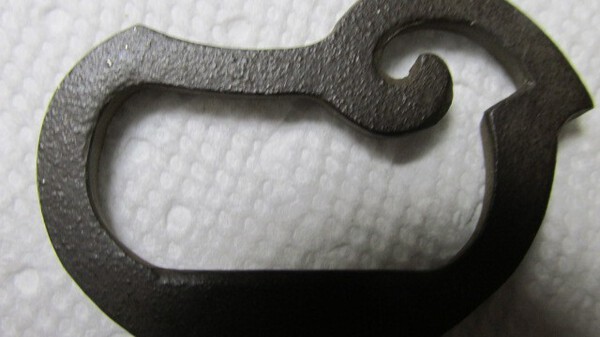
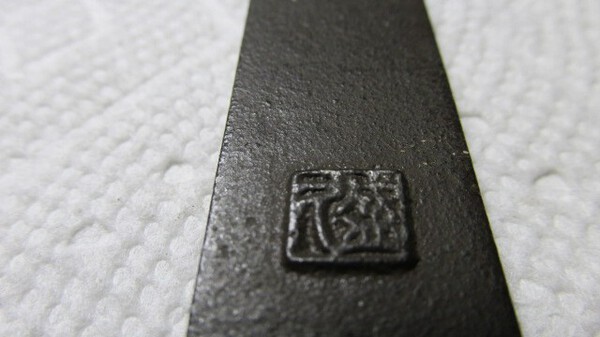
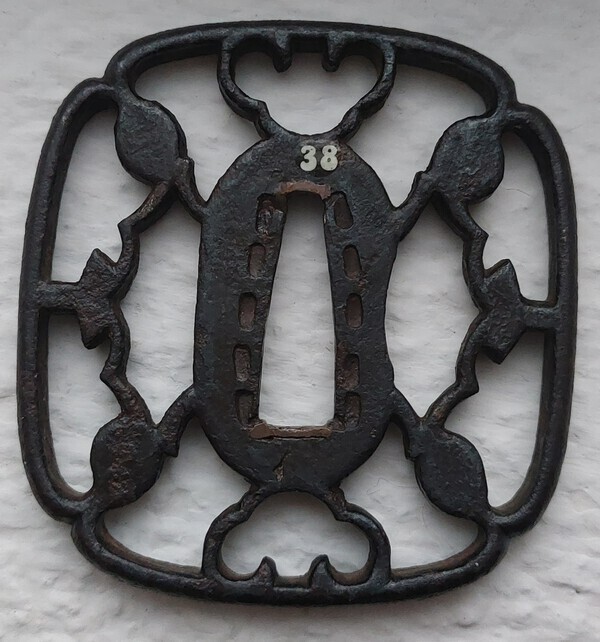
Hello Ed, nice meeting you for the first time! So, that is a really great picture you took of your tsuba! I just couldn’t keep from looking at it and noticing certain items. Now, I don’t want this post to become another “can of worms” (for others that may happen to read this!) on the forum, but I had to comment on your tsuba. Now, there is another thread on this forum titled “Tsuba casting molds”. I (and others) have done extensive research on the subject. One of the hypothesis stated is that some Edo period tsuba were made out of cast iron and sand cast. Although there are no extant (or not yet translated?) documents attesting to that fact. My personal opinion is that your tsuba looks sand cast. I purchased a Japanese made sand cast cast-iron bottle opener (cast in the old traditional way-if you wish you can find that information on page 8 of the above-mentioned thread) that I use now to compare the texture of what tsuba I think are sand cast to the texture of the bottle opener (have included 3 pictures below of my bottle opener and the picture of your tsuba for a (sight only!) comparison of textures. Your tsuba looks old, and as stated by Spartancrest in part of his post “The numbers are very neatly done, it is possible they may have been from a prominent collection or even from a museum sale”. So, not only is the texture of your tsuba interesting but also what appears to be a “crack” at the bottom of the seppa-dai in your picture. I can’t tell if that is a crack due to improper “annealing” of the cast iron (to make it less brittle) or if that is some sort of “left over” casting mark? Anyway, I would be interested in your thoughts and if you think the texture of the sand cast (cast iron) bottle opener looks similar to the texture of your tsuba. Not that this would prove or disprove anything, as your tsuba may have been made after the Edo period and if made during the Edo period it may not be cast (unfortunately there was no provenance that came with it, and there is no way to tell for sure without metallurgical testing). This is just for my own knowledge and my own inquisitiveness. Thanks, and I hope to read what you think of the comparison! With respect, Dan
-
Hello all! Is it known how many tsuba did the “average” samurai have for his swords? I tried researching it on the forum, but couldn't find anything (or maybe I missed it!). I assume that not all tsuba were made for combat. I have read (can’t quote the reference where I read it) that many samurai had 3 or 4 tsuba for each of their daisho. Maybe a “combat” tsuba. A tsuba for “everyday carry”. A tsuba for “royal and court functions”. And maybe a tsuba to reflect their “clan” with a kamon symbol. Did they always have the same design tsuba for each of their swords? Or could they have one motif on the tsuba of the katana and another motif on the tsuba of the wakizashi? Although that would not be considered a “daisho”, but it would still be a long and short sword that would meet the “two swords” requirement that a samurai would have to carry. With respect, Dan
-
Hello all! So, let’s imagine. The year was 1573 at the Battle of Mikatagahara. “At around four in the afternoon as snow began to fall, Tokugawa arquebusiers accompanied by a number of peasant stone-throwers opened fire upon the Takeda formation. Firearms, still somewhat new to Japanese warfare, were a known deterrent to cavalry assaults. Ieyasu had expected his superior weaponry to overcome Shingen's overwhelming forces and formation, but this assumption was quickly dispelled as Naitō Masatoyo's vanguard cavalry attacked and rapidly overran Honda Tadakatsu's segment of the Tokugawa right.” (https://en.wikipedia.org/wiki/Battle_of_Mikatagahara) A samurai in the Takeda force draws his sword. As he does a musket ball fired from the Tokugawa forces hits his tsuba and saves his life. After the battle, the samurai must replace his shot and cracked tsuba with a new one. However, he keeps the musket ball shot tsuba as a memento of the moment. As the years go by the tsuba that saved the samurai’s life is passed down from generation to generation. Someone along the way tries to repair the tsuba with some type of gold colored metal. Anyway, just a fun sequence of events. Did it happen that way? If that tsuba “could talk” it may have a very interesting story to tell! Onward! With respect, Dan
-
Hello all! Well, over the 10 months that this thread has been on the forum I (and others) have done some serious time-consuming and painstaking research! I now feel that I have pretty much exhausted all the references and research that I can do on the subject of cast iron tsuba being made in the Edo period (or before). Now, as mentioned in part of my previous post (of November 7, 2022) – “Now, I know from trying to find research relating to this thread over the last several months that there is very little (almost none!) historical evidence written about “cast iron” tsuba possibly being produced in the Edo period. Maybe the “16th generation iron casting family” has some “family written” old historical documents on the subject. Or, at least, some knowledge of it that was passed down by “oral tradition”? Not that I am going to fly to Japan and interview the family! But it would be an interesting way to find out if more (or any) historical information about the possibility of “cast iron” tsuba being produced in the Edo period is still in existence. “That may finally conclude this very interesting thread. Either way: “If cast iron tsuba were produced during the Edo period” or “if cast iron tsuba were not produced during the Edo period” I consider this thread to have been (and still is!) fun!” And just so the question of ‘written documents” by Edo period craftsman does not come up again (as it did before) let me add a quote from another post of mine also dated November 7th, 2022- “When the Tokugawa period began, few common people in Japan could read or write.” Anyway, that is why Edo period craftsman passed down their knowledge by “word of mouth” or what is known as “oral tradition”. Although my personal opinion is that if this thread is read in its entirety (if someone can get through it all!), an interested individual has enough referenced and researched material on hand to make an informed decision on the subject (one way or the other!). So, until I can find more research that I can reference or save up my money for a roundtrip plane ticket to Japan! -- I guess the adventure (or “crusade” – as Jean likes to call it!) will continue in one form or another! With respect, Dan
-
Hello Arnaud, About the “Edo period” tsuba on my iaito. Well yes, they looked completely different than the “new” tsuba I replaced them with on the iaito. But about “feeling different”. My personal opinion is that with an “actual piece of history” attached to the iaito, the sword carried a different “spirit” (in a good way!). Some may know what I mean, others may not. With respect, Dan
-
Hello Arnaud, So, I used to train in Iaido. I mounted an actual "Edo period" tsuba on two of my iaito swords. It was really neat to train with an actual "piece of history" attached to my iaito. I had to add some metal filler in the nakago-ana, but they worked great! With respect, Dan
-
Hello all! So (as Jean referred to it below) the “crusade” continues! Hurrah! Jean asked a question in his latest post about "for the masses". I quote it below- “But if someone is on a mission (or should I say 'crusade'?) to "prove" that cast TSUBA must have been made in EDO JIDAI in large quantity 'for the masses' (who were they? who would have bought inferior TSUBA, and for which purpose?) only because the technical possibility was given, then there is the danger to use any related information (be it correct or not) as a saving straw.” Now, this is a very long thread. I have often noticed that questions that are asked in current posts have already been answered in a previous post. I have noticed that GRC (Glen) has addressed the above issue in more than one of his posts. I include quotes from part of those posts. If the reader is interested, they can read the entire post for themselves. (part of a post from GRC 11/13/22)- “I found it interesting that he also stated: "I do not think that the majority of these “forgeries” were made for the European market." *Caveat for this quote: this was specifically referring to "gimei tsuba" (tuba with fake signatures), but was placed in a passage that was addressing shiiremono more broadly. In reading Joly's text, it seems clear to me that he is including cast-iron tsuba in with the broader group of "shiiremono". So according to Joly, most of the Edo period productions that were "made for the masses" so to speak, were of lesser quality or were deliberate attempts at deceit, and were mostly being purchased by the Japanese themselves.” (part of a post from GRC 11/14/22) “It's interesting that cast-iron Choshu and Bushu tsuba (among others) were deliberately called out, despite there not being any specific examples in this collection. It speaks to how common they were, such that the author (Joly) would call attention to the fact. In a period of relative decadence and opulence of the mid to late Edo period, it shouldn't be surprising that some members of society would opt to purchase the much less expensive cast-iron version of a famous tsuba, or one with a culturally significant or popular motif. To compare it to a modern day equivalent, it's like people who would buy and wear a fake Rolex. The real ones are widely available, but not everyone can afford one. “ (part of a post from GRC 11/17/22) “The inherent problem there is that you are talking about samurai again, not the target market for cast fittings... refocus your attention on the general populous who would have had a far more varied buying potential. It is well documented that during the peaceful Edo period, some merchants had exceeded the wealth of many samurai, while the masses were still much less affluent. Yet the samurai were still the "cultural elite", and the general masses were not as "cultivated" or as educated as the samurai themselves. So, it doesn't take much of a leap to envision the general populous admiring the cast tsuba copies that have a lot more "obvious" designs with 3D depth to them, like "the frog" and "the rat", or any of the heavily carved "Choshu and Bushu" tsuba, as noted by Joly. Now throw into the mix, many of the lower quality nanban tsuba that were so popular among the masses during the mid to late Edo period, as well as the multitude of cast copies of the Kinai dragon tsuba, or the myriad of examples in the Shachi tsuba thread. These surely would have appealed to those who were NOT the exalted aesthetes that Ford seems to think were the only people who were purchasing tsuba during the Edo period. People also need to stop viewing these things as defensive tools during the Edo period. The idea is absolute folly and is completely irrelevant in terms of determining whether or not cast-iron tsuba were produced in the Edo period. Yet it remains one of cornerstones of the "post-Edo believers". What war, what battle was anyone getting into? And that goes for both the samurai and the general populous. The defensive potential or function of the tsuba, during the Edo period, is completely irrelevant to this whole topic.” The “crusade” continues (and remember that in one of my previous posts this “crusade” question about cast iron tsuba was initially undertaken 133 years ago by Mr. Huish!). With respect, Dan
-
Jean, My friend, your thoughts, opinions, and valuable knowledge are always appreciated by me. Although, it seems to me (my personal opinion) that sometimes you miss the entire point of the subject being presented in the post. As an example, in your recent post you stated “Did Mr. Huish have some competence in metallurgy? When he reports about "hard wrought iron", I have my doubts.” Now, after the entire post, that is all what you derived from it? Well, the only way to find out the answer about his knowledge of metallurgy is to ask him. But oh wait, he is dead!! Unless you can do research to ascertain his knowledge on the subject, you really don’t know for sure. So, what is your point in presenting your opinion about his knowledge? What are you trying to say? I just wish to understand your point of view. With respect, Dan
-
Hello all! So, some may consider this a “minor point” but I nonetheless find it very interesting. Here is a quote from Mr. Huish (referred to in my previous post) from his book published in 1889- “The decoration of the sword furniture showed symptoms of decline early in the present century. Working in hard wrought iron was first of all shirked, and similar effects were endeavoured to be produced by castings ; then the decoration ran riot and transgressed all limits, so that many of the pieces made between 1840 — 1870 could never have been used for the purposes for which they were professedly intended ; such pro- ducts are remarkable in a way, as showing the lengths to which elaboration may be carried, but they can never stand for a day beside the dignified workmanship of an earlier date.” P.182 The longer quote was previously posted on this thread by Spartancrest (Dale) on February 17th 2022 and came from this reference- “JAPAN AND ITS ART” MARCUS B. HUISH, LL.B., EDITOR. OF "THE ART JOURNAL" LONDON THE FINE ART SOCIETY Limited, 148, NEW BOND STREET 1889” (So, when Mr.Huish is referring to the “present century” above, he is referring to the 19th century or the 1800’s, since the book was printed in 1889). Below is a weblink to his book- https://archive.org/details/cu31924072968286/page/n199/mode/2up?view=theater Now, an interesting point to consider. In my previous post, I included part of a letter that Mr. Huish wrote to the “Japan Weekly Mail” in Yokohama Japan. He asked a specific question about cast iron tsuba in that letter (please refer to that specific post). He sent that letter on May 17th, 1889. Mr. Huish wrote the preface to his book in November of 1888. So, I would think that his book was completed by that date, and then sent out for publishing. It was then published in 1889. So, it appears that Mr. Huish had completed his book (and the above quote taken from his book) before sending his question about cast iron tsuba to the “Japan Weekly Mail”. Evidently, he still wanted further research done on the production of cast iron tsuba. Whether he ever received a response from the “Japan Weekly Mail” is unknown to me. Onward! With respect, Dan
-
Hello all- Upon doing further research about cast iron tusba I “stumbled” across “The Japan Weekly Mail”. “The Japan Weekly Mail: a review of Japanese Commerce, Politics, Literature, and Art, Yokohama”. The below article was found in the July 6th, 1889, issue on page 14, under “Japanese Sword Blades and Furniture”. Which was found at the below website: https://archive.org/details/jwm-bound-1889/page/13/mode/2up?view=theater The article is very interesting, but I just attached what I thought were the important points below. It was written from an editor of an art journal in London to the editor of the Japan Weekly Mail in Yokohama on May 17th, 1889. So, it seems that some of the same questions about tsuba have been asked for about 133 years! He asks several questions that are listed in the article under his "Appendix Desiderata", but I only included the question about cast iron tsuba. Also, this is the earliest date on research that I could find (so far!). It predates the other research I found and posted that was found in the “Transactions and Proceedings of the Japan Society, London” (1914-1915) by 25 years! The quote from the article follows below; “It is in the hope that an interest does exist of which we are unaware, or that the matter may be ventilated, that I take the liberty of asking you to give publicity to my letter. It would be an immense benefit to collectors here if they could get into touch with collectors in Japan. ‘There are many points as to which we get hopelessly entangled here but which might easily be unraveled on the spot. I append only a few on which we seek information. Then again there are Japanese textbooks we would willingly contribute to the translation of. The interchange of photographs, which perhaps the Asiatic Society might kindly assist in, would be a real benefit. I will not trouble you further but, apologizing for the length of my letter, beg to subscribe myself Yours obediently, MARCUS B. HUISH, Editor of The Art Journal. London, May 17th, 1889. APPENDIX.— DESIDERATA. Old iron tsuba; whether often cast and decarbonized for chasing or damascening ;...…". Now , as stated above, there were many more questions asked under the above heading, but I only included the question about cast iron tsuba. If you wish to see the complete article and all the other questions asked, I have provided the link above for your reference. The adventure continues onward! With respect, Dan
-
Hello all! So, I was on the internet looking to purchase a Japanese cast iron kettle. I thought it may be neat to add it to my collection along with the Japanese sand-cast cast iron bottle opener I have (and maybe some possible Edo period cast iron tsuba that I have “hanging around” on the walls!). But the one I wanted was $383.00 U.S. dollars, so too much for me! Anyway, I found some good information on one of the “cast iron kettle” sites. I thought it would be interesting to add to the thread: “The origins of Yamagata cast iron go back to the Heian period (794-1185), when a warlord came to the Yamagata region in a military campaign, and metal casters in his army found that the sand in the Mamigasaki River as well as the soil quality of the surrounding area was ideal for making casting molds. Some of the men settled in the region and became the founders of Yamagata cast iron. In the late Edo period (1603-1868), the cast iron industry in the area developed greatly when the town was reorganized and a new adjacent town called Do-machi was established as a home for casting artisans. At the time, artisans mainly produced everyday items and Buddhist statues, but many pilgrims visiting Dewa Sanzan (the Three Sacred Mountains of Dewa) bought the items as souvenirs, which led to Yamagata cast iron becoming known all over Japan.” From the below website- https://en.jtakumi.com/categorysub.php?catsno=5040 The adventure continues! With respect, Dan
-
Hello all! So, Jean in his last post stated “I would like to suggest to open up a new thread about casting iron TETSUBIN and KAMA. Perhaps in a casting forum?” Now, that post seems to be in response to a post above his dealing with the very interesting subject of cast iron kettles and how the designs were applied during casting and after casting. Although starting a new thread on kettle casting (tetsubin) may be of interest, I think that it would detract from their importance on this cast iron tusba discussion. I feel that how the cast-iron kettles were made and decorated is extremely relevant (and gives valuable insights) into the production of cast iron tsuba in the Edo period. I include a quote from a part of Glen's post (posted on Nov 11, 2022)- “The most important points coming from Sesko and Haynes, who are both two of the leading Western tsuba scholars. Both of them independently researched and published statements that cast iron tsuba were being produced by kettle makers during the Edo period. And, in Sesko's example, he referred to a documented case of a tsubako who had apprenticed under a kettle maker who also made tsuba. So, the idea that cast iron kettle makers were also producing cast iron tsuba in the Edo period is a statement of fact corroborated by two tsuba scholars.” So, again, I feel that how cast-iron kettles were made and decorated is extremely relevant (and gives valuable insights) into the production of cast iron tsuba in the Edo period. Anyway, just my opinion on the subject! With respect, Dan
-
Hello all! So, here are pages 53 and 54 (with “plate XVI attached) from the “Transactions and proceedings of the Japan Society, ... v.13 (1914-15)” from the section "Metals and Metal Working in Old Japan" that were mentioned in my previous post, and I finally figured out how to download it (man, that took a while to learn how to do it!). I think this is very interesting information on cast iron and how it was further prepared for adding decorations. ( 53 ) Two standard lanterns (toro) at Nikkō are the only large art objects of cast-iron known to me. They were presented to the shrine in 1641 by Date Masamune, lord of Sendai. The metal has been chiefly employed by the art craftsman in small castings, such as kettles and other vessels for heating water or wine, and many of these are masterpieces of modelling and decoration. They are cast by the method of cera perduta, a process which will be described when dealing with the casting of bronze. When these castings are taken from the moulds in which they have been cast, although they may be perfect so far as the ornamental designs, which had been modelled in wax, are concerned, yet they are quite unfit for further decoration by either chasing, inlaying, or similar processes. Their surfaces are hard and brittle ; they are hence subjected to the following softening and decarburizing process: The furnace used in the process consists of a cast-iron pan, from which the bottom has been broken away, with a lining of refractory clay. This is placed on a fireclay slab, which is perforated with numerous holes. The whole is set upon three or four bricks on the floor of the workshop. The cast-iron object is placed inside the furnace so that it rests directly on the perforated slab, and the space between it and the sides is filled with charcoal in carefully broken lumps. The charcoal is ignited and allowed to burn for an hour or more ; and when nearly all is consumed the object is reversed, and the operation repeated. The surface of the casting is then found to be soft and malleable, the finest lines and channels can be chiselled in it with unbroken edges, and any mode of surface decoration can be conducted without difficulty. After the object has been decorated, the fine brown oxidized surface to which these castings owe so much of their beauty, and by which the effect of their ornamental designs is so much heightened, has yet to be produced. For costly objects, the whole surface is carefully gone over with a pointed punch to ( 54 ) give it the irregularly rough texture which is so much esteemed by the Japanese. The casting is then heated over a small charcoal fire, and as soon as a portion of it has reached the proper temperature it is rubbed with a liquid consisting of plum vinegar containing iron in solution and ferric oxide in suspension. Another part is similarly heated and rubbed until the entire surface has been treated, and the desired amount of rusting has been produced. After being well rubbed with a dry cloth, it is covered with a thin coat of lacquer and heated cautiously over a brazier, a fine spray of water being splashed on it with a brush during the operation. A typical specimen of one of these cast-iron kettles, with a punched surface and gold and silver inlays and azziminia work, is shown in Plate XVI. Onward! With respect, Dan

-
Hello all- So, some excellent information can be found in the “Transactions and proceedings of the Japan Society, ... v.13 (1914-15).” From the section “Metal and Metal-Working in Old Japan” (which starts on page 20 of the text), By William Gowland. Again, here is the link to a pdf of that year’s journal- https://babel.hathitrust.org/cgi/pt?id=njp.32101064994922&view=1up&seq=100 Mr. Gowland’s work and credentials have already been discussed in one of my previous posts. Suffice it to say that Mr. Gowland was in Japan from 1872 (4 years after the Edo period) until 1888. In the article on pages 45 and 46 he talks about iron smelting and furnaces. On pages 52 to 54 he talks about cast iron and its decorations and how the cast iron was prepared prior to adding decorations. I think this is an interesting read and may answer many questions in recent posts to this thread. The adventure continues! With respect, Dan
-
Hello all! So, here is what I consider the “smoking gun” that cast iron tsuba were made during the Edo period of Japanese history (or before). Here is something interesting. I remember reading the below quote about 8 or 9 months ago but couldn't remember the reference. Then as luck would have it, the paragraph was posted under another thread on this forum! The below quote can be found in the “Transactions and proceedings of the Japan Society”, ... v.13 (1914-15), page 51 (of the text itself), 3rd full paragraph on that page. It is listed below for your reference- https://babel.hathitrust.org/cgi/pt?id=njp.32101064994922&view=1up&seq=48 (the title of the article is “Metals and Metal Working in Old Japan” – which is a great read if you have the time!). "in some, the pierced cuts are so fine that they do not exceed 1/250th inch in width, and their sides are perfectly parallel. These were produced by a very laborious method of procedure. A minute hole was first drilled in the iron with a fine steel wire moistened with oil and powdered garnets or siliceous rock; the hole was then elongated into a slit by means of another fine steel wire used as a saw, also moistened with oil and the above powder. These cuts were further continued with flat wires, and were then reduced to the extreme degree of fineness required by hammering both sides of the metal until they were sufficiently closed. The sides of the cuts were kept parallel by rubbing them from time to time with flat wires of steel and grinding powder. Iron guards by the best craftsmen were never cast; they were always of wrought iron." Now, the most important part of the above quote (as it refers to cast iron tsuba) is the last statement. “Iron guards by the best craftsmen were never cast; they were always of wrought iron” So, how do I interpret that statement? Does it say that “Iron guards were never cast”, no it does not. What I believe the author is stating is that “Iron guards were cast. But they were cast not by the best tsuba craftsmen (they were cast by iron casting craftsmen, who are not tsuba craftsmen)”. Also, “That the best tsuba were made out of wrought iron, and they were made by the best tsuba artisans and craftsmen”. That’s what I conclude from the quote. Now the next question is “was the author who wrote the article that the quote was taken from "reputable" and knew what he was talking about?” The article was written by William Gowland (1842-1922). There is a book written about him titled - “William Gowland: “The Father of Japanese Archaeology” Illustrated Edition by Victor Harris (Author), Kazuo Goto (Author)-2003” There is a complete biography of him to be found here- https://en.wikipedia.org/wiki/William_Gowland (it is a very interesting short read!). Now, what is most interesting is that William Gowland started working in Japan in 1872 (which was only 4 years after the ending of the Edo period in Japan). He stayed for 16 years. He conducted many archaeological digs and findings (among his varied other interests). So, yes, the man definitely knew what he was talking about in the above quote regarding “cast iron tsuba”. Now the next question someone may ask is “were the cast iron tsuba he was talking about in the above quote made in the Edo period”? Which is a good question! Seeing how Gowland was in Japan starting in 1872 and stayed until 1888, then if he did not compare Edo period made cast iron tsuba to Edo period made wrought iron tsuba; that means he would have used (newer made) cast iron tusba made from 1868 (just after the Edo period) until 1888 (when he left Japan) to compare to Edo period made wrought iron tsuba. Now, that sounds very unlikely. Especially since the man was an archaeologist and that by definition is “a specialist in archaeology, the scientific study of prehistoric peoples and their cultures by analysis of their artifacts, inscriptions, monuments, etc.” So, my belief is that this is the “smoking gun” statement that concludes that cast iron tsuba were made in the Edo period, and maybe even before the Edo period of Japanese history (although they were considered to be “a much lower quality and not the best tsuba out there”, and that fact has previously been discussed on various posts to this thread!). Anyway, just some more fun research that took up a good part of my day (but hey, I am retired so that was great!). The adventure continues! With respect, Dan
-
Hello all! As much as I have tried, I just can’t seem to stay away from this thread! There is so much research that can be done and is yet to be found (at least by me!). I happened upon the following research today. It is a great article written in Japan and translated to English in 2004 and includes some pictures. It is a good read and also deals with 3 different types of casting molds (which I will refer to later in this post). But for now, listed below is the title of the work and where it can be found. The part of the article I selected deals with metalwork in different periods of Japanese history. Of particular interest is the Muromachi and Edo periods statements. https://www.nihon-kogeikai.com/TEBIKI-E/4.html “Handbook for the Appreciation of Japanese Traditional Crafts” 2004 “Different periods in history have seen the production of different kinds of metalwork in response to the demands of the times, with skills being handed down from one era to the next. During the Yayoi period (300 BC-AD 300) copper was used in the making of swords, mirror and dotaku (bell-shaped ritual objects). During the Tumulus period (258-646) items of personal adornment were used as burial goods. The Nara period (710-794) saw metalworking techniques employed in the production of Buddhist sculptures and ritual implements. Swords and armour were a particular feature of the Kamakura period (1185-1336), while cast iron tea ceremony kettles were produced in large numbers during the Muromachi period (1336-1573). In the Edo period (1615-1868) all kinds of metalwork items were made, including temple bells, garden lanterns and everyday utensils for use by the masses.” The below is included to verify how the handbook was translated- “AFTERWORD In 2002 the Committee of the Japan Crafts Association (Nihon Kogeikai) decided to commission an English-language version of its previously published Nihon Dento Kogei Kansho no Tebiki (Handbook for the Appreciation of Japanese Traditional Crafts). This work has now been undertaken as part of the Association's 50th anniversary programme and has been made possible thanks to financial support from the Foundation for the Promotion of Japanese Traditional Crafts (Nihon Dento Kogei Shinko Kikin). Translation into English was preceded by a review of the original Japanese text, simplification into plainer language, and modification according to the perceived needs of non-Japanese readers. We would like to express our deepest gratitude to volunteers from the Japan Crafts Association for assisting with modifications to the text, and to D&Y Ltd. and its staff for undertaking the English translation. Their enthusiasm and cooperation have contributed enormously to the success of the project.” The Japan Crafts Association September, 2003” The “Afterword” continues, but I included the important stuff! Now, the “Handbook” is a great quick read. Another interesting part of it is how they talk about casting and how casting molds were made. Now I am not sure if all these molds could be used for cast iron, but it is nonetheless interesting. I have included a part of the article below- “CHUKIN (Casting) Chukin involves heating metal until it melts followed by pouring into a casting mould and subsequent cooling at room temperature. Casting differs from other metalworking techniques in that forms are made by pouring molten metal into moulds that have been prepared from an original model made of a completely different material. It allows the creation of far more intricate and complex forms than can be made by other metalworking techniques. Original models may be made of wax, plaster, clay or wood. Wax is particularly suitable for the making of intricate and freely modelled forms and has long been a favoured material. Nowadays metal and silicon are also used.” “MAKING OF CASTING MOULDS Casting moulds are classified into three types according to how they are made: komegata (sectioned mould), rogata (lost wax mould) and sogata (sogata mould). Komegata = In komegata or sectioned moulding, the mane casting mould is made from a plaster mould that has itself been created from an original clay model. Once the outer mould has been made, an inner mould is prepared in such a way that the gap between the inner and outer moulds will result in the desired thickness of cast metal. The moulds are then hardened by firing to 700-800℃. Rogata = In lost wax casting the mane casting mixture is compacted around an original model made of a special mixture of beeswax and resin. The mould is then hardened by firing to 700-800℃, in the course of which the wax melts and drains away, leaving a hollow space in the centre of the mould. Sogata = A wooden profile template is rotated inside a bucket filled with mane casting mixture to create the outer mould. Once the mould has dried it is removed from the bucket and hardened by firing to around 700℃.” Anyway, I thought that the “Handbook” contained some very interesting information! The adventure (and research) continues! With respect, Dan
-
Roger, Thanks for the explanation. You are correct, and I apologize for any misunderstanding. Onward! With respect, Dan
-
Hello all, So, Ford brought up some excellent points in his last post regarding the reference titled “Casting Sites of Bronze Bell and Iron Kettle in Ancient and Medieval Japan” paper written by Shinya Isogawa in 2014 (that paper was referenced to in one of my earlier posts – but here is the website where it can be found at https://www.jstage.jst.go.jp/article/isijinternational/54/5/54_1123/_html/-char/ja Ford’s first point (and it is well taken) is that “There seems to be no mention of Edo period casting in this paper” I find that to be correct (although I may have missed that because I need new glasses!). The only reference I could find stated “Kettles in Medieval Japan (12–16 century)”. So, the 16th century are the years in the 1500’s. So that pre-dates the Edo period by about 100 years. Now I know from research that there is a kettle maker in Japan who is a 16th generation kettle maker, and they started producing cast iron kettles in 1625. That information can be found here- https://www.architonic.com/en/story/25portraits-Japan-stories-suzuki-morihisa-studio/7001664 On to the next point. Ford states that there is no mention of what was referred to as “The article outlined that the foundrymen were using widely available, distributed cast-iron ingots”. Well, what I did find in the article is that “Thus division of production has considerably developed in medieval period, and metal material was circulated all over Japan as item for sale, and using this metal, casting craftsman made a production of kettles.” So, unless the tradesmen that were selling this “metal material” were just pieces of cast iron in loose form, I don’t think it is impossible to imagine that they were sold as “ingots”. The next point is the quote “and would have poured this into multiple pre-made sand molds.” What I did find in the article was “It melted a large-quantity of metal at a time and furnished many molds of kettles with molten metal one after another.” That statement is found at the end of this paragraph “In order to melt metal material, cast iron is charged with charcoal into melting furnace and is burned with sending air. Molten metal is poured into sprue by ladle. In case of large-sized object, casting craftsman let molten metal flow through gutter (shallow channel for molten metal) into sprue. Melting furnace clearly resembles Japanese traditional melting furnace (Koshikiro). Its shape is cylinder, and it has 60–70 cm inner diameter, and is about 1.5 m in height. And it has one tuyer (mouth for blast) through the middle of its body. Inner diameter of tuyer is about 20 cm. This melting furnace has the almost same shape and structure with the melting furnace for Buddhist bell. It melted a large-quantity of metal at a time and furnished many molds of kettles with molten metal one after another.” And the next bit of contested research from Ford. “Cast iron goods were commonplace during the Edo period, and foundrymen were supplying all sorts of small sized consumer goods in large quantities. They even pointed out that a certain point in the Edo period, household ceramic bowls had been largely replaced by cast iron bowls.” Now the statement I found in the article states - “In ancient period, cast iron kettles were rare objects. In Japan, production of the oldest cast iron object was made in the end of 7 century. It is a large-sized Hagama for particular use. And in 9–10 century, in ancient smelting factories of Tohoku, Kanto, Hokuriku, Kinki district, cast iron objects were made. In those days, most of kettles for cooking were made from clay, and these casting kettles could not supply a demand for cooking vessel on the whole, and were in circulation as particularly luxury utensils among a small number of people. In 12 century, production and supply of cast iron kettle increased to high level, and then iron kettles became to be daily necessaries for people.” Now the 12th century (or the 1100’s) is way before the Edo period. And the final point from Ford- “I'd also add that melting cast iron is impossible "at a relatively low temperature" . Typically 1200 degrees C is needed to do the job, this is really at about the limits of a bellows fed charcoal fire.” The type of furnace used for cast iron was described in one of the paragraphs above. So, whatever the temperature needed to melt cast iron, we know that it was done, and they had the furnace to do it. Now in the article the author refers to an “annual report” noted below- “From 2000 on, the annual report, Data book on Casting site Study has been published, and it contains not only data of annual meeting, but also recent achievements on study of casting sites, and discussion of the last year and so on.” Now, wouldn’t that be something interesting to study! I have searched the internet but couldn’t find anything about it. Wow, that research was super fun and kept me busy! I may have missed something along the way. Like I stated above “I need new glasses”! Now, it is time for me to use that Japanese cast iron bottle opener I bought (described in one of my previous posts) and see if it opens a bottle of beer! Anyway, the adventure continues! With respect, Dan
-
Roger, Thank your for your advise. Although, since I am old I am "kind of slow"! I don't understand? What do you mean in referring me to the posts by Bob Morrison? It appears to me that several (if not all !!) of those tsuba would be well "beyond my means" in cash outlay. Although the information provided on the motifs are interesting. Could you please explain why it is "worth my while". Thank you very much, With respect, Dan
-
Hello all, Jean stated in his last post- “Training your eyes and understanding traditional techniques will help you to decide what is good work and what is not. Buy what you like, and look at it also from the artistical and aesthetical side. Buying a cheap TSUBA like that "JAKUSHI" does not teach you anything, and it is not a pleasure to look at. It may well be a genuine Japanese TSUBA, but it is nothing one should collect. Lastly, there are really good TSUBA at reasonable prices available, so there is no need to hunt for bargains.” Well, the only tsuba I can afford are cheap type tsuba (it is the only tsuba I can afford to collect, I hunt for bargains, and they are a pleasure to look at). I never spend over $250.00 U.S. dollars for a tsuba (the tsuba I have purchased cost me anywhere from $40.00 U.S. dollars to $250.00). Why? Because that is all I can afford. But also, if I get “bit”, if what turns out to be a fake or reproduction tsuba, I don’t lose a lot of money! I really enjoy my collection of tsuba (over 120 and counting!). They are a pleasure to look at, hanging on my walls. I learn a lot from these “cheaper” tsuba. The techniques used in making them, the Japanese legends that are sometimes depicted on the piece, the different materials used on the piece, and the intricate designs (yes, even on a “cheap” tsuba), and other learning experiences. Now, maybe unlike others, I will never be able to afford a beautiful museum piece type tsuba. Maybe others can, and that is great for them! But I still look at books of tsuba collections at museums and just “drool”! Anyway, I feel that someone must give these lower quality and lower priced tsuba a “good home”. Hey, that is what I do!! Hurrah! With respect, Dan
-
Hello all, (I present the below information only as a support for the “cannibalized metal” theory, and not to distract from this thread or “impress” anyone with what I collect!) So, Glen in one of his latest posts stated- “He also concluded that the rarity of extant examples of older cast-iron products strongly suggested that older items would have been "cannibalized" and remelted to make new items once they were damaged through use, transport, or fire damage. So, looking at it from a reverse perspective, we can perhaps infer that newer items will have had a greater chance of surviving, and older items will be harder to come by.” Now, that “cannibalized” use of metal has been done over centuries. I am referring to something else I collect. I collect antique “kukris” (oldest from about 1840), the fighting weapon of the “Gurkha” of Nepal. “The oldest kukri known to exist is the one on display at the National Museum in Kathmandu which belonged to Drabya Shah, the King of Gorkha in 1627 AD. It is, however, certain that the origins of the knife stretch further back, way back to 2500 years." And also- “Although the oldest known surviving example (currently) of a kukri is in a museum at Kathmandu in Nepal. It has been approximately dated as having been made in 1559. Although that kukri survived because it was owned by a king of the Gorkha people. Unlike the Japanese swords of old which were handed down from generation to generation; the kukris that may have been owned by the common Gorkha before that period could be lost to history through being buried with their deceased owners (which is a religious custom in Nepal) or having been reheated and reforged time after time.” (The above is a quote from my own article on kukri that I have been working on for over a year!) But below is some further research- “While kukri-like weapons have been carved in temple reliefs and are occasionally seen in ancient art throughout northern India, it is critical to remember that modern Nepal is a very ethnically and linguistically diverse place. Most of these groups did not use the kukri as a tool or weapon prior to the end of the 18th century.” (Above from- https://chinesemartialstudies.com/2012/11/05/identifying-and-collecting-the-nepalese-military-kukri/ Also- “……… museum samples practically do not differ from those made now. Earlier samples were not preserved due to the low-quality metal used in them.” (Above from- https://ezoteriker.ru/en/nepalskii-mech-nazvanie-nepalskii-nozh-kukri-mify-i/ So, perhaps with cast iron tsuba (as with kukri) there may be no early examples because the metal was “cannibalized” for re-use or they just “rusted away” because of the low quality of metal used. Just another thought for consideration. The adventure continues! With respect, Dan
-
Hello Arnaud! And welcome to this super great forum! Thanks for all the valuable information and resources on "Techniques of colouring for goldsmith" and "tsuba making" and where to find them. Very much appreciated! With respect, Dan
-
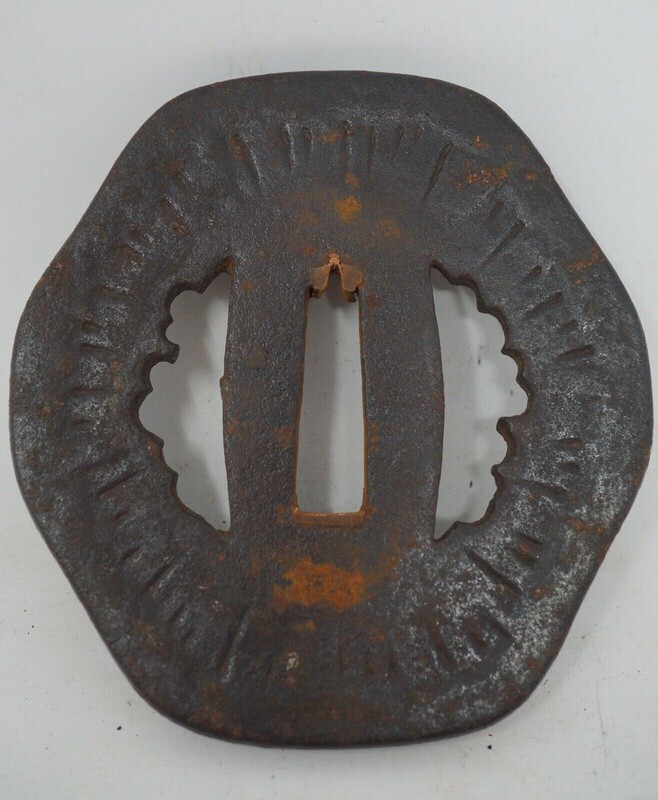
Hello all (and I am still playing the video Dale sent – “oh no, not you again”- he has a great sense of humor, and it is appreciated as this thread can sometimes become “heated”. And I don’t mean in a “cast iron" furnace way!) Anyway, I have read on this thread where now there appears to be a discussion on “cast iron tsuba carving”. And that is great! Please continue so that I may learn more about this great hobby! But Darrel stated in one of his posts shortly after my post of the “bottle opener” - “OK, so now you’ll have to see if you can chisel it and do an inlay like Glen said would be so easy. Maybe try a file first?” I (personally) have no doubt that cast iron tsuba could have been chiseled and possibly inlaid. Hey, but that is just me! Anyway, what I think is more relevant is that the motif in cast iron tsuba (if not cast with the piece) was cut (which must be easier than chiseling) to add their design. This would keep the entire tsuba flat, with no outstanding concave or convex areas in the design (and in some examples the mimi could have been filed somewhat round). I have included some pictures of what I have described above. Remember, I am not saying that these are cast iron tsuba. I just wish to describe “the flat” appearance of a “cut motif” tsuba (that may have been done with cast iron tsuba to save time and effort). Onward! With respect, Dan


-
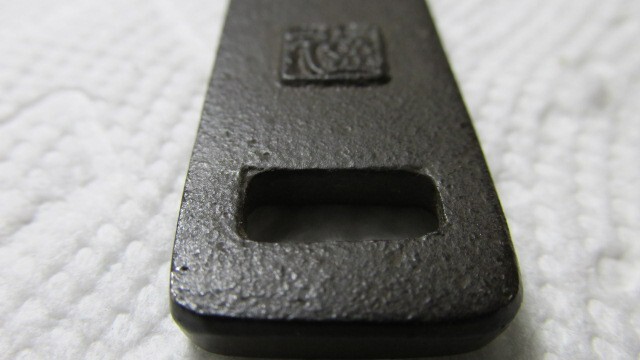
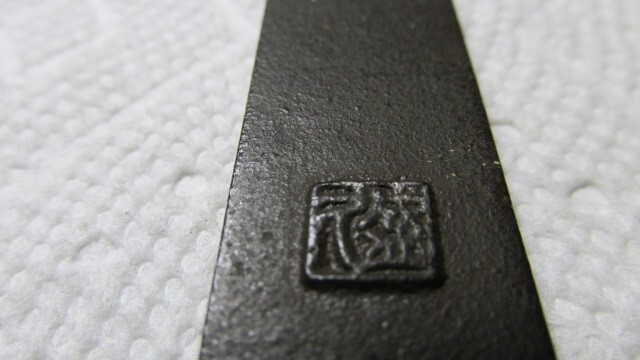
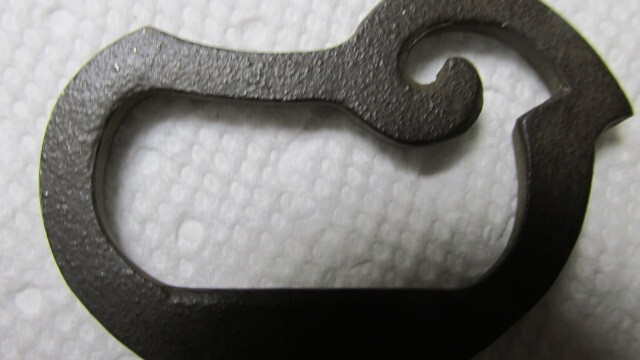
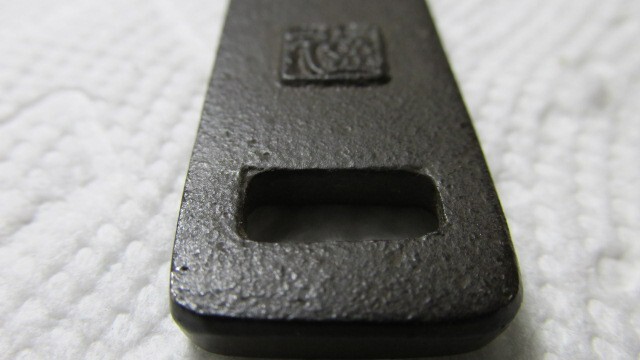
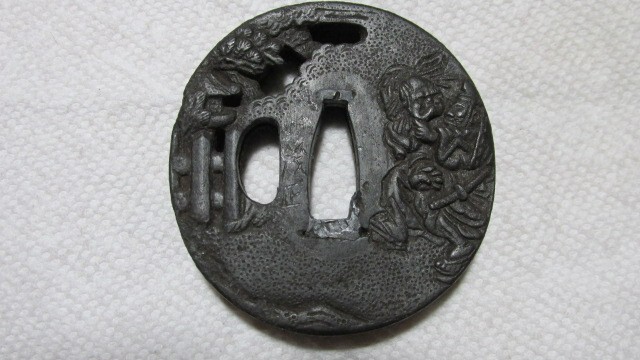
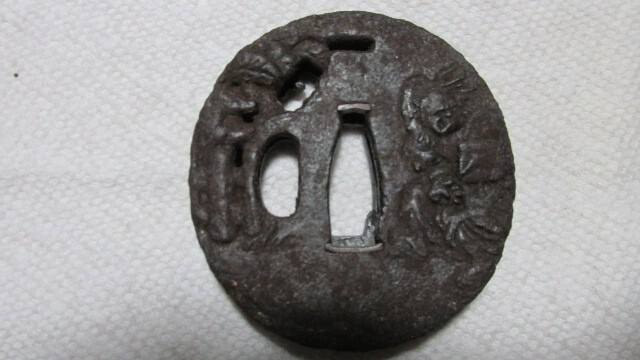
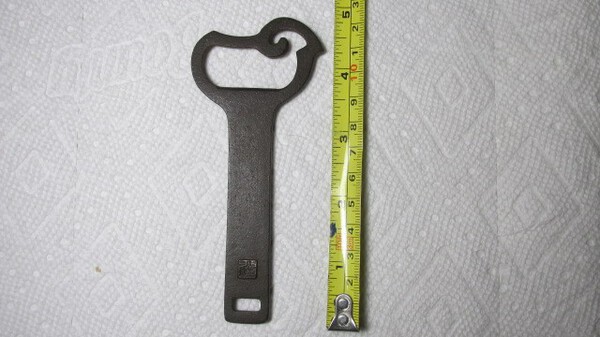
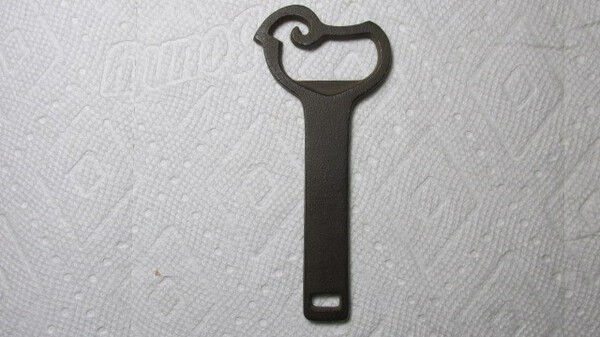
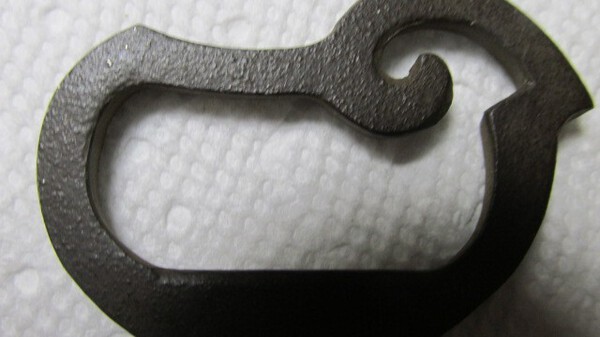
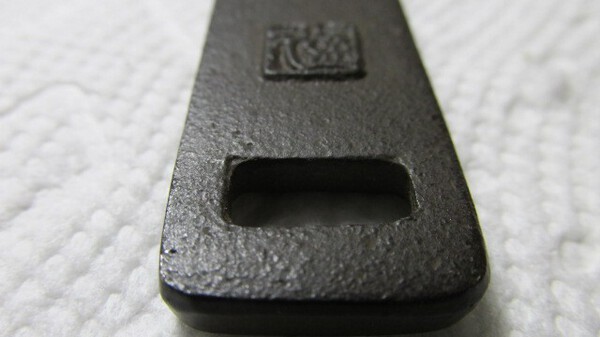
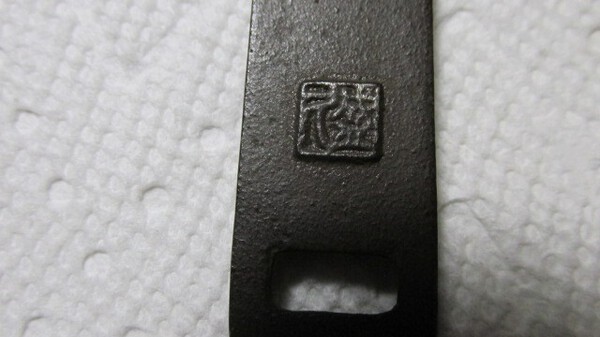
Hello all, So, where to start! I had a fun experiment all planned out (and I am not a scientist or metallurgist!). I figured the experiment would take 4 or 5 days to complete. The hypothesis was that a sand-cast cast-iron tsuba could be abraded (using an actual sharpening stone) to appear as if it was “hand forged”. What I was going to use for this experiment was a sand-cast cast-iron bottle opener, and an actual stone sharpening stone (using water instead of oil as a lubricant – like the Japanese craftsman of old did). Then “flash rust” it and steel wool the rust off of the piece so that there might appear a dark patina on the cast iron. So, I received the sand-cast cast-iron bottle opener today that I was going to abrade. I quote the dealer’s description of the piece- “Suzuki Morihisa Cast Iron Bottle Openers $42.00 Since 1625, The Suzuki Morihisa Iron Studio has produced the finest iron products in Japan. It was designated a Japanese National Treasure in 1974. They have created cast iron fittings, bells and teapots for Buddhist temples and royalty. We are happy to carry a modern extension on their historical craft - bottle opener representations of the Chinese Zodiac. Each is solid and feels perfect in hand. Sheep, Rooster and Monkey currently available. All are exclusive to Made Solid in the USA” Also, they go on to state- “About Suzuki Morihisa Studios Established in 1625, The Suzuki Morihisa Studio is now in it's 15th generation of family operation. Known for traditional Nanbu Tekki iron work, the studio has created Buddhist altar fittings, temple bells and teapots for the highest levels of Japanese culture and society. The Studio was designated a Japanese Cultural Treasure in 1974. Made Solid is the exclusive US retailer of Suzuki Morihisa Studio work.” Here is the link to the studio- https://www.madesolidinla.com/home-1/suzuki-morihisa-cast-iron-bottle-openers?utm_medium=email&utm_source=customer_notification Now, when I received the bottle opener I was amazed! There was no need to abrade it to appear as if it was “hand forged” (although that option is still available!). It was obvious (to me at least) that the piece could be easily abraded to make it appear “smoother” in texture (but it is smooth already!). And I didn’t really want to “ruin” a 50 dollar (including shipping) artistic bottle opener (after I post this I am going to see if it works on a couple bottles of beer!). So, what is my conclusion (remembering that this is all personal opinion!)? I think that a sand-cast cast-iron tsuba could have easily been made. Remembering that the only way to tell the difference between a sand-cast cast-iron tusba (that perhaps was hand finished and hand worked) and between a hand forged tsuba (that has not obviously been “folded”) is to subject them both to invasive or non-invasive metallurgical testing. Otherwise, it is just a “guess”! Also, I have included several pictures of the bottle opener. Dimensions of the piece are 4 ¾ in long (about 120.7 mm), weight is 65 grams, thickness varies from about 4.25 mm at the bottom to about 4.48 mm at the top of the motif. The adventure continues! With respect, Dan

-
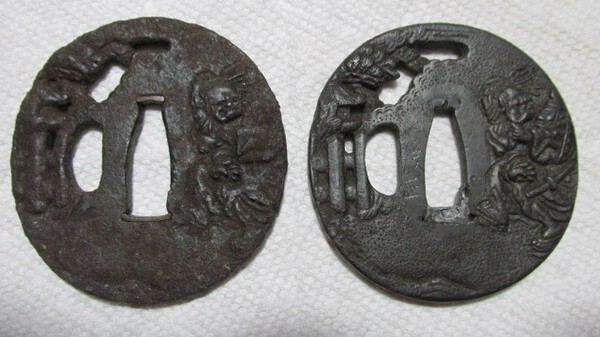
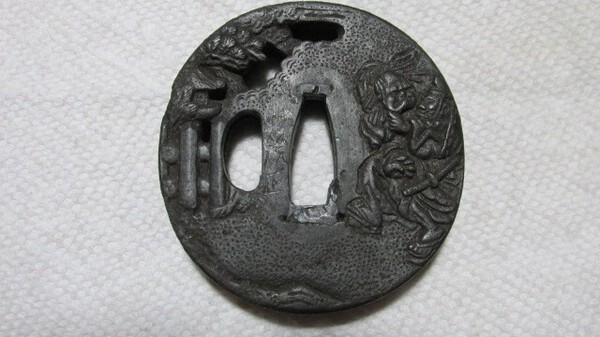
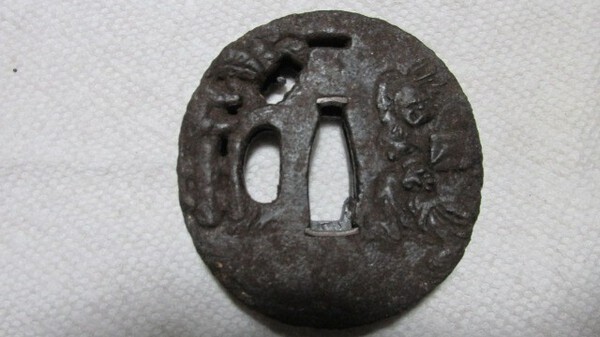
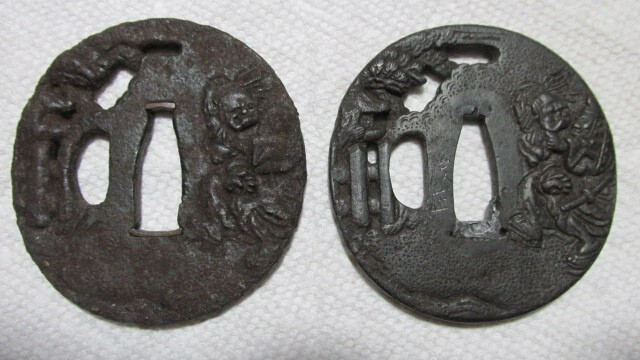
Hello all, (don’t mean to interrupt this fantastic thread – so perhaps read this and carry on!). Brian, I didn't understand what you were referring to in your last post about “Satsuma Rebellion” tsuba? Did you mean that the tsuba found on those swords would be cast or not cast? But since the "Satsuma Rebellion" was mentioned I thought that the following information may be of interest. Now, I thought this would be interesting (although kind of “off topic”). About 4 years ago, I purchased a tsuba from one of my “trusted sellers” in Japan. This was the only tsuba that I purchased from him that included a “story”. I quote what he stated in his story (remembering that this is an unverifiable piece of provenance). “This tsuba is made of iron. The story behind this tsuba is that it came from an imperial soldier, taken as spoils of war during the Satsuma Rebellion of 1877. There were two swords and other things among the items that came out of a kura, or old store house. The former owner came from the same lineage as the imperial soldier. I was only able to get this tsuba. Now, while the previous owner believed the story, his father might have made it up, or his father before him. There is no guarantee that this tsuba came from a fallen samurai after the clashes during the satsuma rebellion, but it is an interesting story. The tsuba has been ‘sleeping’ for a long time and it had a lot of active rust. I have cleaned it with a deer antler, but the damage from being stored for so long is still visible in the lack of details”. Then, as luck would have it, a year or two after buying the so called “Satsuma Rebellion” tsuba I came upon a tsuba with the exact same motif. The seller states it was signed “Shigemasa”. Could cast iron tsuba have been signed (or could that only be done on hand forged iron?). Anyway, I have included pictures of both tsuba (and have tried to highlight the Mei on the one tsuba with chalk). When placed one on top of the other, they are exactly the same, except for the filler (sakigane) in the bottom of the nakago-ana of the less rusted tsuba (pictures also attached of both tsuba placed one on top of the other). So, could these have been “sand cast iron and hand cut pieces (or hand enhanced)”? Now without metallurgical analysis it will never be known for sure, but still interesting! The tsuba (less rusted one) is thick at about 5.16mm and it is about 66mm x 68mm in size and the weight is 106 grams (less rusted tsuba) and 96 grams (rusted tsuba). Yes, the Satsuma Rebellion was in 1877 (10 years after the Edo period) but still interesting stuff to consider! With respect, Dan