
Dan tsuba
-
Posts
856 -
Joined
Content Type
Profiles
Forums
Events
Store
Downloads
Gallery
Everything posted by Dan tsuba
-
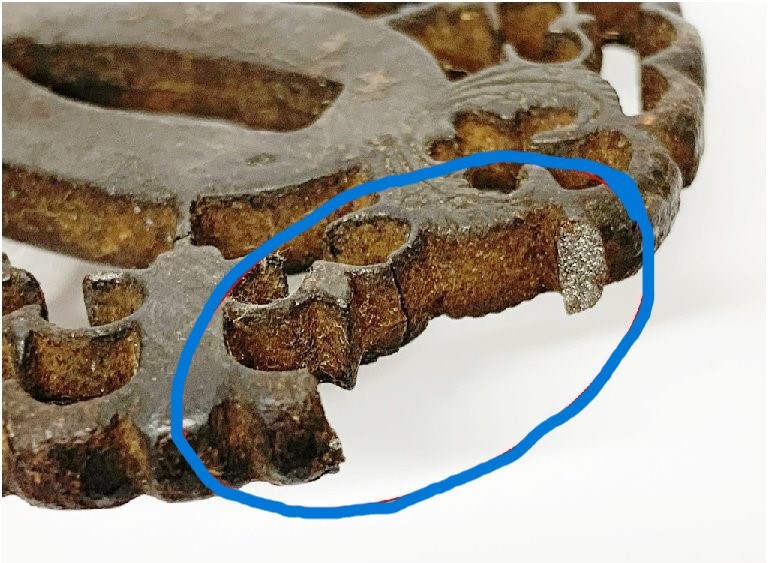
Hello all! Spartancrest (Dale); your research, knowledge, and insights are truly amazing (just my opinion!). After reading this thread I have to get myself one of these Edo period “horse” type tsuba! I will be on the “lookout” for one! Now, whether the one I purchase will be hand forged and hand worked or cast iron or cast iron and hand worked is something I can only “guess” at! I figure the only way to know for sure if the one I end up purchasing is hand forged or cast iron is if I spend the money to have it invasive or non-invasive metallurgically tested. But I don't have the cash to have that done! Or, I can just take a hammer to it and see if it “fractures” like in a picture of another cast iron tsuba shown in a previous thread (“An Edo period Cast Iron tsuba" thread), then I will know for sure! But in the meantime, if I purchase a “horse” type tsuba, I will just enjoy my purchase and appreciate it! That is why I only purchase “low cost” and “low end” tsuba. If it is hand forged, great! If it is cast iron and old (Edo period – as many of the pictures of the “horse” type tsuba posted are from that period) that is also great! With respect, Dan
-
Jesse, Very funny! Great sense of humor! I really enjoyed the picture on your post! With respect, Dan
-
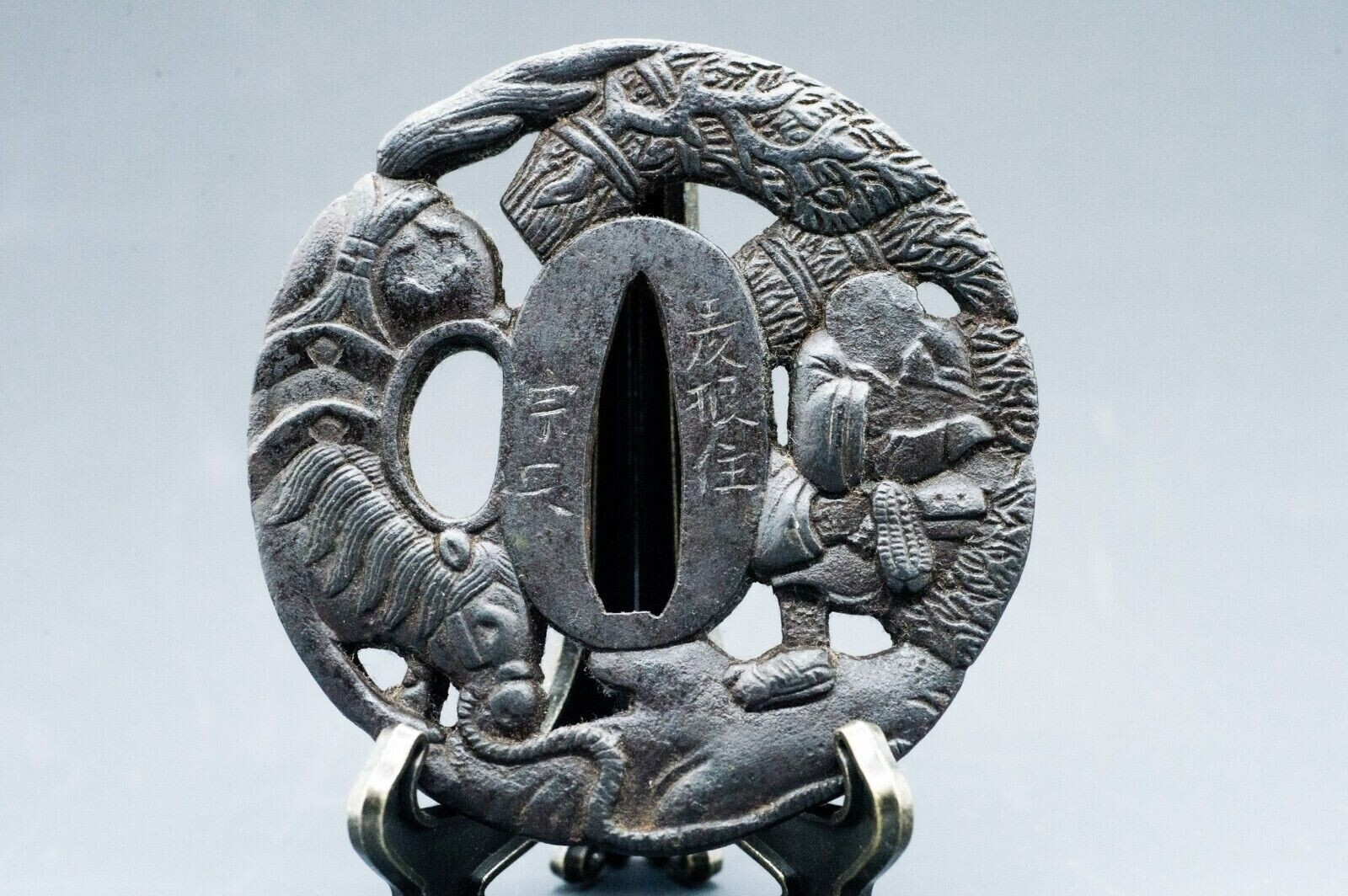
Hello Colin! Now that is my kind of tsuba! Old and rusted! I really like it! My opinion is that it is hand forged and hand worked (although for me it is really difficult to tell – could it be cast – I don’t know! But my first thought is no - not cast). I really like the bottom of the mimi where it is worked to look like a rope tied to the horse. Also, from my limited expierence, I have found it rare that both hitsu-ana are the same shape! It also looks like one of the hitsu-ana has been repaired? I have no knowledge of the mei. I am certain that other members will help you out with that! With respect, Dan
-
Hello Noah! Welcome to this great forum! Nice find! My suggestion is to follow all the great information already given and post pictures of the blade. If I found a blade like that in my grandfather’s barn I would keep it in the family (unless I really needed the money from selling it). It probably has a great story to it that perhaps you could learn? Was this a bring back from World War II by your grandfather? If it turns out to be a “historic piece” of Japanese craftsmanship (and if I owned the blade) I would consider “lending it” to a museum for display. Just my thoughts! With respect, Dan
-
Thank you so much David! Yes, much better to see the improvement with different lighting of the same set! And I also see from the “before” pictures where there is now significant improvement from the removal of dirt and other debris from the set! Always with respect, Dan
-
Hello! Just an opinion from a relatively new collector! But I like the “before” pictures better! It seems to me that the details are more visible on what appears to be the “darker” patina. With respect, Dan
-
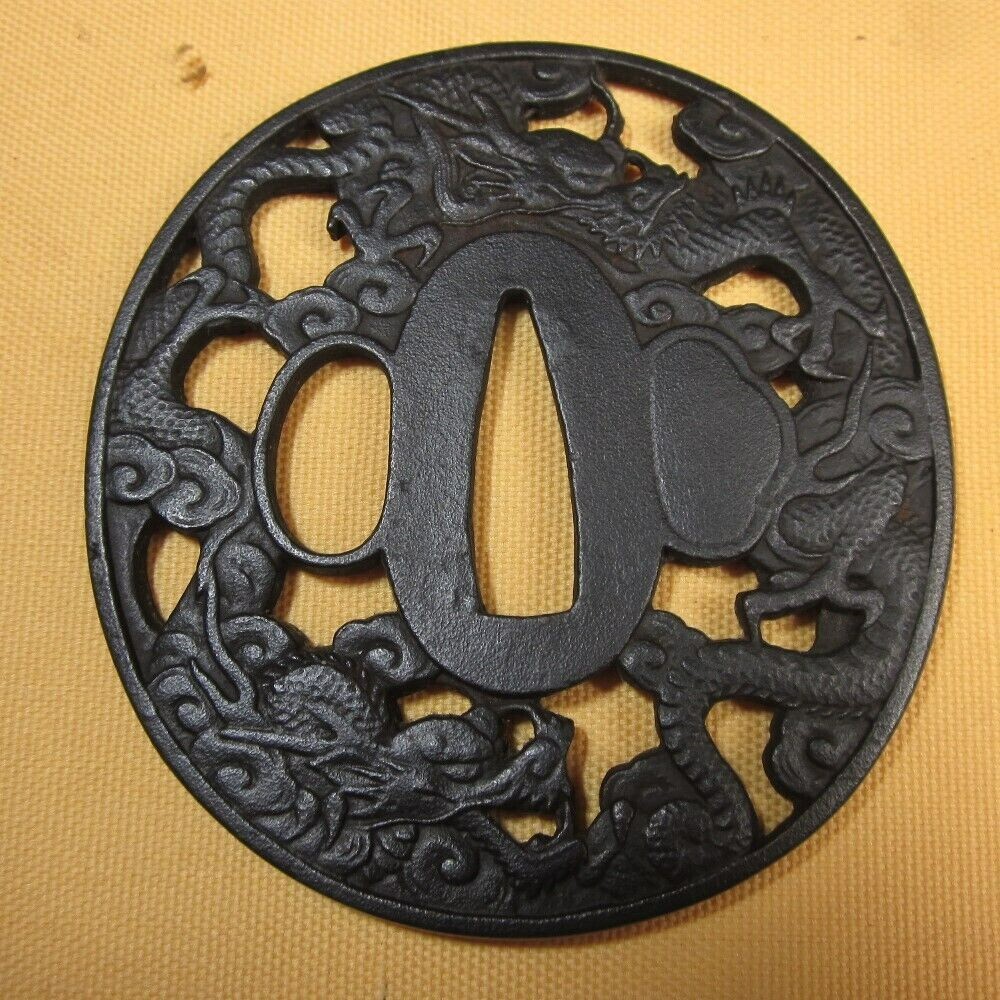
Hello again Vitaly! So, there are other “tells” I use in determining if a “low cost” tsuba is an actual Edo period tsuba. Sometimes, the hitsu-ana (side holes of the tsuba) are filled with a metal filler (sekigane). That may show me that the original tsuba was altered or “customized” by its new owner (he didn’t need one or both of those “side holes” for the kozuka or kogai side tools on the saya (scabbard)). Have included a picture so you can see what I am talking about (tsuba with tiger). This particular tsuba is not “low cost” – at least not for me! This tsuba is hand forged and hand worked. And I wanted to give you an idea of an actual hitsu-ana “filler”. Also notice the sekigane filler at the top of the nakago-ana and some tagane-ato punch marks on the seppa-dia (as discussed in my previous post). Again, many fakes now have something that appear that the hitsu-ana were filled. But it is just an attempt to deceive. Have also included a picture of “fake” filled hitsu-ana (tusba with dragon). This tsuba is cast along with the "fake" hitsu-ana filler. Hope this helps! With respect, Dan


-
Hello Vitaly! Nice meeting you! I have only been collecting tsuba for about 5 years. I can only afford low cost tsuba. So, over the years, I have found certain “tells” (signs) that I use to discern if I think a tsuba is authentic and is a tsuba that was made in at least the Edo period. First, I like the tsuba you pictured. If it is cast, I believe it is well done (and probably hand worked to some degree - hey members - just my opinion!). Also, I notice that the rim (mimi) appears to have been “hand worked”. So that is nice! But one of the signs (or tells) that I look for in a tsuba is if it appears to have been mounted (and thus actually used on a sword). How I determine that is if there are tagane-ato (punch marks) around the seppa-dai. What is even better is if the nakago-ana has sekigane (soft metal “plugs”) in it. Now, not all tsuba need to have those punch marks or plugs to have actually been used on a sword. The tsuba could just have been a perfect fit for the blade “as is”, or was specifically made for a particular blade and then never re-mounted onto another blade. But, nowadays, it seems that even the “fake” tsuba have some of those “tells” to them. It is getting much more difficult over the years to discern “real” from “fake” just using pictures listed on the sellers’ sites. Anyway, I just thought this information may be of use to you! With respect, Dan
-
Hello Dakary (Dan), Welcome to this great forum! I have done some research for you and have found a katana made in the Muromachi period. This particular sword was dated from 1394 to 1428. It has NTHK certification papers. It has a kozuka and kogai that appear on the side of the saya and go through the holes (hitsu-ana) of the tsuba. I am certain other much more knowledgeable members will give you more in-depth information! The website where I found the sword is - https://www.samuraimuseum.jp/shop/product/antique-Japanese-sword-katana-unsigned-norinaga-nthk-certificate/ With respect, Dan
-
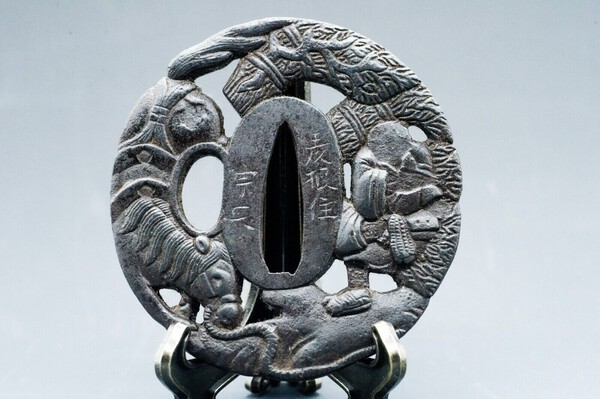
Hello all! So, I found another “grazing horse theme” tsuba. This particular cast iron tsuba motif is relatively easy to find! How many of these were made! Again, the tsuba pictured has no “alternate metal face” on the person. It does seem like the mei has been engraved and not cast with the tsuba. Are all the mei the same on all the “grazing horse theme” tsuba pictured? They all appear somewhat different to me (maybe because some parts of the mei are “worn” off). Are the mei original or “gimei”? Who would (evidently) cast so many tsuba, not finish them, and engrave (?) a mei??? Were they cast in the Edo period (or is that something we may really never be able to determine)? What is up with these tsuba? With respect, Dan
-
Wow! Thank you all so much for your help and assistance! I will research the different schools of tsuba makers that were mentioned to see which one looks like the “most possible” maker of my tsuba. Again, the research continues! This hobby is too much fun! With respect, Dan
-
Hello all! So, I recently purchased what I consider a beautiful and “delicate” tsuba. It has obviously been “overcleaned” (but not by me!). Others may not even consider this as a “collectible” tsuba. But then “others” are not me! I can only afford “low cost” and therefore “low end” tsuba. Although the learning gleaned from even “low end” tsuba is of value to me and extremely educational. I believe this tsuba may be attributed to the Akasaka school? Any opinions on the school would be greatly appreciated! Pictures of the tsuba are attached. With respect, Dan


-
Hello all, So, in the previous thread mentioned (in one of my posts) on this thread; Stephen stated (and thanks Stephen – it started a whole new line of inquiry for me!)- “….there are quite a few Soten/Hikone Tsuba that were done this way. Quite often one will pop up for auction that is just the base casting - no added inlay/zogan, they are mostly complete, just missing the alternate metal faces. A typical example of this is the soten grazing horse theme.” Then Dale (also, thank you Dale) posted pictures of this "grazing horse" themed tsuba. The first picture he posted of the broken tsuba (great picture – by the way!) verifies (at least to me!) that these “grazing horse" themed tsuba were cast iron (also, that particular tsuba has a “missing face”). Then Dale posts other pictures of the same “grazing horse” tsuba that are also “incomplete”. They are missing the “glued on(?)” faces. These tsuba also appear to have “some age” to them. So, what is up with that? This tsuba design was obviously very popular. Did the alternate type of metal faces fall off of these cast iron tsuba over time? Or are these actually tsuba that were not completed? If they were not completed, what was the reason why? Personally, my opinion is that the "alternate metal" face of the motif of a person on these cast iron tsuba just fell off over time. They didn’t use a very good glue! Thoughts, opinions?? The research continues! With respect, Dan
-
Again, thank you Stephen! A very interesting link, and I see what you mean by “incomplete”! Well done and thanks! The research continues! With respect, Dan
-
Stephen, Thank you so much for your thoughts! Like I stated before, the subject of cast iron tsuba being made in the Edo period has always intrigued me! With respect, Dan
-
Hello all! I refer you to the thread titled- “Papered(?) iron tsuba….help! Matsunoki By Matsunoki Thursday at 09:24 AM in Tosogu” So, I put 2 and 2 together and came up with 4 (or maybe 5!). Ha, ha, ha, ha, etc! When I re-read the above mentioned thread, I noticed that one member thought the iron tsuba looked like a cast iron tsuba. Another member tended to agree with that opinion. These statements are my summation of what was stated, and I could very well be wrong (to find out exactly what was stated, I refer you to the above thread). Also, another member thought the tsuba could be dated from the late 1700’s to the early 1800’s. Now what does that all mean? Could it show that some members are now of the opinion that cast iron tsuba were made during the Edo period? It has been my experience that the study of tsuba is not an “exact science”. There are many “variables” that are left up to the interpretation of the individual doing the research. As many of you know (from my “Tsuba Casting Molds?” thread), the idea that iron tsuba could have been cast in the Edo period has always intrigued (fascinated?) me. I am still researching and always trying to find new “evidence” in support of this “Edo period cast iron tsuba” hypothesis (theory?). I think the above-mentioned opinions by various members of the forum are very interesting! Thank you all! And the research and adventure continues! With respect, Dan
-
Hello all! So, those "white looking papers" are “dealer’s” papers. I learned something new (again!). As Steve stated the papers say- “The paper is from 1979, and its from the sword shop "Tōken Shibata" (signed by its proprietor, SHIBATA Mitsuo). Says the tsuba is a Sōten tsuba, and that it depicts the theme of "High Men Viewing the Waterfall" (高士観瀑).” So, those papers are 44 years old, not bad! Then Colin adds- “Obviously done by the dealer to hype up its saleability…..which worked because a couple of hundred years later I bought it!🙂” So, if I would happen to come across a tsuba with white papers is that something that could be reliable? But then again as Piers stated – ….”there are rules of thumb for paperwork too! Before ranking them in order of degrees of infallibility to fallibility (which we have attempted to accomplish more than once before here) it’s probably safe to say that none of them are 100% reliable.” Oh well, still interesting stuff! I wonder, do those “white papers” state what period or year the dealer says the tsuba was made (perhaps Piers D and/or SteveM- maybe you can give me a clue-it would be much appreciated!) Something like that could be great information to add to the “known background” of the tsuba for the purchaser (Colin). The adventure continues! With respect, Dan
-
Hello Colin! Like you, I am mostly devoid of knowledge about this stuff. I have only been collecting for a couple of years. But you asked for opinions, and like “belly buttons” everyone has one! So here is mine- Something just looks “off” about the tsuba. The mei looks like it was almost “cast”. I have a few “papered” tsuba but have never seen papers like that. My “gut” tells me that something is not right (maybe I need food so my “gut” feels better!). On the positive side it is a nice looking tsuba with nice inlay work. Like I said before, just my (uneducated) opinion. I will wait (along with you) to see what other members think about it! With respect, Dan
-
Brian, I know you have a “massive” job to do taking on the responsibilities of this forum. And I for one have always appreciated your endeavors and hard work. Asking “Gimmick” to stop posting is a viable solution to what is going on in the thread. I guess you can also stop him from posting, lock the thread, or remove the thread completely. But, why not let him post? Like I stated before if no one responds, then in a short time “Gimmick’s” thread will just naturally “fizzle out”. This will send him a clear message that no one is really interested anymore, and we have all "moved on"! Maybe that is another option? Always, with respect, Dan
-
I quote- "Id like to thank all of our members from new to long time members for taking time from their day to assist Ferry. How many times have we seen were a rather obviously intelligent person comes in the ask for assistance only too poopoo what he's told. Thank you to our administrator who has been in these situations more than he cares to count. The patience of Job he has. Thank you to our most learned senior Bazza. I think you figured out beforehand how it would be accepted. Why anyone else would have any want to do with the "gimmick" is beyond me. Cheers Stephen" Members, I know first hand what it is like to be "bullied", "intimidated", and shown "disrespect" on the forum (I refer you to my "Tsuba casting molds" thread). This forum is "fantastic" and a great place to learn new things and meet fine and knowledgable individuals. However, everyone has a choice. If you don't like what is being said, then don't respond - the choice is yours. If no one responded to "Gimmick" then the thread would end. Yet, there are evidently those that feel "they must defend" their "opinions" (without verifiable quoted research). Much the same situation as on the "Tsuba casting molds" thread! Whatever! I guess there are more "posts" to come! Always, with respect, Dan
-
Ferry, Great research! I enjoy your posts! Look forward to more after the replies come in! With respect, Dan
-
Ferry, I like your thinking! Your qoute of the statement that "If it was meant to be part of your collection, it will be either now or sometime in the future. Eventually it all comes back around, or perhaps something better." Also "Now there is some optimism!". I have found that statement definetly applies to my tsuba collecting. I also collect kukri, keris, and jambiya. Like you also, I don't want to spend the cash to have my daisho set professionally polished (but then my hamon on the set is not as beautiful as yours!). So I just leave them "as is" and enjoy them as part of my collection (actually almost a "museum" now!) With respect, Dan
-
Hello Ferry, Welcome to this fantastic forum! I have read this entire thread and I enjoy your views and persistence! I am mostly a “tsuba” guy. In some of my threads I have also had to deal with (like you did) some “random opinions”. Hey, it is just part of the “game” and learning process! Most everyone on the forum is here trying to help. I have included pictures of a daisho set I have. I am very proud of it, although others may not even want to display something like this. Also (and everyone out there I know that this is not a “kukri” forum – but just wanted to share with the “new guy") I collect kukri, and have included a picture of one I have. Like you, I collect many different things! Keep up the good work! With respect, Dan


-
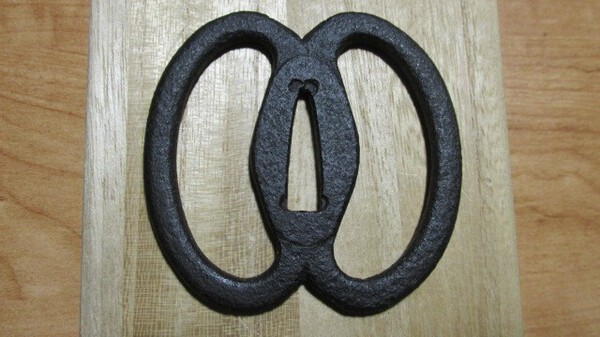
Hello all, I can use your assistance. I am thinking about purchasing the “Musashi” (I believe it is referred to as Namako) style tsuba shown in the pictures below. It is difficult for me to tell if it is a “fake”, if it is an authentic and old tsuba, a new copy, or something else. Should I just "pass" on it? Your help is appreciated! With respect, Dan

-
O.K. my friends- A little too much information. Enough about the “herpetologist” views and the swallowing techniques of a snake. It is only a tsuba with a snake motif! Whether it is right or wrong in its “swallowing” of the rabbit, it is still a very nice motif! So let's move on!! Onward! With respect, Dan