Bruce Pennington
-
Posts
14,094 -
Joined
-
Last visited
-
Days Won
169
Content Type
Profiles
Forums
Events
Store
Downloads
Gallery
Everything posted by Bruce Pennington
-
Thanks to @Rawa for bringing this one to us. Found at this Jauce Auction


-

Looking for origin of arrow feathers
Bruce Pennington replied to Anthony de Vos's topic in General Nihonto Related Discussion
I plan to visit again next week. I'll get shots of the other 3 cases then. He said the two corroded ones at the top were excavated from some old site and believed to be a few thousand years old. -
New variation of extended/patented ishizuke?
Bruce Pennington replied to RobCarter3's topic in Military Swords of Japan
Found another one of these drags without the patent information while going through Leo Monson’s collection this week.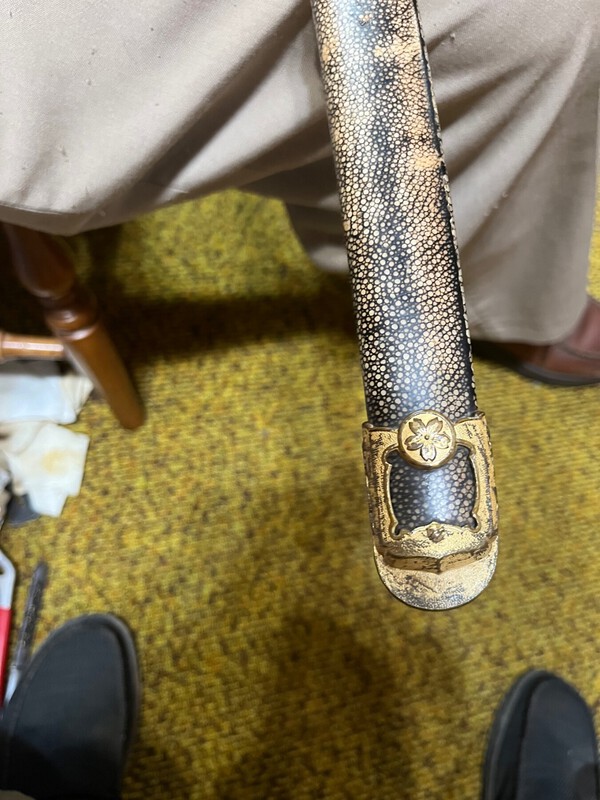

-
The works of Gassan Sadakazu
Bruce Pennington replied to EdWolf's topic in General Nihonto Related Discussion
Oops! Yeah that's what I was looking for. Trying to rock the 2mo. old granddaughter and keep her from wailing, and search NMB at the same time! I'll get back over to his house some day, not to far in the future, and update. -
Looking for origin of arrow feathers
Bruce Pennington replied to Anthony de Vos's topic in General Nihonto Related Discussion
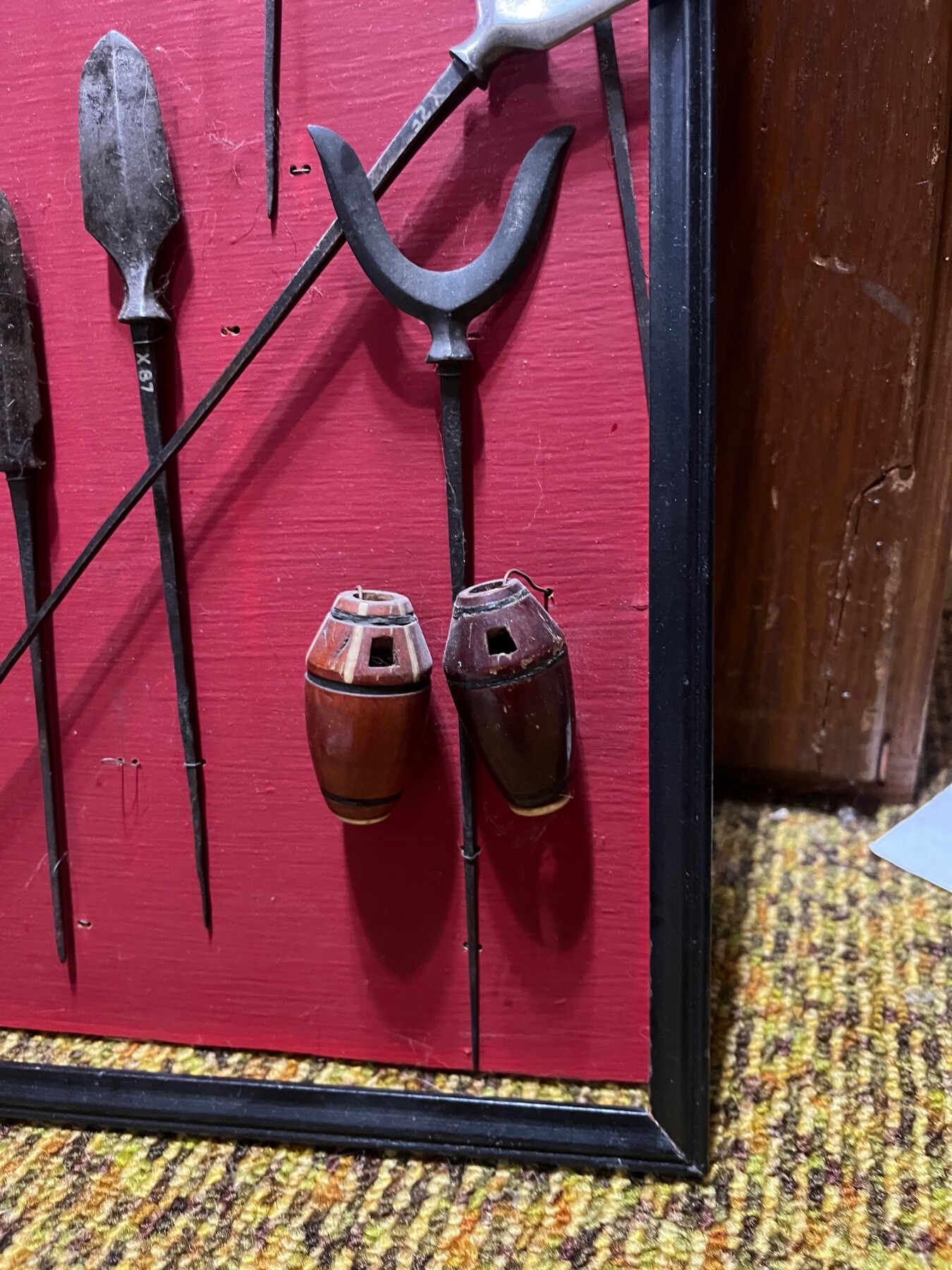
Don’t know the proper place to post this, so I just piggybacked on this thread. One shot of Arrowhead’s from Lee Monson‘s collection. I wish I had taken pictures of the other three cases. This one was interesting because it has wooden whislers. Had not seen these before.

-
1892 Type 25 survey assistance needed
Bruce Pennington replied to John C's topic in Military Swords of Japan
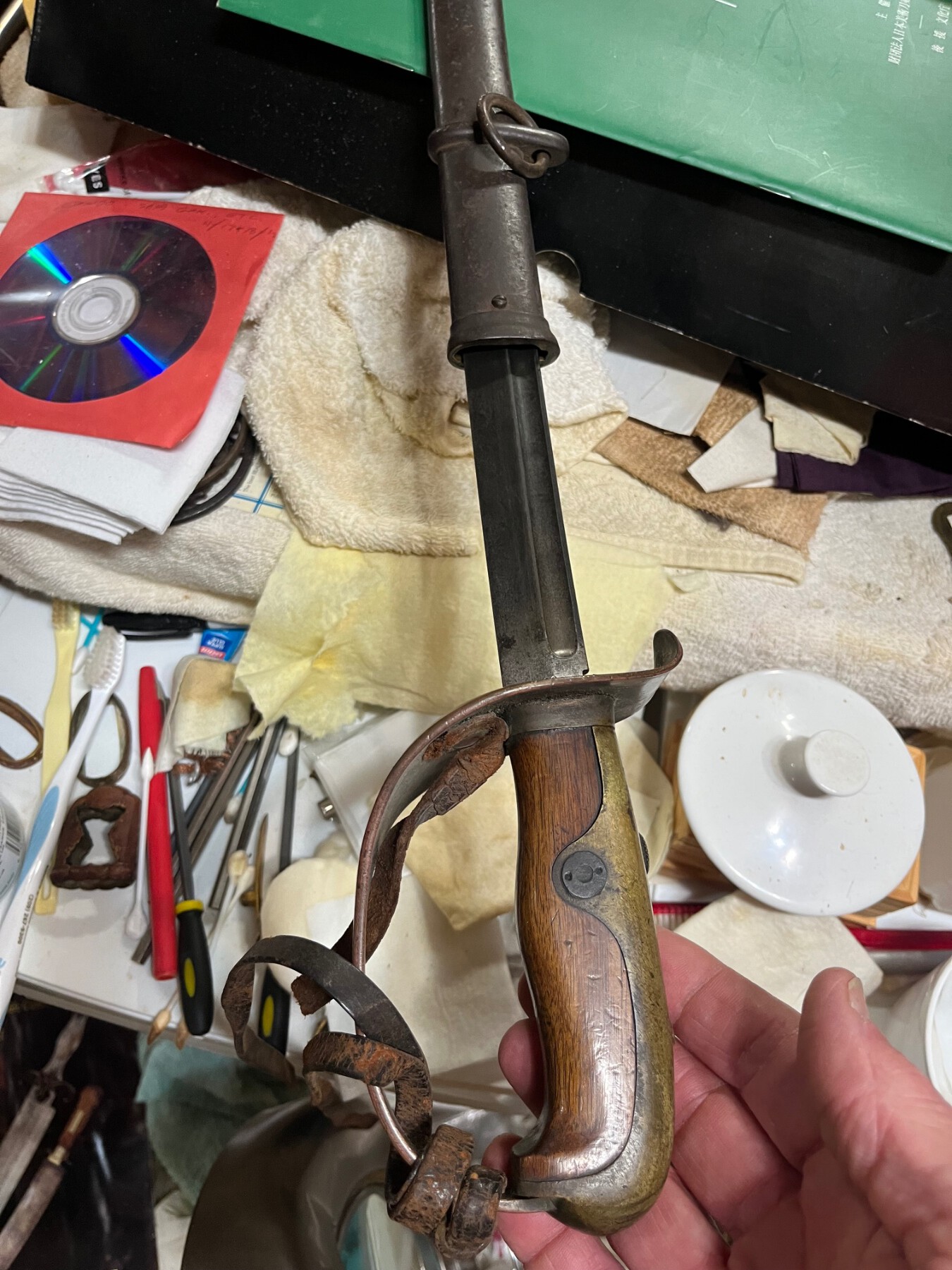
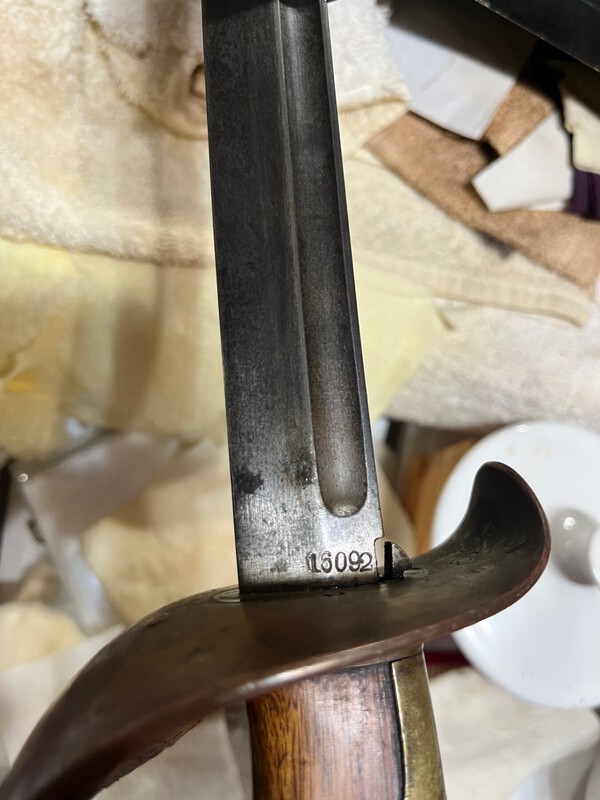
Here is one for you, John. Comes from Leo Monson’s collection.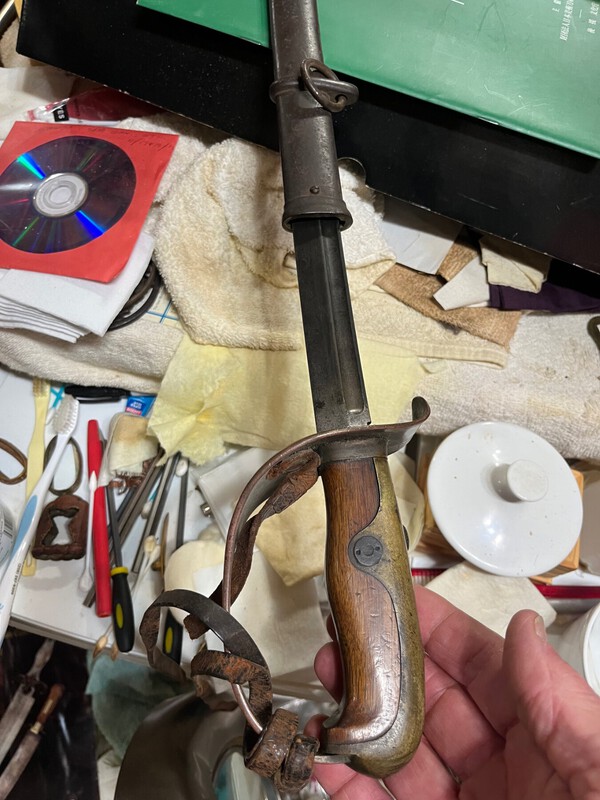
-
So, what are you saying this is?
-
An Interesting (if Troubled) Zoheito
Bruce Pennington replied to Kaigunto230's topic in Military Swords of Japan
Oh, I do remember reading that, but did not realize that that was what he was trying to say. -
An Interesting (if Troubled) Zoheito
Bruce Pennington replied to Kaigunto230's topic in Military Swords of Japan
Not to mention that I do not read Japanese ha! -
The works of Gassan Sadakazu
Bruce Pennington replied to EdWolf's topic in General Nihonto Related Discussion
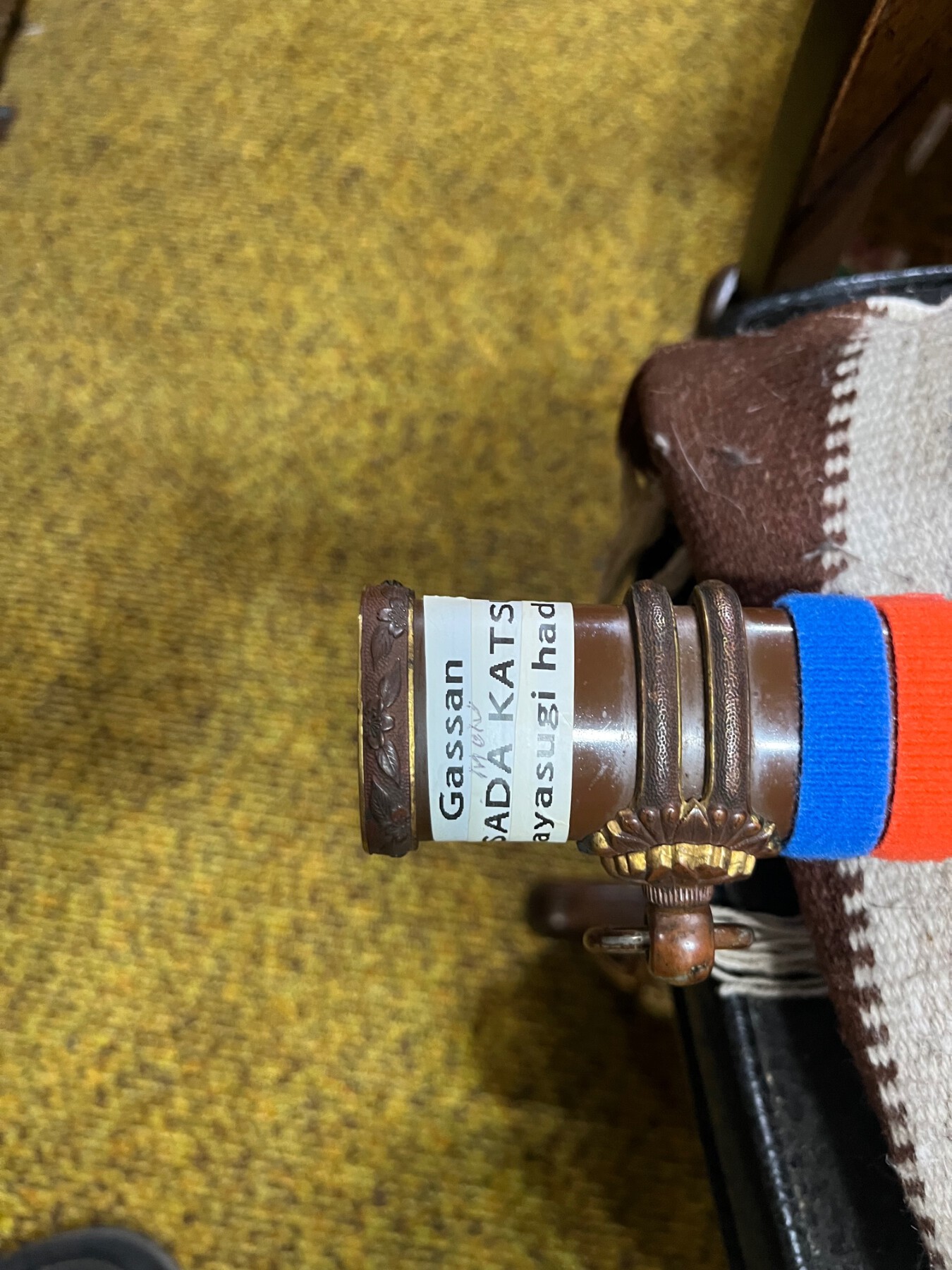
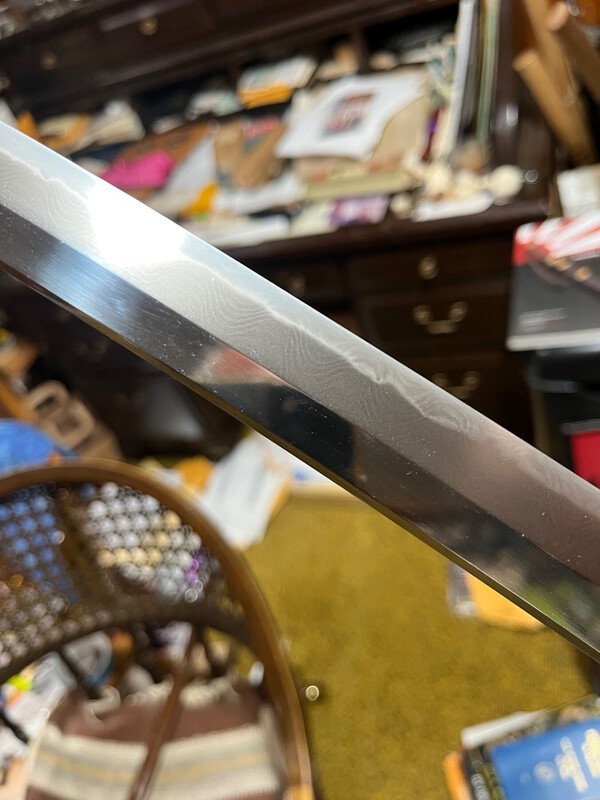
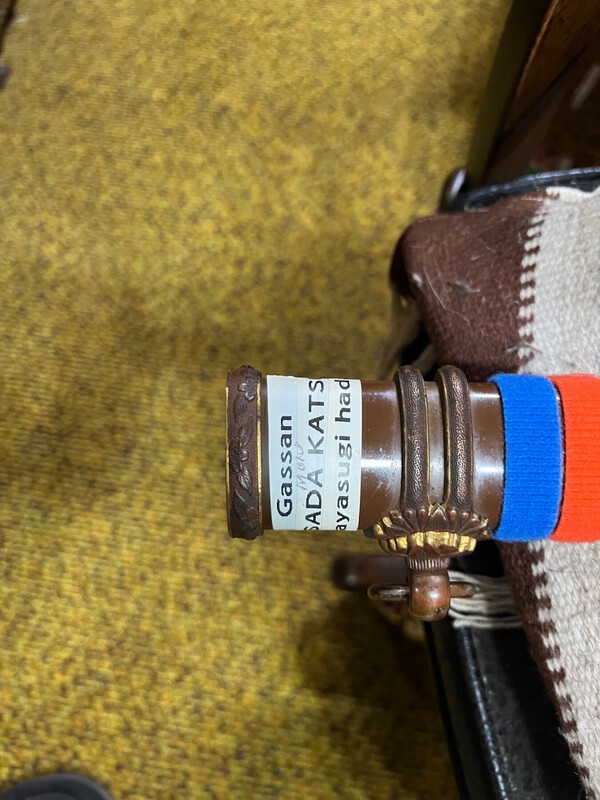
Spent three hours with Leo Monson looking at his 200 swords. He wanted me to see this Gassan. I don’t know the term for this hada, but it is stunning, and ran the full length of the blade holding the same pattern. Didn’t take any more pictures.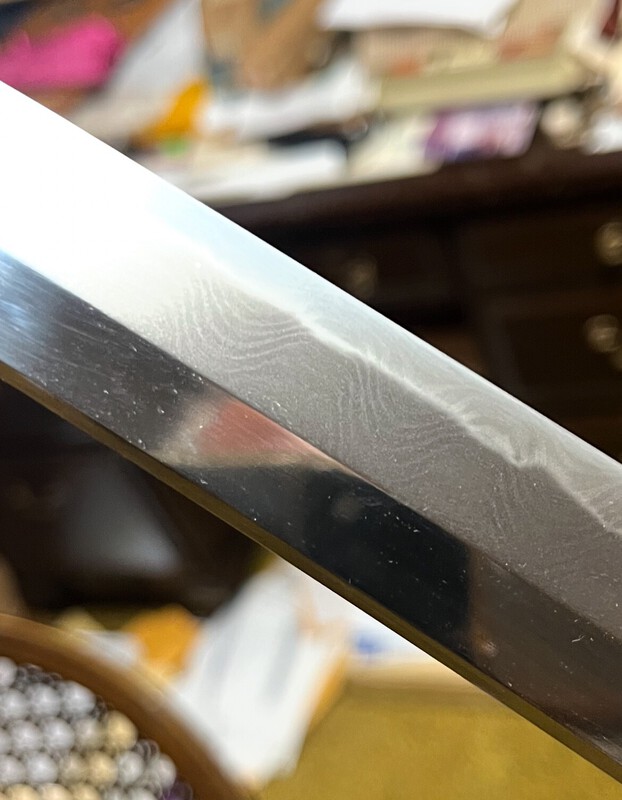
-
Can someone please help me identify this sword.?
Bruce Pennington replied to NikkiK's topic in Translation Assistance
Nikki, The stamp at the top, "Seki", was used between 1940 and 1944, with most dated blades showing up in 1942, just to narrow down the date range for you. It was a quality inspection stamp used by the civil industry to weed out poor blades. The Seki Cutlery Manufacturers Association stamped approved blades, like this one. Such blades were usually really good quality, though not fully traditionally made - called showato. -
An Interesting (if Troubled) Zoheito
Bruce Pennington replied to Kaigunto230's topic in Military Swords of Japan
I did not know that, either! Thomas, you always amaze! Thanks brother. -
I have seen buttons like that. Not the "norm" but not uncommon. The patina/finish on the fittings looks to be legit. You will see variations in such things. Various shops that made them sometimes did their own thing, plus custom work often diverted from the norms/standard.
-
Hi Craig! As you suspected, it is a Chinese fake. Signs: The Chinese fakes like to use serial numbers on the habaki (brass collar on blade), writing on the blade, and Damascus steel. Also, they make the folds of the handle wrap all turn in the same direction, while Japanese alternate directions in their wrap folds.
-
Beautiful hamon! Oil quenched. My opinion, but I find the early showa-stamped blades to have been really well made with great hamon.
-
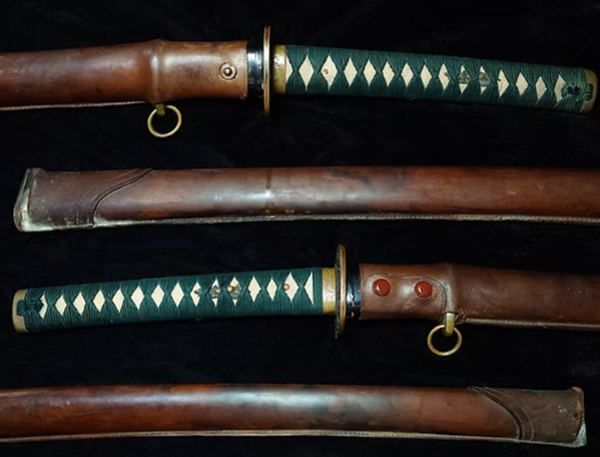
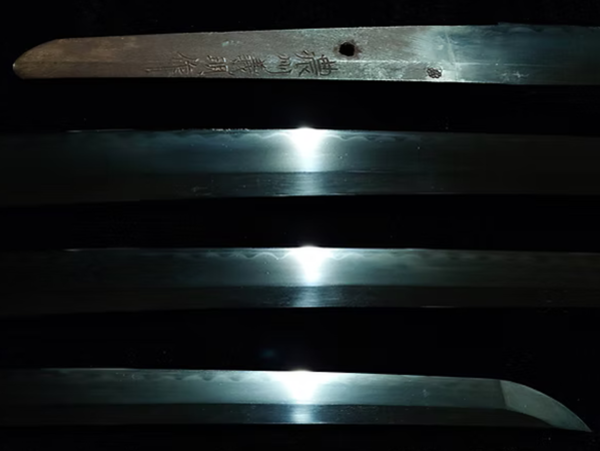
Here's one for the record books! A 3-5-3 on the tsuba. Yoshiaki, showa stamped blade in civil re-fitted rig. Found on this Shigure-militaria sale site.

-
Translation and thoughts please
Bruce Pennington replied to Michaelr's topic in Translation Assistance
This is the only Sukesada I have on file, but I did a quick scan of a few others from other smith’s and have found some on the same side as this one. I do not know the predominant practice as I did not go through all of the files, but I found at least two others on the same side. -
My kai-gunto: some photos & questions.
Bruce Pennington replied to Nazar's topic in Military Swords of Japan
Excellent work Nazar. It is a good feeling, isn’t it, when you are able to restore an old war blade back to a condition that is more like it’s original. It looks like you are a natural craftsman! -
An Interesting (if Troubled) Zoheito
Bruce Pennington replied to Kaigunto230's topic in Military Swords of Japan
That was a great write up Michael! Looks like you have a bit of the researcher blood in you! Considering the condition of the blade surface, I doubt anyone will be able to really tell whether it was traditional or not from the pictures. But that’s not my forte anyway. @mecox @BANGBANGSAN @Kiipu Something unusual about this one is the construction of the blade where the blade meets the nakago. There is a distinct edge that run between the machi. I will have to go back and look at my other zoheito, but from memory, I don’t recall ever seeing this before. Very unusual. -
Questionable Gunto up for Auction
Bruce Pennington replied to Kaigunto230's topic in Auctions and Online Sales or Sellers
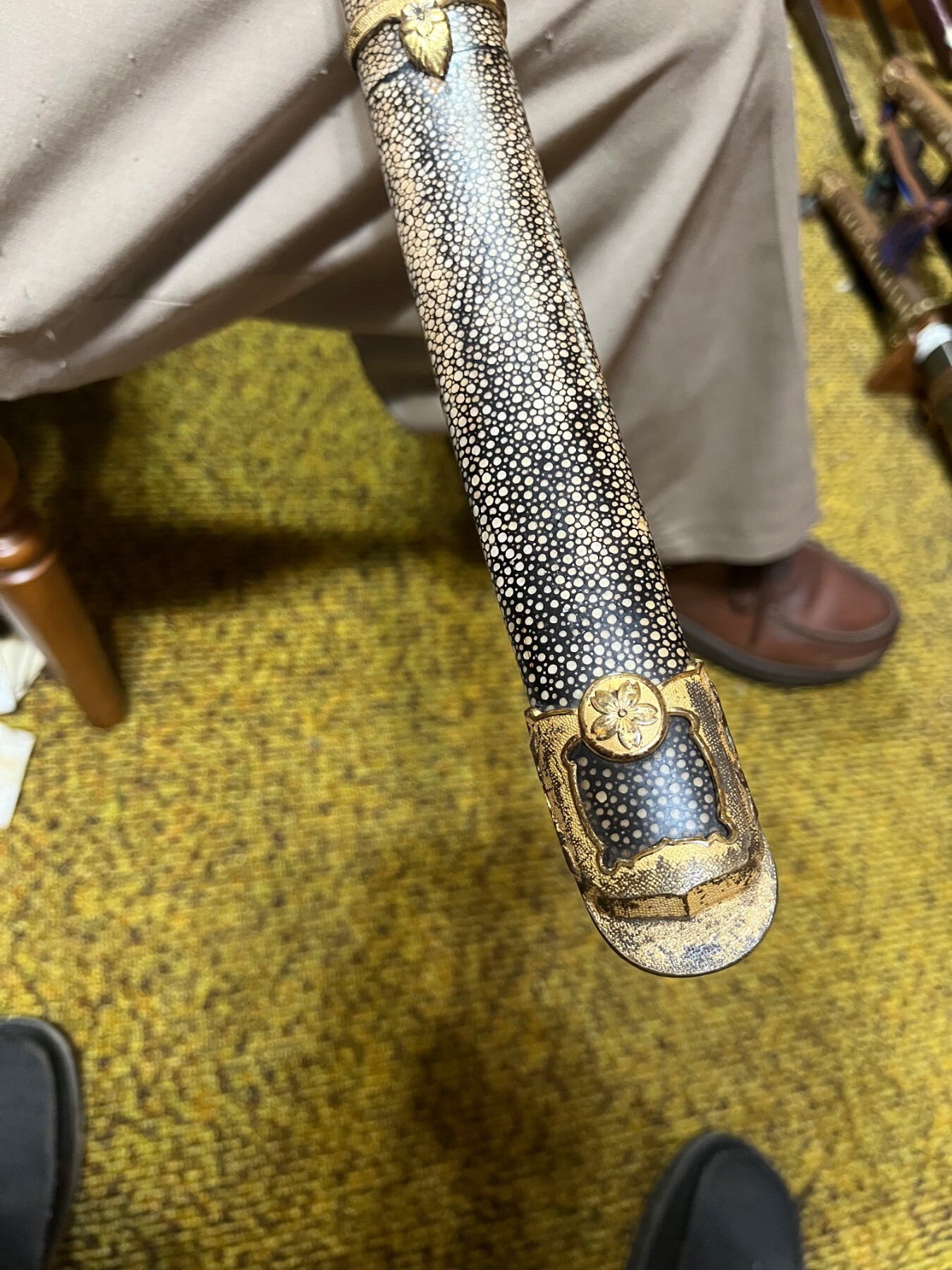
I would lean towards this being a late war sword. The fittings have been blackened, and we see that often. It has unfinished shark skin same’ and the all brown Gunzoku tassel which is something I have never seen on fakes. The ito is also wrapped properly. -
Attention Mantetsu Owners: A Survey
Bruce Pennington replied to Bruce Pennington's topic in Military Swords of Japan
Thank you, I appreciate all the help I can get! -
Thank you, Steve! That hot stamp has been seen only on two of his blades now and on a blade by Tadahiro. Thought to be a sanko-tsuka-ken or sanko-zuka-ken, a sword to chase away the Devil.
-
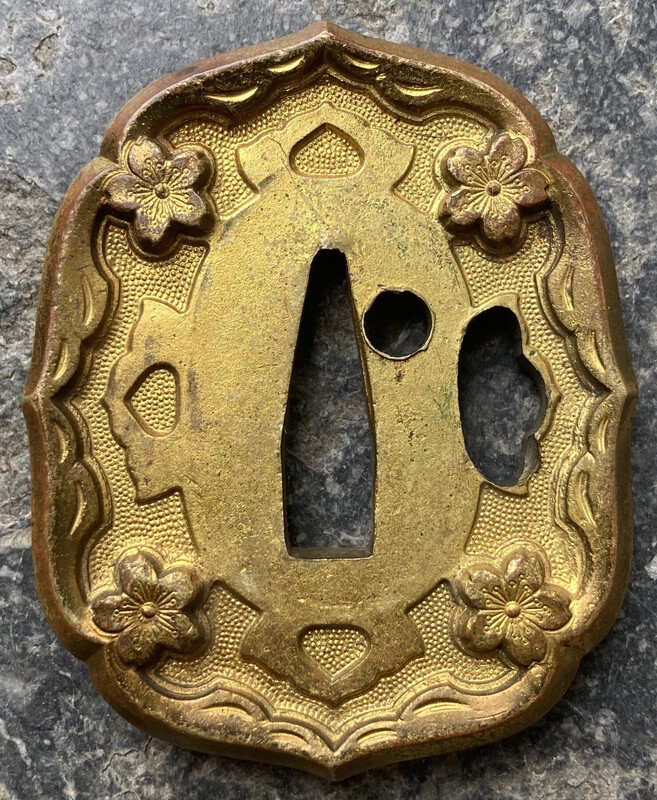
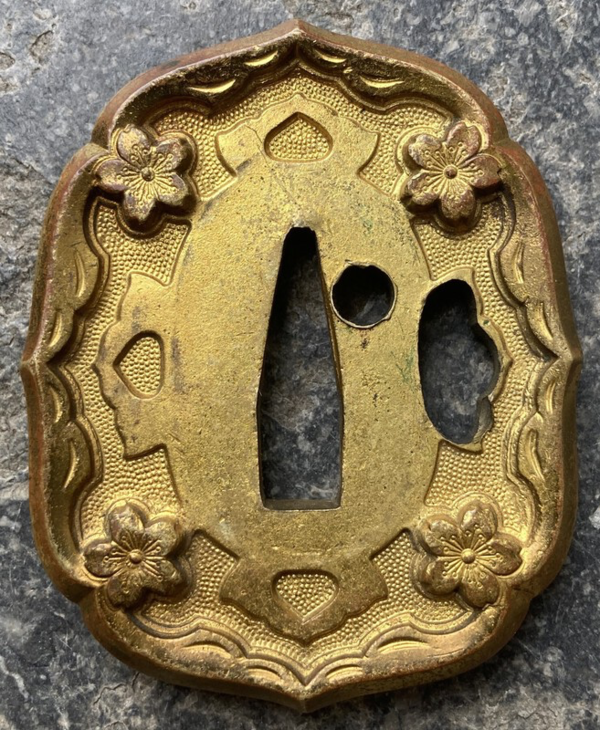
Posted by @Kantaro HERE. it could have been done post war, and seems too small to be functional for a locking latch to move horizontally as you push the button. I feel like we have seen tsuba with both holes, but don’t recall where. If anyone has examples, please post.
-
Military Tsuba with strange hole?
Bruce Pennington replied to Kantaro's topic in Military Swords of Japan
Don’t think I’ve seen that before! I feel like I have seen them with the double holes, but the smaller was rectangular for the locking latch. I don’t see how a locking latch in a round hole like that could move horizontally for latching and unlatching. -
Thanks Braden. In charting the stamped numbers on blades the practice started in the second half of 1941 on RJT blades and they all fit a distinct pattern through the years to 1945. On non-RJT blades. They also fit a pattern and begin in 1942. The pattern is different than RJT blades, in fact opposite, But the fact that they distinctly fit a pattern rather than be randomly placed around the nakago, implies to me that it was a regulated army practice, not just sword shops. You will see stamped numbers on navy blades, but they are pretty random on placement, implying to me again that this time it is sword shops, doing it on navy blades. Now, it could be the navy doing it and they just didn’t have an organized system, but at least for the army stamped numbers. It is very organized. I personally believe that the sword shops just piggybacked onto the numbers that were already there and used them on their fittings.