Bruce Pennington
-
Posts
14,649 -
Joined
-
Last visited
-
Days Won
176
Content Type
Profiles
Forums
Events
Store
Downloads
Gallery
Everything posted by Bruce Pennington
-
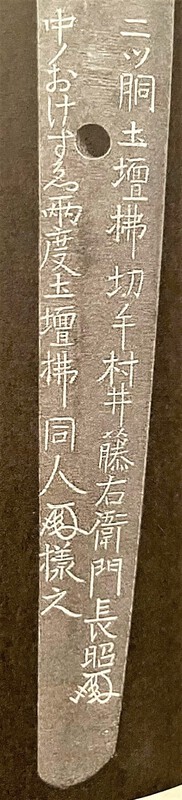
Hope you guys can help me understand this one. Right side is clearly Nagaaki with kao. But the left side says something else, but has the Nagaaki kao, too. Can you tell me what is said on the left side? Trying to figure out why his kao is on both sides:
-
Not near as spectacular as those, but something nice. On a 1600s Kuniyuki:
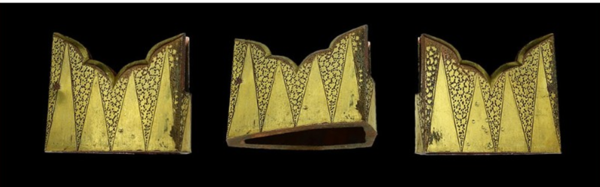
-

Translation help with Signature on Gunto
Bruce Pennington replied to Skeezy Bojangle's topic in Translation Assistance
Lots of guys recommend antler for removing rust. I think it was in reference to removing it from nakago, not the blade, but I could be wrong on that. I'd personally not use it on the blade. Here's the breakdown on their ranks, from a discussion by Nick Komiya here - Regs for Army Civilians to Carry Swords "Firstly, Gunzoku (軍属) or civilians in military service seems a confusing concept to some, so I’ll need to briefly explain what sort of people they were. There were 4 ranks of civilian grades in the army. 1. Younin (傭人) were hired laborers. For instance, barbers and laundry workers were such civilians. 2. Ko-in (雇員) hired admin helpers for the office (treated as equivalent of a Lance Corporal) . 3. Hanin-kan (判任官), who were civilian equivalents of NCOs, carrying out legal, accounting, machine maintenance and other duties. 4. Koutou-kan (高等官), who comprised the officer class equivalents from lieutenant to general. Such people included teachers of non-military subjects in military schools, interpreters, legal specialists, etc. Finally onto the sword regulations for the people above. There was a revision to the Army Gunzoku uniform regulations in August 1940, so I will simply quote the sword section from that. Koutou-kan were to wear the sword, tassel and sword belt of army officers equivalent in rank. Hanin-kan and Ko-in ranks were to wear an army company grade officer sword, belt and tassel. However, the rear side color of the belt and tassel were to be brown." And after re-reading that, I can see that the Hanin-kan were premitted to use the blue/brown tassel, too. -
Wow, that's a new one on me! Wish I could go back and see what hoops they were jumping through at the end of the war to get these gunto made and into the field.
-
Yes, looks interesting. Something Buddhist on the other side.
-
V & A MASAMUNE BLADE (?) - AUTHENTICITY ?????
Bruce Pennington replied to stackinnutts's topic in Nihonto
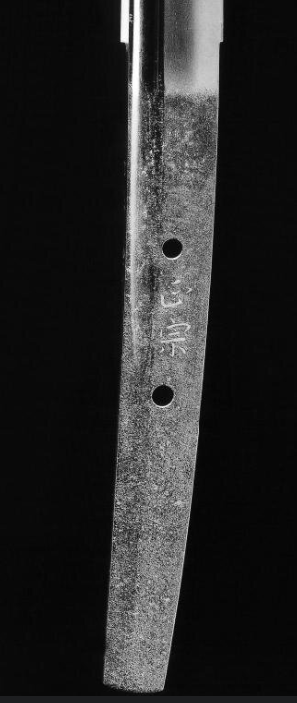
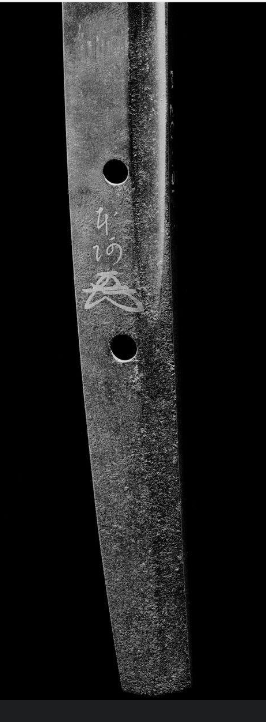
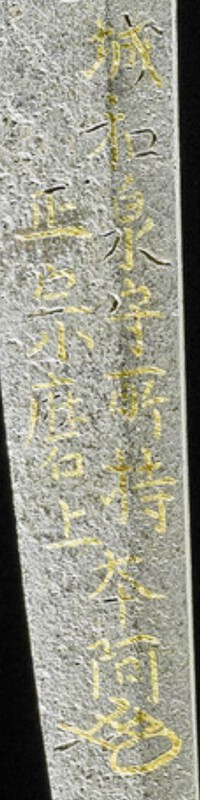
Thanks guys! Quite an education on the Ho'nami line of appraisers. Didn't know they existed. Now I'll have to add something about them in the Stamps doc, since these are on blades, and correct the post I have where I called one a "Masamune." -
Copper Type 95 on eBay
Bruce Pennington replied to Conway's topic in Auctions and Online Sales or Sellers
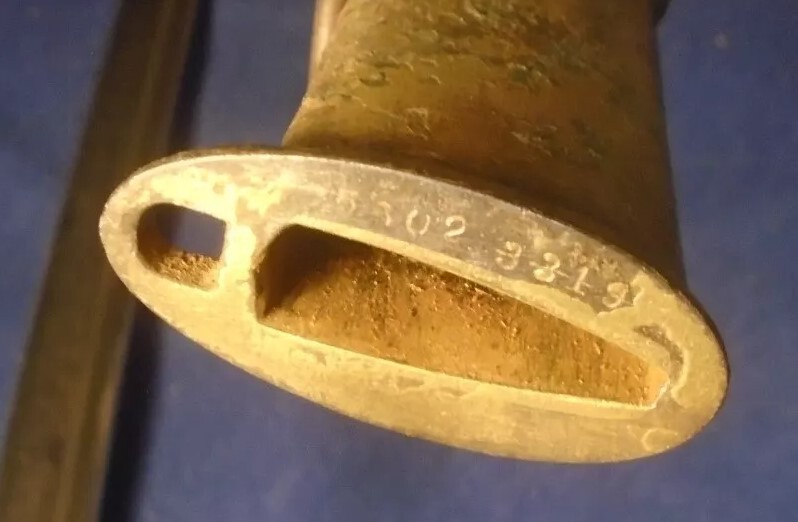
Wow, that's a fascinating saya, all by itself! Two previous numbers, and neither the number on the blade. The first number was actually struck out when they added the second number, which is oddly higher than the number of the blade.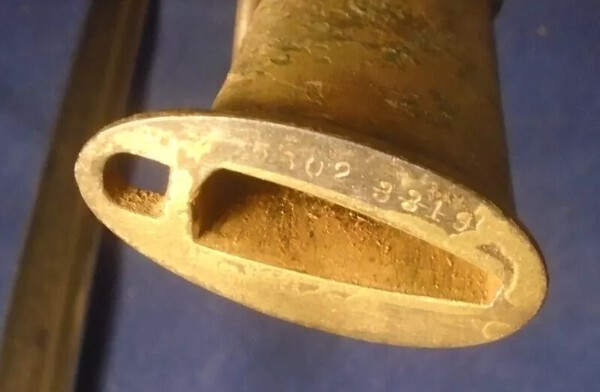
-
Translation help with Signature on Gunto
Bruce Pennington replied to Skeezy Bojangle's topic in Translation Assistance
Would enjoy seeing photos of all that, Kevin! Small correction - the blue/brown tassel was Company grade, Lt's & Capt's. The equivalent rank of Gunzoku were allowed to use them, too. So, with the sakura tsuba, you're right, it was probably carried by a Koutou-kan. -
Thanks for the links, Franco, that was quite educational! A part of Sword-world I had been unaware of.
-
Good eye, John, thanks!
-
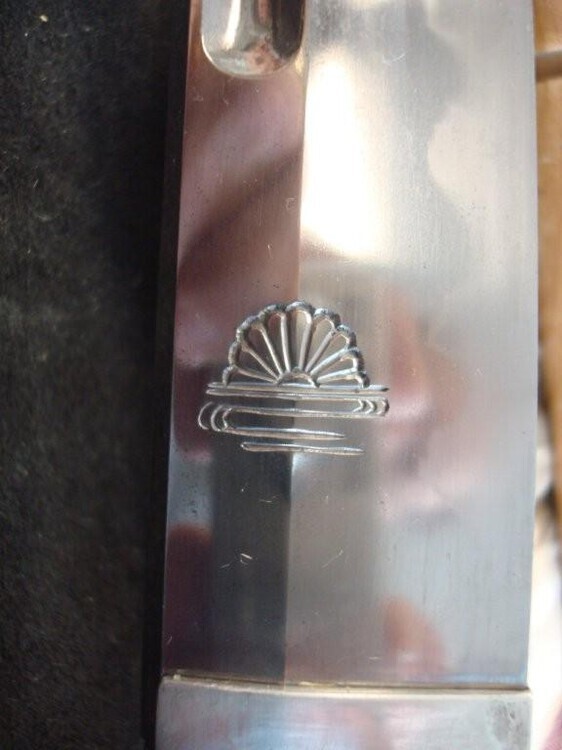
Without seeing more of the sword and especially the nakago, it's really not possible to be evaluating this. I don't have any Yoshihisa on file with stamps, so I'd personally appreciate more photos if you can coach the friend on how to get the tsuka off. For the kikusui, it's the first one I've seen using a single line for the river. I do have one other blade with the kikusui on the blade. Unfortunately, I didn't record the source where I found it. Interesting that they are both on fullered blades.
-
Nobunaga + Nagamasa, Help Please
Bruce Pennington replied to Bruce Pennington's topic in Translation Assistance
Thanks for digging into this, guys, I appreciate it. I haven't been following the cut test mei for very long, but it sure seems unusual to have 2 tests done on the same blade. If it was a normal practice, you'd think we would see more of this. Of course, @Markus would have seen it, if it was normal. -
Translation help with Signature on Gunto
Bruce Pennington replied to Skeezy Bojangle's topic in Translation Assistance
Even 政広 (Masahiro) 三品 一夫 But badly written with wrong Masa -
Sadly, for those of us who study them, we see this often. There were almost 500 smiths working during the war, and it seems that the lists, of any kind, usually only have about 300 names. That leaves 100-200 smiths that are not found on lists. If anyone can find them, it would be @george trotter and @mecox. If they can't, I'd say there's nothing to be found.
-
Since it's the only one we've seen - no way to tell. We have seen other "Oops" stamps, though, especially on the 95s.
-
Thanks for the links, Thomas, fascinating! One of the quotes: "You have to understand that a lot of Japanese military items in The Netherlands come from the former colony Indie, now called Indonesia, witch was occupied by the Japanese during WW2. After the war people took a lot of souvenirs home."
-
Nobunaga + Nagamasa, Help Please
Bruce Pennington replied to Bruce Pennington's topic in Translation Assistance
I can't read Japanese. Would you mind giving the English version of these? Are they both cut tests? Are the separate tests, or speaking of the same test? Do they state dates? Thanks guys!!! -
Nobunaga + Nagamasa, Help Please
Bruce Pennington replied to Bruce Pennington's topic in Translation Assistance
Thanks Uwe! I should have recognized the kao style. Cutter kao have that top horizontal line. They usually have horizontals on the top and bottom, whereas smith kao will only have one on the bottom. -
Gendaito with showa stamp?
Bruce Pennington replied to John C's topic in Auctions and Online Sales or Sellers
The Showa stamp is hotly debated by those who believe they have a gendaito with the stamp. There are also 2 cases, from memory, where a blade passed shinsa with the stamp. Pretty sure at least one of them was discussed here at NMB. They only documentation we have comes from Ohmura and the Seki City website. The Seki website makes the broad, generalized claim that "all swords" were inspected and stamped, meaning gendaito with showato; however Ohmura has a chart from back then showing how many blades had been stamped, and a note on the page states that the number didn't include gendaito as "they were not inspected", meaning only showato were stamped. My gut goes with Ohmura as this chart is from back then, whereas the Seki website was designed and written by modern city publicity people who, like modern reporters, talk of things they know little about. I have the feeling that the "gendaito" with the stamp were likely blades made from something other than tamahagane. -
Sorry Trystan, didn't mean to imply that. Just relaying what Stegel said.
-
Toine, Never seen anything like it. Really could use some close, clear photos of the blade and tip. Plus, can you remove the wooden handle and get photos of the nakago?
-
Can I get a full translation of both sides of this, please? They seem to be 2 different smiths and both have kao. Thanks guys!
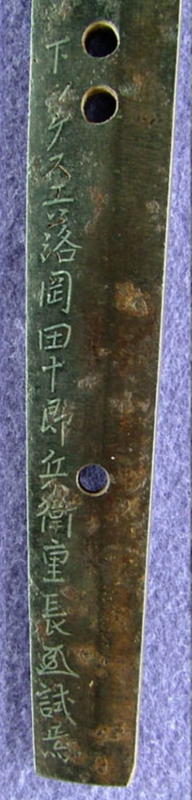
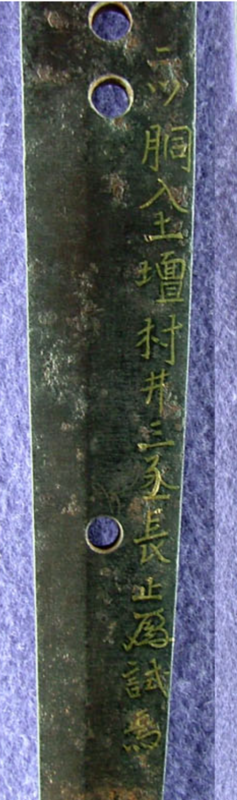
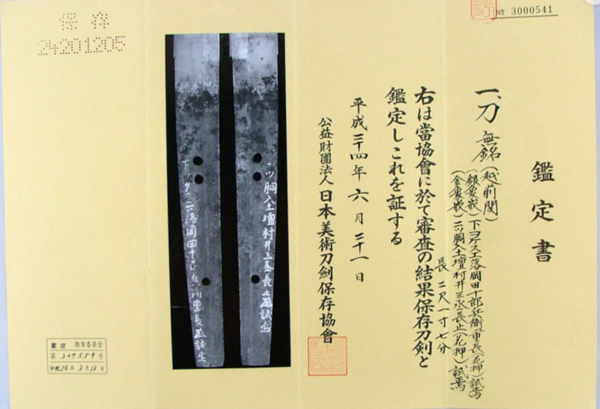
-
V & A MASAMUNE BLADE (?) - AUTHENTICITY ?????
Bruce Pennington replied to stackinnutts's topic in Nihonto
How interesting. An appraiser with a kao. Thanks Christian! -
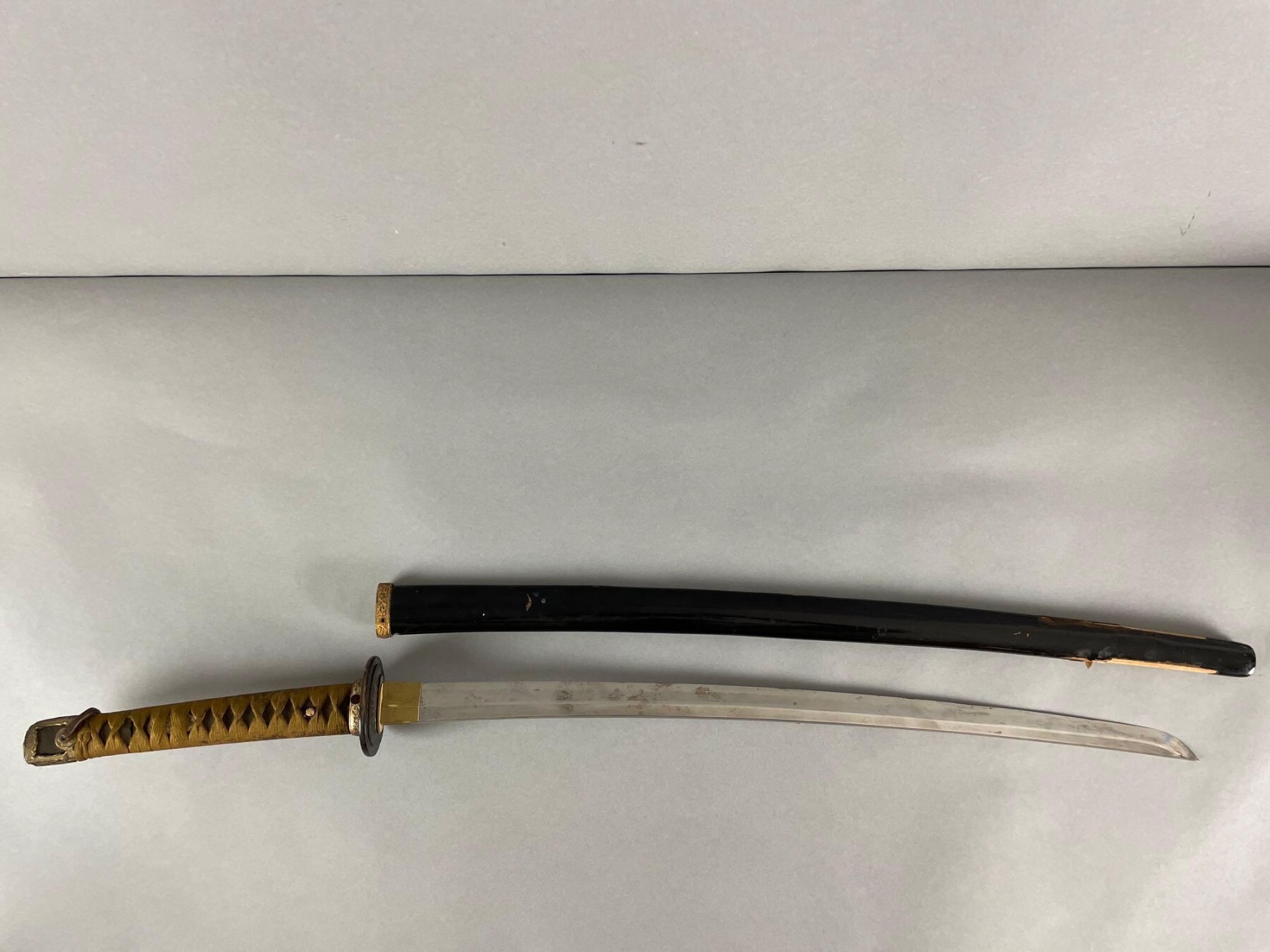
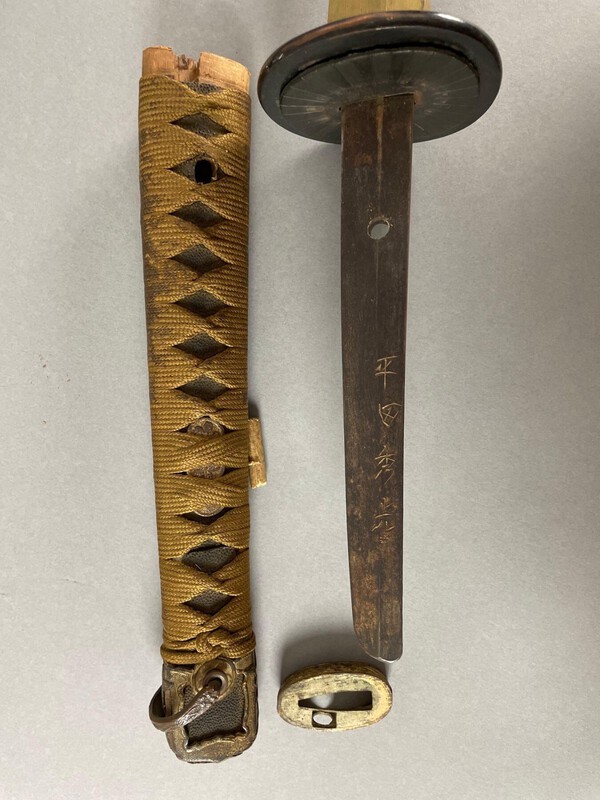
A late-war kaigunto, Hidemitsu blade. Note the tsuka, fuchi and koiguchi were made for a chuso, but tsuba/seppa and saya were not. I've seen a few of these with mixed fittings and am starting think they were assembled this way, using available parts. Another common theme is the icky colored ito. Same ito used by Tenzoshan with the souvenirs. At auction HERE
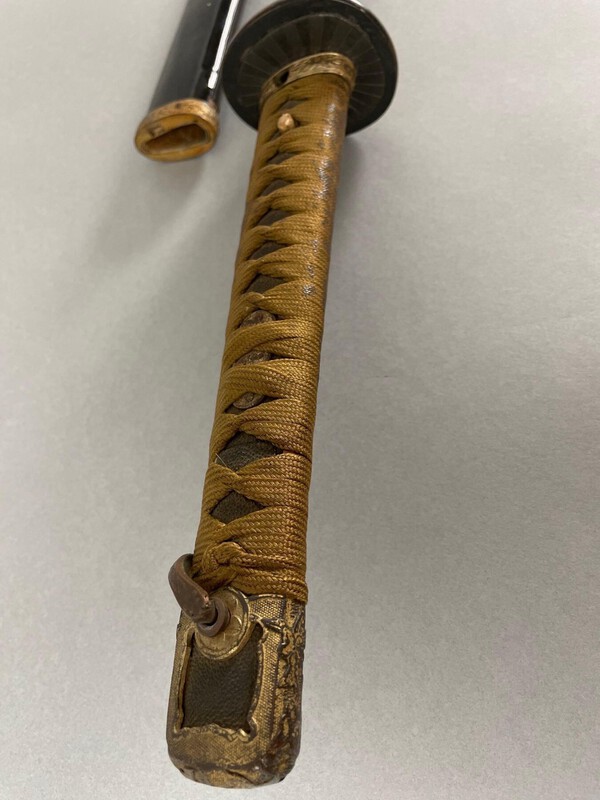
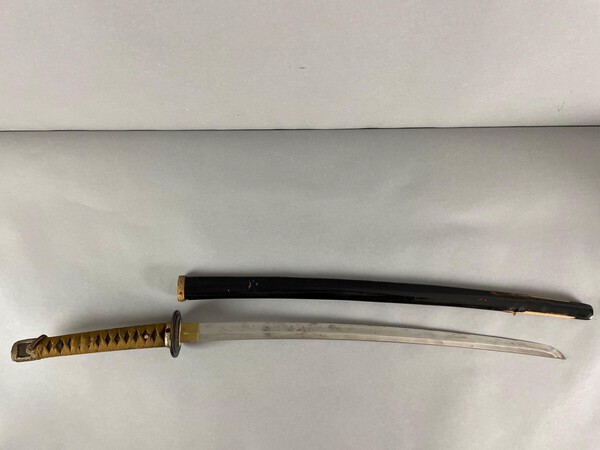
-
V & A MASAMUNE BLADE (?) - AUTHENTICITY ?????
Bruce Pennington replied to stackinnutts's topic in Nihonto
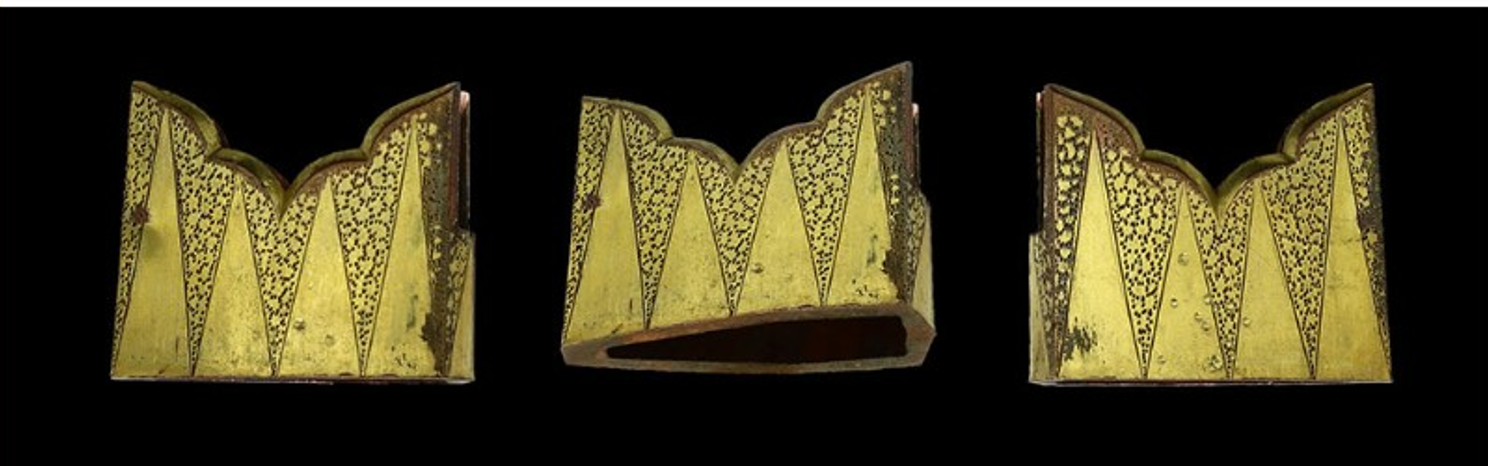
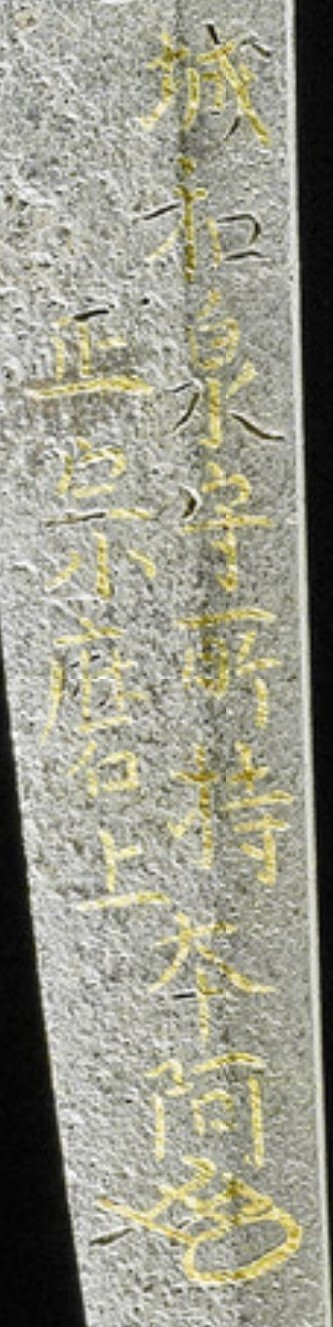
Am I correct that they are saying this is a Masamune blade? I see that on one side, but what is written above the kao on the other side? The kao is different than the Masamune I have on file. One on file: