johnnyi
-
Posts
290 -
Joined
-
Last visited
Content Type
Profiles
Forums
Events
Store
Downloads
Gallery
Everything posted by johnnyi
-
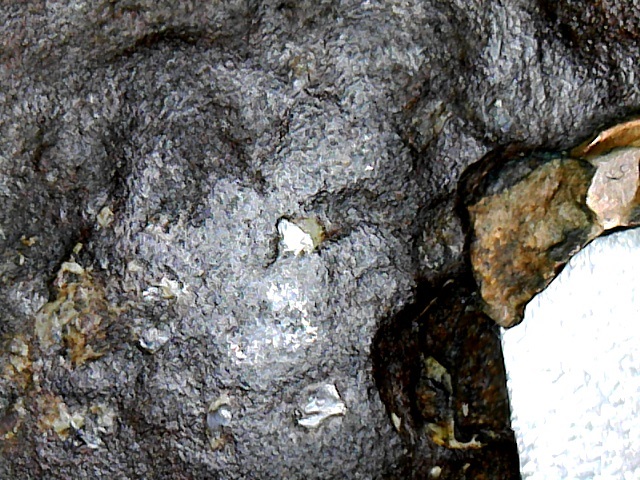
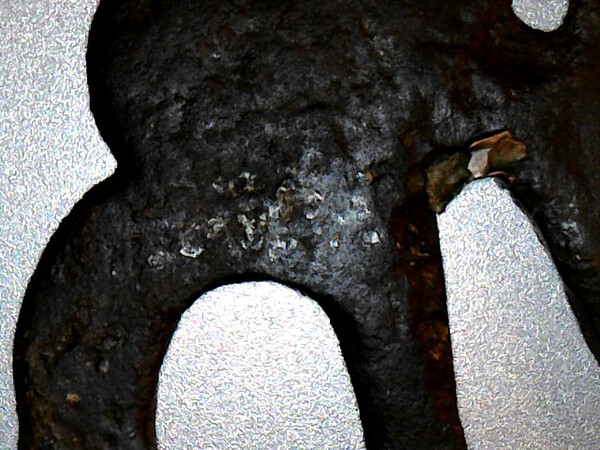
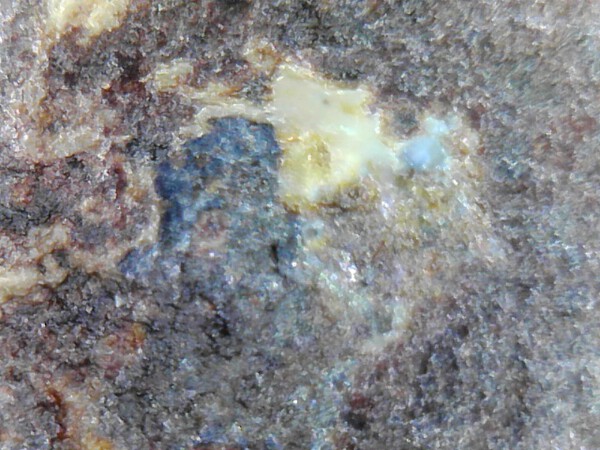
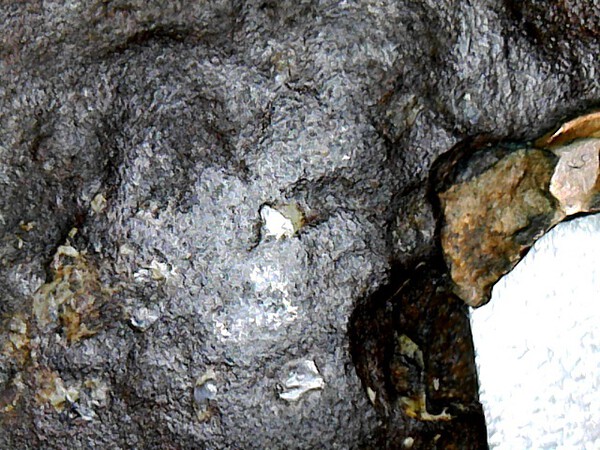
Hello. hopefully these will show. What you see as little whitish-silver areas similar to wear are actually crystals or maybe melted silica? Martensite maybe? Thanks in advance. Kind regards, John
-
Can anyone identify the crystals (melt?) shown here? Edit picture didn't go through admin. please remove Thanks, john Still001a.jpg.bmp
-
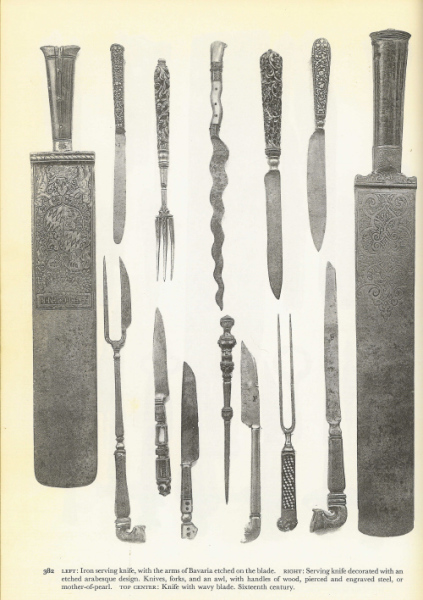
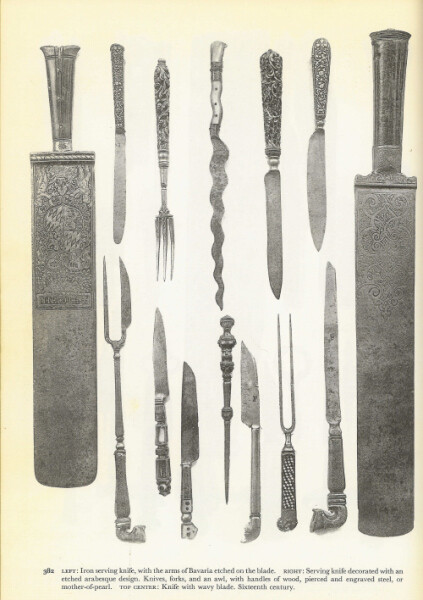
Hi Malcolm. I think an awl might make more sense. Here is a picture showing an even more ornate one. Regards, Johnnyi
-
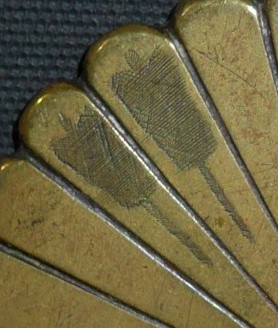
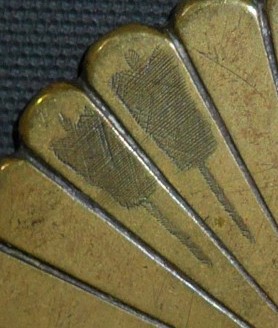
Prewar, I thought so too at first, but I think it is just the nature of crosshatching that gives the illusion of knocked. Anywhere crosshatching stops you will get a "v". johnnyi
-
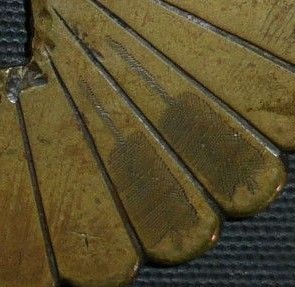
Thank you all for your help. I will go with gunbai, and try to discover whether they might be mon, rank, or maybe something else. Thank you again. regards, Johnnyi
-
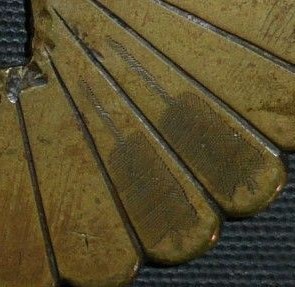
Here's the reverse which isn't much help. I was leaning toward fans too, but after seeing Jose's post of the rounded two arrow fletches kamon, maybe that's what it is? Thanks all for the input. Johnnyi
-
Hello. I have heard two differing opinions of what these might be; fans or arrows. There is a pair on the front and a pair on the back of this tsuba. Was there ever a system in Japan, military or government, that might have used a certain number of fans (or arrows) to designate rank or position? I've been looking but can find nothing. Thanks in advance Regards, Johnnyi
-
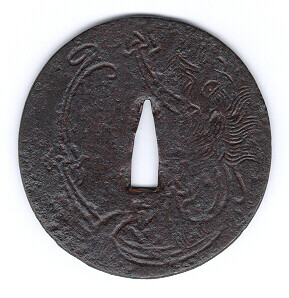
Henry and Curran, thank you for your help. Henry, I had been looking at this example wondering if it was related, but it lacked the rim (which seemed to exist on a saga kanaiye tsuba on the Shibui sword site) Regarding the patina, thanks for that insight. For what its worth, there is no smell or taste, and if I rub it with cloth rag the only deposit is small amount of brown rust. Is this consistent with repatinization? Thanks again, John
-
Ha, thanks Jean, frustration might have been the wrong word; its more like the old Chet Baker tune, "almost blue"... practically enough, but not I'll let it sit and hope Ford shows up., Thanks again fellers. John
-
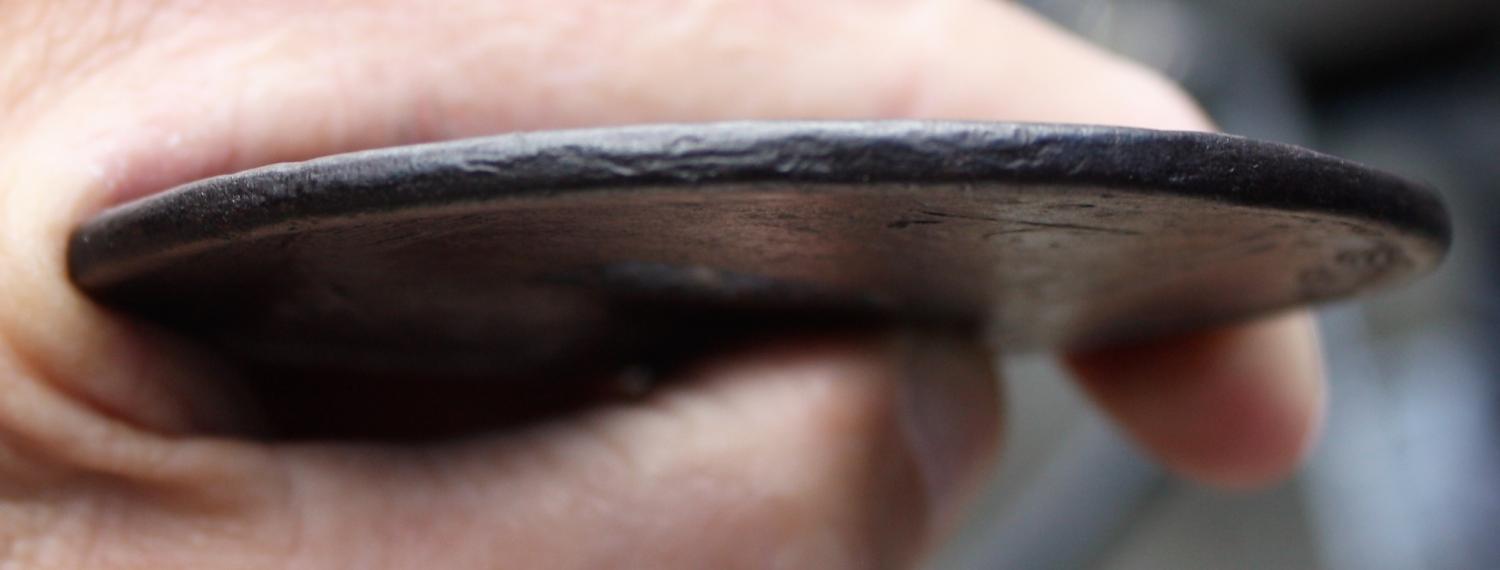
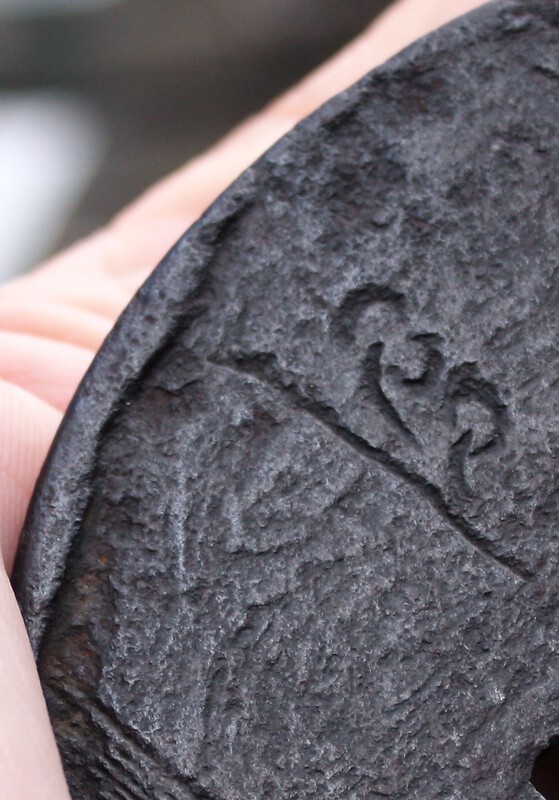
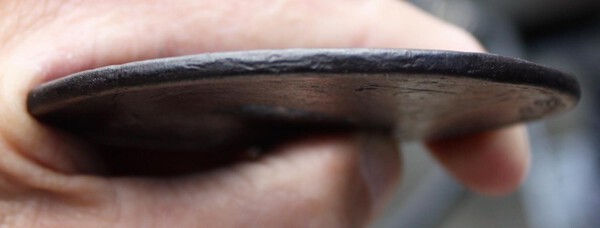
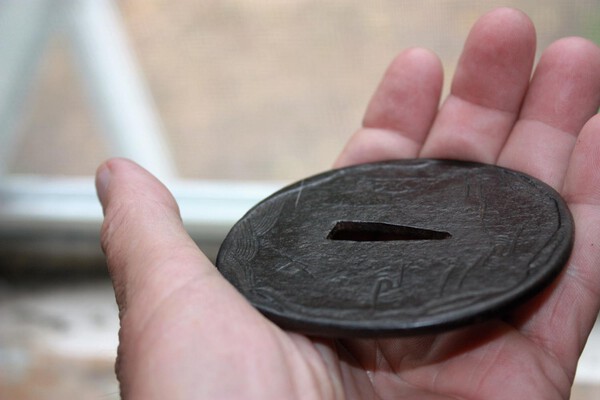
Grev and Jean, thank you. I had (have) the same reservations as both of you, however upon being assured that it is not cast, and its very low price, I have taken a chance. I have edited this post and replaced two pictures. Hopefully you can see the edge of the mimi, the worn area of the seppa dai, the minute chisel marks on three corners of nakago ana, and what looks like a false wood grain (shows much rougher than in hand). In all, very frustrating; either junk, or old and interesting., regards, John
-
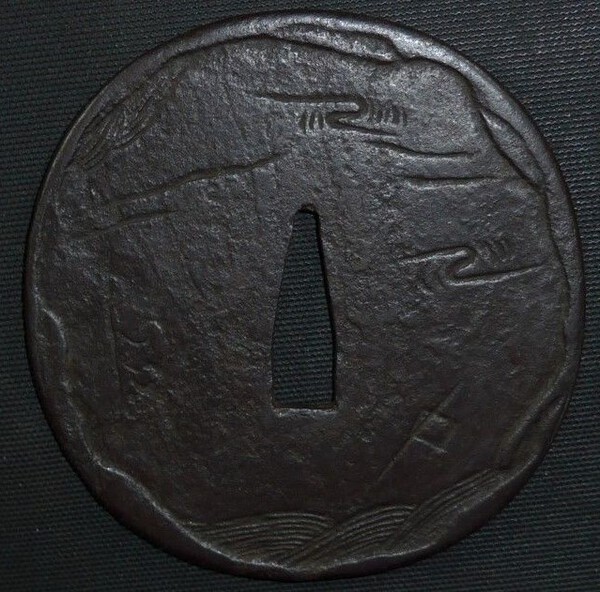
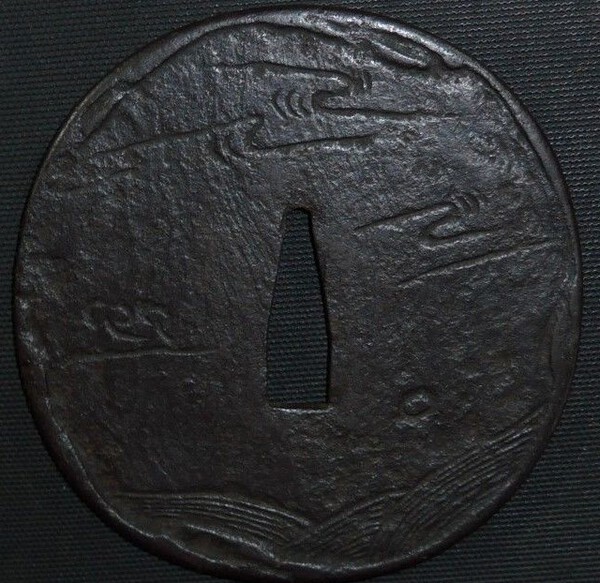
78 views and no opinions? Please, if it is something glaringly obvious don't spare feelings I might have written this one off if it wasn't for the folded iron, and the similarities of the border of the plate to a ko-shoami and one or two early saga kaneiye. Any help is much appreciated regards, John
-
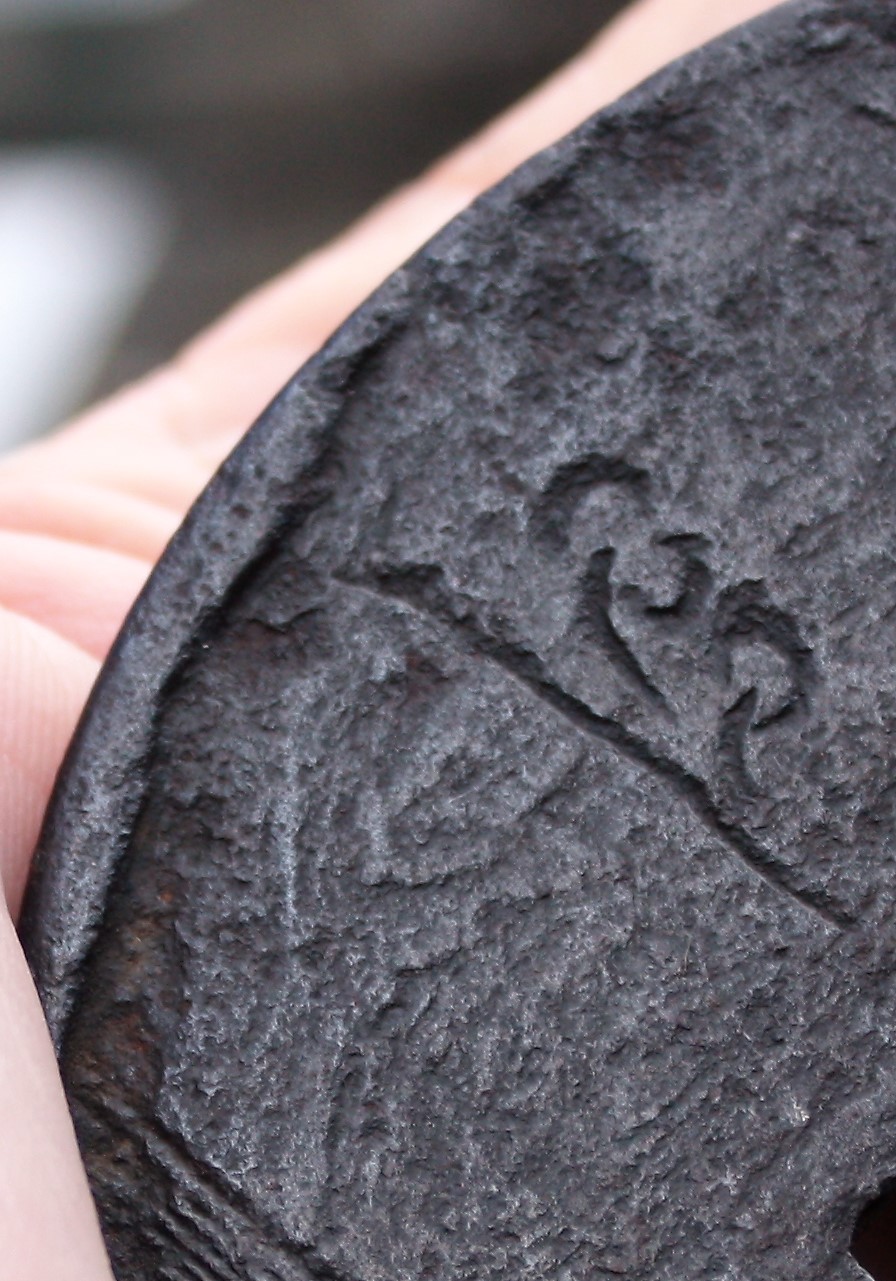
Hello, I am hoping I can get some help identifying the school, name of the style, and the age of this tsuba. Measurements: 84.5 mm tall 81.5 mm wide 3.7 mm roughly at mimi 3. mm or slightly less on face It is forged iron with evidence of folding It has what looks like a natural black patina, and there is curious "melted" or brushed surface to the right and above nakago ana on both sides. I was wondering if this could fit ko-shoami possibly? Thanks for your help. Kind regards, John (johnnyi)
-
George, thanks. I thought it might be wishful thinking trying to get it identified, let alone be able see the same design on another tsuba. Thank you, all of you; the depth of your knowledge is amazing. Kind regards, John p.s. Might I conclude from the write-up that due to the thick inlay, this tsuba would fall into the class of Onin influence-Momoyama period?
-
Sorry to hear that Henry. "I think the colors" sounded so zen-like. johni
-
Thanks Christian! Johni
-
Thomas, I thought you were joking at first, but what I read just now bears your thought out, even to the baskets. "Debris", yes, indeed I should have guessed Thank you johnnyi
-
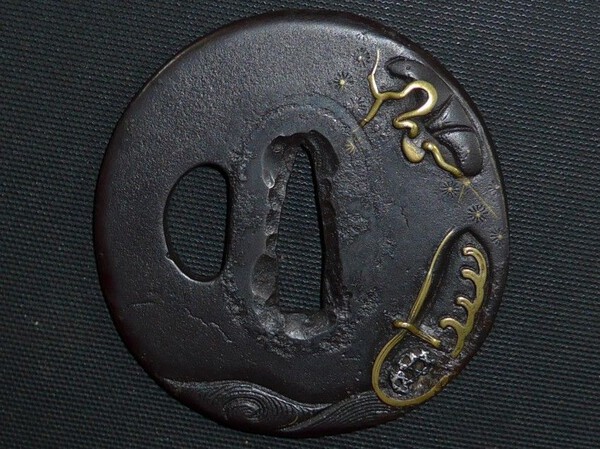
Ahead scratcher indeed. The upper element is only produced once on the front as you see. The lower element is reproduced again on the verso, with the same little doohickey that crosses over, the same silver inlay, same four fronds (for want of better word), and the waves. John
-
"sea cucumber" has been suggested, but I think that is a stretch. The silver inlay resembles caning that you might find on a chair seat (woven overlap) and this design element repeats on the verso. To me the design seems to hint at life springing forth (from the sea?) or something along those lines, but I don't know. Any help or even guesses would be much appreciated. Thanks johnnyi
-
I like your tsuba, and I too think it is shakudo, having immersed myself in researching something similar recently. While waiting for better pictures, are we looking at brass (ten zogan), or are these dew drops the same shade as the copper alloy? The former would lend even more weight to it being a well made tsuba I would think. p.s. I see after looking again that they don't seem to appear in both pictures. Looking forward to your better pictures.
-
I know nothing about swords, and with that said, one scenerio might be that this was shrapnel damage (grenade maybe, followed by the flame thrower, which I believe was the practice when securing defence bunkers, particularly the caves on the Island of Iwo Jima. A really interesting piece of history. Regards, Johnnyi
-
Ha, thanks Brian, I wasn't sure it was allowed. Here it is http://www.ebay.com/itm/DAISHO-TSUBA-18-19th-C-Japanese-Edo-Antique-Koshirae-fitting-Tree-d535-/272647095307?hash=item3f7b08840b:g:8~4AAOSwjqVZAXi7 regards, Johnnyi
-
For what it's worth, there is a fairly new listing on ebay now of daisho tsuba of what seems to be this exact style. Possibly the seller of those has an opinion on school? (will send you link) regards, Johnnyi
-
Hi Grev. Could it be that putting hard and fast dates on these might be sometimes misleading? By that I mean trying to distinguish an old tsuba, (for instance a ko-Tosho, which Robert Haynes speaks of in his Shibui Swords site as having certain distinguishable characturistics) from the next generation of that tsuba which has distinctly different characturistics? As an aside, the Ko-Shoami he describes as being made until the end of the Momoyama period which I guess again is attributing "ko" to characturistics of the old school moreso than exact date?. Just my 2-cents, It will be nice when the experts chime in on this, as I've wondered too. regards, Johnnyi
-
Hello Vermathrix, Possibly I am missing it, but I don't see the one mentioning school? regards, Johnnyi