Rivkin
-
Posts
2,528 -
Joined
-
Last visited
-
Days Won
20
Content Type
Profiles
Forums
Events
Store
Downloads
Gallery
Everything posted by Rivkin
-
Sorting out my guesses: #1. Shizu Kaneuji. #2 I feel its actually a quality sword, but its the only case where the pictures are a little too vague. Soshu, or at least Bizen heavily influenced by Soshu, but a little too brash and wide hamon for the classics and a little too good a condition as well. I will throw something like Taikei Naotane. #3. Ko-Aoe, or something old and sort of similar, can be even ko Bizen, #4 Don't know, something Shinto. #5 Sue Soshu, can be Tsunahiro #6 Yamato Hosho style, but quite likely Sendai utsushi. #7 Late Soshu imitation. #8 Pre Muromachi, something Rai related. #9 something very late, probably shinshinto, not the first class name. #11 some shinto smith, maybe Hizen Tadahiro. #12 Sue Soshu, Sengaku period. #15 late Nambokucho Bizen, like Moromitsu. #16 Yoshimichi of Mishina #18 someone rare and weird like Kongobei school. #21 Enju. #22 Uda Tametsugu or maybe Sanekage From these, I suspect 1 and 3, maybe 15 are Juyo. Which brings me to the wildest of all my probably highly erroneous guesses: #14 I think the sword is somewhat tired, hard to photograph and will look different from other angles. But, sometimes this is the way Soshu Yukimitsu looks like, which would make it TJ. Kirill R.
-
Great photos! There are some that appear "easy", like #16 is Yoshimichi of Mishina, but most require some thinking. #1 looks like Shizu Kaneuji. #3 is probably ko-Aoe, but also surprisingly looks like one ko-Bizen blade that was sold recently. #5 looks like Sue Soshu, probably Tsunahiro. #12 and #7 are related to it; #12 is probably the end of Muromachi Soshu, #7 is late Edo period someone who is not the first class but recognizable name working in Soshu style. #6 sort of looks like Yamato Hosho, but can be Sendai utsushi. 9 is some shinshinto+, not very distinctive. #11 is some shinto smith, maybe Hizen Tadahiro. #15 is probably late Nambokucho Bizen, like Moromitsu. #22 is sort of feels like Uda Tametsugu or maybe Sanekage. 18 is someone weird like Kongobei school. 21 feels Enju. Fugh, I expressed my than my usual share of ignorant and erroneous opinions, must get some sleep. Thanks! Kirill R.
-
No, its the end of Muromachi, but not Muramasa. Muramasa has much stronger tint of Mino to it, kind of Ujifusa-like, hamon is different from this one. There are also some strongly sue-Soshu looking pieces, including hitatsura a-la Tsunahiro but with very long kaeri and very symmetric, but those are rare. Very personal and likely erroneous opinion. Kirill R.
-

Daisho tsuba really Unno Shomin?
Rivkin replied to terminus's topic in Auctions and Online Sales or Sellers
These come up on yahoo auction now and then, they do cost some money but I think below 1,400$. Looks like a somewhat modern work. Regarding the papers, tosogu is relatively seldom papered compared to swords, I would not hold it too much against it. Kirill R. -
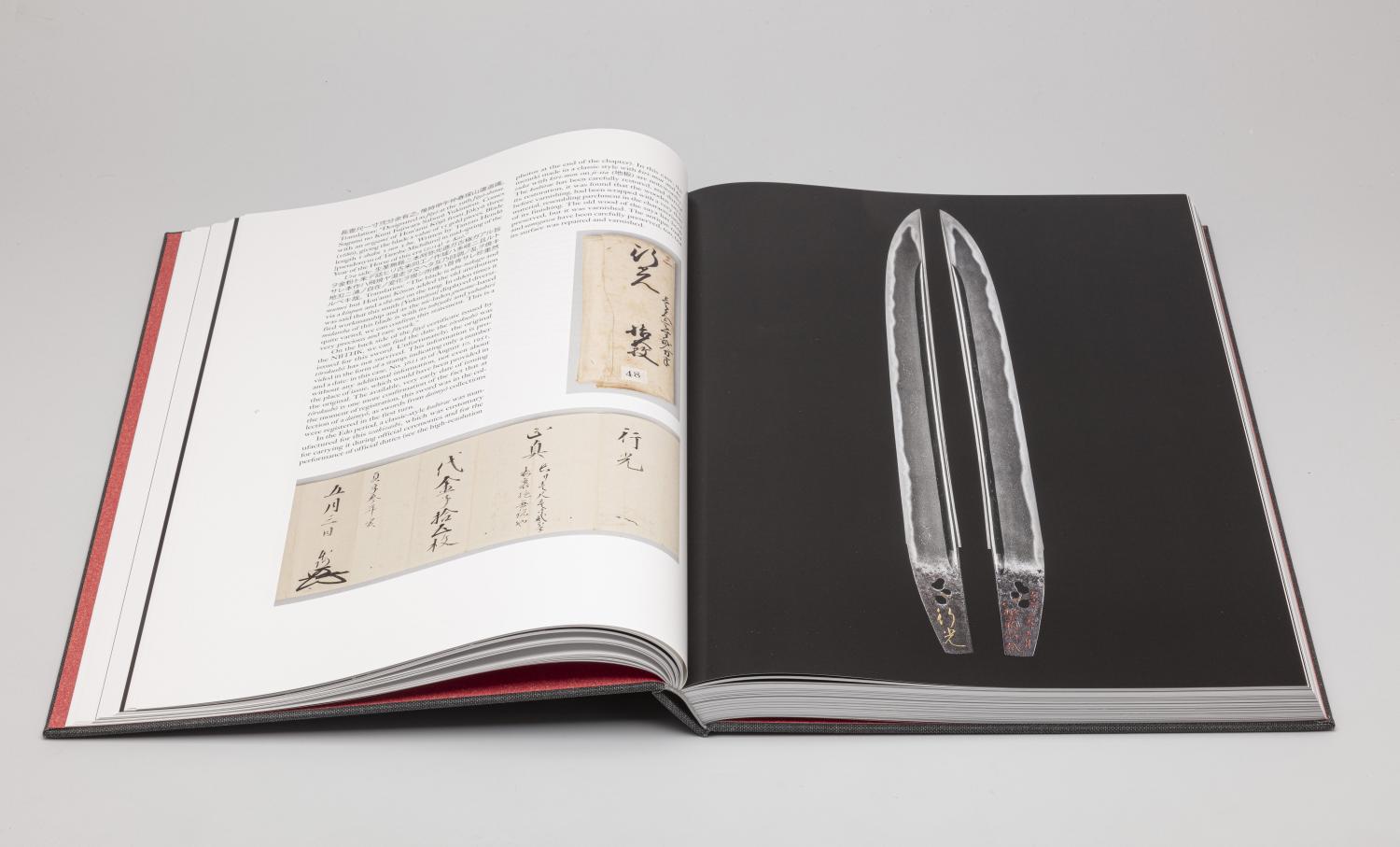
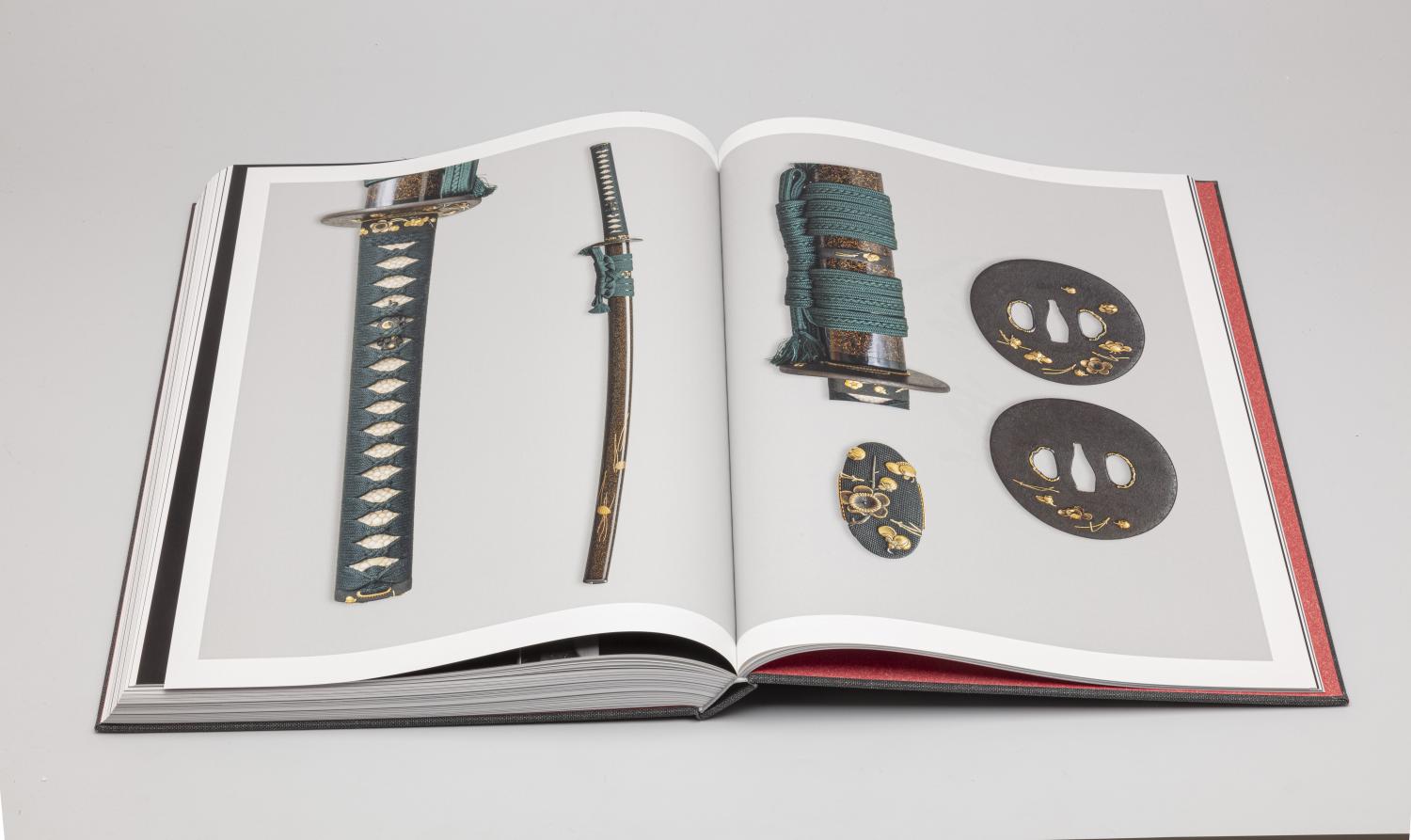
I finished reading at about 70%. The book is a very substantial improvement over Dr. Honma's. Markus Sesko did a very good job with a final edit; in the present form it is extremely impressive both in terms of analysis and objects presented. Detailed information about the Soshu school's early period, its reinterpretation and the resulting great uncertainty with Soshu attributions - it actually gets more interesting towards the middle. As good as private collections go without venturing into kokuho territory. The praise can be repeated on and on, but its really worth to bite the (price, weight, convenience) bullet and just read it. My personal interest here is anti-commercial - I myself ended up buying a significant number of copies. Kirill R.
-
360 pages. If someone for some reason does not mind lugging 12lbs in a luggage, I can bring a spare copy or two to SF show. Kirill R.
-
Received my books yesterday, so just began the reading. Very impressive! The blades are mostly TJ with a relatively long provenance, which provides interesting background regarding the old papers, koshirae, alterations done etc. Otherwise information is excessive, there is a hint of typical emphasis on lineages, as per guesses made in Edo period, but the community does not seem to object to those... But there is quite a lot on observations regarding the style changes during the foundation of the Soshu school, kantei issues, and great wealth of information regarding the statistics on signatures, gathered both from Juyo volumes and old publications. The publication quality is simply above and beyond Dr. Honma's book, which includes the photography. Unfortunately SF show reduced number of tables this year, so they are oversold and with all my recent issues I did not get the table application in time, so will not be having it there... Maybe will drop a copy to show on Grey's table if needed. Kirill R.
-
I'll second Uda, but will vote for 1500. There are a few period names that come up, some make more sense than others. Ignorant and erroneous opinion, Kirill R.
-
Nice! Kambun Shinto could be a good guess based on sugata. I would consider someone like Kawachi no kami Motoyuki. His hamon tends not to be as strongly Soshu styled or frankly as good as better ones by go-dai Tsunahiro, but sometimes he did his hada quite well, with lots of large mokume not completely unlike what is seen here. There could also be a small chance this is actually shinshinto with an unusual shape for the period. But they were more inclined to experiment with hada like this one compared to Kambun smiths. Personal and almost certainly erroneous guess. Kirill R.
-
Robert, without having truly strong knowledge of the early Goto [i am really out of my confidence zone here], quite a lot of originally Goto designs did spread around throughout the Kyoto area, or even the ones with Gempei war went almost everywhere in the kinko community, plus there was an extensive number of waki goto artists... Were this kozuka an exact match (and these things do often exact match to signed pieces), the argument would have been stronger, but since it is not, moreover the differences are clearly such that the artist is most likely a different person (shape of the bottom fins, for example) - it is likely someone of good skill but who worked from a similar general drawing. In this case, my fear is also that extensive condition issues here will prevent any very specific attribution. To me it looks the early Edo. Kyo kinko in this case is a conservative-general attribution, which could be really anything, and thus a low risk path for anyone cautious. At the same time, someone who is not afraid to be more specific, like Haynes, will likely be more specific and can say "early Goto", but in the end with such extensive wear I just don't know how one can distinguish for sure. Kirill R.
-
Old kyo-kinko. Kirill R.
-
Being a blade rather than tosogu person, but still: The subject here is most likely fox wedding. Yes, these foxes are typically depicted in the way we would see rats, which is always puzzling. It most likely was a part of a set with kozuka showing the bride's palanquin. All "rats" in these scenes are wearing samurai attire, usually with swords and large naginatas. The subject was quite popular in kozuka, somewhat less - tsuba and sets around 1830-1860. It makes it hard to pinpoint a maker since the scenes and depictions are more or less the same. There are some quality examples from Mito and I don't think this one is Aizu Shoami either. There are a few other "samurai as foxes" subjects that were explored beginning around 1800 - foxes playing kabuki and so on, but they are not nearly as popular as the wedding procession. Personal and likely erroneous opinion. Kirill R.
-
What Tsuba are most sought after?
Rivkin replied to barnejp's topic in General Nihonto Related Discussion
Thank you for correcting me - it was more appropriate to write: tsuba by tokujo. Thank you, sorry for the mishap. I wanted initially to mention somewhat wider range of names but to my shame just realized I don't remember the next 2 generations of goto and due to move writing from cell phone is not enticing to fact check. Kirill R. -
What Tsuba are most sought after?
Rivkin replied to barnejp's topic in General Nihonto Related Discussion
Kaneie and Yasuchika tend to be very pricy. Then around 20-30k usd you’ll meet every big name in the book from early Goto ending around Tokujo, first generation Nobuie, Goto Ichijo, somin and many others. Kirill R. -
Yes. They released Russian and English versions separately. Kirill R.
-
Thank you very much! I have to state I bear no commercial interest in the project, just wanted to give heads up regarding what I feel will be an interesting "read and view". The author is Dmitry Pechalov as was already noted. I hope to display a copy at SF show. Kirill R.
-
What can you tell me about the Taira-Takada school of the Bungo province?
Rivkin replied to general_piffle's topic in Nihonto
Again it comes in Japanese context, where schools are defined by province, even if the work is quite different. During Kamakura Bungo had an exceptional status of one of very few territories outside of the North which were governed in wholesome by Kamakura rather than Kyoto. It had weird samurai bloodlines and customs, and a few smiths, whose works today one very seldom sees, which suggests that this Bungo school was not nearly as large as Norishige's shop in Etchu or Mino's Kaneyuki etc. By Oei however all Japanese schools save Bizen basically began to quickly die out. There were few holdouts from Nambokucho period like Oei Nobukuni or Hasebe or Naoe Shizu, but by Onin war simply nobody bought new swords. Strange as it sounds, but the situation was beyond bad everywhere. Swordsmithing revived in 1500-1520, but with a very different style and different quality. Case in point - Nambokucho Bungo has very little to do with Shinto Bungo, though in Japanese books they are considered as the same school. Shinto Bungo and Sengaku Bungo are similar in quality. There are many who say that Shinto is inferior to koto, but it does not mean early Shinto is inferior to Sengaku, one can argue it is actually more of the opposite. Kirill R. -
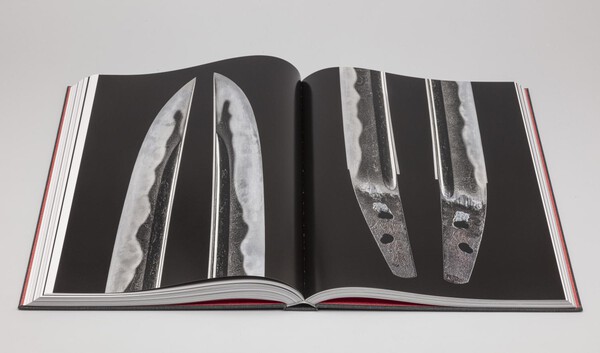
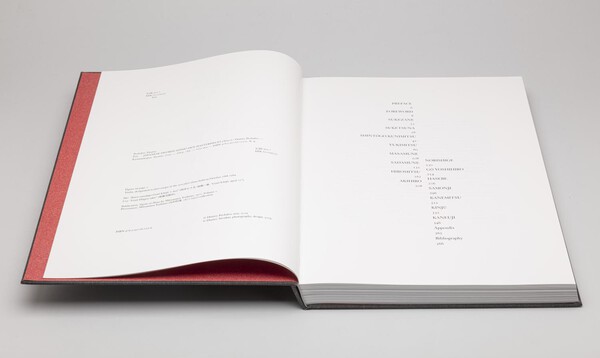
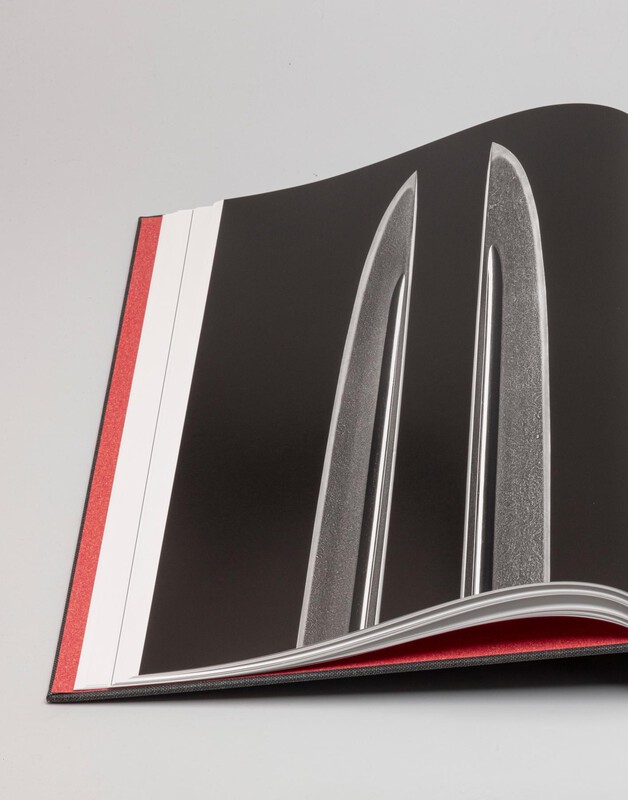
New book is coming up! I Catalogue of one private and important collection. While I am usually not a fan of "Swords in .... museum" kind of thing, since it suggests certain laziness limiting authors to what they could easily access, combined with randomness of selection, this one indeed reflects a very serious and earnest effort dedicated specifically to the subject of the early Soshu. The Gentleman in question caused much pain to Soshu collectors for years by depriving them from chances to purchase some very advanced items, and now we finally get to see the results of this effort. I have not had the book in hands yet, but I expect there is going to be a lot of kantei on the early Soshu as well as translations and discussions regarding how the subject was reflected upon in Edo period studies. The photographer who worked on the volume is a very important figure in the world of still life photography, though not equally well known one. I don't think he practiced the nihonto subject before, but being one of the best in the world in his craft should still show. Predicting an obvious question - I have little idea at the moment through which channels it will be sold. Kirill R.
-
What can you tell me about the Taira-Takada school of the Bungo province?
Rivkin replied to general_piffle's topic in Nihonto
Signed examples are uncommon, but among those Tsunahiro’s student was not half bad and can be had for little money. For unsigned but attributed blades, which are plenty, the situation appears to be quite different. Japanese can’t offer abstract attributions like mid quality early Shinto blade, everything has to be said through names and schools - and therefore comes the need for schools that are vaguely defined, can be in any hada and almost any Hamon, and absorb unusual lower quality pieces. Early Shinto bingo is a prime example of Shinsa saying it does not know what it is, but probably nothing important. Muromachi bungo is more or less along the same lines Kirill r. -
Kelly Schmidt saved my bacon (or crane)
Rivkin replied to Surfson's topic in Auctions and Online Sales or Sellers
200,000 yen, all "weapons" and all things potentially of important historical value. For the last one they go by the item's 1 line title description. If it says "Important Nambokucho autograph document by Ashikaga Yoshiimitsu" even at 175,000 yen chances are they'll get it returned by the post office and you'll need export permit. Things to avoid I guess - references to pre-Edo date, "tokubetsu" and attributions to important historical figures. But it seems you need at least 2 out of 3 before post office declines to ship it. Kirill R. -
Thank you, Piers - no my comment on the sword for sale was purely related to a different, blog-related question - the one regarding the impression that something papered with special qualifications regarding the signature still means NBTHK absolutely affirmed the signature as being original to the sword. There is an example of such Juyo sword for which when the issue was asked to be further explained in sayagaki the response by leading NBTHK judges was consistent and firm that they believe it is a substantially later signature, not original to the sword. If the sword is old enough, and the signature is quite old by itself, it sometimes can be papered "as is" with an appropriate statement to this fact. Very personally and possibly erroneously, I see some lack of caution in re-interpreting such paper as an affirmation of signature's authenticity with some minor doubts. Kirill R.
-
Congratulations! This Taima sword is really something. Kirill R.
-
Would this be a shinto sword with a major signature the feeling could have been that it has slight (maybe really slight) discrepancies with what is considered canonical and thus the judgement is omitted, as it often is. Horyu for koto works is a tad harsher and without seeing the blade and signature it is hard to say anything concrete. Regarding what shinsa really means when expressing some doubt but papering... I have a rule not to comment on swords being offered by dealers, first and foremost since I occasionally sell swords myself and thus cannot be a disinterested party. So I would appreciate not pointing the sword in question directly, but as a matter of context - there is a high paper sword with a "unique signature" for which sayagaki was in the past asked from all of major three issuers (for the obvious purpose of dispelling the stated doubt), but all of them responded that the signature was most likely placed after the smith's lifetime. All opinions expressed are very personal and very likely erroneous. Kirill R.
-
The straightening of hamon in the boshi is a tad too drastic for koto, can't see the details but if its really suguha in the boshi then the sword is shinto. Tembun Uchigatana would typically have somewhat shorter nakago with a more "obtuse" end. With somewhat larger kissaki no fumbari and this curvature it looks probably no earlier than Momoyama and maybe no later than Kanei. The sharp yasurime is also somewhat Shinto looking. As is "glassy" very uniform hamon, though one does find similar things on Muromachi Mino pieces as well. Can be early shinto, mino-derived. Kirill R.
-
Well, I think those tend to come up predominantly for signed pieces, where it indicates there are some issues with the signature, but not enough to discard it as gimei. A koto piece where the signature is unlike anything recorded but sort of matches the work can get this judgement. One option - NTHK NPO will be more clear cut on this issue. I sort of see their judgement sheets are less detailed in Japan compared to the US shinsa, but they still can simply write down a comment like saying "there a chance this portion of the signature is not original" or "the work is Nio, the signature is not". The bad thing about getting this judgement with NBTHK is that it is unlikely to be overturned if you resubmit in a year, despite the judgement sort of inviting this course of action. One might be better off with yet another "Uda" that can easily transform into something more tangible on a slightly more careful examination. All opinions are personal and likely erroneous. Kirill R.