ROKUJURO
-
Posts
7,235 -
Joined
-
Last visited
-
Days Won
40
Content Type
Profiles
Forums
Events
Store
Downloads
Gallery
Everything posted by ROKUJURO
-
Steven, it is a school/tradition that signed their KATANA with TACHI MEI.....
-
Mark, there is no clay application for the tempering (= YAKIMODOSHI). This is only done before hardening (= YAKIIRE). What you call "temper line" is in fact the hardening line (= HAMON). Generally, clay application is mostly done with one side of the blade at a time (there are videos on that on YouTube). In this case the HAMON may not be symmetrical on both sides. However, some smiths took great care in producing almost "mirrored" HAMON. Japanese nouns do not have a plural form, so it is always TANTO (not Tantos)
-
And for your statement Jacques.
-
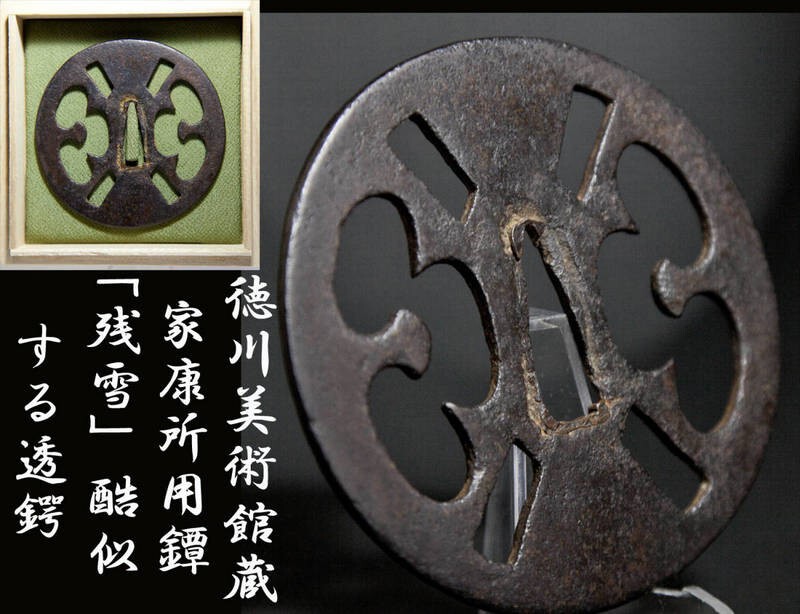
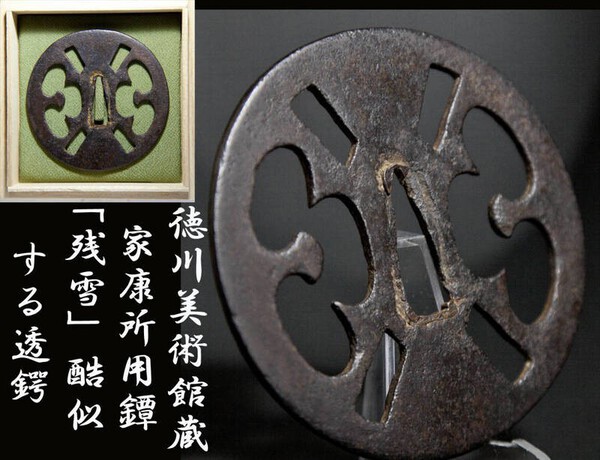
Thank you Piers, Uwe was friendly enough to translate that for me from the TSUBA's description that came from the TOKUGAWA museum. I think this is just another 'picture' this design might be called (....TSUBA theme is called “残雪” (ZANSETSU = remaining snow ). I can easily understand it, but it seems it is not frequently seen so.
-
Does not look to be of (traditional) Japanese origin to me, but I may be wrong as so often....
-
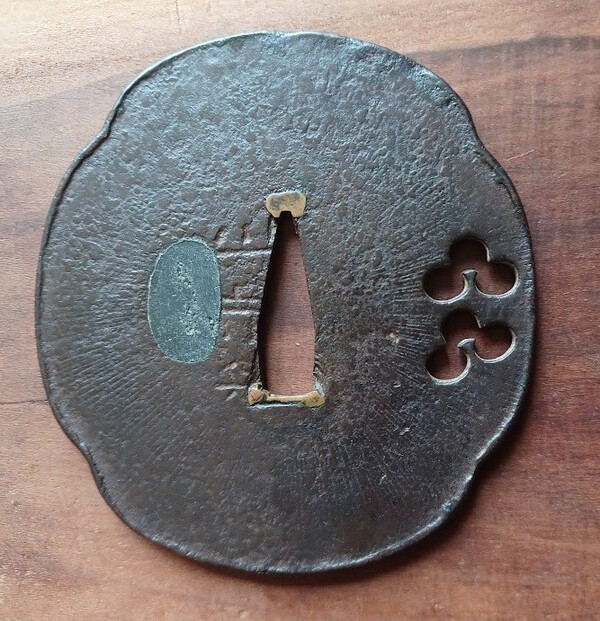
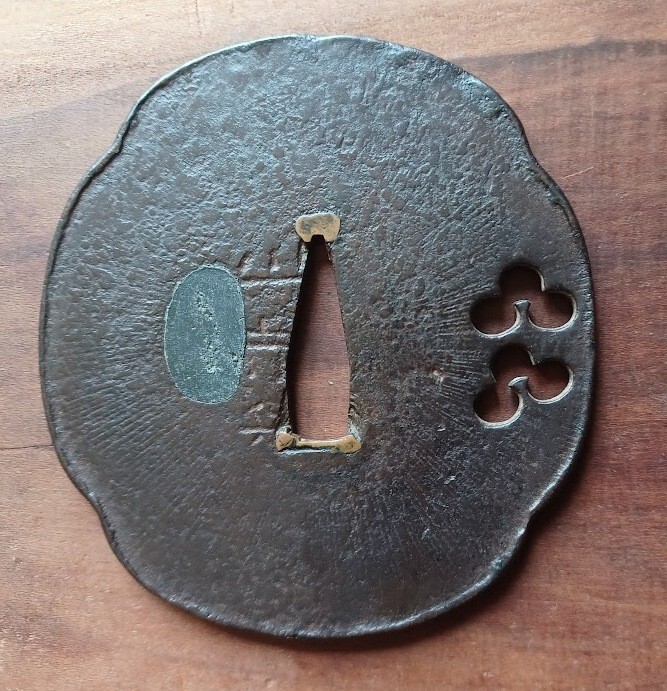
Jay, it is a difficult task to judge a TSUBA from images alone, but as you have it in hand, you may be able to get a relevant assessment. If you imagine how the carving on TSUBA of this style are made, you will find that the tools used leave typical traces. In your case, the chisels (= TAGANE) used to cut the design of mountains and water (SANSUI) will leave a smooth surface in the lines. Now when you use a magnification glass you can judge by yourself if these grooves have a "sandy" surface (which would be a hint towards cast technique) or if they look cut by a sharp tool. As the TSUBA does not look 'old' from its general appearance, you could exclude corrosion/rust having caused a rough surface. All openings in a TSUBA can be reworked and smoothed-out after the production, so in case one does not find traces for cast technique there, this does not mean so much. But in my experience, the design cut with TAGANE is never reworked so looking carefully at how the TSUBA was actually made will teach you a lot about its origin and age. The small gold (or brass) embellishments can be applied on a cast TSUBA blank and are no evidence for a hand-forged TSUBA. THIS THREAD BELONGS IN THE TOSOGU SECTION!
-
Ah, this is good to know as it changes the view!
-
Kirill, what about that blade? Does it have an ICHIMAI BOSHI? Where is the exhibition or salesroom?
-
Why are the name and address of this polisher such a secret?
-
Hi John, C14 dating would not be possible for dating iron TSUBA as it is a specific method for dating organic matter. In addition to that, the carbon content of TSUBA iron (in case you could isolate it) is especially low (just traces, if at all).
-
I think we mean the same. The article is probably not well translated. KIZU are damages, and not necessarily caused by "normal" forging. They are no proof of repeated folding and fire-welding, but can accidentally happen in that process.
-
To me, this looks as if the BOHI were in the JI rather than in the SHINOGI-JI? If I am seeing this correctly, the BOHI might have been added later in an attempt to conceal a bad KIZU that appeared while polishing.
-
Blade and tsuba translation request
ROKUJURO replied to robinalexander's topic in Translation Assistance
The blade is TACHI-MEI. -
Kai, you can adjust the size of your photos so they can appear here on the forum! Two of these images are better than before. I think it will become an attractive TSUBA when properly restored.
-
Unfortunately, I am unable to capture the HAMON in a cell phone photo. I will probably need a special set-up for it as there is almost no HADORI. The SUGUHA HAMON (very slightly MIDARE) widens from 5 mm at the HAMACHI to 14 mm just below the YOKOTE. SAKIHABA is 19 mm there, so the HAMON covers the JI completely. NAGASA is 470 mm. A bit special: The KAERI has a 70 mm long turn-back on the MUNE.
-
The second one doesn't look exactly like a TANTO TSUBA.......
-
Thank you gentlemen, for your comments. I gather from it that ICHIMAI BÔSHI is not so specific for a school or tradition. If I succeed in taking good photos for a KANTEI, I might try again with this specific blade.
-
Might well be a good sword but on these photos there is no detail that I could see.
-
First one might be YOKOYA school "SÔ X TAKAFUSA (?)
-
The short one is a KIRIDASHI or KOGATANA.
-
You can read on their website "KIZU are the evidence of repeated forging" so I would not take all very seriously. Maybe it's the translation....
-
Charles, I think your idea of steel colour cannot be backed up metallurgically. If I grind/polish historical or modern industrial steel in the same way, they will look the same with almost no variation except possibly in the structure. Basically, TAMAHAGANE has no other "colour" than any other carbon steel, however, in the long range, superficial micro-oxidation and chemical influence may change that as the chemical reactivity of steel alloys can vary. It is often said that KOTO blades have a different (= darker) colour than SHINTO, but, depending how they are polished, they can look the same. On the other side, a KANAHADA polish can last for hundreds of years, depending on the use (= abrasion) of the blade. I cannot follow your thought that differing size HAKOBORE ( 刃毀れ; not Hakobori) on both sides of the blade should be evidence of correct hardening.
-
As Marcin says, heating up steel to a temperature of ca. 280°C will cause a dark blue colour, resulting in a loss of hardness. But sword blades can also get a bluish surface colour from a late stage in polishing (KANAHADA NUGUI). It is best seen if you compare blades side by side.
-
Another one: The design refers to a naturally formed coastal line where round puddles are made in the sand by wind and waves. Like natural "harbours"
-
Usually, this is called SUHAMA motif: