Ford Hallam
-
Posts
3,091 -
Joined
-
Days Won
78
Content Type
Profiles
Forums
Events
Store
Downloads
Gallery
Everything posted by Ford Hallam
-
I did a little dig around on-line for some background material to help clarify what we mean when we talk about aesthetics. I did this because I sometimes feel that there is a distrust of this discipline, as though it is just yet another attempt by "authorities" to impose their own standards. Personally I think that the study of aesthetics actually provides the tools to help you ultimately form your own informed opinions. So if you're interested here are two short essays which might prove helpful. Exploring the meaning of the term "aesthetics" Art criticism:judgement versus taste and here, on the same site, you'll find some more essays that may be of further interest.
-
Hi Steve, I enjoyed your reply. On reflection it made me realise that my own view hasn't been clarified. In fact I agree entirely with the points you make and as such feel that the broader awareness of the pitfalls of the past might well equip us to better approach the subject with a little more lightness of touch :D . Part of what I feel very strongly about is the need to let go of our preconceived tastes. By this I mean the sub-conscious absorption of the "common aesthetic" we were raised in. Personally, as an artist, I have tried to counter this bias by means of study and exposure. This, coupled by a genuine desire to simply try to observe things in as neutral a state as possible may help us grow beyond the limitations of our individual circumstances. regards, ford
-
the problem with this statement, Remy is that people very rarely agree with each other notions of beauty. Different periods in history also have very different ideas about what constitutes beauty. Steve, I remember you raised this chestnut regarding objectivity previously on the Tosogu forum and while I understand the basic philosophy you are citing I don't think it's all that helpful really. It may well be "the ultimate truth" in this matter but to be honest it merely opens the door to chaos. The real problem with this theory is that once you've deconstructed something it rarely works any more :D If we allow that everything is subjective and contextual then it becomes almost impossible for us to communicate anything of any substance to one another because we will never have any idea at all what the other really means. It's bad enough as it is without abandoning what last remnants of our notions of objective qualities remain. regards, Ford
-
I think Franco's comment "above and beyond the eternal search for the correct mei" is fair in reference to the book quoted. A quick search found this; a link to a page from the book It does look very tasty. and here's a link to it's full listing at the bottom of the page, although that's not a cheap book :? So if anyone wants to send me a chrissy present....
-
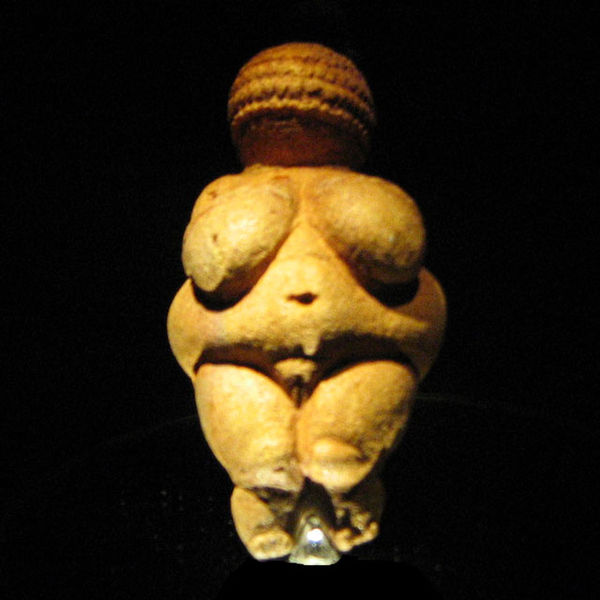
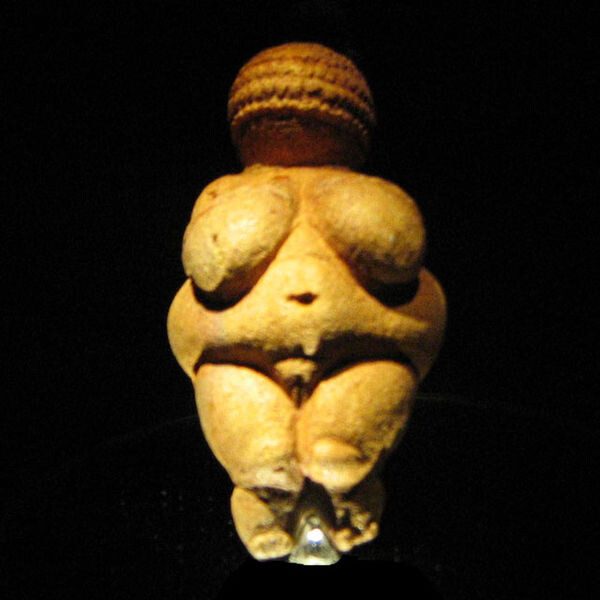
Good taste is the last refuge of the true artist Milt, I may agree with you to a point on butterflies...but I think I could show you some by later artists ( both Edo and Meiji ) that are quite beautiful. With most work though, we're talking about stylistic conventions that were common at a particular time. The degree of skill in the work can be objectively judged, as you agree, and the matter of whether you personally like it is yours to make. Consider the Venus of Villendorf; as an accurate depiction of a woman it's not very accurate but it was not likely that it was intended to be...and yet it continues to enchant the modern eye and most probably in ways that the maker never imagined or intended either. I think Picasso is a good artist to consider in this context too...his later work, that which seems to raise the greatest objections can only really be objectively "understood" by a more informed appreciation of the modern art movement, it's aims and influences, and the influence it actually makes on our visual world today. It is quite easy to dismiss if we don't understand/like or respect it, but this is a rather superficial reaction and one we can learn much from if we consider the parallel situation in our own particular field of interest. regards, Ford p.s. I only posted this reply so that I could sneakily work in a reference to this statuette and so be the first person to post a nude on the forum ...thought you'd appreciate that Milt
-
actually Milt you're spot on...in every other field of art that is generally well acknowledged. The signature is the one part of a painting that can be relatively easily copied. The part that is so difficult is the work itself. This does raise the question as to how it is that in this field, fittings ( I think swords are another matter ) specifically, we have these reference books of mei but rarely are we given suitable examples of the artists work to equally asses and thereby begin to develop an appreciation of their working style, it's characteristics and their skill. The amusing thing is, that with regard to earlier iron guards we have quite a lot of reference material that does focus on the pieces themselves...because there are relatively few mei to obsess over :D . With kinko work it seems we have to content ourselves with "spot the difference" on the mei and trust that conformity to the "officially sanctioned" signature form guarantees quality.
-
Remy, I don't think the latter part of this discussion was particularly directed at you or your tsuba. The way I saw it was more a general expression of concern at the sort of thing we are seeing a lot of recently. The criticism seemed to me to to be more about not trying to "see" more there than there really is. Yours is a perfectly honest tsuba, you like it...and that's absolutely fine. But the point is not to lose sight of the bigger picture and in this we need to constantly work towards a better understanding and appreciation of what constitutes real quality in this field. Matters of personal taste aside, there are objective criteria in all art forms which we can learn to recognise and enjoy. The danger of ignoring these is that we all simply end up just liking what we like and we get no-where....we'll have no consensus on values and we end up with a situation where we democratise art on the basis that everyone is entitled to their own opinion. The absurdity of that scenario is clear :? I better say no more now because last time I pursued this tack I got lots of knickers in knots Regards, Ford p.s. while everyone may be entitled to their own opinion not everyone is entitled to be taken seriously
-
s! ...sorry Dr John, I missed this earlier...I'm with you on this 100% I think I understand what Shan is getting at but I fear that in this case it isn't a matter of expressive choice on the part of the maker. The workmanship simply isn't fantastic. There are artists who are noted for a more vernacular style ( Jingo work for instance ) but it is very important to understand the difference between mediocre technique and deliberate "roughness" or naivete. Sorry Milt, skill is not a matter of taste, it is an objective quality I think Brian has assessed the matter fairly accurately so he gets a beer
-
I think they're Japanese , not great work though. The copper horse looks to be stuck on actually, not inlaid.
-
hmmm....yeah, probably ...and I love that quote of Henri Joly's that Dr John posted....pretty much sums it up for me.
-
Thanks Gents, for your kind appreciation John, if the images are pixellated It probably means they haven't fully loaded. You may need to give it a moment if your connection speed is a bit slow. Sorry. In terms of your question as to whether this sort of work is actually viable today in a commercial sense I'd have to say that it would depend entirely on the quality of the final product and getting in front of the right audience. Funny enough ( in an ironic way ) that audience generally isn't fittings collectors. There is no contemporary tradition really, just a very small group who make, perhaps, a single piece a year. There is nothing really new coming out in terms of the designs or expression either so I think there isn't much confidence in newer work. Having said that I've been fortunate enough to have sold quite a few piece to collectors, some of them through this forum ( Thanks Brian ) but I couldn't support my family that way. It's a little disheartening at times that I can't follow my first love ( tsuba) despite years of absorbing the tradition and working out a coherent and authentic expression of my own. I've have experimented with the netsuke format ( kagamibuta) and have found a fair bit of interest there but that too is a fairly small market. I'm beginning to work towards a sculptural format that I hope to present to the wider art market and I think it pays to try and explore different avenues. Thankfully though, there are always people who can afford and appreciate the finest things that are available so there is always the motivation to keep pushing ones abilities. Shan, thank you for your very eloquent compliments. Perhaps one day you'll be able to test out your impressions....and get to see if the really are all that ethereal . I'll let you know when I'm next back in the UK. Thanks again all, regards, Ford p.s. Milt, the beard is just a disguise for here, and a desperate attempt to be taken seriously ( I mean...IF I was much older AND Oriental... I'd be laughing ) The way I seem to upset delicate sensitivities I also thought it wise to adopt at least some sort of disguise.
-
Thanks John, glad to add what I can to help raise everyone's game I think we can do this sort of mini "expose" as and when similar big names come up for discussion. Eventually we could end up with a very valuable and complete database. The material could be archived under the names of the relevant artists. What do you reckon, Brian? We already have a few similar threads that could easily be overlooked unless more accurately labelled too. Just thinking of ways to keep Brian busy...."The devil makes work for idle hands"
-
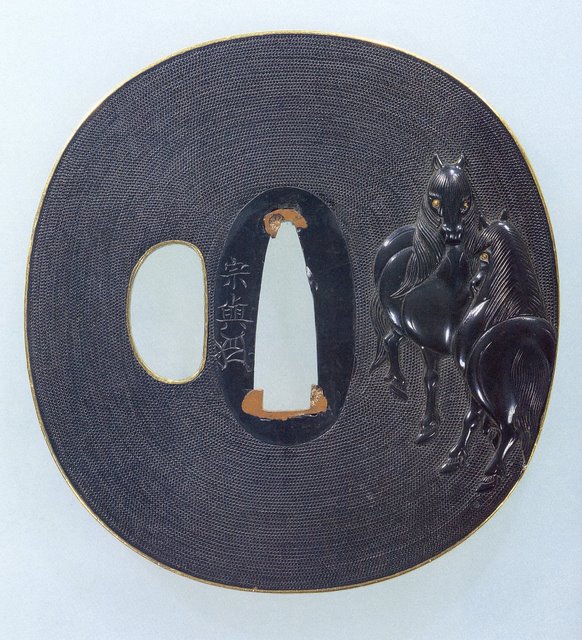
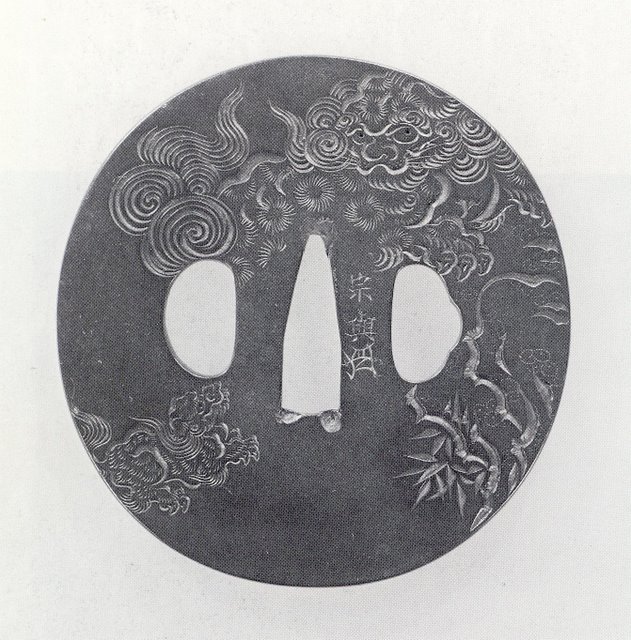
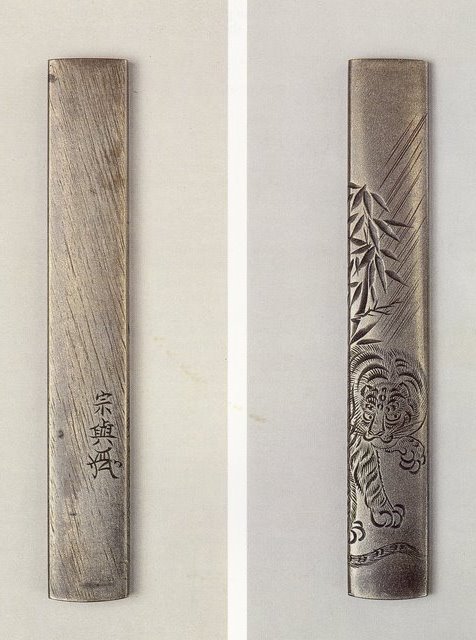
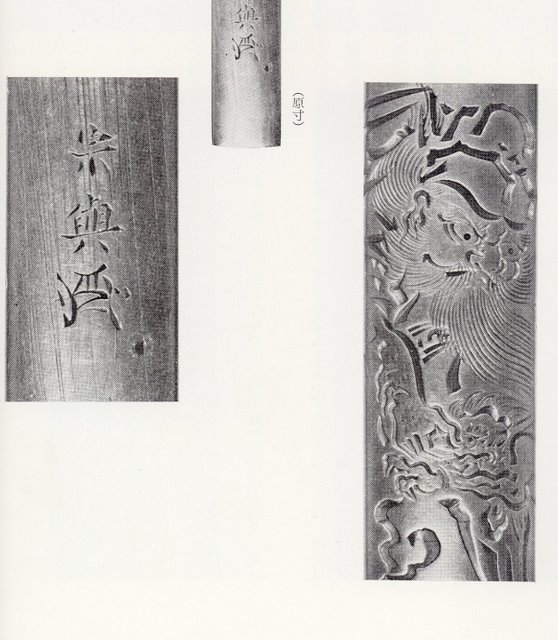
...and while we're dealing with this maker I thought it might be helpful to add the following images as reference and some biographical information. Yokoya Soyo (1615 - 1690 ), his personal name was Yokoya Jihei. Started off using the art names ; Moritsugu, Morinobu, Tomochika and ended up using Soyo. Apparently his early training was in a studio that supported the output of the Goto school in Kyoto. Most likely in making up the basic forms of fuchi/kashira and kozuka. It's probable they supplied the nanako grounds also. He graduated from this lesser workshop to study the pure Goto style under Goto Injo. Yokoya Soyo went on to found the Yokoya school which is famed for it's dynamic work in kata-kiri bori. Soyo who is often referred to as "Grandfather Soyo" was the father of the more famous, and arguably influential, Somin. The school flourished until late in the Edo period and produced a great number of students, rather confusingly, called either Somin or Soyo. The school is credited with introduction of the vertical format, just like a hanging scroll, for kozuka decoration. This is in contrast to the horizontal arrangement of the Goto school which echoes earlier screen painting composition. In this we can see the move from the aristocratic taste of the Goto clientèle towards the freer type of artistic expression favoured by the merchant class and the rise of the machibori artists. This was exhibited at the British museum in 1990 and is regarded as genuine. ...as was this, more typical kata-kiri piece. This charming fella was exhibited at Patrick Syz in 1991 and I was fortunate enough to get to examine it at very close quarters. It convinces me of it's authenticity. Most of the information I've quoted comes from the catalogue written by Graham Gemmell that accompanied the exhibition.


-
these are from the "Toso Kinko Meishu Roku" circa Showa 45 handy converter here


-
...from my professional perspective ( he he...that's me pulling rank ) and from what I can see I can't see anything that suggests any unusual construction processes in the fuchi. It looks perfectly normal to my eyes. In fact I think that in terms of actual construction and overall shape these are quite decent examples and ones I'd recommend as good examples to my "followers of the iron brush" The mei is fairly obviously gimei and the workmanship confirms this, which is what Dr Lissenden clearly explained. Any further speculation enters the theological realm of " how many angels can dance on a pin head" :lol: regards, Ford
-
I would have to wholeheartedly agree with John's assessment also...sorry Milt, perhaps Santa will be kinder
-

looking for any info regarding this iron & copper kozuka
Ford Hallam replied to KRM's topic in Tosogu
Hello Kevin, Your kozuka is quite pretty, as you say. It would appear to be a fairly average ( to low quality ) piece most likely very late Edo period. The traces of "gold coloured material" are in fact the remains of a gold plating. That there is so little left on the copper base ( and the fact is was plated at all ) tells us it was not particularly special nor expensive when new. I don't think a school could really be assigned but most likely made in Edo. Just my opinions of course. regards, Ford -
There is only one way for the fellow who ground that nakago to atone for his crime...Seppuku! and with the same blade
-
I think it's French...it looks like philo-pastry.
-
Henry, Your statement seems a bit absolute ...I'd suggest rather the opposite is more often true. It would seem to me that the use of thicker material would mean the manufacturing process would take longer and that the material cost would be greater. I agree with the opinion that these are not particularly remarkable but I wouldn't call them poor quality. I think they are perfectly honest work. regards, Ford
-
aw...thanks chaps ....it's nice to be appreciated . At least you know I'm not all bad I appreciate the compliment, Jean...but I fear I still have a very long way to go. I'll keep at it though regards, Ford
-
Hi Gents, interesting that you both have such good examples of the same technique. I don't know if you remember but there was a discussion some time ago about the "apparent fact" that the vast majority ( if not all ) of the very fine wire, or line pattern gold inlay frequently seen on shakudo fuchi-kashira were in fact painted on with some sort of lacquer. This was the opinion of an unidentified Western expert. Uncharacteristically I left it at that....perhaps I was tired Anyway...I'll enlighten you all now as to how it really is done and in fact how these kozuka were also done. Never let it be said I don't give you fellas anything :D here's your Christmas present The technique is called keshi-zogan. It's basically a process of filling an engraved, or chiselled line with gold or silver amalgam. The mercury is then vaporised with heat leaving the precious metal behind. It typically takes a few applications to fill the lines completely. The Tanaka school use the the technique to create those little dots on the seki-gane and those kozuka with the incredibly fine lines of script are also done in this way. There's a famous shakudo tsuba by Murakami Jochiku that has a design of a a circular crane done in gold that is also keshi-zogan. I've never seen the technique done with anything other than gold or silver and of course it won't be seen on ferrous metal. Another fairly common application is where you see a fine spray of tiny gold dots on a non-ferrous ground like shakudo, shibuichi or copper. Regards, Ford p's. don't try this at home ...it can kill you I'll post some images of the process and the result on my forum in a day or two. I did the back of one of my kagamibuta this way;this one'. It's about 4cm across.
-
Hi Dr John L, sorry I didn't notice your query before.... The making of gold/copper alloys is not very difficult really, as long as you exclude excess oxygen which tends to be absorbed by molten copper rendering it friable. the actual mechanical properties of shakudo are virtually identical to pure copper. Making good shibuichi with visible grain ( nashiji ) is an entirely different matter...that really is an art. hope that helps, Regards, Ford
-
Brian, a very decent piece of work, regardless of who made it. In my opinion work like this ( ie; of debatable origin ) should be judged firstly on it's aesthetic merit. In this respect this is a perfectly pleasing tsuba in all aesthetic aspects. I'd be happy with it. well done and well spotted. Regards, Ford
-
Hi Milt, it's possible, I suppose but to my eyes and compared to many pieces I'm mentally referencing in terms of overall feel of the workmanship there remains something "un-professional". I don't means it's sub-standard necessarily, just not made by some-one who has experienced workshop training.