Ian B3HR2UH
-
Posts
464 -
Joined
-
Last visited
-
Days Won
4
Content Type
Profiles
Forums
Events
Store
Downloads
Gallery
Everything posted by Ian B3HR2UH
-
Here is the first page again hopefully with the correct alignment

-
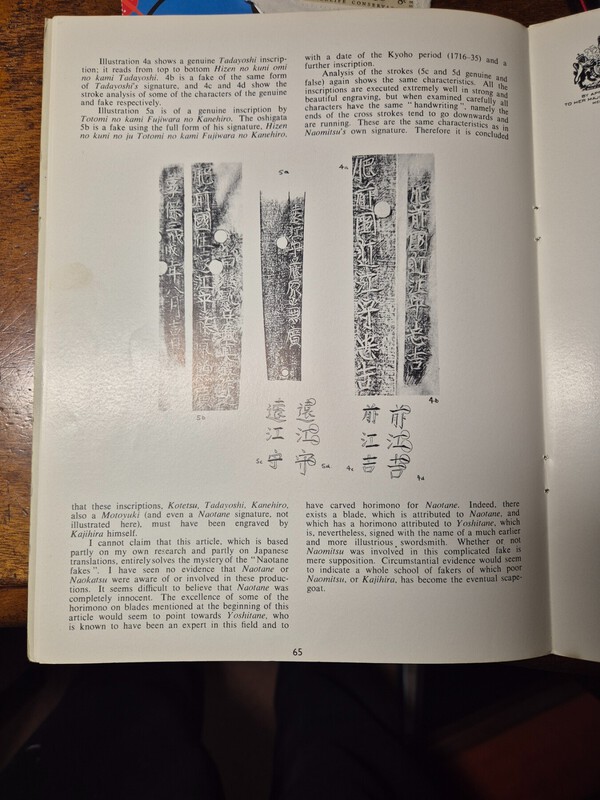
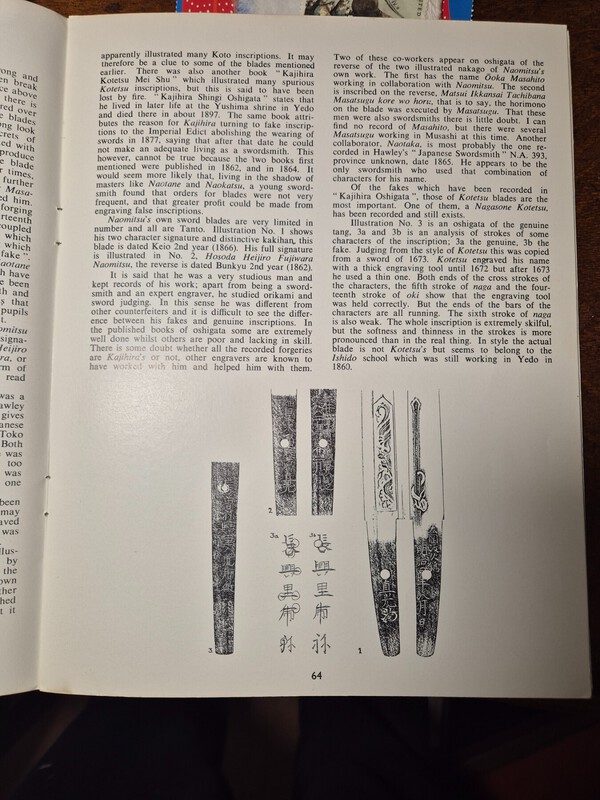
The attached might be of interest

-
I was struggling with the Japanese description of a mounting . Mr Moriyama , who is a huge asset to the Board , assisted by giving me the translation ,being Yosegane ,together with a link to the Mokumekin Museum . The museum describes Yosegane as"like marquetry Yosegane combines metals of different colors to create patterns ". Members might be interested to see an example of what I now know to be Yosegane. This sword , regretably not mine , is one of the finest that I have ever handled. I hope you enjoy looking at it . Ian Brooks
.thumb.jpeg.fc5e542807b8c57224ba7d03e43a6d76.jpeg)
.thumb.jpeg.ff07293e7f2dc9c2699cf4180c2baf53.jpeg)
.thumb.jpeg.cb343a7676ef5e3a655b2e95d43039b7.jpeg)
.thumb.jpeg.18f7f5d3af0cc23dc0b64a9f429a9c05.jpeg)
.thumb.jpeg.024d72891165960bf447b78a64d346a0.jpeg)
.thumb.jpeg.d75ba5b8e446e48d3f5b73bf505c54c3.jpeg)
.thumb.jpeg.735f2788969c9ccc581bbcc09f1454f8.jpeg)
- 15 replies
-
- 17
-

-

-

-
Thank you , that makes sense . Your help is much appreciated . Ian
-
Can anyone tell me what these characters would read when they follow the characters for fuchi or kashira . On their own they read kikin meaning contribution or donation but that makes little sense as part of a description of a fuchi kashira or tsuba

-
Nagasone okisato nyudo Kotetsu . A much faked maker
-
That is the makers name not a valuation
-
I think this is the swordsmith Munechika forging the blade Kogitsune Maru ( little fox ) aided by the Fox Spirit in the form of a youth . See plate 5 of Robinson's The Arts of the Japanese Sword
- 5 replies
-
- 10
-
-
-

-
Your tsuba is signed Shozui . Shozui 1696 - 1769 is a very famous and much faked maker who founded the Hamano school . Your tsuba looks to be a quality piece but not in Shozui's style. Ian Brooks
-
I am sorry to say it but this is a Chinese fake Ian Brooks
-
Assistance Requested with possible Nihontō in Guntō mounts…
Ian B3HR2UH replied to DocTheRoc's topic in Nihonto
It is almost impossible to give an opinion from these photos without having the sword in hand but here goes The freshness of the nakago and the roughness of the file marks lead me to think that the blade is probably Showa . On the other hand the Habaki is older and points to the blade also being older . The habaki seems not to fit too well though so may be added. The overall impression that this piece gives is one of low quality so I wouldn't be expecting too much . Ian Brooks -
Unusual Meiji era gunto mounts...pieced together?
Ian B3HR2UH replied to Gerry's topic in Military Swords of Japan
Great piece . Have a look at Fuller and Gregory's write up on Imperial household swords -
It is a modern Chinese fake
-
Inherited Sword Captured in Burma During WW2: Looking to Learn More
Ian B3HR2UH replied to CarstairsCowboy's topic in Nihonto
It is genuine in that it is a real Japanese sword . The question as John says is the blade really made by Yasuyo . The Japanese produced a lot of blades and put the names of famous makers on them to make them more saleable . This is like coming across a painting signed by say Picasso . It is a real painting but was Picasso the actual artist or did someone sign it with his name to make it more saleable -
Han Bing Siong wrote in Token Bijutsu Vol 11 that " a great number of the members of the committee for Koshu Tokubetsu Kicho Token shinsa are also judges of the Juyo Token shinsa " . IF Koshu Tokubetsu Kicho Token papers are suspect does this not therefore cast doubt on some of the 1970s Juyo attributions ?
-
I am glad you returned it as it was a pretty poor sword . Now as John suggests take your time .
-
Your grain is pretty open and rough , If you type Konuka hada into a search engine you will see what Hizen hada should look like
-
Sorry to be blunt on Xmas day but here goes I am afraid . It doesn't look at all Hizen like and the mei is way , way off . If the signature was cut by a student then it would have some passing resemblance to that of the person he was cutting it for but this is just gimei and a bad one at that .
-
Picked up some nice sword related militaria.
Ian B3HR2UH replied to Hector's topic in Military Swords of Japan
Here is a two strand hanger that came back from the war with four two's stamped inside it . Others that I have are stamped with a single 6 , what looks like 37 and what looks like three circles
-
Original WWII army sword bag value?
Ian B3HR2UH replied to george trotter's topic in Military Swords of Japan
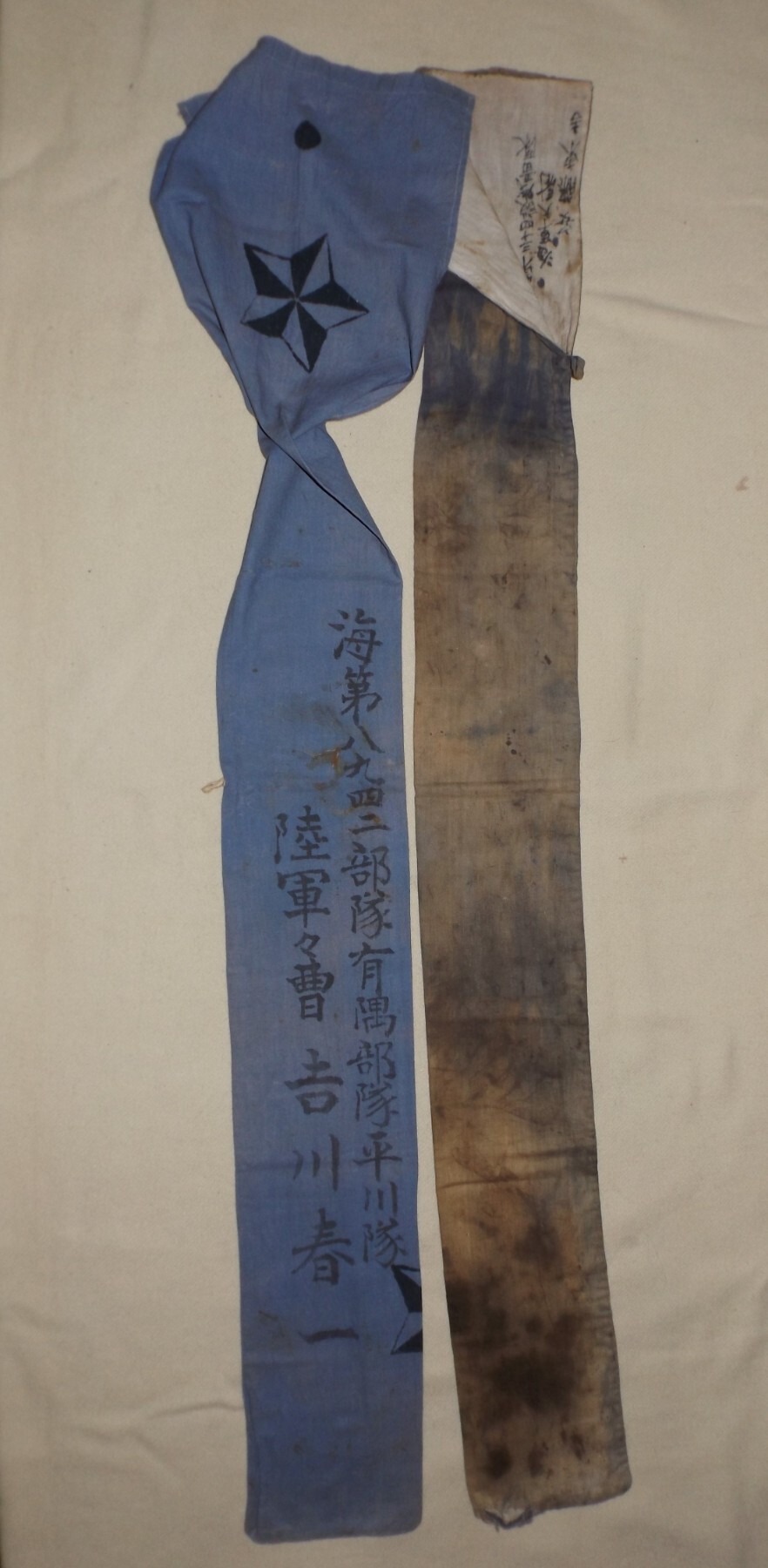
I don't know if I have posted these before but if not here are a couple of mine with the officers names on them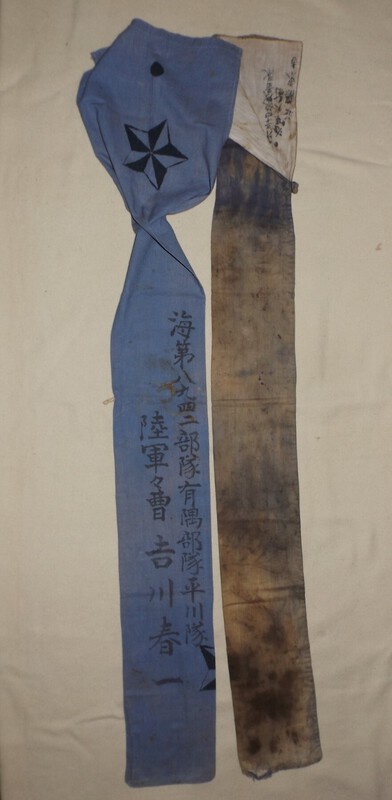
- 19 replies
-
- 10
-
-
-
-
Painted collection number comes in handy for provenance.
Ian B3HR2UH replied to Spartancrest's topic in Tosogu
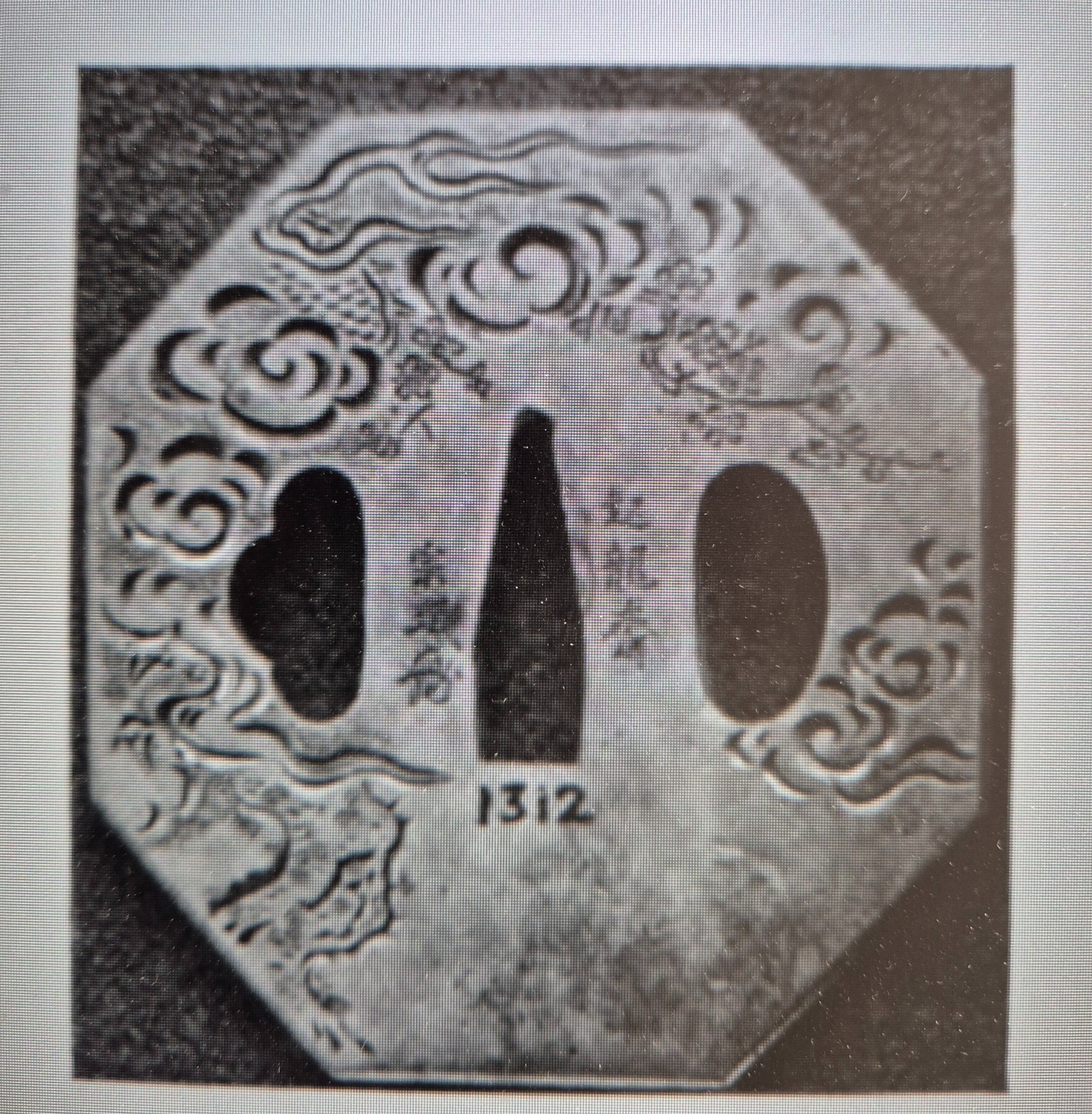
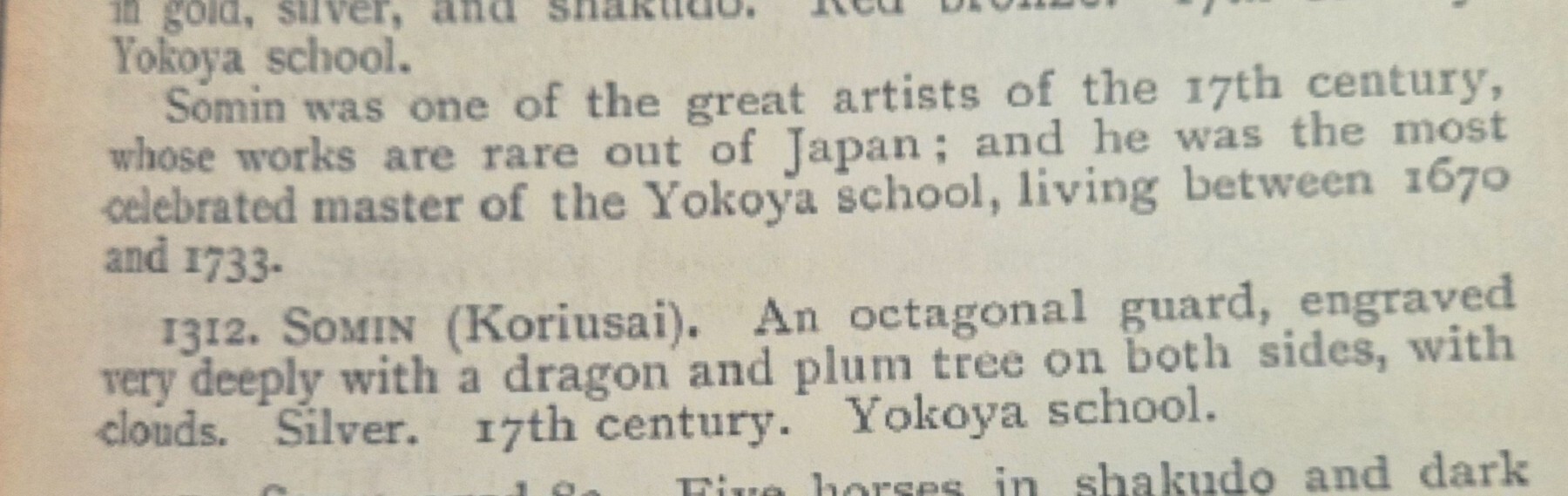
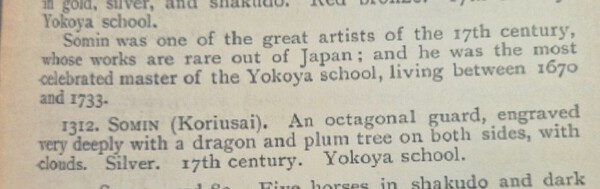
Whilst some of these numbers are no doubt museum numbers I suspect most of them are collectors numbers . For example Edward Gilbertson the pioneering English collector had a massive collection of Japanese art and numbered his pieces . He probably owned over a thousand tsuba. In 1889 he published three catalogues listing a selection of pieces from his " descriptive catalogue " The attached octagonal tsuba is from a paper he delivered to the Japan Society in 1894 and clearly shows the collection number as it is dark paint on a light surface. The tsuba description is from his 1889 publication listing a selection of tsuba from his descriptive catalogue and shows that the number on the tsuba is his catalogue number. C P Peak was another early English collector with a vast collection who numbered his pieces.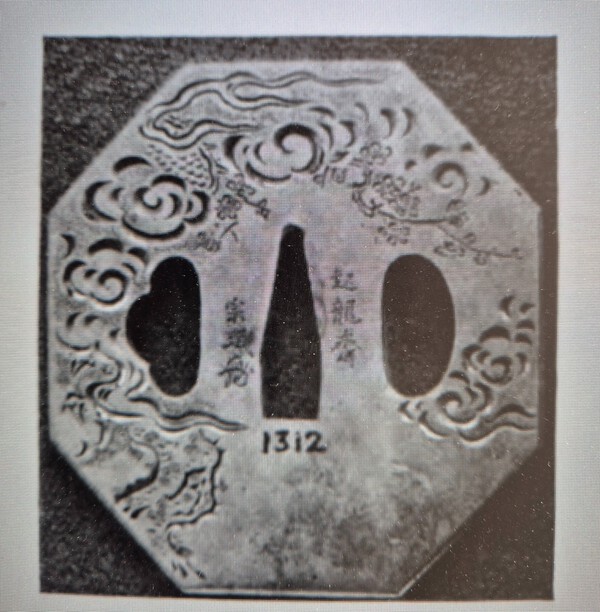
-
Painted collection number comes in handy for provenance.
Ian B3HR2UH replied to Spartancrest's topic in Tosogu
Neil , could I trouble you to post a photo of the numbers . I am trying to work out who painted red numbers inside the nakago ana of their tsuba ( which a pair of mine have ). Ian -
Japanese military sword souvenired WW2
Ian B3HR2UH replied to Carlyl3's topic in Military Swords of Japan
Hi George , no need to show photos of this to someone in Osaka as there are people in Victoria , including some in rural Victoria, who can tell you about the sword. Ian Brooks -
I like Hoshi's theory . One of my blades is by Kunihide and whilst it has bold sunagashi it is far more subtle and finer than the piece that Reinhardt has shown . His piece reminds me of the showa pieces that are produced by the likes of Amahide where the work is much coarser and even more artificial looking. So I will stick my neck out and say it is more recent than shinshinto .
-
Hi Dale , I think your illustration is from the Red Cross catalogue at which time the tsuba was owned by Mejor Everard Calthrop who was killed in action at Ypres on the 19th of December 1915


.jpeg.dcc02bc43c6d3cf944ebda9c0565ab87.jpeg)
.jpeg.547e0d31c275398aefed3dccc5814f5b.jpeg)
.jpeg.4d9c54ef43427fefadb279ed31f60156.jpeg)
.jpeg.96bfe51e7aa82a10342497fad29b9404.jpeg)
.jpeg.4773d892d208a86794c6a837d0a941d4.jpeg)
.jpeg.890d6d984176190b7ad2969a972a0e6d.jpeg)
.jpeg.c6f0b8dd8b44ba988064fa8aafd5315f.jpeg)