paulb
-
Posts
3,046 -
Joined
-
Last visited
-
Days Won
73
Content Type
Profiles
Forums
Events
Store
Downloads
Gallery
Everything posted by paulb
-
 Thank you Dirk I wish I could have ben there.
 -
It was there when the sword was papered as it appears on the oshigata. I have to say I would have a problem with it too. Its a shame because there is so much to see in it but I know as soon as I started to look I would be drawn to the damage. I regard that in my weakness more than anything else and dont doubt I miss a lot of interesting material by not blotting out such faults.
-
Jean What you suggest is logical and a good starting point but the ratings system is equally subjective so where do we go from there?
-
Hi Darcy I really appreciate your in depth response. I need some time to digest it before coming back to you. theres a lot of information and ideas in there that I would like to understand better. thanks again Paul
-
yes it is totally subjective and all ideas are valid. However behind that subjectivity there is likely to be something more solid that creates this consistant view as to superior qulaity of one to another. appreciation is subjective. However As one of my dear old friends once said, "The more you study the more you will understand why you like what you do" Deigo as I said repeatedly every era has its masterpieces and for some a beautifully made Gendaito cannot be bettered. But becaue it appeals to one group it doesnt necessarily warrant being classified as work of a golden age. If such a thing really exists.
-
Hi Darcy Thank you for your considerable efforts and for getting mind cells working. I must admit when reading this I become increasingly frustrated realising that I can never be more than a beginner in this subject. I am in the wrong place lack the linguistic skills to read work written in Japanese and to communicate with sword scholars in Japan. So I must content myself with those works translated. Thankfully work by Markus Sesko has greatly enhanced this but there is a mass of material which will always remain unseen (by me). I think the strong Yamashiro influence on Kunimitsu is apparent in his jigane. The one Yukimitsu tanto I have looked at in detail had almost identical jugane but a more flambouyant hamon. Certainly it is reaonable to see him as a contemporary nd associate of Kunimitsu. I havent seen work of Kunihiro but believe that after him later Soshu work started to go seriously adrift. Looking at your chart where does Rai Kunimitsu and Kunitsugu figure? Kunitsugu seems to show considerable Soshu influence (more than Kunimitsu and Ryokai) possibly more than Nobukuni shouldnt he be in the main Masamune influenced grouping? Once again thanks for the efforts and getting my thought processes working on a wet and miserable Sunday. Cheers Paul
-
Gentlemen Thank you for your comments so far. I think they raise a number of points which add to the conversation James I think I need to clarify my point about poorer quality material. This is perhaps inaccurate. I think what happened was that production of tamahagane became centalised (and still is) and thus more uniform. Therefore some of the small subtle, possibly accidental differences in the locally manufactured tamahagane were lost. As a result some of the key matalurgical features which contribute to characteristics of the gokaiden disappear.I dont think these differences were created, sought or found I think they were just there in the locally made material. I agree with you about experimentation and large steps were taken when smiths went beyond what they were taught. Something I think is often overlooked is the role of Go-Toba in this. Bringing the best from different schools together enabled them not only to experiment but interact with each other and you see the blossoming of the Ichimonji tradition and the creation of Soshu coming out of this activity. However experimetation is not the same as improvement. I have seen early Soshu work by Shintogo Kunimitsu and yukimitsu that are incredible. Unfortunately I have only ever seen one Masamune (behind glass in 1990 at the British museum) and to be honest I didnt then know enouh to appreciate it. However I have seen later Soshu work that I think has clearly lost the plot, their experimentation had lost direction and thought and what resulted was a combination of busy and apparently uncontrolled features that had little to recommend them (opinion I know). Yamashiro work up to Rai Kunimitsu was generally consistant, although niji Kunitoshi and Ryokai had some variation. I would argue that after the increase in Soshu in other schools the quality of many schools seriously deminished. There are good Soden Bizen, Sue-Tegai, Sue-seki etc work but there is also a lot of mediocre as these schools tried to adopt Soshu technique and style but didnt quite get it right. Ken I was interested in your side by side comparison. I have done something similar and have reached the same conclusion. In general I think swords from the kamaura period look better. I cant explain this from a metal quality point of view, I dont know enough, but just looking at them side by side the earlier blades look better made and have an overall higher quality appearance. It is a combination of all features not least shape but also the jigane and hamon and the interaction of the features. They combine more subtly than much later work. As said in the first piece, or at least intimated, I am beginning to think the golden age idea is too simplistic. However I do think certain periods did produce swords of a consistantly high standard and some exceptional examples.
-
Accepting that swords are a questionable investment in the first place you have to decide why you are buying it. swords in poor condition are always a problem if you want to sell on. Unless they are by a very famous maker (in which case they are likely to have been cherished and not in poor condition) then they are extremely risky Unsigned shinto blades are generally not regarded as commercially strong. So as a buy that you want to sell on at a profit (an investment) both have their issues. On the other hand if you are buying because they appeal to you and you will enjoy studying and trying to learn from them then a good condition unsigned blade is likely to teach you more than a poor condition sword signed or otherwise.
-
A recent thread started by someone looking for a sword from a very specific school and period (Ko Aoe) started me thinking and I wanted to hear other opinions. Don’t misunderstand me I am a great Ko-Aoe fan, well actually an Aoe fan. My own preference is for Chu-Aoe which dates mid to the end of the Kamakura, but I have seen some superb ko-Aoe and indeed sue-Aoe work as well. I have also seen swords from all these periods that do little for me. So spreading this beyond Aoe we often see discussions about whether Koto really were better than Shinto, are gendaito up to the same standard as koto etc. Many think the art hit its peak in the time of Masamune and following Soshu smiths. But when we look more closely are we right to draw these comparisons and conclusions. To be honest I have been amongst the worst for this for many years. For me good quality sword making began in about 1100 and ended in 1336. It then headed down the long slippery road and with one or two minor upward swings continued to decline. The reality is that when you really start to look in detail there were incredibly fine swords made in all era, there still are. One could argue the level of skill has remained largely the same. Materials have changed and any shortcoming is due more to deficiencies in available material than craftsmanship. So how do we define “The golden era” of sword making? Is it when the finest swords were made? That becomes very subjective, finest for what? quality of forging, fitness for purpose, complexity of hamon? Was it when the greatest number of high quality blades were produced? Again very subjective and usually when we start to see increases in quantity quality starts to decline. Was there actually such a thing as a “golden age” or are we suffering from marketing hype that dates back for more than 500 years? I still believe that the finest swords were made in the Kamakura period. But I fully accept that opinion is based as much on my own aesthetic ideal as it is the quality of what I am looking at. I also know that I have seen swords made in different styles and from different periods that have taken my breath away and I would love to add to my collection. What I think I am getting at and go a long way round to do so is that I have been wrong to single-mindedly pursue swords from a specific school and time I think we should view blades with an empty mind, forget all preconceptions and look at what is in front of us. Then using the information gained through examination and study decide whether what is in front of us is well made, aesthetically pleasing and a desirable thing. Once we have answered those points then start to consider when and where it was made. I would be interested in others views about this was there ever really a golden age or did some people just do a better sales job than others at different periods in history?
-
Dear Pietro There has been a lot of movement and changes in shipping regulation over the past 12 to 18 months. Much of this has been unclear, even to the employees of the shipping companies involved and they differ country to country. I have listed below what I think to be the current situation regarding shjipping swords from Jaoan via EMS and shipping from Europe (especifically the UK) others may have a more up to date understanding. 1. Some months ago EMS said they would only ship swords by air to countries where there were direct, non-stop flights from Japan. For countries that had no direct link the only alternative was surface mail. I thought after a lot of pressure from dealers in Japan this had been recinded but perhaps not. 2. FeDex in the UK have a total ban on not only swords but anything that has a sharp edge (including tools garden equipment etc) I have written about this in another thread so wont elaborate on the legal stupidity behind thie policy. 3. Parcelforce have apparently subcontracted their Express international shipping to FeDex and are therefore subject to the same restrictions. At the moment you can still ship using their global services. The problem with them is the lack of insurance availability. I am sure other European based shipping bodies have equally problems. There is no doubt that shippng swords has become much more difficult than it was. This appears to have more to do with Incompetent legal advisors (in the case of FeDex) rahter than terrorist threats or other causes. Unfortunately in overall business terms shipping swords will have little impact on shipping company's business. It is easier to say no than to think. However we need to keep trying. Regards Paul
-
The only restrictions I have faced shipping to countries outside of the UK are those imposed by shipping companies such as FeDex. I now understand that Parcelforce have subcontracted their express service to FeDex (Thanks Peter F for the heads up) so that is subject to the same nonsensical policy. At the moment Parcelforce global priority still works but insurance is an issue. Government restriction only kicks in if the stated value of the antique or art object exceeds £43000. At which point an export licence is required (may have changed in the past 12 months but thats what it was). This entails a great deal of form filling and time. Regards paul
-
Darcy Many thanks for sharing this and for the comprehensive discussion and write up around it. In every area of collecting there is always much debate and strongly held views as to how such projects should be approached. There are some that think one should attempt to recreate the look of earlier work, effectivelt making a new koshirae look several hundred years old. For others this is a form of dececption and they aim to make something that look as the original would have when it was brand new. The first might be considered a reproduction, the latter an original work that is sympathetic to the sword. This approach has been taken throughout history with new koshirae being made for swords over many hundreds of years. The key factor is that you have used artists with proven skill and track record to produce what you have and to maximise and enhance the beauty of the fittings you have added. As you know this style of koshirae is not my favourite and I had some questions about the compostion and overall look which you kindly answered but the quality of the workmanship in the lacquerwork looks from the images to be exceptional. Congratulations on completing this exceptional project and BTW if I had to choose a sword to spend the rest of my life with this little tanto would be very high on the list!
-
Recommendations For A Shirasaya Maker In The Uk
paulb replied to Iain E's topic in General Nihonto Related Discussion
pm sent -
I know Tomei and have seen several pieces by him which I think are mind blowing. You may also remember Ford Hallams homage piece after Tomei which I have the good fortune to see on occassion. I think I struggle more with fittings than swords because they are in many ways more subjective. The technical abilities of these craftsmen is beyond question but that which differentiates the best comes down to composition. Although this is also true for swords with a blade it is in a more restrictive environment and limited range of material (i.e. steel) I have a long path to follow
-
Before we get carried away regarding what this is or isnt or indeed whether the papers are rigt or not can I make the point that I didnt buy them based on papers. In fact I didnt know they had any until it was mentioned after I had bought them. As I said I havent got them in hand. My guess is they are older white papers. I am aware that older papers (especially green or blue) causes mass panic when talking about swords although in reality the number of "bad papers" was relatively few. I will rely on the fittings enthusiasts to confirm if that is also true for fittings. Bottom line is I am not insulted subtely or otherwise, I bought them based on what I saw and liked not what attribution they may or may not have. Whether ichi jo or not the workmanship to my unecucated eye stands up well in comparison to much else i have seen cheers Paul
-
thanks for sharing those and I agree they hit the humour button very well. I think what adds to it is the great attention to detal and fine quality which seem to magnify the impact. while I have many other failings as the years pass by so far the comb over is one I have not had to experience personally (about the only postivie attribute) instead my "iron blond" (my own invented term for grey turning white!) thatch makes me look like an ancestor!
-
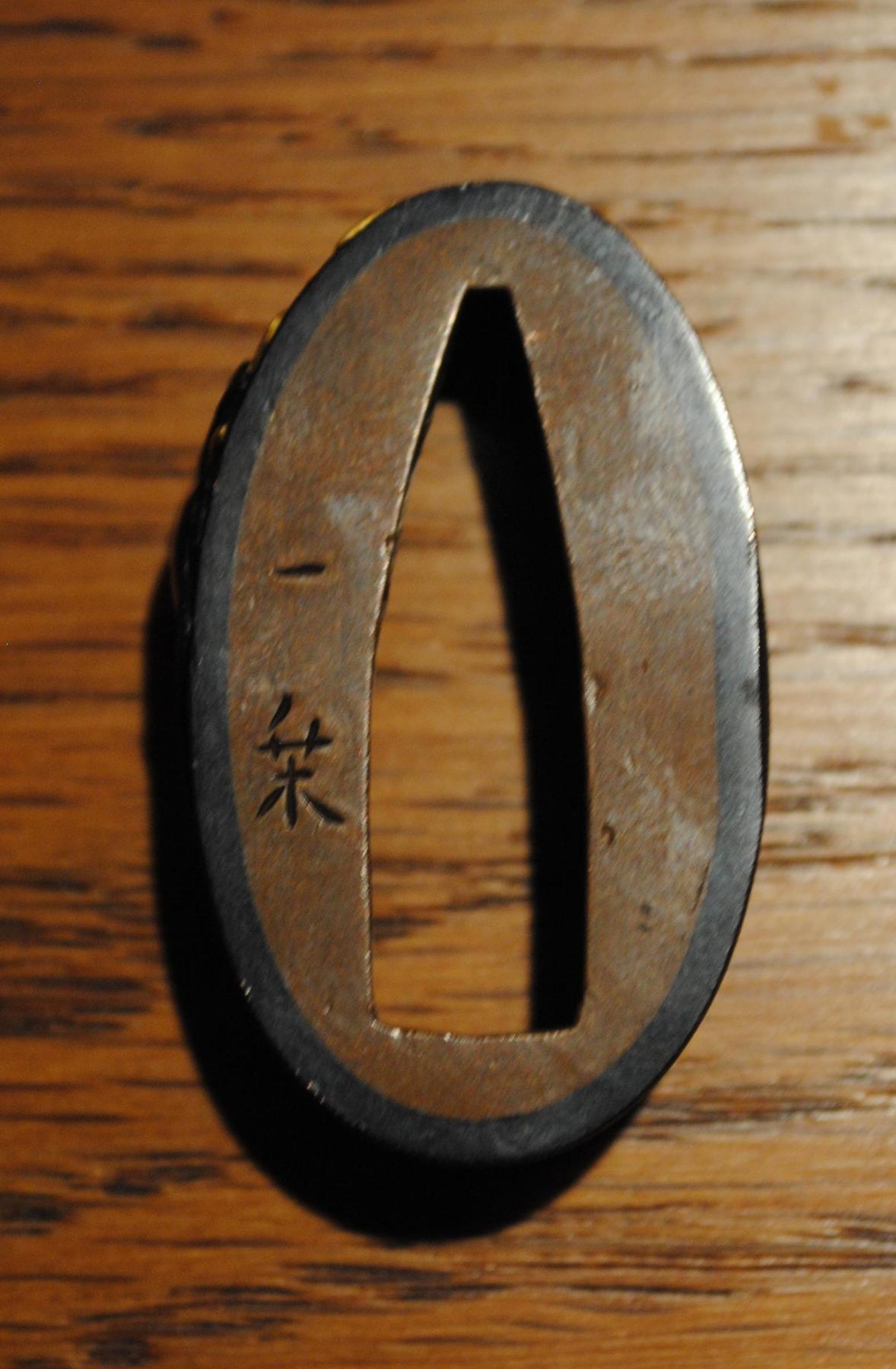
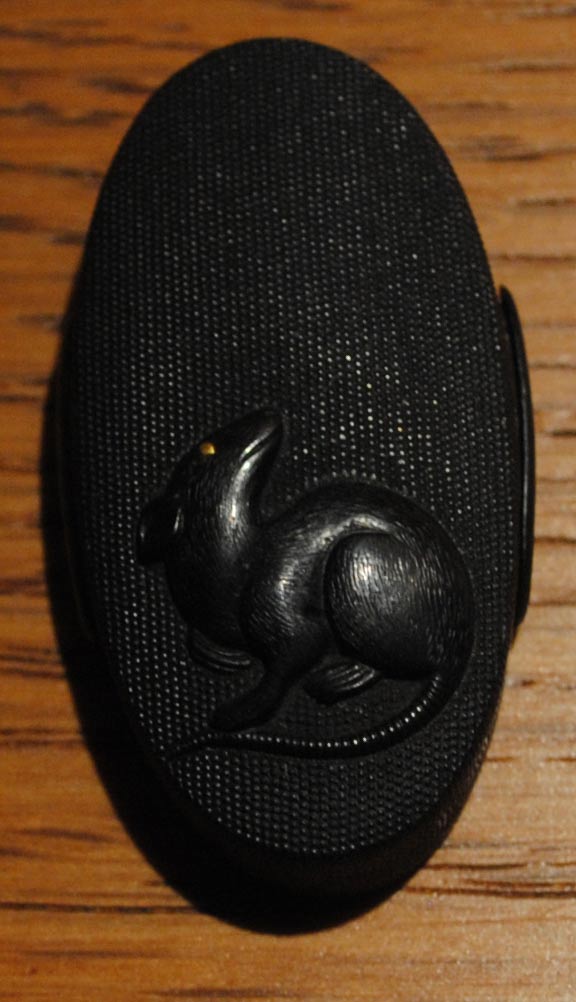
Thanks Curran I think you do the same with swords. I started buying what I liked without really knowing why. As I learned more I realised what it was that triggered the "Like" gene.and started focussing on schools and periods that fed that craving. More recently I have really loved swords that I have seen from many different traditions and periods. The benefit in doing it in phase 2 is that you can understand better what it is you like and better understand the quality of what you are looking at. When I first started looking at fittings I forced myself to focus on iron, believing it was the right thing to do. While I still find some iron tsuba that really float my boat I have been increasngly looking at small fittings and enjoying the pure art and sometimes humour in their composition and the incredible skill in combining different alloys and finishes. As I said I am really just dipping my toe in the water but am enjoying the experience (thankfully with a lot of help from those who know a lot more than I do) BTW yes you are right they are late, the Fuchi kashira signed Ichi-Jo and papered by the NBTHK the menuki unpapered and unsigned so anybodies guess. The reason I went for them other than their charm was the similar treatment of the rats in the fur and tail.
-
Dear All I have said many times I am not a fittings person, which to some extent is true. However I am finding myself increasingly drawn in to the subject and dare I say it, I am enjoying learning. My interest at the moment is very simple and doesn't depend on school material or age, it is just what I like. I have attached some images below of some recently acquired pieces. Anyone attending the last Token of GB meeting in December may be familiar with the fuchi kashira. I loved the subject and the quality is about as good as I have seen in a long time. The nanako on both the fuchi and kashira is incredible and the colour of the shakudo fantastic. Best of all the subject matter makes me smile!


-
well that will teach me to write an explanation in the early morning. Explanation is valid just about the wrong smith and school. Sorry! Having said that I have seen 3 or 4 Hojoji Mashiro blades and have liked every one of them the workmanship is very good and they are a joy to study (almost as much as Hizen Masahiro ) Sorry for the confusion Iwill wake up a little earlier and use my glasses more!
-
Hi Hamish I think the problem with swords with veery fine hada such as Yamashiro, Enju and Hizen they tend not to show their best in photos. When you hold a Masahiro in hand the fine konuka hada sparkles with ji nie and chickei and the activity running through the hamon is sublime. For control freaks like me there are few better examples of a smith in full control of his art. Think of what he is starting with and the tools available to him With this limited arsenal he is able to work material and judge the right amount of times to fold steel the temperatures needed just by sight and then produce an incredibly consistent and refined product that looks as good as new 400 years after it was made. His work is about as good as hizen work gets and there are few that make better quality swords.
-
I admit I am a little bemused by this. As Curran says, or sort of says, there a numerous Juyo papered blades at the DTI. And my own limited experience has been that the vast majority of dealers were more than happy to let me look at them in detail (maybe the grey hair makes me look more of a spender than I am!) The lack of swords with higher papers on display did not lessen my experience. If dealers choose to be careful regarding who they show these works to can you really blame them? I have witnessed shows that are crowded with people, you have no idea the level of understanding and you just have to watch some of them pick up swords to know they are a liability and risk to both sword and anyone else standing around. While those at the DTI may be more knowledgeable I am sure there is a wide range on understanding and the non Japanese are by no means the bottom of the food chain there. If dealers with swords worth several hundred dollars are careful Isn't it reasonable that those with blades with a huge price tag should be equally cautious? I think they are just trying to protect their investment. I think in those circumstances I would probably do the same. From my point of view I was envious enough looking at the Juyo level blades I couldn't afford to buy. If I had seen a lot of even better swords I would have probably left in an even more depressed state!
-
Grey I am confused. There is a clear shinogi therefore isnt this shinogi-zukuri? I have always assumed the description was defined by the presence or lack of a shinogi not a yokote.
-
Thanks For Another Great Year!
paulb replied to b.hennick's topic in General Nihonto Related Discussion
Thanks to all who have contributed to making 2015 a memorable year with a lot of debate and valueable information A particular thank you to Brian and his team who have kept us largely on the straight and narrow and continued to make this the go to place for all things Nihon-To related. Looking forward to an equally positive 2016. thanks and regards Paul