BenVK
-
Posts
247 -
Joined
-
Last visited
Content Type
Profiles
Forums
Events
Store
Downloads
Gallery
Everything posted by BenVK
-
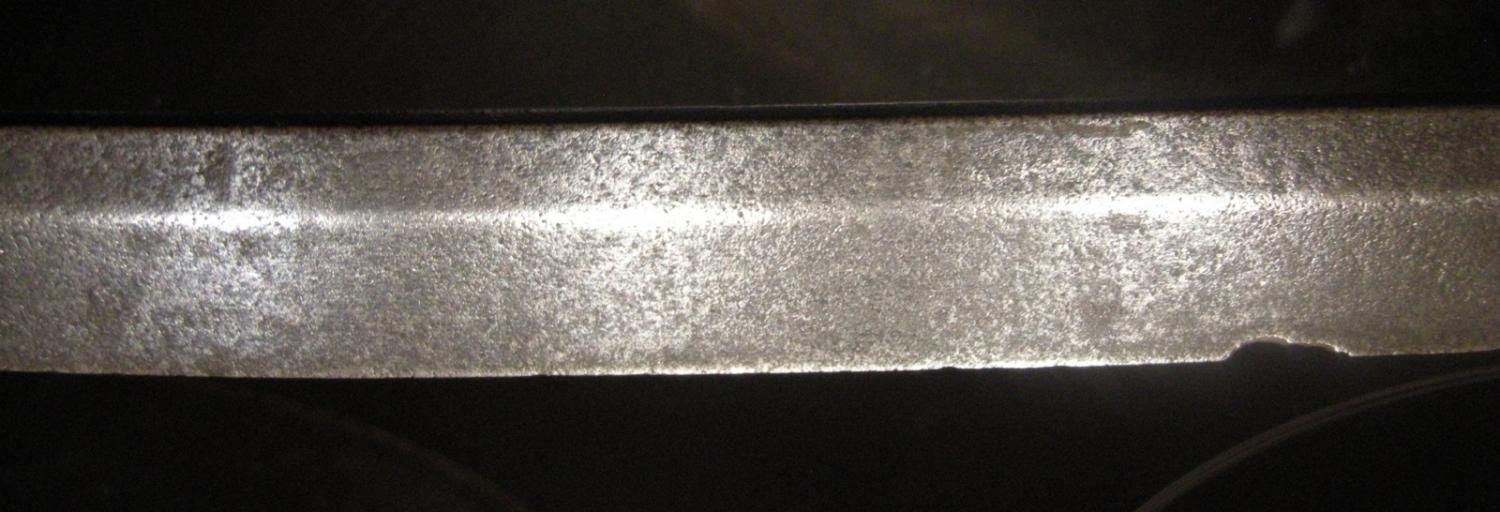
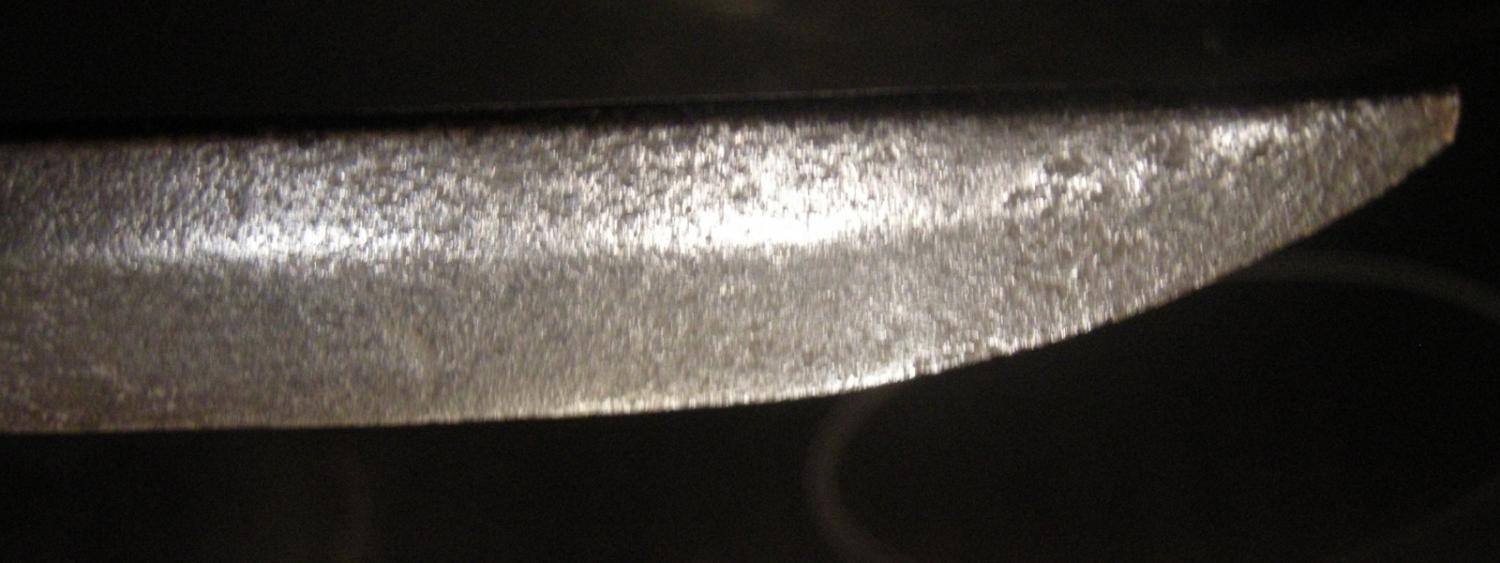
You've confused me guys.. (not that difficult) Do you mean Gendai not often seen in so called Type 3 mounts or not often in this specific olive colour saya? I thought I could see hada in one of the photos but it's probably patches of corrosion that's been polished over.
-
Could be a Gendaito but it's difficult to be sure, someone's had a go at polishing it but made a mess of it.
-

H.i.m.s. Katori Inaugeral Voyage Ephemera
BenVK replied to Baka Gaijin's topic in Military Swords of Japan
I'm near Enfield so not exactly local but if you’re passing this way, let me know and I’ll put the kettle on. Also, the To-ken society of GB hold meetings in central London so that’s an ideal way for you to meet other sword collectors and study some blades. http://to-ken.uk/index.html I don’t have a copy of the Fuller and Gregory book yet (santa is bringing it hopefully) but I think it’s unlikely to be the same sword unfortunately. More likely, and as you already suspect, it’s A sword bought home by the soldier who took the photos but probably not THE sword. Whatever the outcome, you got yourself a genuine old blade and in good condition from what I can see. It was a risky gamble bidding blind but you did really well and should be pleased! Welcome onboard the rollercoaster! -
H.i.m.s. Katori Inaugeral Voyage Ephemera
BenVK replied to Baka Gaijin's topic in Military Swords of Japan
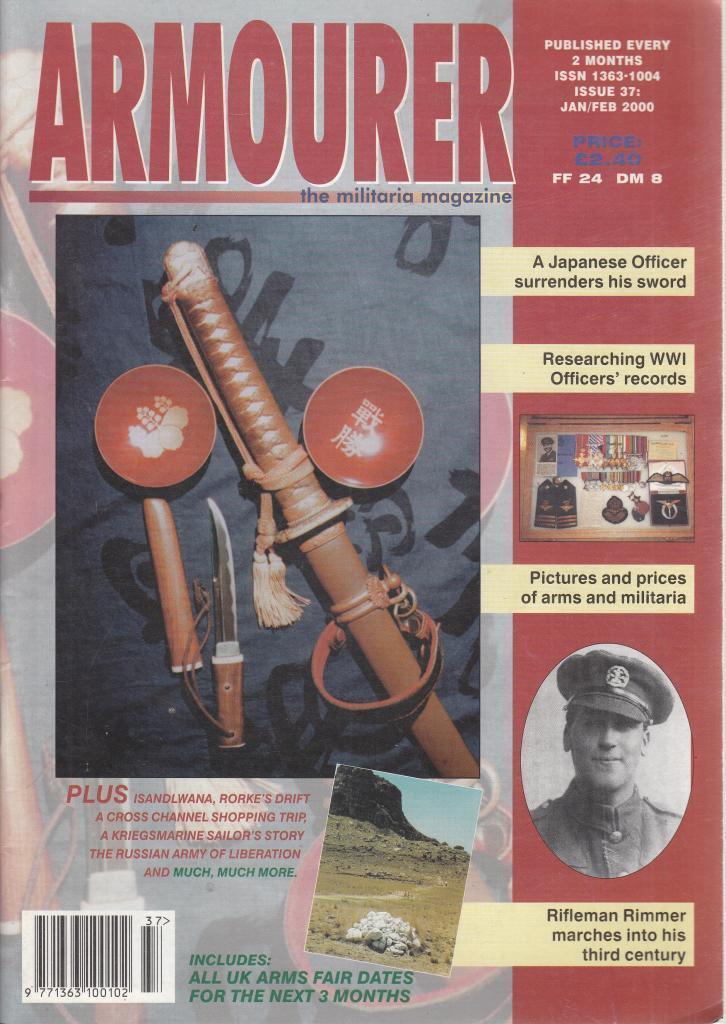
I was interested in bidding myself but without any photos of the blade, I didn't want to risk it. Did you attend the auction? Here's the front cover of issue 37 of Armourer.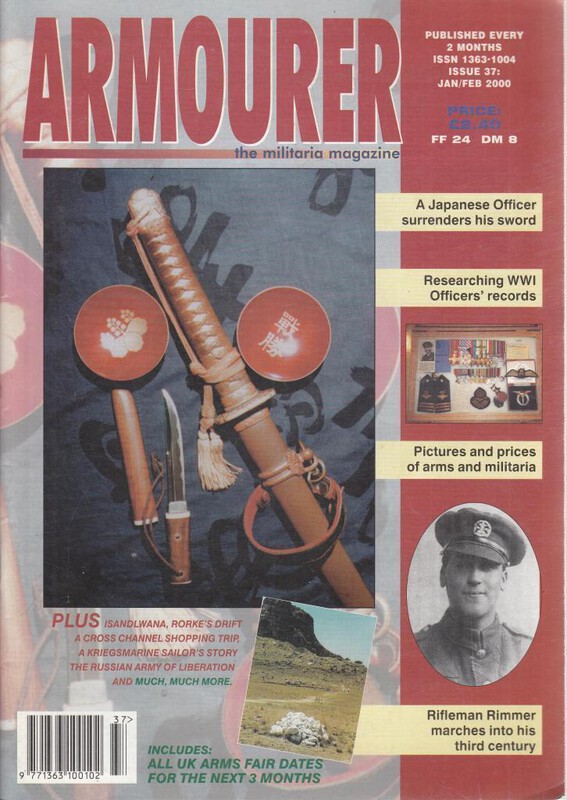
-
H.i.m.s. Katori Inaugeral Voyage Ephemera
BenVK replied to Baka Gaijin's topic in Military Swords of Japan
Which must mean you also acquired the sword because both it and the album were auctioned together recently. https://www.the-saleroom.com/en-gb/auction-catalogues/hansons/catalogue-id-hanson10091/lot-c6a8c81d-02be-4c76-8e23-a6c200fc447b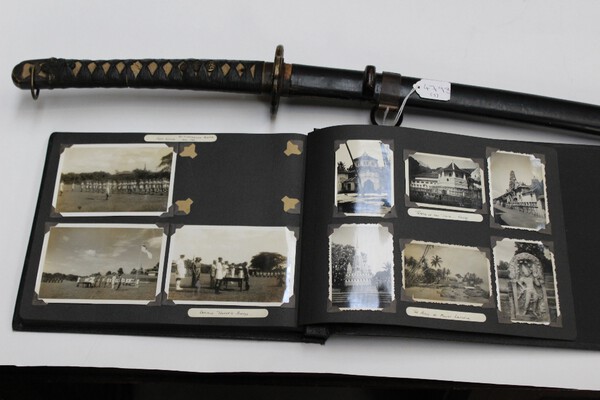
-
That's what I thought and that's fine, thanks.
-
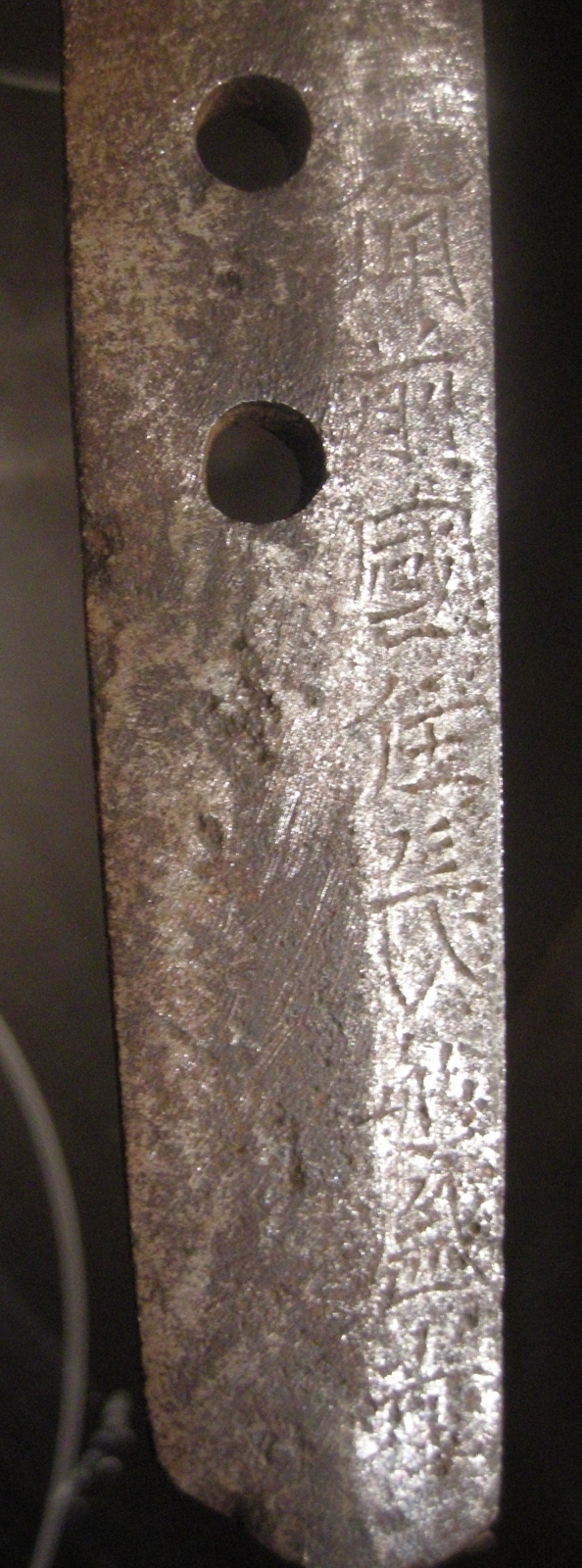
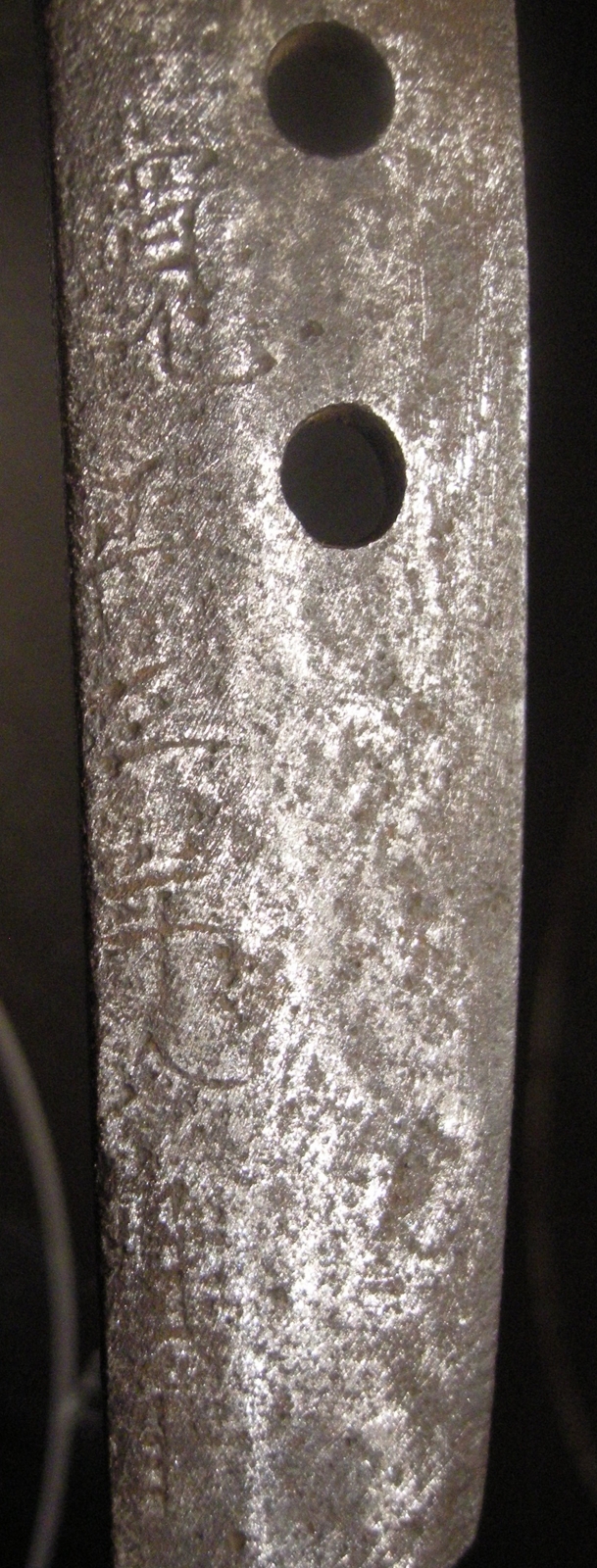
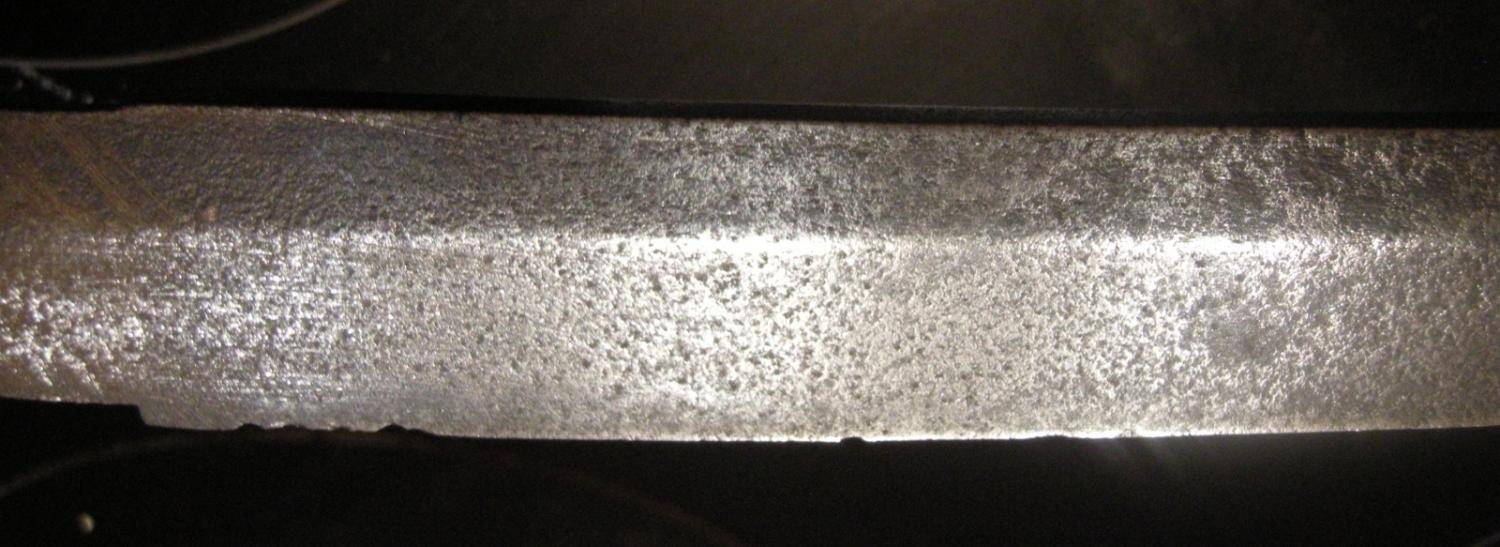
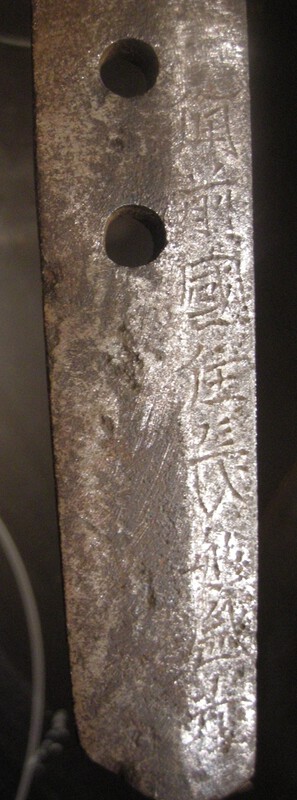
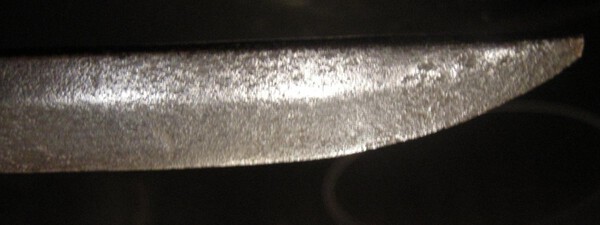
It's pretty far gone in my opinion, a relic almost, but what do you guys think? can it be saved? A good friend helped with the translation. "Kwansho ni nen hachi gatsu, nichi" (a day in 8th month, 2nd year of Kwansho) August, 1461. "Bizen kuni ju Osafune Morimitsu."



-
I'm sure Uwe Grabowski would be willing to offer some advice in regards to photography. He gave a very interesting lecture in London not long ago which explained the impressive skill and effort that goes into creating proffesional images of Nihonto. He doesn't take one shot of the whole blade, he takes macro shots of small sections then stitches the images together in photoshop to create one, very high res and detailed image. http://www.militaria.co.za/nmb/topic/20693-london-calling/ http://www.nihontophoto.com/
-
Absolutely Steve but what truly worries me is that certain members here seem to be advocating that only a Japanese trained polisher will suffice. I'm just an amateur collector with an interest in polishing but after reading this thread and viewing the photos, I would argue that being Japanese or being trained in Japan is no guarantee of being a skilled togishi. http://www.militaria.co.za/nmb/topic/12772-sword-polishing-service-in-Japan/
-
I would guess it depends on the smith doesn't it? some might take the blade to a higher degree of finish before handing it to the togishi than others.
-
A very generous offer!
-
Kai gunto,UB178, Penang,Admiral Ichioka.
BenVK replied to Lindus's topic in Military Swords of Japan
Facinating story, are there any more photos of the sword and stand? Here's some additonal information I found over on the WAF. http://www.wehrmacht-awards.com/forums/showthread.php?t=420435 -
I see no major issues that would give a trained polisher any headaches. Could turn out to be a real stunner!
-
You make a very good point about the niku. I think some pro's and amateurs are guilty of removing too much of it. Sometimes it's entirely gone and you're left with just a flat surface.
-
The foundation polish is not a basic or cheaper polish or anything like that. It’s the polish that sets the geometry of the blade using natural or artificial waterstones in increasingly finer grades of abrasiveness. If the blade is badly rusted or pitted, chipped or geometery rounded off etc then it will definitely require a foundation polish, you can’t skip this step. After completion, the blade will have a dull matt grey finish with lots of scratches all over it and basically, it will look like crap. I suppose you could ask a trained polisher to polish a Showato just up to this stage as to keep costs down but that would be ridiculous as it would still require a finishing polish of some sort. So we’re kind of back to square one in terms of the prohibitive costs. There are individuals out there who offer much cheaper polishes that incorporate both the foundation and finishing stages but to save a lot of time and therefore cost, machine tools are used. I’ll leave it to others to decide if machine polishing is the right thing to do or not for Showato...
-
I totally get what your saying Brian and I agree. I've refused to restore more hats/uniforms etc than I've actually undertaken because I think it's my responsibility to explain what shouldn't be done more than what can be done. Also, it's not just a matter of getting the sewing needles out and getting on with it. Similar to Japanese swords, 90% of the task is identifying the maker and the correct materials, techniques and style that's appropriate to that item. It's just my opinion but I think that if we were to discuss polishing in more detail including the methods, then I think it might actually deter more people than it encourages. Edit: I also think you have to give people more credit than just assuming that they will undertake a project without first spending a lot of time and effort researching and studying before they even start a restoration whether it be a hat, a sword, a car or anything else for that matter. Granted, most will just make a complete hash of it but a few will go about learning in the right way and some might even decide that they want to go on and be properly trained to a professional level.
-
I haven't explained myself that well obviously, sorry. What I'm trying to say is this. If all discussions regarding polishing is restricted to "don't do it yourself", give it to a "professional", thread closed etc, which actually happened recently, then the subject becomes taboo doesn't it? I understand why the thread was closed but IMO, it would have been better to keep it open so that we can all discuss polishing in a sensible and instructive way. If we want to deter the owners of these things from making big mistakes in regards to restoration, the best way, IMO, is to try and educate them rather than just telling them not to do it. Let's get real here, trying to find a properly trained polisher outside of Japan is a complete nightmare even for someone who has taken considerable time to research the subject, let alone mr.average joe blogs on the street who just wants their rusty "samurai" sword to look shiny again. I've not even factored in the cost of a proper polish either which is totally out of reach of the average person. Is it that surprising then that we see so many DIY attempts? I consider myself a skilled restorer. Not of swords but of military hats and I've restored examples worth huge amounts of money. It's a very specialised thing, much more than sword polishers and there are very few of us in the world that can do it properly. I've seen everything there is to see in regards to terrible restorations but I've found that the best way to try and stop people from having a go themselves is to explain, in detail, how much work and skill is involved rather than just telling them to don't do it. After all, I guess it's human nature to do something that you're told not to do isn't it, especially if you think it's going to save you a ton of money. Getting back to the topic of Japanese swords. I've learnt that many swords that are floating around in UK have been poorly polished, I actually own one of those examples. I'm not naming any names but you guys probably know who I'm talking about. It took a lot of asking around behind the scenes to learn this because it's not really public knowledge to the novice collector like myself. I would like to go into more detail about this but I'm acutely aware that it might a touchy subject which is a disappointing fact in itself because IMO, we should be able to freely discuss this. At the end of the day, polishing is a major factor in owning a sword and it's a service that we pay good money for so we should at least know who does a good job and who does not. I would not be still restoring hats for example if I did a lousy job.
-
The problem is that people continue to screw up their swords because of others who say "don't touch it" ! It's completely obvious to me why they do so.
-
Looks to have been chromed to me as well but I've seen a lot worse. Regardless of what's been done to this blade, which is wrong without doubt, I have to question the whole communities stance on the subject of polishing. It seems to me that it's a taboo subject which just seems crazy to me because a sword only becomes a sword once it's been polished. I'm not talking Hadori or Sashikomi, I'm talking about the foundation polish which isn't a "polish" at all really. It sets the whole geometry of the blade, doesn't it? Without it, it's just a lump of folded steel. So why is the focus always on the smith who hammers the lump of tamahagane into a sword like shape? A phenomenal skill without doubt but what about the polisher who then turns that piece of steel into a blade? Is he not worth recognising or studying? I'm in awe that some of you can describe in Japanese words what metallurgical features a blade has in the Hamon and Ha. However, if it wasn't for the craftsman who polished the blade, you wouldn't be able to see the activity would you. Well, that's just my opinion.
-
Non-Traditionally Made Gunto, Is This How They Were Made?
BenVK replied to BenVK's topic in Military Swords of Japan
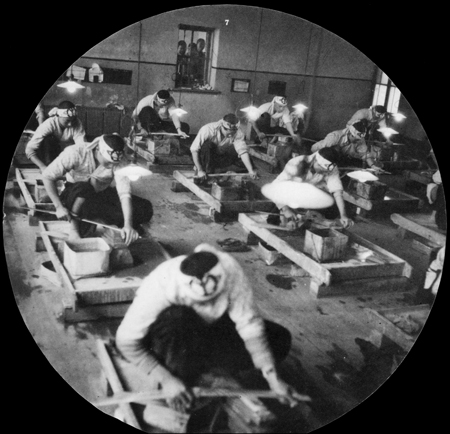
Thanks for posting Dave! That's a great one of the young ladies polishing the blades.. Edit, you mentioned the Mantetsu Factory and that was the key to finding what I was searching for. Check out the images on this page, facinating! https://namu.wiki/w/%EB%A7%8C%EC%B2%A0%EB%8F%84 Translated: https://translate.google.com/translate?sl=ko&tl=en&u=https%3A//namu.wiki/w/%25EB%25A7%258C%25EC%25B2%25A0%25EB%258F%2584 I've attached one image which is of particular interest I think. Whether hand polishing on this scale was done in other factories/workshops is an interesting question.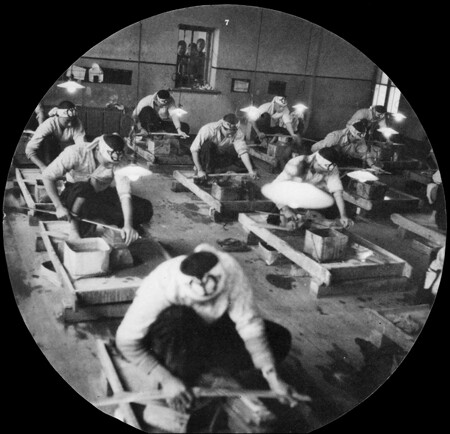
-
The question of whether this or that wartime sword is "machine made”, "hand made" or “hand forged” seems to crop up all the time on the internet. It's one of those topics that causes quite a bit of confusion amongst collectors, myself included because I think it’s safe to say that every sword ever made will involve hand work to some degree. In an attempt to try and find some clear information about the manufacturing process of non-traditionally made Gunto, I stumbled upon this video on youtube. https://www.youtube.com/watch?v=LmRCCy7Bta8 As you will see, the smith uses alternating machine and hand methods to make the blade which seems to be from a single billet of steel and not folded. It's then clay tempered and either water or oil quenched, can’t tell which. So is it accurate to say that wartime blades which aren’t Gendaito were made in a similar way? Ideally, I love to find a period photo or film footage of a sword workshop during the war to study which machines they had but I’ve had no luck so far. Can anyone help with that?
-
Can Anyone Tell Me Anything About This Unsigned Sword? 400 Years Old?
BenVK replied to brechindave's topic in Nihonto
And if more steel has been removed on one side than the other... -
I'm curious to hear about any ebay buying experiences. I've been collecting militaria for over 15 years now and have picked up quite a few original items from ebay at bargain prices. However, being a complete novice where it comes to Japanese swords, I've never taken the gamble bidding on them on ebay. They rarely appear on ebay UK anyway so it's never been worth the risk for me. I see there have been a lot of threads here already about ebay but it's usually about which sellers should we buy from etc. That's not the aim here. I would just like hear about the successes and the failures, tips and pitfalls etc. The sword that looked great in the photos that turned out to be a turd and vica versa. The seller who was a weirdo but the sword turned out to be a gem! I've been through it and heard it all in my own chosen speciality of collecting (can bore you to death with stories) but I've never heard anything similar from knowledgeable Japanese swords collectors before. It would be nice to hear some stories because it can be intimidating for a novice sword collector sometimes because it seems that the guys with the knowledge never make mistakes but I know that's not true.
-
Customs Advice - Australia
BenVK replied to FletchSan's topic in Auctions and Online Sales or Sellers
Thanks for the heads up on using saran wrap or cling film as it's known here in the UK, nice idea. -
Good to hear.