John A Stuart
-
Posts
8,372 -
Joined
-
Last visited
-
Days Won
20
Content Type
Profiles
Forums
Events
Store
Downloads
Gallery
Everything posted by John A Stuart
-
OK, While corresponding with a Japanese history buff he came upon this in an English language book, no less. Family Crests of Japan. Paulownia crests are used because they are the symbol of good fortune. In ancient China, paulownias were considered to be trees where phoenixes lived. In the Chinese poetry collection, “Anthology of Bai Juyiâ€, there is a poem in which a phoenix lives in the high branches of a blooming paulownia and sings, “Long live the king!†It is for this reason that paulownia patterns came to be used for the Emperor’s garments, and later as crests at the end of the Kamakura Period. The Imperial Court bestowed the crests to retainers such as Ashikaga Takauji, and later the Ashikagas granted them to vassals who had performed meritorious deeds, such as Oda Nobunaga. Toyotomi Hideyoshi, who had also been allowed to use paulownia crests, distributed them so often that even people to whom they had not been give started using them. Though Hideyoshi prohibited the use of chrysanthemum and paulownia crests, the ban had little effect and quite a number of daimyō were using these patterns during the Edo Period. Tokugawa Ieyasu was another who was granted the use of this popular crest, but he refused it and used a hollyhock design instead. (p. 50-51) Hideyoshi seems to have had this crest granted to him by Nobunaga, when he had the surname Hashiba. (p. 133) That seems to explain how Toyotomi Hideyoshi may have been using the kirimon before 1582. John

-
NY Times - March 22nd, 1891
John A Stuart replied to SSt's topic in General Nihonto Related Discussion
Prices have risen a bit, eh? John -
Hi Ian, While reading Carlo's photocopy of Dall'Isola del Giapan I came across a book reference to the Tensho mission. Written in Macau in 1590 it is titled 'De missione legatorum japonensium ad romanum curiam'. If you have access to it there may be further info on the armour there. John
-
I wonder if what some may erroneously call nie in tsuba could be the difference in steel used. I have seen high carbon steel in the forge slow cooled have a crystalline structure that reflects light that shows a crystal like pattern. It sparkles somewhat. Low carbon steel does not. In fact cast iron really shows this effect, being very high in carbon. Yakite shitate may actually reduce the granular look of the steel to be a more amorphous surface, more aesthetically pleasing visually and tactilely. Can this just be an effect of the steel used? Quenching certainly would be unnecessary. John
-
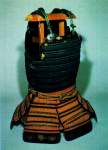
Hi Ian, Nice pics. I actually have seen the bottom before. The kirimon are very prominent on the kabuto. I searchedmy files and may have found a pic of the do. Isd this it?

-
That's the one. I had a few minutes to go and got tied up with that armour thing and forgot to check last minute. Next thing I know I saw your handle was the winning bid. Oh well that's what it's all about. Grumble, grumble. :lol: John
-
Fraud or not? What action should be taken?
John A Stuart replied to Marius's topic in Auctions and Online Sales or Sellers
Hi Mariusz, I am tracking a package sent EMS from Japan right now, so EMS must still exist. I have another from Hawaii tracking EMS too. Weird. John -
Hi Milt, Looks good. BTW you sniped :lol: my kozuka menuki set, good price. Blast. Let me know how it is in hand when you get it. John
-
You are right Uwe, but considering that the tsuba is in the proper orientation I assume that this is the way the kamon should appear as well. John
-
Hi Curran, The book I mentioned does not give familial relationship to the kamon just the standardised descriptive of the elements within them. The circle with bars may be of Hatakeyama, Imagawa, Mogami or Satomi. The 4 pierced lozenges may be Kamei, Kimura or Sasa. Being as how they are in combination investigation for relation between any two of those combinations would have to be done to really know what families are represented here. Of course the names I gave you are major families using these mon. There could be hundreds of sub groups using any one or combination of mon. Sorry not much help. John
-
Hi Ian, Capital, that gives me a good basis to work with. Some of the people with whom I'm discussing this are in Japan and if I receive information from Japanese archives relating to this, I will surely let you know. This is really fun. John
-
Hi Ian, This information has caused quite a stir. If this gifting to Phillip was on Hideyoshi's own authority it would show some independant scheming by Hideyoshi, who had always been considered the loyal vassal of Nobunaga and had no independent designs until Nobunaga's assasination. Unless, Hideyoshi was acting as the agent for Nobunaga in this case. As well the armour with kirimon; could it have been ceremonial armour attesting to the sanction of the Imperial court and not a family mon at this time? I don't have access to your article in Arms and Armour but what led to the attribution it was Hideyoshi's armour and not some obtained from another source at Hideyoshi's behest? A few people holding their breath right now. I hope you don't mind my questions but this may change some common conceptions of Hideyoshi's plans at the time. John
-
Hi Ian, It is the fact that at the time the Kyushu daimyo's diplomatic mission left Nagasaki in 1582 Toyotomi Hideyoshi was still a vassal of Oda Nobunaga that caused concern about whether Hideyoshi would have sent gifts of armour directly to Phillip II. Considering that it was a Jesuit mission to assure Europe Japan was being proselytised apace sanctioned by Nobunaga it was hard to understand the usurpation of the mission by Hideyoshi ostensibly to ensure the silk trade. He was a wily guy though. I am quite curious, too, about the kirimon on the armour. Is there absolutely no doubt that it was personal armour of Hideyoshi or his kagamusha? Amazing that so much remained of their cargo when a lot was lost between Macau and Malacca. How strange that when investigating this, I found reference from an article written by Ian for the Royal Armouries. Full circle there, eh? I'll post anything new I find out, there are feelers in Japan creeping about, I hope. John
-
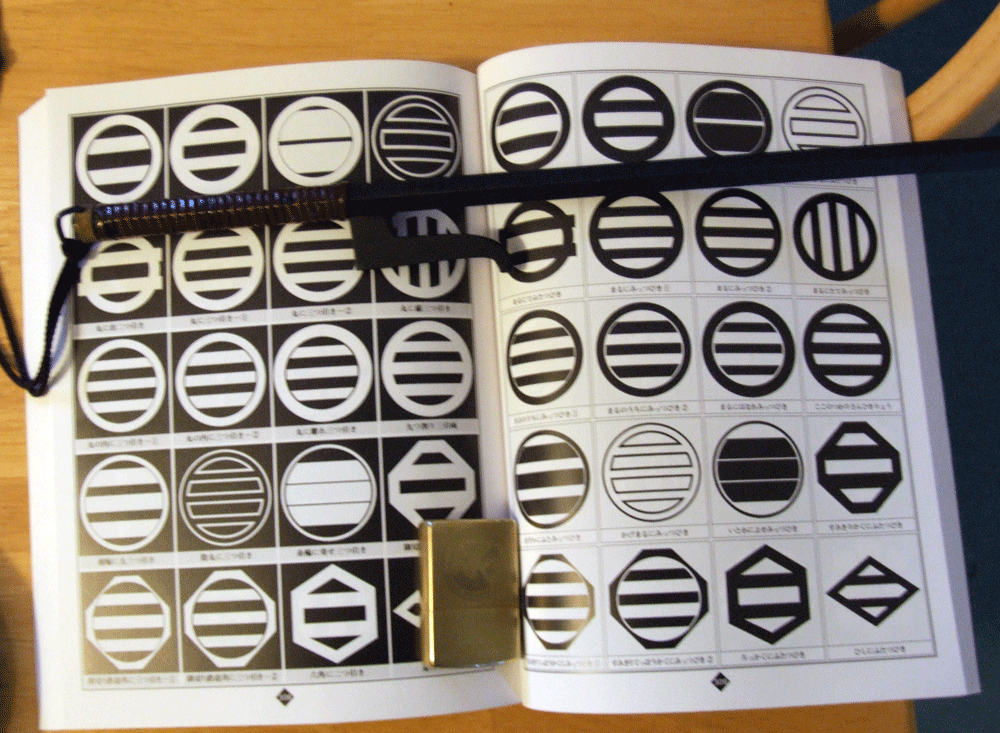
Hi, An Illustrated Encyclopedia Of Japanese Family Crests. John
-
Oh, for fishing in this case or retaing river banks. I put the rice grain with it and thought basket. Makes sense, thanks again. John
-
Thanks, Much easier to read now. Just descriptive of material and theme. I see now that that is some sort of rice basket, or at least I think it says that. Too bad no school attributed. John
-
I am having trouble reading the description; but do I see Bushu in there? John
-
Finally. Here are some references I found referring to armour received by Phillip II http://shogun.royalarmouries.org/press/biography.asp Japanese Visit Europe Whilst Tokugawa Ieyasu and Oda Nobunaga were making their mark on Honshu, the main island of Japan, trade with the Portuguese had continued unabated in Kyushu. All was not well however with the Europeans in the East. In 1580 an event in Europe caused them considerable consternation. King Philip II of Spain had moved into Lisbon and had taken the vacant throne of Portugal. With Philip in control of the whole Iberian Peninsula there was a very real fear amongst the Portuguese in the East that he would favour the Spanish and allow them to take over control of the Portuguese operations. In a move to forestall him, four Japanese youths from the Arima, Omura and Otomo families, all baptized Christians, journeyed to Europe in 1582 to demonstrate to the devoutly catholic king how successful the Jesuits had been in spreading the Christian faith in Japan. Hashiba Hideyoshi learned of this expedition and recognized its importance to the maintenance of the silk trade. To this end he sent personal gifts for King Philip II that included weapons and armours, in Japanese eyes the only proper gifts between statesmen. http://www.mainlesson.com/display.php?a ... ristianity Several of the daimio, who had become converted, sent representatives to the pope. They crossed the Pacific Ocean in a Japanese vessel, and landed in Mexico; after traveling through that country, they sailed for Spain, and from there reached Italy. There are now in the museum in Madrid two fine specimens of the suits of armor worn by Japanese samurai in those days. They were given to King Philip II by this embassy. In the first paragraph it mentions Hideyoshi's part in this mission. This ios new to me and thanks to Ian for bringing this to my attention. There are a few others chagrined by this as well. John
-
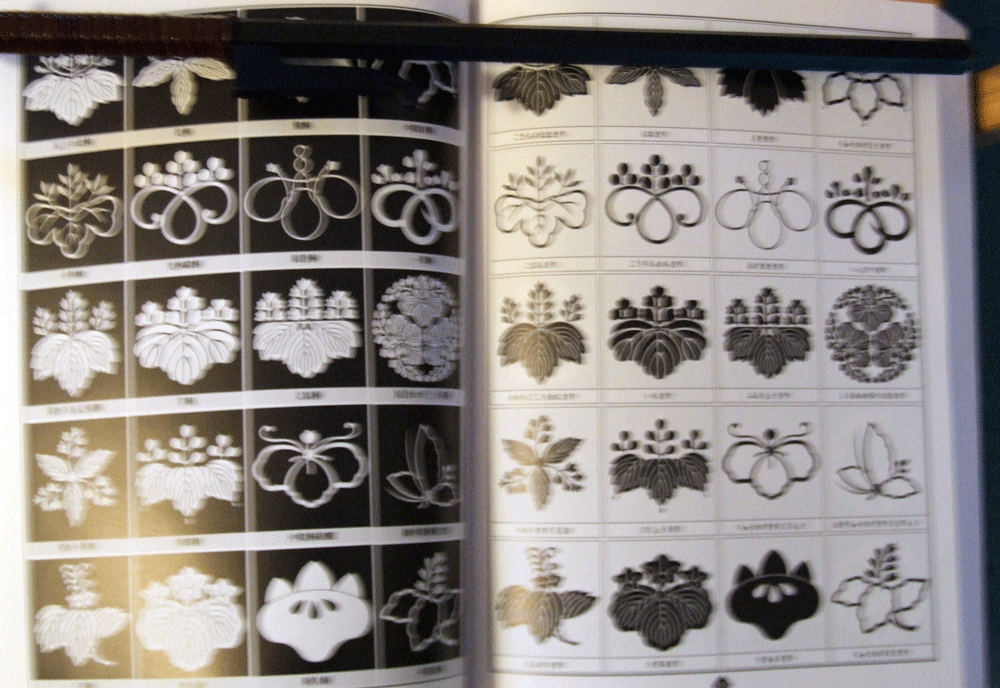
Hi, Here are some not so good pics of examples. I tried. I doubt the kanji are legible. John
-
Hi, Yes, the screen is mentioned and can be directly traced to this mission of boys. A picture of Azuchijo by Lake Biwa it was given to Fr. Valignano by Nobunaga. It may have been painted by Kano Eitoku. I am still trying to find sources for what was exchanged by the boys and Phillip. John
-
Hi Ian, Thanks for the reply. Being only somewhat familiar with the Tehsho mission to the Pope, I found it interesting that you attribute this as the source of the armours (yoroi). Although the mission must of had tacit approval of Nobunaga, who was assasinated before it's return in 1590, I find no Toyotomi influence in it until the return. Following the pioneering work of Francis Xavier in establishing Christianity in Japan, in early 1581, Alessandro Valignano decided to send a legation to Europe representing the three Christian daimyo of Kyushu; Otomo Sorin, Omura Sumitada and Harima Harunobu. The purpose of this mission was twofold. It would give Europeans the chance of seeing Japanese people at first hand and appreciating their culture; in this way the expedition would publicize the work of the Japanese Church and increase financial aid from Europe. Conversely, on their return to Japan the envoys would give to their fellow countrymen eyewitness reports on the splendours of Renaissance Europe, thus broadening the Japanese view of the outside world and moderating existing notions about foreign barbarians. It might benefit the impoverished Japanese mission financially and thus promote its expansion. Two Christian samurai boys were chosen as legates together with two teenage companions, and they sailed from Nagasaki in February 1582. After a journey lasting more than two years, the foursome reached Europe and began travelling through Portugal, Spain and Italy. They met King Philip II and his family several times, and in Rome were befriended by the elderly Pope Gregory XIII and his successor Sixtus V. I'm not sure if this mission can be attributed as the source of Hideyoshi's kagamusha armour, if indeed it is that. Apparently a few families were using kirimon variations and there were many ways armour could have made it way to Phillip II before 1607. Not trying to argue, Ian, just discussing the facts. John
-
Hi Ian, Where did you get this information that it was Hideyoshi's armour? I have some feelers out about this and need references. Thanks, John
-
Hi Johannes, That may be the mon of the Ashina family, Mutsu daimyo; or Hirate family, Oda retainers. John
-
Hi Thierry, Rich's blog spot has this info on sanmei tsuba. I think even if there are two internal plates making four total it is still termed sanmei. Yonmei etc. would be redundant. Here's the link http://tosogu.blogspot.com/2007/06/byou ... rivet.html\\ John
-
Rotten luck.