O koumori
-
Posts
357 -
Joined
-
Last visited
Content Type
Profiles
Forums
Events
Store
Downloads
Gallery
Everything posted by O koumori
-
What makes a collection good?
O koumori replied to Tsuku's topic in General Nihonto Related Discussion
Whatever speaks the most to the collector themself, at his or her particular stage of their journey, -
The issue here is dust. If you have a display case or cabinet, it helps - along with the temp & humidity control. If not, bare blades can and will accumulate dust - especially if they are oiled. Cleaning off the dust can actually cause micro-scratching. Then, too, there is the "oops" factor of accidental contact...
-
PM sent re Sue Koto
-
There are many, many definitions of “quality.” From a practical standpoint (that of protecting one’s life on the battlefield), the best definition is “meeting the customer’s requirements.” For the sword, the prime requirements are: The sword must be sharp and able to cut well The sword must be resilient and able to resist breaking The sword must not bend during use The Japanese sword has throughout its history proven its ability to meet these requirements. While modern collectors’ definitions of quality might border on the purely aesthetic, the beauty prized by today’s connoisseurs is a by-product of meeting the above practical requirements; the beauty of the grain resulting from the forge folding methods to ensure resiliency and bending resistance, and hamon structure from differential hardening to ensure sharpness in addition to the resiliency.
-
Alex, Take a look at some of these fakes: Fake Japanese Swords - Nihonto Message Board (militaria.co.za) Hope you didn't spend much on this learning experience!
-
Barry, The new member is Joanne. I've been here a while...
-
Welcome! There are many knowledgeable and helpful folks here, and much to learn. Have fun!
-
When does collecting stop?
O koumori replied to Peter Bleed's topic in General Nihonto Related Discussion
Peter, Perhaps once one stops acquiring swords? I think that the retention of the existing collection wouldn't necessarily mean that you'd still be a 'collector.' That said, I doubt that the social involvement or research aspects of the hobby (disorder?) actually ever go away. -
Sure, I;kk bring it. Dan K
-
Thanks Jan! Dan K
-
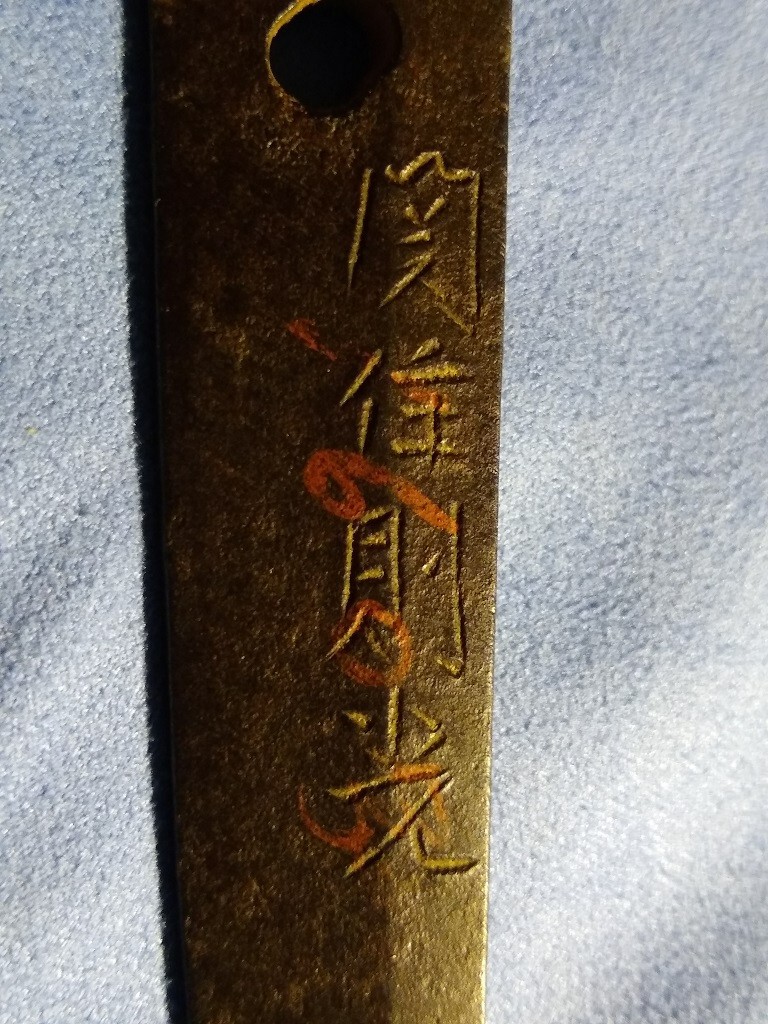
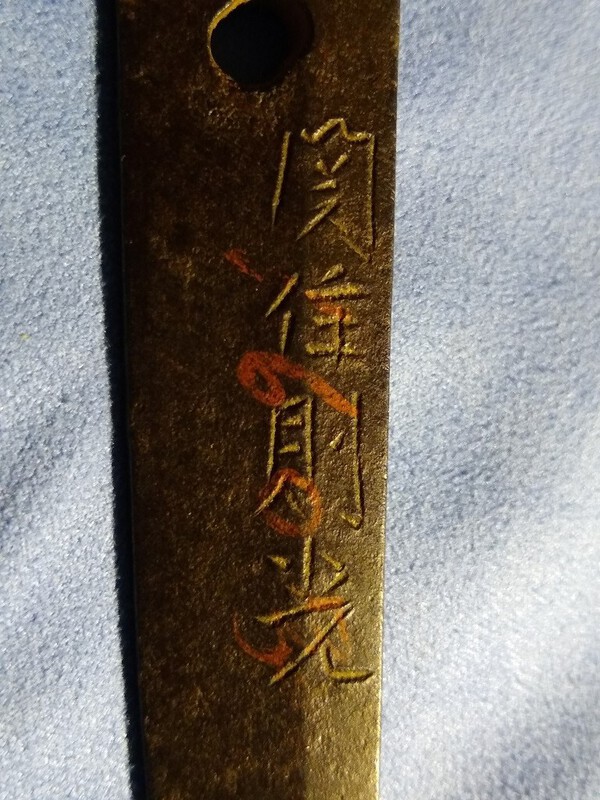
Hi, I could use some help with this 4 character mei, (?) ju Nori (?) Thank you! Dan K.
-
The sword you posted a picture of was mine. Unfortunately it was sold during the show. PM me. Dan K.
-
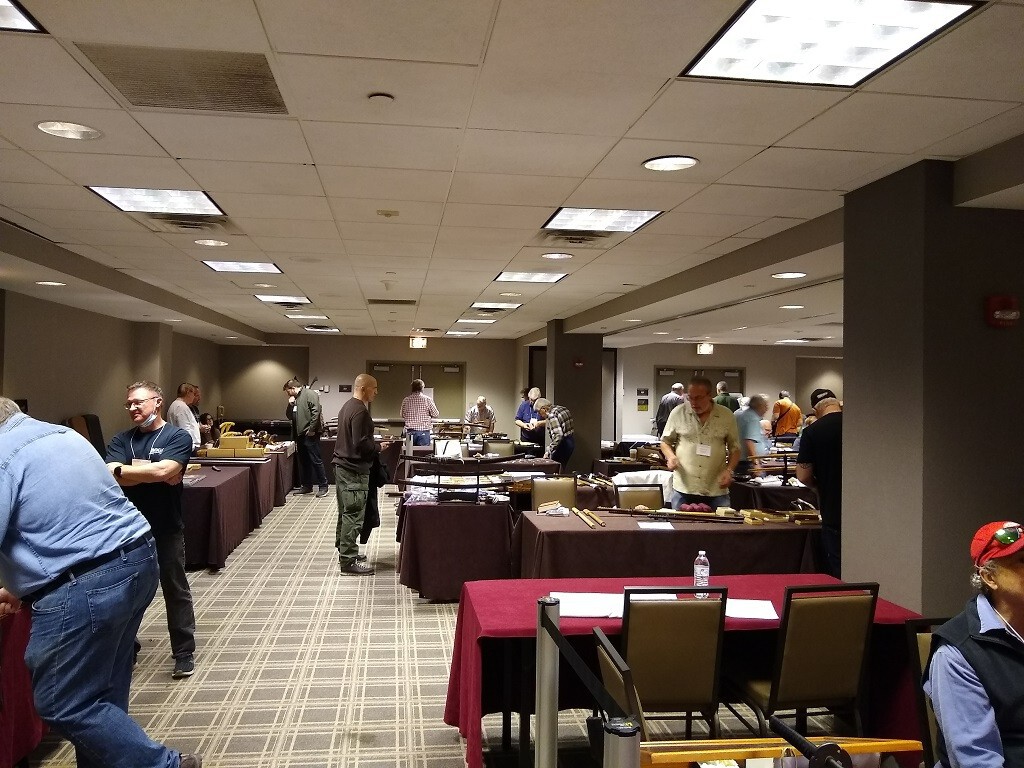
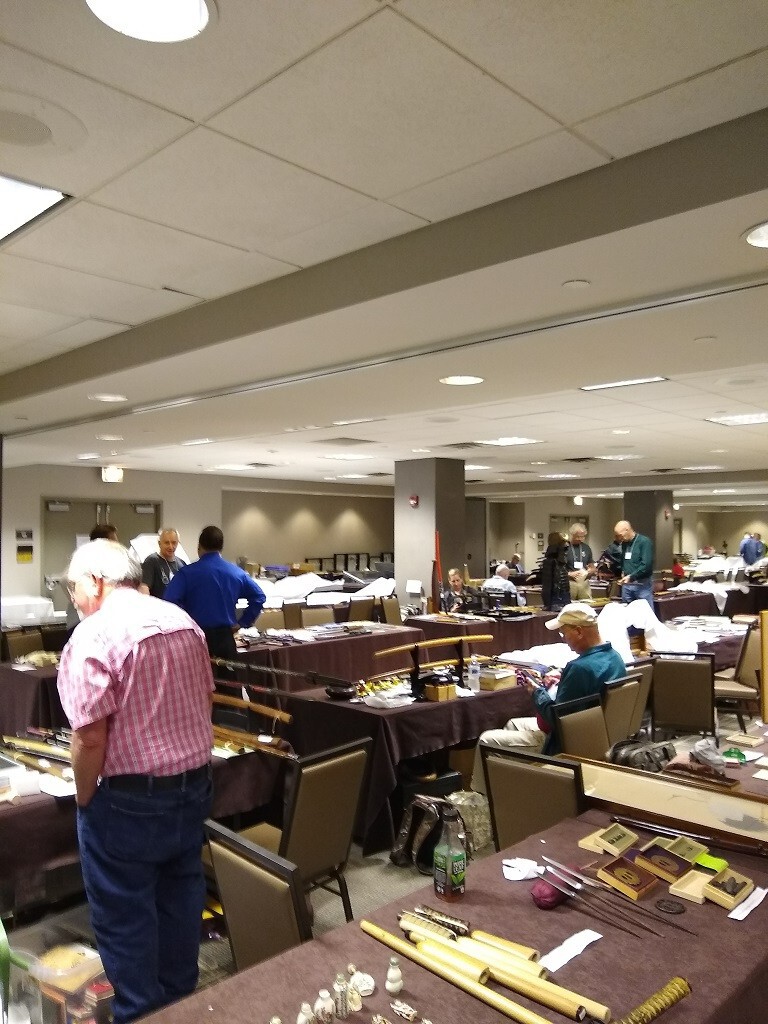
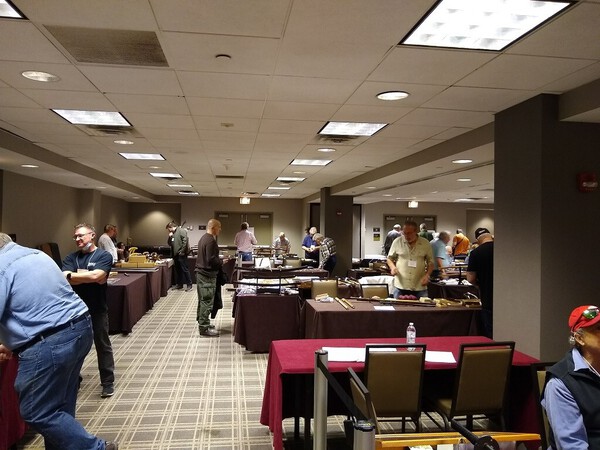
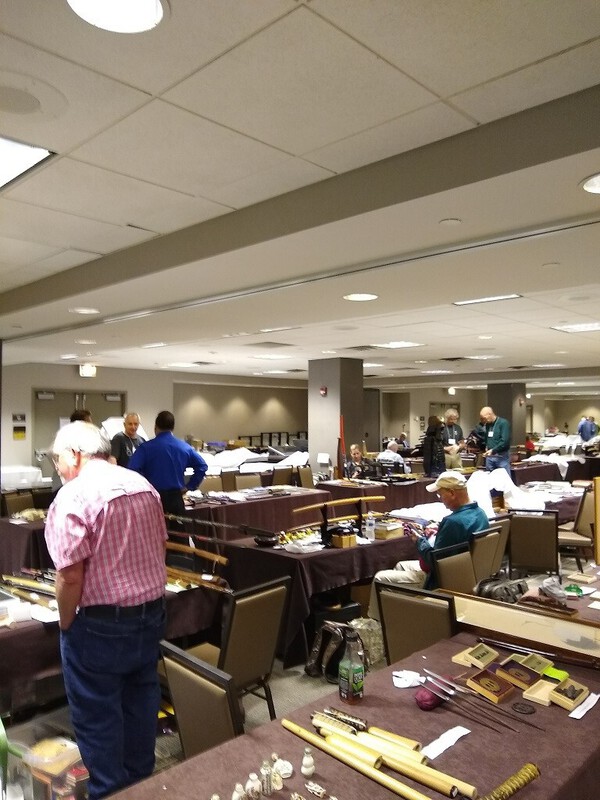
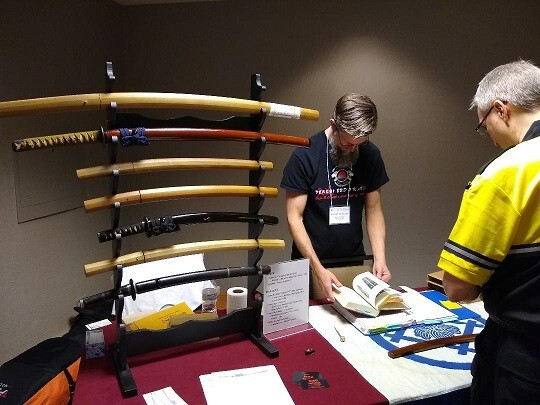
Mark, Thanks for your time and hard work to make the show a success! It was a fine show. Dan K.
-
Chris, Thanks for your kind words! It was indeed a great show. Hats off to Mark for a job well done! Dan K.
-
Hi Jon, The nakago looks suspicious to me, like it's been in a fire. Perhaps I'm wrong. Dan K.
-
What would you call this boshi?
O koumori replied to O koumori's topic in General Nihonto Related Discussion
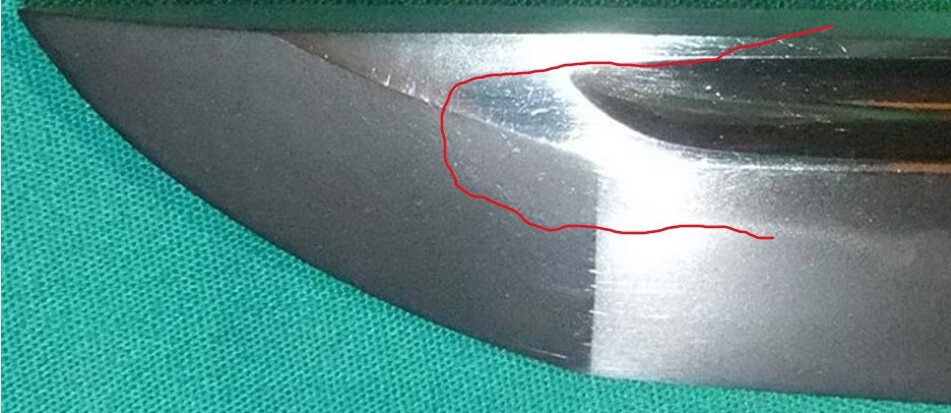
A couple more pics - I'm not great at photography. There is some utsuri but it is difficult to capture.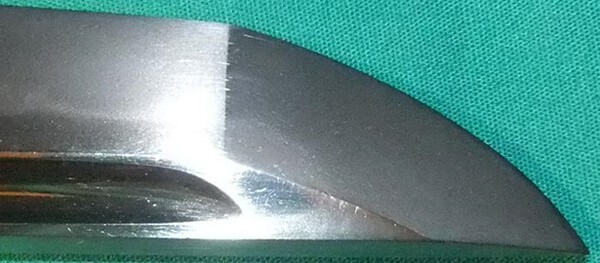

-
Samurai Splendor: Sword Fittings from Edo Japan | The Metropolitan Museum of Art (metmuseum.org) Dan K
-
- 3
-

-
Stephen, Interesting chart! What's the source? Thanks Dan K
-
This one is handcrafted from Cedar. It will be up for sale at the Chicago show. Dan K


-
What would you call this boshi?
O koumori replied to O koumori's topic in General Nihonto Related Discussion
Ken, Yes, I understand that - My point was that yakidashi would provide further evidence to support an Osaka-produced blade, if the boshi was indeed "Osaka." Thanks, Dan -
What would you call this boshi?
O koumori replied to O koumori's topic in General Nihonto Related Discussion
Thanks Ray! I thought it might be 'Osaka Boshi,' but does not have yakidashi... Dan -
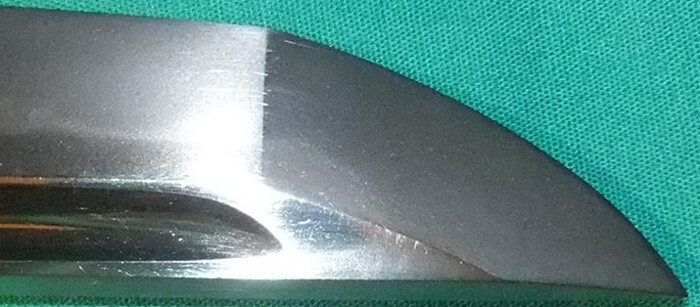
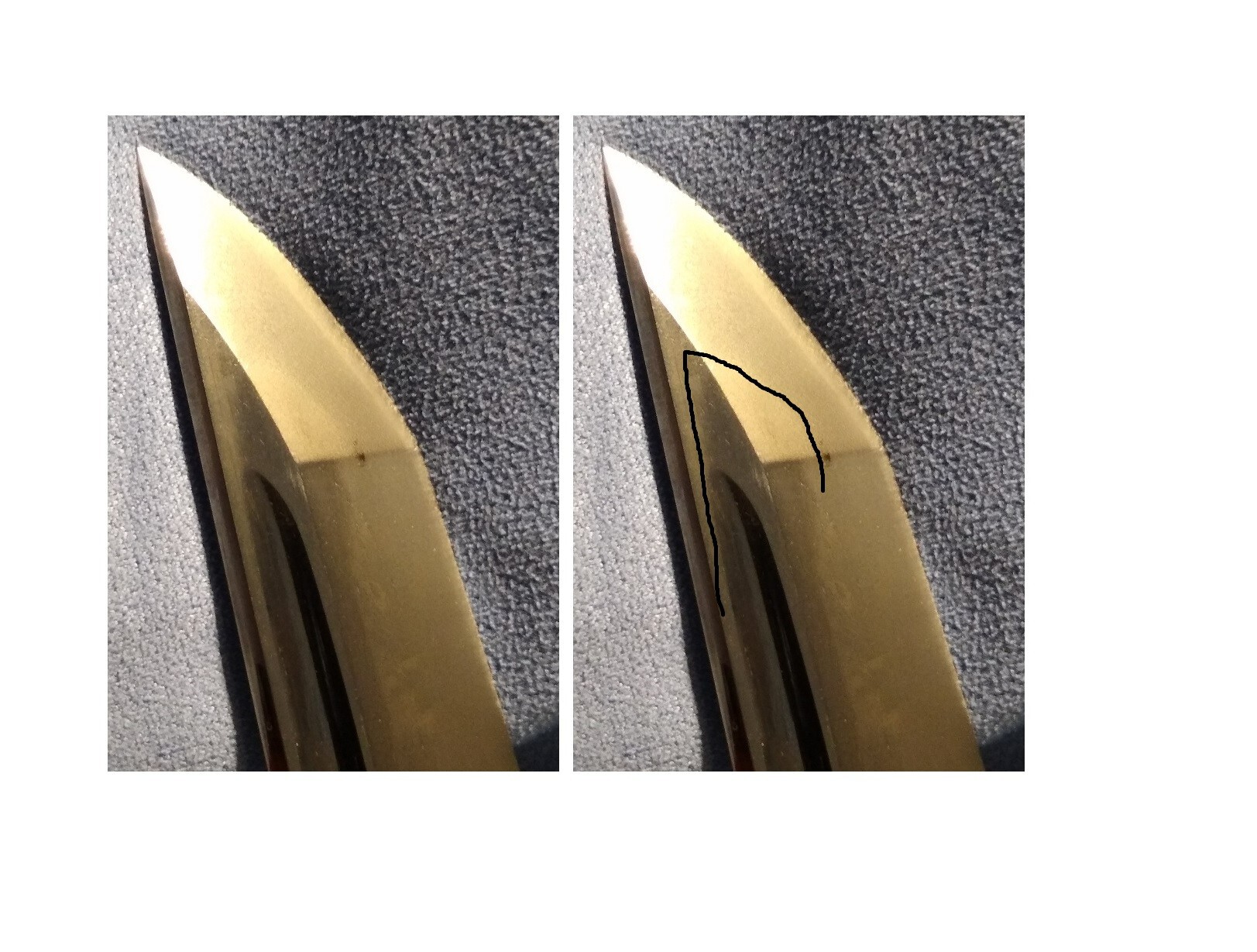
I've not seen a boshi like this before; much of the kissaki is hardened. What would you call it? Please pardon the lighting; I drew in what I think I'm seeing. It is slightly different on either side. The hamon is chogi-midare. Thanks, Dan K


-
I had one like this once. It was mounted with a somewhat thin tsuba and no sepa. At the time, someone theorized that the tsuba had been changed, and the previous one was of a different thickness, necessitating moving the mekugi hole. I was never able to prove or disprove this theory... Dan K
-
Thank you gentlemen! Dan K
-
Agreed, not Kamakura - the questions is, is this a gimei, or an 'unlisted' later smith (at least not in the reference materials available to me)? Thanks for the replies, Dan K