Brian
-
Posts
21,778 -
Joined
-
Last visited
Content Type
Profiles
Forums
Events
Store
Downloads
Gallery
Everything posted by Brian
-
*Should be fixed now* Brian
-
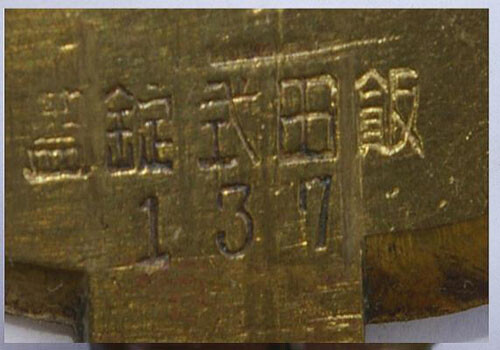
More pics merged from other post:


-
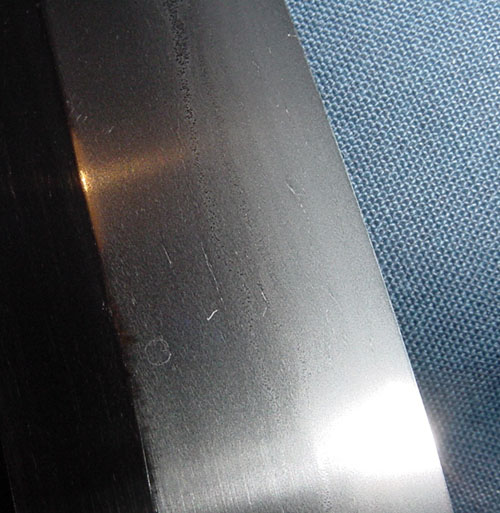
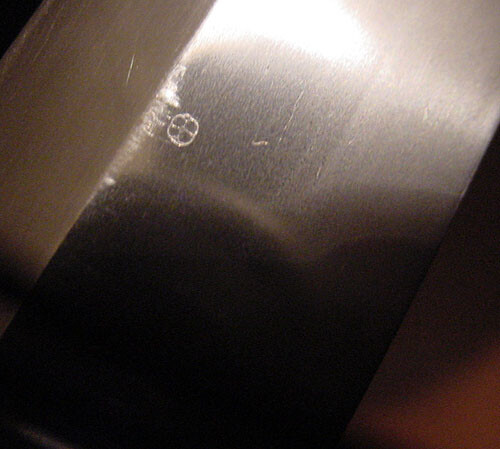
Yeah..I missed it many times. Actually..it was the g.f. who saw it I wouldn't want it polished off..it is so subtle, and I can't bring myself to believe it was added later. I can only think it was put on there during or just after manufacture. Perhaps it is something not often seen due to the fact that later polishing would remove it. Took me 20 photos to even capture it :D This is really a deep and interesting hobby, and one that never fails to surprise. Yes, this one definitely needs to go for a full and professional polish and shira saya oneday. So much nie Brian Btw - It is on the ura side.
-
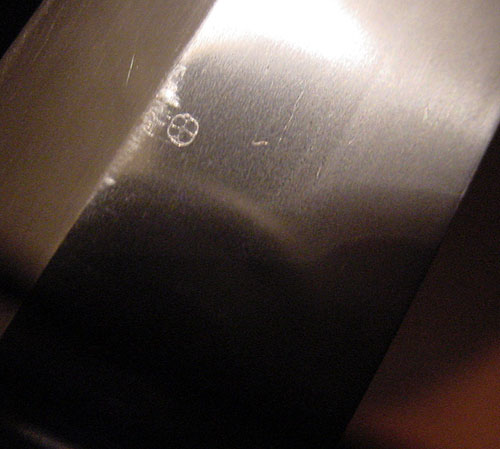
Hi all, I was lookig closely at my new Emura blade that recently got through Stephen. Lovely blade, showing everything you want to see in a nice Gendaito. Something caught my eye on perhaps the 20th time I looked at it. There is a tiny stamping on the blade I missed it the first few times, as it is only about 2-3mm across, and seems lightly but well engraved to me. It is in the form of a tiny circle with 4 tiny circles in the middle of that, forming a cloverleaf shape. It looks like it was either engraved there with a tiny instrument, or maybe stamped (looks more engraved) It is just below the mune, and above the hamon, and roughly in the middle of the blade length. This blade doesn't look like it has taken much polishing if any since the war, and I am very intrigued by this. Would have taken a very careful hand, and I can't think of a reason it would have been done long after manufacture. Has anyone ever come across this kind of marking on a blade? It is much less conspicuous that the photos make it out to be, and is really small. Could it be some kind of semi-secret forging signature, polishers mark or arsenal mark? Simon, perhaps you could ask Ohmura-san if he has ever seen this before on a blade? Hmm..curious. Brian

-
From: http://japanesesword.net/eng/iaito/su_toppei.html The name of Toppei Koshirae is derived from the unique Saya end shape, reinforced with the big metal ornament, that resembles the Kabuto armor's Toppai. In order for the late Tokugawa Shogunate to adapt the western style of military training, the overall shape of Japanese sword has been slightly modified and it has become the Toppei Koshirae. Like Tensho Koshirae, the Toppei Koshirae is considered to be the most practical and simple sword in Japanese sword history. A google image search does pull up quite a few examples. Try this search: http://www.nihonart.es/iaido/iaido108.htm Also, some good pics here: http://www.nihonart.es/iaido/iaido108.htm http://www.budoya.es/katana/toppei.html (This one has close ups of the parts you enquired about) There is also a write-up here: http://www.arscives.com/historysteel/ja ... rticle.htm that says The end of the Edo period 江戸時代 is called Bakumatsu 幕末 (1853 ~ 1868), and brought many changes to the Samurai 侍 class. Some men started wearing newly imported western clothes. Since at this time both the Imperial Army and the Shôgun’s Army adopted Western style military uniform, the soldiers of both Armies started wearing so called Toppei-Koshirae 突兵拵 swords, also called Zubon ズボン (trousers)-Koshirae 拵, which had a softly rounded Kojiri 鐺 but no Tsukamaki 柄巻. Bit confusing since most of the pictured swords have tsukamaki. Not sure which is the correct version to go for here? Regards, Brian
-
I did say it can probably be repaired This is a nasty one, although I have seen worse. I do think it can be repaired without losing the tip, but of course only an expert will be able to tell you for sure. I recommend taking a few shots from all angles, and sending them to Bob to at least ask what he thinks. He might be too busy to take on a new job right now, but I am sure he will be able to give you an educated opinion. From what I can see (very limited) it isn't fatal though, even if it broke off. I can only imaging what they did to it to make it bend like that. That parcel must have been an impromptu rugby ball or something. Brian
-
A bent tip is not a fatal flaw. If it snaps off, and the hamon then runs off the boshi, then it is fatal. If the tip breaks off, and there is still boshi there, then it is not fatal. If the bend causes a crack that runs through the hamon (hagire) then it is fatal. If it is just bent or curled, then it is not fatal, and can probably be repaired. I suggest you 2 work out any shipping or transactional queries via pm, and post pics for us to advise on the solution. You say it is a slightly bend. Perhaps it is no-where near as bad as we are imagining. Post a pic. Perhaps there is no new damage at all, and it is only a very slight wiggle that came from the previous repair that you are seeing. As mentioned by Andreas, let's wait for the pics before jumping to confusions Brian
-
The big question is if the tip can be straightened without breaking it off. I am sometimes confused by bent or curled tips, as the boshi should be hard, and I would have thought that it would snap off instead of curling. I was present when an acquaintance dropped a sword point first onto a carpet (gives me nightmares) and curled the last 4mm into a tight curl without snapping off. I would be very cautious about straightening it again, and consult with a polisher who can tell you if it can be straightened and how. If I remember, you are in Hawaii, so I would take it straight to Bob Benson, and let him advise. Brian
-
Got this reply in a pm from Ford Hallam. Thanks Ford, great info! Brian
-
Paul Martin recently donated a fantastic article to the Nihonto Message Board that he wrote on the Yoshihara tradition of Japanese swordmaking. This is an extensive summary of this important line, and features information on such esteemed modern swordsmiths such as Yoshihara Yoshindo, Ono Yoshimitsu, Yoshihara Kuniie and many others. It is in the form of a 34 Meg downloadable .pdf file, and is linked from the NMB Downloads section at the top of the page. Please feel free to download it or view it in your own time. There is no rush to download it, it will be up permanently. A huge thanks goes out to Paul for this tremendous effort and gracious donation. If any of you are on other forums, please rather refer people to the archives page where they can download it, instead of posting the direct link to it. Enjoy, Brian
-
Before anyone has a chance to say it themselves... Is the forum going to the birds? Back to swords now folks Brian
-
Yes, on yours he signed tachi-mei, whereas on the example it was katana-mei. Not unusual, and I don't think it has any great significance. Swords made for the military in WW2 were mostly carried in the position of old tachi, hence whey they are often signed this way. I have seen Emura also signed sometimes tachi mei and other times katana mei. Interesting to see the conflicting ratings though..from lower grade to medium/high grade showato. Not sure which to go with here, so as we should always be doing anyways, let the blade quality speak for itself. Brian
-
If this is Yoshida Kaneuji (worked in Seki) then you can find him here: http://home.earthlink.net/~ttstein/seki.htm and here: http://home.earthlink.net/~ttstein/tosho.htm He seems to be listed as ge-saku. Since chu-ge saku means below average, and chu means middle/average, then would ge-saku mean inferior blades? Brian
-
Fish? Looked like some kind of sack to me. Where are the legends experts? Brian
-
Looks Japanese theme to me. The sword looks like a ritual ken carried by one of the Gods here? Hotei? Not sure of the theme, but someone will know I am sure. I like it a lot. Is it ended already, or still for sale? Edit: On second thought, not sure about one of the Gods at all. Can't be Hotei as he is a happy God, and this guy doesn't look too merry to me. :? Anyone want to go through the list? Lol. http://www.godchecker.com/pantheon/japa ... _gods-list Brian
-
I don't see any reason to believe anything has been done to the nakago. I think it has just aged a bit more than some other swords from that period. There are always exceptions, as pointed out often. Nothing strikes me as remotely odd here. And let's not forget it has TH papers from the NBTHK, which is exactly what you want in a purchased sword Brian
-
Every tsuba collector should have one
Brian replied to Rich T's topic in Auctions and Online Sales or Sellers
Gabriel, Well spotted. I should have noticed they were both the same side. Interesting and slightly wierd item there :lol: Brian -
Grey, You are a genius :D Such a simple trick, and I was still using rubber bands. Great when you are storing that old saya before you can have repairs done. Heck...if you photograph or scan your saya pattern, and print that out and cut the strip from it, and use clear masking tape, you won't even notice it from a distance :D Thanks for a great tip. Brian
-
Every tsuba collector should have one
Brian replied to Rich T's topic in Auctions and Online Sales or Sellers
Ok..now that is just wierd Is that a large board to display tsuba on, or a tsuba with a tiny tsuba theme? Can't read the description. Interesting how the small nakago projections go through to the other side. It's all yours Rich, I'll pass :D Brian -
Very true Milt, good point. Brian
-
Agree with Franco, When the demand for sword fittings wasn't there anymore in the Meiji period, then the fittings makers turned to making anything else they could. Many kozuka makers turned to those fancy kitchen-type knives that use a regular cutlery knife blade, and on many of these we see these double sided kozuka. Not very sought after I'm afraid, kind of mass production. Brian
-
Hi Stephen, Yes, you have a point. To be honest, I can't really decide how this was done. I can't find signs that it is indeed inlay, but the detail is very fine, and it may have been done with the mercury methods or other means of transfering the thin overlay onto the base metal. There is lots of fine carving too that you can feel, and none of the contrasting metal is lost anywhere. Considering this is only about 10cm high, the detail is very well done. Fine chisel work on the feathers and bamboo that you can feel with your fingertips. It is definitely silver and gold on there, so not sure how it was applied. The other 2 do show signs of some inlay, but it is very fine work also in minute detail. Brian
-
Outstanding work Markus! :D Thanks very much. Even with my copy of "Dictionary of Japanese (Sôsho) writing forms" I was clueless where to begin. No idea who he was, but this will give me something to research. Regards, Brian
-
Thanks Pete, that's what I was thinking too. Don't have Haynes yet, although it is high on my list to get next. I was hoping, (since I think kao are often made up of a combination of kanji mixed together) that someone might have a clue. Agreed on the restoration. In this case, I was thinking more of the very long term soft cloth/pocket carry/open air method used to promote natural patinas on iron, and not any artificial chemical patina. But this would not apply much on soft metal tsuba like this I think, since the coloration comes from treatment and not age? Have no problem enjoying it as it is Btw - the darker areas are just reflections while taking the photos. It is actually a very even color except for the middle where the wear is evident. It reflects objects like a mirror. Regards, Brian