All Activity
- Past hour
-

Shin gunto katana with black lacquered wood scabbard
Bruce Pennington replied to Battara's topic in Military Swords of Japan
Here is a picture of mine. Small metal band without any decoration Justin, Does yours have a screw to hold it on? Most of these do not seem to be attached in any permanent way. That is why most of them are missing at the time you see them. -
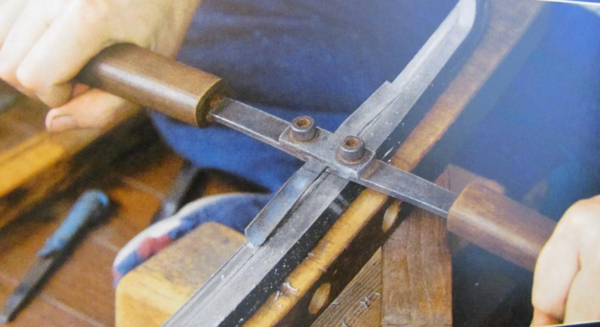
Always fascinating to see tools used by swordsmiths. I assume a Sen was used, even in ancient times, to shape the blades prior to being passed to the togi-shi. I can certainly see how poor application of this tool could cause such imperfections. From what I can tell from the low Rez images are that some of the 'creases' are convex and others concave. I would say these were the result to reshaping or straightening after sustaining damage.
-
The flat head shape (possibly suggesting a depression containing water) made me think of a Kappa, but the face, hands and feet are not typical. Maybe the Kappa king??? Dunno. One for @Bugyotsuji perhaps.
-
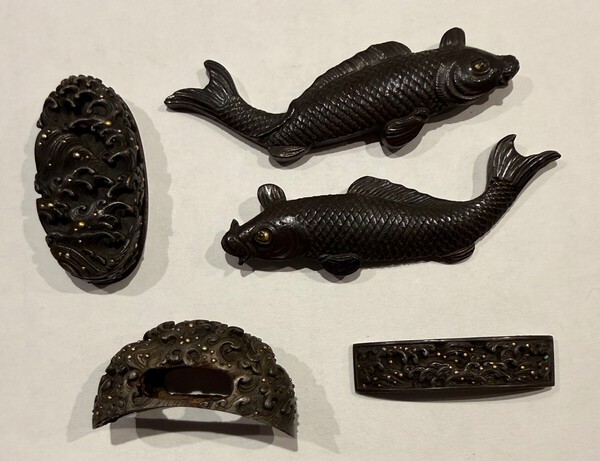
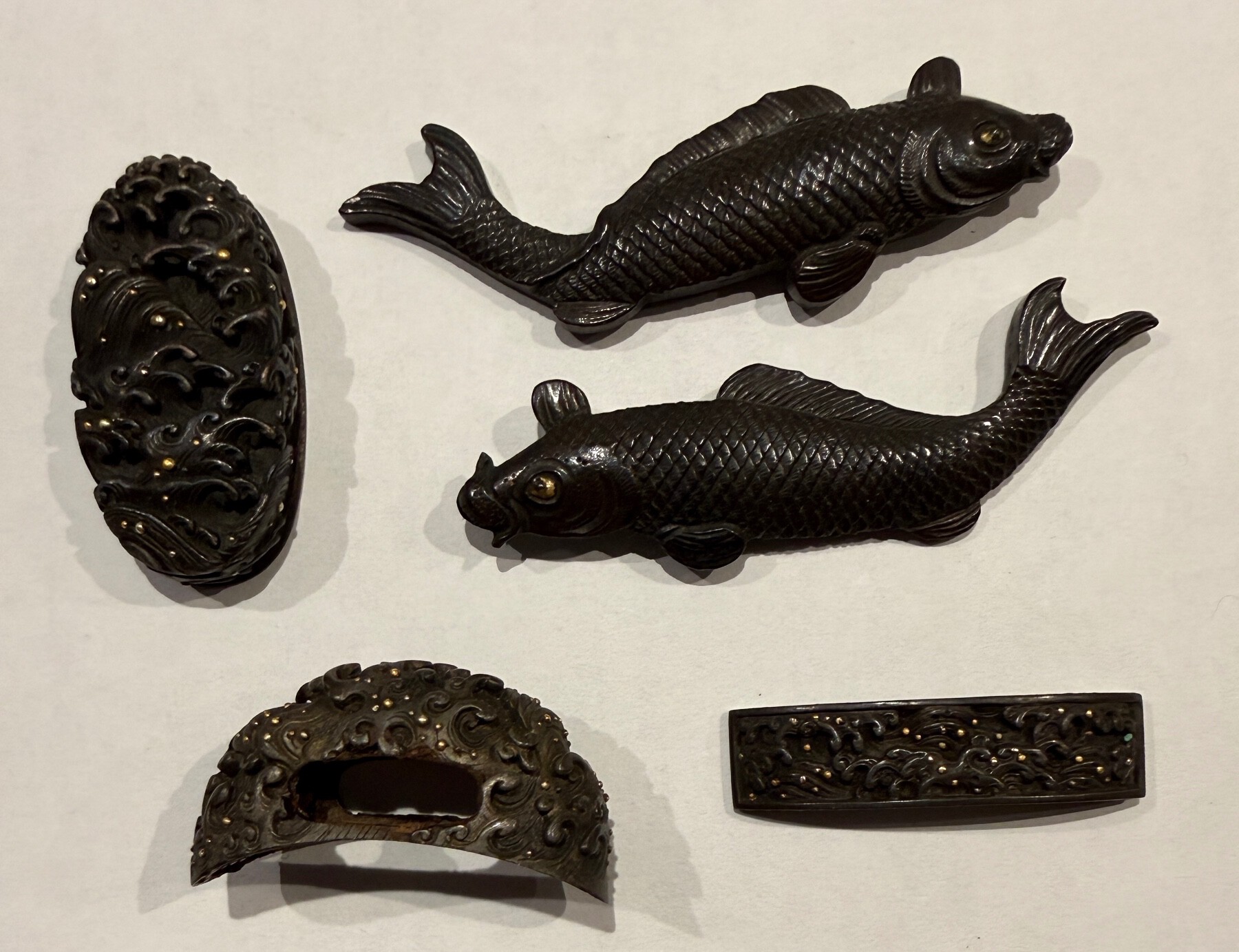
Hi! I am looking for the following tosogu for a Daisho koshirae project; 1. Kojiri in shakudo Omori style waves 2. Kurigata in shakudo Omori style waves 3. metal part for the kozuka pocket in shakudo. Omori style waves. 4. Koi menuki in shakudo Please look at the picture to see what to match Regards Anthony de Vos
-
Anthony, OK…..your kozuka is a “shiremono” which is the term used (in the context of Kozuka) to describe a mass produced cheaply made item designed to look like far a more expensive mixed metal inlaid piece. Basically the whole top plate is pressed from a thin piece of copper alloy to create the high relief effect and then multi-patinated and gold plated (as opposed to true mixed metal inlay) to look like shakudo, silver etc. This is then joined to a solid base plate and finished to look like a normal kozuka. Often a thicker than normal base plate is used to create the impression of “weight in the hand”. Some even get signed but that is usually an attempt to mislead. The one you have is a well known variant and I even saw one at last weeks Arms Fair. Sometimes two pressed plates with the same subject matter are joined together and used as cutlery handles and put into sets for export to the west. However sometimes real kozuka, often of considerable quality and value got used in cutlery sets and they are can be very exciting. It is important to be able to tell the difference because….about 30 years ago at a big antiques fair I came across a set of 24 cased knives and forks with silver blades ….all were superb quality genuine kozuka. I asked “how much” he shouted to his partner “how much do you want for those Chinese knives and forks” …the answer was £65. The antique gods smiled on me that day. If you decide to stick with this interest being able to discern quality is vital…..the same applies to tsuba and all other fittings. I apologise if I disappoint you, but these things fool a great many people. Happy hunting. PS….why not come to the Birmingham Arms Fair in June, happy to show you some better pieces (you don’t have to buy anything!!🙂)
-
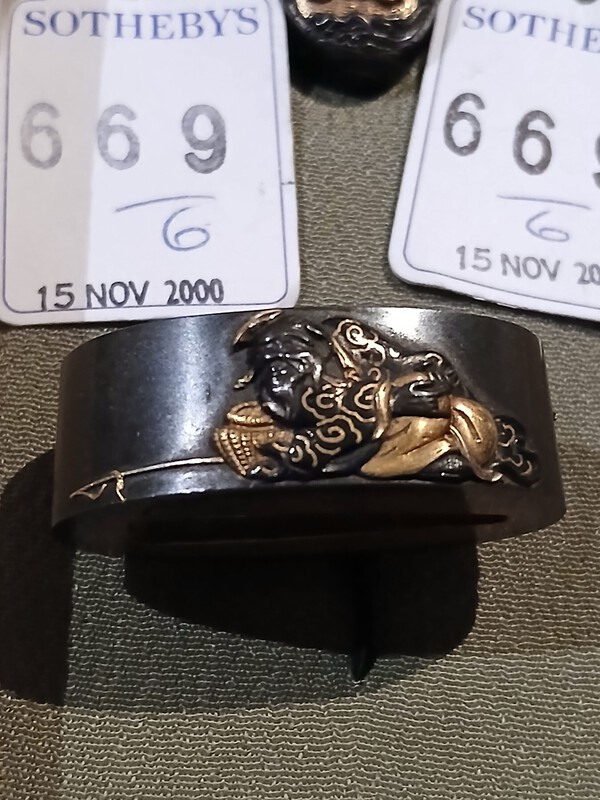
Can't say with 100% certainty but this one gives me an Ichinomiya vibe and strongly reminds me of a recent fuchigashira acquisition of mine... No idea about the theme though
- Today
-
Just for a better understanding I am showing some of my MIGAKI BO. I think they are made from a highly hardenable carbon steel, probably something like ball-bearing or so.


-
Last but not least, when it comes to my favourite from this set it's between the first Hamano piece I posted and this Taigong Wang design and I can't decide which I like most...
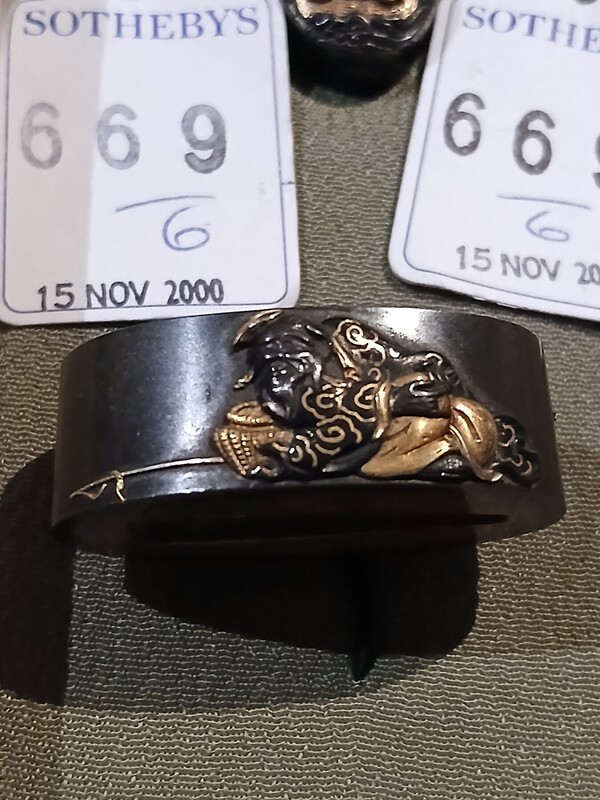
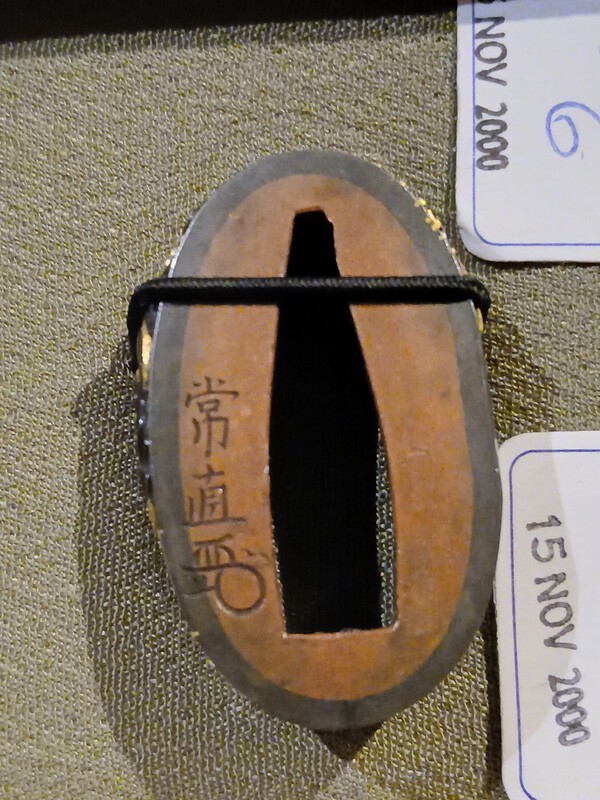
-
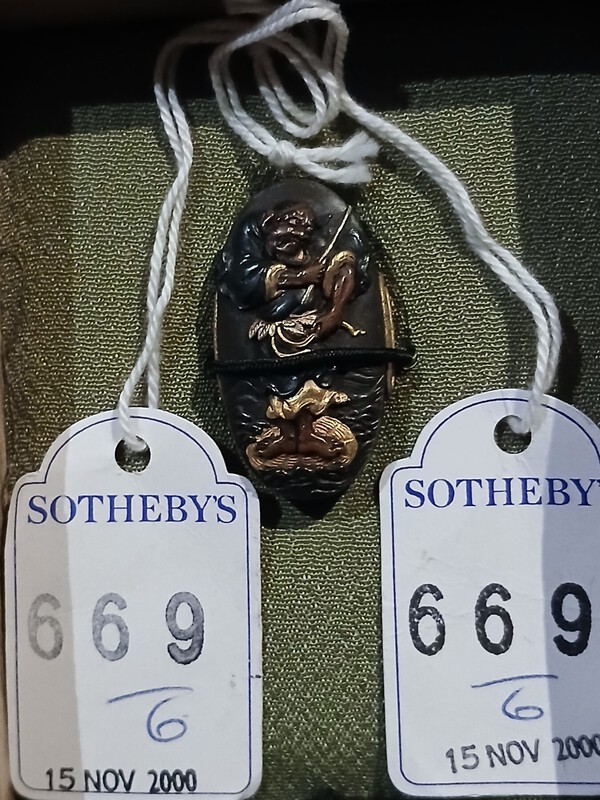
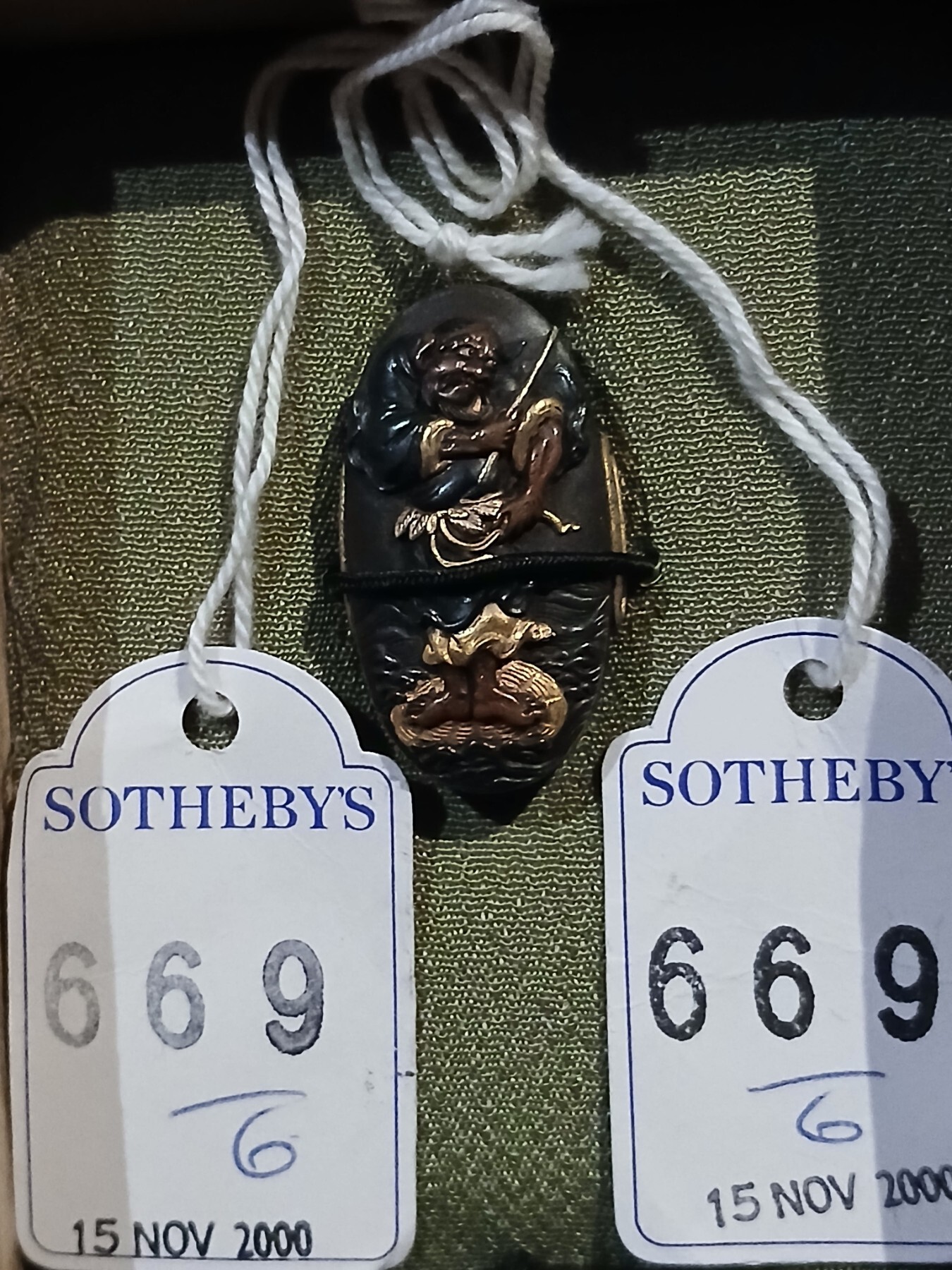
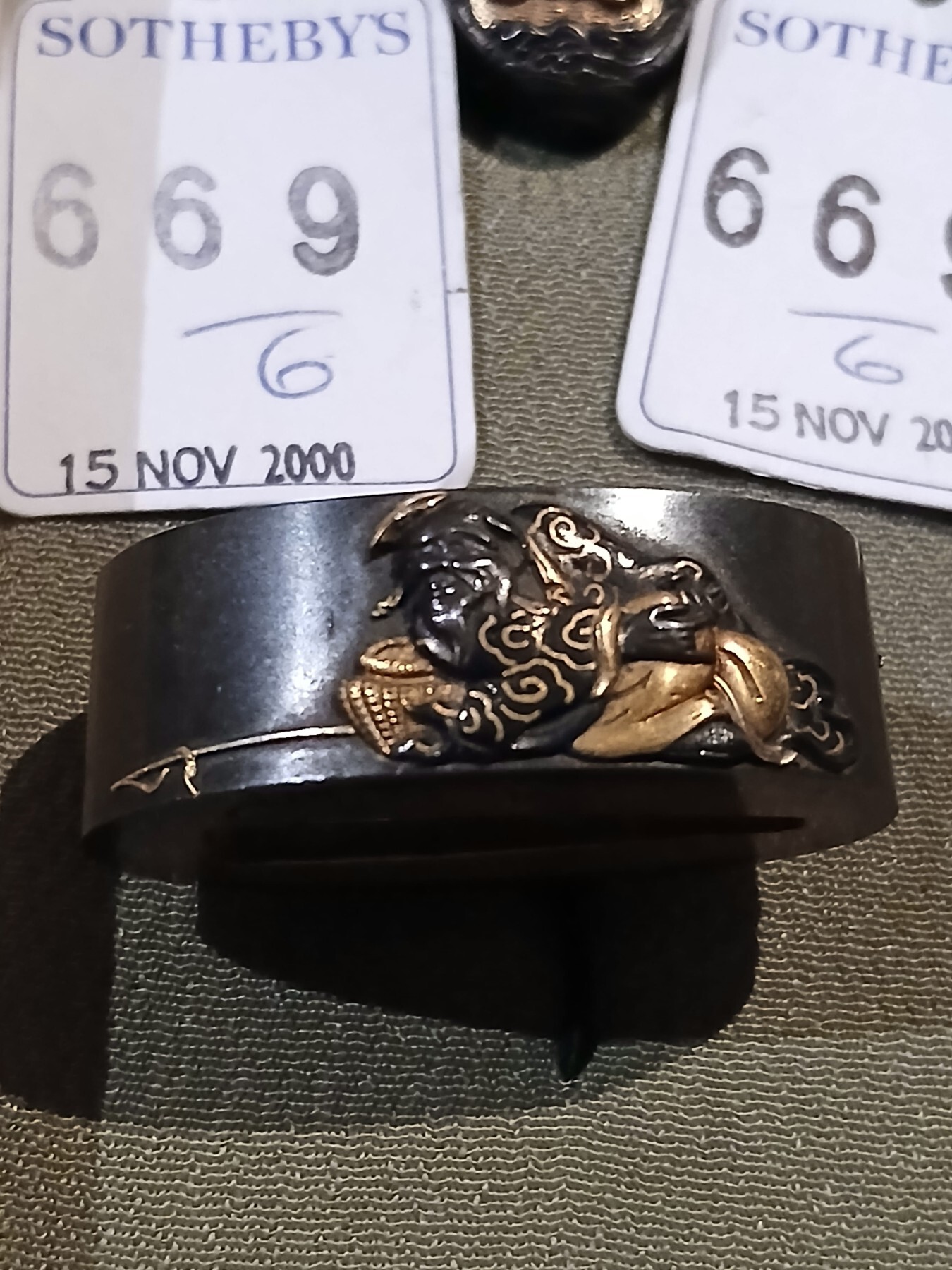
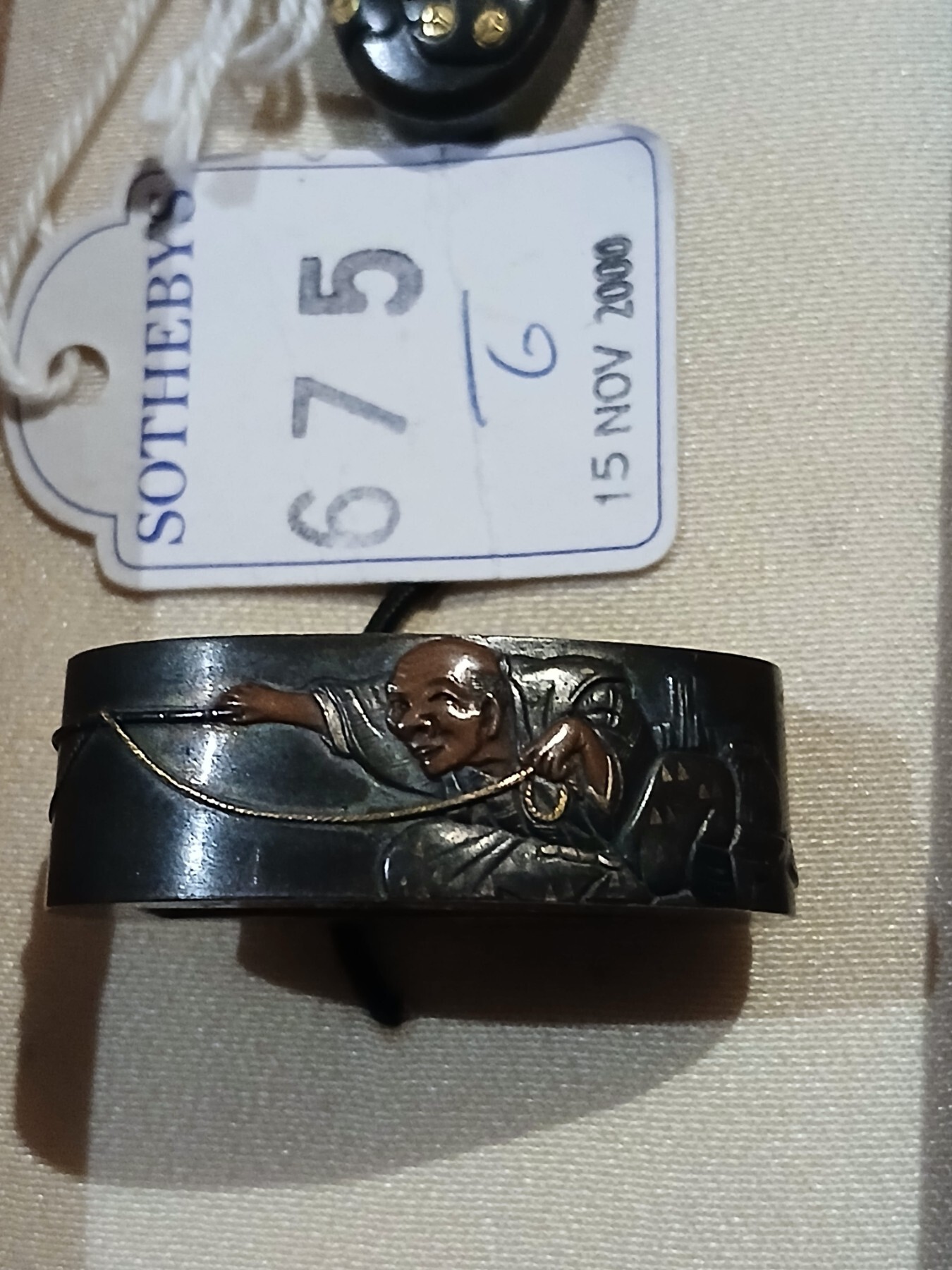
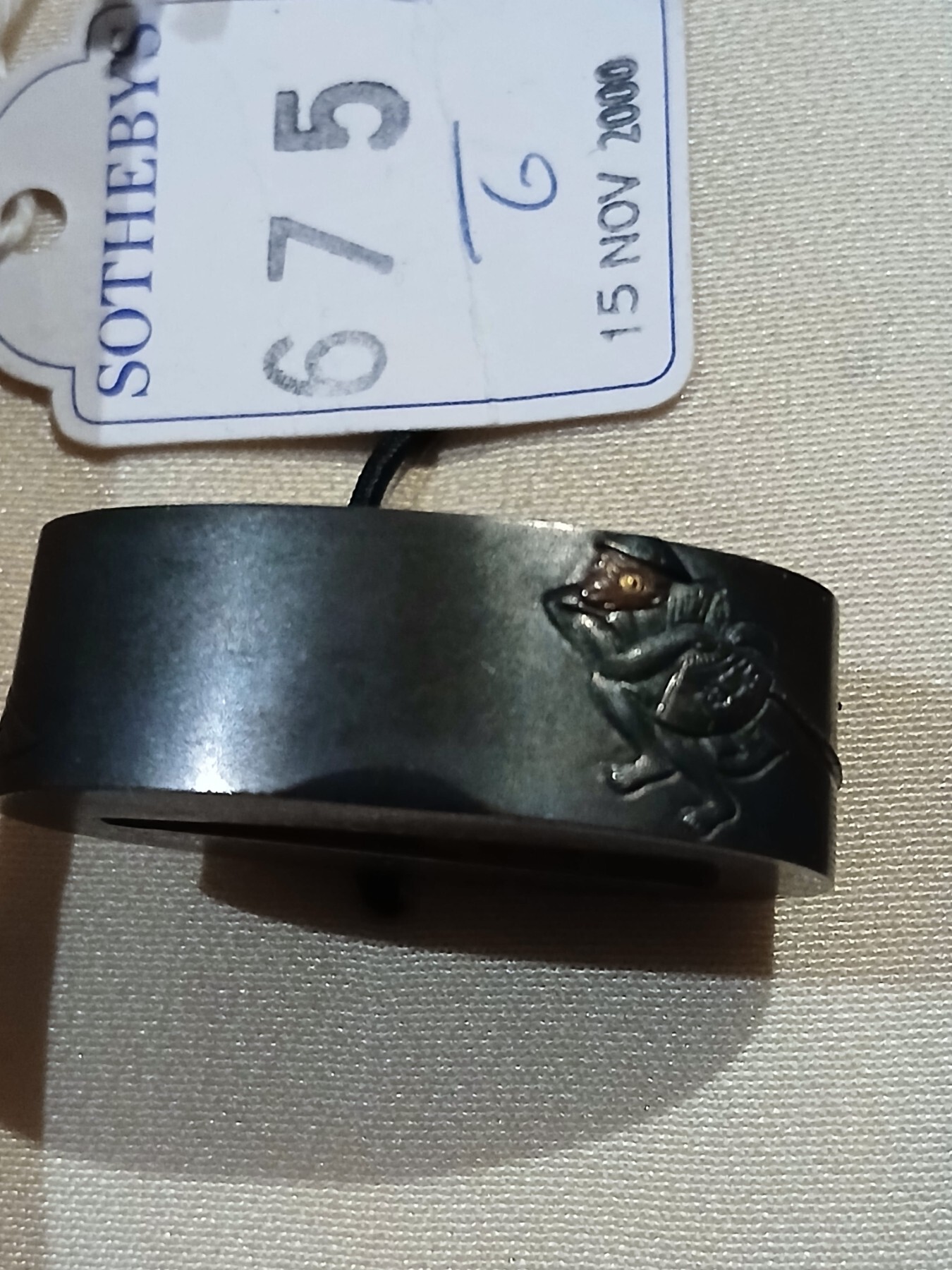
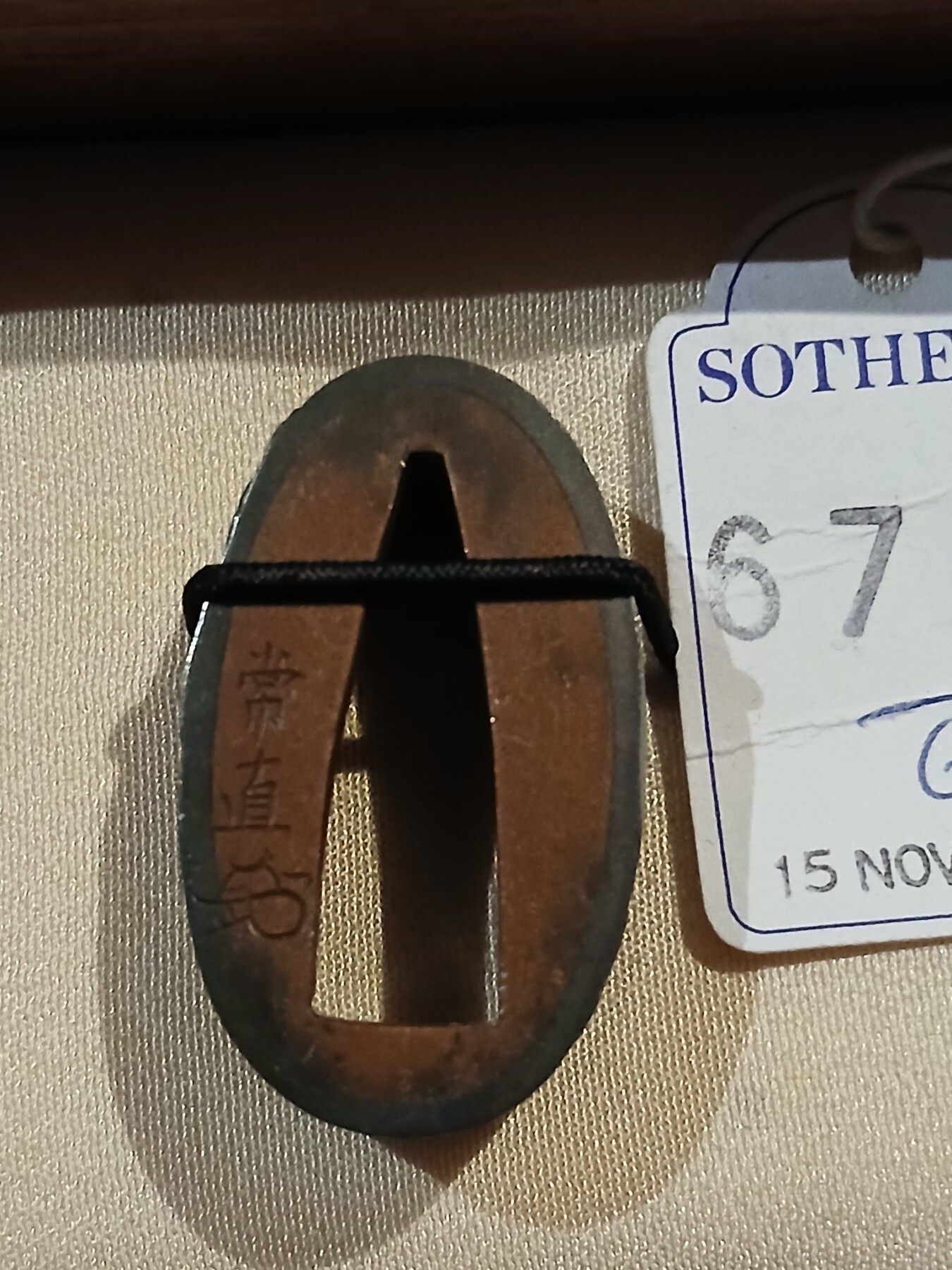
Now the Tsunenao pieces with their original Sotheby's tags...
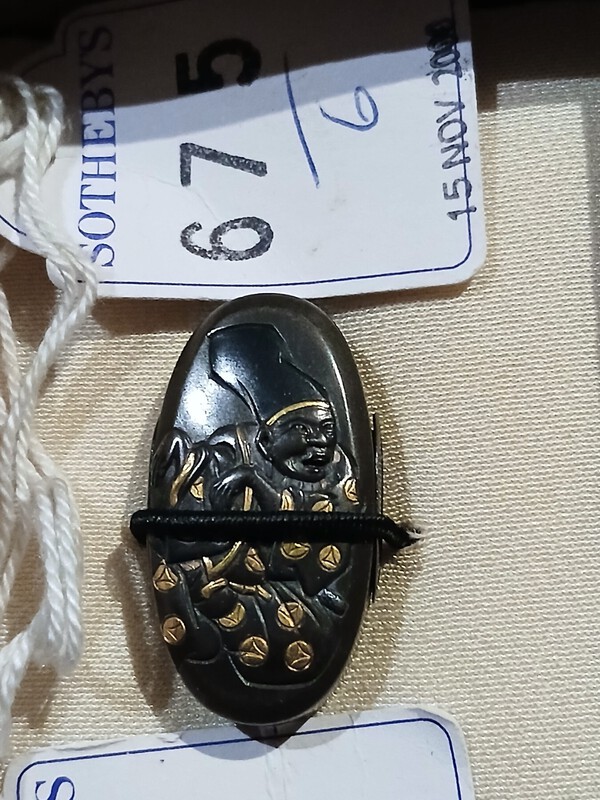
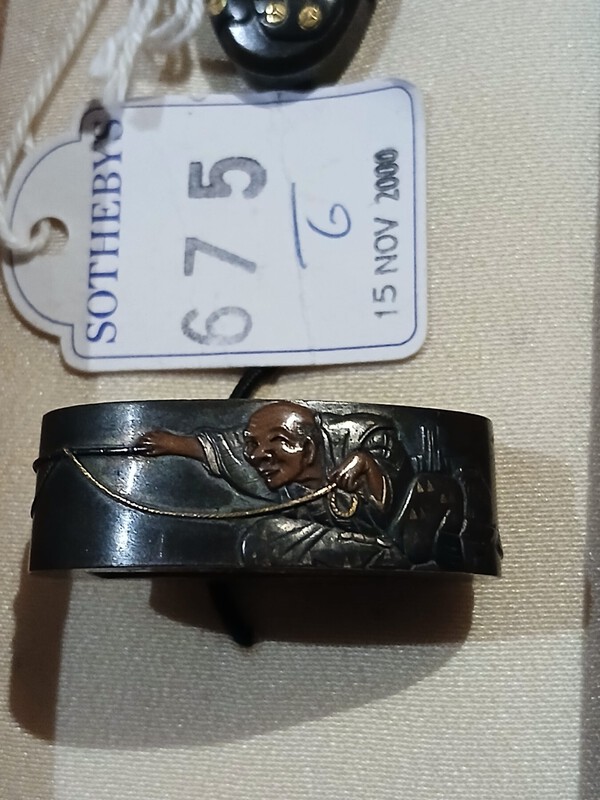
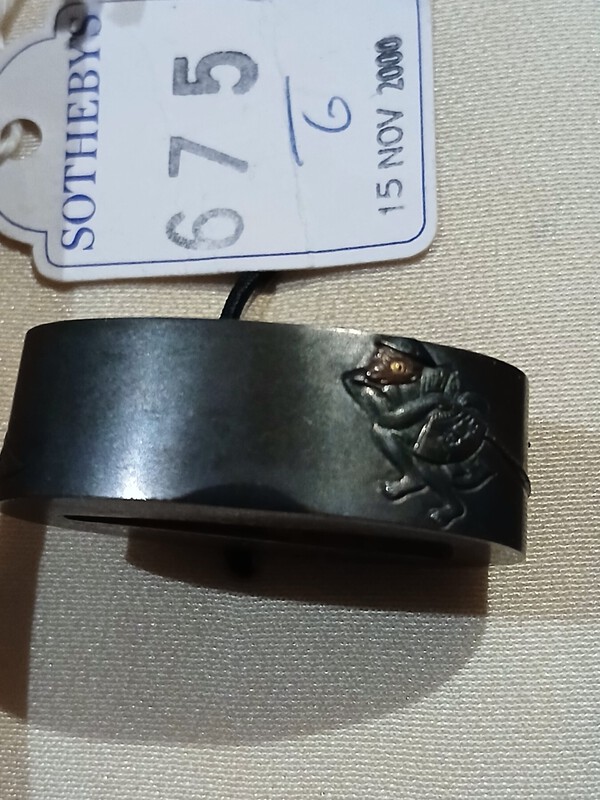
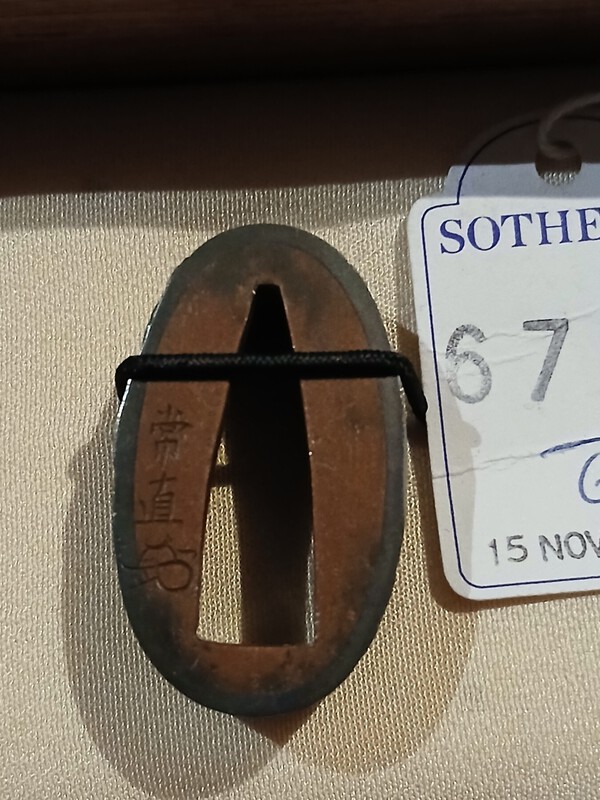
-
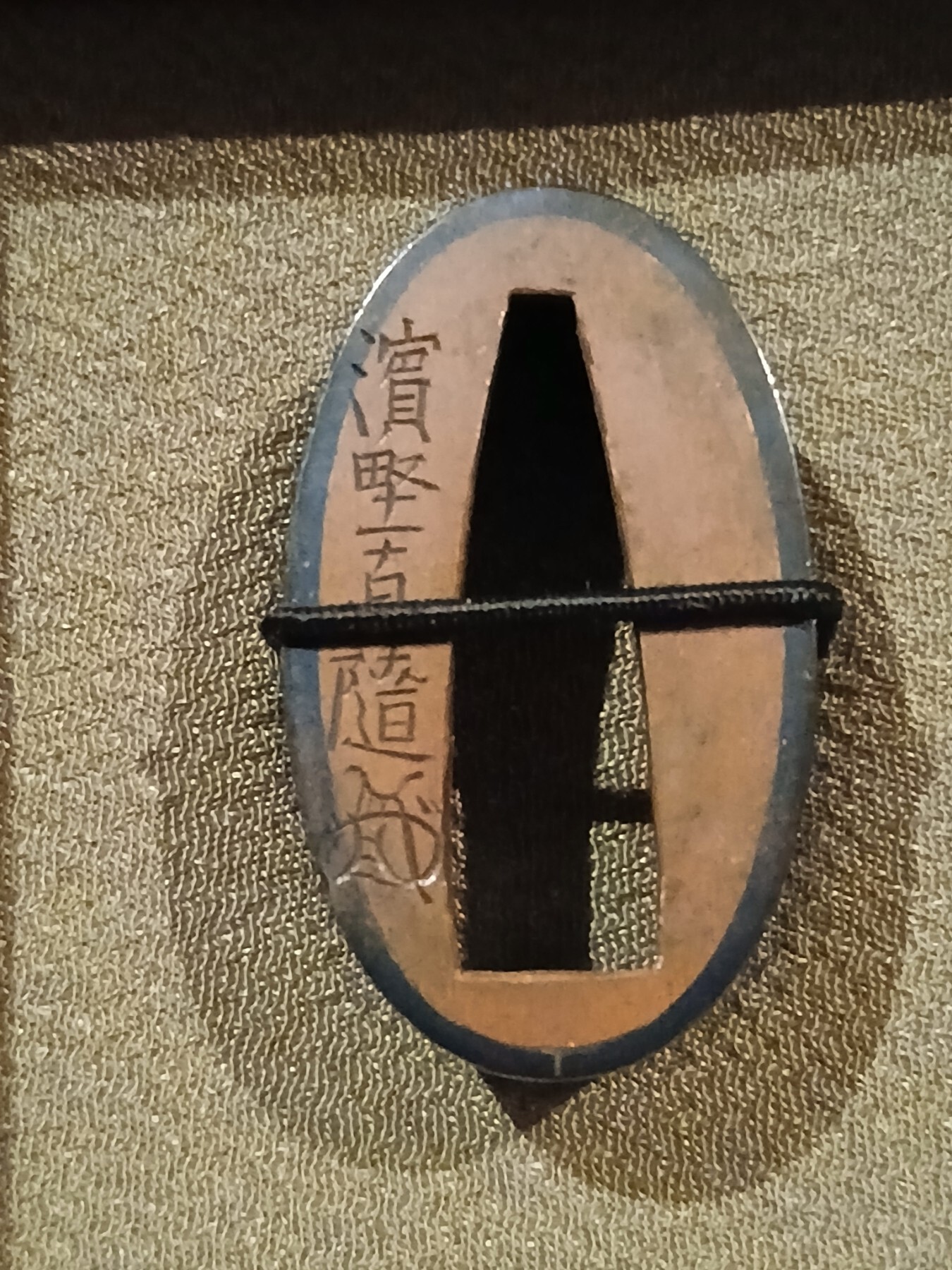
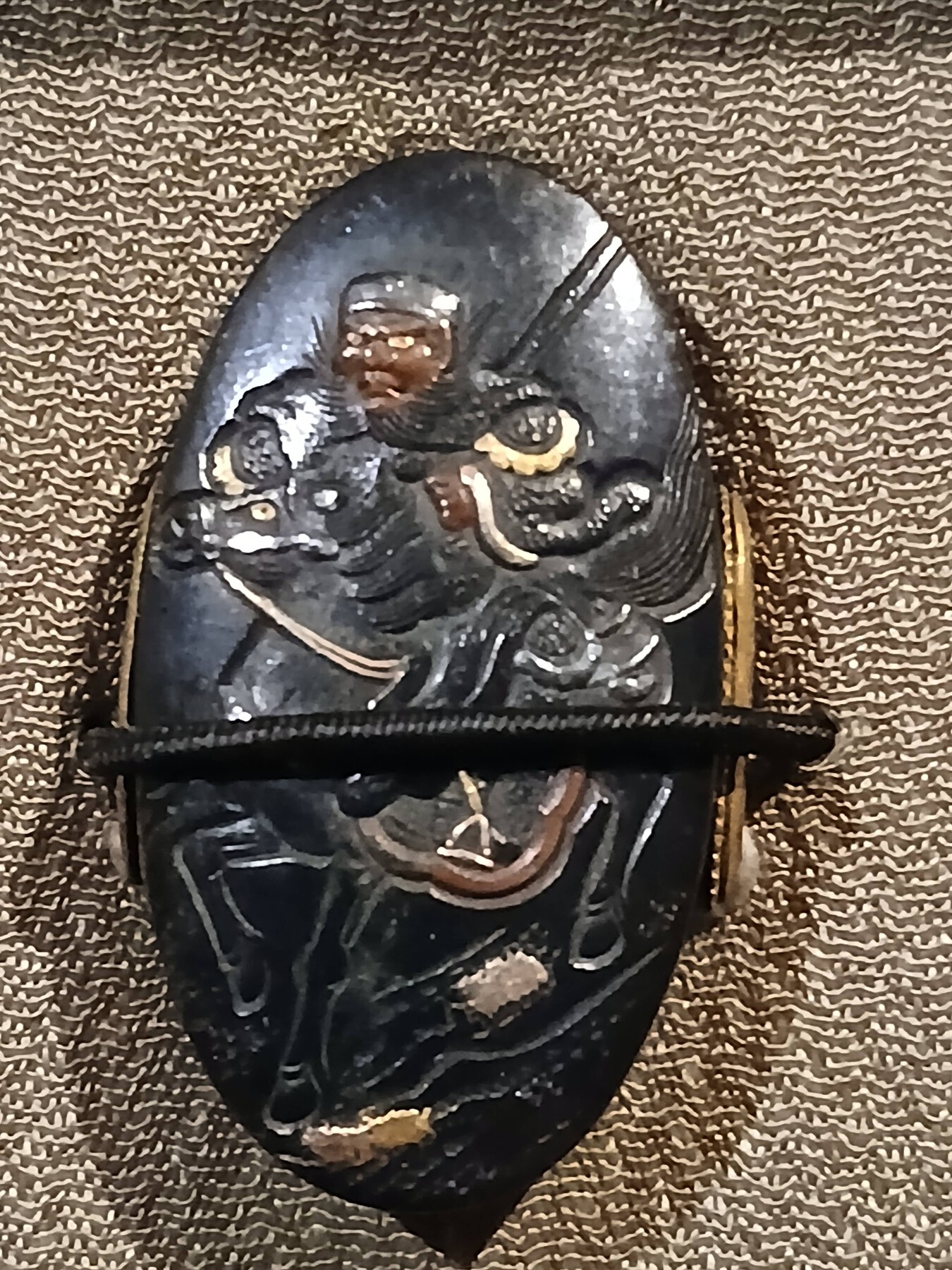
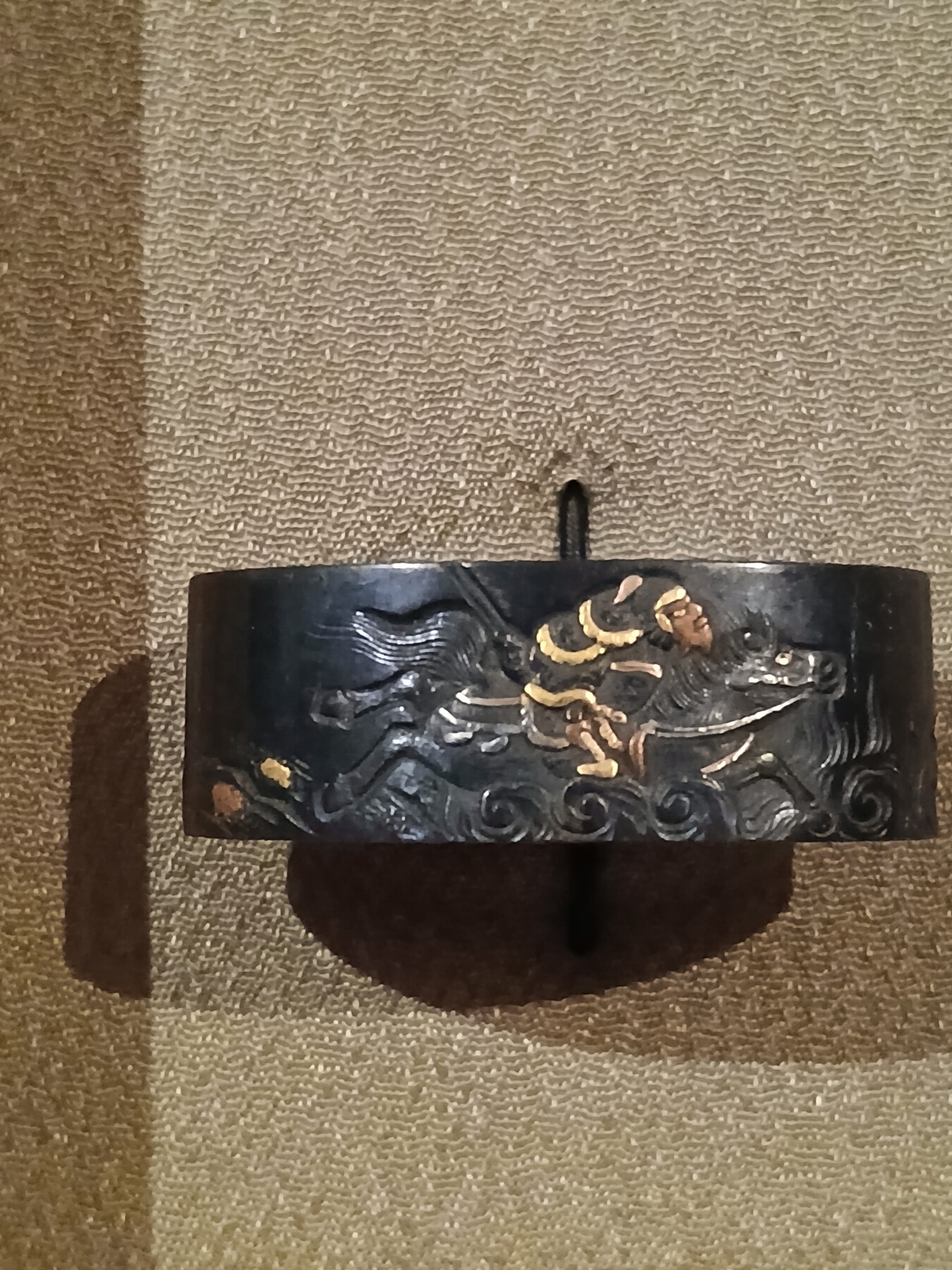
Posting the 4 pieces in 4 separate comments just for space...
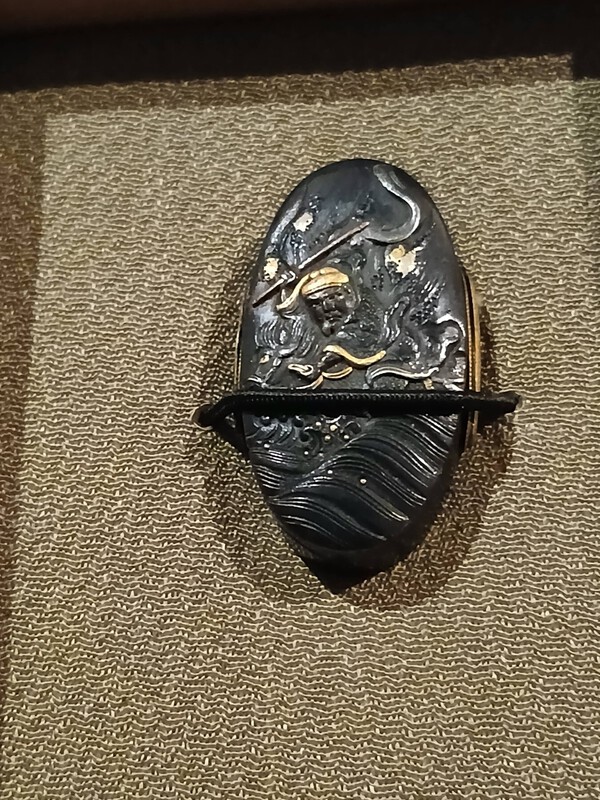
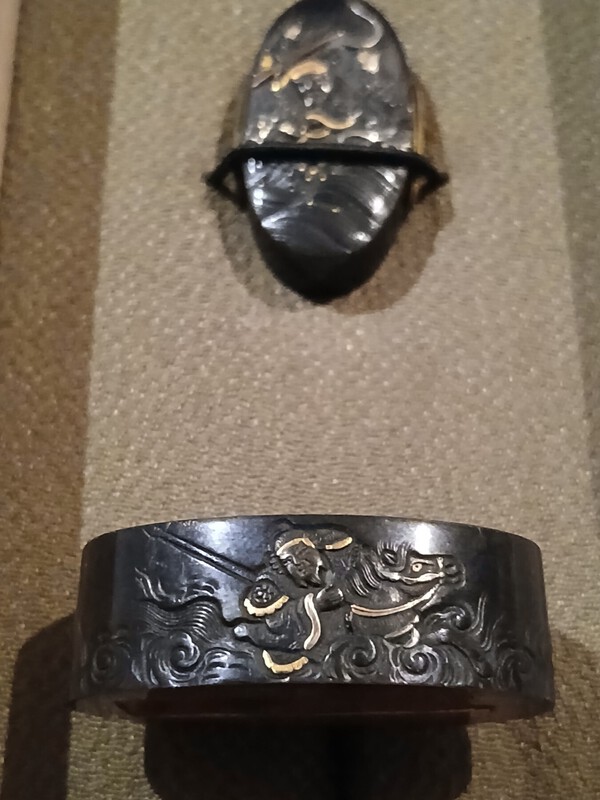
-
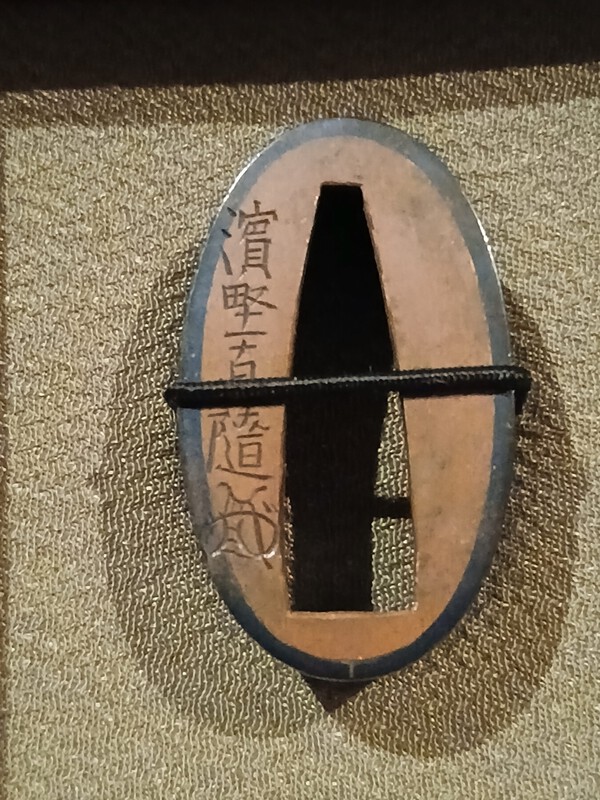
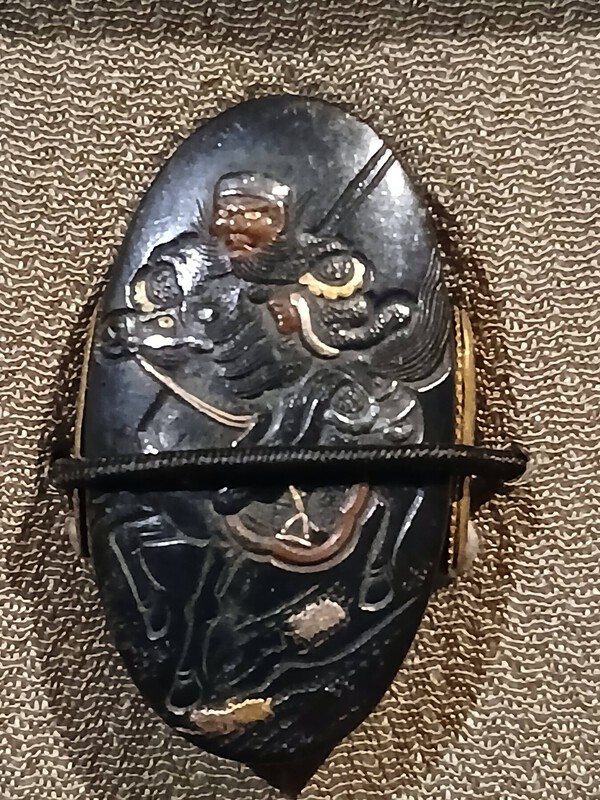
Hi Tosogu enthusiasts, Over the holidays I acquired a number of new fuchigashira that appear to have come from a single collection. The acquisitions include 4 pieces in total, two signed Hamano Naoyuki and two signed (Ichinomiya) Tsunenao. The two Tsunenao pieces still have their original auction tags from a Sotheby's collection dated November 15th 2000. The other two pieces are missing their tags, but all 4 appear to have been from the same collector/owner. (This does not mean they are from the same Sotheby's collection necessarily...) These pieces are pretty high quality with some interesting motifs and I'm hopeful the mei might be authentic. If not however it's no big deal as the quality was well worth the price I paid for these. Photos taken with my less-than-spectacular phone camera and size compressed but I tried my best... Do let me know what you all think! I'll start with the Hamano pieces:


-
 "Despite this, samurai have not left our lives completely. They live on in popular media as heroes of manga and anime, or as the protagonists in videogames." No mention of collectors such as the esteemed an knowledgeable members here , Kendoka or we Iaidoka.
 -
Hello, May I have your opinion on this kozuka and to which school might it belong? Does anyone have any idea who the character is or which legend he is referring to ? Thanks
.thumb.jpg.b825cec3dbc64d6e4c94e4881fee6974.jpg)
.thumb.jpg.b20b5e872e71a7a0cd404e45bf5b27ba.jpg)
.thumb.jpg.a99257b49656d7edcf007e4779420698.jpg)
.thumb.jpg.8e7de33a305486aab741256dac01f463.jpg)
.thumb.jpg.ee2a7ccbb45b5df54622a660f4eeea27.jpg)
.thumb.jpg.8321d418926b359f534b80cba61cb312.jpg)
-
Very interesting thread! This is the first time I've seen this technique so I'm happy to have learned something new! Did you encounter this blade in Japan Ian?
-
Hi Colin, yes that would be good. Cheers, Anthony
-
Very interesting, thank you for the insight!
-
SHINAE are superficial cracks in the steel after a bend on the stretched side of a blade, and of course they are not beneficial to the structural integrity of it. What we see in Jeff's blade was correctly described as ripples, and they are something quite different. They can develop when the preliminary work in a BOHI left out a stage or two of fine grinding lengthwise which is tedious work. The final polish with a MIGAKI-BO 'compresses' the surface to a very small extent, and using only a pointed MIGAKI-BO can produce these ripples. With differently dimensioned tools, these can be avoided as you can see on many good swords. But I will add that some sword construction methods also might provoke the occurrence of these ripples. I would not consider them negative in technical hindsight at all. Looking at this feature with a microscope/high magnification will clear that up easily.
-
Ah that makes sense. Is shinae supposed to be able to be blatantly seen with the naked eye or should you have to hunt for it with lighting angles and magnifying lenses etc? Or just different degrees of it present themselves differently?
-
There are also some schools where a specific type of shinae - shinae-ware, or small crack-like openings in the horizontal grain - are expected and not considered a flaw at all. In particular, the Hosho school's masame-hada has a tendency to produce these and it's even considered a kantei point for that school.
-
Generally shinae themselves aren't considered a structural integrity problem and are unlikely to develop into a bigger problem on their own - but they do indicate that the blade was abused or faced some serious stress in battle, and thus are a warning sign that internal structural weaknesses may have developed as a result. Think of it as seeing a giant dent in a car's side door; the dent itself likely has no bearing on the roadworthiness of the vehicle, but having received a perpendicular hit like that, you'd want to check that the suspension's not shot.
-
This is probably a really dumb question, but curiosity hasn’t killed me yet lol … if a shinae developed during forging, and the pattern of the minuscule creasing all ran mostly perpendicular to the cutting edge and curvature of the blade, what structural instability would that cause during a strike? i.e. how does that flaw progress into failure of the blade?
-
To be honest Jeff, that's a bit technical for me. The logical bit of my brain would say that you would only get shinae on the side of the blade that has been compressed rather than stretched but that might be wrong as this is a flaw that isn't that common and that I've only ever seen in pictures. I don't recall seeing them on both sides of the blade but that isn't conclusive. I understand that, if minor, they can be ground out but it is a flaw so again, using what passes for my reasoning, they would be removed if possible - I've just seen Rohan's post which probably sums it up pretty well. Some more information on flaws in this thread and the third post has a picture from an old book which might interest you.
-
For a new blade, generally if it's not small enough to be ground out, the smith wouldn't sign the blade and forward it for polishing (especially given that they're only allowed to produce a limited number of blades each month). For older blades being touched up, it depends on how deep the flaw goes - usually the integrity of the blade is prioritized above a flawless topology, especially if you don't know exactly how much surface metal would need to be ground down to erase the flaw(s).
-
Knowing the terminology really helps with knowing what to search for, thx again!
-
That makes perfect sense, thank you! And thanks for the link. I’m guessing when it’s on both sides of the blade it could stem from the forging or tempering bend in that axis?



.thumb.png.4c5df79fec171b2dc4a23af38e280a4d.png)






.jpg.c53596f1cd9954f2dd86ac6f8df49aa1.jpg)
.jpg.79cce2c0dd34de5c2693eed2a934e620.jpg)
.jpg.d39a4e8b638f95e9d5b75d8b291fd746.jpg)
.jpg.8484b655ec11fcd1e4076913917367dd.jpg)
.jpg.300d14f27da5a97f56aa64953d3ce220.jpg)
.jpg.bf2c9229496e4554d04433bac82d8f74.jpg)