


Hiro
-
Posts
18 -
Joined
-
Last visited
-
Days Won
1
Content Type
Profiles
Forums
Events
Store
Downloads
Gallery
Everything posted by Hiro
-
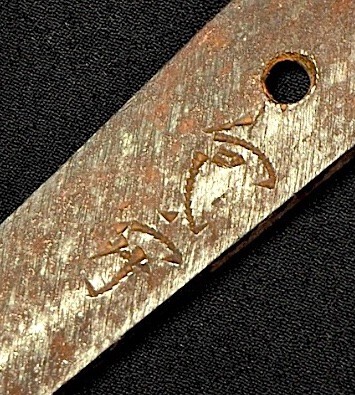
I may have been wrong after all—sorry about that. I ended up thinking to myself, ‘it could be read this way as well. 「い」→「つ」? I suspect that the part marked ‘軽る’ might have another possible reading as well. 銘作も つらぬきさくて ***** 浮世をさして 行そ 木刀 character: meisaku mo tsuranukisakute ***** ukiyo wo sashite yukuso? bokutou (reading: meisaku mo tsuranukisakute ***** ukiyo wo sashite yukuzo? bokutou) つらぬきさく tsuranukisaku : pierce+split There doesn’t seem to be a clear answer, so I keep going around in circles thinking about it. If there’s anyone truly knowledgeable about this, I would really appreciate your help. I’m going to study for a while… Hiro

-
銘作もいらぬ meisakumo iranu 「I have no need for famous, highly regarded swords (authentic, signed blades).」 きさくて軽る軽ると kisakude karugaruto 「 with a light, easygoing spirit (also evoking the physical lightness of a wooden sword)」 きさく kisaku:It also brings to mind the images of “whittling wood” and “making something out of wood”. (気さくkisaku 木・削 ki/saku 木・作 ki/saku) 浮世をさして ukiyo wo sashite 浮世 ukiyo : a hedonistic world, 憂き世 ukiyo : the transient, sorrow-filled world さして sashite:「刀を差す katana wo sasu」… to wear a sword 「刀を刺す katana wo sasu」… to stab with a sword 「目的地を指す mokutekichi wo sasu」… to make for one’s destination It seems to carry all of these meanings at once. 行そ木刀 yukuzo? bokutou さして行そ sashite yukuzo「a declaration of intent to move forward in this way.←[差す/刺す/指すsasu] 」 行そ木刀 yukuzo bokutou「Let’s go, wooden sword.」 This also feels like it carries both meanings. Added note: “Zo” may also be used as a form of emphasis, stressing the preceding phrase. I truly hope that someone knowledgeable will come and explain this properly. Hiro
-
Freely composed poems are difficult…!Please assume that my interpretation is basically “incorrect.” I will only share a simple impression based on the wording. The rest, please leave to your imagination. (in the case of classical waka, the meanings are already established, so I can convey them accurately.) 銘作も いらぬ きさくて 軽る軽ると 浮世をさして 行そ 木刀 character: meisaku mo iranu kisakute karukaru to ukiyo wo sashite yukuso? bokutou (reading: meisaku mo iranu kisakude karugaru to ukiyo wo sashite yukuzo? bokutou) 圓正堂(en shou dou)or(en sei dou)

-
Hello, It contains a poem by Ono-no-Komachi, a 9th-century poet. It starts in the center, then moves to the left, and continues to the right. 心から うきたる舟に 乗りそめて ひと日も波に 濡ぬ日ぞなき kokorokara ukitarufuneni norisomete hitohimonamini nurenuhizonaki meaning 「I willingly chose to board this painful boat, and not a single day passes without being drenched in tears (waves).」 (It expresses her lament over the suffering caused by a love she herself began.) Hiro

-
Hello, It looks like “Rinsai” (林斎) to me. This is a brand logo of a company that used to be in Saga Prefecture (the company has since closed). 三洋陶器株式会社「龍峰窯」 San yō Ceramics Co., Ltd.’s ‘Ryūhō Kiln’. I’m not sure if it has any connection to Okinawa. It seems they produced a variety of items. I tried to find pieces with a similar texture from among them. a teapot a platter I hope someone more knowledgeable will show up.

- 1 reply
-
- 2
-

-
 It’s not about swords, but… Nishiōeda’s handwriting is really clean and easy to read.(I think I’m getting tired of unreadable handwriting lol) He is said to have served as a clerical staff member [contract employee] at the Forestry Economics Research Institute in 1952. He died in 1958.
-
I was wondering who ‘Nishioeda Yutaka’ was… it turns out it’s this person! Nishiōeda Yutaka(西大條 胖 or 西大条 胖) 西大條 胖 wiki-page (Japanese language only) (You might not need this, but …I’m writing this as a note for anyone may read this.) Hiro
-
It’s an amazing lineup, isn’t it? The Maeda family was extremely wealthy, so they owned a large collection of treasures and have preserved them over the centuries. ---- Please note the exhibition period, as the displayed items may change depending on the dates. Around May 9, your visit falls under either Period 4 (May 4–10) or Period 5 (May 12–17). Hiro

-
Hello,Nice to meet you. How about visiting the Tokyo National Museum? Around May 9th, there appears to be a special exhibition on the Maeda clan of Kaga. (This is the family of Maeda Toshiie, a warlord from the Sengoku period.) According to the exhibition list, swords as well as armor are expected to be on display, including: Oodenta Mitsuyo, Maeda Tōshirō [Yoshimitsu], Ryōkai, Sōshū Masamune, Tomita Gō [Yoshihiro], Yoshihira, Norinaga, Sadayoshi, Sōshū Yukimitsu, Kotegiri Masamune, Kitano Gō [Yoshihiro], Fukushima Kanemitsu, Hitotsuyanagi Yasuyoshi, and others English list : here→ the Tokyo National Museum ーーーーーー If you are interested in the Edo period, I also recommend the Edo-Tokyo Museum. It was renovated over four years and reopened this March. the Edo-Tokyo Museum reopen news(you tube) Both museums are closed on Mondays. ーーーーーー There also appears to be a studio where you can take photos wearing armor. (I have not used it myself, so I cannot provide detailed information. ↓There are also other shops besides these.) Ex. photo studio samurai-pictures I hope you have a wonderful trip. Hiro
-
Hi, This might be a metaphor for the games of love?(two-timing in love?) I might be cautioned by experts if I write something speculative about the content. (↓This is a very rough interpretation—just my own image. the first poem→"A horse that has run free will not accept the stirrup again." the later poem→"It was good the first time I rode it. A young horse, once in the stirrup, cannot step back.") ( Please let me know if anything is incorrect.) 三都之内 江戸武蔵鐙 Santo no uchi Edo musashi abumi (三都=Edo,Kyoto,Osaka) 武蔵野に かけて遊へと 名にしおふ あふみをはまた 掛ぬ春こま 佐倉壽美麿 musashino ni kakete asoheto nanishiohu afumi(鐙)wohamata kakenu harukoma (春駒) (NAME:Sakura Sumimaro) 大江戸に のり初よしや 武蔵あふみ かけては跡へ 引かぬ若駒 宝館福住 ooedo ni norihatsu yoshiya musashi afumi(鐙) kaketeha atohe hikanu wakagoma (NAME:Houkan Fukuju?) The sign on the right 北渓(Totoya Hokkei 魚屋北渓 1780–1850) The mark on the left 芝山堂 Shibayama dou(publisher) (I’m an amateur, so I stay quiet when the text is difficult…!) Hiro
-
( I asked because it is a bit long.) Right(meaning) 「The Kagura of our shrine has been performed since ancient times, and it is even mentioned in an old poetry anthology, 拾遺和歌集the Shūi Wakashū. The waka poem composed by藤原忠房 Fujiwara noTadafusa when 宇多上皇Emperor Uda (during his time as a retired emperor)visited Kasuga Taisha in Nara. (In 920. 延喜engi20年)」 Left(Only the first half of the waka poem is written.) (meaning) 「Today, Yaotome (shrine maidens who perform Kagura) at Kasuga Taisha are so wonderfully rare and beautiful that even the gods themselves cannot help but rejoice and praise them.」 「めつらしき けふの春日の やをとめを かみもうれしと しのはさらめや」 me tu ra si ki ke fu no ka su ga no ya wo to me wo ka mi mo u re shi to shi no ha sa ra me ya (珍しき 今日の春日の 八乙女を 神も嬉しと 忍ばざらめや ) (mezurasiki kyou no kasuga no yawotome wo kami mo ureshi to sinoba zarameya) The photo shows the text up to “yawotome wo.” (Emperor Uda is famous for having written in his diary that “my black cat is so cute.”) Hiro
- 10 replies
-
- 11
-

-
-
Hello, nice to meet you. This is a beautiful waka poem, so I would like to share its contents with everyone. May I write about it? Hiro
-
I read the rest, but please don’t trust it. 種別→ Wakizashi 刃長→1shaku 7su n +a (30.303 cm+21.212 cm+a = about 51.52 cm) 銘文・時代→ oo-suri-age unsigned 鍛→ Itame 刃紋→ Gunome ashi-iri? 互の目 足入り? (←Could someone check this?) 中心→ Peg holes/ 2 Yasuri/ 切 kiri Shōwa48(1973) .March .9 Hiro(Ghost)
-
Hi…、 It might be written in this way. Hiro(Ghost)
-
Thank you! MORIYAMA san
-
Hi… (I’m not very confident in this translation, so please don’t take it as definitive.) No.13432 (Wakizashi)(Unsigned) 綱廣(Name:Tsunahiro) (Living in Sagami Province)(Momoyama period) (Blade length) 壹尺参寸0分強[←maybe] (Re-tempering?)[←I'm not sure, but maybe...] 「I authenticated it as described in the text on the right.」 (1990.6.19) (Blade length) 壹尺参寸0分強=1Shaku 3Su n 0bu +a =1×Shaku(30.303 cm)+ 3×Su n(3.0303 cm)+ [0×Bu(0.303 cm)]+a =about 39.4 cm?
-
Hi… Top→「銘」Mei Under→「前大徳誡堂(叟)←maybe」 前:former 大徳:大徳寺Ditoku-ji 誡堂:(Name)Kaidō 藤井誡堂 Fujii Kaidō(1898-1984) The 515th Chief Abbot of Rinzai school of Zen Buddhism at Daitoku-ji Temple “-Sō(叟)” is a character used in an artistic pseudonym (雅号gagō) , meaning “old man,” with a humble tone that also suggests refined taste. (The mark at the very bottom is a kaō [stylized signature].)
-
Hi… 「勲七等青色桐葉章」(1875~2003) This is a seventh-class decoration established in the Meiji era. It is a silver badge awarded to military personnel and others. This badge was awarded to police officers (the Keishitai警視隊) and military personnel who distinguished themselves in the Satsuma Rebellion 西南戦争(1877), such as 斎藤一 SaitōHajime (a former member of the Shinsengumi新選組).


