Bruno
-
Posts
1,195 -
Joined
-
Last visited
Content Type
Profiles
Forums
Events
Store
Downloads
Gallery
Everything posted by Bruno
-
Thank you Jean I knew NBTHK but not SHINSA, I am learning a bit more everyday thanks to you all. Bruno
-
Hi everyone! "shinsa"??? what does it mean? It is not in the glossary. Bruno
-
Hi Joe! Thanks for your response, very interesting. Showa swords will always kept their mistery, that is maybe why they are such interesting to collect. Stamps can not prove that a sword is gendai or not, in some cases, even a traditional polishing can not for sure prove it(some swords were made with such good quality steel than even best experts could not say it was tamahagane or not). Regards Bruno
-
Ok thanks for the GIFU meaning! "to open that old chestnut again"???? is it english humor? Too bad that I do understand this play on word! Bruno
-
Too bad that it is not the good one! I am wondering how this ebay seller Pierre CLAY knows when gunto were machine made or hand made? I asked him and he told me:"Just by looking I can tell". For example this KANETSUGU sword is described by him as machine made, how can he say that for sure? Bruno
-
About the way, what is GIFU stamp? GIFU is.....????? Bruno
-
I think now I will more focusing on older edo shinto nihonto, with them you are sure that they are hand made! Furthermore, they are often cheaper than showato, which is quite surprising! Regards Bruno
-
Thank you Stephen! My hope that it could be a gendai is flying away, snif! showa stamp=showato Thanks to all who have helped me Bruno
-
Sorry guys, pics are completly unreadable! Thanks for your help, I appreciated it. Regards Bruno
-
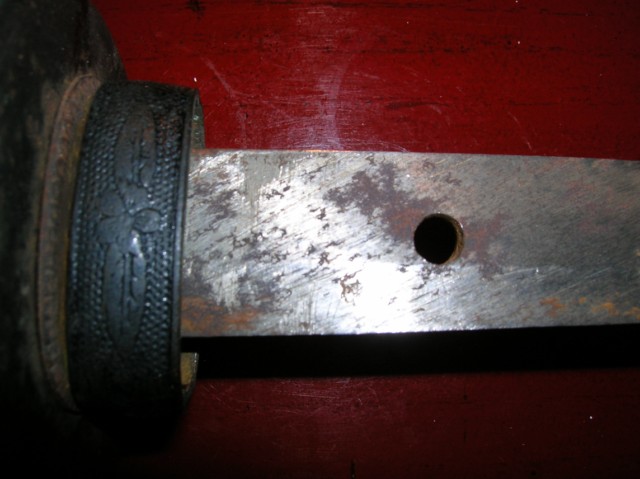
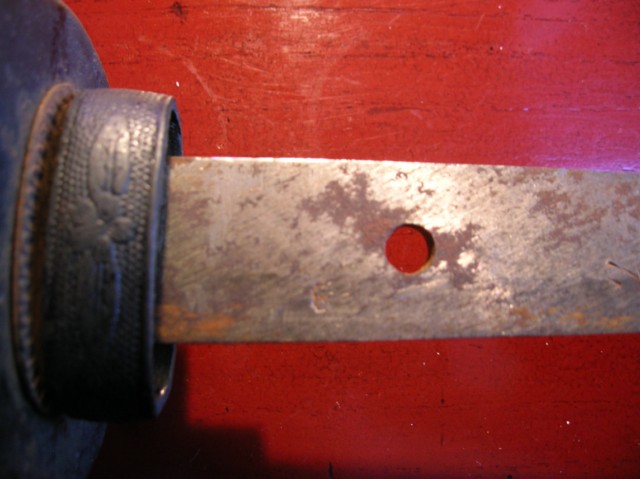
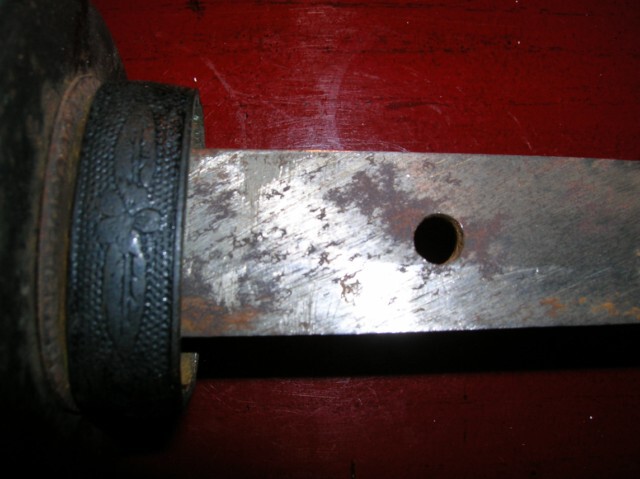
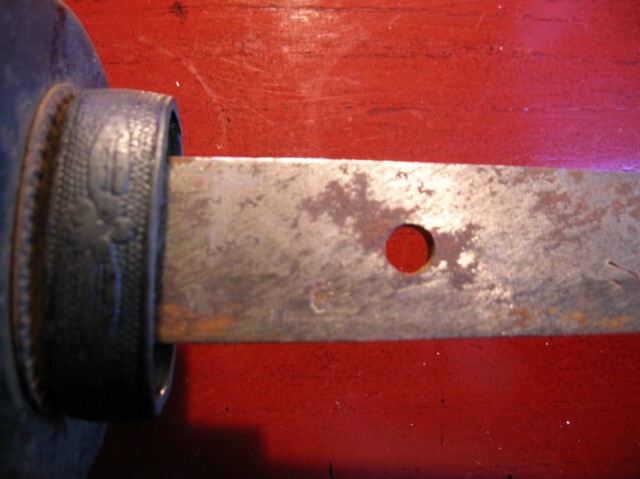
Here are some pics of this unidentify mark. It is certainly showa stamp but still have a doubt.... pics are not that good and probably won't that much, I do not have a better macro to provide, sorry.
-
Hi Stephen! Not sure to understand well your english. As I told you, there is a KANETSUGU gunto to sell on EBAY. Here is the link: http://cgi.ebay.fr/NICE-Japanese-ARMY-O ... .m63.l1177 Is it what you were looking for? I hope yes. Best regards Bruno
-
Thanks Stephen! "do a search here for Kanemune" WHERE IS THE "HERE"? Sorry, the little mark is not at the end of the nakago, you are right, it is close to the begining of the tang. Is it out of topic, but I remember you were looking for KANETSUGU swords, right? Because there is one to sell, mounted in a Type 3 mounting, this week on EBAY. If it is not you, excuse me. Regards Bruno
-
Hey Stephen, Did we go down this road before? I do not remember. Yes it is on the end of the nakago close to the habaki, and looks like a half of a stamp. Very small (3mm), impossible to identify. There is no try to delete it. I saw what a showa stamp looks like but it does not look like it. I also try to take a pic but so small that my camera zoom is not powerfull enought to catch it. Thank you Stephen, it is nice to help me. Bruno
-
Hi everybody! I have a simple question for those who are better connoisseurs than me. I have a gunto sword signed and dated, and until now, I have never saw any stamp on the tang. Yesterday, I looked the tang very closely and noticed what it looks like a "mark" or "stamp" but it is so small(around 3mm) and just half stamped that I am wondering if it is an arsenal stamp or not. I checked Gunto arsenal stamps on books, but the one on I am talking about is so small that I am not able to determine it(even if it should be showa stamp). Does anybody knows what were the "regular" or "standard" size of showa, seki arsenal stamps? If those ones were much bigger it would give an idea. I do like to post a pic but a 3mm mark will be difficult to see clearly. I will be gratefull of any help and opinions about my questions. If my question is stupid, forget it! PS: the sword is a FUKUMOTO KANEMUNE mounted in a Type 3 koshirae, if that help...? Thanks Bruno
-
Hi Matt, I live in France and what I know about sending swords to France is that it could be complicated if you do not write the right thing on the package. In fact, it is allowed to send sword to France, but....french postmen have the right to refuse to deliver the package if they think what it is inside could injured them(sword, knifes, etc...). So your package could be stopped anywhere in a post office waiting for you to pick it up. It can be annoying! To me, best thing to do is to write on the box something not explicit as "nihonto", or "gunto" etc... few people know what it is. Regards Bruno
-
Thanks George! It is very interesting! regards Bruno
-
Huuuuuummmmm.....??? What does it mean Stephen? Bruno
-
Thank you Moriyama san That is what I thought but wasn't 100% sure. Is it possible that the mei I joined belong to KIRIBUCHI instead of FUKUMOTO? Does the SHOWA stamp means that it a showato? Bruno
-
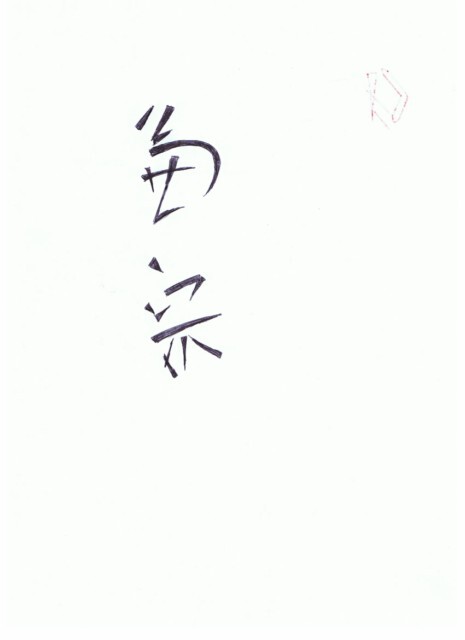
Hi everyone! On a previous post I asked some help about the mei I posted again. Some friendly persons helped me to translate it and their answer was KANEMUNE(FUKUMOTO) who seems to be the son of AMAHIDE(FUKUMOTO). Once again I want to thanks these people for having helped me. After few new researches, I found out that there were several KANEMUNE during that time. 桐淵 兼宗 (Kiribuchi Kanemune) CHUGE SAKU(RYOKO NO JOI) 福本 兼宗 (Fukumoto Kanemune) CHUGE SAKU(RYOKO NO JOI) 兼宗 (Kanemune) real name:福本 小市 SEKI KAJI TOSHO Furthermore, I saw what it looks like a SHOWA stamp on the tang, even if this one is very very difficult to see. I am wondering if these new researches can change the previous result of the mei translation? I hope MORIYAMA SAN could help me on this once again. I also want to thank Steven, George, Moriyama san and the others who gave all the previous informations before.
-
Thank you very much Moriyama san Bruno
-
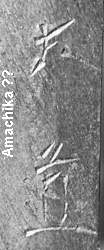
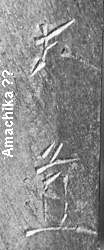
Here is the AMACHIKA mei. It looks like what it is written on the tang, no? Regards
-
George Yes this website is very interesting. But I do not really understand(lack of english skills) if the iron/aluminium scabbards of the Type 94 and 98 showed on this website, who look like glossy aspects or semi glossy aspects are lacquered or painted. I can not the difference. Thanks Bruno
-
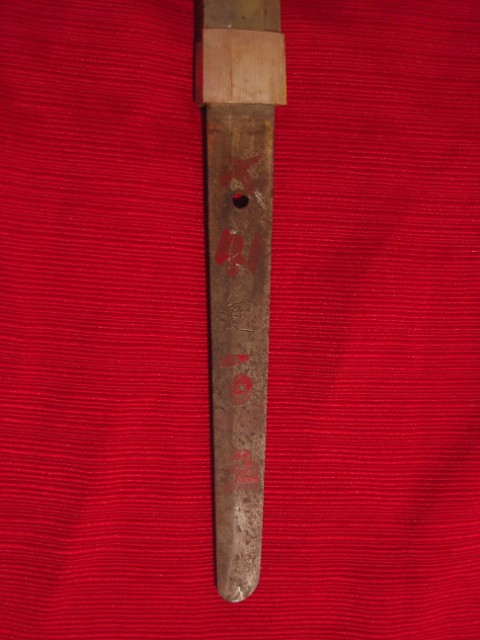
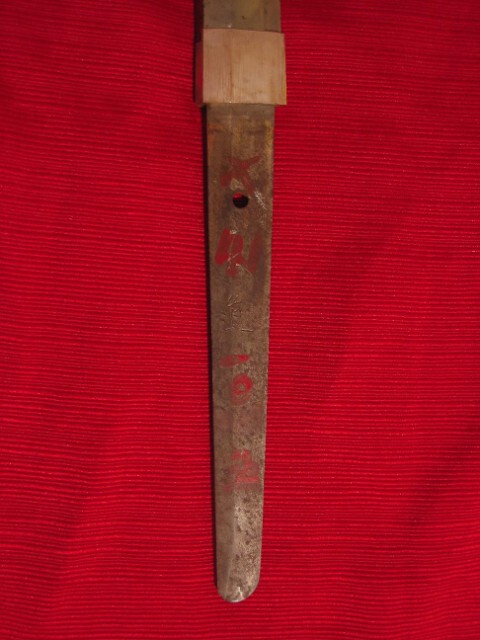
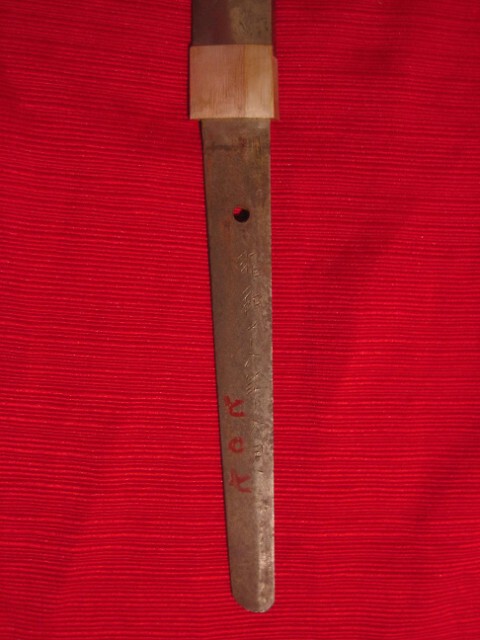
Thank you very much George! I have pics of the mei and the date on the tang, I do not know if it is readable, I joined the pics anyway. But there is no seki stamp on that tang. I will be glad to know your sources, where you found all these informations and translations(DAIDO,Higashidani, Katsukichi (or Katsuyoshi). I hope to that Moriyama san will have a look. To conclude, no chance that it could be a gendaito! I am really gratefull for your help George, I do appreciate the time you spent for getting all these informations for me. I will soon buy the famous book on modern Japanese swordsmiths, it will be helpfull. Kind regards Bruno
-
Thank you George! That is what I was thinking too! In fact, iron scabbards were never lacquered even if in some cases it looks like they were. Maybe because iron/aluminium is not a good support for lacquer, and wood is better support? I am asking that because I was thinking about restaurating an aluminium Gunto scabbard with a nice ishime or urushi lacquer instead of the damaged paint it has now. But I do not want to make something it has never been done before in Japanese shops supplying fittings during ww2. I'll be happy to have your opinion on that George. Best regards Bruno
-
Hi George! Thank you for your response! In fact, I found his name on this website: http://www.geocities.com/alchemyst/oshigata/index.htm I am about to get a showato signed by this swordsmith, and I would be glad to have more informations about him. If you "clic" on his name in the list you will have his mei. But apart from that, I was not able to find anything else about him(ranking, type of swords he made, working place etc...) If you can have informations on him I will be happy to have them! Thank you Best regards Bruno