Exclus1ve
-
Posts
128 -
Joined
-
Last visited
-
Days Won
2



Exclus1ve's Achievements






-
Congratulations on the acquisition! You can look at it for a long time, like a painting. I really like that works of the Soten school look great as standalone pieces.

-
It really is. After reading this article, I became curious about the approximate cost of a piece of tosogu during the Edo period. https://nihonto.com/nakai-koshirae/ Must-see We can see that the prices of high-quality works were truly impressive. These prices were justified not only by demand and popularity at the time, but also by the amount of work involved. How much would you estimate a piece that took about three to six months to complete? Today, such a price would not be much lower. For example, prices for top-end tsuba by Ford Hallam start at around $5,000. Obviously, producing such work requires a great deal of time and skill, making it inaccessible to many people. Looking at examples related to this topic, it seems likely that someone simply wanted to quickly create something similar and sell it to an inexperienced collector, which, judging by the auction results, was successful. However, I still think it could have been made in Japan, but with a different goal - purely for profit. During the Edo period, there were also many rather “simple” or even crude works by novice and inexperienced artists. The difference is that in those days the primary purpose was practical use, whereas today the context is completely different.
-
Still, I think it's just very poor quality and not following traditional techniques… It would be interesting to see them live. https://www.bonhams.com/auction/30444/lot/165/kawai-isshu-born-1920-an-inlaid-mixed-metal-large-tsuba-showa-era-1926-1989-mid-20th-century-2/


-
Re-examining some items, I agree about the casting with further refinement. But such things have at least been seen at auctions since 2000, according to the online-archives… It is interesting to see the original source.
-
Maybe modern, I agree, Colin. Your example is even better than the previous ones, but there is still something missing...sophistication... I think this is the fate of many modern artists, few people will be able to find the meaning to spend their whole lives on this craft in order to achieve perfection.
-
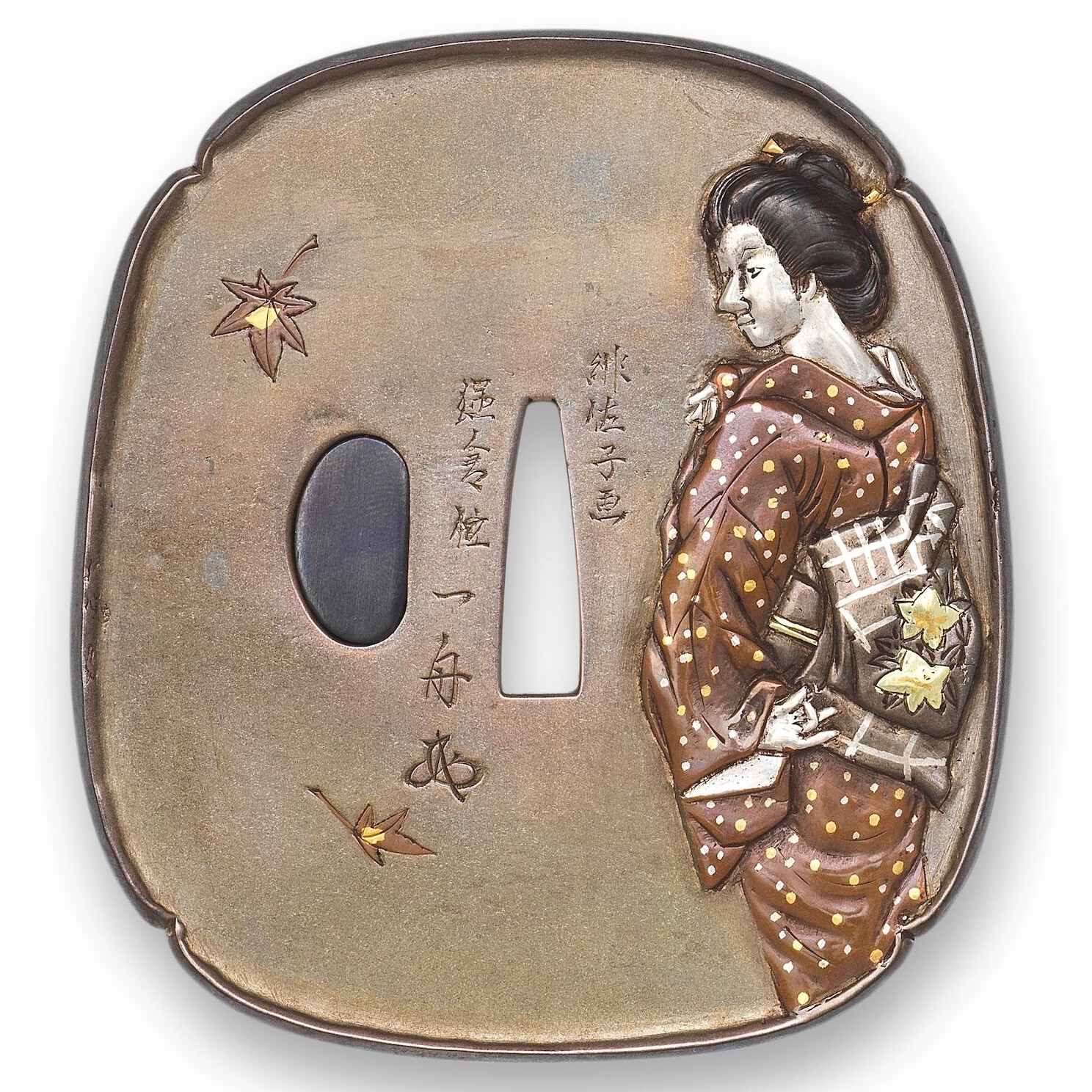
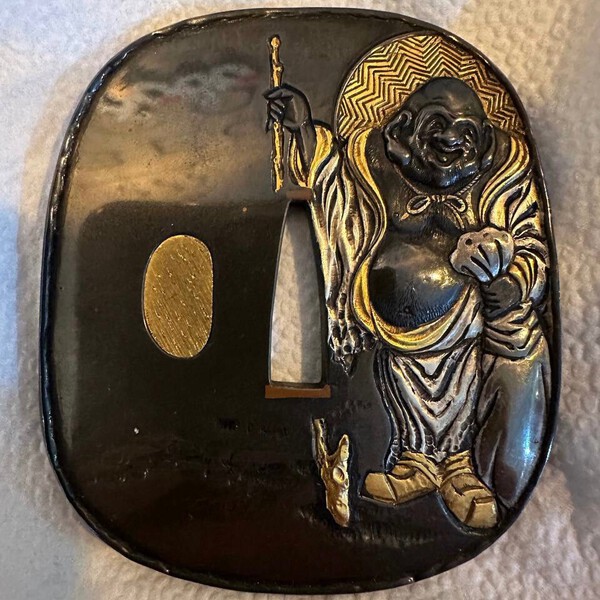
I think it's just an alloy with a low silver content. However, we do not evaluate tosogu based on the content of precious metals. Do you really think so? Because the inexperienced person who bought this tsuba turned out to be my countryman, I will share live photos of this tsuba. This tsuba was definitely made by hand, there is carving, but there is no refinement, small details are blurred. Just a good souvenir for an inexperienced tourist, but not for that kind of money… I think these are original Meiji or Showa items, but they were made without attention to detail and original technologies. The tourist will buy, and this is proof of that! In general, I think there is no deception in high-quality tosogu, everything is visible here if you know where and what to look at. I think it would not be superfluous to recall:


-
Most of all it seems to be true. These are not the lowest quality items, but the carving is quite simple, there is no inlay, just painted. https://www.bonhams.com/auction/15678/lot/291/a-large-shibuichi-tsuba-after-unno-shomin-meiji-period/


-
I really like the transfer of colors, spring really feels! Good work, thanks for sharing.
-
You should not pay attention to mei here, I think the quality is quite simple. However, the theme is quite interesting, it looks like a flood.
-
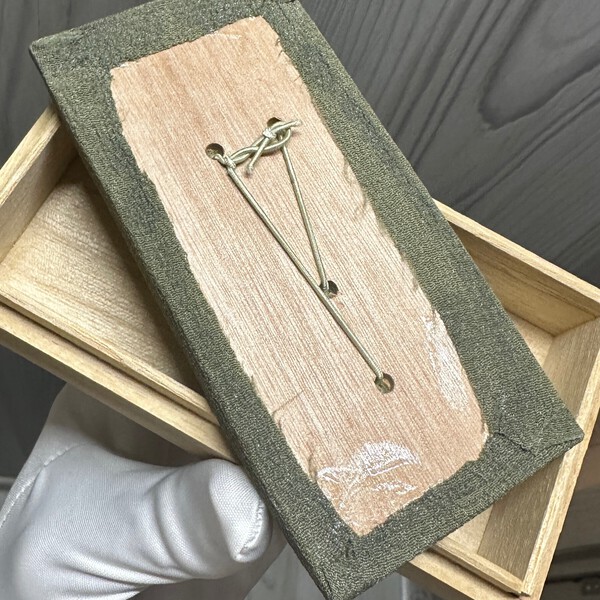
Can someone take the same photo of their box, made in a traditional way in Japan?
-
Sometimes you just need to focus on something more important and interesting(let everyone figure it out for themselves) and not pay attention to everything, any opinion has a place to be, the question is, do you need it?… P.S. Curiously, this applies to absolutely all participants in this (and not only) topic)
-
As if I already knew the answer, but it was interesting anyway) A door handle or a hanger hook is a good idea!
-
So far, I've only found one such instance.…
-
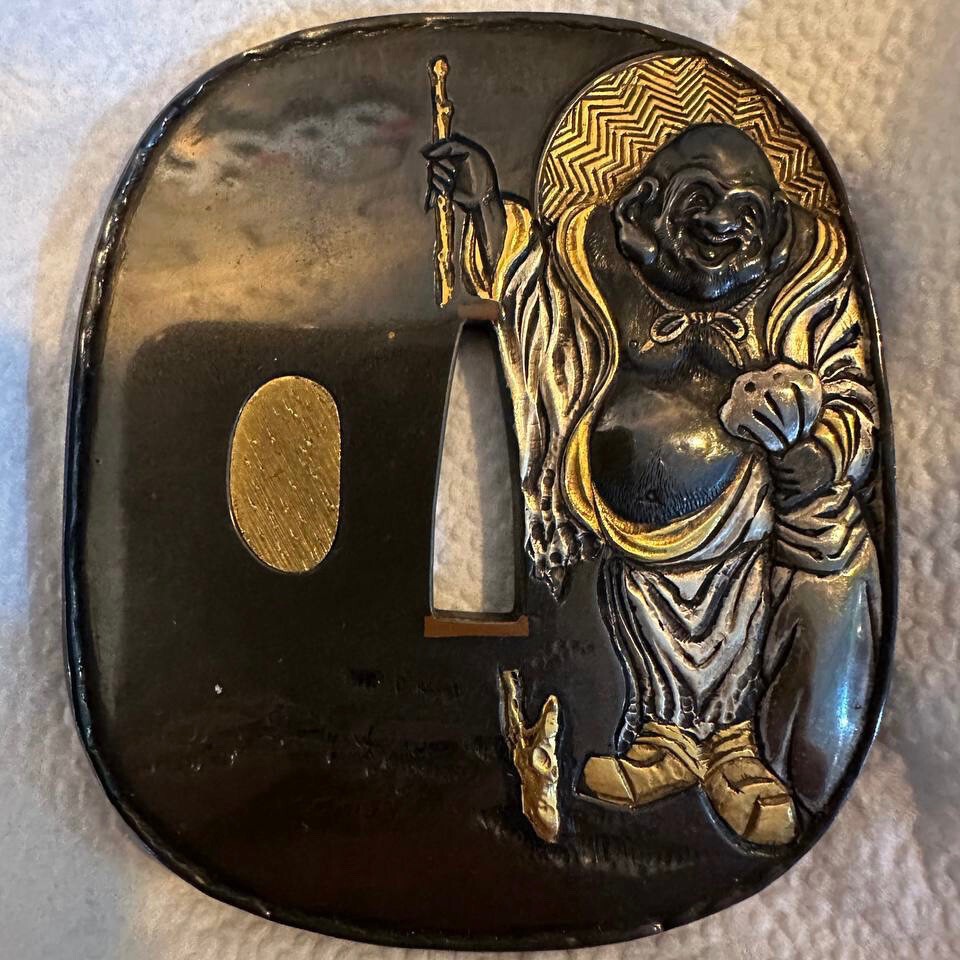
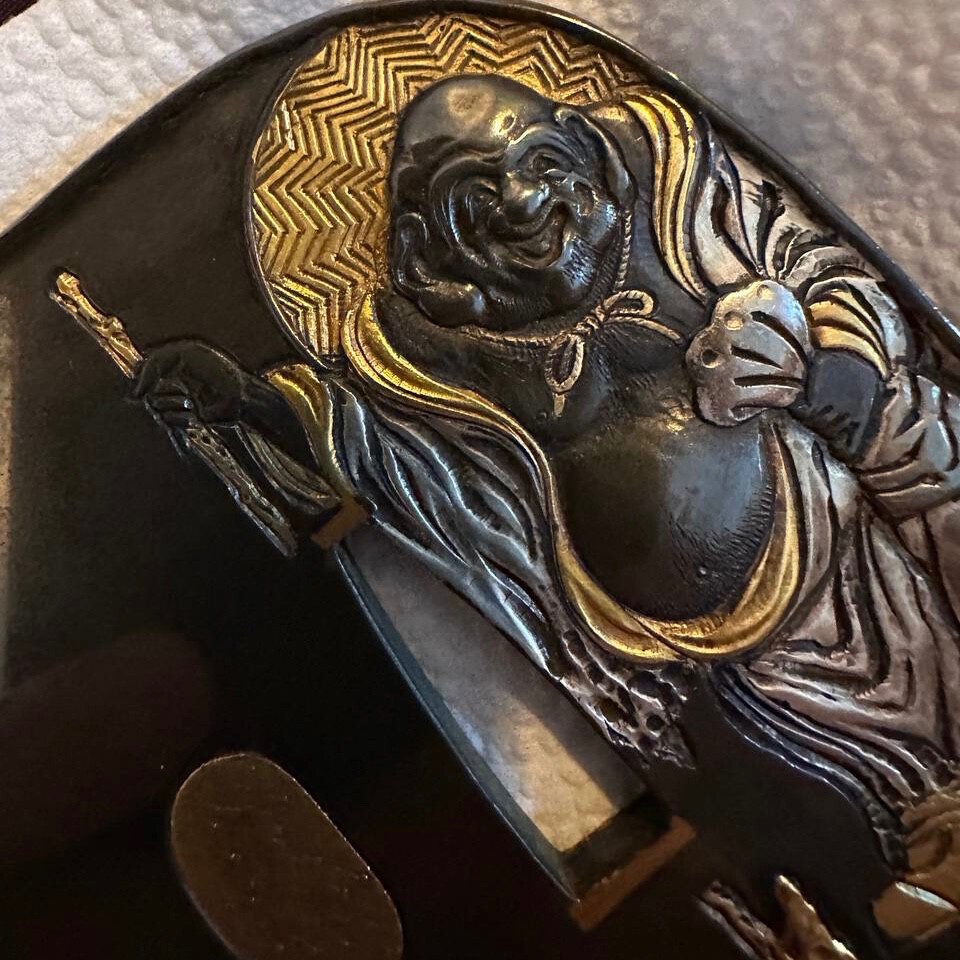
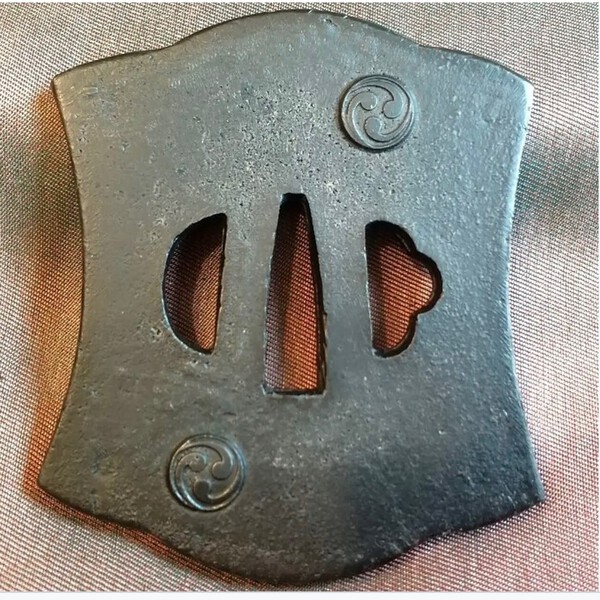
Hello! I came across such a tsuba as a bonus, I would like to know more. What are your thoughts?

-
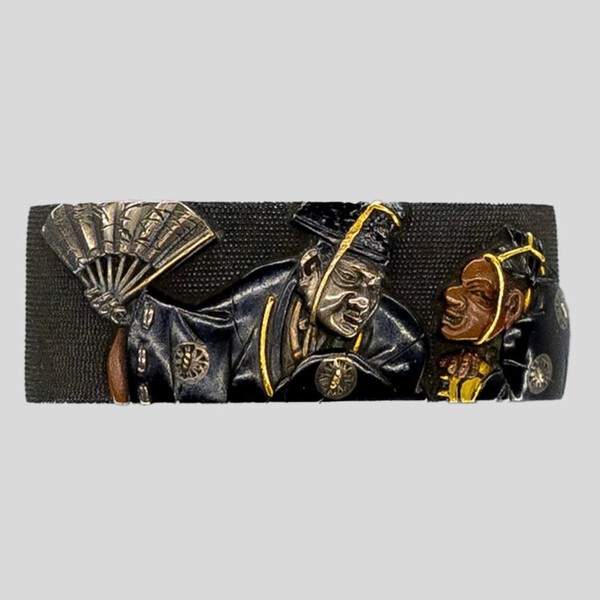
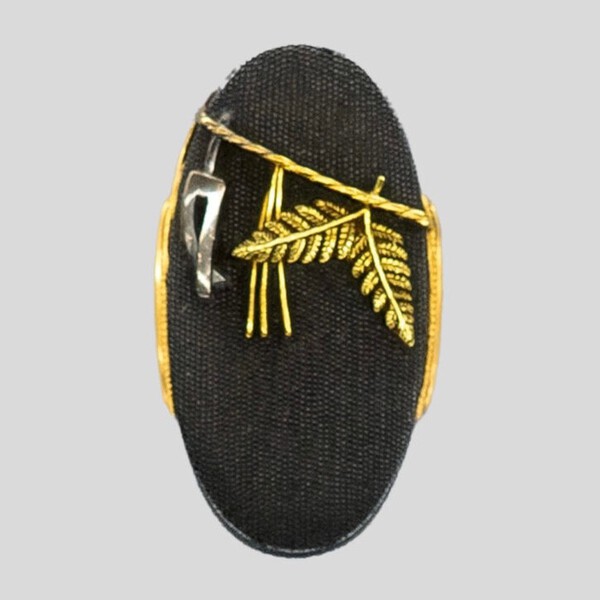
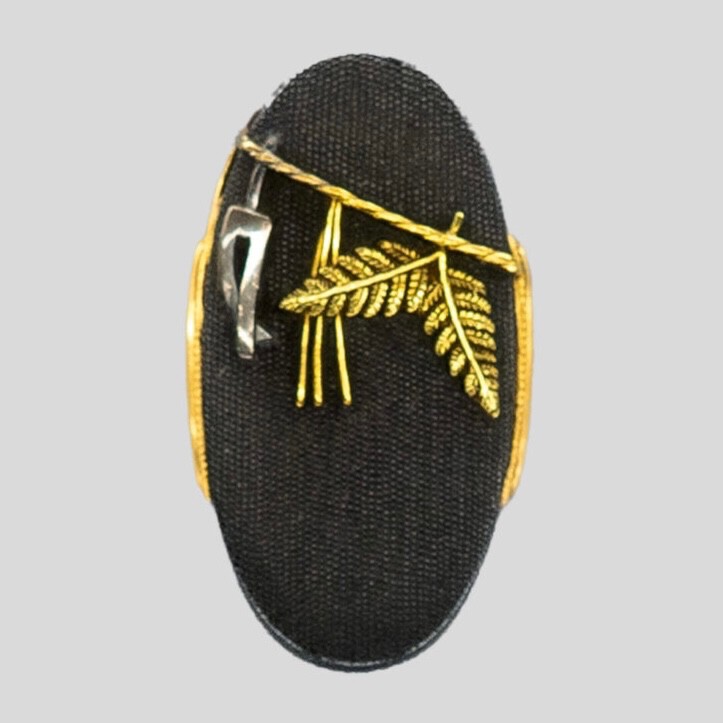
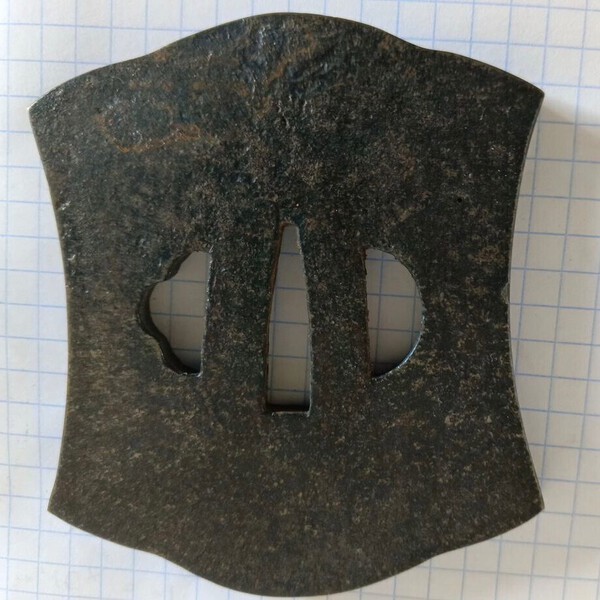
Greetings to all once again! Yes, these are different parts. Firstly, the metal is different, and secondly, the technique is too different. However, I also found a pair for Fuchi from this set(as I realized, it was lost). Kirill, I can understand why it resembles the Hamano school. A really similar technique on Fuchi. I found a more interesting example by Hamano. https://ginzaseikodo.com/product/fittings/shozui/ At the same time, it became clear with the theme of the New Year. Does anyone have any examples Ukiyo-e with this theme?