goo
-
Posts
92 -
Joined
-
Last visited
-
Days Won
2
Content Type
Profiles
Forums
Events
Store
Downloads
Gallery
Everything posted by goo
-
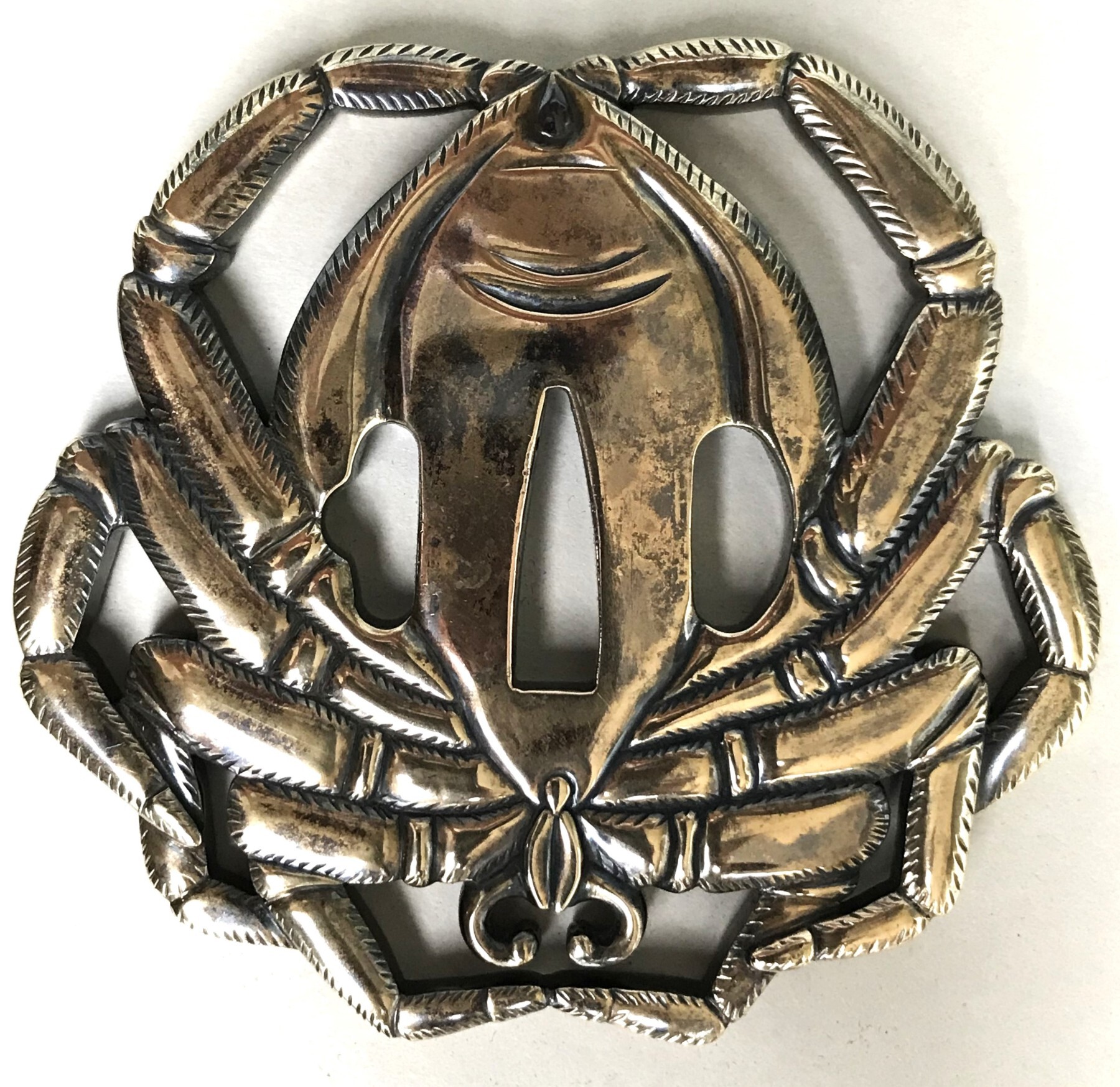
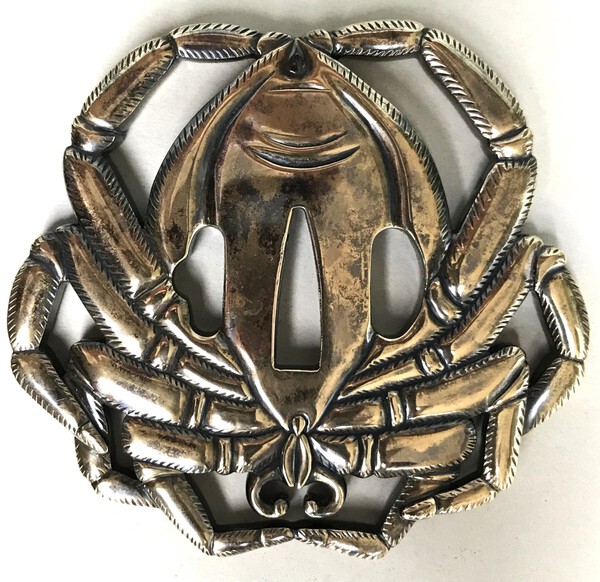
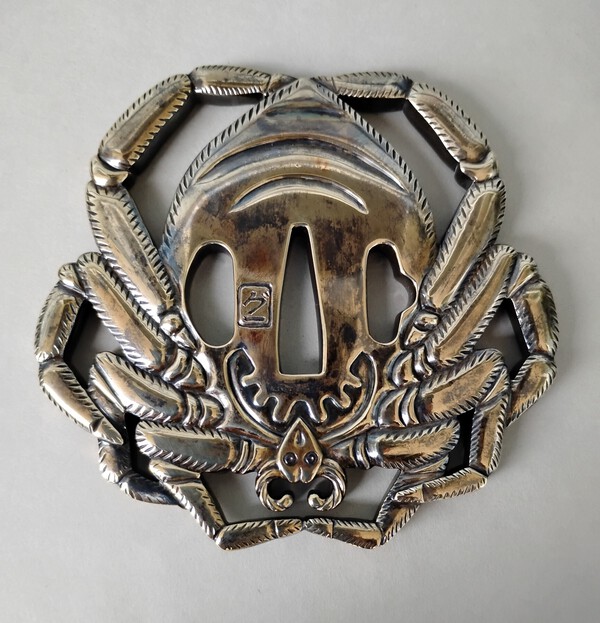
I would like to present my most recent work accomplished with help from Spartancrest who chose the design, did the research to confirm dimensions from the collection curator at the V&A museum where the original is kept and provided the Kanji so I could have a proper mei. Dale and I did some careful planning to create this Utsushi and there are some details I wish to explain that make this work uncommon. As Dale describes it The spider is a problematic design done in this manner because it is difficult to place the legs in a way that make a usable tsuba. The design is based on the Legend of Watananbe who killed a great spider. The project took about six months to complete. All of the work was done by hand using only hand tools and finishing stones The eyes and stinger are Shakudo. The original of this piece is asymmetrical I went to great effort to make my work symmetrical as a way to distinguish the piece as a copy. Funny thing is though despite all the effort my piece ended up asymmetrical as well as if fate or karma predestines this design to be that way.
- 6 replies
-
- 20
-

-

-

-
Maybe they are using AI to write the descriptions 🫢
-
If it's this difficult to distinguish the difference maybe it is time to embrace, facilitate and start a new category. For a craftsperson once they develop a passion for something it's not a want but a need, that person has to make or wither. Make a space and create a pathway to legitimacy. Gift a mei that can be registered and required. Encourage tosugo that looks like the old ones did when they were new so the work can be identified as new, as in don't antique or fake patina your work to look old. Experienced collectors mentor craftspersons to develop skills. The NBTHK already has a category for newly made pieces facilitate a pathway to craftspersons showing an ability and ethical practices. Just my 2 cents here.
-
Dale , That Is a good observation about the ho-ho bird and Garuda I am certainly no expert on this and I have no Idea what was in the mind of the maker of the tsuba. A couple of more points to consider might be the bird in the sculpture has teeth in the beak and the eyes face front not to the side. The sculpture is in costume as well with a hat. That being said the Tsuba is flat so it would be difficult to depict the eyes facing front but you could depict teeth in the beak the image also shows the fleshy ears behind the eyes. Image number 306 shows fowl I cant enlarge the image so I cant compare in detail but the flow of the heads feel similar to me. Not trying to label this as a chicken but Japan seems to have had fowl since 400 BCE ? and making observations it would certainly be more exciting to think of it being a Garuda. best regards goo
-
Good job On seeking out the unusual !!!!! When I see things like this It reinforces my opinions that one should always expect the unexpected. It seems there was much freedom to do something different. Google says chicken wire was invented in 1844 then I looked up the François Poncetton Collection sale of June 12th 1929 and the book popped up along with these images. Someone was into poultry would be my guess from the upper right image. Looks like a rose comb breed rather than standard comb breed fowl. https://www.abebooks...ppet-_-srp1-_-image2
-
Has anyone in the US bought kumihimo cord from Japan?
goo replied to John C's topic in Other Japanese Arts
If they send DHL most likely not a problem, I`ve purchased all sorts of things from China shipped by DHL just shows up at my door like an amazon purchase does. But.... might be different if you are importing a thousand yards of the stuff. -
That`s funny like mimi means ears and also the rim around the perimeter. Getting off topic a bit here fun facts about vinegar. It will dissolve iron and steel so you can add filings to vinegar. After they are dissolved apply it to wood when it dries apply heat and it will oxidize the surface and produce color or bring out figure if any exists. Maple can turn different shades from light brown to red, mahogani will turn black, etc. and so forth. some people soak files and or cutting burrs in vinegar for a short time and it will sharpen the edges on the file teeth by dissolving off a layer of steel but you can only do this once maybe twice.
-
All ferrous metals oxidize (rust). The ferrous metal workers challenge is to come up with a comprise with entropy. In other words patina the surface of the thing so that the process of entropy (rust) can be managed slowed down. All Patinas on an Iron objects surface are rust based. In the past you could create a controlled rust/patinaed surface on an object with an acidic chemical (vinegar) then neutralize the oxidation by means of a base chemical (ammonia/urine) modern term would be called browning. A second choice would be to place the object in a moist environment allow it to rust evenly then if possible convert/stabilize/neutralize these natural process in boiling water called rust bluing. Thirdly you could allow the object to form oxides naturally until an even layer/color appears then apply a barrier wax or oil to minimize/mitigate the process of entropy. I agree with Spartancrest in that you can interfere and clean the object so you don`t end up with a pile of rust or a severely damaged work of someone`s hands.
-
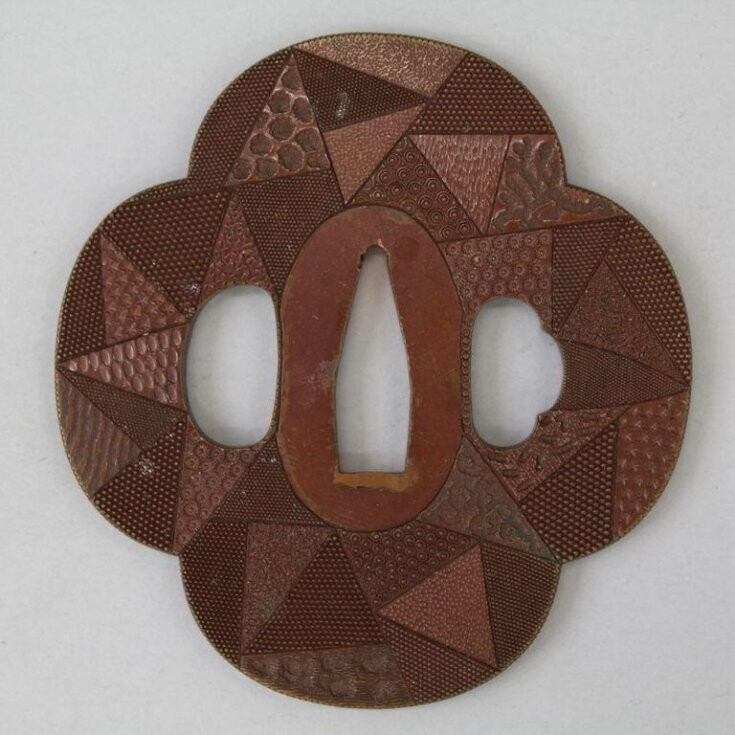
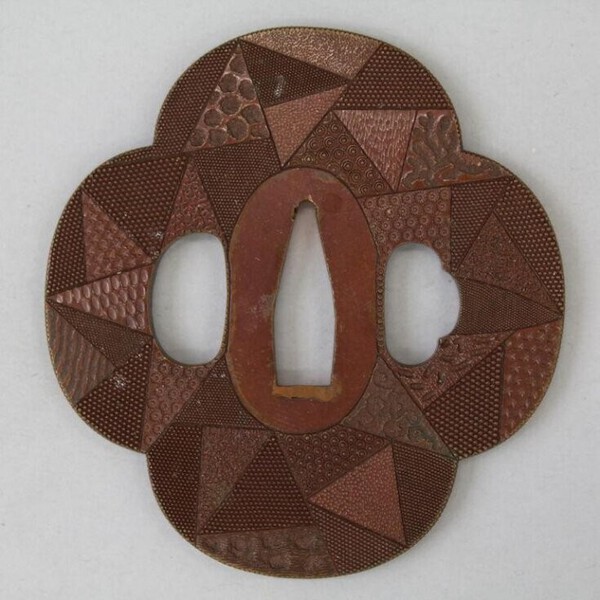
I found this Tsuba while browsing the collection of the British V&A museum the moko is said to have been purchased in 1911. This date would fall after the introduction of cubism. Any one see this before what are your thoughts? https://collections..../item/O465753/tsuba/
-
Newbie Question, moderators, If this is the incorrect section for this topic I apologize in advance and please move or delete and LMK. What would be the best reference book for Tsuba that contains info such as Makers name, period dates, province, Mei and styles or what the maker was known for. Or is this information something one painstakingly compiles on their own over time. Thank You
-
I think its old and the combination of age and perhaps not having been cared for properly during its lifespan before you acquired it have caused the surface and grain in the iron to lift and separate who knows where its been or what its been through. I think you have a great piece.
-
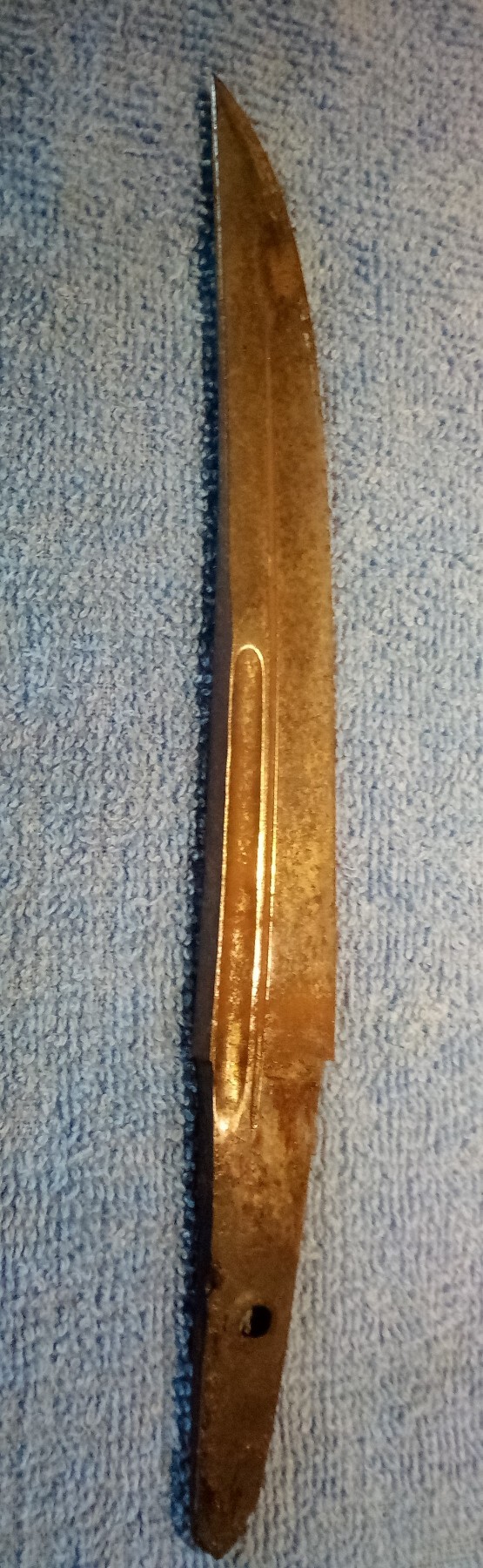
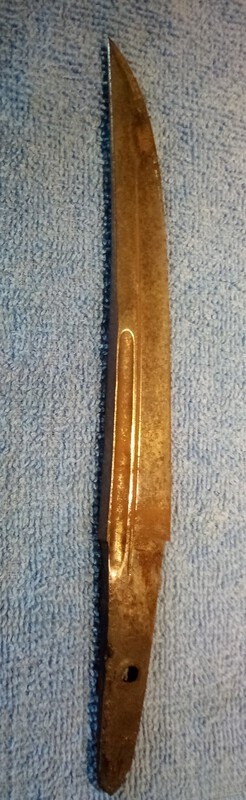
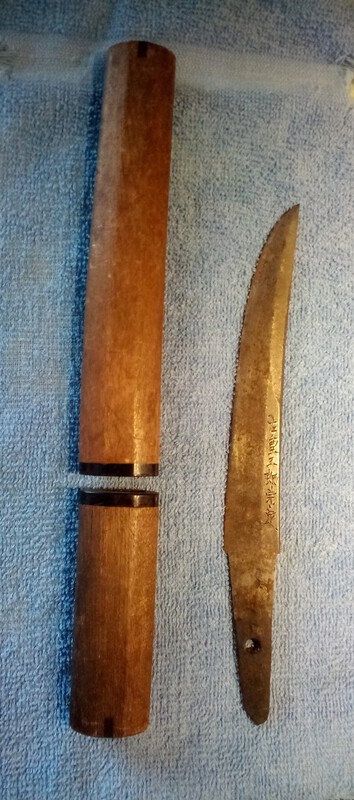
Hello Jean if I understood correctly this is about the best I can do I dont have alot of editing and imaging skills I could not get the lighting against a dark back ground after many tries the blue dish towel seemed like the best choice the hamon is barely visible in person and there seems to be residue inside the Tsuka.


-
With regard to your specific question of how to achieve a patina on a Tsuba. I can speak to this from my experience when it comes to browning or getting a brown color on a reproduction of a historically correct flint lock or percussion lock of an American longrifle. Barrels and touch holes/ cap nipples are plugged then usually the gunsmith (me), will apply a browning solution to start the rusting process then the barrels and other steel parts are exposed to moisture in a steam cabinet, or other humid environment. The steel or iron in the case of antiques, will oxidize creating a layer of red rust. The red rust is then rubbed back with card sock or heavy paper referred to as carding. This process is repeated many times to achieve a thick layer of smooth brown steel. The rusting process creates an oxide which is neutralized and actually forms a rust resistant surface patina which can be waxed or oiled with linseed oil, carnauba wax to preserve the finish.. A second choice of patina is available once a piece is sufficiently rusted. The parts can be submerged in boiling water for a length of time and the oxide will turn blue to dark gray This is known to gunsmiths (me) as rust bluing. I have an original Tsuba that became endangered by active rust blooms. Using finishing stones I was able to remove the rust blooms and smooth up the pitts. When I started to restore the brown finish I discovered the iron to have swirl patterns created during the forging process. The Iron has what must be areas of differing carbon content because the patina(rusting) is lighter and darker in certain areas. The patina will even out but it may take a year or longer for the finish to appear consistent. As others have pointed out handling the piece allowing to hang in humid atmosphere will create more oxide across the surface which must be rubbed back with a soft brush card stock etc.,but the key is patience, I hope my explanation will help.
-
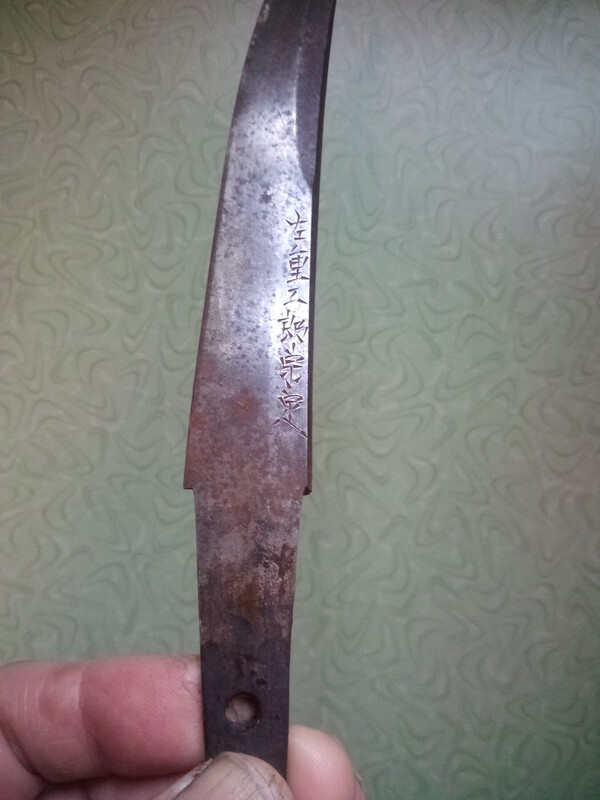
Thank you for the reply, You were right to correct me yes its 22 centimeters and koshirae is the correct spelling as well. I will be sure to get those things under control out of respect (and any further embarrassment.) It came with what looks like a fancy but plain saya natural wood with horn at the end of the tsuka and top of the scabbard portion but missing a habaki to secure the two halves together If this is a pilots Tanto then this would be modern Kanji, a quick google search auto corrected Munesada to Monesada and images of these types of Tanto Thanks for the clue i will continue to look.
-
Hello everyone I picked up this short Dagger/tanto at the local chapter antique arms dealers meeting spotted it at the bottom of a box of misc partial parts pistols. I am not a dealer I did not buy it to resell I am trying to put together examples to use to when I make Koshire. I looked through my reference material and the online resource for the forum and cant seem to find or identify the inscription on this blade. if anyone would be able to help sure would appreciate it. Best Regards Gustavo Hoefs
-
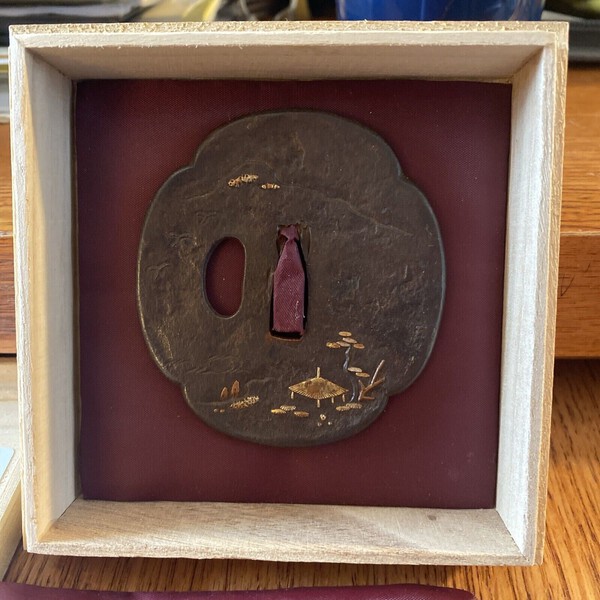
Bugyotsuji- I am asking in other words about the geometry or the outline as in if you were to make a tracing of a the Tsuba. Opinions about the style of the Mokko shape in general are welcome. Spartancrest- Thank you for your comment My journeyman Master Michael Lea who taught me how to build flintlock guns trained me to copy original works as an apprentice (I am following his methods of procedure since I have no sensei for Tsuba).At first I was put off but, as I followed his teaching and advice I saw the wisdom of having a good foundation and understanding of what was going on. As I gained his respect and praise I began to step out slightly. I have an ethical duty to preserve the traditions of the craft and all those who came before me. when i win a prize at NBHTK Ill develop my own style. Shugyosha- Conservative views are what I need right now as a beginner at understanding Japanese art and the flow of it within the confines of the Tsuba The context of the motif or theme and use of space are the point of my efforts at this time.
-
Hello I am seeking opinions concerning the shape/outline of this Tsuba. I purchased it to use as a pattern to create a Mokko Gata style tsuba of my own design. I wish to know others opinions about the shape before it influences my work. It is not signed as I dont have the money to purchase one that is signed with papers. My most recent Tsuba which I completed kept me occupied for twenty weeks. Thank you for your comments don`t be shy or worry about making me feel bad if its not good for a pattern
-
Hi I am new to the forum. I have built 21 Early American style muzzle loading rifles fowlers and pistols 1750-1840 time period. In this craft/trade the word swelling would communicate a bulge or barrel failure. The words used in the muzzle loading craft would be diameter and taper. In the book Espenigarda Perfeyta edited and translated by Rainer Daenhardt and Kieth Neal ( from portuguese to english) to achieve a safe to fire barrel, the barrel length is divided into eight parts three parts from the breech forward are heavy in diameter and the remaining 5 parts are are lighter or thinner in diameter towards the muzzle. Smooth bores require less wall thickness along parts of the barrel than rifled barrels. Sometimes barrel makers would add thickness or barrel bands at the muzzle as wear from steel rods can decrease barrel thickness. I have seen many old barrels with paper thin wall thickness at the muzzle. Rifling a barrel will increase internal pressure exponentially which is why you see a rifled barrel as thick and quite heavy. What makes shooting old original barrels risky is that original barrels european style barrels are forge welded from a flat skelp or flat rectangular iron over a rod down the length of the barrel. As the barrel ages the corrosive quality of the black powder can compromise the weld. Commercially available modern black powder barrels are drilled solid rod, The alloy of choice is now 12L14 because it is ductile and does not work harden. I do not know what Japanese smiths did when barrel making I would assume they had the ability to produce superior barrels as their work in producing iron and steel for blades was outstanding.
-
Solid Gold Katabiri-Bori Tsuba
goo replied to Infinite_Wisdumb's topic in Auctions and Online Sales or Sellers
Hi everyone this is my first post; Lower Karat gold can be made to appear as higher karat gold by a process known as surface depletion of the alloy usually copper and silver. The common term is pickling, after the gold alloy is heated the copper oxidizes and turns brown and black. The metal is then placed into a mid acid solution which dissolves the dark oxidized copper. In the workshop this is done in order clean the metal in preparation for/during soldering and fabrication of the piece. It can also fool the electronic xray guns because they only analyse the top layer of several microns.