goo
-
Posts
92 -
Joined
-
Last visited
-
Days Won
2
Content Type
Profiles
Forums
Events
Store
Downloads
Gallery
Everything posted by goo
-
Thank you all for the help and information on how to tackle these mei. These are some Great resources.
-
I find myself struggling to find a way to translate mei on tsuba, swords etc. and I don't want to beg for someone else to tell me every time I need to know, who's mei is this? One thing I have noticed is engraved mei can be like Western style handwriting, it has a certain style and if you are familiar enough with the language, context, etc. you can read handwriting. It has become clear to me that a non Japanese Westerner needs a varied and extensive resource library if they want to succeed. Could some of you please share your tips on translation programs? Revealing what the kanji looks like so you can analyze and identify the structure of the engraved character? How do you all do this?
-
Ok,, not the same, would you know which Toshihide am I looking for? Can you help?
-
Hi Ray, Thanks for the reply, here is a pic of the mei on my wakizashi. I don't know if it's same person or not what do you think? Regardless I am interested if I can afford it.

-
Is your search isolated to Japanese firearms?
-
I am looking to buy a katana to go with a Toshihide wakizashi I have. It's impossible at this point to make a daisho but perhaps something by a gendai swordsmith that at least would show a bit of similarities in style. Please pm if you something for sale. Also if there is anyone in or near Columbus Ohio that would be great.
-
Has anyone heard of a swordsmith Endo Kimiyuchi? Working In Seki before and or during WWII ? I've been checking lists and index's but haven't been able to turn up any information.
-
I have noticed with this type of surface inlay it is so thin that the iron oxide/ rust/ patina whatever you want to call it, blooms up and over the silver and gold and buries it. You mentioned silver polish. A pencil eraser works very well when applied gently in unidirectional slow strokes. You don't have to use water to remove any residue.
-
Dale, How do you do this? I never cease to be amazed.
-
Hello Dan, I should have been specific. I was referring to the initial pics you posted showing layers at the edges of the nakago ana. I don't know how to copy and paste photos off Google on my phone. You can do an image search using the terms like "delaminating iron". Iron like wood has grain. This happens during the refining process . The iron bloom is pulled from the fire and then forged to push out the slag. Some of the slag is trapped forming layers or grain. you will see examples of iron that has separated along the grain of you do an image search. If you have conserved items pulled out of the ocean, soil or lain neglected, after they are cleaned up, they look to me like the first pictures you posted. Good luck keep up the good work 👍
-
Iron can have grain similar to wood. Maybe it is just delaminating due to neglect or moisture intrusion. It is possible that the piece was cleaned up after sitting around in bad conditions?
-
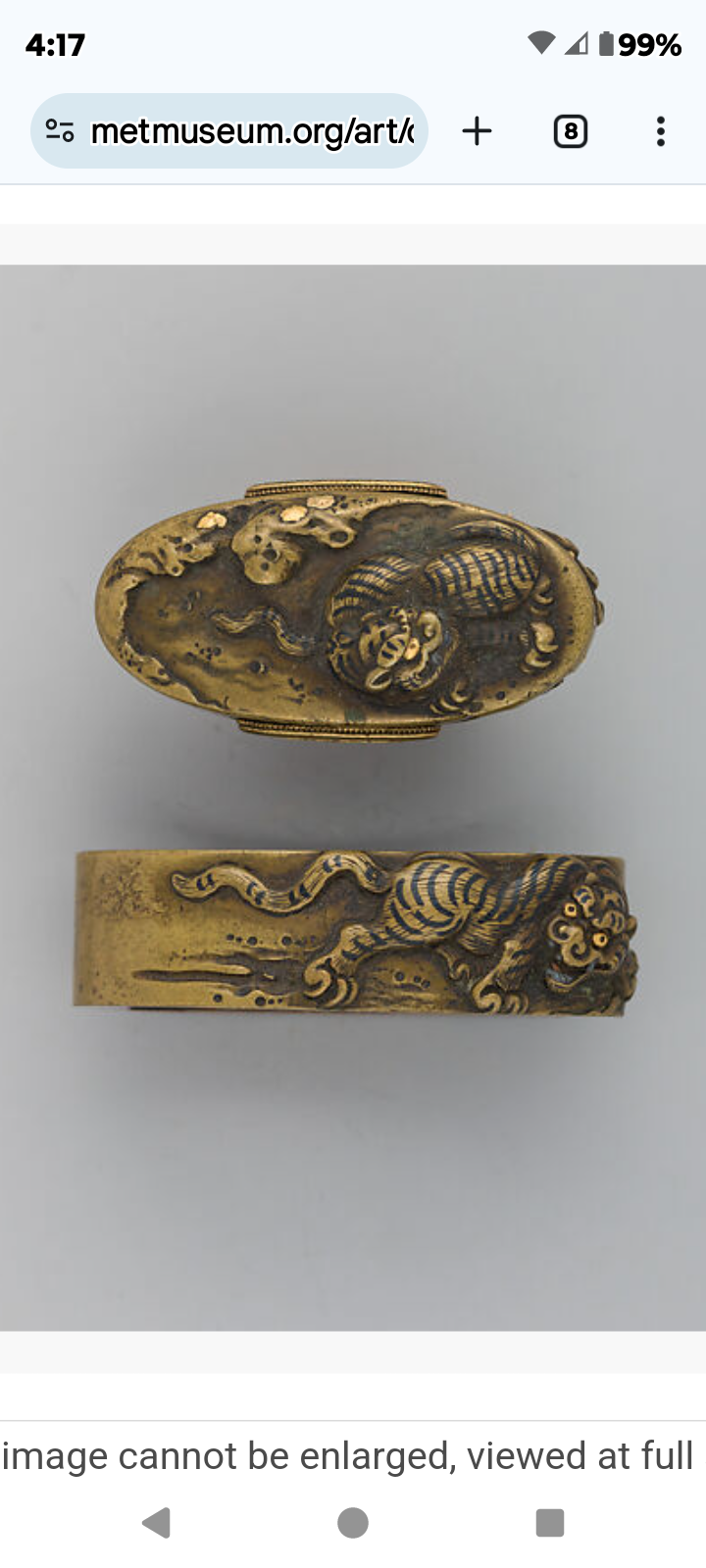
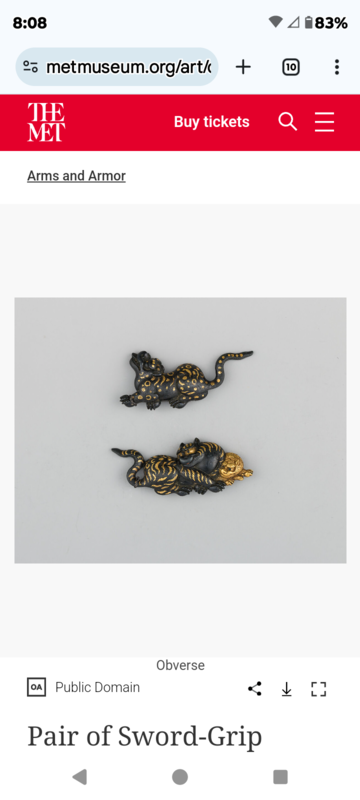
Some matching menuki?
-
I know this is a late response but I just saw these in the Met collection. Could these have originally been part of the whole set? The facial features and pose of the tiger seem to resemble those of the tiger on the original Tsuba. It doesn't seem to be a huge stretch of assumptions that one of the pieces stayed in California while the other went east.

-
Thanks to John and Peter, it looks like gold and tarnished silver inlay to me. I intend to attempt a copy of this one.
-
I took a screenshot of this Tsuba while browsing the Victoria & Albert website some time ago. I would have posted the link but I cannot find it on the site now, it sort of disappeared. Does anyone have an opinion or information on it? I am very much a novice but if I had to guess I would say it is modern, after 1900? It reminds me of lantern glow.

-
Good to know this , looks like a good study piece, thank you!
-
Sooo... You think it's not genuine? Which would be fine.
-
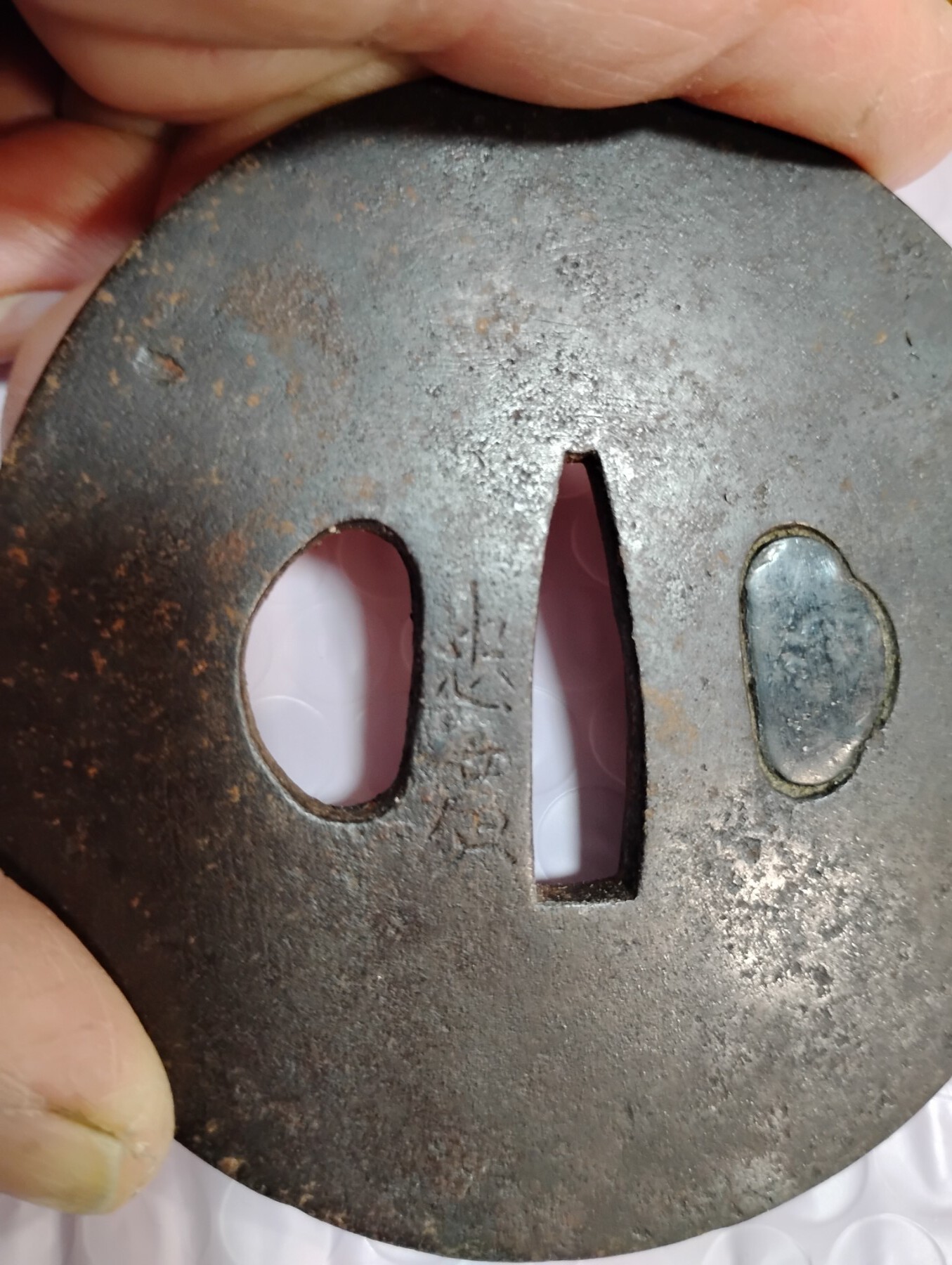
Thanks John, from what I understand there were a couple of generations of Tadahiro sword smiths. As you said a number of tsuba makers using Tadahiro. If it is not a fake signature I maybe there is some value for comparison to other mei?
-
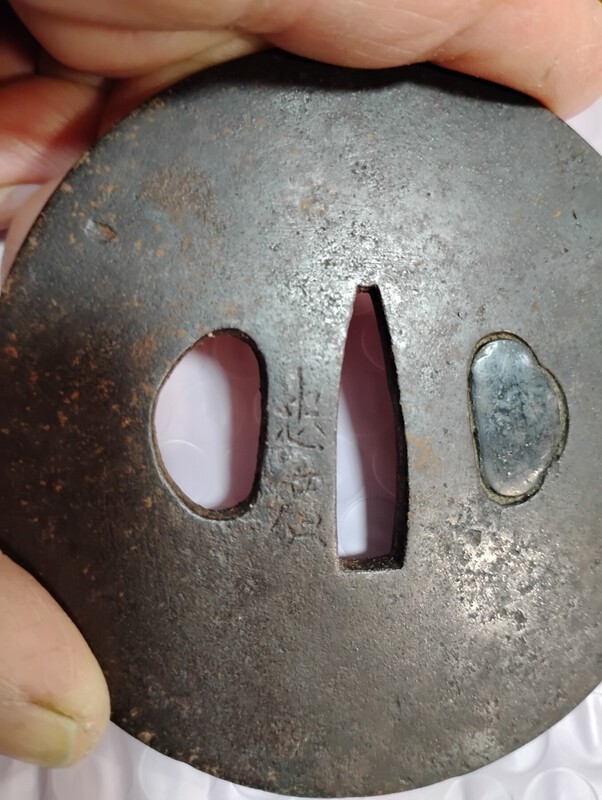
The mei on this tsuba looks to me as though it could be Tadahiro. Could someone who knows what it should look like be willing to give an opinion and perhaps the reasons why it is or isn't. Thanks
-
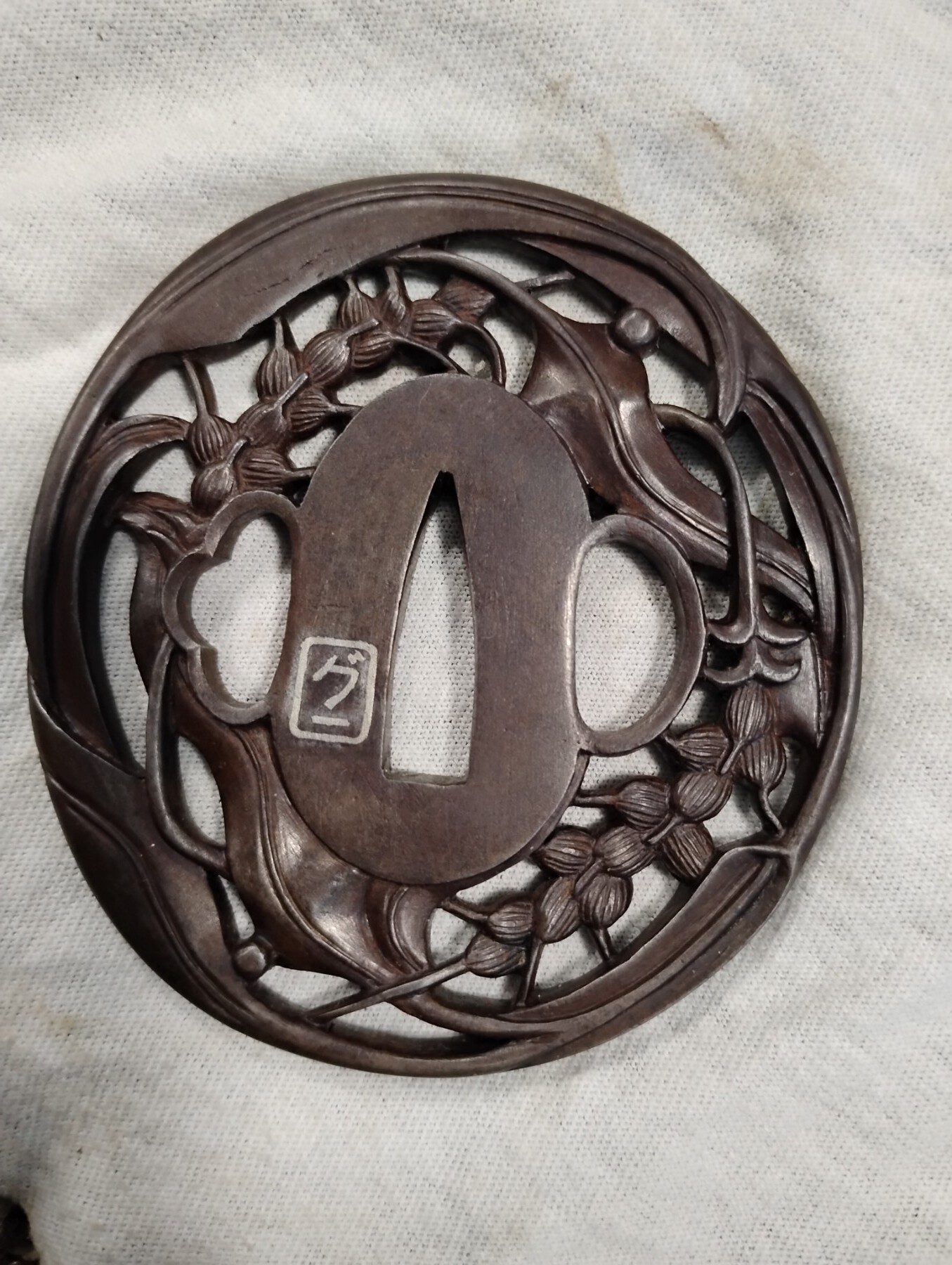
I re executed the finish over this past week. The first time I used heat blue oxide you heat the metal after cleaning and it forms an oxide which can be stopped at a number of colors from yellow to gray. I decided to change it to a more traditional controlled rust patina. The camera is not picking up the black under tones that make it look like dark mahogany.

-
I am not a master but I would make you a Tsuba.

-
Thank you for the compliment. I know that other makers put an antique finish on their work but I choose not to because I think when the surviving works we see today were new, that they must have "looked new". I feel I walk a moral and ethical fine line. I have a responsibility to achieve and maintain artistic quality while at the same time make it clear to those who collect tosugo that these are new works. Part of the reason I document them online is so there is a record, should they ever survive me into the next century and by that time aquire a "patina" they should not be confused for old original works.
-
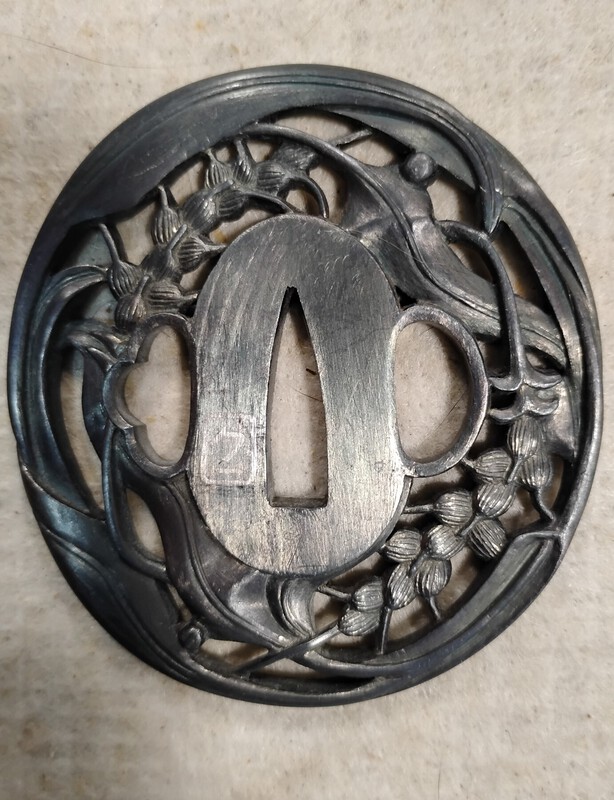
Here are some phone pics of my latest work, this is my 4th attempt at making tsuba. The bronze original is in the V&A London online collection. The details are as follows. The project took 7 months to complete including choosing the design to inlay of the mei. The material is iron(not mild steel) I sent some 100 year old relic parker brothers and other Damascus shotgun barrels to a blacksmith who returned them as 1/4" iron plate. I made a pen and ink drawing adding the kogai hitsu ana. The design was xerox copied and transferred to the plate. I then pieced with a jewelry saw and sculpted with hammer and chisel gravers. Polished with files and finishing stones. The color is heat blue patina.

- 10 replies
-
- 23
-

-

-

-
Art imitates life and gets a little eccentric in the process.
goo replied to Spartancrest's topic in Tosogu
New discoveries linking quantum physics to biology have recently arisen. It is being called quantum biology. In any case I am certain there is an explanation and a reason just have to connect the two. Maybe it is so the tsuba makers who make tsuba in the shape of spiders will have something interesting in the way of content to include in their designs.🙈- 1 reply
-
- 1
-
-
A bit of trivia on this project, the jewelry saw blades I used to cut the design are WWII era German mfg. The story goes like this my friend Niel is Armenian Jewish descent. During the war his uncle Pierre a highly skilled jeweler was swept up in the Holocaust. His capturers being driven to details discovered that he was useful, pulled him from the barracks and supplied him with vast amount of tools and materials. During Pierre's incarceration he escaped five times. His work was so highly prized creating baubles for the officers they refused to shoot Pierre and would instead put him back in the workshop. After the collapse of the German military Pierre secured all the stuff and moved to New York. Niel gave a lifetime supply of Pierre's left over sawblades as a bonus for some work I did for him.