
ZH1980
-
Posts
65 -
Joined
-
Last visited
ZH1980's Achievements






-
Exactly - they tested the metal with a magnet device to confirm the magnetism. In terms of reviewing the signatures, they compared the export certification (which included photos of the tangs) with the actual blades, including comparing the signatures to verify that the blades at the airport were the ones approved for export. It was not a particularly comprehensive review, but they did do this comparison.
-
Because I knew that customs/police would inspect them, and considering my really excellent case (plug again for Lykus), I didn’t spend a lot of time wrapping them. I totally disassembled both swords, packed the sword parts in different plastic bags, and wrapped both blades in scabbard bags often used for iaitos.
-
Because my case is a gun case, I got a lot of attention at customs (because everyone assumed I was transporting a firearm). Once I explained that they were authentic nihonto and 250-500 years old, they didn’t ask any other questions. No forms to complete or other declarations of any kind. Very easy on the US side. Also - I offered to show them my Japanese export certification, but they didn’t care/want to see it (which makes sense).
-
Customs would not touch the blades themselves. The asked me to handle them throughout the entire inspection process. We showed them the blades at the United check in desk (the United employee had to call them over) and just simply opened the case and unwrapped the swords so they could test the metal.
-
My understanding is that the ¥200,000 “threshold” was (and remains) very unofficial. The export certification application for sword parts (which is a different form from the sword export certification) makes no reference to purchase price or estimated value. My understanding is that customs clearance for tsuba is based on the customs official’s judgement about whether the item could be considered a protected item.
-
My wife and I just successfully exported a Edo-era Katana and a Muromachi-era Wakizashi - both bought in Japan - via a checked suitcase on a United Airlines flight from Sapporo to the United States (via Tokyo). We were extremely nervous, did a lot of research in advance, and wanted to share our experience. Sharing in case this helps others. First off, we purchased a padded gun case with heavy duty TSA pad locks to transport the two swords. This ¥24,000 that we spent on the hard case was a wonderful investment. I highly recommend Lykus brand suitcases for this purpose. Secondly, we live in Japan and processed the entire Export Certification process ourselves. If you don’t speak Japanese, or don’t live in Japan, I would highly recommend using a private service in Japan for obtaining the export certificate (most Japanese sellers seem to include this in the price of the sword). Other private companies offer export certification services (even if you don’t buy the blades from them). Doing it ourselves took six weeks from submission to receiving the certification. Written Japanese language proficiency was necessary. Other lessons learned: (1) Departing from a city other than Tokyo or Osaka made things a bit more difficult. The Sapporo check-in agents were unfamiliar with nihonto export procedures and required that we have our suitcase reexamined in Tokyo. (2) The export process in Tokyo involved two customs agents and a police officer inspecting the blades and export certification. My personal details, including residence card and passport, were copied. They applied a magnet to the blades to confirm that they were made of iron. The whole process took about 45 minutes. Bottom line: Budget extra time if traveling with nihonto. (3) Customs in Tokyo kept the original export certificate. Make a copy. (4) I was also traveling with some expensive tsuba and spare antique sword parts. We did not obtain export certificates for the tsuba. Customs did not think twice about tsuba or any of the other sword parts we traveled with. It remains unclear to me if tsuba require export certification procedures. (5) Fearing theft, I packed both wrapped blades with discreetly hidden Apple AirTags. These gave me peace of mind, but may have not been necessary. Good luck to those traveling from Japan with Nihonto!
-
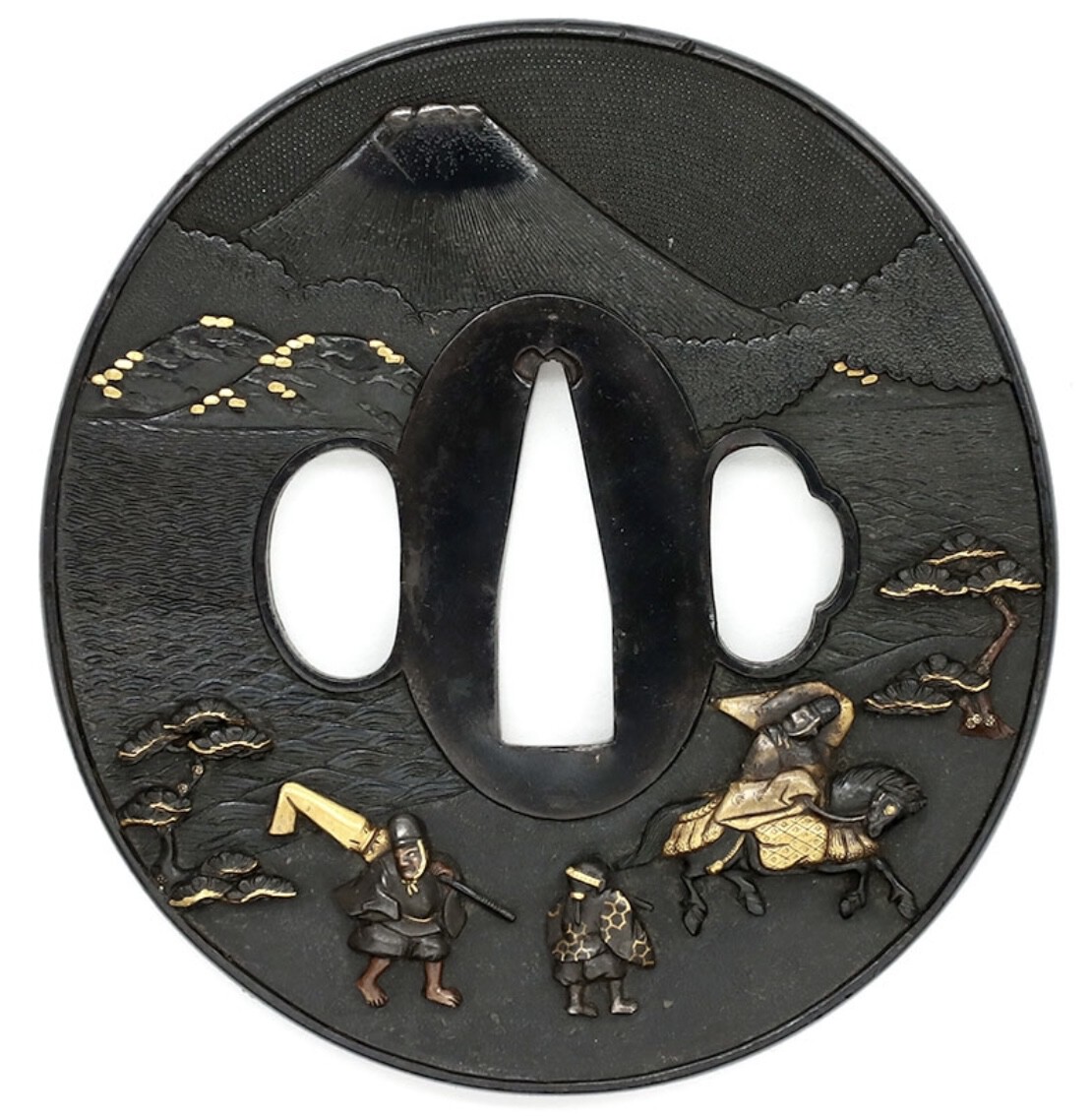
Here is a favorite in my collection - a Daiso tsuba set signed by Souju (Kao) 宗寿(花押)


-
Surprised at how few tsuba I have with birds! Here's one:

-
Thank you, Jean! Appreciate you taking the time to explain this.
-
Hello - hoping to get some input on this tsuba's nakago-ana. Is the shape unusual? Given the standard size/shape of a typical sword's tang, this shape seems strange. Thoughts?

-
Thanks very much, Steve.
-
Hi Steve - I wonder if you could elaborate a bit - or provide another example - on what you mean by "absence of indent in the upper sekigane." This sounds like an important "tell" for possible modern replicas, but I didn't understand your point.
-
What is the soul of your collection ?
ZH1980 replied to Benjamin's topic in General Nihonto Related Discussion
Like others have said, the soul of my nihonto collection has little to do with intrinsic value and more to do with sentimentality. As such, some of the most meaningful pieces aren’t necessarily the rarest or most valuable—they’re the ones tied to memories. The tsuba I was given by my daughter as a birthday present, the wakizashi that sparked a long conversation with a fellow collector who became a friend, or the unexpected Mercari find that sent me down a research rabbit hole. These memories give the collection a kind of living thread, binding together styles and schools that might otherwise seem disparate. -
True that counterfeiting has always been illegal on paper, but, in practice, Japan lacked meaningful enforcement mechanisms against counterfeit goods until legal reforms that were passed in the 1970s. Laws on paper are great, but without enforcement mechanisms, laws often meaningless. Post War Japan is a good example of this, particularly vis-a-vis counterfeit products.
-
For that price, one would think it would be papered, but, sadly it doesn’t appear to be.