Iaido dude
-
Posts
536 -
Joined
-
Last visited
-
Days Won
3
Content Type
Profiles
Forums
Events
Store
Downloads
Gallery
Everything posted by Iaido dude
-
 Another "Ichi" is offered on Yahoo Japan auction: https://buyee.jp/item/jdirectitems/auction/n1218134606?conversionType=mypage_watch_list
-
Sansuiga Sumi Ink Landscape Painting by Sesson Shukei
Iaido dude replied to Iaido dude's topic in Other Japanese Arts
Indeed, I see this in Walmart Superstore during Black Friday sales! -
Sansuiga Sumi Ink Landscape Painting by Sesson Shukei
Iaido dude replied to Iaido dude's topic in Other Japanese Arts
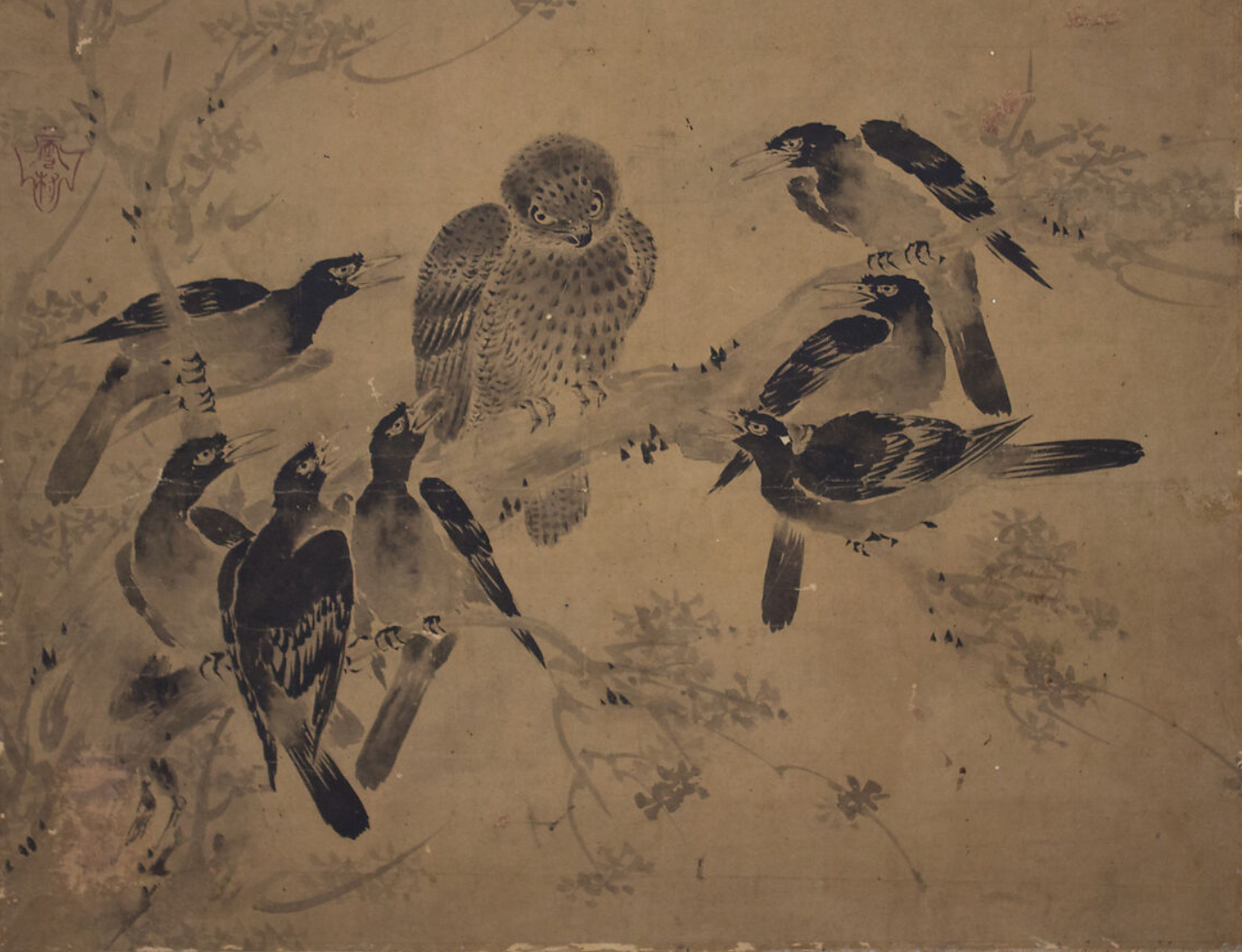
This one of "Mynah Birds Attacking an Owl" (The Metropolitan Museum) bears the same seal and is also mumei.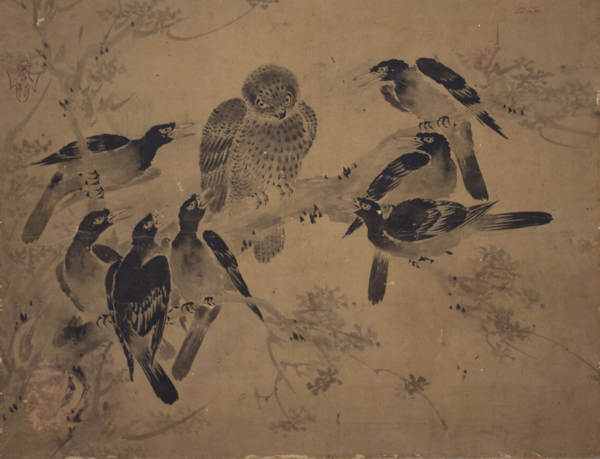
-
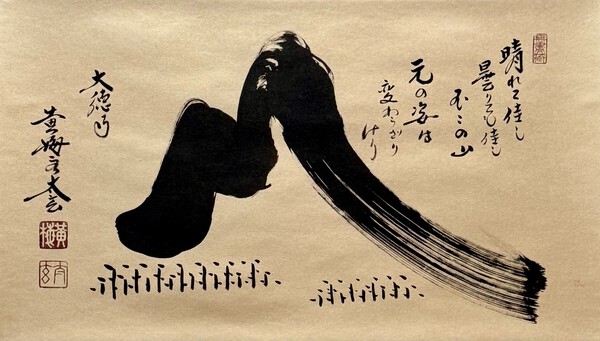
The third work I have by Kobayashi Taigen is his version of Yamaoka Tesshu's Mount Fuji, which is his account of his own enlightenment experience. Comparing the images in all three, his brush style becomes quite evident. Here his calligraphy style is looser, perhaps gently influenced by Yamaoka's highly idiosyncratic cursive script. Fuji is written here as "not two," a play on words that is intended to indicate the absence of dichotomy that characterizes the state of enlightenment. The Tao/Universal Principle/Regenerative Tissue from which all phenomena of the world arise and return--is eternal and unchanging. Perfect when clear, Perfect when cloudy, Mount Fuji's, Original form, Never changes
-
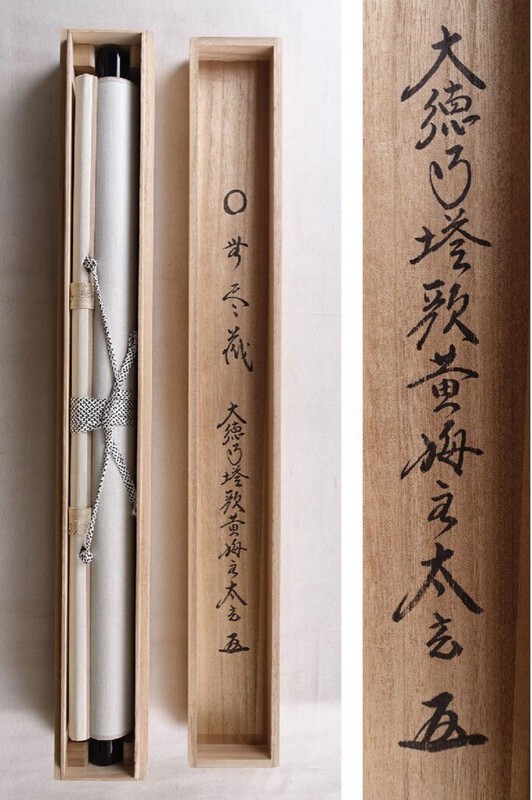
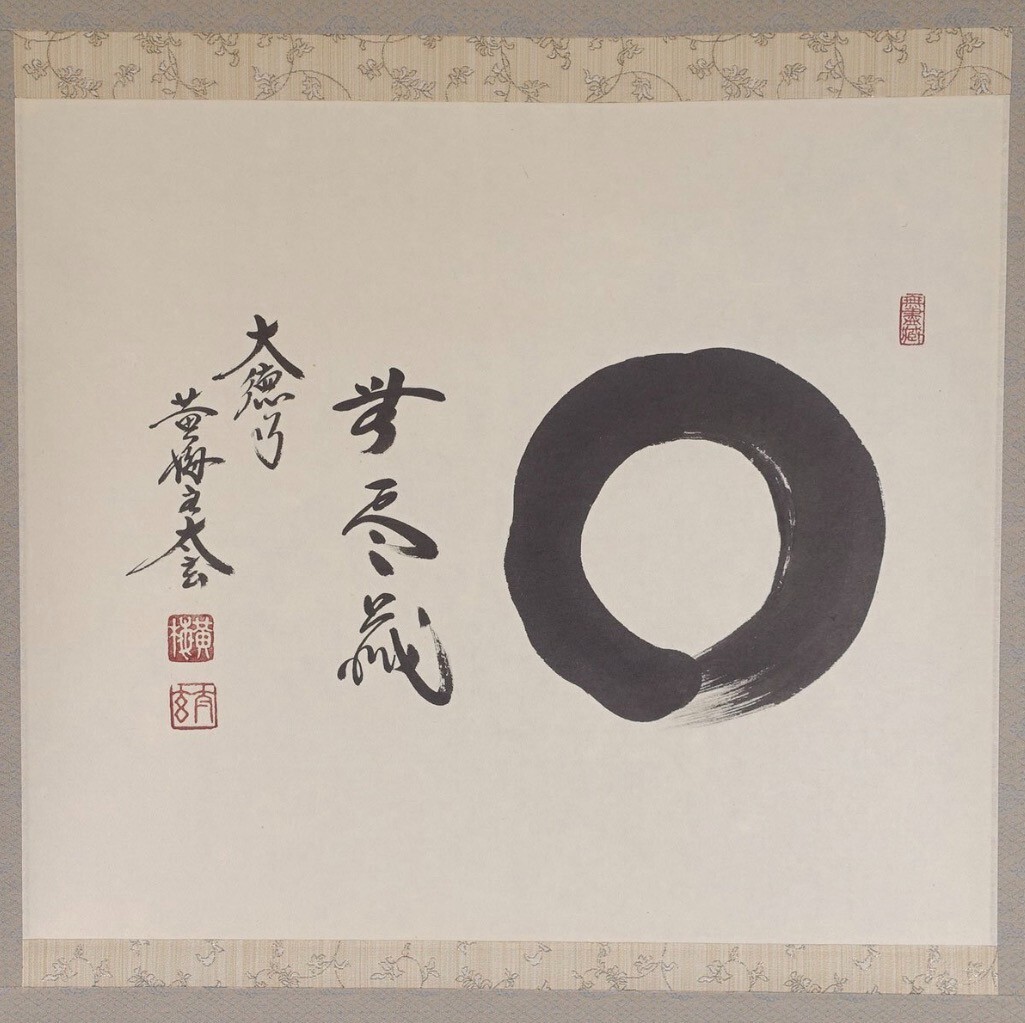
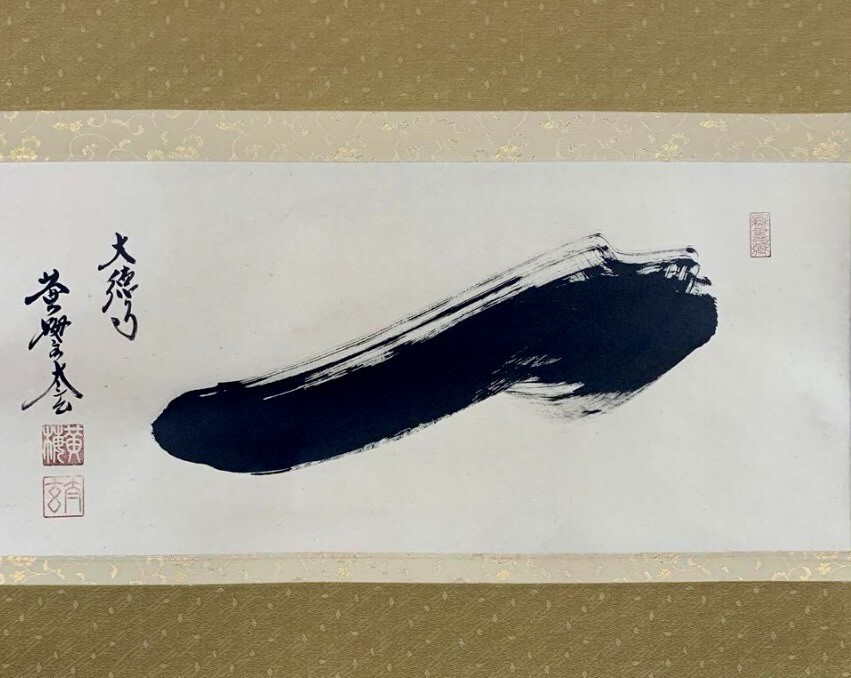
Kobayashi Taigen was born 1938 in Shenyang, China and raised in a Buddhist monastery from the time he was six years old. In 1975 he became successor of abbot Miyanishi Genshō at Ōbai-in, a sub-temple of Daitoku-ji, Kyōto. He is a prolific calligrapher and maker of tea bowels and bamboo tea scoops for traditional tea ceremony (chanoyu). This Enso painting has the inscription "Inexhaustible (無尽蔵)," which is part of a wisdom poem attributed to the Sixth Patriarch of Ch'an Buddhism Hui-Neng. Zen practice seeks to free the mind from dualistic, discriminating thinking. However, "not one thing" or "nothingness" is not equated with emptiness. Rather, with a mind emancipated from delusion, the possibilities become truly inexhaustible. Mu ichimotsu chu Mujinzo 無一物中無尽蔵 In nothingness, there is inexhaustible abundance What an apt inscription to accompany an Enso--the circle that is at once empty and full. Kobayashi's work is characteristically and consistently elegant, as in his "Ichi," with a beautiful flying white brush technique.



-
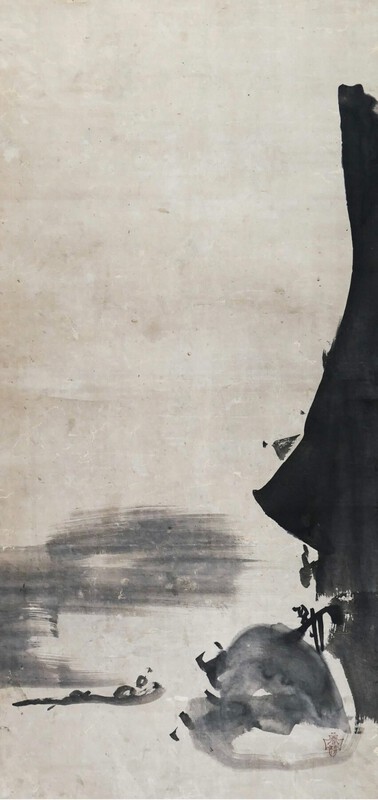
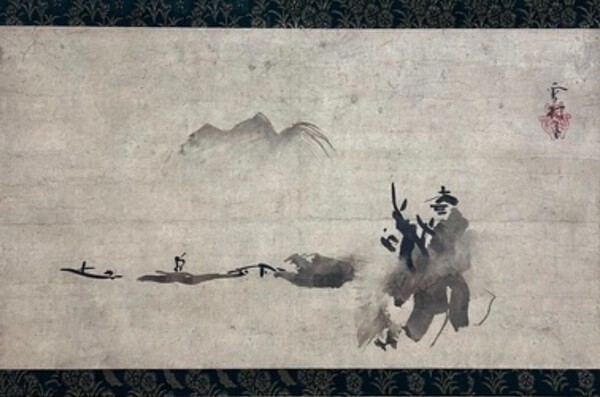
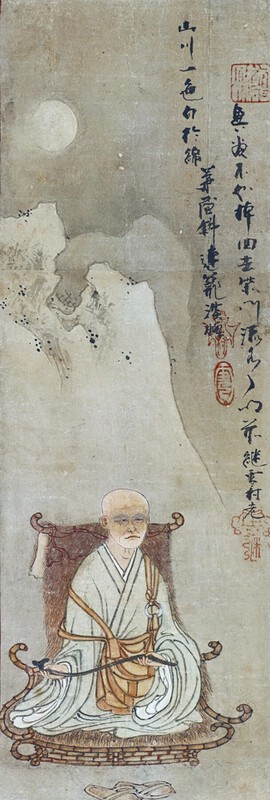
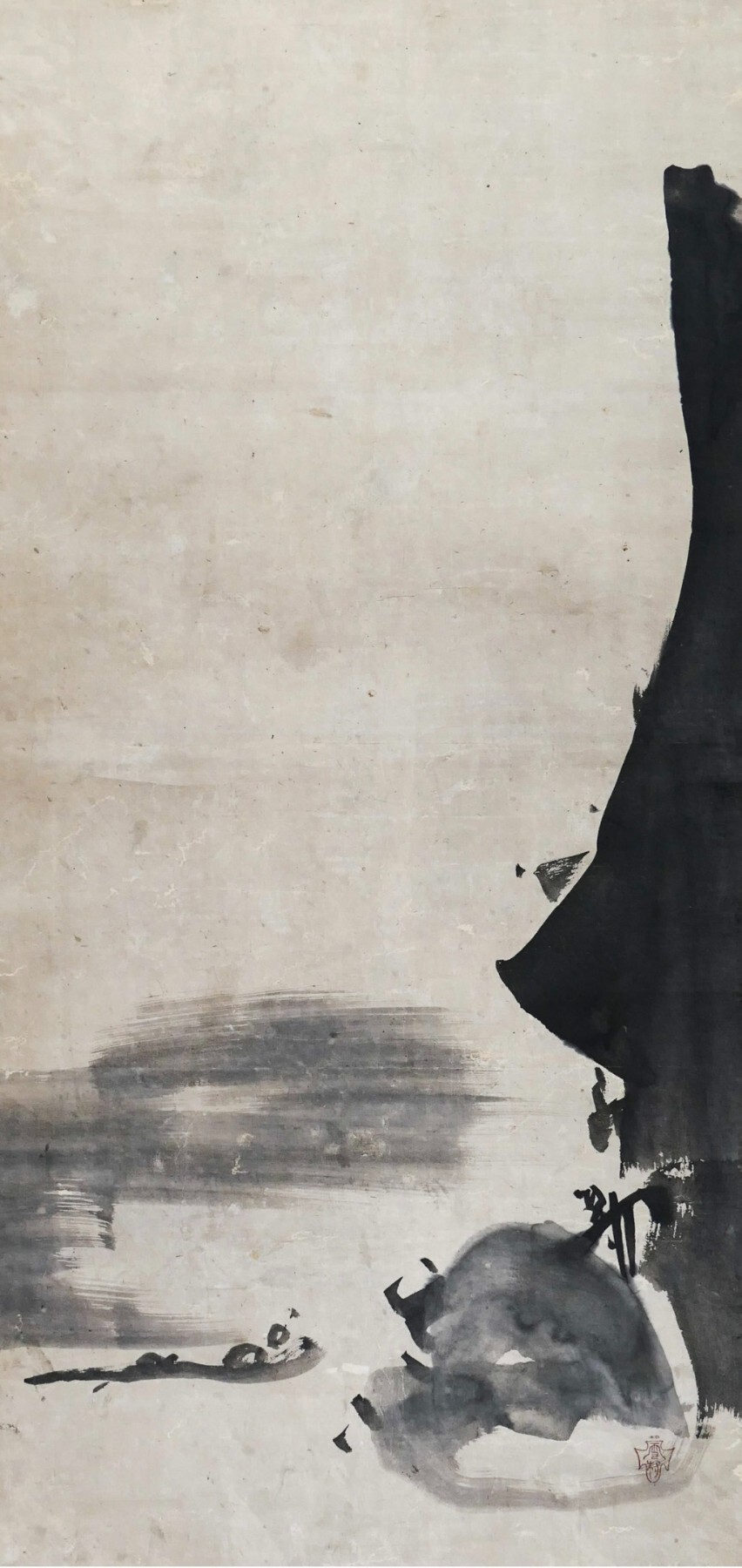
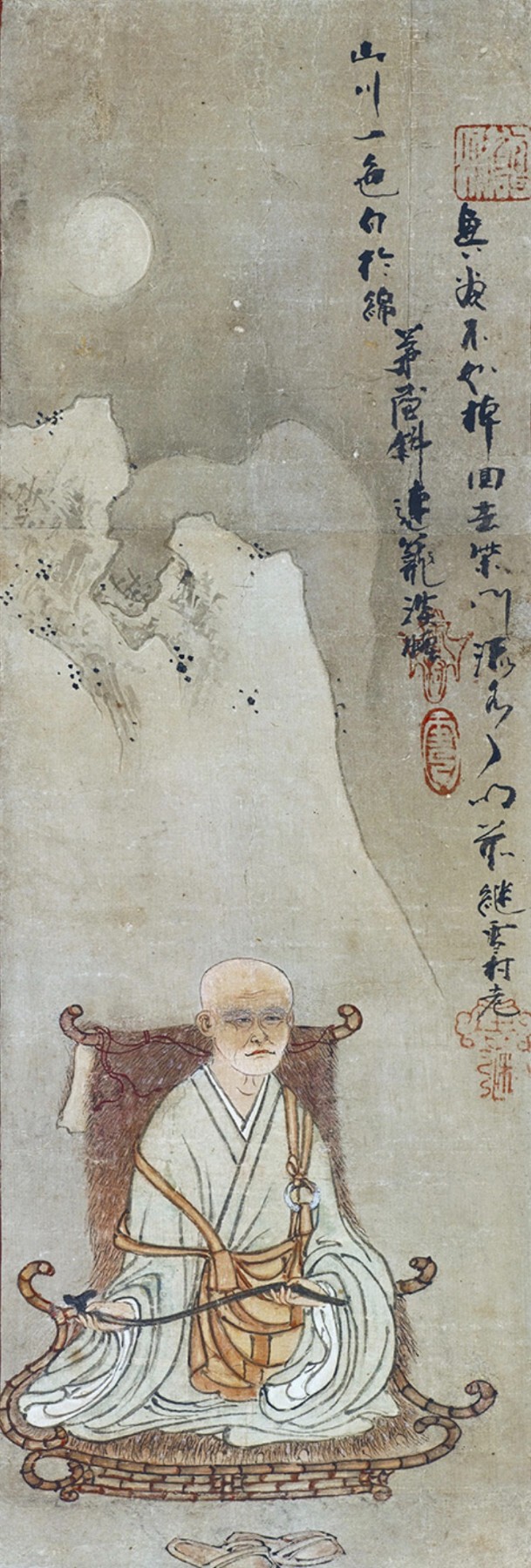
Sesson Shūkei (雪村周継 1504-1589) was a Muromachi Period Soto Zen monk and self-taught artist who is considered the most distinguished and individualistic talent among the numerous painters who worked in the style of Sesshū, the 15th-century artist considered the greatest of the Japanese suiboku-ga (“water-ink”) painters. The two are referred to as "Sesshū of the west, Sesson of the east". He studied the paintings of Shūbun (a suiboku-ga artist active in the first half of the 15th century) and later, from 1533, those of Sesshū and called himself Sesson Shūkei in tribute to the two masters. He worked in a dramatic style that generally accentuated idiosyncrasy, humor, and exaggeration in his approach to subjects, whether figural or landscape. This sansuiga (ink landscape painting) work is an excellent example of his almost calligraphic brushwork style. The boatmen are depicted in a sunset scene, but the foreground is indistinct, abstract, a bit ominous, and filled with yugen (mystery). He juxtaposes heavy black ink and different shades of grey wash. Although unsigned, the seal in this work is similar to one that appears in his self-portrait, which is a Japanese national treasure. Similar example Seal comparison
-
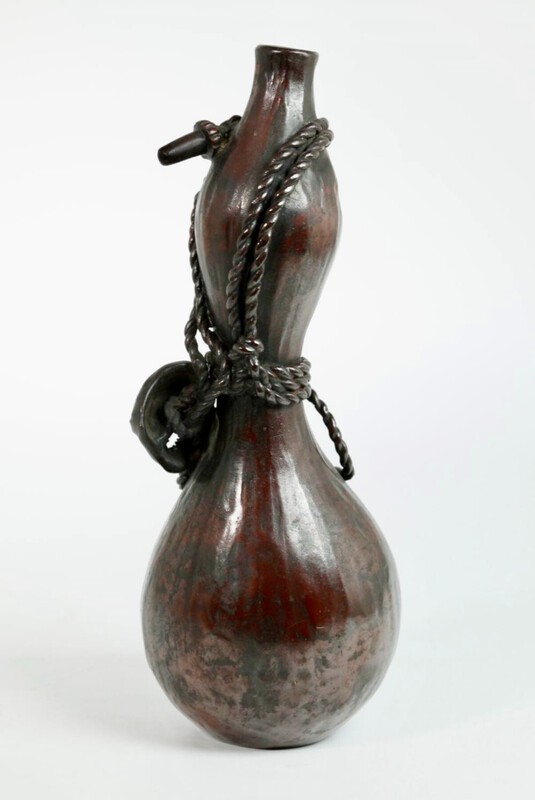
Thanks Piers. You are right. I think I just pulled down the wrong kanji. I think this old dodger is still alive! Not sure if there is a particular symbolism or reference for hyotan and what appears to be a noh mask, but hyotan is near and dear to me and I use a pic of this vase as the image for my home page. I love that it has a "stopper," as part of its detail. I don't see any casting lines, but it is the only object of its kind that I have had the opportunity to examine.
-
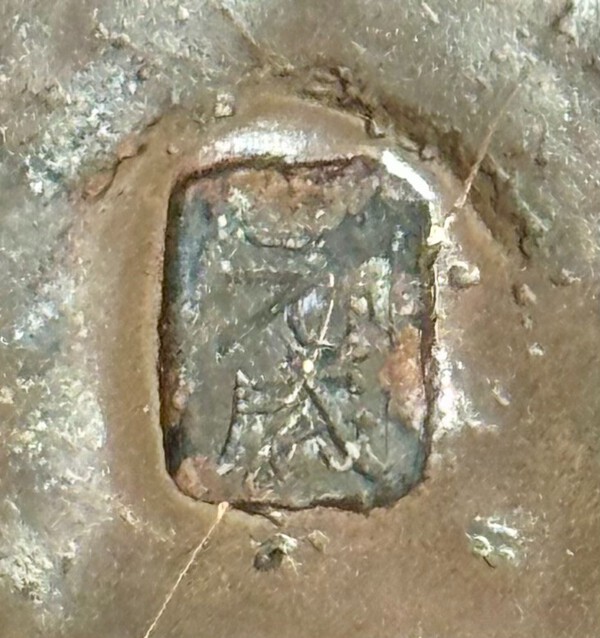
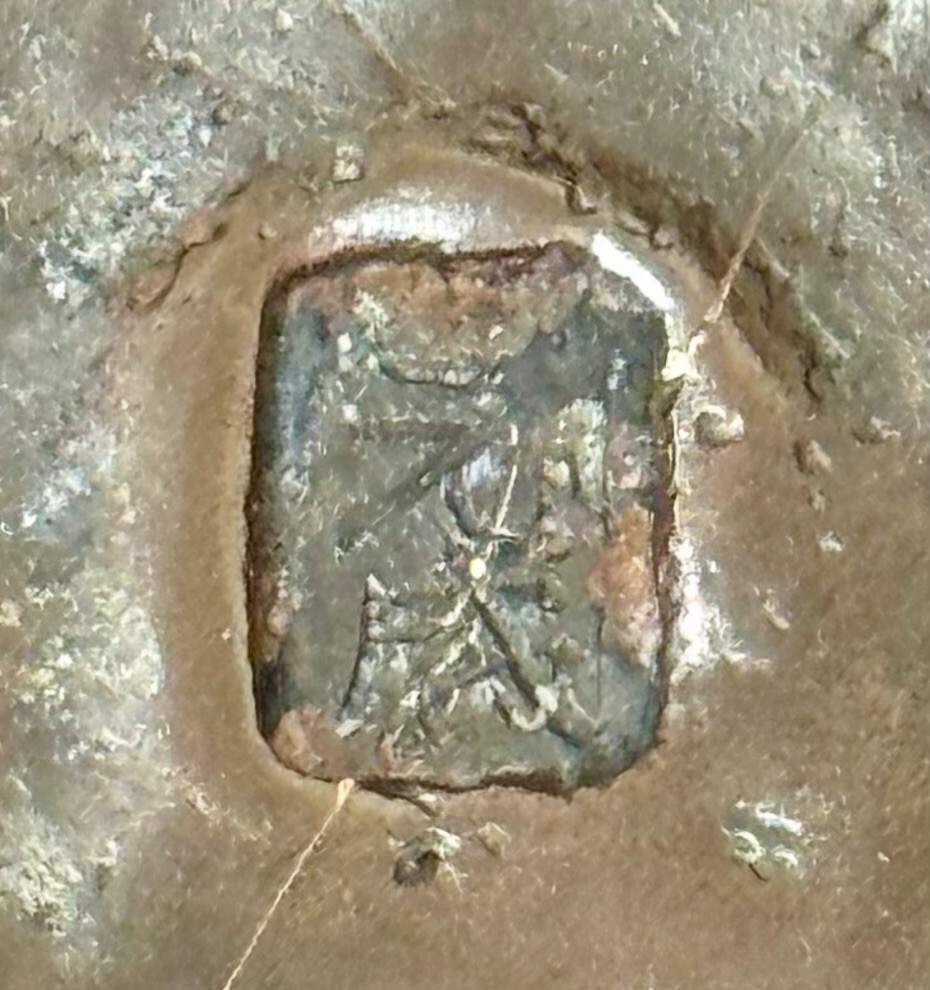
A fine Japanese cast bronze (presumed) double gourd (hyotan) bud vase with tasseled cords, a stopper and Noh Theater Demon Mask "Netsuke" well detailed around the sides with reddish-brown colored patina. The slightly recessed base is impressed with a seal mark of Mouri Motonari (元就, 1947–present), a prominent metal craftsman working out of Takaoka City in Japan, specializing in creating high-quality, handcrafted, and detailed samurai helmet (kabuto) figurines and traditional bronze, iron, and brass-based metalwork. These traditional Japanese handicrafts (Takaoka Copper Crafts) are frequently designed for display and commemoration incorporating authentic, detailed, and symbolic designs. The work is deeply inspired by Mōri Motonari (1497-1571), a famous strategist and Sengoku period warlord from the Chūgoku region, often depicting items such as the "Three Arrows" story or specific kabuto armor. In hope of encouraging three of his sons, Mōri Takamoto, Kikkawa Motoharu, and Kobayakawa Takakage, to work together for the benefit of the Mōri clan, he is said to have handed each of his sons an arrow and asked each to snap it. After each snapped his arrow, Motonari produced three more arrows and asked his sons to snap all three at once. When they could not do so, Motonari explained that one arrow could be broken easily, but three arrows held together could not. It is a lesson that is still taught today in Japanese schools and the legend is believed to have been a source of inspiration for Akira Kurosawa when writing his samurai epic Ran. Height 9 1/4 inches X diameter 3 1/4 inches.


-
It's my pleasure and privilege, Greg. Cheers.
-
Hi Greg. Here is a write up that I took from my website: "The vast majority of his works were calligraphy from the Jubokudo lineage of Shodo established by Wang Hsi-chi (Wang Xizhi), a Chinese calligrapher of the 4th century. Yamaoka created a calligraphy manual based on the 154 Chinese characters of a poem – “The Eight Immortals of the Wine Cup” – by the Tang Dynasty poet Du Fu (712 – 770 A.D.) that is still practiced by the Chosei Zen Rhode Island Zen Dojo in the US." Part of the difficulty with translating Yamaoka's brushwork is that it is highly idiosyncratic, although extraordinarily consistent. He also mixed kanji with katakana in many of his works. Although his "calligraphy manual" is useful, it is only 154 characters long. It is often said that to read a Chinese newspaper requires fluency in at least 2,000 characters. And if we suspect that the work on the panels that I posted is taken from ancient Chinese poetry, we are now talking about this language in the hands of (e.g.) Tang dynasty poets! The only person I know of who was truly an expert translator of Yamaoka is John Stevens. I still mourn his recent passing. No longer can I reach out to him for help with translation. However, I continue to work on these panels whenever I see something familiar such as the kanji for "wind" as the second character in the last column. It gives me a cross reference. Interestingly, the Chosei Zen shodo practice uses the Yamaoka manual as a template for learning calligraphy as part of and to enhance zen practice. Breathing and form are very important in shodo, as they are in zazen and budo. I originally came into contact with Chosei Zen while seeking assistance with a Yamaoka work. No one there can read a complex Yamaoka work. In fact, I'm more familiar with Yamaoka's usage and range. As it turns out, they practice shodo without needing to know the meaning of the calligraphy--even purposely ignoring the meaning of the kanji in the process of focusing on the act of creating a beautiful brushwork that reflects the state of their minds in samadhi. So, I disagree with your statement that "calligraphy without translation is mere decoration, devoid of meaning." One of the remarkable qualities of a work by Yamaoka (or Otagaki Rengetsu for that matter) is that it is readily apparent that they were the work of a martial artist. His execution of characters on this particular panel is a perfect example. The columns and character spacing are perfectly aligned, one character flowing into the next without a break. The hand is sure, fast, and perfectly controlled as if he were engaged in a sword duel. His calligraphy has been analyzed under microscopic examination to reveal the absolute confidence in which the ink has been laid down on paper. Like a fortress, there is no way to attack or penetrate these lines from the outside. The panels are over 6 feet tall and stretch out to nearly 12 feet. When you stand in front of them, it is simply overwhelming. It feels like it a face-to-face encounter with Yamaoka's life force. Of course I would love to know the meaning of the poems on these panels. They will lead to other levels of meaning. Merely decoration? I don't experience them that way. One last thought. Here are two examples of the same Hanshan poem, brushed by Rinzai Zen master Gako (Tengen Chiben) and the Obaku Zen master Baisao. Their calligraphy reflects totally different pictorial styles separated by about a century and with different intentions--both admirable. Same poem/meaning. 吾心似秋月 (Wú xīn sì qiū yuè) - My mind is like the autumn moon, 碧潭清皎潔 (Bì tán qīng jiǎo jié) - clear and bright in a pool of jade, 無物堪比倫 (Wú wù kān bǐ lún) - nothing can compare, 教我如何説 (Jiào wǒ rú hé shuō) - what more can I say
.thumb.png.7321796cea7274fcb1f468827a388a56.png)
-
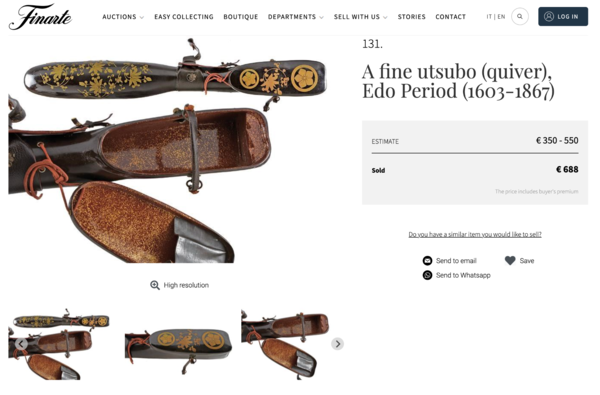
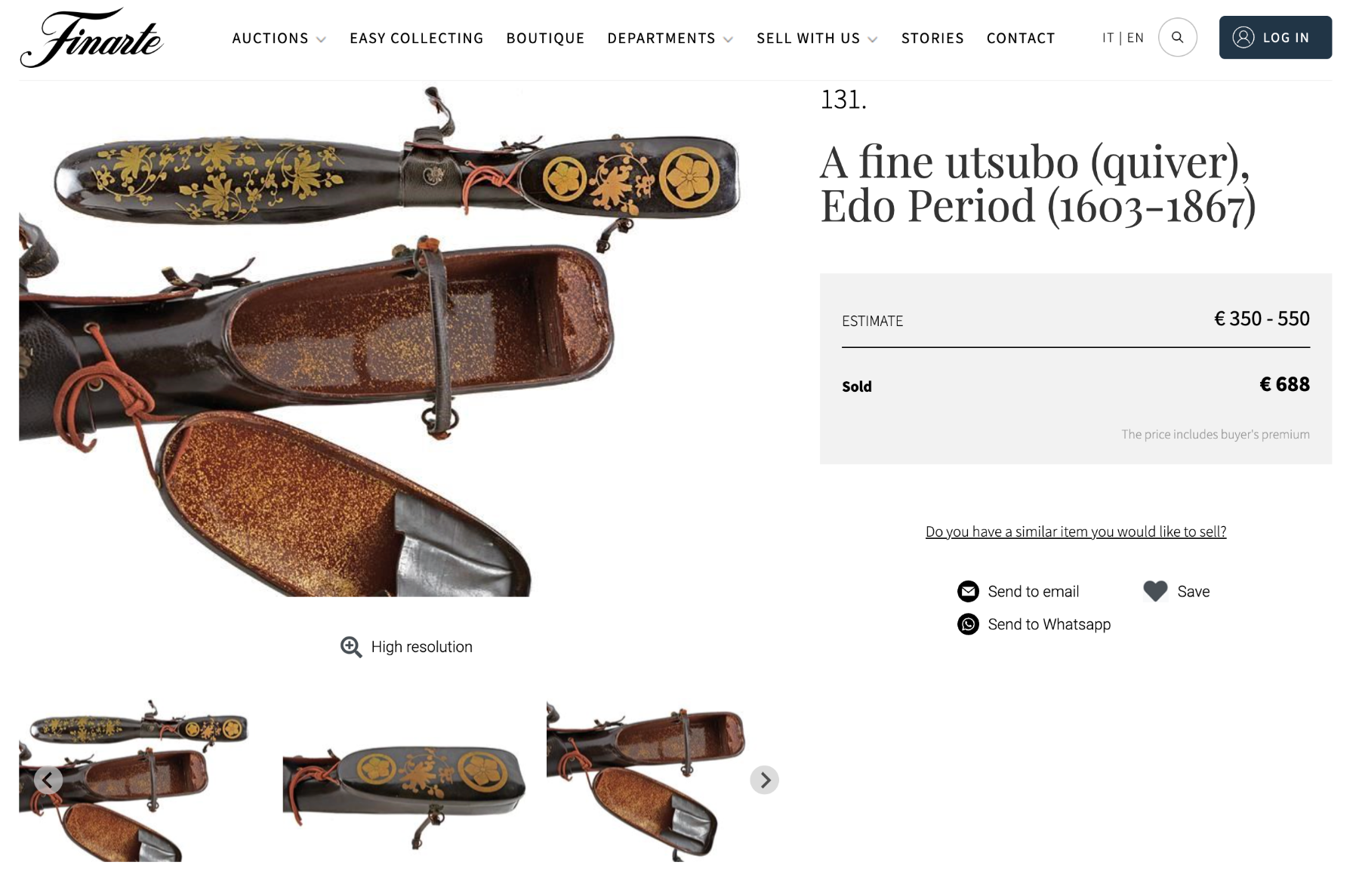
This is an example of an incredibly well-preserved utsubo:
-
Thanks, Andrew. I see that they have sold a nice of pair of utsubo (http://www.kinokuniya.tv/others/G-020/index.php) and ebira (http://www.kinokuniya.tv/others/G-002/index.php).
-
Yes, quivers. Thanks. You’re right that most are in quite poor shape. Looking for a historical example in good shape and not for actual use since they appear quite fragile.
-
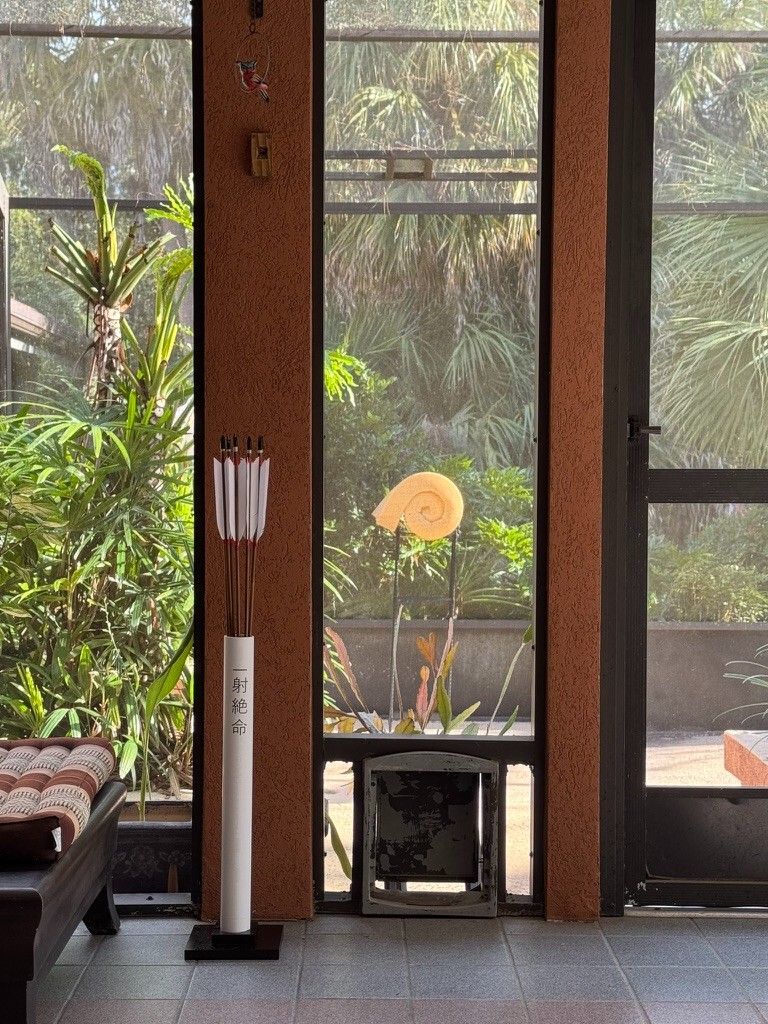
Actually, believe it or not, I learned yabusame in Kamakura Japan. Mostly riding a wooden horse for training indoors and then... I don't really need the Ebira to hold ya when practicing on a makeshift wooden horse. I just tuck the ya into the straps of my hakama, but the Ebira is fun. I practice Heki Ryū Bishū Chikurin-ha, which Shibata sensei brought to the US in the 1970's at the height of Western interest in all things Japan. There is a National Geographic documentary about him that was heavily viewed. The yabusame is another story. I got a chance to do kyudo practice with a group on a visit to Kamakura. To my surprise, they had a wooden horse in their dojo, which they let me try. When I was coming back from a 7 year sabbatical in Singapore, I took a significant amount of time off to train in Japan (both Kyoto where Shibata sensei's main teaching line remains, and Kamakura). I didn't even know how to ride a horse, so it was quite an adventure. I have made some of my own wooden turnip shaped arrowheads, which got me interested in the whistling variety. This is my makiwara just outside my covered patio and the 8 mm bamboo practice ya that I make from scratch. I do enteki on our back property that overlooks a nature reserve (just gorgeous). I am making finer sets of 9 mm ya fletched with the highest grade wild turkey feathers with horn nocks and silk wrapping to gift to teachers for ceremonial shooting.

-
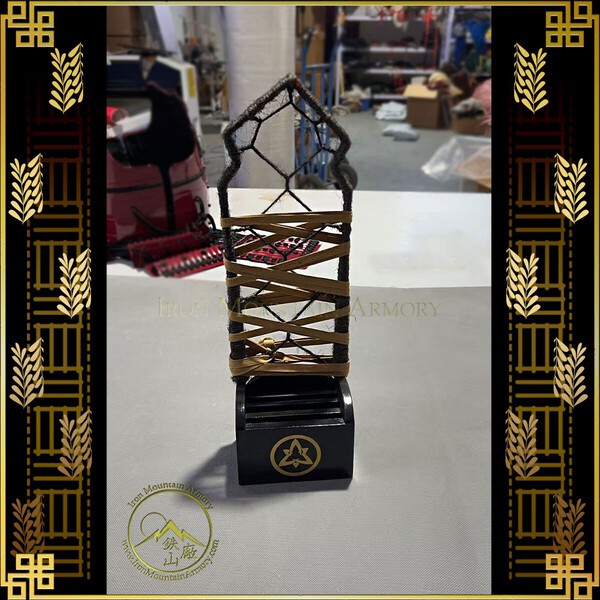
Yes, I have been on the lookout on Yahoo, Jauce, and other auction sites. This the one that I had custom made for actual use in kyudo. It has the mon of Chosei Zen, where my Zen teacher is based in Madison, WI.
-
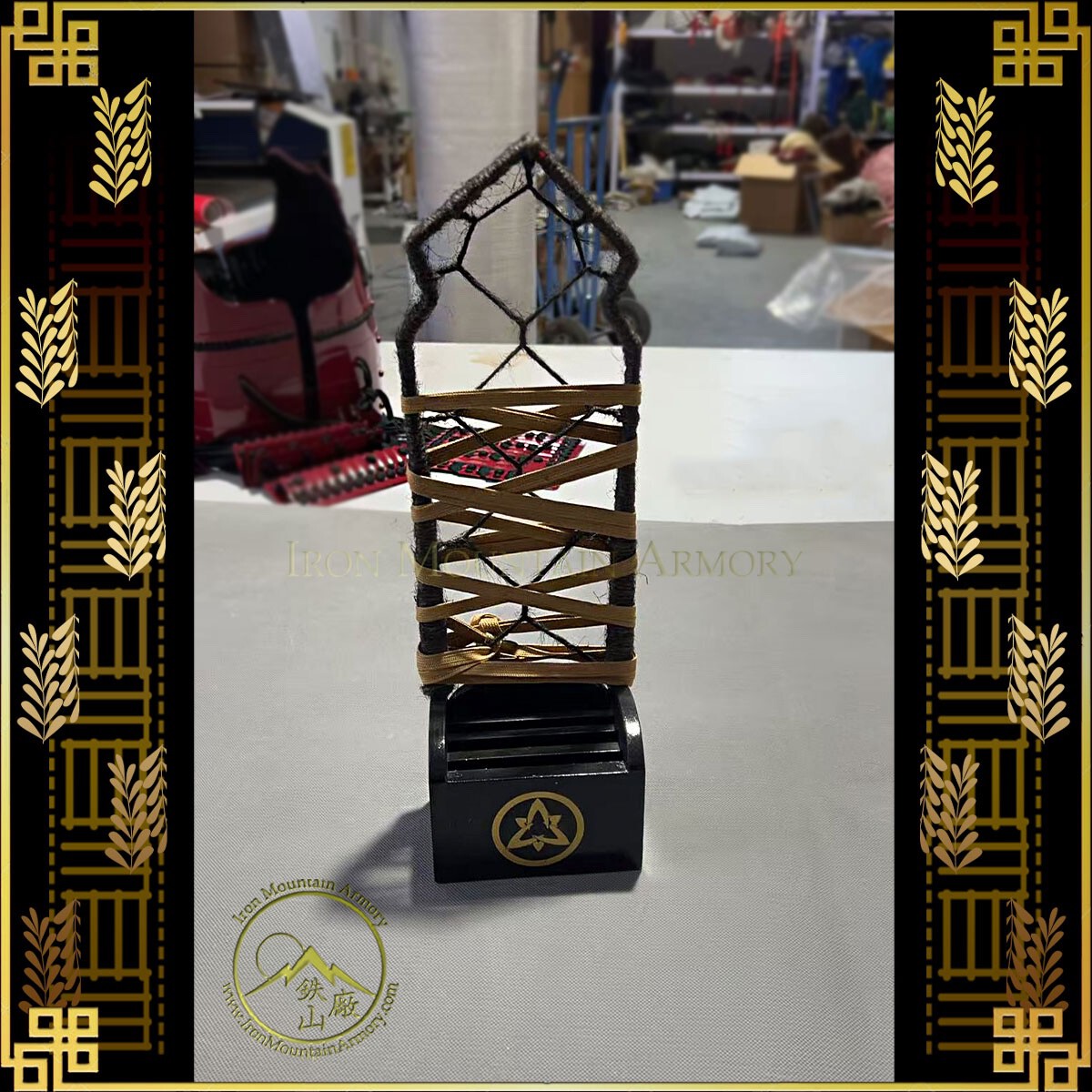
I have modern reproduction Kari-Ebira and Kabura-Ya, but am interested in Japanese vintage examples. Located in Florida, USA.
-
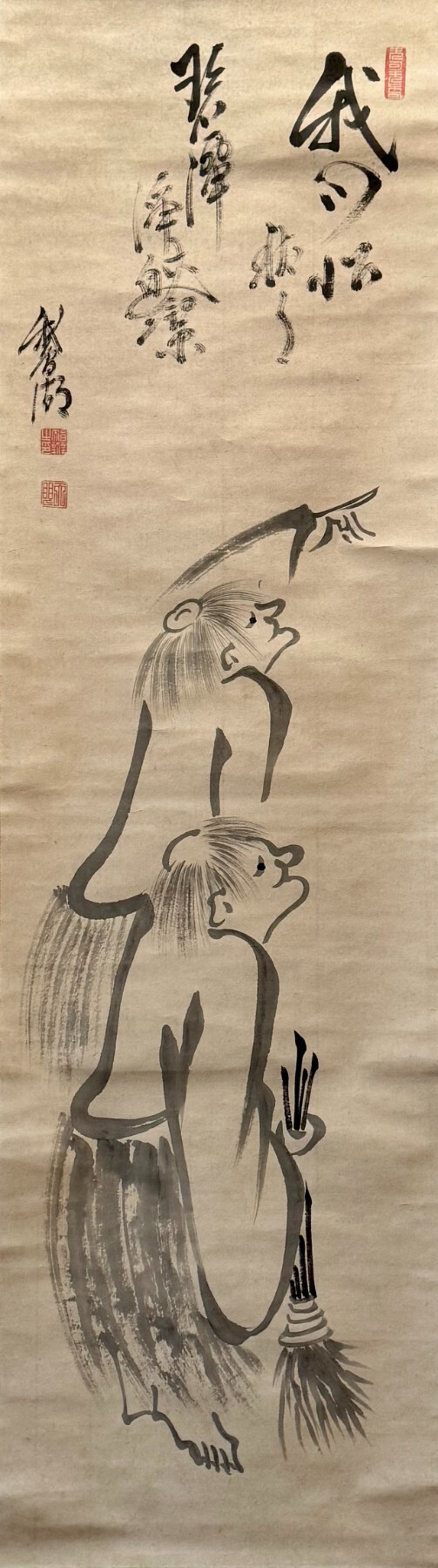
They are two mountain Tao/Buddhist sage-poets who lived on the outskirts of an established monastery during the early development of Ch'an practice and who are beloved by Zen masters and frequently featured in their artworks. Jittoku is most often depicted with a broom.
-
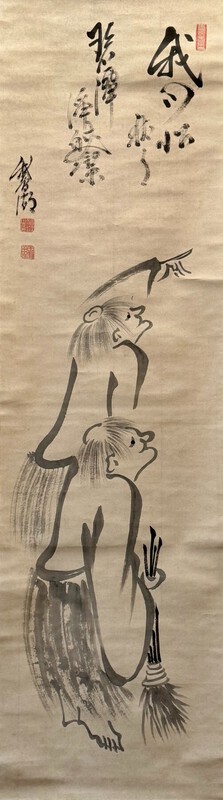
Tengen Chiben (1737-1805), whose art name was Gako (meaning "Goose Lake"), was a second generation Rinzai monk in the Hakuin Ekaku tradition. He lived and taught at temples like Onsenji and Nanzenji, leaving behind influential ink paintings and calligraphy that showcased his deep understanding of Zen Buddhism. He was known for his expressive figural paintings, especially of Zen eccentrics like Kanzan (Chinese Hanshan 寒山), "Cold Mountain") and Jittoku, following the tradition of Hakuin's lineage. However, this painting and accompanying inscription of one of Hanshan's most famous poetic quatrains (#5) shows his lively and individualistic brushwork. The dark outline of their bodies, eyes, and handle of broom stands out from the gray-wash of their clothes, serves as a compositional device to emphasize attention on the moon above. Interestingly, Gako substitutes the less formal Wǒ (我) for the first character Wú (吾) in Hanshan's poem, both of which have the same meaning. The verses connect the moon's perfect, untainted reflection to the enlightened mind (Buddha-mind or kensho), representing clarity, emptiness (mu), and the universe: 吾心似秋月 (Wú xīn sì qiū yuè) - My mind is like the autumn moon, 碧潭清皎潔 (Bì tán qīng jiǎo jié) - clear and bright in a pool of jade, 無物堪比倫 (Wú wù kān bǐ lún) - nothing can compare, 教我如何説 (Jiào wǒ rú hé shuō) - what more can I say1 This specific piece was purchased in auction for a mere fraction of its real value, perhaps unrecognized as the very example from a private collection that was published in Stephen Addiss' seminal book.2 1The Collected Songs of Cold Mountain. Translated by Red Pine; publisher Copper Canyon Press, Washington (2000), pg. 39 2The Art of Zen: paintings and calligraphy by Japanese monks 1600-1925. Stephen Addiss; publisher Harry N. Abrams, Inc., New York (1989)
.thumb.png.61a4a1903beba0c064cf6110aafed2d1.png)
-
Enso Nakahara Nantenbo (1839-1925), whose Buddhist name was Toju Zenchu (Complete Devotion), was in the last 17 years of his life the Exalted Master of the main temple of Moyoshin-ji of the Rinzai sect. A contemporary of the great lay Zen master, swordsman, calligrapher/artist, and statesman Yamaoka Tesshu, whom he met while teaching at the training hall at Sokei-ji in Tokyo and had daily private meetings with, he was a tireless reformer of Zen monastic training and activity, emphasizing strict practice and koan study. Done when he was 80 years old, this delightful Enso shows Nantenbo's sense of humor even while encouraging the pursuit of enlightenment. The moon is a more concrete manifestation of the Enso in the empiric world, symbolizing sudden enlightenment. However, he also challenges us to make a diligent, single-minded, and bold effort to seize the opportunity for achieving self-evident truth. Tsuki (moon) appears in kanji as 月. The structure is not quite haiku. If that moon falls, I will give it to you, Now try to take it. kono tsuki ga, (この 月 が) hoshiku bayarou (ほしく ばやろ) tote miyo (とて みよ)
-
- 3
-

-

-
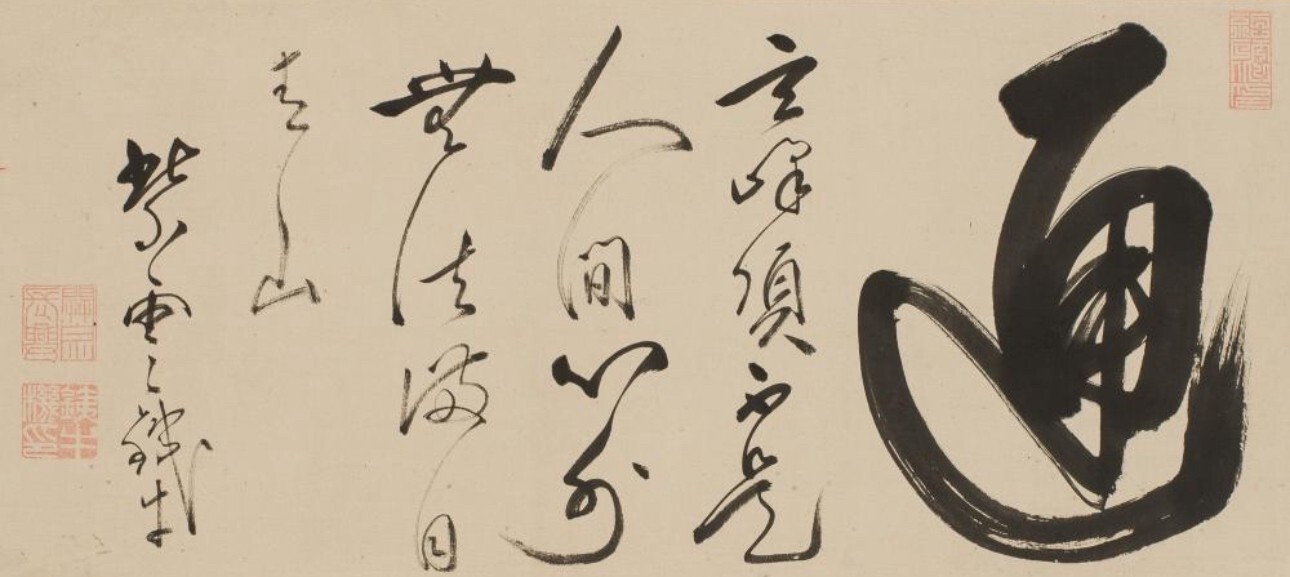
I have the full translation now. It appears as a poem attributed to Deshao (891–972) in Case #445 of Treasury of the Eye of True Teaching, which is a collection of classic Ch'an (Zen) stories, discourses, and poems used for teaching by the famous Ch'an Master Dahui (1089-1163): 通玄峰頂 (Tōng xuán fēng dǐng) 不是人間 (Bùshì rénjiān) 心外無法 (Xīn wài wúfǎ) 滿目青山 (Mǎnmù qīngshān) A monk asked Fayan, "What is one drop of water from the wellspring of Chan?" Fayan said, "It is one drop of water from the wellspring of Chan." When National Teacher Yuan heard this, he had insight at these words. Later, when he dwelt on Lotus Peak, he composed a verse saying, The peak of penetrating mystery Is not in the human world; Outside mind there are no things. Filling the eyes, green mountains. When Fayan heard this verse, he said, "It just takes this one verse to naturally continue our school." [Commentary): Dahui said, "The extinction of Fayan's school was just caused by this one verse." This poem refers to the central Ch'an teaching that we are created with the Buddha-nature or "true mind/original nature" within us. We are by nature enlightened. It is the delusion that the external world only exists as a projection of the mind that has us seeking enlightenment outside of ourselves through rational striving. 無 (Absence) is the original generative source of 有 (Presence) or the 10,000 things (called the myriad of things that comprises all of creation). 無 is "The peak of penetrating mystery"--The Tao itself. 有 are the things "in the human world." The awakened mind is not oblivious to the world. Rather, the ability to occupy that silent emptiness of 無 as home-ground through meditation practice allows us to experience the world more intensely and directly as it is ("Filling the eyes, green mountains"), without the distortions of deluded views. Indeed, we are one among the myriad of things. 無 unfurls its generative potential to create 有, which dies back into 無 in an endless cycle of creation. Rather than a separate sect of Buddhism, Zen is in fact a nativist expression of Taoist mysticism (already in existence for centuries) occasioned by the introduction of Buddhist thought from India, according to the Chan scholar and translator/poet David Hinton. Translation by Thomas Cleary, "Treasury of the Eye of True Teaching: Classic Stories, Discourses, and Poems of the Chan Tradition," (2022) Shambala Publications, Inc., pg. 287
-
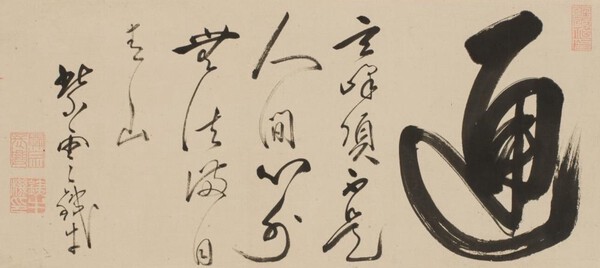
This is a wonderful "One Character Barrier" calligraphy scroll by the Obaku Zen Master Tetsugyu, which starts with a pictorial representation of the character 通 followed by an inscription that I am having a bit of trouble translating. 通 can mean "all" or "through" or "to pass through (penetrate)." in koan Case 89 of The Blue-Cliff Record, it appears as “通身是眼” (My body is through-and-through hands and eyes). I think I can make out the phrase 人同心 (people of the same mind) and also 無 (no, none, nothing, not one thing) and 山 (mountain).

-
Thanks, Jean. I didn't realize there was a translation section.
-
This is a wonderful "One Character Barrier" calligraphy scroll by the Obaku Zen Master Tetsugyu, which starts with a pictorial representation of the character 通 followed by an inscription that I am having a bit of trouble translating. 通 can mean "all" or "through" or "to pass through (penetrate)." in koan Case 89 of The Blue-Cliff Record, it appears as “通身是眼” (My body is through-and-through hands and eyes). I think I can make out the phrase 人同心 (people of the same mind) and also 無 (no, none, nothing, not one thing) and 山 (mountain).
-
I made a tsuka from scratch for a katana out of modern production materials, but of course if you want a period tsuka, that is a different proposition since altering it is not desirable unless one doesn't care about maintaining original condition. Making one requires learning how to use a traditional saya nomi chisel that can be purchased (https://www.waltersorrellsblades.com/product-page/saya-nomi-Japanese-scabbard-chisel).
-
Oki Sogen (大森 曹玄) was the third abbot of Ryōbozen-an, a sub-temple within the Myōshin-ji school of the Rinzai sect of Zen Buddhism. The temple's formal name includes the mountain name Garyūzan. Myōshin-ji, located in Kyoto, Japan, is the head temple for the largest branch of Rinzai Zen Buddhism, with over 3,000 affiliated temples. The inscription is a famous line from an account of the enlightenment experience of Dahui Zonggao (大慧宗杲, 1089–1163) in an encounter with his master Yuanwu Keqin, which also serves as a Zen koan1,2: "Master Yuanwu ascended the high seat in the lecture hall at the request of Madame Chang K'ang-kuo (張康國夫人). He said, "Once a monk asked Yunmen this question, 'Where do all the Buddhas come from?' Yunmen answered. 'The East Mountain walks on the water' (Tung-shan shuei sheng hsing).3 But if I were him, I would have given a different answer. 'Where do all the Buddhas come from (諸佛皆出自何處)? As the fragrant breeze comes from the south, a slight coolness naturally stirs in the palace pavilion (薫風自南来).' When I heard this, all of a sudden there was no more before and after. Time stopped. I ceased to feel any disturbance in my mind, and remained in a state of utter calmness." Yuanwu was quoting the conclusion verse from a poetry contest in which Emperor Wenzong of the Tang dynasty wrote an introduction verse stating, "Others suffer from the scorching heat, but I love the long summer days (別人受酷暑之苦,我愛夏日長日)." The poet Liu Gongquan then composed the conclusion verse, which Yuanwu quotes as his preferred answer to "Where do all te Buddhas come from?." The story highlights the Zen principle that enlightenment is not found through intellectual study or dogmatic answers, but through direct, immediate experience of the self-evident nature of truth. Just as one doesn't need to be told a southern breeze is cool, the reality of the Dharma is something to be directly experienced, not intellectually understood through words or concepts. We live our lives obsessed with gain and loss, caught up in self-interest, biased toward love and hate, and right and wrong, and we are driven back and forth by the dichotomous biases of the discriminating mind. Koan study is intended to induce the "Great Death," which severs us from this duality. 1Chun-Fang Yu, "Ta-hui Tsung-kao and Kung-an Ch'an." Journal of Chinese Philosophy V. 6 (1979) pp. 211-235 2Case 92 in "Entangling Vines: A Classic Collection of Zen Koans" (2013) 3Ibid, Case 49

-
- 3
-








.png.d881df9583e7758940d595aab9fc9bb6.png)
.png.ae8116e4e98763de7549db66e1343e22.png)