Iaido dude
-
Posts
547 -
Joined
-
Last visited
-
Days Won
3
Content Type
Profiles
Forums
Events
Store
Downloads
Gallery
Everything posted by Iaido dude
-
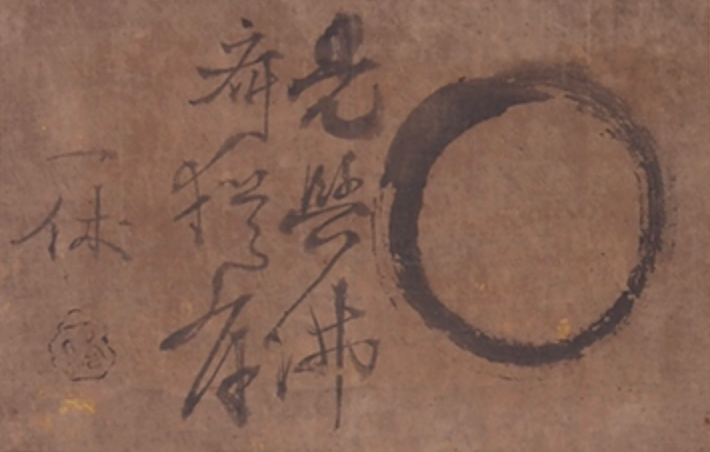
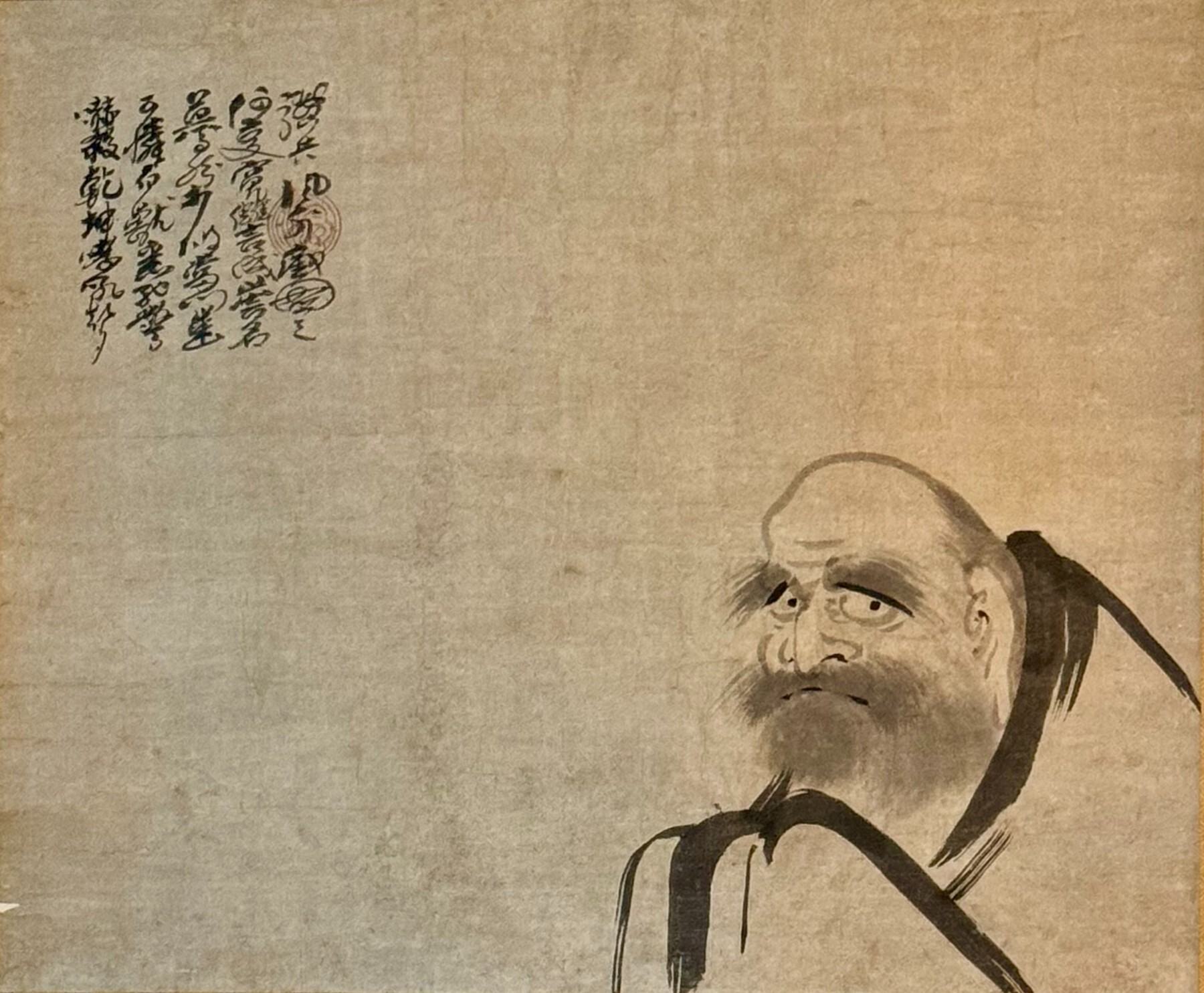
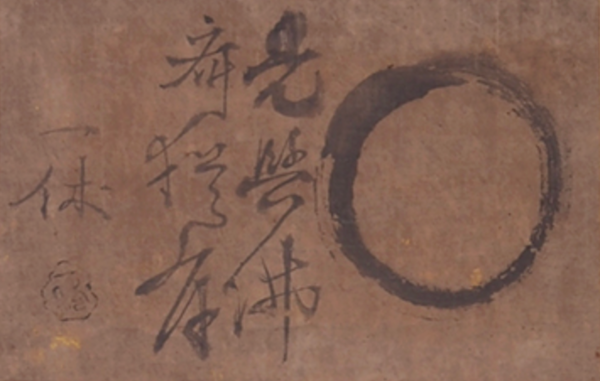
I'm trying to translate this Enso purportedly by Ikkyu Sojun, an eccentric and iconoclastic Zen master of the 15th Century. It looks like the first row on the right references Buddha and the next row to the left references Autumn moon. It is signed "Ikkyu 一休). Any thoughts?
-

Mount Fuji (富士山) painting and calligraphy by Kobayashi Taigen
Iaido dude replied to Iaido dude's topic in Other Japanese Arts
Thanks, Piers. Wonderful. I had left this without the original calligraphy brushed by Kobayashi. Then today, my wife noticed that 佳 appears in both of the first lines (so there are a few additional kanji). It is the second character of her Chinese name. And of course she had to let me know that their is a calligraphy in "our" collection with her name in it--twice no less! -
Mount Fuji (富士山) painting and calligraphy by Kobayashi Taigen
Iaido dude replied to Iaido dude's topic in Other Japanese Arts
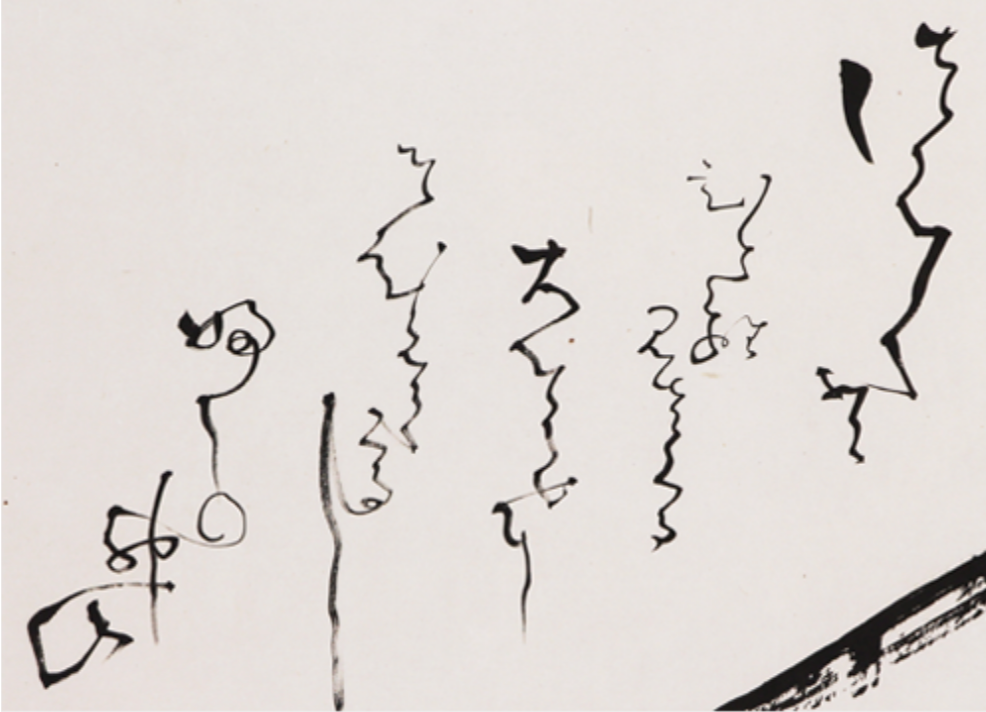
Here is the Japanese waka poem. The first character is kanji, followed by hiragana (I may be off a bit on the last line). 晴れて佳し 庫もりても佳し 富二の山 元の姿は 变わらザリケリ -
Very elegant and heartfelt—both the art and the display. She would approve!
-
Wow! Please post the entire tanzaku and ceramic for us to admire.
-
Sorry, here's the last panel.

-
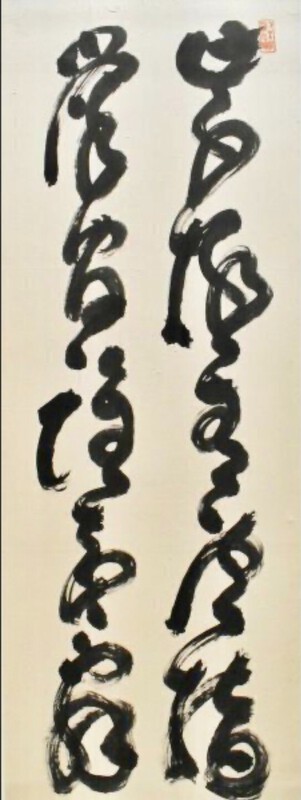
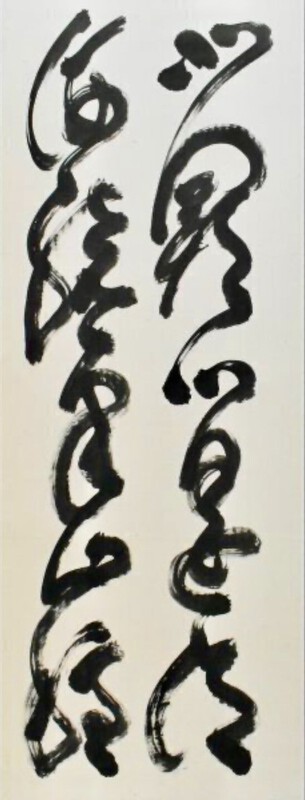
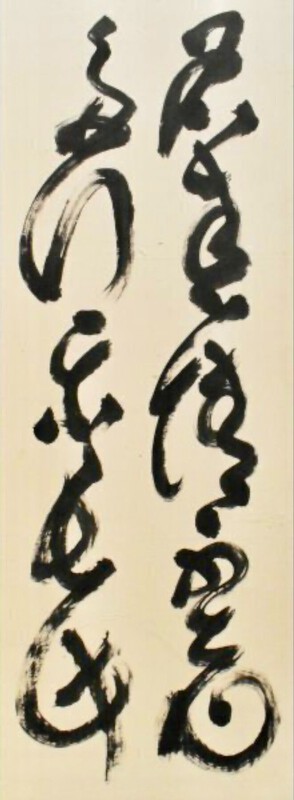
This is a gorgeous work in outstanding condition by Yamaoka currently being offered in auction that I cannot find a reference for in published books, prior online auctions or well-known online collections. Many of his work of this kind consists of of a set of 6-panel screens. This is one screen, which may suggest that it has been separated from the original set. Or it may have been intended as a single screen. I suspect that the translation may help solve this mystery. As usual, Yamaoka's cursive script, while consistent, is highly idiosyncratic. I find it very hard to decipher, although I am trying to learn his style from a famous poem that he brushed to provide instruction on calligraphy for his wife. Some of the challenge is also how he connects kanji or hiragana characters. This work is clearly pure kanji, which suggests that it is a poem or Ch'an teaching. He was classically trained in Chinese literature, poetry, and Ch'an writings.




-
Chiyo-ni Tanzaku (translation help please)
Iaido dude replied to Iaido dude's topic in Other Japanese Arts
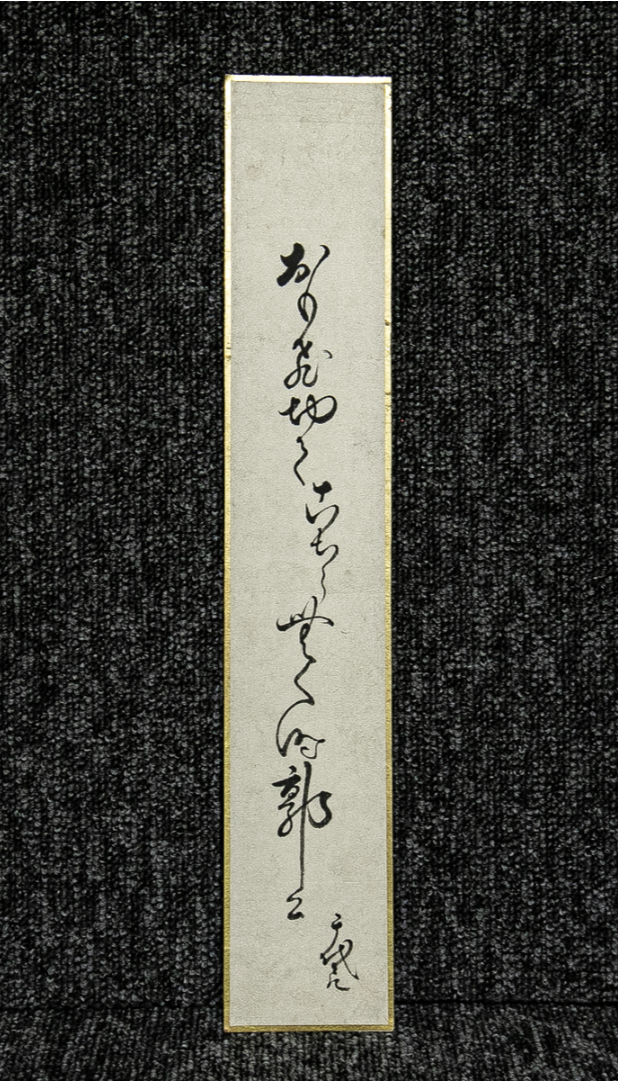
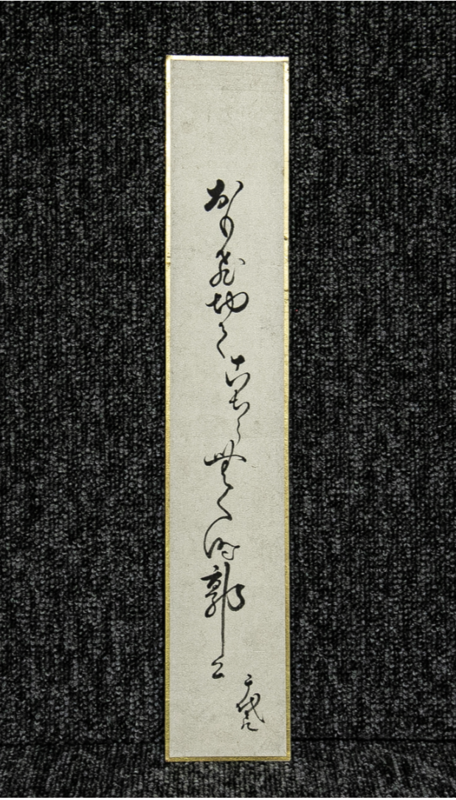
Briliant. Thanks, Steve. 郭公 is also the way Otagaki Rengetsu often brushed the kanji for cuckoo in her waka. Chiyo-ni has several oft cited haiku that reference the cuckoo, but this is not one of them. There is a Japanese book of the complete works of Chiyo-ni, which I am thinking of buying. I found a used copy, but it is in quite poor condition. -
This appears to be a tanzaku by Kaga no Chiyo. I can't quite get started on the translation to know how to proceed.
-
Your set of seasonal tanzaku are stunning. Such powerful, focused, precise brushwork.
-
I’ve never understood whether the coloring of the paper (very common on tanzaku) is done before the brushwork or added some time later. This is the link to the Rengetsu Foundation, which has compiled and translated a searchable database of her waka: https://www.rengetsu.org/
-
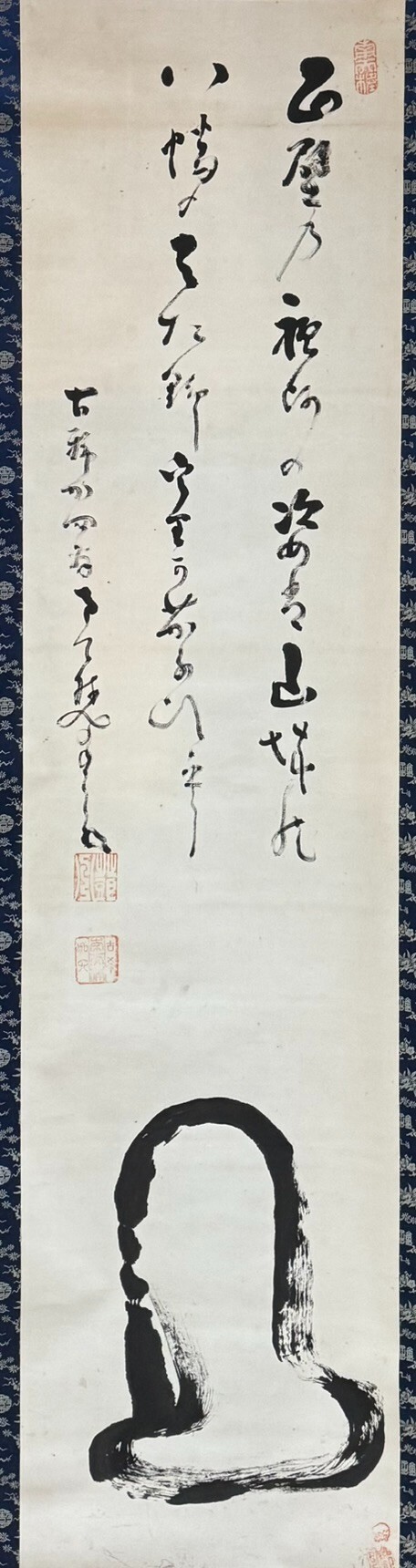
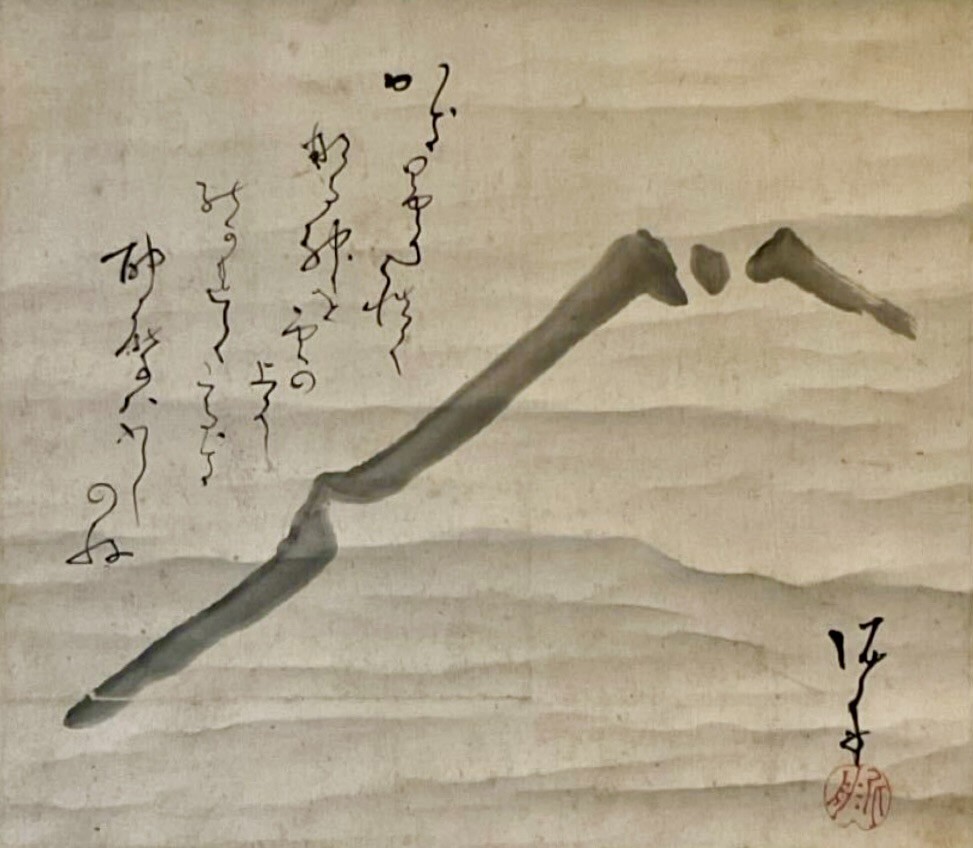
Nakahara Nantenbo (1839-1925), Buddhist name Toju Zenchu (Complete Devotion), was in the last 17 years of his life the Exalted Master of the main temple of Moyoshin-ji of the Rinzai sect. A painting theme brushed extensively by Nantenbo is the "wall-facing Daruma" or "menpeki Daruma 面壁達磨," referring to the ancient First Patriarch's nine years of meditation facing a wall. As early as the fourteenth century in Japan, Zen artists playfully depicted the sage's silhouette by means of a sing, meandering outline in a technique known as ippitsuga (one-stroke painting). Nantenbo's conception of the menpeki theme is even more abbreviated than those of his predecessor's. By eliminating the distinction between the head and shoulders, he further distilled the silhouette of the First Patriarch. A simple inverted U-shape is used to connote Daruma's body, and a horizontal ellipse is meant to imply his knees beneath monkish robes. The abstract nature of the figure only accentuates the quality of the ink, applied in a single sweeping stroke of great energy. The calligraphy exhibits Nantenbo's legendary Zen humor. 面壁乃祖師の姿者 山城能八幡野 者たの宇里可 茄子比釆 The shape of Daruma facing the wall, is it like a melon or an eggplant from the fields of Hachiman in Yamashiro? Was Nantenbō simply inept at pictorial representation, or was he a visionary who pushed Zen painting further into a realm of dynamic epigraphs and emblems? The inscription on his menpeki painting offers a playful acknowledgment of the image's ambiguous nature. It is likely, in fact, that Nantenbō intentionally challenges people's rigid preconceptions about the nature of Daruma. In his autobiography he notes that while he receives many requests for paintings of Daruma, his images are often criticized for looking like owls or octopi. "Very interesting," the old priest observes. "People talk as if they have seen Daruma, but who has seen the original Daruma?" Provenance: Nagaragawa Gallery (Tokyo). Personal collection.


-
- 2
-

-

-
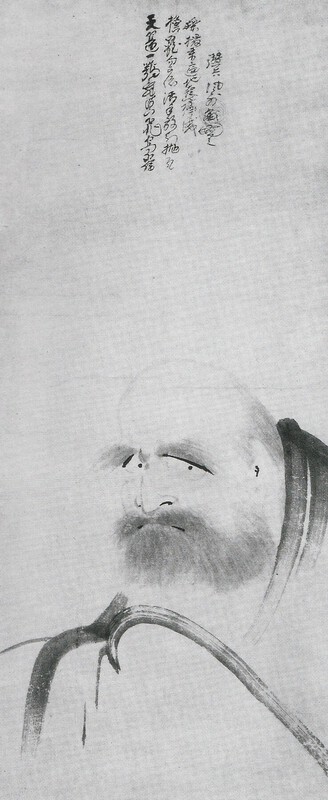
Here are a few other masterpiece paintings by Fugai with inscription--one identical and another different than the one in my collection.

-
Lovely. Gyokuro and the concept of umami taste are two experiences that I have not yet had the pleasure of exploring.
-
My "kyudo" corner with Otagaki Rengetsu and Kaga no Chiyo works. My wife is very good at keeping all of my "hobbies" tidy.

-
Yamaoka Tesshu Daruma Painting with Calligraphy (1885)
Iaido dude replied to Iaido dude's topic in Other Japanese Arts
Another Yamaoka Daruma painting I recently acquired with same inscription as the original work I posted. HIs more commonly seen signature here is within the body of Daruma.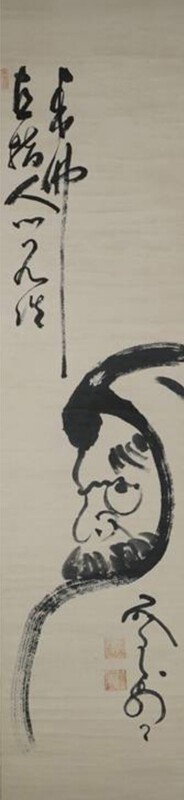
-
Etsuzan Doshu (1629-1709). Born in China as Yueshan Daozong. He came to Japan in 1657 to study with Mokuan. In 1705, six years after he produced this calligraphy, he became the seventh abbot of Manpukuji temple of the Chinese Obaku sect of Zen buddhism near Kyoto. Regarded as one of the finest of the Obaku calligraphers and respected as Sho no Etsuzan (Etsuzan of calligraphy). He frequently started his poems with a dramatic large kanji character. Personal collection. Provenance, Zen Art Gallery (Belinda Sweet). Poem translation: "Small pebbles can build a great wall; purchase this kind of gold all life long!"
-
- 2
-
-
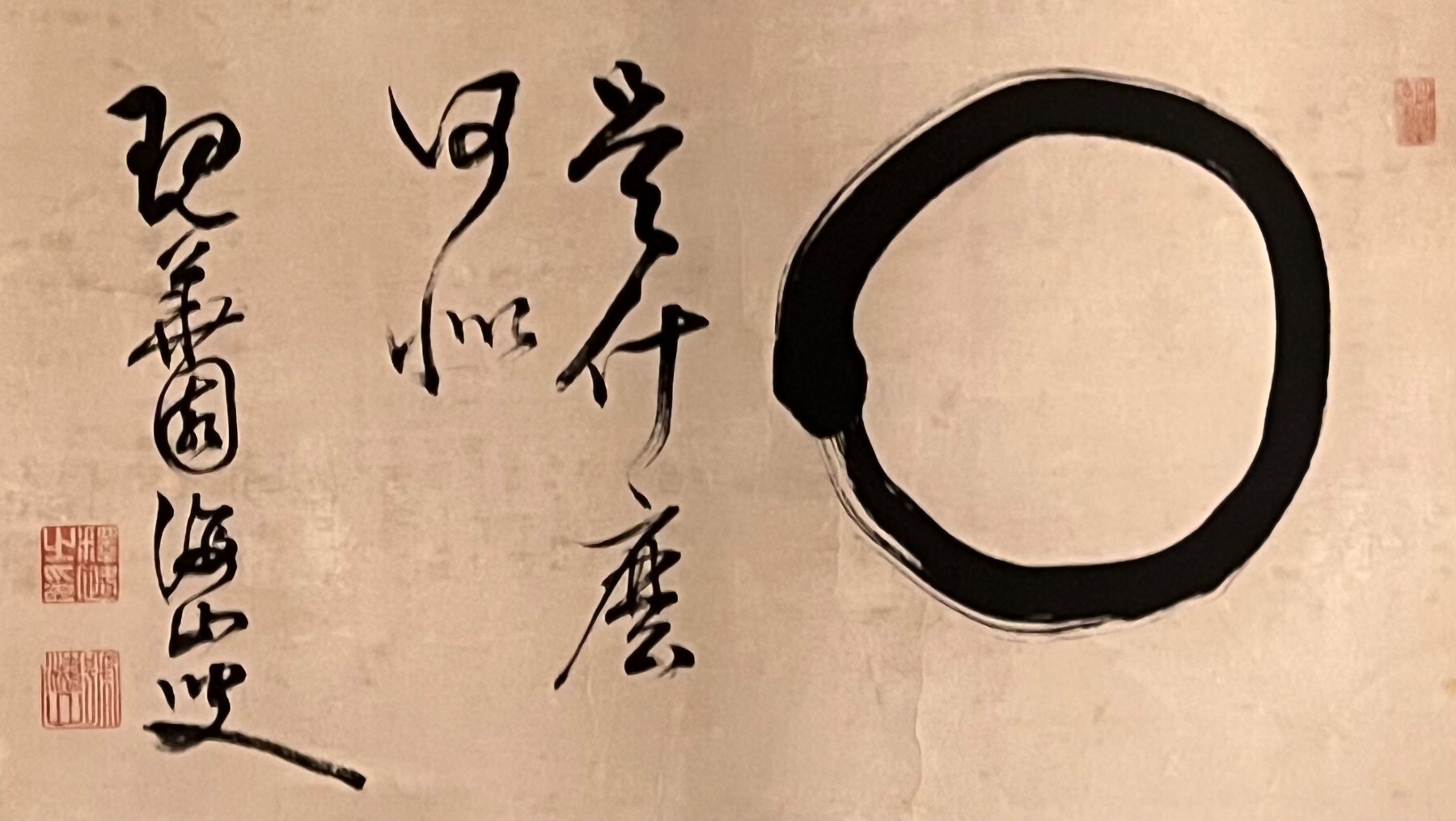
Kaizan Sokaku (1769-1846). Enso—the iconic and celebrated "circle" brushed by Zen Masters—often interpreted as a representation of both the void and the universe, emptiness and fullness, the one and the all. Calligraphy in cursive asks, "Where is it?" or "Why ask why?" to turn the experience of contemplation back to the Zen practitioner's sense of self and true nature. I use this image for the personal blog section of my website. Personal collection. [Published in Enso: Zen circles of enlightenment. Audrey Yoshiko Seo, Shambala Publications, Inc. Singapore 2007]

-
- 1
-
-
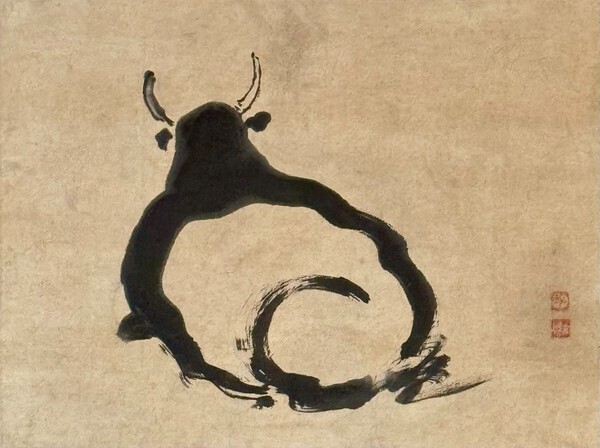
Kogan Gengei (1748-1821). Born April 27, 1748. Rinzai Zen abbot of Kogen-ji temple in Tamba. He was a disciple of Hakuin Ekaku and Genro Suio. When a Zen bull sits, it is immovable. The bull appears to be formed from an Enso. Provenance, Zen Art Gallery (Belinda Sweet). Personal collection.
-
- 2
-
-
-
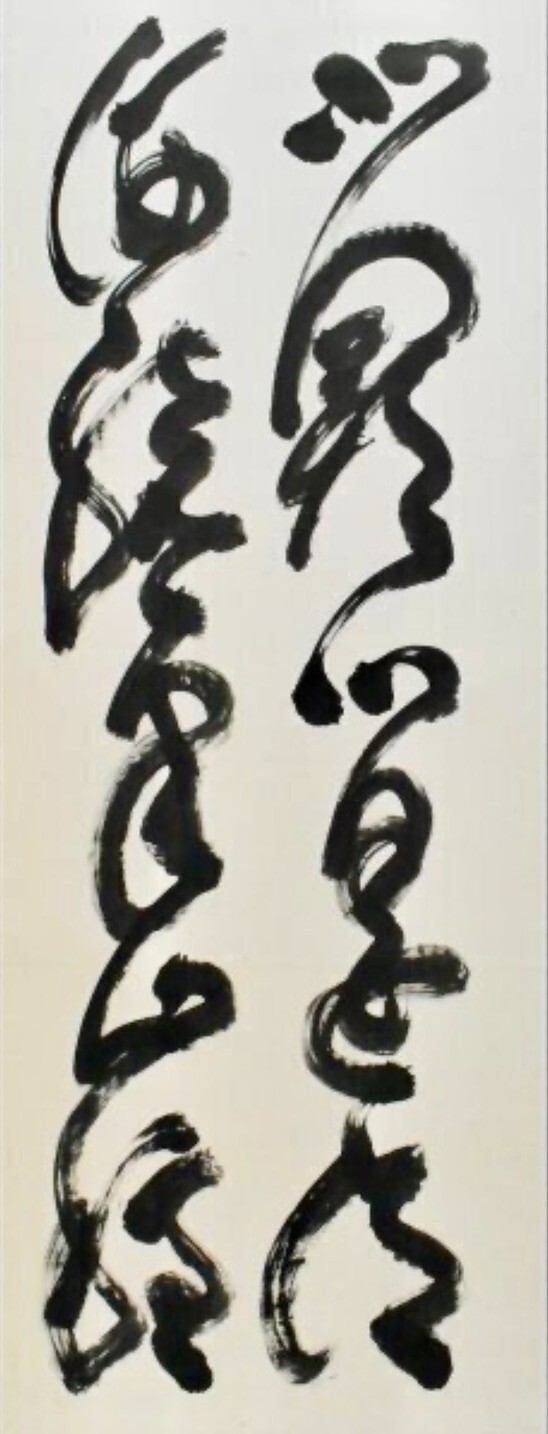
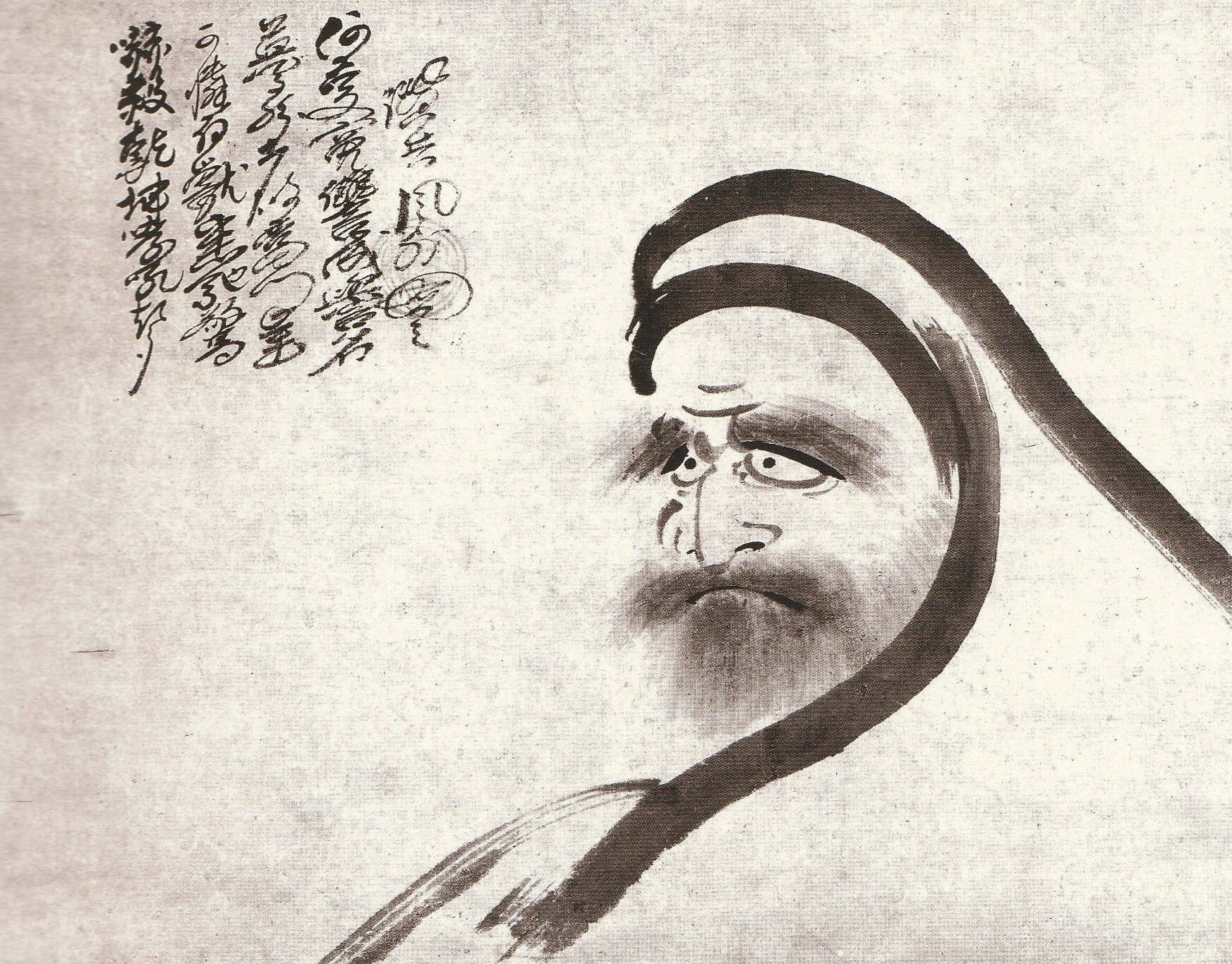
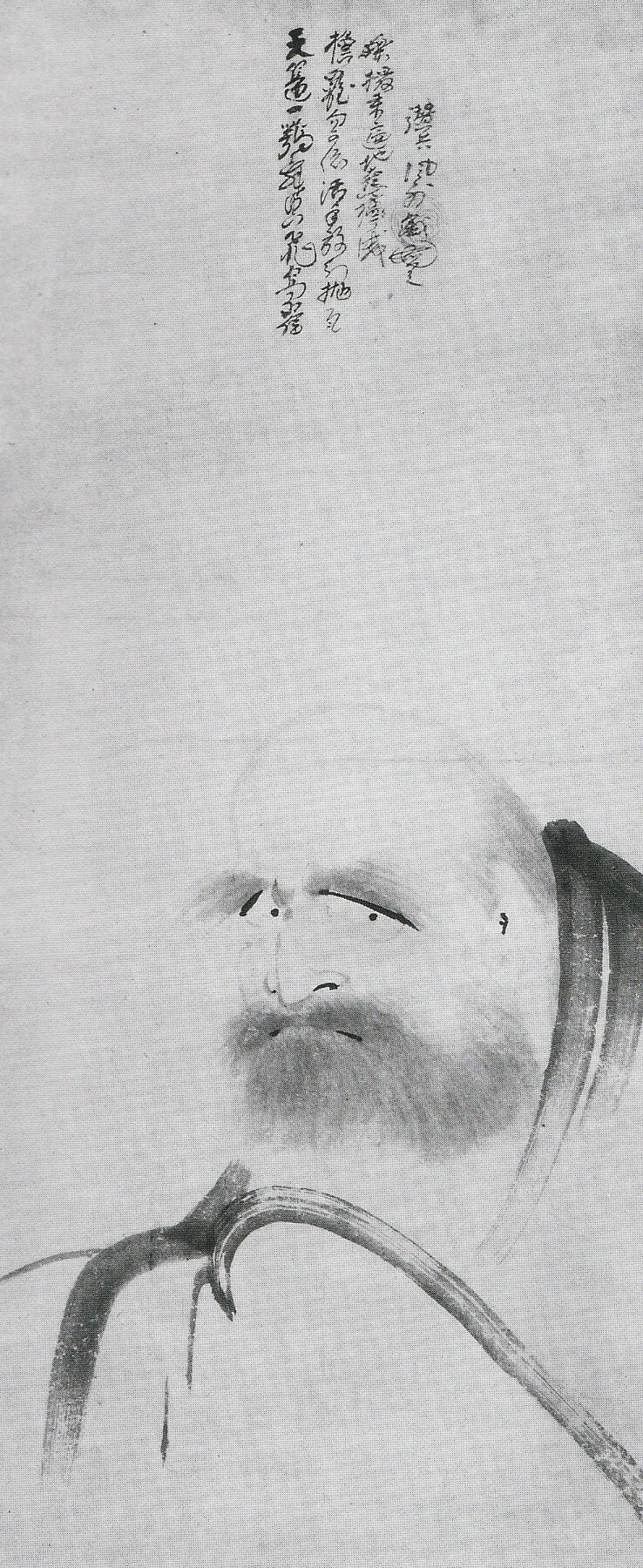
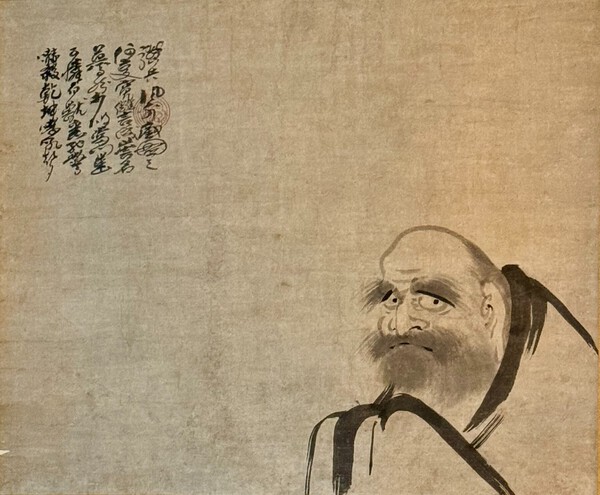
This is a masterpiece by Fugai Ekun (1568-1654). In 1616 he became the Soto Zen abbot of Joganji in Sagami Province (now part of Kanagawa Prefect.), but after only a few years he gave up his position to live in caves of the Kamisoga Mountains, which earned him the nickname 「穴風外」Ana Fūgai ('Cave Fūgai'). Poem translation (Okabe Hisashi, "400 Years of Zen Painting"): The sound of roaring, terrifying Heaven and Earth Pitifully, the hundred beasts all run away in fright Suddenly, he strikes and breaks the front teeth "The paintings of Fūgai Ekun, simply brushed with ink on paper, convey a depth of spirit that makes them unique even within the sphere of Zen art. His works are imbued with a haunting intensity; the eyes of the figures he depicts penetrate deep into the human spirit, providing a sense of direct communication with the artist. Yet Fūgai has not received the recognition that other Zen artists have been given, in large part because he lived far away from the major cultural centers, had no pupils, and founded no school. Historically, Fūgai was the first and most important Zen monk-painter of the Sōtō sect. Fūgai also anticipated future directions in Zenga by inscribing his own poems on his paintings and by brushing informal self portraits. His final years were spent in nomadic travel; he died almost literally 'on the road'." Provenance, Zen Art Gallery (Belinda Sweet). Personal collection. [The Art of Zen: paintings and calligraphy by Japanese monks 1600-1925. Stephen Addiss; publisher Harry N. Abrams, Inc., New York (1989)]
- 1 reply
-
- 2
-
-
Chiyo-Ni's Calligraphy of her Haiku "Autumn Moon"
Iaido dude replied to Iaido dude's topic in Other Japanese Arts
I picked up the new release in Singapore last month, which is much more nicely laid out than the original. -
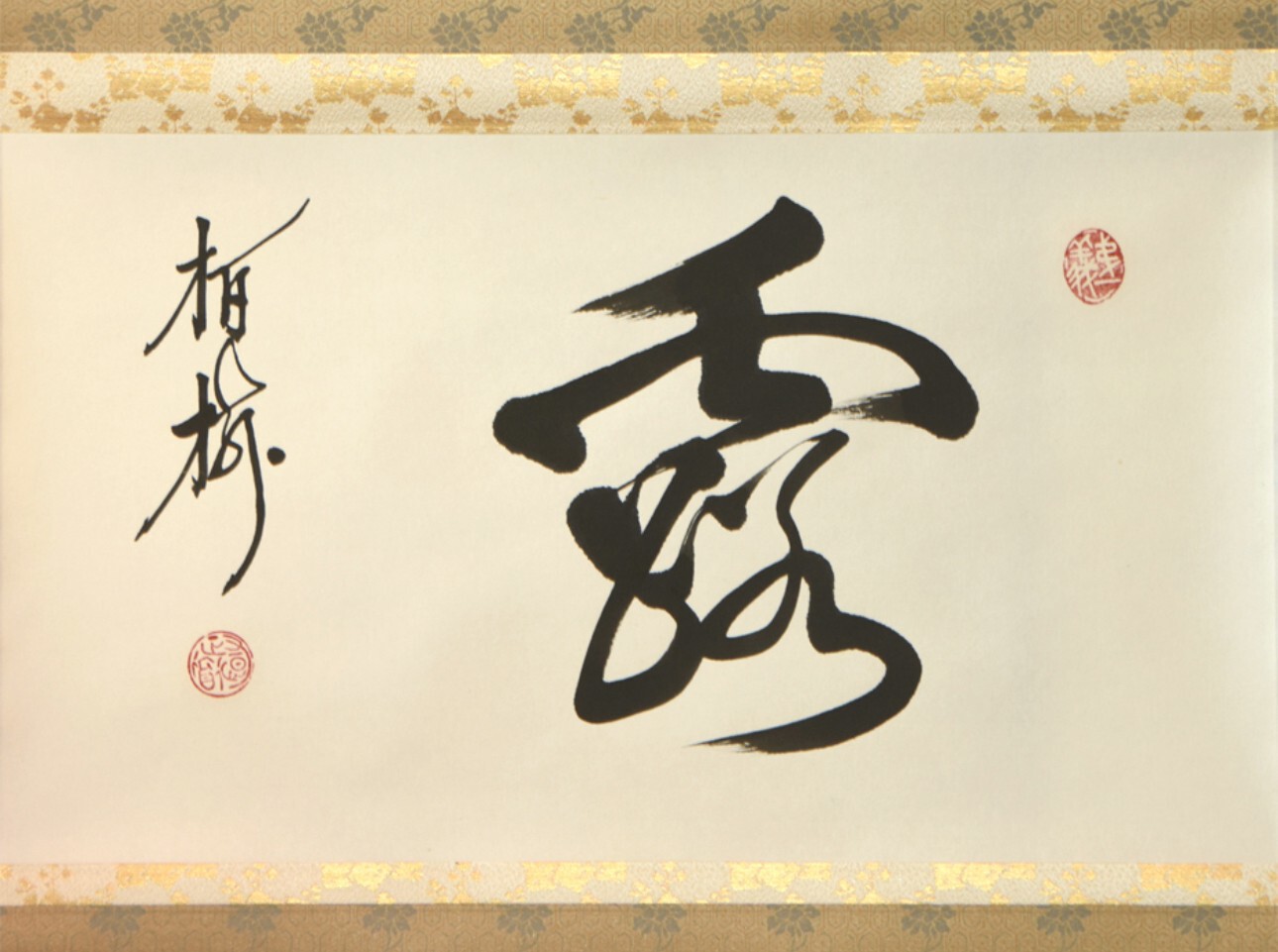
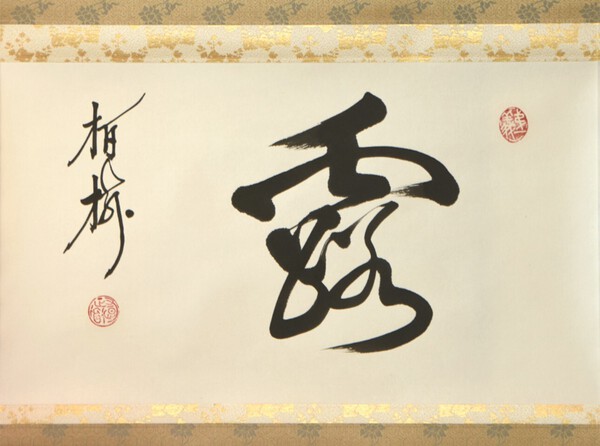
Here is another calligraphy of the character for "Dew 露" by Masamichi Yoshida (Kaijuan), head priest of the Kencho-ji School.
-
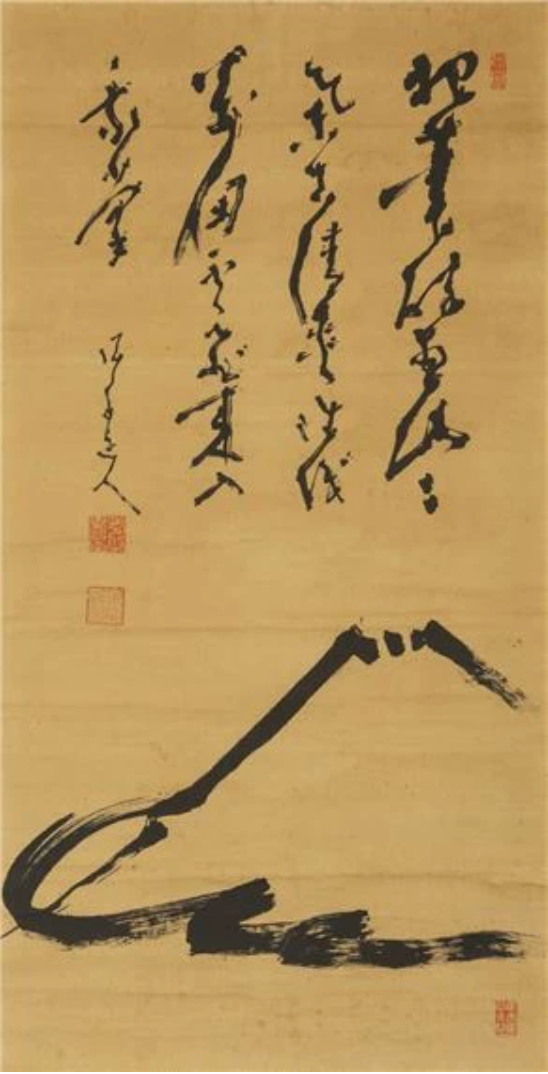
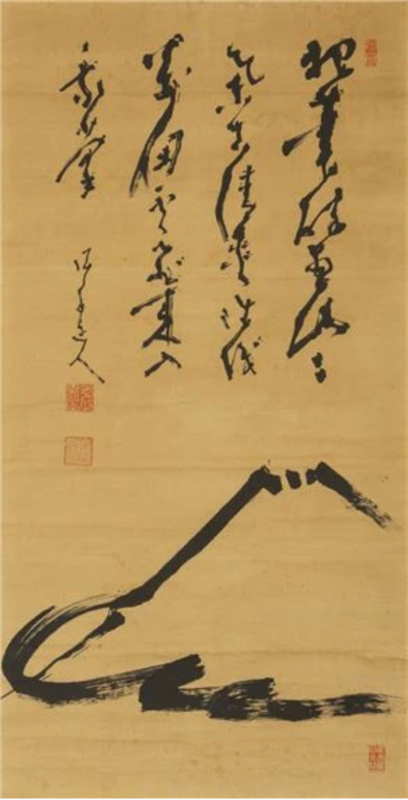
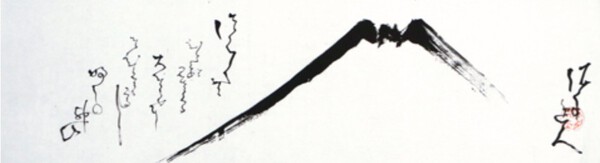
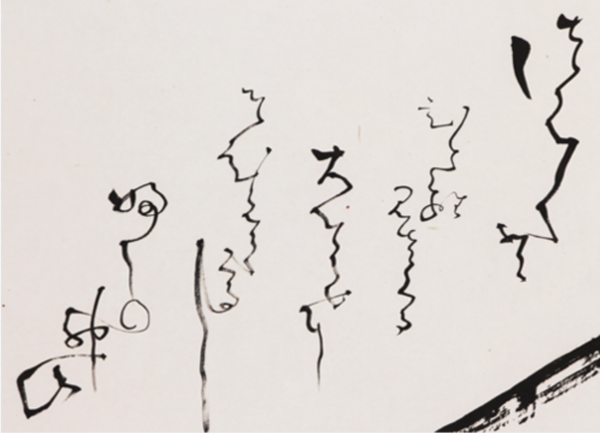
Takahashi Deishu (高橋 泥舟; 1835-1903) was a samurai, calligrapher, author, and an important compatriot of his contemporaries Yamaoka Tesshu and Katsu Kaishu during the transition from the Takugawa Shogunate to the Meiji Emperor. HE He was born the second son of the hatamoto Yamaoka Masanari (山岡 正業). He succeeded to his mother's side and was adopted by Takahashi Kanetsugu (高橋 包承). The Yamaoka family was well known for the Jitokuin school (自得院流, Jitokuin-ryū) of spearmanship, and he trained under his elder brother Yamaoka Seizan (山岡 静山; 1829-1855), who was regarded as a great master in the use of the spear. In 1855, Seizan died of illness at the age of 26, and Ono Tetsutarō, a student of his, married into the Yamaoka family. Taking the family name, he became Yamaoka Tesshu. Takahashi Deishu served as a minister in the district of Ise, retiring from public life soon after the Meiji Restoration of 1868 to devote himself to poetry, calligraphy, and painting. During the time he was studying calligraphy under Nagatani Kawakane. he stated, "In extending the brush head instead of the spear, one must reveal the truth of enlightenment." This aged and worn work shows a version of Takahashi's Mount Fuji as a zenga subject that stretches back along the dharma transmission lineage to Nantembo and his disciples including Yamaoka. Interestingly, no two examples of his Mount Fuji bear the same inscription (see below). I can't get a fix on the translation given his highly idiosyncratic script and the lack of a source for translation of any similar work. Reference. Ken Zen Sho: The Zen Calligraphy and Painting of Yamaoka Tesshu (Katsu Kaishu, Takahashi Deishu, Terayama Tanchu). Bankasha International Corporation (2014)

-
- 2
-
-
-
This is one that got away. Really wonderful waka with painting. I should have put in a higher bid.

-
I am not an expert on her ceramics, but I have seen a lot of them in my studies. She made simple ceramics by hand with equally simple glaze to sell cheaply at the market to her admirers who came from far and wide--and to be used, not collected. As you say, they are literally dripping with wabi and sabi. It seems that her method of incising calligraphy was by using some kind of stylus, which was somehow also done for her calligraphy to achieve a very fine and uniform line without ink splotches at the beginning of each stroke (remarkable control!). It takes a very steady and strong hand to achieve this kind of result. If the ceramic appears refined, it is not her creation. If there is a signature on the bottom, it is also not her work.