Iaido dude
-
Posts
542 -
Joined
-
Last visited
-
Days Won
3
Content Type
Profiles
Forums
Events
Store
Downloads
Gallery
Everything posted by Iaido dude
-

Yagyu Shojo Calligraphy (Meirekireki rododo 明歴々露堂々)
Iaido dude posted a topic in Other Japanese Arts
Yagyu Shojo (柳生紹尚 1926-1989) was the Rinzai chief priest of Hotoku-ji (法徳寺) subtemple of Daitoku-ji (大徳寺). His calligraphy is prized among practitioners of Zen and Japanese tea ceremony (chinoyu). In this calligraphy, Yagyu brushes a phrase that is well-known in Japan: Meirekireki rododo 明歴々露堂々 Signature: 大徳法孫柳生紹尚 Daitoku Hoson Yagyu Shojo Seals: 大徳法孫 Daitokuji (prefatory); unclear; 紹尚 Shojo The literal meaning is "bright, clear, and unmistakable (明歴々), like dew in the open air (露堂々), with nothing to hide." 露 (dew, revealed) was also brushed by Tetsugyu in my collection as part of the phrase "Self Revealed." Figuratively, 明歴々露堂々 represents a state of mind where the truth is not hidden, but is completely evident and open to view--often in the concrete world of mountain streams, frost-covered leaves, and a lone flower growing through a crack in the concrete. It suggests living authentically, without pretense or obscurity. In Zen, it signifies that ultimate truth is not a hidden mystery but manifests openly and directly. If we don't perceive it, it is simply because we are not looking or our perception is clouded. The origin of this phrase is Zenrin Kushū (禅林句集), one of the compiled collections of "capping phrases (jakugo)" used in Zen koan training. In Rinzai Zen tradition, the practitioner is directed not to grasp a koan by fixing on its words or looking for intellectual explanations. One has to embody the koan so that self and koan are one. Once a particular koat has been completed, the roshi will instruct the practitioner to bring a verse or phrase that captures the insight of that koan. This phrase is called a jakugo. The sense is that although the awakened state of enlightened seeing can be likened to pure gold, undefiled by language ("not founded by words or letters"), in order to be conveyed to others, it has to be mixed with the sand of language (i.e. jakugo). I especially appreciate the beauty of his semi-cursive (gyosho) rendering of 露 in the scroll, as compared to the block/regular (kaisho) writing on the tomobako. There is an Obaku/late Ming Dynasty influence that also reminds me of Mokuan, another master calligrapher and disciple of Ingen.



-
- 1
-

-
Enso Painting by Chuho Sou (1759-1838)
Iaido dude replied to Iaido dude's topic in Other Japanese Arts
I'm a Zen student of the Chosei Zen Dojo in Madison, WI that follows the Chozen-ji Rinzai lineage that was established by Tenshin Tanouye Rotaishi and his teacher Omori Sogen as the first training monastery outside of Japan. Later, Kenneth Kushner Roshi founded Chosei Zen on the mainland. Gordon Greene Roshi, current Abbot and my teacher, then established the Spring Green Dojo nearby as a rural training community. I live in Florida, but do both virtual and in-person intensive training with Chosei Zen and private training with Gordon. We all practice a martial art and a Japanese fine art to enhance our Zen training because it's an extremely physical practice through posture and breathing. Tanouye Roshi believed that we could enter Zen through the body and that "Zen without the accompanying physical experience is nothing but empty discussion." In my case these physical practices are kyudo, iaido, and shado. When we do calligraphy, often copying from a manual by Yamaoka Tesshu that he brushed for his wife, it feels like martial arts. The brush is like a sword. Breathing and focus are critical. Ink is laid down not through the wrist, but through the entire body. It is said that painting the Enso is one of the most illuminating activities for a Zen calligrapher. The result is a direct reflection of the state of one's mind, here and now, in this very moment. When I gaze on the Enso works displayed in my home, I feel the presence of Zen masters and their teachings (Nakahara Nantenbo in particular), stretching back 400 years and even more. The transmission of the mind-seal (inka shomei) from master to disciple ensures that the experience of enlightenment and the teaching of dharma is an unbroken strand that reaches all the way back to Siddhartha Gautama. -
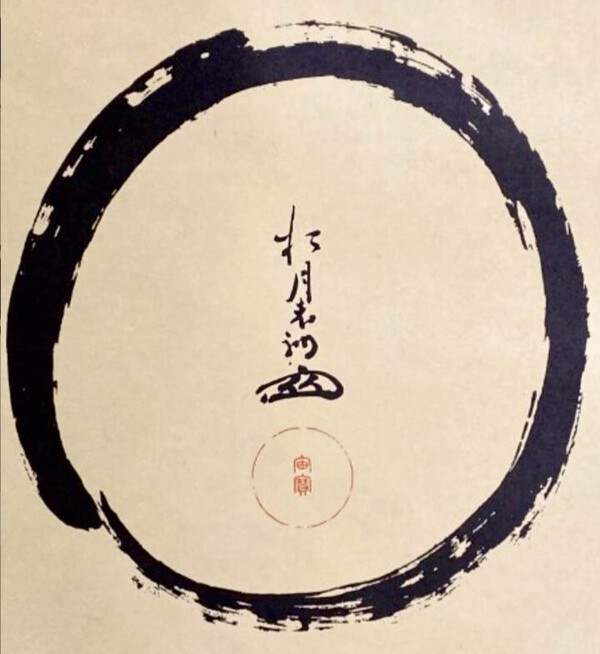
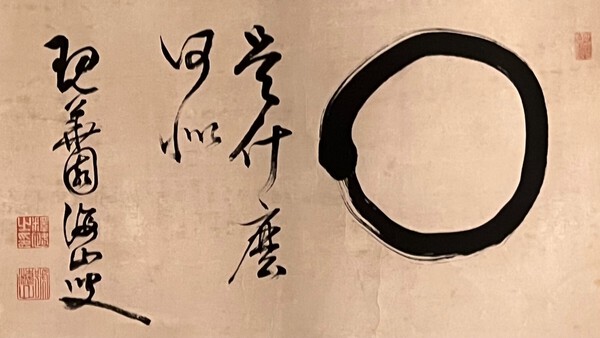
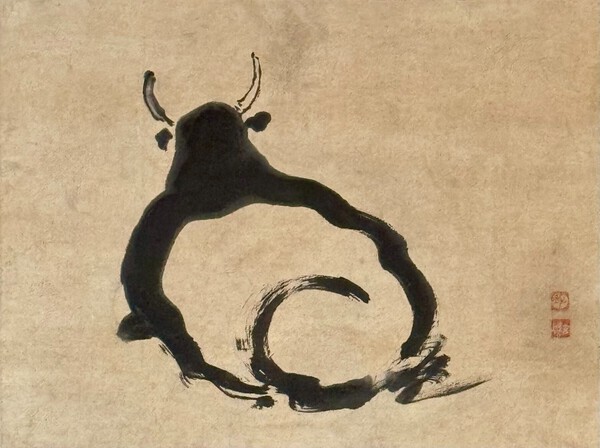
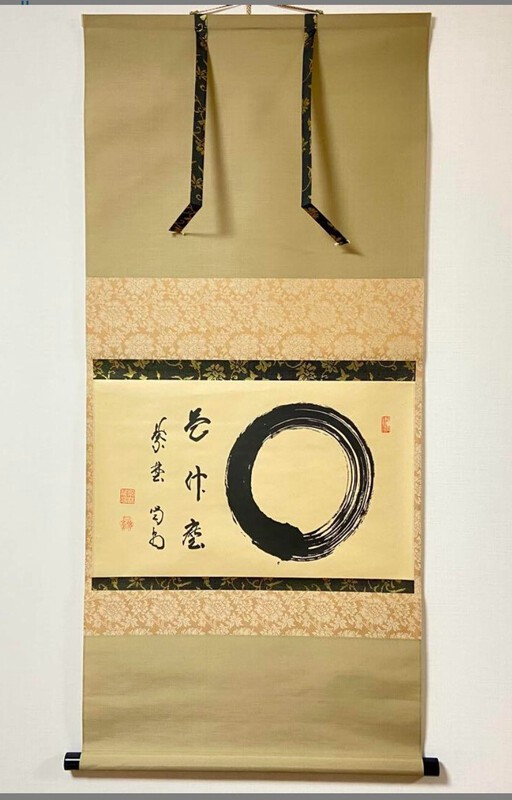
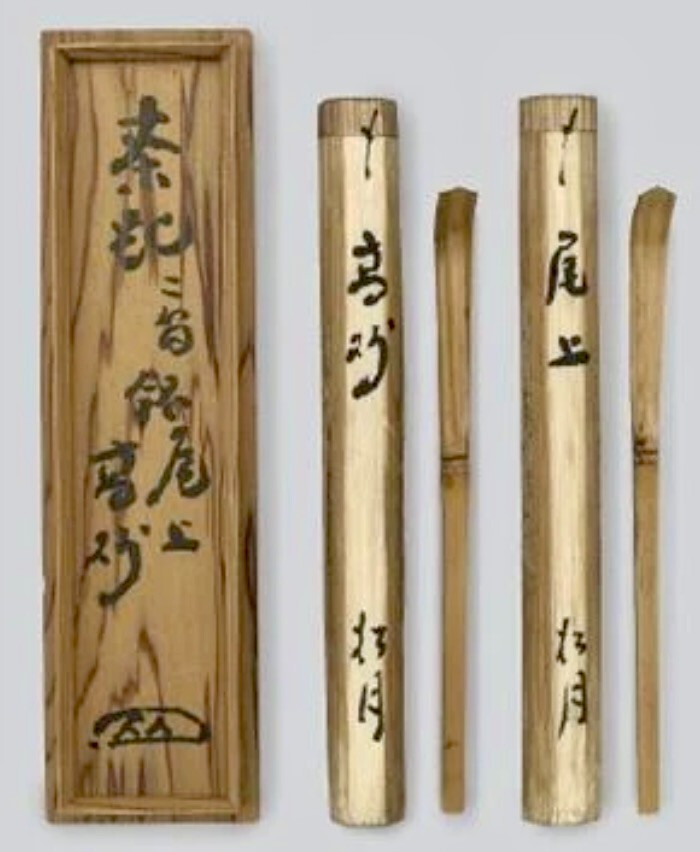
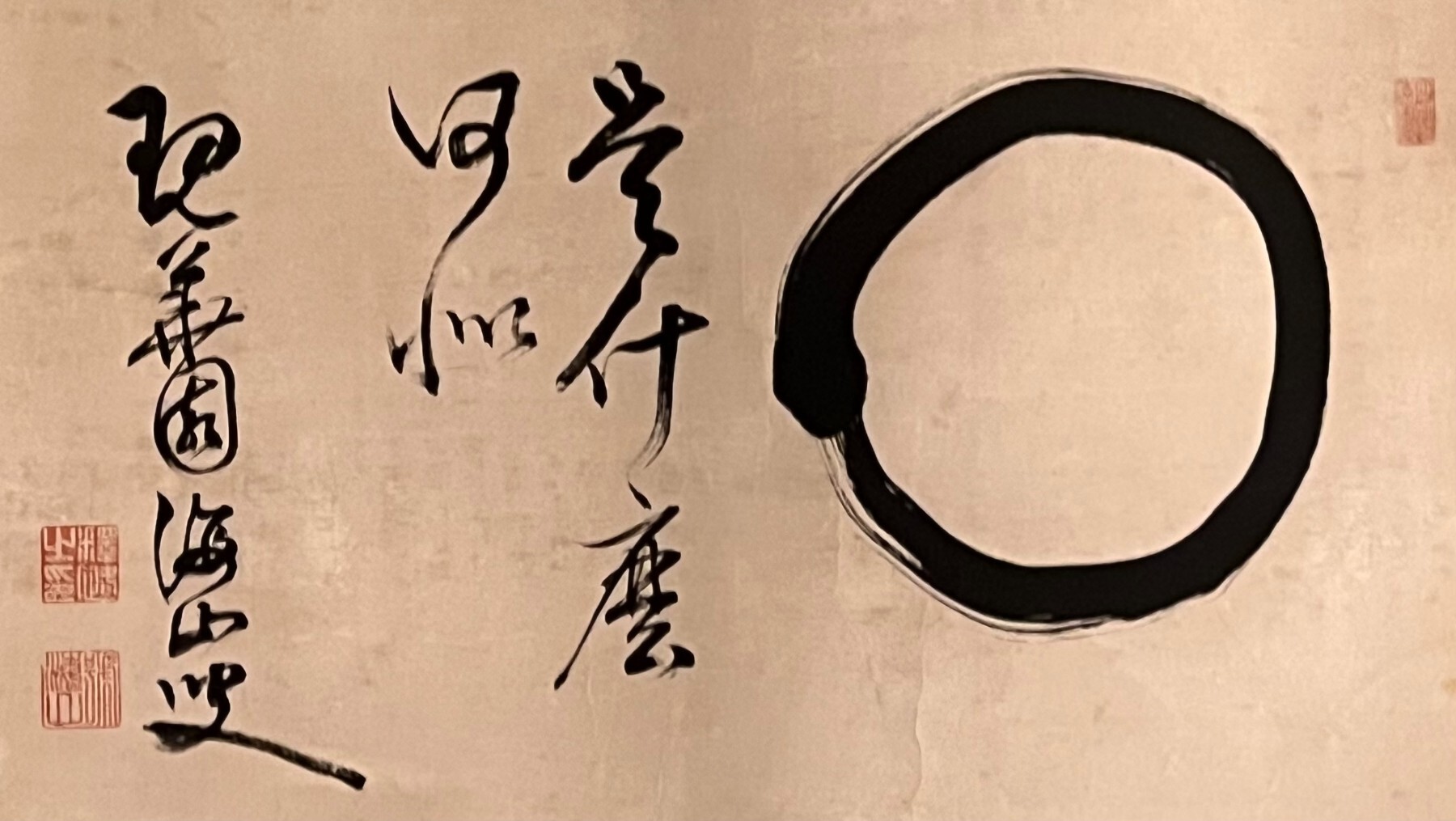
Chūhō Sōu (宙宝宗宇, 1759-1838) was the 418th chief priest of Daitokuji Temple in Kyoto. His Buddhist name was Chūhō, his given name was Sou, and he was known as Shogetsu (昇月), which means "Rising Moon." He trained under Sokudo Soki, the 406th bishop of Daitokuji Temple and was a highly revered Japanese Zen master, calligrapher, potter, and tea connoisseur. Chūhō admired and was influenced by his contemporary Jiun Onko. Two works below are excellent examples of his unique style and deep comprehension of the Zen aesthetic and the enlightened mind. This is the 3rd work by Chūhō Sōu in my collection. Here he signs as Shōgetsu rōsō (松月老僧), meaning "Old priest 'Moonlight on the Pine Trees.'" The colophon that appears at the bottom is found on some of his brush works and crafts such as tea scoops. Together with his characteristic seal, this work is confirmed to be authentic. I now have seven Enso paintings with and without calligraphy by notable Zen masters from the 18th to 21st centuries. The artists start painting at different positions of the circle, but always going clockwise. The two most contemporary ones start at the bottom. This one is unique because the mei and stamp are within the Enso, as if to say that the artist is also infathomable and fathomable, empty and full, and infinite within the finite. Here are other Enso in my collection. From left to right: Kaisan Sokaku (1768-1846), Kogan Gengei (1748-1821), Nakahara Nantenbo (1839-1925), Tachibana Daiki (1898-2005), Hosoai Katsudo (1919-1985), and Kobayashi Taigen (1938-). I consider unadorned iron plate tsuba to be "Enso" that you can hold in your hand and carry in your pocket.




-
This is a new one for me—a Nantenbo Kannon painting. It’s a common subject matter of the Bodhisattva of compassion who hears and sees all suffering. Just the first time I’ve seen Nantenbo tackle this subject from among thousands of this prolific Zen master’s works that I have studied. Translation is a bit uncertain to me. Kannon was the patron Bodhisattva of fishermen who founded many seaside temples dedicated to her (actually originated as a male figure). This is a touching and unusually personal portrayal of Kannon, sitting in a kind of watery setting with branches around her, gazing down and to the side. She is usually sitting on a giant lotus pedestal, rather regal and all powerful as she emanates compassion like a superpower. This is a quiet scene. I wonder if it is reflected in the calligraphy. I do know that the kanji for Kanzeon bosatsu is 觀世音菩薩. Thanks in advance for your help.


-
- 1
-
-
I hear you. The 18 year old in me is frustrated to find himself in a 63 year old body. However, I am sometimes surprised at how much less pain I feel after intensive training. I did a 4 day zen intensive training recently consisting of 8 hours a day of zazen, chanting, and hojo walking. I was pretty convinced I couldn’t do that much sitting meditation without severe pain. I actually had less pain after the first day. Very encouraging.
-
Hi, John. There is a reason I have an archery backstop. I’ve only ever shot through the screen of the covered patio once—evidenced by a small exit hole. My wife doesn’t know about this. Imagine the skill it takes to his a smaller target at 28 meters standard distance for what is called enteki. I’ll be doing that next weekend. Yes, as a general rule in most styles the prescribed distance between the feet is the length of the arrow. If you use an arrow that is too long (it should just be long enough so that the tip is close to the string at full draw), the distance between the feet will be too be too great and the stance too wide to maintain good balance and support. We didn’t used to live so long a century ago. Now we deal with the wear and tear of life with advanced age and morbid obesity grinding down joints and the lower back. A lot of what I do for older patients is address painful orthopedic issues and neuropathy from long-standing diabetes.
-
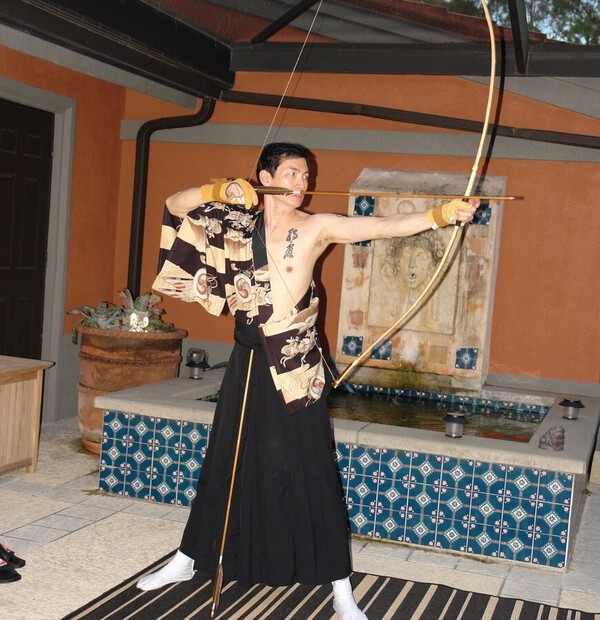
I started practicing kyudo in Boston in 2005 every weekend for about 1 years. With my move to Florida, practice was quite irregular. From 2015-2025, I didn't practice at all due to chronic pain from a nerve injury for which no form of therapy including surgery and every procedure and medication known to man provided even a little benefit. I stopped Zen practice. I stopped iaido practice. In my desperation and state of heightened anxiety, I convinced myself that the next procedure would be the magic bullet. However, even partial relief never came. There was no end to severe pain every waking moment. Then I realized that I had no weakness, no muscle atrophy, and no ongoing acute tissue injury. Every imaging and nerve conduction study was normal. The pain was just a loop that had taken up occupancy in my brain--just neurotransmitters running amuck. Pain-->anxiety-->more pain-->more anxiety, etc. I started to remind myself that there was no 5-alarm fire. The anxiety died down. About a year ago, I resumed daily kyudo, iaido, and Zen practice. Next weekend, I'm going to my first kyudo intensive in the past 20 years in nearby Eustis, FL. https://www.facebook.com/events/1392050959279976/?ref_source=NEWS_FEED Here I am in 2008. And here is a video I just shot yesterday. It's been a long journey...
-
Thanks, Kevin. The iaito I favor these days is wrapped in leather tsukaito. I have just gotten quite accustomed to how it feels and overall aesthetics. I don't have sweaty hands, so I've never had an issue with the durability of silk or leather. I put in only one mekugi initially, but have decided to put in a second one for stability. And this time I'll be careful not to drill into the tsukaito on the other side. Live and learn... If you are still following me on my web site, I just finished the Kyudo page, although I have to put in a better demonstration video when we get better weather next week. It's been a bit wet in Alachua county.
-
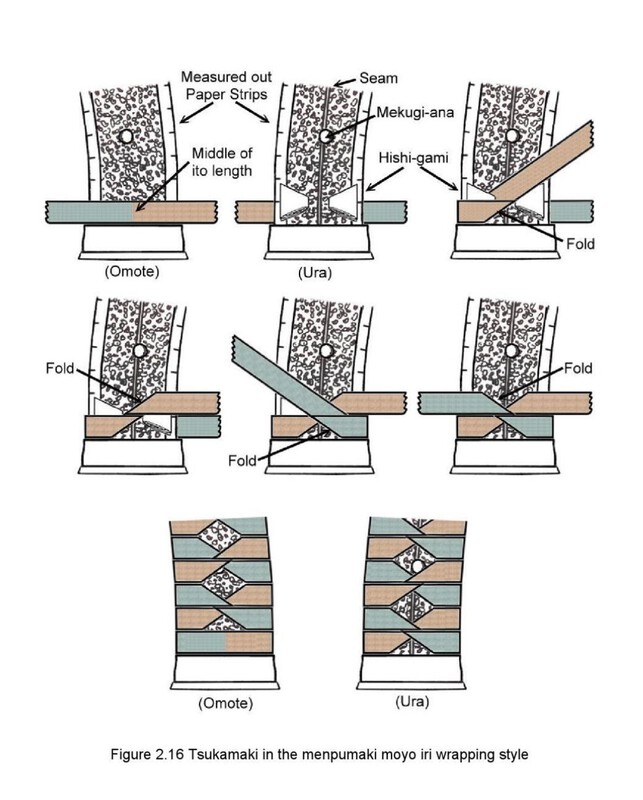
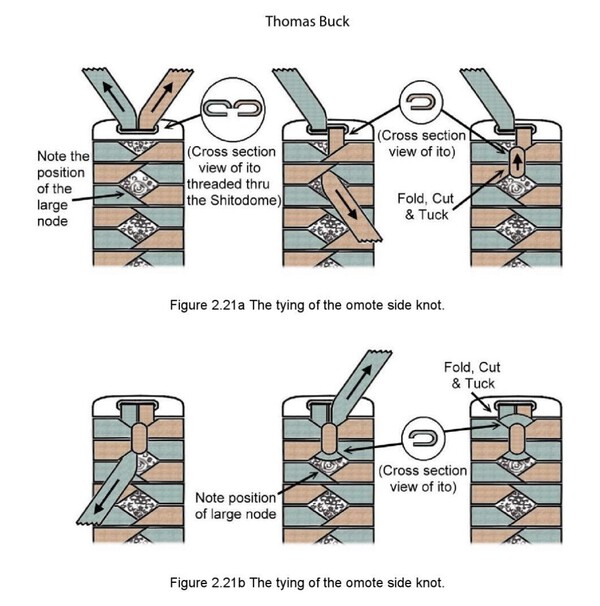
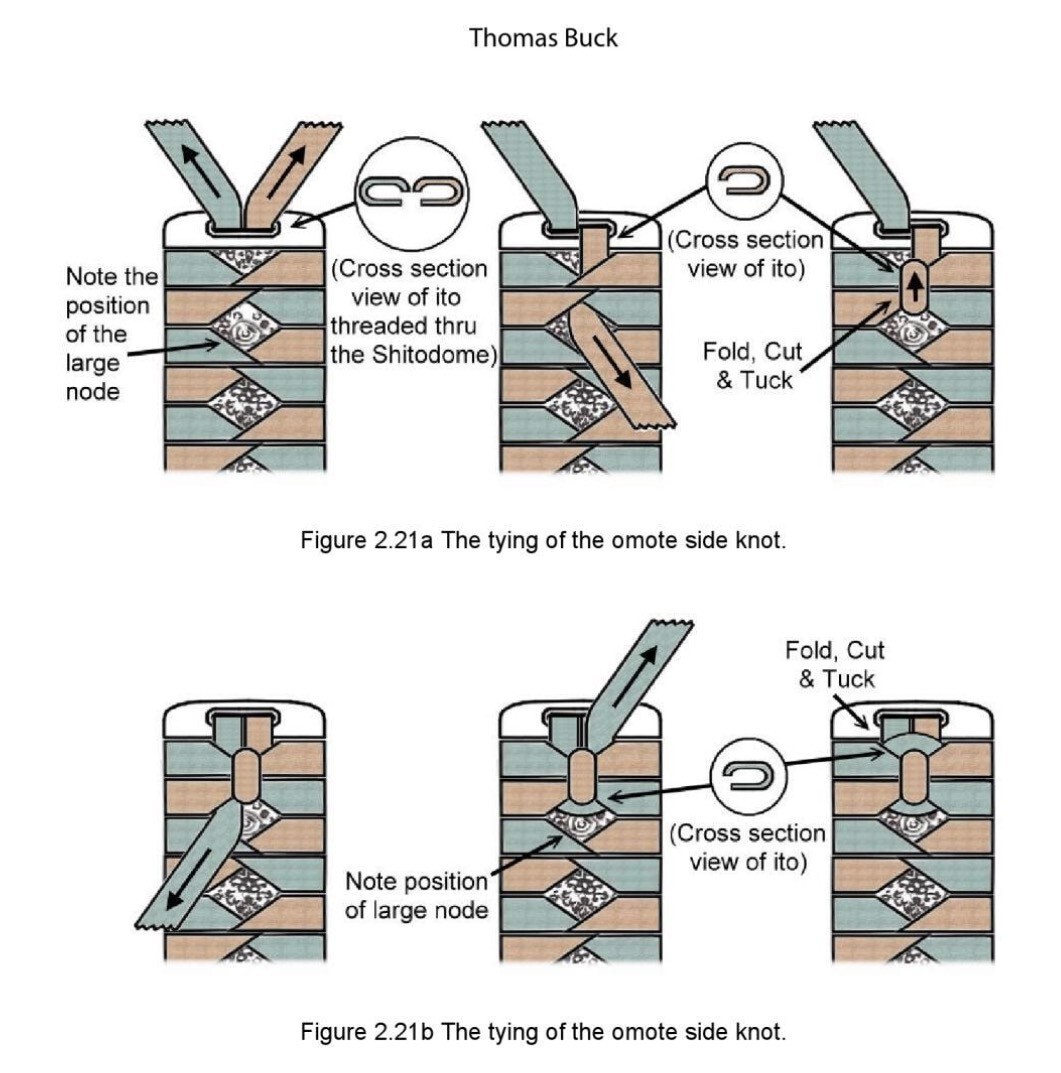
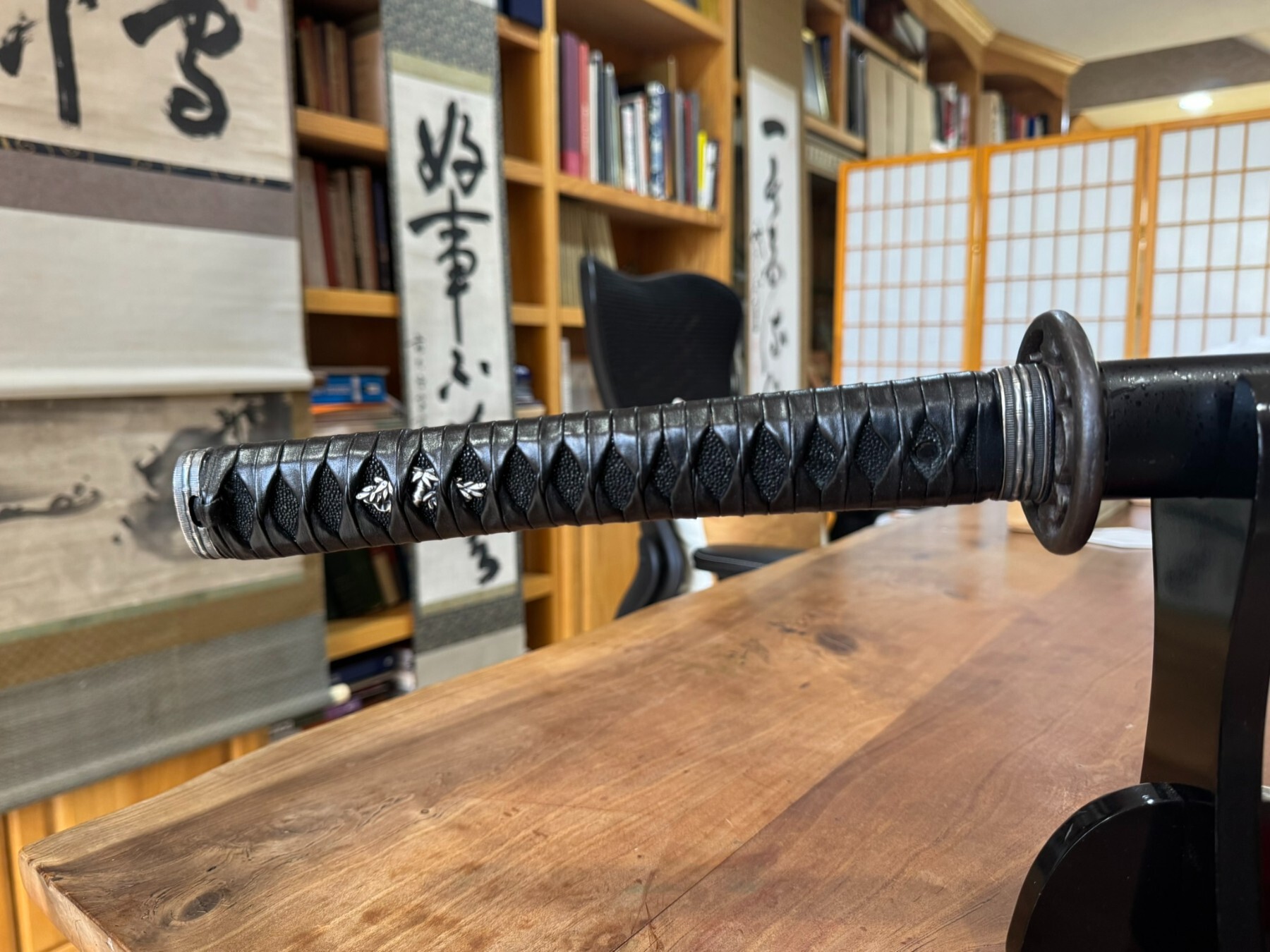
Good catch! I left glue residue on the surface of the black eel skin during my first wrapping attempt that was not covered well when I switched to a different wrapping style, so I had to reverse the menuki placement to cover this up. Some right-handed swordsman actually prefer this configuration. It potentially changes the feel of the grip (menuki against fingers vs. palms) that may be advantageous for specific ryu that are practiced, but I'm not sure if it will make much difference for me. There are traditional wrapping styles such as gyu kawa kumiage maki that don't even use menuki, substituting woven strips for the middle 2/3 of the tsuka. Ditto for the shonai zuka style that utilizes vertical wrap (not diamonds) in the middle 2/3 to provide a firm grip. Kojidai asaito makiage zuka uses a hemp wrap to completely cover the entire tsuka and is devoid of menuki. This blade and tsuka were intended to be slightly shorter than what I use for iaido because I wante to do tameshigiri with a less wieldy and somewhat lighter katana for speed and safety during noto. My sense is that master swordsman prefer slightly shorter shinken for the same reason. I wear a leather glove on my left hand when the blade is quite long and the noto is more challenging. I value my fingers! Here is the menpuki moyo iri style for tsukamaki that I used. Tying the knot is the most challenging step because of the thickness of the leather tsukaito.

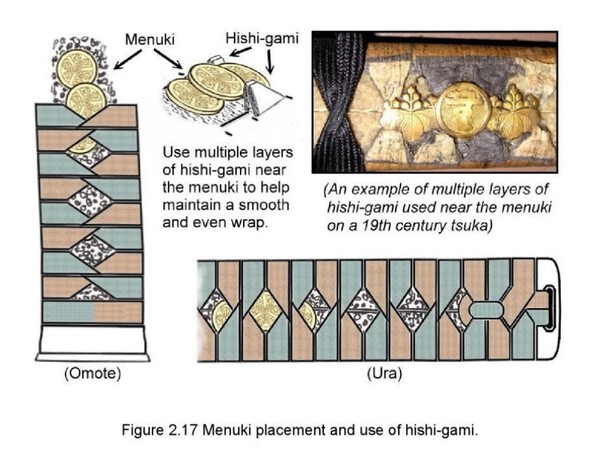
-
Shibayama Zenkei (1894-1974) was appointed the abbott of Nanzen-ji of the Rinzai sect in 1959 and was one of the most important Zen masters and scholars of the 20th century. He taught at Hanazono University, published the influential commentaries on the Ten Oxherding Pictures and the collection of classic koans called the Mumonkan (Gateless Gate), and taught in America starting 1965 when he was an active Kansho (abbott) at the persuasive invitation of the Zen scholar D.T. Suzuki. Shibayama had a personal appreciation for art, befriending haiga and literati artists and creating his own works. In particular, he had a special admiration for the paintings and calligraphy of Zen Master Hakuin Ekaku. This particular work shows his interest in depicting not only traditional Zen and Buddhist subject matter, but also Japanese folk themes and aspects of everyday life with which he believe he could reach a general audience with his Zen teaching: 渓邊霜葉紅 (keiben sōyō kō) By the mountain stream, the frost-covered leaves are red In Zen, nature is not viewed as a metaphor for something else; it is viewed as the direct manifestation of the Dharma (Buddhist truth). This phrase captures the essence of "thusness" (tathātā). Unlike Western poetry, which might use the red leaf to symbolize sadness, passing time, or romantic longing, in Zen this line is considered a direct presentation. The stream is just the stream. The frost is just the frost. The red is just the red. Zen emphasizes that enlightenment is not found by escaping the world but by seeing the world clearly, without the overlay of conceptual thought. The brilliance of the red leaves against the cold stream is a moment of reality fully revealed. In Zen, 渓邊霜葉紅 does not carry a symbolic "meaning" to be decoded. It is an expression of non-dual reality. It points to the fact that the natural world—in its stark contrast of cold water and bright leaves—is already the complete expression of enlightenment, requiring no addition, subtraction, or interpretation. Like his contemporary Chuho Sou, his calligraphic style was most influenced by the works of Jiun Onko, whose terse, blunt style of brushwork he highly admired. This is most evident in the dynamic use of "flying white" and the almost agitated energy of the brush as it dances across the composition, leaving the surface with gestural energy resulting in broad open tips of the brush strokes. He had an early seminal experience while attending a lecture by the Zen Master Mamiya Eishu during a time when he was exploring Christianity and other spiritual paths. Eishu saild that it would be nice to be able to cover the whole world in leather and be able to walk anywhere without dirtying or hurting one's feet, but it was better to cover the soles of one's own feet with leather and to live an authentic life dedicated to Zen training rather than idealistically trying to change the whole world. Shibayama would later write that about 600 years ago, in Japan, a famous Zen Master Sanko was a teacher of the emperor of the time. A monk asked Master Sanko one day: "Please show me the essence of Zen." Sanko at once replied and said, "Look under your feet (shokokyakka)!"1 Shibayama continues, "Look under your feet!" means "Where are you standing now?" This tells us that Zen does not exist apart from the very spot where we now stand. For Sanko, there was no place where Zen was not present. He actualized satori (sudden enlightenment) by way of occupied space. Shibayama's life was interrupted by the war. He believed that defeat was inevitable, that only Zen and Japanese culture could survive, and that their study could restore his country. Following the death of his wife and child in 1945, he took vows of celibacy and became the Zen Master of Nanzen-ji. In a lecture in the early 1960s at the Society for International Cultural Relations (Kokusai Bunka Shinkokai) in Kyoto, he discussed the differences between Eastern and Western religion: "I am told that the word 'religion' etymologically comes from a Latin word which means 'to bind together' and implies that religion consists in the relegation between God who is the Creator and hman beings who are the created...In Buddhism the word kiye is used as a term corresponding to 'faith' in the West. Kiye means 'to return to the fundamental truth and trust wholeheartedly in it.' This shows that the character of self-reliance forms the main current in Buddhism, and the ultimate goal or purpose of 'shukyo' (religion) is to reach 'gedatsu' (deliverance from worldly passions) or 'satori' (spiritual awakening) rather than 'salvation.'" He died on August 29, 1974 shortly after the publication of Zen Comments on the Mumonkan." His final poem utilizes the same motif of filling the well with snow that Mukurai used in his death poem: Carrying snow and filling the well, I have lived for eighty-one years. Truly there is nothing special-- I sleep with limbs outstretched. 1Shibayama, Z. A Flower Does Not Talk--Zen Essays. Charles E. Tuttle Company, Inc. Rutland, Vermont & Tokyo, Japan (1970), pg. 98.

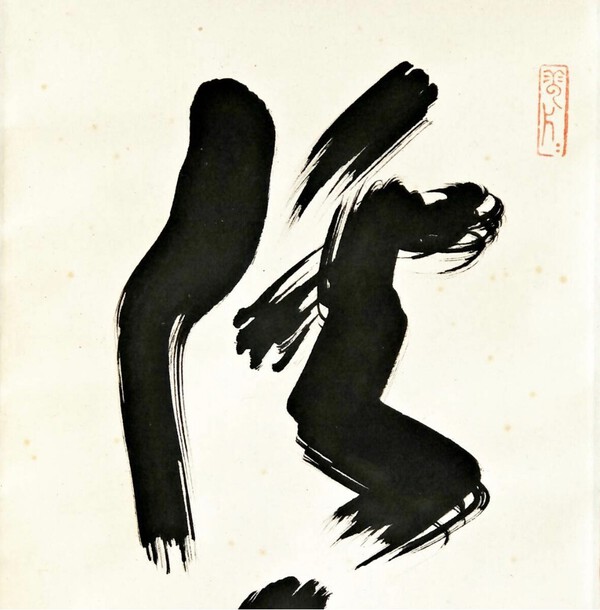
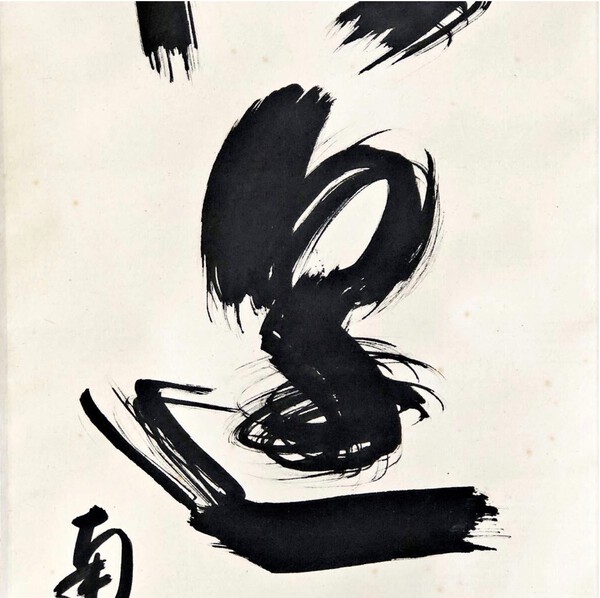


-
- 1
-

-
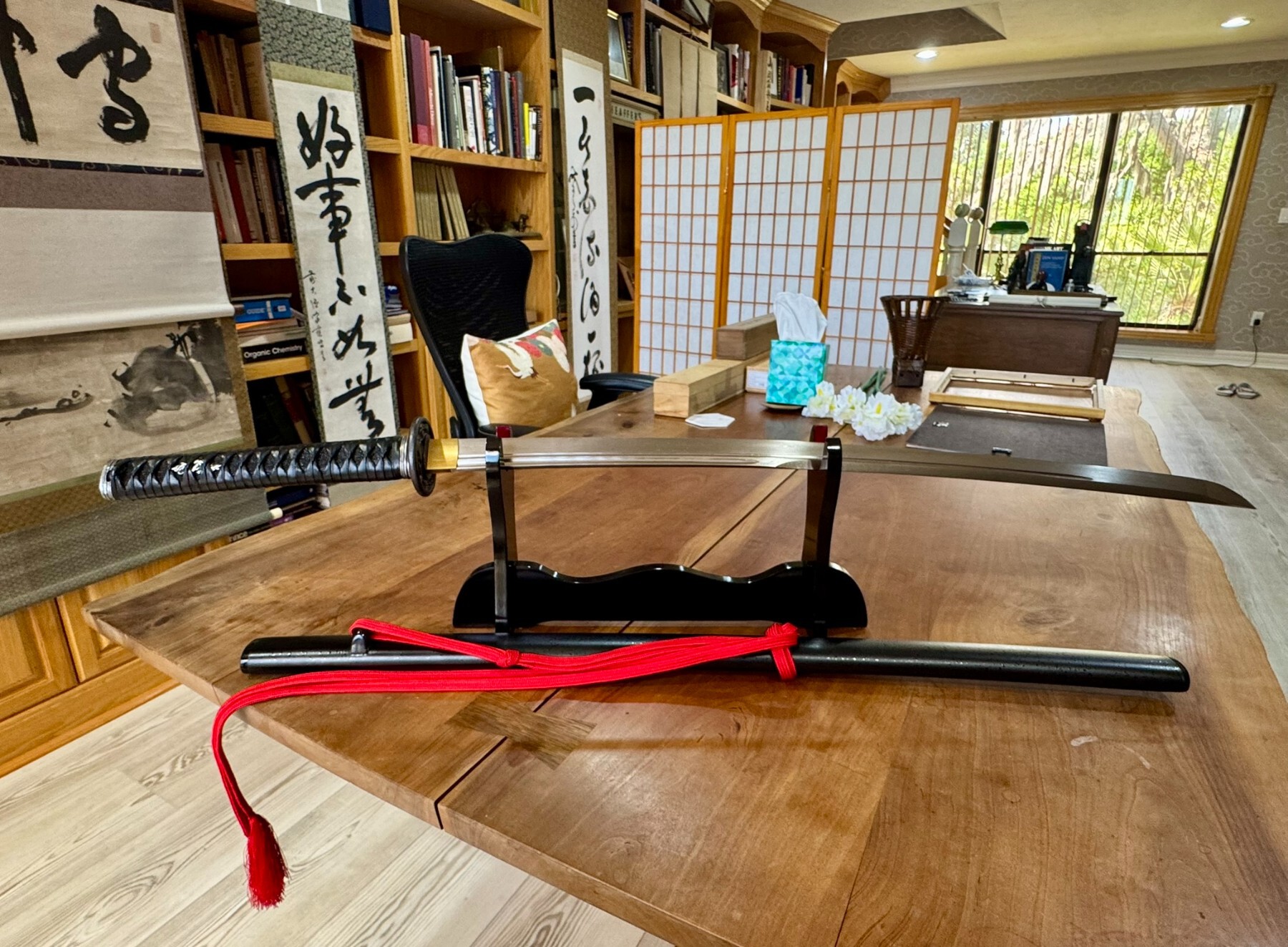
Here is the final product. I'm quite happy with the outcome of my freshman project. I changed the tsukaito wrapping style to the less ambitious menpumaki moyo iri style and finished it off with a custom-made silk sageo. There is a slight misalignment in the seating of the fuchi against the koiguchi because the drilling of hole in the tang for the mekugi is slightly off, thereby changing the angle slightly. During drilling, I accidentally drilled into the tsukaito on the opposite side of the tsuka, requiring repair with Seiwa glossy water-based leather finishing agent. I really should have done all of this before I wrapped the tsuka. I may redo the entire tsuka/tsukamaki and drill new hole in the tang to correct all of these mistakes. I need to shim some wood veneer into the sides of the opening of the koiguichi to tighten the seating of the blade and eliminate slight side-to-side rattling. Otherwise, the saya turned out quit well.


-
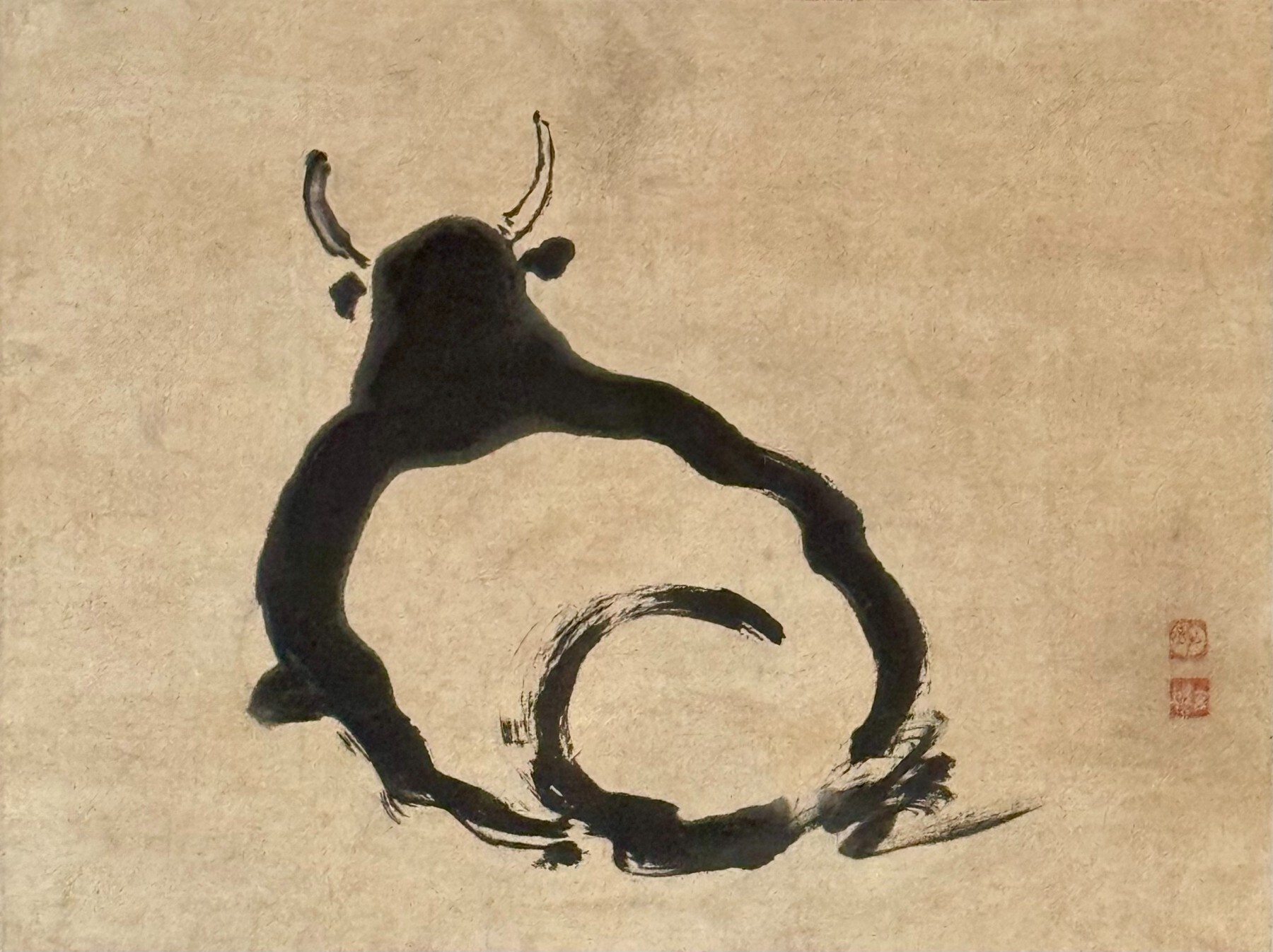
Chūhō Sōu (宙宝宗宇, 1759-1838) was the 418th chief priest of Daitokuji Temple in Kyoto. His Buddhist name was Chūhō, his given name was Sou, and he was known as Shogetsu (昇月), which means "Rising Moon." He trained under Sokudo Soki, the 406th bishop of Daitokuji Temple and was a highly revered Japanese Zen master, calligrapher, potter, and tea connoisseur. Chūhō admired and was influenced by his contemporary Jiun Onko. Selecting from unusual subject matter that seems quite typical of Chūhō, he brushes a line that comes from an early Ch'an story of an encounter between Ch'an Master Zhaozhou Congshen (趙州從諗, 778–897) and his disciple Wenyan (文偃) or possibly Wenyuan (文遠), as recorded in Jǐngdé Chuándēng Lù (景德傳燈錄), or "The Transmission of the Lamp" completed in 1004 CE (Volume 10, in the entry for Zhaozhou Congshen). This vast text is a foundational history of the Ch'an lineage and contains biographical entries for countless masters, including Zhaozhou. It is also found in "The Recorded Sayings of Zen Master Joshu" (translated by James Green). One day, the Master Zhaozhou saw his disciple Wenyan bowing to a statue of the Buddha. Zhaozhou walked over and struck him with his staff. Zhaozhou: "What are you doing?" Wenyan: "I am paying homage to the Buddha!" Zhaozhou: "Is the Buddha someone to be paid homage to?" Wenyan: "Paying homage to the Buddha is a good thing (好事) ." Zhaozhou: "好事不如無 (A good thing is not as good as no thing)." The last phrase originates from the 增廣賢文 (Augmented Collection of Wise Sayings), a popular Chinese didactic text from the Ming Dynasty that is based on a Taoist principle of "福禍相依" (fortune and misfortune depend on each other): 庭前生瑞草, 好事不如無 (Tíng qián shēng ruì cǎo, hǎo shì bù rú wú) When auspicious grass grows in front of the court, a good thing is not as good as nothing In Zhaozhou's hands, 好事不如無 becomes "A good thing is not as good as no thing." This is a powerful lesson on non-attachment, a core principle in Zen/Ch'an. The horizontal strokes in the 2nd and 5th characters anchor the contrasting halves that are separated by 不. Non-Attachment: Even the act of doing a "good thing" (like bowing to Buddha or giving charity) can become a spiritual obstacle if you cling to the identity of being a "good person" or if you do it to gain merit. The Master is teaching that the state of "nothing" (無) or "no thing" is higher than the state of doing "good things" with a grasping mind. The Trap of Intent: The teaching warns against performing good deeds with a "seeking" mind—doing them for the sake of reward, merit, or to bolster one's ego as a "good practitioner." Zhaozhou uses this sudden, shocking action (striking Wenyan) to jolt Wenyan out of this conceptual trap Beyond Duality: Where there is "good," there is "bad." The phrase encourages the practitioner to move beyond this dualistic thinking into the true nature of emptiness, where there is no need to cling to the label of "good" or "bad." "No Thing" (無) as True Peace: The phrase "好事不如無" points to a state of "no-thing-ness" or wu shi (無事). This doesn't mean doing nothing, but rather acting without attachment, without a self-conscious focus on the doer or the deed. It is the state of natural, effortless action that flows from an empty and peaceful mind. Signature: Daitokuji Chūhō Sōu Seals: Chūhō, Nichigatsu cho

-
- 3
-
-
-
Etsuzan Dōshū (1629-1709) was born in China as Yueshan Daozong (悅山道宗). He came to Japan in 1657 to study with Mokuan. In 1705, six years after he produced this calligraphy, he became the seventh abbot of Manpukuji temple of the Chinese Obaku sect of Zen buddhism near Kyoto. Regarded as one of the finest of the Obaku calligraphers and respected as Sho no Etsuzan (Etsuzan of calligraphy). Here, he brushes the vertical line 體內貯乾坤 in large characters, which echoes a Zen teaching contained in the koan Case #69 in The Blue-Cliff Records called "Yunmen's Jewel." Master Yunmen Wenyan (c. 864–949) said, "Within heaven and earth, throughout the universe, there is a single jewel, hidden inside the mountain of form." To understand the Taoist influence and the Zen interpretation of this phrase, we must examine both the literal and conceptual meaning1 [Note, this is the first time I am using queries to Deep Seek AI]: 體內 (tǐ nèi): Inside the body, within the body. 貯 (zhù): To store, to hold, to contain. 乾坤 (qián kūn): This is the key term. Literally, it means "Heaven and Earth," "the cosmos," or "the universe." In the I Ching (Book of Changes), Qián is the creative, heavenly force, and Kūn is the receptive, earthly force. Together, they represent the totality of existence, all of reality, the entire dynamic interplay of yin and yang. So, a very literal translation is: "The body contains the universe." While the phrase uses Daoist terminology (乾坤), Zen Buddhism adopts and transforms such ideas to point to its own core insights. The literal meaning is just the starting point. In a Zen context, this phrase points to several profound realizations: 1. The Non-Duality of Self and World Zen teaches that the fundamental assumption that we are a separate "self" inside a body, looking out at an external world, is an illusion. The boundary we draw between "inside" and "outside" is a mental construction. "體內貯乾坤" smashes this boundary. It means that the entire cosmos is not something you are in; it is something you are. The mountains, the rivers, the stars, the sounds, the silence—all of it is your very body. There is no inside and outside, only one unified field of being. 2. The Microcosm as the Macrocosm This is a classic idea in both Eastern thought and, more recently, in Western philosophy (like in William Blake's "To see a world in a grain of sand"). The human body is not a small, isolated object. It is a perfect reflection and embodiment of the entire universe. The same laws of physics, the same elements forged in stars, the same cycles of nature (birth, growth, decay) that govern the cosmos are all happening within your own physical form. You are the universe experiencing itself in a localized way. 3. The Body as a Vessel for Awakening In Zen practice, the body is not disregarded. It is the very vehicle for enlightenment. Through meditation (zazen), we come to realize that our true nature is not limited by the skin. The sensation of the body expands to include the entire universe. The breath is not just air moving in and out of lungs, but the very interchange with the totality of the atmosphere. The body becomes a vessel that "stores" or, more accurately, is the dynamic, living cosmos. In summary, in Zen, "體內貯乾坤" is not a statement of biology or physics, but a declaration of spiritual realization. It points to the awakened experience of non-duality, where the individual body is understood to be inseparable from the totality of existence. It is an invitation to stop seeing yourself as a tiny part of the universe and to realize that the entire universe is your true body. And the true body contains the Buddha-nature. While the exact wording "體內貯乾坤" brushed on Etsuzan's scroll isn't in the existing records of Master Yunmen's teachings, its essence is not only present but is a fundamental pillar of his Zen. It is most clearly articulated through his famous principles: "函蓋乾坤" (the universe is completely enveloped by the true self) and the teaching of the jewel hidden "秘在形山" (within the mountain of the body).2 Signature: Obaku Yueshan sho 黃檗悦山書 Seals: Rinzai shoshu sanju-yon sei (34th generation heir of the transmission of the Linji/Rinzai Sect); Etsuzan; Doshu no in (Doshu's seal, 道宗之印) 1Deep Seek answer to query: "What does 體內貯乾坤 mean in Zen?" 2Deep Seek answer to query: "Does 體內貯乾坤 appear in the writings of Master Yunmen?"


-
- 1
-
-
Two Calligraphy Works (Nangen Shoha and Kogetsu Sogan)
Iaido dude replied to Iaido dude's topic in Translation Assistance
This work sold for $800 on Yahoo Japan. Kogetsu’s work is highly sought after. -
Two Calligraphy Works (Nangen Shoha and Kogetsu Sogan)
Iaido dude replied to Iaido dude's topic in Translation Assistance
This is wonderful and quite profound, Jan. The phrase is what we call a "capping phrase," which is employed by a master to challenge the student in the coarse of koan training. In the Zen context 學人 (Xueren) means a student or practitioner who seeks enlightenment; it is a common way for monks to refer to themselves when asking a master a question. Similarly, 轉身處 (Zhuanshen Chu) is literally a "place of turning the body," but is a crucial Zen concept referring to the point of spiritual transformation or turning point. It is the metaphorical place where a practitioner "turns around" from delusion to enlightenment, or the pivot point in a koan where one must make a leap in understanding. 會麼 (Hui Me) is a common Ch'an expression meaning "Do you understand?" or "Can you grasp it?" Putting it all together, the master intones: 學人轉身處. 會麼口取 "Here is the point where you must turn from ignorance to enlightenment. Do you understand? Now, express that understanding directly, right now!" Ch'an master Dayi, when asked "What is the student's place of turning?" he replied, "In the streets and alleys" (meaning it is everywhere, in everyday life). Right here. Right now. The master is not asking for a philosophical explanation of what "turning" means. Instead, the master is pointing to the present moment and demanding that the student manifest their enlightenment through a word, an action, or a gesture. The "mouth" (口) can be the instrument for that immediate, living expression of truth. However, the moment of breaking through a koan is an experience that occurs before language is formed. It is in fact ineffable. An idea about enlightenment is not enlightenment. Maybe this capping phrase is intended to specifically instruct on how to approach Joshu's Mu koan (無 no, nothing, not one thing), the famous and notoriously difficult-to-penetrate Case #1 of the Mumonkon (The Gateless Gate) koan collection: A monk once Master Joshu, "Has a dog the Buddha Nature or not?" Joshu said "Mu!" When a student responds, the master will know it is a breakthrough if it embodies a deep, personal, and immediate experience that is ultimately transformative. A teacher may ask if what the student has experienced has changed some other aspects of his life. This is because enlightenment is expressed through action (i.e. it is inacted). Does it enhance your capacity for compassion towards family, friends, co-workers, the dog, or the environment? Is your relationship to the world fundamentally altered? -
Two Calligraphy Works (Nangen Shoha and Kogetsu Sogan)
Iaido dude replied to Iaido dude's topic in Translation Assistance
Kogetsu Sogan's Mu
-
These are two works by a Chinese Obaku monk named Nanyuan Xingpai (Nangen Shoha, 1631-1692) and a Japanese Rinzai monk named Kogetsu Sogan. Nangen's brushwork is in late Ming style partial cursive/running script. Kogetsu's is in standard script. I would guess not difficult to translate, but I can only make out certain characters and can't quite put it together. Thanks for your help. Nangen Shoha
.thumb.png.f2c070fa91f5e55964ff2a97699396fd.png)
-
Chuho Sou (宙宝宗宇, 1759-1838) was the 418th chief priest of Daitokuji Temple in Kyoto. His Buddhist name was Chuho, his given name was Sou, and he was known as Shogetsu (昇月), which means "Rising Moon." He trained under Sokudo Soki, the 406th bishop of Daitokuji Temple and was a highly revered Japanese Zen master, calligrapher, potter, and tea connoisseur. Chuho admired and was influenced by his contemporary Jiun Onko. In his usual powerful hand, Chuho has brushed 壺中 (right to left), practically reinventing the first character. This phrase translates most directly as "Inside the Jar" or "In the Pot." However, the meaning runs deeper than the literal translation. In Zen and ancient Chinese lore, 壺中 (kochū) carries the connotation of "a different world within," "a microcosm," or "a reality outside of normal time and space." This meaning comes from the legendary Chinese tale of the "Jar Gourd Heaven" (壶天). In this story, a man follows an immortal into a small gourd and discovers a vast, magical palace inside—a complete world within. Therefore, 壺中 often implies a state of enlightenment where the vast universe is contained in a single object, or where the duality generated by distinctions between inside and outside, large and small, cease to exist. It evokes the Zen principle of "the infinite in the finite." I can't make out these particular seals since there isn't a lot of documentation online. Usually, The MET archive has very good translations and annotation, but it doesn't have any works by Chuho Sou. Signature: Daitokuji Chuho Sou

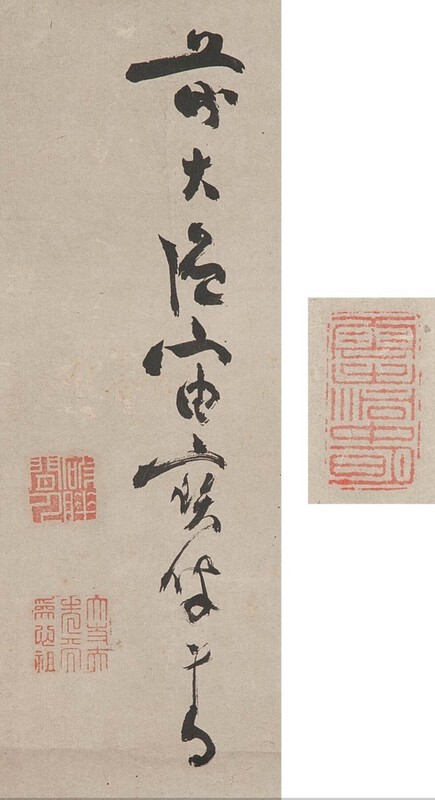
-
- 1
-
-
Yamaoka Tesshu Calligraphy, Assistance with Translation
Iaido dude replied to Iaido dude's topic in Translation Assistance
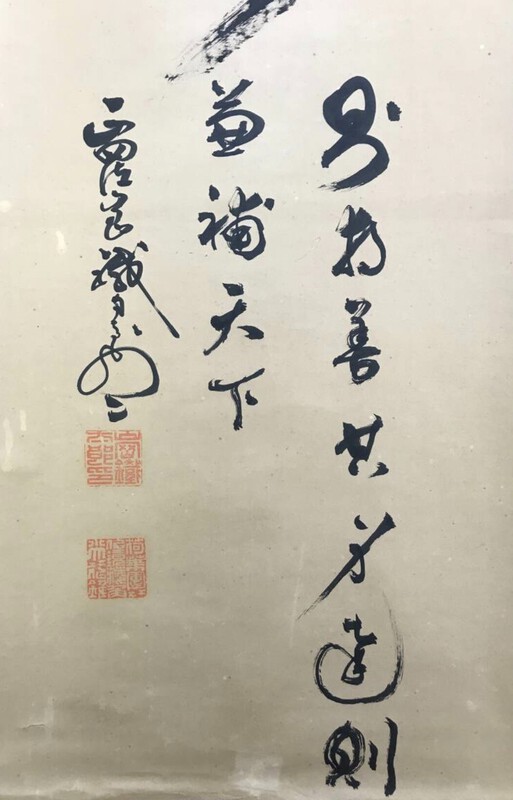
Thanks so much, Steve. You are absolutely spot on. Turns out that "When poor, one should cultivate one's own virtue; when successful, one should benefit all under heaven," comes from Mencius, Book 7, Part 1, Chapter 9, which reads: "Therefore, a scholar does not lose righteousness in poverty, nor does he stray from the Way in success. When poor, he does not lose righteousness; therefore, a scholar holds possession of himself. Those who achieve success do not stray from the Way, therefore the people are not disappointed. In ancient times, those who were successful brought benefits to the people; those who were unsuccessful cultivated themselves and made their virtues known to the world. When poor, one should cultivate one's own virtue; when successful, one should benefit all under heaven." Yamaoka would have studied Confucian thought, as did all well-educated samurai. -
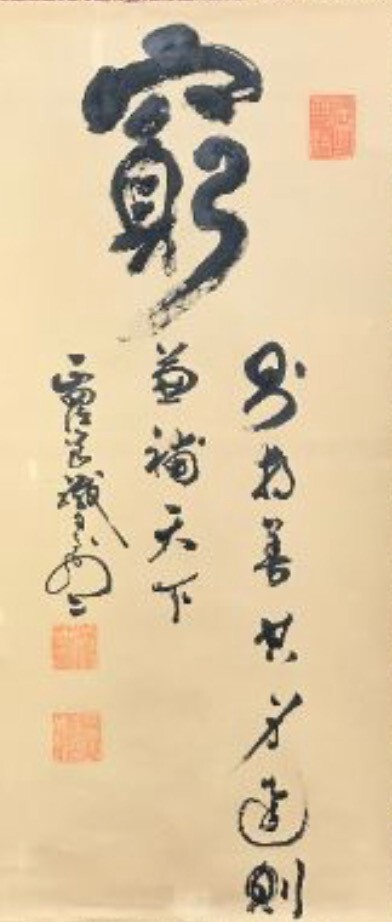
I have been looking at this appealing work by Yamaoka Tesshu, whose calligraphy is consistent, but highly idiosyncratic. The large "One Word Barrier" is "窮 (poverty/poor)", rendered in an almost pictographic form that is rare for Yamaoka, but I cannot make out the rest of the inscription. There is some water damage, but I've never seen such an inscription done by this otherwise prolific artist who often produced many versions of the same theme. Thanks.

-
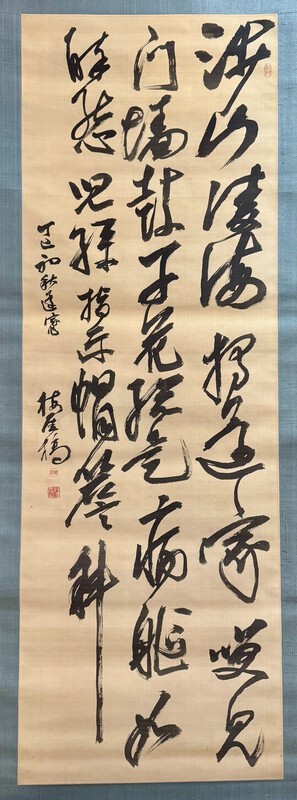
Most grateful. I’m generally not a collector of Confucian literati art, but I ended up with 8 scrolls in auction from a collector who clearly was interested in this genre. I was only interested in two of the scrolls brushed by Zen masters. However, this poem chosen by Ryu Kobi is quite lovely.
-
This is a calligraphy work in kanji that I cannot entirely translate. Even a partial translation will likely allow me to cross-reference with a well-known writing. Thanks. Totoki Shi (1749-1804), called Baigai, was born in Osaka but educated in Edo in the Chinese classics, philosophy, calligraphy and painting, achieving wide recognition as a scholar and literati artist. He was a figure deeply embedded within the intellectual and artistic currents of Edo-period Japan. His artistic expression flowed directly from his erudition. Baigai’s life unfolded against a backdrop of increasing cultural exchange with China, an influence that would profoundly shape his style and subject matter. Though born into a merchant family, his destiny lay not in commerce but in the refined world of art and letters. He received extensive education in Edo (modern-day Tokyo), mastering the intricacies of Chinese literature and painting techniques – skills highly valued amongst Japan’s educated elite. This foundation would become the cornerstone of his artistic identity as a prominent member of the Nanga school, also known as the ‘Southern School,’ a movement that consciously emulated the aesthetics and spirit of classical Chinese art. In Kyoto Baigai studied painting with Minagawa Kien (1734-1807) and Ike Taiga (1723-1776), creating an individual style that was based especially on that of Taiga. The painters shared an interest in creating textured surfaces and in the expressive effects of strong accents, seen here in the strongly varied accents of ink for the bamboo and rocks. It was likely in the company of such masters as Kien and Taiga that Baigai met Matsuyama Sessai (1755-1820), who on one recorded occasion invited a number of people to a large banquet. During the course of the dinner, presumably after drinking and becoming suitable inspired, Baigai entertained the group by singing popular songs, dancing solo, and even performing conjuring tricks. When the assembled guests were asked to contribute to a commemorative work of art, Baigai painted a picture and added a poem that were held by general agreement to be the best of all of the various efforts. In 1784 Lord Sessai asked Baigai to accompany him to his fief at Nagashima in Ise Province, where the versatile artist opened a school for the children of samurai. In 1790 Baigai received permission to visit Nagasaki but, after overstaying his permit for that fascinating port city, Baigai lost his job and returned to Osaka.
-
This is a 4-line poem that I cannot entirely translate. Even a partial translation will likely allow me to cross-reference with a well-known writing. Thanks. Ryū Kōbi , also known as Tatsu Sōro or Tatsu Kimiyoshi, was a pupil of Ogyū Sorai (1666–1728), a poet and one of the most influential Confucian scholars of the Edo period. Born in Fushimi, Kyoto Prefecture, as Tokinori Takeda, he had many names through his life depending on his position at the time. Most famously called Ryû Sôro, his artist name was Ryū Kōbi. He also went by his azena (formal name) Kungyoku. His common name was Hikojiro, which later changed to Emon. Sôro was his “go” or pen name. A disciple of Meika Uno, Ryū Kōbi founded Shisha, a poetry club in Karasmaru – Koji St. In 1750, he was invited to work as Shinkosha (one who explains achievements to nobility and royalty) to Naosada II, the Lord of Hikone domain. In 1756, he was appointed as Hanju (Confucian scholar who works for a domain) for 18 years before he resigned and returned to Kyoto. His publications include: “Soro shishi (Collection of Anthologies of Soro)”, “Kinran shishu”, “Materials for Poetry of Tang Dynasty”, “Book of Japanese Poetry”, “Summary of Rongo Analects” and “Mosh sha (Book of poetry of ancient China)”.1 1Stephen Addiss, "77 Dances : Japanese Calligraphy by Poets, Monks, and Scholars, 1568-1868"

-
Yamaoka Tesshu (山岡 鉄舟) was born in Edo June 10, 1836 and died July 19, 1888. As a master swordsman, lay Zen master, and prolific calligrapher/painter, he embodied the integrated practice of Ken Zen Sho. The inscription is the poignant last verse of a quatrain by Xiong Rudeng (熊儒登), a Tang Dynasty official and poet who served in Western Sichuan, called "Presented to Vice Minister Dou at a Banquet at Quchi." The inscription is the poignant last verse of a quatrain by Xiong Rudeng (熊儒登), a scholar-official and poet, called "Presented to Vice Minister Dou at a Banquet at Quchi." He lived around the time of Emperor Xianzong of Tang's Yuanhe era (806-820). After passing the imperial examination, he became a Jinshi (a successful candidate in the highest imperial examinations). He served as an official in the Western Sichuan provincial government and was a close friend of Bai Juyi and Liu Yuxi, frequently exchanging poems. He was a prolific writer, producing many poems, but only one collection has survived to this day. Many of these poems are exchanges of poems, containing numerous beautiful lines. Some of these lines are sincere and moving, and were widely recited in his time. It is easy to understand why this poem would have appealed to Yamaoka's Zen sensibility: 水自山阿繞坐來, 珊瑚台上木綿開。 欲知舉目無情罰, 一片花流酒一杯。 Water flows around the mountainside, and cotton blossoms bloom on the coral terrace. If you wish to know the merciless punishment before your eyes, see a single flower drift down to a cup of wine.

-
- 2
-
-
-
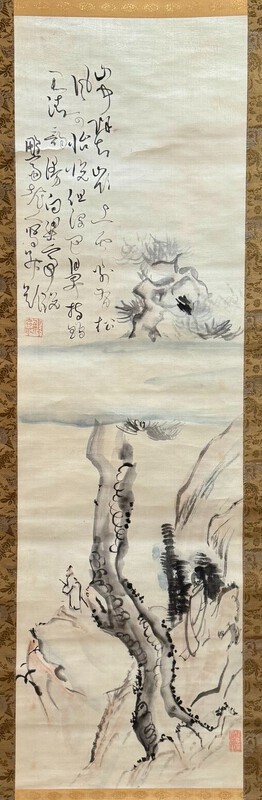
Interestingly, there are two works among the 8 scrolls that are by a father and son pair of Confucian literati scholars, suggesting a purposeful theme in the collecting interest of the previous owner Frank Preiser. Kameda Bōsai (亀田鵬斎; 1752–1826) was a Japanese literati painter (nanga in Japanese). He originally trained as a Confucian scholar, but spent the second half of his life as a literati and artist. The book "Mountains of the Heart" contains many of his most famous paintings. The inscription is in the form of a traditional quatrain of 7 characters per line: "Within the mountains apart from the mountain-top clouds, there is also the pine wind in which to take pleasure; If only I had a tea-whisk to send as a present to you, for elegant rhymes can mislead, as in what was said to the Liang dynasty Emperor" 山中除却嶺上雲, 別有松風可怡悅; 但謂巴鼻特賠君, 清韵讀向梁帝說 The poet T'ao Yuan-Ming (372-427) once wrote to the Liang Emperor Wu: "I have certainly had wide experience, but I am afraid I am not yet skilled..." T'ao then resigned his official post after serving only 83 days in office and spent the rest of his days in creative retirement. Here Bosai paints the pine tree piercing the cloud. The small figure of a scholar stands on the edge of a cliff in this polychrome work. Signature: (Painted and inscribed by old man Bosai) Seals: (Bosai, used 1820-1824), (Kanto dai-ichi futensei, The greatest fool in the Kanto area, used 1818-1823) Kameda Ryorai (亀田綾瀬, 1778-1853) studied under his father Kameda Bōsai, a distinguished Confucian scholar, painter, and calligrapher. The inscription in this large character single line work is an expression of the Confucian Doctrine of the Mean (Zhongyong), which espouses the natural order of things. The "Mean" represents a balanced, optimal approach to life, avoiding extremes through moral cultivation, sincerity, and finding the right path (Tao) in all situations. 鳶飛魚躍活潑潑地 "Kites fly and fish leap, those on the ground are lively"











.png.9d30a65471e0a7dfdb9f5aa684243af2.png)