

George KN
-
Posts
252 -
Joined
-
Last visited
Content Type
Profiles
Forums
Events
Store
Downloads
Gallery
Everything posted by George KN
-
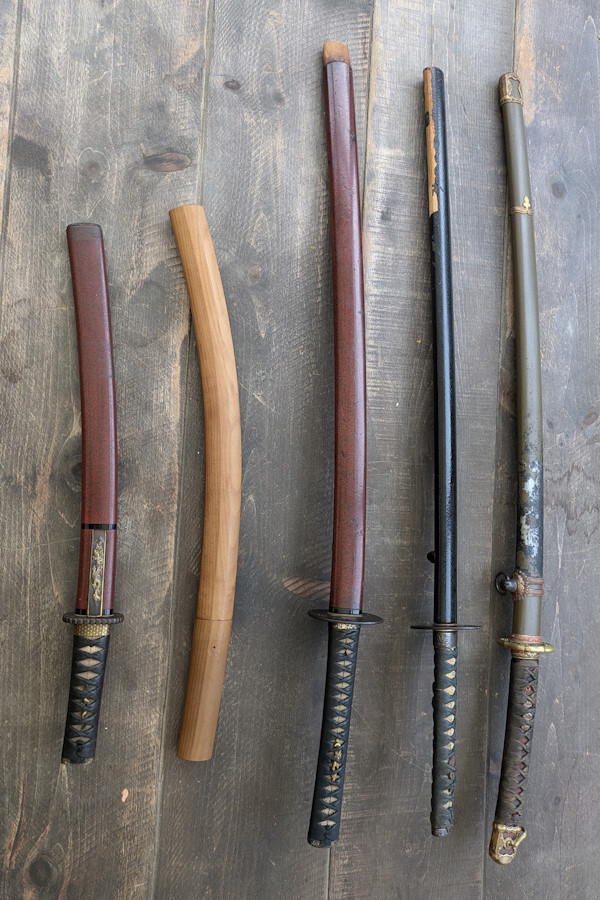
Definitely more quantity than quality for me, although I've not yet got to the stage where I'm finding forgotten swords in my house But even if I could afford something good quality, I think it's genuinely beneficial as a beginner to handle as may different blades as possible, so I'm happy with that strategy for now. ~2 years worth of collecting, and the most expensive one was £900: Not a single one in good polish, none papered, 4/6 mumei, 1/6 likely gimei, 1/6 Emura (got super lucky with that). As for periods, 1/6 muromachi, 1/6 koto, 2/6 shinto, 1/6 gendai, 1/6 mystery tanto. Each one has taught me (with a lot of help from this forum!) important lessons about so many different things, and because they are from different periods and in different styles, much more than if I had bought a single high quality sword. Yes, it would be great if they were in good polish so I could study the hada more, but since they are in less than perfect condition, I also don't have as much anxiety about them. In the distant future I expect one day I will look for something higher quality (I've been reading the horimono threads with a fair bit of jealousy!), but if a lump sum appeared out of nowhere tomorrow, I think I would rather spend it on restoring at least some of the blades and fittings I have first.


-
Thanks for the tips Dan! Any good ways of ruling out the fakes? Or how to properly value a tsuba?
-
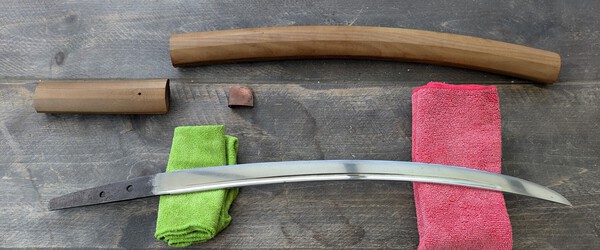
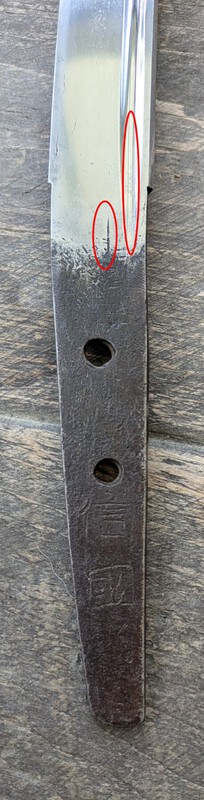
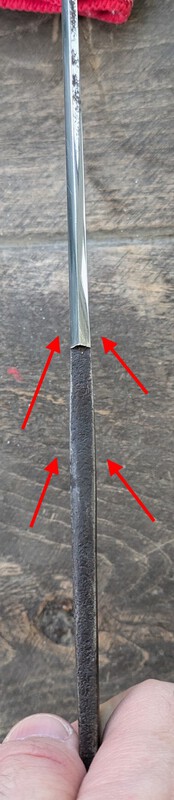
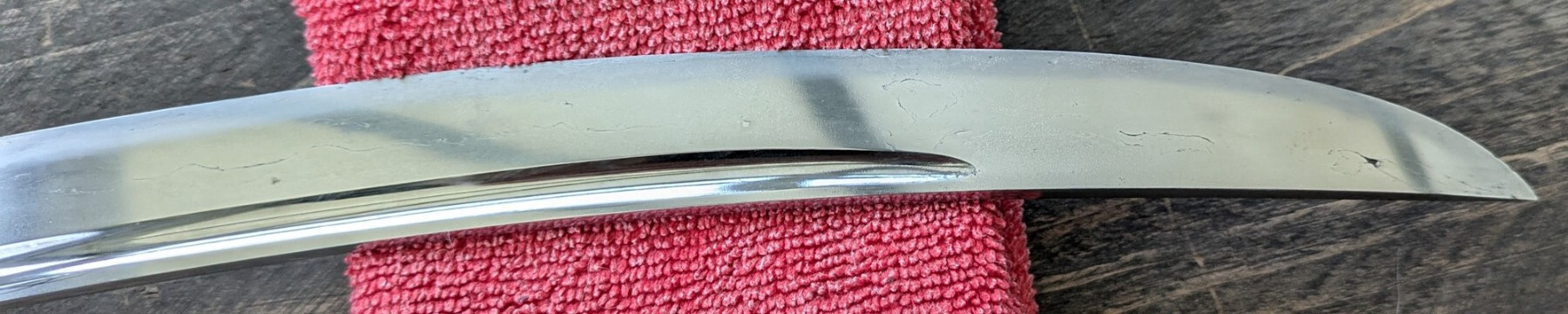
Hi all, I was lucky enough to buy this Wakizashi with a large sori from a member here a while back, and it is the first Nihonto I've owned with a bohi/horimono, and also likely my oldest piece. But after studying further, I've noticed some odd things I was hoping someone would be kind enough to inform me about? Here's the blade, and it has a large sori, as well as two different styles of bohi/horimono: For starters, I find it strange it has two different styles of groove - I wonder if the thicker one was added later to help remove some of the kizu found after a later polish? (There certainly are a few visible) What's especially interesting is that within the thicker horimono are two faint lines, as well as a small third one outside the bohi: Are these two parallel lines inside the bohi signs of a previous horimono that has been mostly removed by the wider bohi? And is the additional small third line evidence of another part of a horimono, removed during polishing? Similarly, does the difference in the thickness of the nakago and the sharp part of the blade indicate it has been polished a lot like I think it does? If so, that's a lot of lost material! Thanks, George




-
Just reflecting on the original 4 points and after reading the related threads - if we agree that a "perfect" daisho is actually a big and small sword made together, with matching koshirae, and that daisho the term just refers to the big/small sword combo regardless of looks and history, then surely "Samurai" and wether the swords were worn can't actually come into the equation? Otherwise we would be excluding any gendaito or new forged or created pairs simply because they weren't around before the class was abolished... (In which case, I very much agree with the OP)
-
This topic has caused me some confusion ever since I got involved collecting Nihonto. Is there an official definition somewhere, e.g. what does it take for something to be papered as a daisho? As others have mentioned though, it does feel sometimes that the "purposefully made" koshirae definition doesn't fit with the historical reality. Like if carried these two into battle, even though they have a different habaki, menuki, and tsuba, surely I'd still be calling them a daisho? It does feel like there needs to be separate words to describe a "pair of matching koshirae", a "pair of matching blades" (forged at the same time), and a "pair of big/small swords worn together".

-
Sword tassel help please - genuine or reproduction?
George KN replied to RussellM's topic in Military Swords of Japan
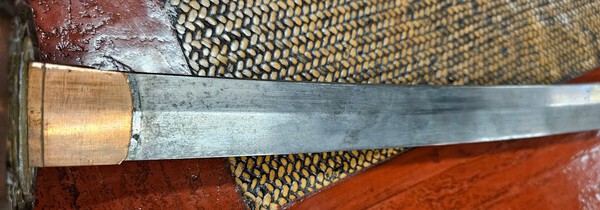
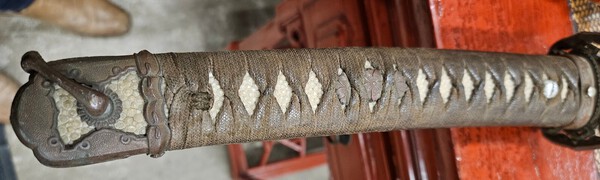
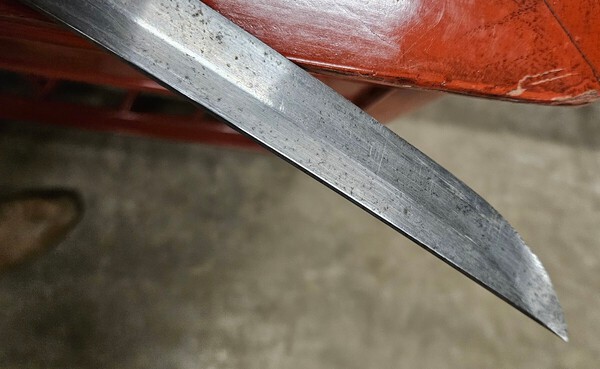
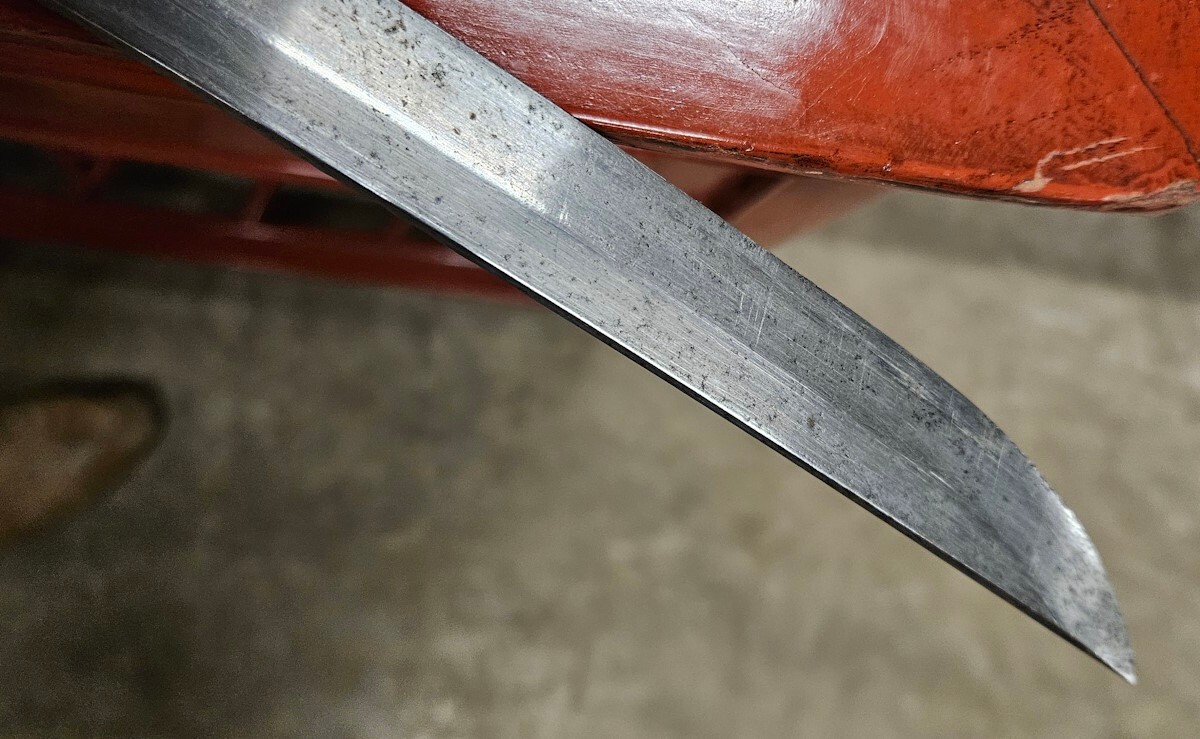
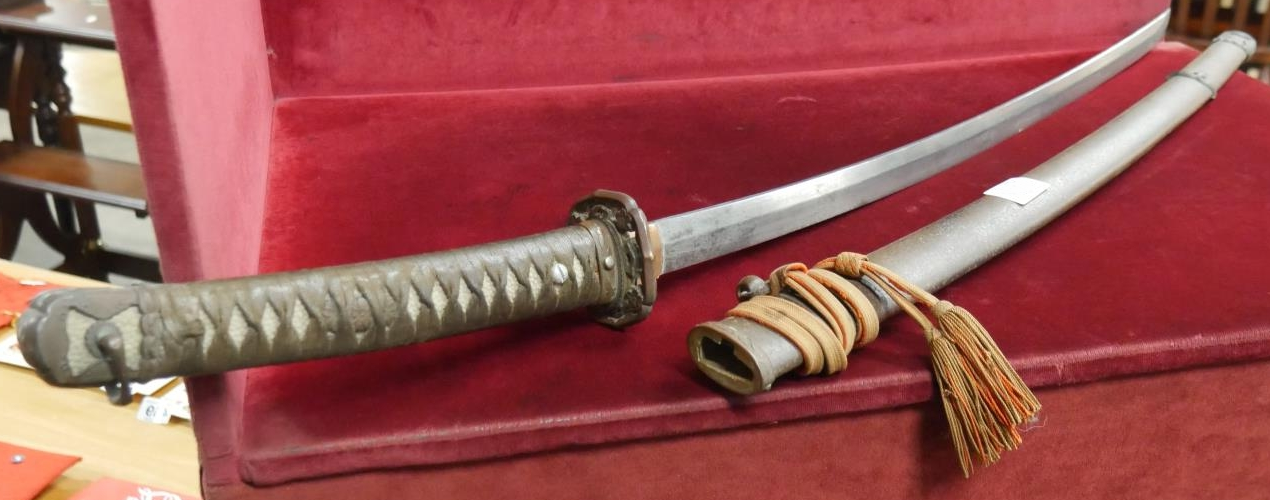
Looks like someone else ended up with this one! I'm trying *really* hard not to pick up more project blades, and it went for just a little too much for me. These were the extra pictures from the auctioneer: Koshirae definitely looks decent, but the blade has had a rough time. Dodged a bullet? Missed a gem? I'm not sure either way, but definitely hard to walk away. I hope it finds its way onto this forum so I can find out what's on the nakago

-
Sword tassel help please - genuine or reproduction?
George KN replied to RussellM's topic in Military Swords of Japan
@dwmc great spot! But that one's on me, I actually mirrored the image to help me notice anything odd. Thanks for all the thoughts everyone, much appreciated! I'm hoping I can buy this one 🤞 -
Sword tassel help please - genuine or reproduction?
George KN replied to RussellM's topic in Military Swords of Japan
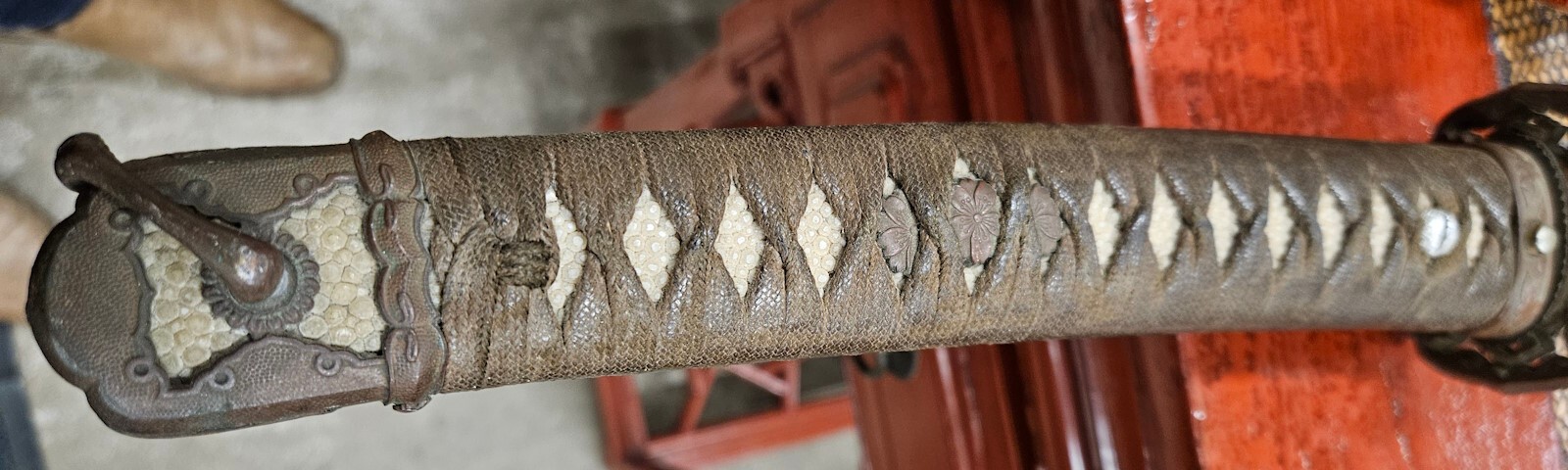
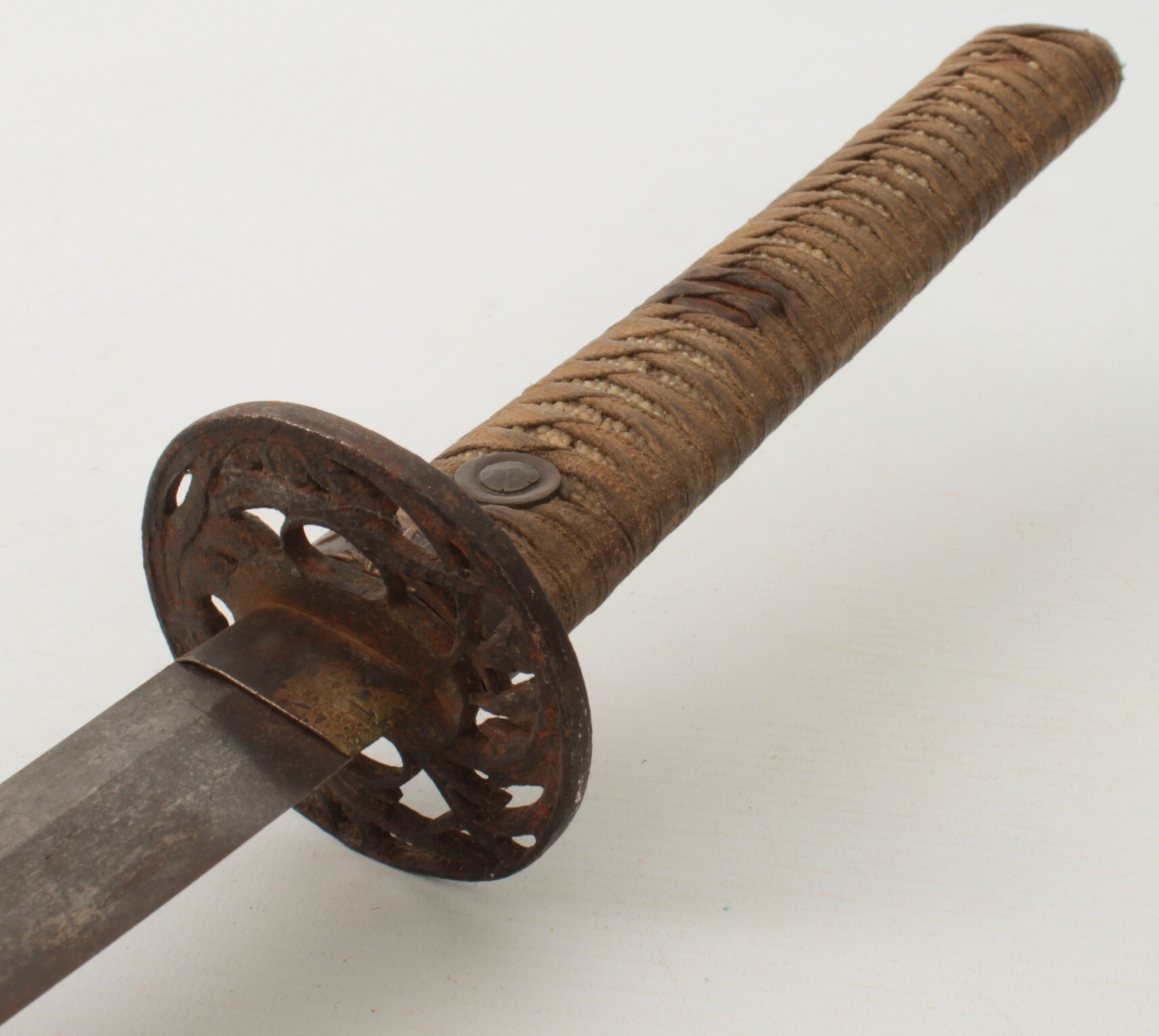
Thanks @PNSSHOGUN! To be honest, I don't know if the sword is good, bad, or a complete fake, since I only have one picture whilst I wait for more: Apart from not knowing whether the blade is damaged, fake, showato, etc - the tassel, screw mekugi, and unusually plain chuso button (is it a replacement?) is giving me pause for thought about whether it is a genuine wartime sword. I also don't think I've seen such a generally brown and boring tsuka before... Does it seem in-keeping for an early gunto? I'm normally used to seeing a bit more gold or red, and a bit more of a hamon I was somewhat hoping you'd tell me the tassel was fake so I could rule out the rest as a put together package, but if it's not, I might have to reconsider...
-
Sword tassel help please - genuine or reproduction?
George KN replied to RussellM's topic in Military Swords of Japan
I didn't want to open a new thread since this one was fairly recent, but I've come across a similar-ish tassel myself in the wild, and just wanted a second opinion from people. (Apologies for the terrible picture, I'm trying to get another) Does this look genuine at first glance? It's certainly rough around the edges, but it doesn't seem as shiny as the repro one discussed earlier in this thread... And do people think it looks more like a field or general grade tassel? I don't know much about them and information seems to be fairly sparse. Thanks!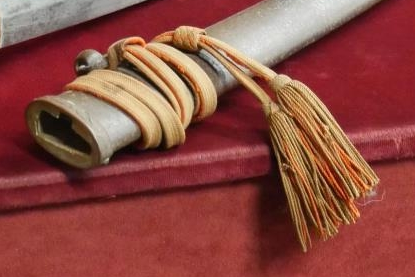
-
From the perspective of just rust I think as others have said it would be safer for the sword to be kept in the shirasaya. However if by being in koshirae and on display it would mean it was more enjoyable for people, and that in turn means it is cared for and not forgotten about (where it could then be mistreated down the road due to lack of appreciation), I'd personally say this particular risk is probably worthwhile. If anything, changing it from shirasaya to koshirae once a week is much riskier than just leaving it in either one - there's a chance of dropping, scratching, or leaving fingerprints each time this is done, so I'd probably just stick with one and only change if needed when doing required maintenance. Maybe then use the shirasaya if going on holiday etc.. As an aside, you're lucky to have both options! All but one of my swords only have koshirae - in the UK at least it seems rather rare to find blades with both.
-
Giving a nihonto some use ?
George KN replied to Nicolas Maestre's topic in General Nihonto Related Discussion
Now that's a hot take 😂 (Doesn't Hozon literally mean a sword is worthy of preservation?) -
Giving a nihonto some use ?
George KN replied to Nicolas Maestre's topic in General Nihonto Related Discussion
Hit the nail on the head here @Franco D! These swords are here because people didn't fall to their desires. The swords weren't buried with their past owners, they weren't mistreated by their descendants. They were stored, respected, and only when needed, maintained. It is frankly a small miracle we are even able to acquire them - and I suspect there will come a time where they are once again more widely revered and valued. Even if it is a bit more boring for us... I don't need to practice with my nihonto, so I wont. After all, I want at least one of my swords to survive another 500 years, and travel the stars as humanity start to settle them -
Bohi Short of Kissaki
George KN replied to Francis Wick's topic in General Nihonto Related Discussion
This is an interesting thread! I have recently acquired a hira-zukuri wakizashi with two different styles of bo-hi that both end way back from the kissaki, and I've been wondering as to why too: As others have said though, the hamon is so close to the edge I can't see how in my case reshaping the kissaki would have been the main motivation for this blade or the OP. If the bo-hi had been added to remove some forging flaws though (which would make sense on mine because there are still quite a few kizu present) then perhaps it just didn't need to go any further, perhaps to prevent weakening the point/taking more time for no reason?


-
Thanks all for the replies and suggestions on how to remove the rivets. I decided not to go for the original sword - I sadly don't have a workshop available and it needed too much work for my risk tolerance, so it's contents shall remain a mystery unless someone else on this forum bought it and is feeling braver than I... If anyone does have any pics of other swords with rivets, please do share though!
-
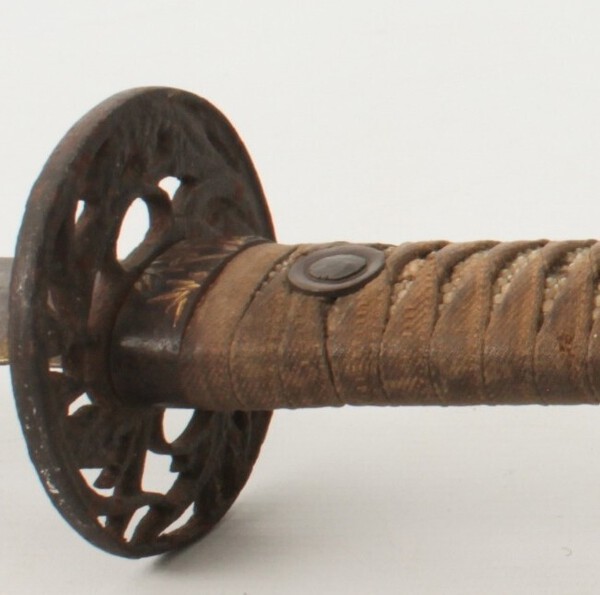
Yeah, it's likely not the best piece... I just can't get over why someone would ever decide hammering a permanent rivet was a good idea. They've thought a little about potential damage by adding a washer to distribute the weight, but I didn't think the mekugi was ever a point of failure during combat? Perhaps the satsuma koshirae weren't very well fitting, and this was a hasty attempt to fix that? There are one or two other examples of modern rivets on the forum, like this one: From here: https://www.militaria.co.za/nmb/topic/37912-assistance-please/#comment-393113 And another (but this time a yari) here: https://www.militaria.co.za/nmb/topic/7816-fukuro-yari/#comment-77759 It's just odd is all 😅
-
Imagine if that rivet was original to the rebellion though - who knows what's underneath... I can only think that drilling it out is the only incredibly risky option? If original its a shame, but I can't think of any other way someone could polish the blade without removing it (which it desperately needs)

-
Has anyone seen this before where instead of a wooden mekugi a rivet has seemingly been hammered in? Is it even possible to get something like this off? Seen it online, and I'm thinking it could be a satsuma rebellion sword... (It's in rough shape - not sure what's going on with the habaki either)


-
The areas where the paint is chipped away seems to be corroded. I wonder if this is another example of someone painting it in the hope it would stop rust? This happened to mine, which was painted brown and black, seemingly covering up damage to the original green paint: If the red really has just been painted on top of the other fittings (which it does look like), I recon you might find the original paint colour when taking off the koiguchi.


-
If that is a newly made Chinese sword, that's impressively good. I can't see any obvious signs beyond the sketchy seller that it is Chinese or machine made... Honestly if this hit the UK auctions with no info and based purely on sight alone, I'd probably be bidding on it, which is scary if this really is a fake. Are there any red flags I'm missing? The hamon looks a little strange on some photos (darker shadows in places), the linear vertical lines on some of the steel reminds me of a wartime polish (so rushed/amateur/perhaps machine done), but anything distinctly bad that couldn't be explained by bad lighting or a bad polish? (And yes, I am ignoring the nakago since there's no close up images of it) I'm uploading the ebay pics and description for posterity: Japanese Samurai Sword(Uchigatana) Blade length(nagasa, 刃長, はちょう): 72.0 cm Bottom width (motohaba, 元幅,もとはば) : 3.08 cm Top width(sakihaba, 先幅,さきはば) : 2.40 cm Blade thickness(motokasane, 元重 ね) : 0.68 cm Top thickness( sakikasane, 先重ね) : 0.56 cm Curvature of the sword(sori, 反り): 1.6 cm Item specifics Seller Notes “This item lacks information about its year of manufacture, maker, and place of origin. Certifying ... Read moreabout the seller notes Primary Material Tamahagane Original/Reproduction Unknown Featured Refinements Samurai Sword Age Unknown Maker Unknown Country of Origin Unknown. However, this item was collected from Japan NTHK-NPO Certification NA
.thumb.jpg.e357b8c51a1f542382c4fdfdbadf5fed.jpg)
.thumb.jpg.439950b793619e0b8c1af9b8f5d5e832.jpg)
.jpg.91fd762136183bd38a8905ba4d43a6da.jpg)
.jpg.121808d1f5506f01dee6827ce80a33cf.jpg)
.jpg.874a12223061efe441ce036516498330.jpg)
.jpg.650b0df5c523fd42ebbe0f464e566a46.jpg)
.thumb.jpg.cab645944eb466321bd33a14799bb8df.jpg)
.jpg.0eb36ac3e7df1a46eeac0245d52260a9.jpg)
.jpg.cfee83940ca808c4f09cfea3357b69ae.jpg)
.jpg.88cbf4e819c36fbd22a19800d6bd717f.jpg)
.jpg.e62b2d0f2b8b19c54fa829bda9f93ee9.jpg)
.jpg.df69f3191363251a92c0391d05f1ab03.jpg)
.thumb.jpg.7879367d738d7d816533b966f3b48b46.jpg)
.jpg.aaba4cfb4c8d5c17d7730f67351dd00d.jpg)
-
Thanks for the extra pics Rob, I'm glad you've sent them! This all looks to be a very genuine and possibly very old shobu zukuri wakizashi. I unfortunately can't help translate the tang (hopefully someone else will come along and give it a go), but it really does look like a nice sword to me. I especially like the black habaki and tsuba - both are fairly unusual, and not things you would see normally added to a low quality sword. I think in the pictures I can see some evidence of fingerprints on the blade - please do give the blade a wipe with a clean microfibre cloth or else they may end up being permanent... However, don't ever be attempt to do anything else cleaning wise (no rust removal, no cleaning the tang, etc). Here's a link I found helpful starting out: https://www.Japanese...rdindex.com/care.htm
-
It's very hard to say much about the wakizashi without seeing the blade or tang, but those look like some good fittings! That tsuba in particular looks amazing...
-
I rarely buy ebooks as I generally find them less satisfying to use and read, but I took advantage of this sale a week or so ago to buy the Meikan and Swordsmiths ebooks (amongst others), and I'm actually really impressed by how useful the format is for references/data. Not only can you search the entire pdf using ctrl+f (which is very useful for finding references to particular swordsmiths), but you are also able to zoom in on mei and other characters, which makes it a lot easier to compare the kanji. Thanks for people mentioning it on this and another thread, or I would have missed out on this
-
Good blade and good fittings, awesome!
-
It can be hard to say as lighting and the state of the polish can make a big difference to pics, but I'm leaning towards water quenched? I like it either way though!
-
We have to talk about chatgpt
George KN replied to Cola's topic in General Nihonto Related Discussion
I'm not a nihonto expert, but I work with AI language and image models regularly as part of my job and hobbies, and there's a lot of misinformation about what AI can and can't do... Language models do not know things. They simply create text that reads like the most likely answer based on the previous context it has access too. This means it is very good at creating things that sound right, but not things that are accurate, or would disagree with its previous context. Yes, you could create a more accurate model using only reputable sources (e.g. adding only Sesko's and others work, giving it none of the mess that is online sources (this would be stealing without permission though)). But it has no ability to reason or solve conflicts of information - it would simply try to create what best fitted the theme of the works previously provided, leading to decent accuracy but regular terrible mistakes that even a beginner would catch. This isn't to say that AI can't be used in the field of Nihonto though - I actually have high hopes with enough images and sources image models would be very useful at matching signatures against indexed swordsmiths. Similarly, the initial terribly inaccurate assessment can be used to speed up writing a human analysis or text, as it at least provides a starting point, however wrong. In general AI like most tech tools thrive on very specific datasets and tasks - general use (like trying to analyze all things about a sword), not so much.













.jpg.9979f60f6bd376c25328306409b0e69b.jpg)
.jpg.19624aa623c9ac8266bd698e928342e1.jpg)
.jpg.b74b21df9cb76ab8b4f7f06f9160186e.jpg)
.jpg.bba2b3d0cae392e2c12b88175c2ea4b9.jpg)
