John C
-
Posts
2,522 -
Joined
-
Last visited
-
Days Won
16
Content Type
Profiles
Forums
Events
Store
Downloads
Gallery
Everything posted by John C
-
What were the effects of WWII on the Nihonto?
John C replied to Crusader22's topic in General Nihonto Related Discussion
Jeff: I think the vast majority of swords provided for the Japanese military were purpose made for the war effort by various entities. Although there were some who took family blades into battle and others who donated family blades (primarily if they did not have a son to go to war), these were not the majority. The biggest impact would have been the law to disarm the civilian population after the war and make them turn in their weapons. But MacArthur understood the cultural significance of the sword and made allowances in certain cases. This law, therefore, was tempered somewhat by efforts to declare certain blades as national treasures or important to Japanese culture. Many examples of petitions exist where citizens are trying to get their family heirlooms declared as important to the Japanese culture in order to keep them. Were some national treasures destroyed? Most likely. The most telling pic is probably the one shown below. How many national treasures are in that pile? We will never know. It is also important to note that we relinquished military rule in 1952, allowing the Japanese to keep their swords as long as they were registered (torokusho). Many of the sword smiths were still alive and were able to teach sword making once again. John C.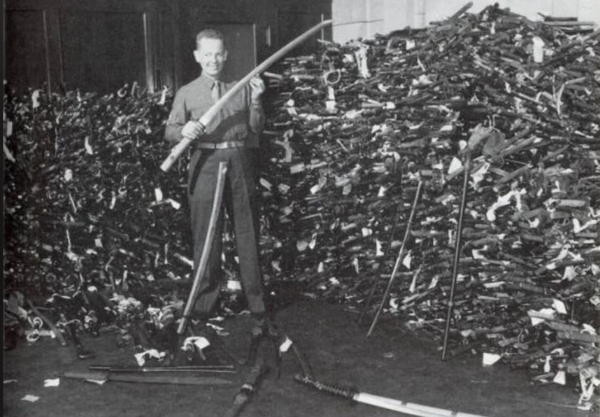
-
Would the hotstamp be worth forging? John C.
-
WWII Sword, can I please get help identifying?
John C replied to Crusader22's topic in Military Swords of Japan
Jeff: The saya is probably black lacquer with a texturing layer underneath (think orange peel paint texture on your walls - same concept), though metal saya were painted. The same' could be ray skin or celluloid, which was used as materials became scarce. Painted burlap was even used toward the end of the war. The tsuka wrap is shiny because it would have a thick coating of lacquer on it. John C. -
Any Techniques for removing Tight Leather Saya Covers?
John C replied to Bruce Pennington's topic in Military Swords of Japan
Bruce: As a holster, belt, and wallet maker, I would carefully cut the stitching along the side then remove it. The saya cover can then be re-stitched using a blind stitch or a saddle stitch if you want it to stick out. I mention this method because the other method would be to wet the leather to soften it then work it off. Much more difficult and could cause shrinking and cracking once dry again. You could also try a leather conditioner to see if it becomes pliable enough, but I don't think it would. Not many options to do it safely. There may be some saddle makers in your area that could do it. John C. -
WWII Sword, can I please get help identifying?
John C replied to Crusader22's topic in Military Swords of Japan
Jeff: Type 3 is sometimes referred to as type 100 and refers to the style of mounts. See Ray's link for details. The star stamp identifies the sword as a "gendaito", meaning a traditionally made blade as opposed to a mass-produced or machine made blade. So yes, a more desirable blade. It looks as if the blade has some condition issues, however still a nice piece of history and a good find. John C. -
Gunto blades - what was their standard shape?
John C replied to Yukihiro's topic in Military Swords of Japan
Here's one document that mentions minimum blade length for donated blades. John C.
-
Since we know that swords were repaired frequently, could these just be very late war replacements? John C.
-
Dale: You probably have this already, however here's a link just in case. https://www.ebay.com/itm/226236745067? John C.
-
That could be. We may never know without definitive documentation. Hot cutting the nakago of pre-existing blades makes sense because the limited time they had to fill the orders after the red tape would have necessitated the need-for-speed. John C.
-
Fun With My Late War Nco Gunto
John C replied to Bruce Pennington's topic in Military Swords of Japan
These are a bit like hens teeth. They're out there, but you'll pay up for them. You may want to buy replacement copies for now until you come across a reasonably priced real one. You could also use a bamboo mekugi in the mean time. John C. -
John: You might be able to answer this - are the handles on the souvenirs slightly shorter than a regular gunto? I was thinking that if so, it could explain why the nakago on the blades were so abruptly cut in order to fit the souvenir. John C.
-
habaki serial numbers - parade kuy / kai gunto
John C replied to Suci's topic in Military Swords of Japan
I'll probably get corrected on this, however I think most parade / dress swords did not have habaki. There were some type 8 kyu-gunto riding swords and artillery swords that had serial numbers and other stamps on the ricasso. There were also general grade swords that had the rising sun on the habaki. Maybe someone else can find a more specific example. John C. -
Mike: Here is a partial translation for the hotstamp area from Bruce's Stamp document. John C.

-
Gerry: In one sense, it could be a good (or at least interesting) thing as it adds to the provenance. As the next caretaker of the sword, you could start an ownership chart. If the quality were excellent, I would have no problem with it. Indeed, all of my swords have been owned by someone else! John C.
-
A bit repetitive, however another list of arsenal marks. John C.
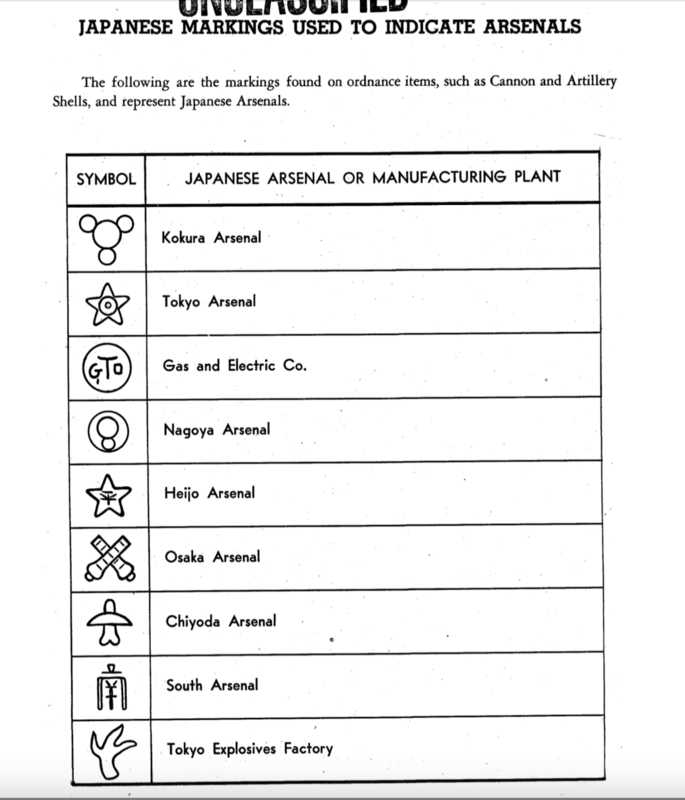
-
...again not sword related, however may be useful as a reference tool. A list of marks from various ordinances. John C.
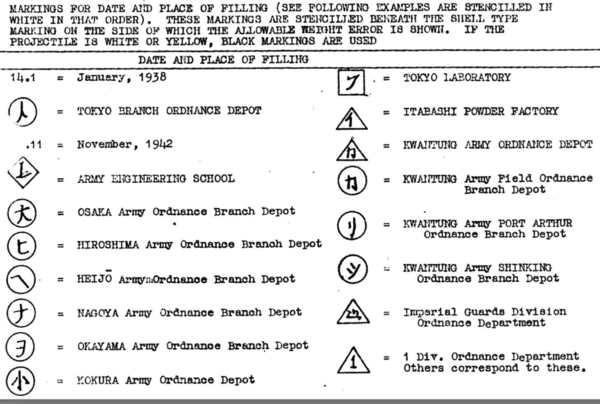
-
@Bruce Pennington Here is some stamp related info you may find interesting, though not related to swords. Note the comments on the origin of the Nagoya mark (you may already know this) and the comments on the Japanese not liking serial numbers over 5 digits (99,999) so they used katakana letters to denote new series. http://www.nambuworld.com/t14markings.htm John C.
-
I wasn't sure because I thought naval ships used case-less ammo and I couldn't think of an artillery piece that would fire something that big. The largest howitzer shell we used was a 240mm, which I think is smaller than that can. John C.
-
FYI

-
Is that bucket made from a large artillery shell? Anzio Annie perhaps? John C.
-
An interesting looking saya with embellishments
John C replied to KB1107's topic in General Nihonto Related Discussion
I believe the lacquering technique here, is called kawari-nuri. All manner of things (particularly bits of abalone shell) could be used. Could yours be a type of sliced shell? I also think the tsuba may be horn. John C. -
...and we worry about scratching the darn things. John C.
-
Rob: Kanetoshi was an RJT smith, meaning some of his blades were hand made using tamahagane steel (we call these gendaito). Under a loupe or magnifier, does this mark look like a star shape? John C.
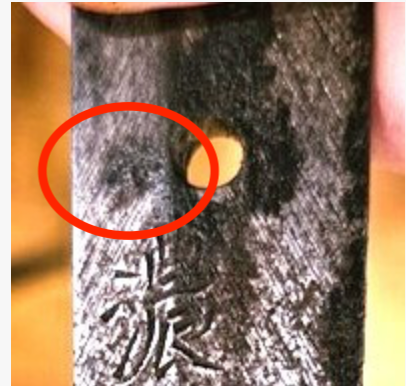
-
The pierced tsuba could indicate it is a type 94. Type 94/98 swords were carried by officers. As to value, it would depend on the overall condition and the expertise of the sword smith (we need pics of the tang - both sides and any stamps). John C.
-
Tang doesn't have the second mekugiana either. Note that it isn't crudely cut like most. Could that be the reason for the lack of sarute hole and barrel? Seems as if it were intentional, for some reason. John C.