
Soshin
-
Posts
2,912 -
Joined
-
Last visited
-
Days Won
3
Content Type
Profiles
Forums
Events
Store
Downloads
Gallery
Everything posted by Soshin
-
Hi Peter Reusch, I think it does and it lets me appreciate the designs at a deeper level. I will keep trying to acquire an antique Yaygu tusba example for my Japanese sword fittings collection.
-
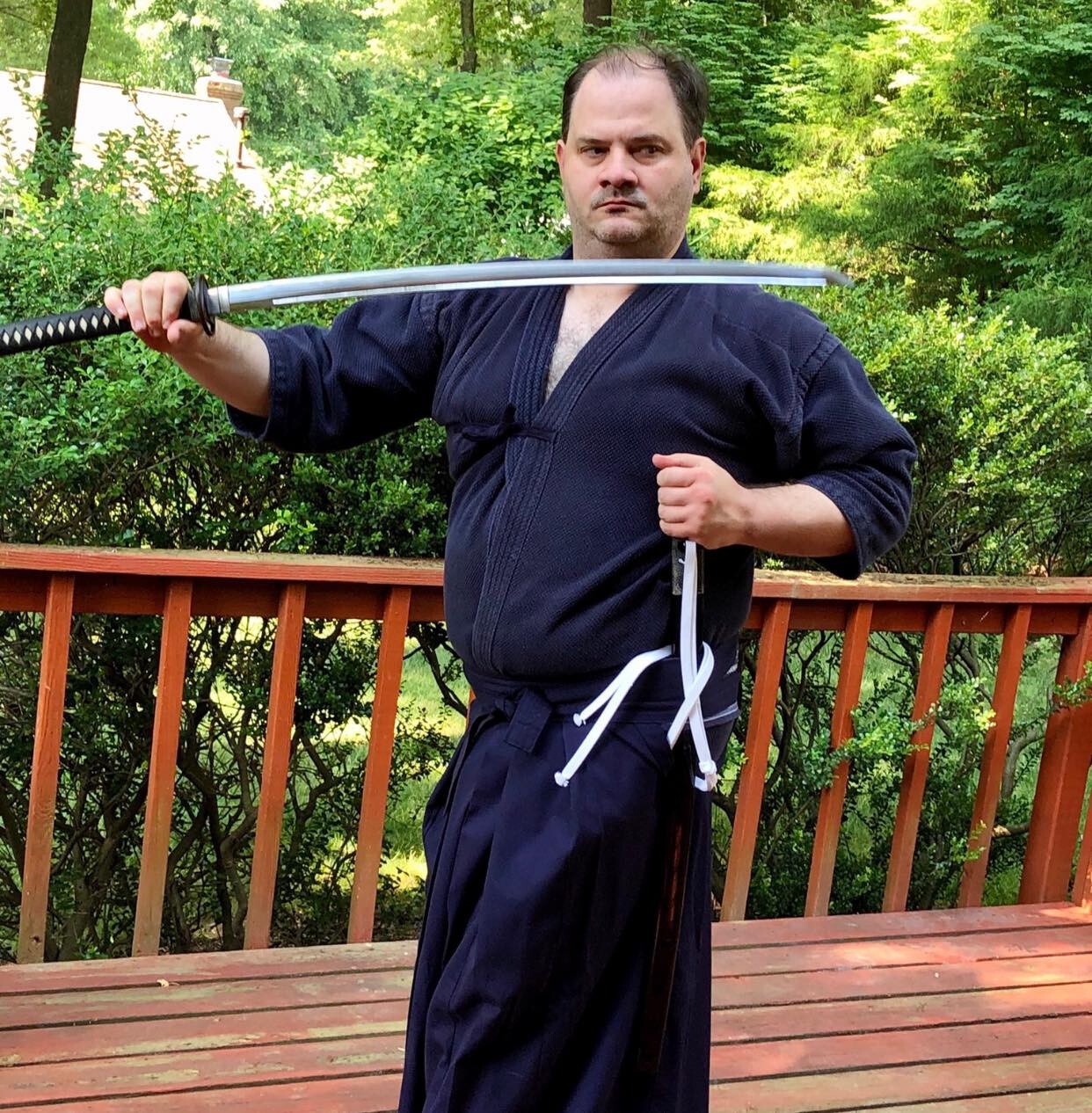
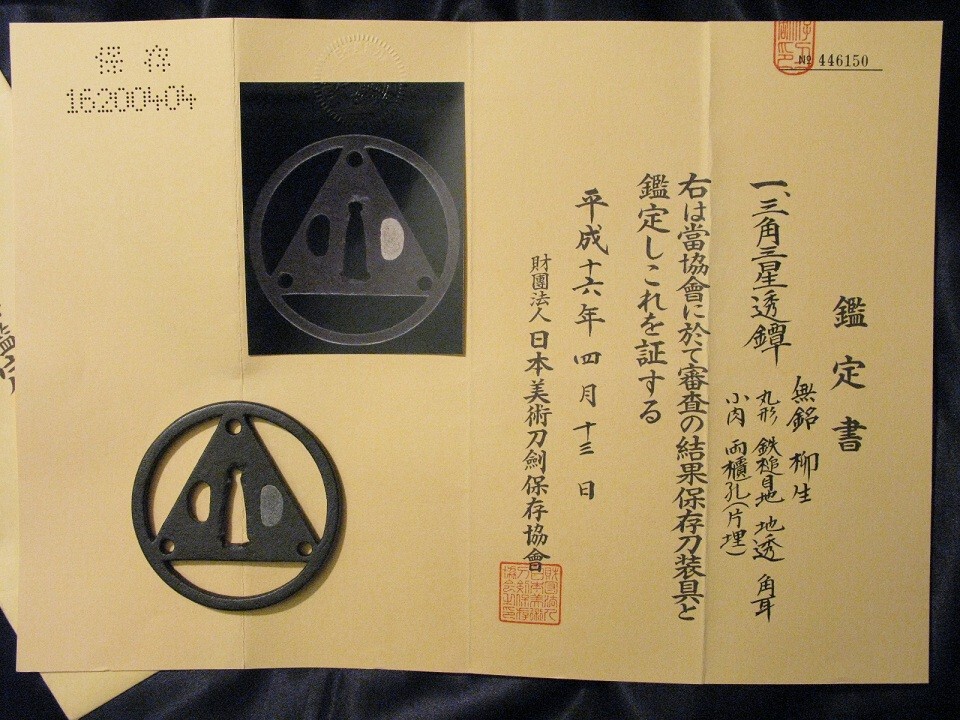
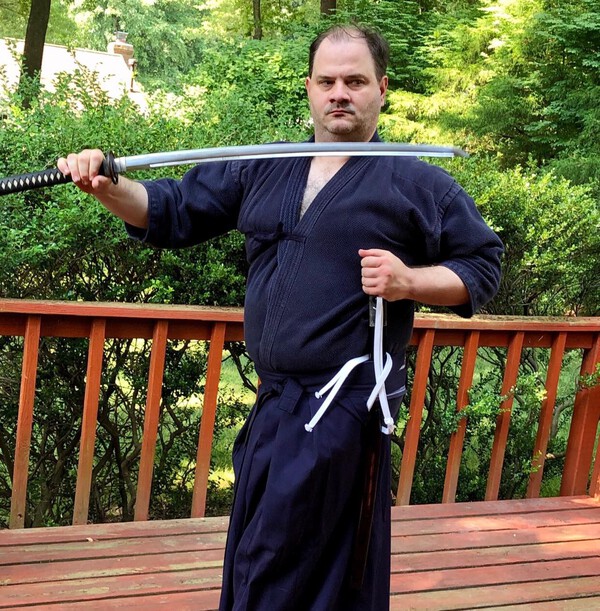
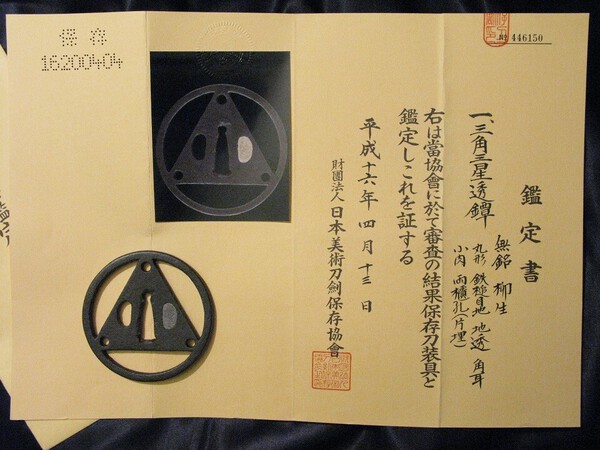
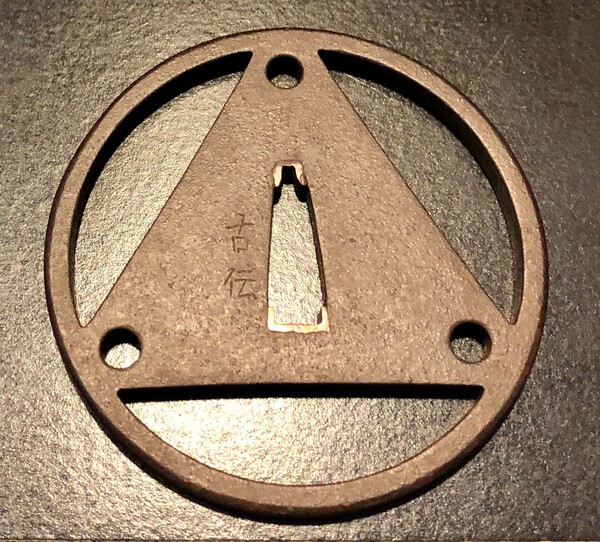
Thanks @BIG for the additional photos of your fine tsuba. I really like Yagyū tsuba but do not own any antique ones, but I have two modern tsuba one I had a custom made for my martial arts training sword. It has a classical Yagyū design. In the photo below I am using the modern Yagyū tsuba and demonstrating Yagyū Seigōryū Battō (柳生制剛流お抜刀). My teacher trained at the Yagyū Kai in the 1980s under Yagyū Nobuharu 21st headmaster of Owari Yagyū Shinkage Ryū. Here is a photo of my Yagyu Tsuba Utsushi unmounted from the sword and the historical example with NBTHK paper reference. The design of the tsuba references the first kata set of the Honden: Sangakuen-no Tachi.
-
I agree with the NBTHK first call to Aizu Shoami for the first tsuba. The second guard if unsigned I would have given it a quick Hozon level attribution to Kodai Akasaka and left it at that. The signature does not look nice and neat in my opinion and requires additional research hence the Horyu call made by the NBTHK this year. My advice for @SRDRowson is to resubmit in a year or two later if he is planning to keep the tsuba long term since he lives in Tokyo. @Brian with any Horyu (reversed) call made by the NBTHK no fee is paid.
-
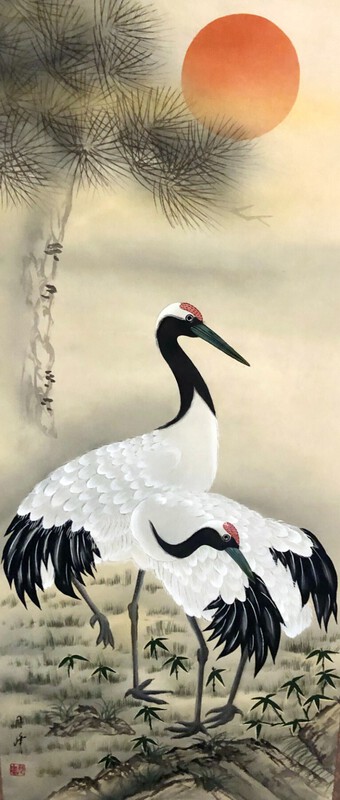
I just received this modern hanging wall scroll painting from Japan I really like it. The seasonal theme of this painting is Winter. I tried to find a painting with an Autumn theme for the upcoming equinox but was unable to find a wall scroll that I liked on the Japanese art dealer's website. I found and started following this Japanese art dealer on Instagram. Enjoy and feel free to discuss politely.
-
- 4
-

-
Nice tsuba! Thanks for sharing on NMB in Tosogu form, the iron looks excellent and interesting, I can imagine how great the iron would feel in hand.
-
From what I can see in some of the photos the blade looks like a bad modern reproduction. Consider yourself lucky you didn't "win" this ePrey auction.
-
 I must agree with Curran in the above comment. The website above contains contact information. The New York Token Kai is a great club. I have been attending meetings since 2016 and at any given meeting you will see a lot of wonderful things. Being in Brooklyn is an excellent location, you are likely just a subway ride away from Times Square (nearest subway stop). Living near Washington, DC I need to take a three-hour train ride on Amtrak and then about a 20-to-30-minute walk from the train station to the club meeting location which is near Times Square.
 -
This was a tsuba owned over ten years ago that has the same signature and copper inlaid kao. The artist Seiryuken Eiju was a member of the Tetsugendo School. I remember showing pictures to Mike Y. and having a nice educational discussion. The tsuba I had was in excellent condition for an antique tsuba, made circa the late Edo Period. @GetFuzzy2 Vern, I hope you find this helpful to your study.

-
Dear Peter Reusch, Thanks for the link to Richard Turner's website. I had lost the link to this WordPress website. P.S. Love Kyo-Sukashi tsuba. Thanks for posting and keep up the good collecting Colin H.
-
Thanks for the article, I will look at it. Do try to fix the funny typos I make them all the time and English is my first language, so it isn't a big deal.
-
Sorry for my late reply on the topic and might have overreacted a bit to your crude comment @Bugyotsuji. I have been dealing with family health issues, which was eating up my free time outside of work but for now it is resolved. I agree with "camp" that my tsuba is likely displaying a Japanese Weasel (itachi 鼬) (Mustela itatsi). This contrasts with the original topic tsuba. I am going to update my write-up on my tsuba. Thanks everyone for the help and good discussion.
-
Thanks for the information and pointing out my inaccurate information. I was thinking this is not accurate, thinking about what I know of the basic biology of squirrels and the trees of Japan. The latter tsuba is not crude, which the term crude itself is an impolite and vague term to begin with and not helpful for a meaningful study or discussion. The basic workmanship and artistic expression of my tsuba is quite different and much older than the tsuba that started this topic. I posted it per request as my tsuba does have a small mammal pictured on it, that I mislabeled as badger (mujina 狢). This was likely a mistake as the topic is now starting to drift from the original tsuba.
-
No squirrels in Japan. That I know. I find this interesting from a biological perspective. Moriyama-san I agree. It is the Japanese weasel (Mustela itatsi). Second follow-up question why would they be featured so prominently on a tsuba? The Wikipedia article (Japanese weasel - Wikipedia) says that the animal is written with katakana (itachi イタチ), which I find interesting. Does this mean the weasel originally came from mainland Asia? Thank you.
-
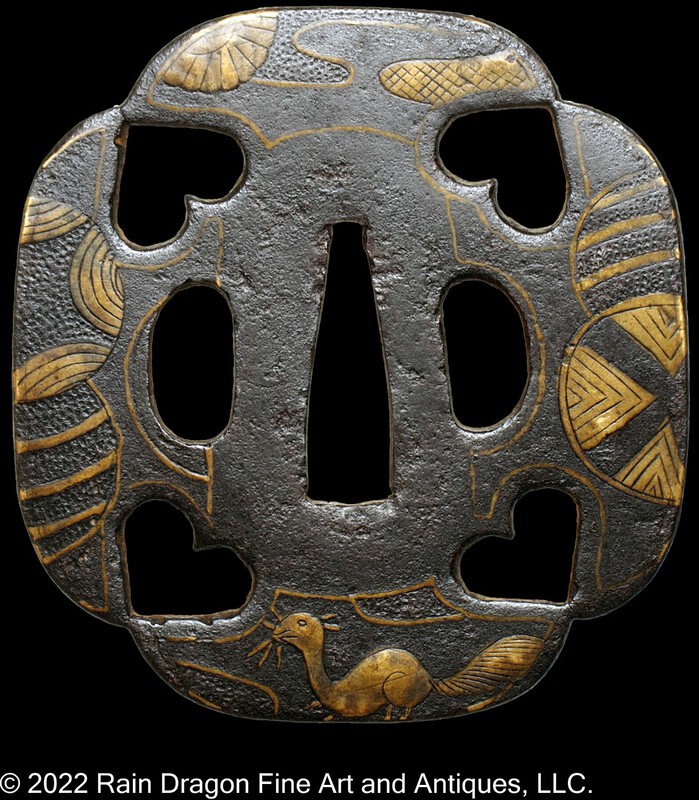
Here is the tsuba per your request above. This tsuba was attributed by the NTHK to be the work of Heianjō (平安城) group circa the early Edo Period. I have more photos on my website here: Tsuba Gallery #10 | Tsuba Otaku. It is the third tsuba from the top of the webpage as you scroll down. I have the lower design as a badger (mujina 狢), the NTHK does not discuss what the design is on its appraisal paper. Here is an interesting quote from the article about Tenuki you linked to. The artist's depiction of these animals has changed over the centuries from a more realistic one to a more cartoonish one.
-
I have a tsuba with what I think is a Mujina on it. It is artistically different than the above example and my tsuba considerably older. Unfortunately, the NTHK completely ignored the design when they wrote an appraisal paper for the tsuba. I still think you have Japanese raccoon-dog (Nyctereutes viverrinus) on your tsuba and not a Japanese badger (Meles anakuma) which is pictured on my tsuba.
-
@Stephen, this is why the event is called a show. With all due respect sometimes, it is not about buying, it is just a chance to see great pieces with permission in hand (i.e. not on a computer screen or book) that will never be part of my personal collection. I wish I could have made it to the show this year.
-
Thanks for sharing. I agree with @rematron. I think the flower is likely ominaeshi. Its association with autumn is an important one given the overall theme of the tsuba.
-
Well technically he wrote three books. One book covers the Hayashi and Kamiyoshi Schools, another book is for the Nishigaki School, and third book covers the Shimizu and Hirata Schools. So happy you were able to meet Itoh-sensei and see his display at the San Francisco show this year. I can imagine how great the display was in person, and the few photos I have seen of the display looked awesome. I am also glad you had such a fun time at the San Francisco show.
-
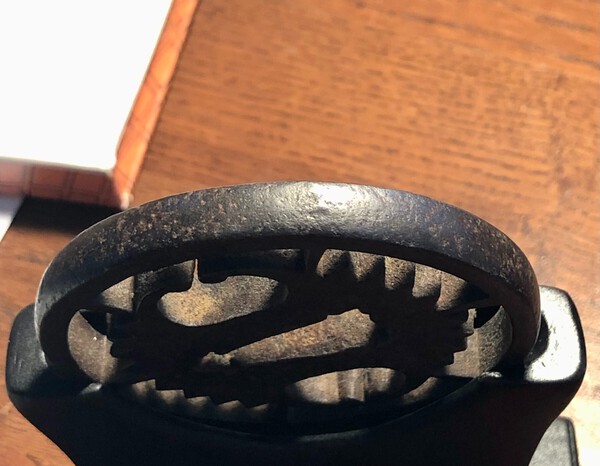
Just wanted to share some photos of my new tsuba stand that arrived yesterday. It is the black cradle version. I purchased it from Darren Harvey from the UK for my birthday. I have not tried all my tsuba on it, but I really like the stand. It is great for showing the iron bones of my Owari Sukashi tsuba. Feel free to discuss it politely. Thank you.

- 1 reply
-
- 5
-

-
-
This was fairly common. Sword smith's working period would extend across historical eras sometimes even when there were functional changes to the swords because the style of warfare had changed.
-
The papered says in brackets below no signature (mumei 無銘): Uda Kunifusa (宇多國房) it does not say Ko-Uda (古宇多). The sentence afterwards talks about the end of the Nanbochokô Period: (Jidai 時代) Nanbochukô-makki 南北朝末期), (naishi 乃至) (means "to about") the (Ôei 応永) era. The sentences in brackets are offering who they think made the sword and the approximate time period it was made. I hope this is helpful. I like Uda and Ko-Uda swords. If it were my sword, I would plan to keep it and try for the Tokubetsu Hozon paper from the NBTHK.
-
Hi Brian, I just sent a late PayPal donation so you can get coffee at the San Francisco Japanese Sword Show via you signature link. I cannot attend the show this year. Say hello to Ito-sensei for me. He is attending for his business gallery陽々youyou. Have a great show and thank you for all your efforts over the years.
-
Thanks for the replies. I found this nice Shinshinto Nanotane tanto with koshirae on Ginza Choshuya website (日本刀販売・買取専門店銀座長州屋|短刀 銘 荘司筑前直胤(花押) 文政十年仲秋 (choshuya.co.jp)). I really like the contrast with polished back lacquer saya and the lighter shibuichi kojiri. Here is a tanto by Shinshinto Munetsugu from Ginza Choshuya. This is a plain saya example: (日本刀販売・買取専門店銀座長州屋|短刀 銘 宗継(宮川筑前守宗継) (choshuya.co.jp)).
- 13 replies
-
- 2
-
-
-
- tanto
- shin-shinto
- (and 1 more)
-
Quick question beyond a tsuba do I need any other fitting to complete my planned tanto koshirae? Has anyone ever seen a kojiri on a tanto saya? i think I have only seen them on katana and wakizashi saya. Thanks for the information. This discussion as been helpful.
-
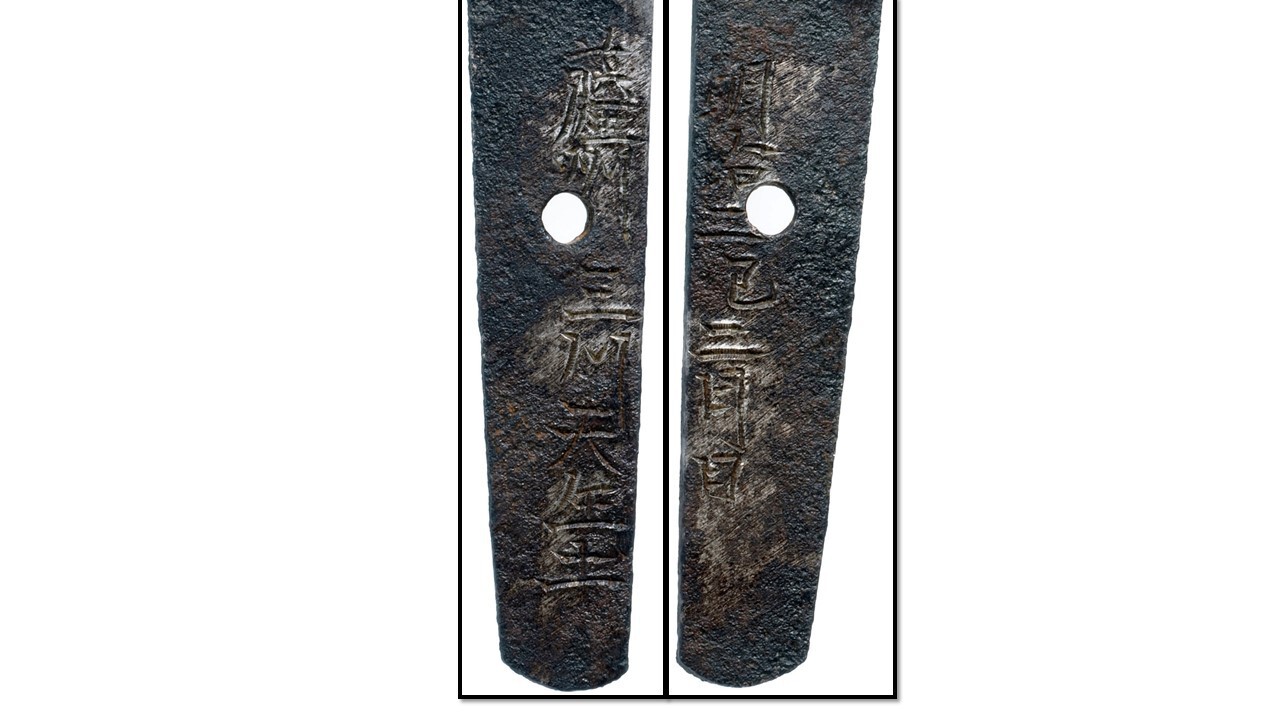
Thanks for the information. I remember being told this and it would make sense to have a motif with a tiger in the menuki. @David Flynn while the focus of this topic is not the translation or authentication of signatures on the sword or its fittings. I will provide a small side by side view of the nakago of the tanto per your request. I was able to translate the date of the nakago with help.