jdawg221
-
Posts
118 -
Joined
-
Last visited
Content Type
Profiles
Forums
Events
Store
Downloads
Gallery
Everything posted by jdawg221
-
Shinshinto- Gendaito periods inaccurate?
jdawg221 replied to jdawg221's topic in General Nihonto Related Discussion
I mean it's decent work, but it just doesn't excite me at all. For instance akamatsu taro makes nice swords, but once you've seen 1 sword from that lineage you've basically seen them all. It's very samey, not really any variety. Here are 2 of my Gendaito, both of which are good work but from some lesser known smiths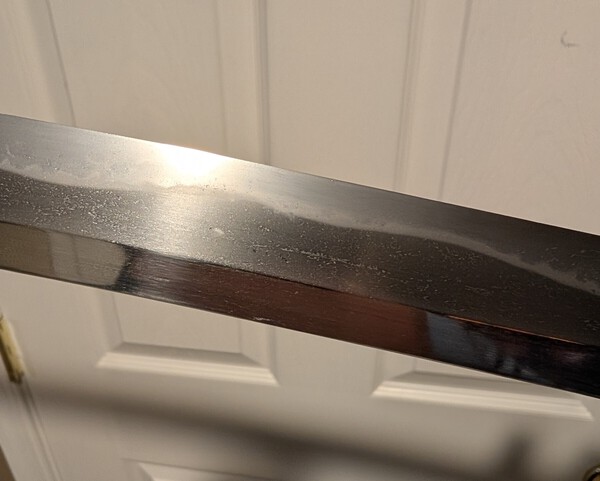
-
Shinshinto- Gendaito periods inaccurate?
jdawg221 replied to jdawg221's topic in General Nihonto Related Discussion
Hmm I don't think I've ever heard that. If anything imo it's the opposite, after the 70s/80s overall nihonto quality declined since alot of the experienced Gendaito makers passed away by that point. Most shinsakuto I see are just replicating what their father or master taught them, there's very little creativity involved. Contrast that with Gendaito where the variety in work between smiths is almost endless -
Shinshinto- Gendaito periods inaccurate?
jdawg221 replied to jdawg221's topic in General Nihonto Related Discussion
I agree that the boundary is never clear, and yeah another thing I've noticed is that if you compare 1920s Gendaito to 1940s Gendaito the stylistic trends diverge. But at the same time something like an Osaka Shinto sword from the 1660s is basically nothing like a Yokoyama bizen sword from the same period. So how someone interprets era differences very much can be subjective. I mean there are plenty of who fall for the Shinto "art swords" trope when in fact many Shinto swords were made with pure usability in mind. -
Shinshinto- Gendaito periods inaccurate?
jdawg221 replied to jdawg221's topic in General Nihonto Related Discussion
Well yes but I'm not just considering sugata when making this statement. Stylistically Gendaito are very similar to Shinshinto. Much more similar than late koto swords are to early Shinto, or late Shinto to early Shinshinto. Also, the Shinshinto to gendaito transition is the only sword period which is defined by a historical event. Both koto-shinto and shinto-shinshinto are defined by stylistic changes and sword making changes, despite both changes occurring during significant historical periods. This is ignoring that plenty of Shinshinto smiths, specifically gassan sadakazu and 11th gen kanesada, made swords into the 1910s which stylistically were basically identical to their earlier works. Yeah you could say that there is an equivalent to this with the koto-shinto transition with smiths like tadayoshi 1, but his early works tended to look more like rai school jigane, unlike his later stuff which had a much more iconic sugata and jigane. -
As someone who owns both swords labeled as "Shinshinto" and pre WW2 non Gunto gendaito, something I've wondered is why the Shinshinto sword making period does not extend into the 1930s, or at least the 1920s. Yes the obvious answer is that Shinshinto ends at the Meiji restoration as the samurai class is dissolved, however there were plenty of Shinshinto smiths making swords in Shinshinto style well into the 1900s, and the early gendaito smiths also made plenty of swords that are near identical to Shinshinto sugata. Besides the fact that the shinshinto period only lasts around 80 years, much shorter than the Shinto period, and the gendaito period only lasts around 60 years. In my opinion the Shinshinto period should be extended to around 1931, and the gendaito period should be all swords from 1931 to the modern day, with the term shinsakuto ceasing in usage. Any thoughts?
-
Nijuba and how it affects a sword
jdawg221 replied to jdawg221's topic in General Nihonto Related Discussion
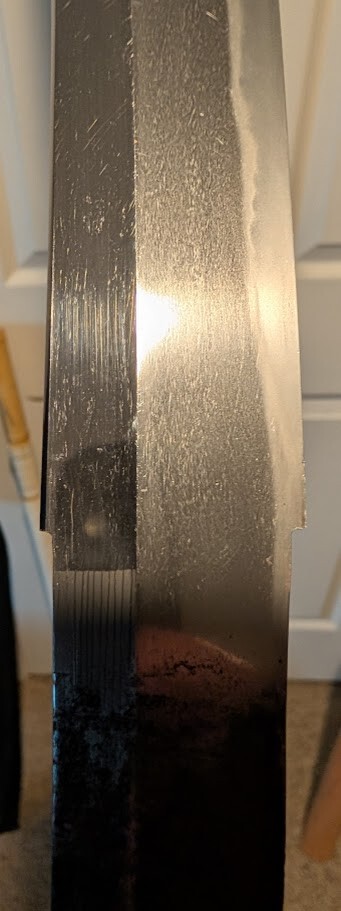
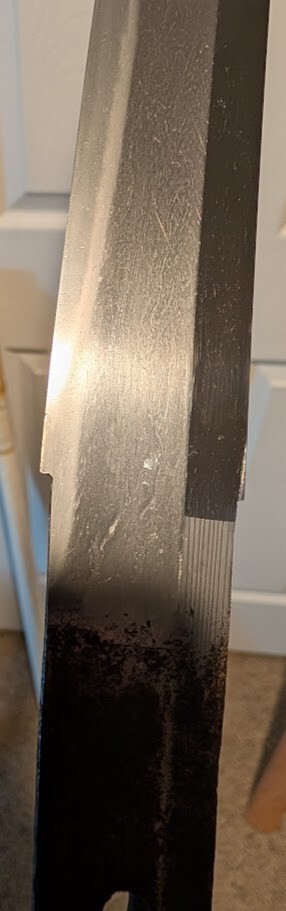
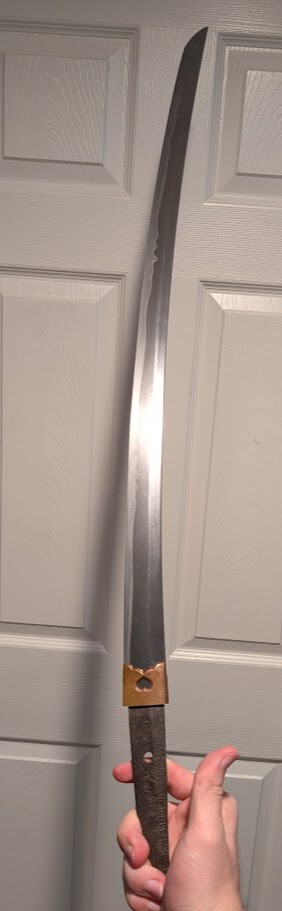
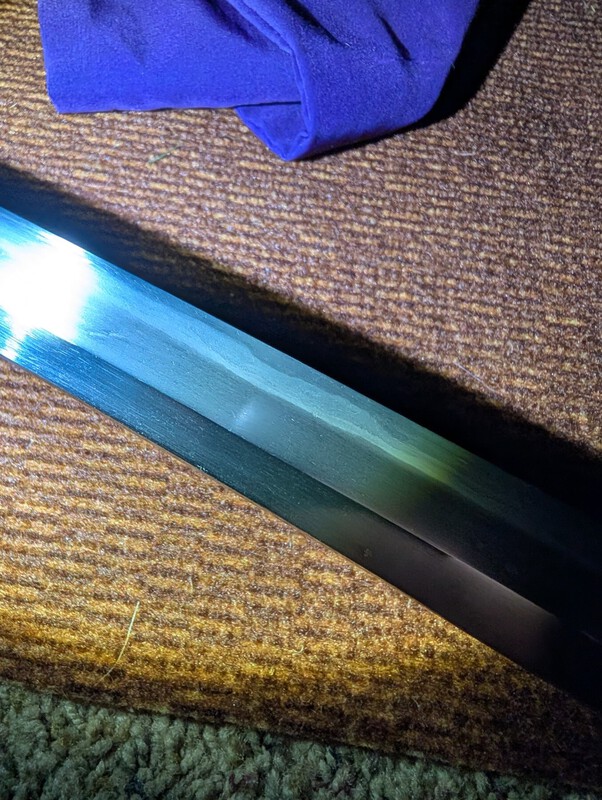
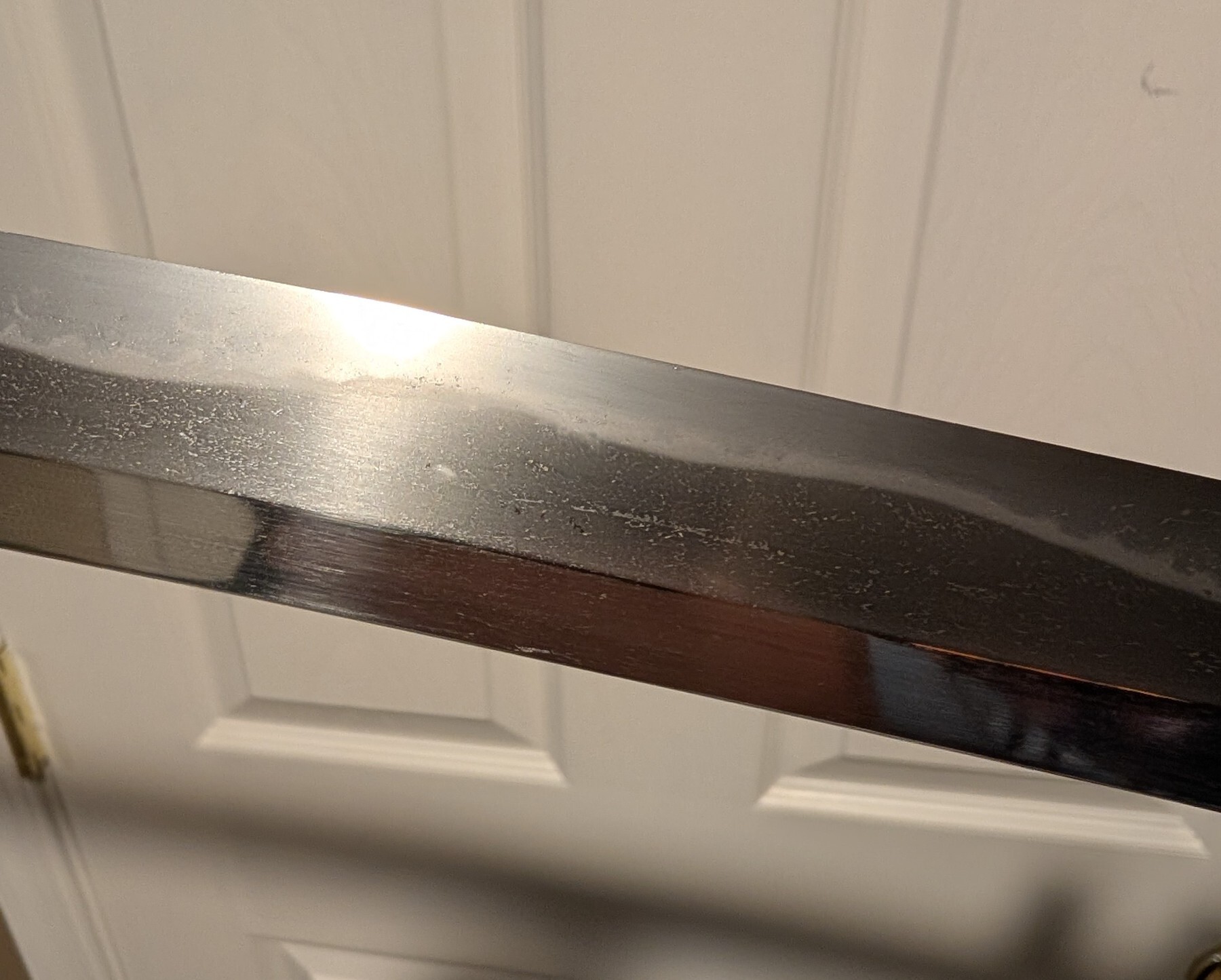
Also thought I'd post pics of the sword as it's the first sword I've encountered where I'm actually confused where the true hamon is. Is the darker banding closer to the ha the actual hamon, or is that just a visual difference caused by different steel composition?
-
So I recently picked up a cheap daito that seemingly has nijuba. I understand that nijuba is typically seen on sanmai laminated blades, however something that confuses me is how it affects the durability of the blade and what nioi gire on such a sword would look like. For example, would it be nioi gire if the lower hamon runs off the edge, or if both the upper and lower hamon run off the edge? To add to this, is the upper hamon typically softer than the lower hamon, or are they usually around the same levels of hardness, just seperated by a line of either nioi or nie? Im guessing that most of the answers to my questions will involve "it depends". Regardless, any insight would be much appreciated.
-
Very true, and while I definitely appreciate the art swords, its true I don't quite have the experience yet to really appreciate the finer points. However I still find it rather dumb to call budget swords "preschool level" or "inferior". One must remember that the blades that we are fortunate enough to to call budget today very well could've been relied on in the past to protect someone's life, or could've cost a lower ranked samurai months of saving. Of course there are kizu ridden messes out there which are flat out garbage, whether it be due to amateur restoration work or poor forging. Basically the point I was trying to make is that there are plenty great interesting pieces out there for cheap, while there is also vastly more cheap garbage out there lol. All depends on what a buyer is looking for and what interests they have. I currently very much enjoy koshirae just as much as the blade itself and the history of the blade, but I would agree that a lot of the swords at the lower price range are not too great for study from an artistic or metallurgical standpoint.
-
Maybe it's just me but I find this line of thinking rather ridiculous. The point of 90% of nihonto throughout history is for them to see usage. Plenty of these blades hyper optimized for use are usually on the cheaper end. Examples? Bungo takada, higo doutanuki, non zenjo mino, most hizen smiths, etc. Does the lower valuation of these blades equate them to "pictures from pre school kids", despite their extensive usage and words of appreciation from swordsmen that actually used them? I actually use nihonto for kenjutsu, and personally the most interesting blades I've swung around are the budget blades you consider "preschool level". To add to this, some of my favorites I've ever handled are oei bizen works, specifically a kiyomitsu and morimitsu daito. Of course oei bizen stuff is held in very high regard, but it shows that the apparent visual quality of a blade does not equal a good sword. For example, I've handled a few swords from smiths that people hold in very high regard but the shitty kaga kiyomitsu I got for 1000 dollars somehow handles better despite near identical dimensions on paper.
-
Anyone have any examples of Shinshinto mikawa swords? Specifically daito
-
WTT Fujiwara Yukinaga Daito for Shinshinto Daito
jdawg221 replied to jdawg221's topic in Sold Archive
sold -
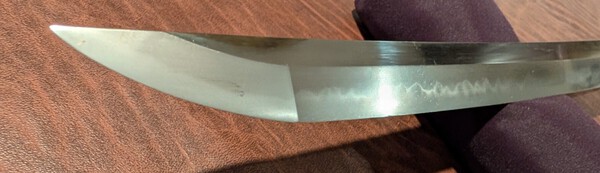
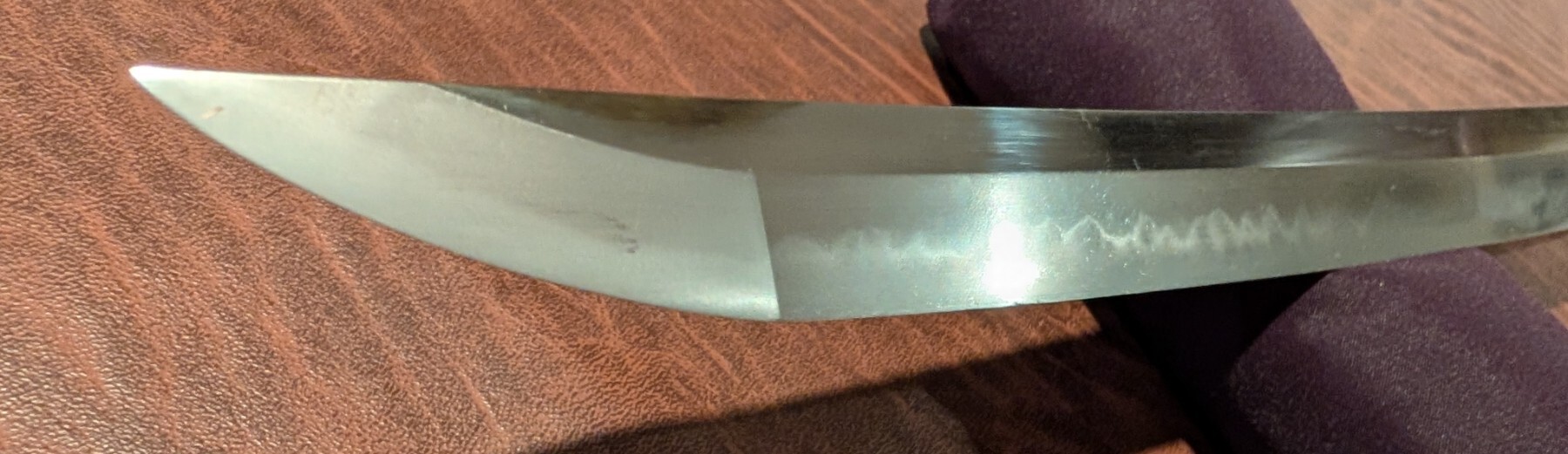
You would think, weirdly enough the blade does not look that tired. Boshi is relatively healthy, pic related. Part of me is curious if it was just measured incorrectly, since I am aware this definitely happens. My kanenobu was advertised as an 8mm motokasane, however upon measuring it its more around 9mm.
.thumb.png.9547b23064d3b1f42673d452d7dd1ca7.png)
-
Hey guys, barely post here, but thought I would start a thread regarding a question that I've been thinking of lately. So I have a modest nihonto collection, mainly of lower end old polish pieces in edo koshirae, some hozon pieces mixed in, and something I have always wondered is in what way does motokasane specifically affect durability. Recently picked up an old koto(presumably bizen) mumei daito in the 68cm nagasa range with a motokasane of 5.5mm, which honestly seems rather narrow for the time. Of course I do not have it in my hands yet so it may have a high shinogi and 5.5mm could just be the mune measurement, but comparing it to my hizen yoshifusa, Noshu ju kanenobu, Fujiwara Yukinaga, even my yoshikatsu signed shoto, all of those are above 7mm for motokasane. So basically what I am wondering is if there was an agreed upon ideal for what a motokasane should be. I frequently see blades with 7mm-7.5mm, so I would assume that was a very common middle ground?
-
WTT Fujiwara Yukinaga Daito for Shinshinto Daito
jdawg221 replied to jdawg221's topic in Sold Archive
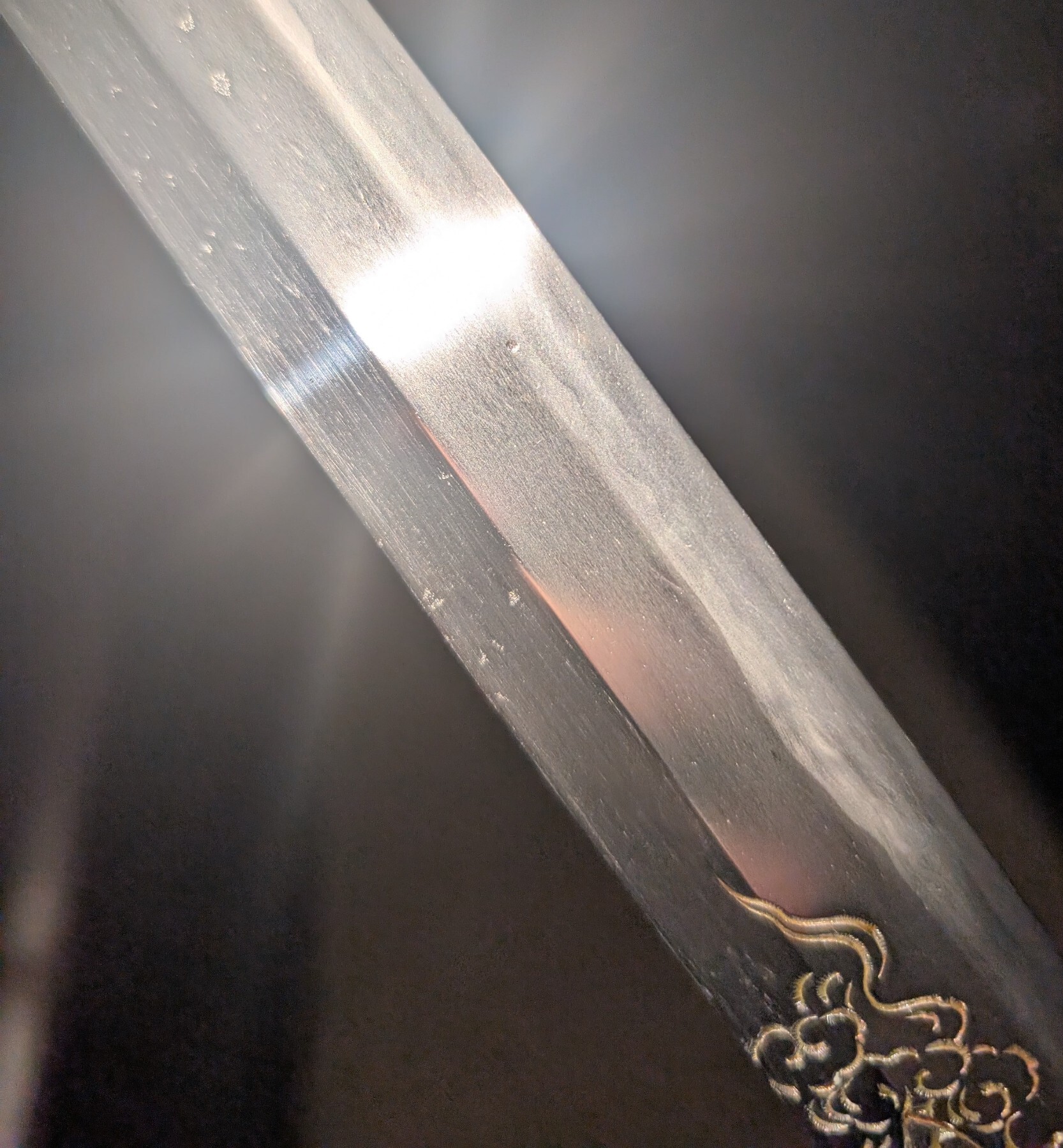
Here are more pics. Also added more detailed pics to the album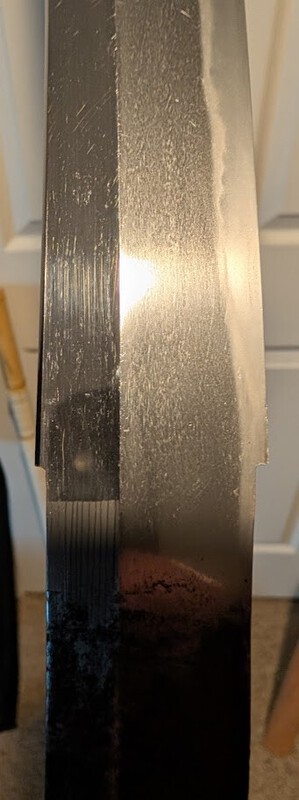

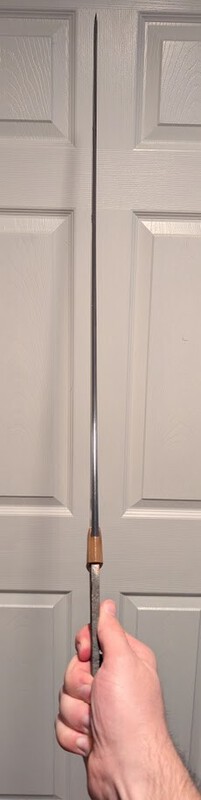
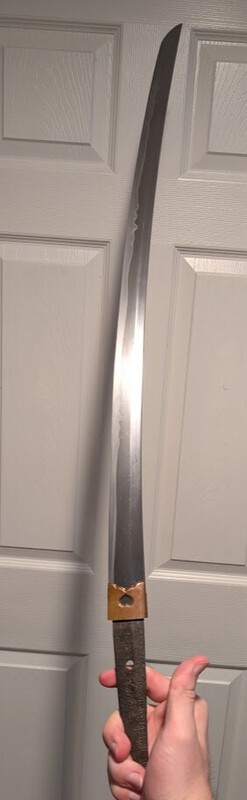
-
Transition from koto to shinto periods
jdawg221 replied to Mikaveli's topic in General Nihonto Related Discussion
"mino is bad because.... when i look at blade i dont see as many pretty steel patterns!!!" -
Transition from koto to shinto periods
jdawg221 replied to Mikaveli's topic in General Nihonto Related Discussion
Coming from personal experience homare kize can easily be caused by something as pedestrian as paired kata with sharps... which was extremely common in pre meiji kenjutsu, so even that isnt necessarily a judge of the blades quality, unless you somehow are able to go back in time to see what specifically caused it. A hanwei tori elite I had a while back had lots of homare kize from this exact thing.... does that make the tori elite a better sword than a hizen tadayoshi? No. -
Transition from koto to shinto periods
jdawg221 replied to Mikaveli's topic in General Nihonto Related Discussion
This is something I have always argued, no one is testing antique swords, and even wazamono grading was only done on relatively recent swords, not so much the older koto stuff. People on here and various other sites love to argue all day about what the best sword making tradition is, or who made the best blades, but lets face it, no one on here or elsewhere who is alive can determine anymore than what they themselves think is the best based off subjective views on artistic value, balance, and maybe how it feels to swing around. Anyways I am partial towards gendaito, shinshinto, and shinto swords if that means anything, but that is mainly because those pieces tend to be in a condition which is closest to how they would have looked when originally forged, Very few koto pieces survive in a state that has not seen dozens of polishes or multiple kissaki reshaping efforts, so having any sort of objective evaluation on the durability or performance of these swords is iffy at best. -
Looking for a cheap fuchi kashira pair sized for a daito, with kashira length in between 37mm-39mm for a project im doing. Preferably no motif, do not care what condition they are in, looking for nothing special. Willing to pay between 0 dollars and 100 dollars, ill cover shipping.
-
WTT Fujiwara Yukinaga Daito for Shinshinto Daito
jdawg221 replied to jdawg221's topic in Sold Archive
Thanks for the headsup, google photos settings changed. Honestly no idea why that isnt off by default. Very stupid. Ill get some pics of the mei sometime this weekend -
WTT Fujiwara Yukinaga Daito for Shinshinto Daito
jdawg221 replied to jdawg221's topic in Sold Archive
The menuki on the omote side is actually staggered compared to the one on the ura side and goes underneath the following diamond. I'm assuming it was a request by the person who commissioned the koshirae as on basic katatemaki, depending on how you hold the sword the menuki can stab into your fingers as you swing the sword. With it staggered like this that doesn't happen. It's an issue I have with my custom bugei shobu -
WTT Fujiwara Yukinaga Daito for Shinshinto Daito
jdawg221 replied to jdawg221's topic in Sold Archive
Price range added -
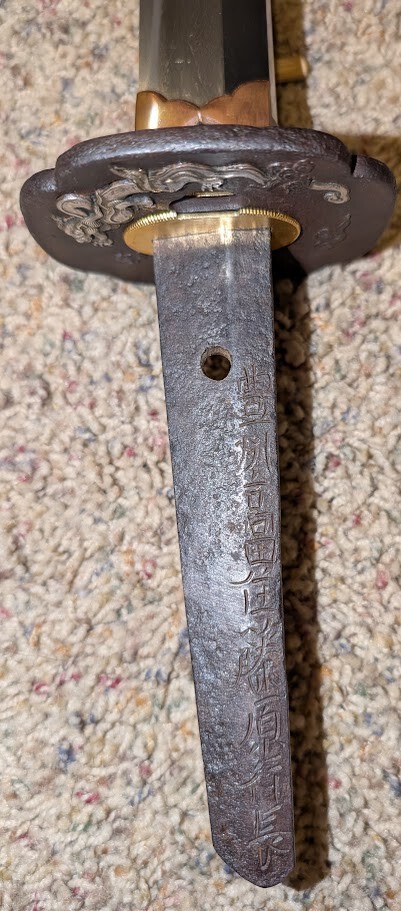
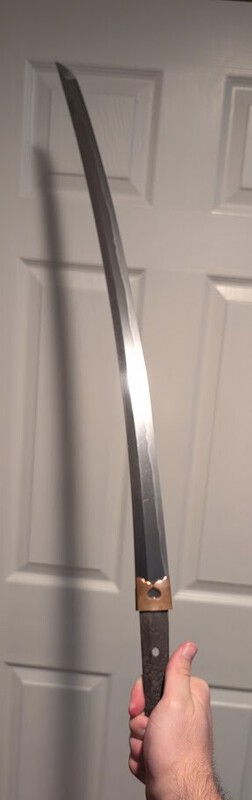
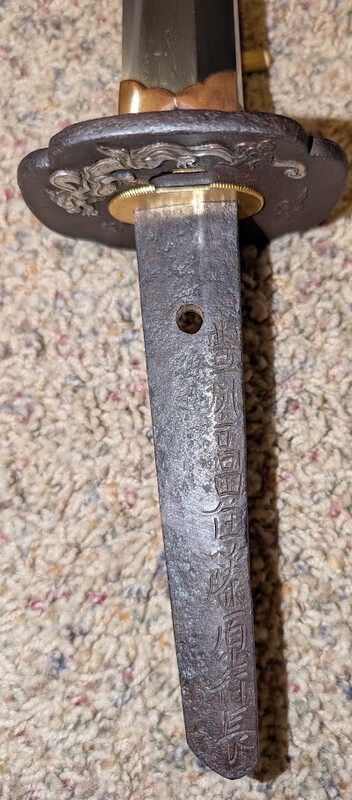
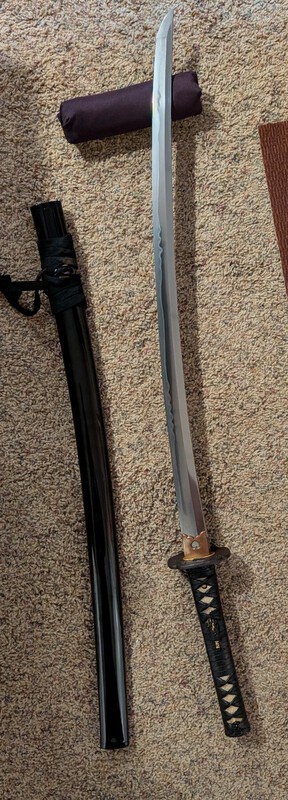
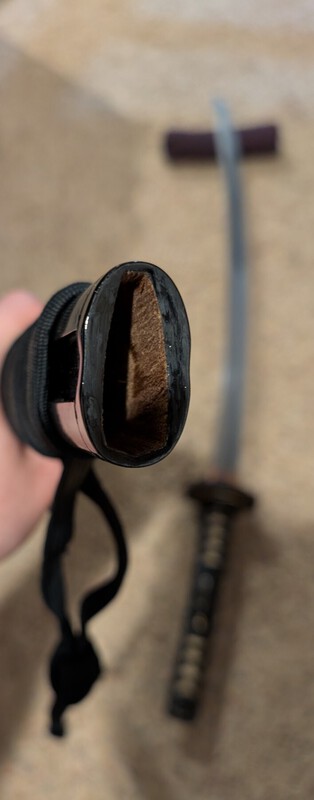
Looking to get more shinshinto swords into my collection, and while my fujiwara Yukinaga daito is a very nice sword, I'm more of a fan of the late Edo rather than the early Edo historically. Here's stats for the blade: Nagasa: 69cm Motokasane: 8.1mm Sakikasane: 5.5mm Sorii: 2cm Motomohaba: 3.4cm Sakimihaba: 2.2cm Signed fujiwara Yukinaga, no papers. Beautiful hamon, extremely clear jihada. Extremely sharp. Some surface scratches, but overall in great polish. Comes with Edo period koshirae with a beautiful dragon motif tsuba. Also comes with shirasaya and tsunagi, as well as a sword bag. I'm specifically looking for to trade it for a shinshinto piece with a nagasa between 68cm-72cm in koshirae. Don't care if it's mumei, obviously doesn't need papers as the piece I'm offering doesn't have papers. Id say the trade value for the sword is between _____ and _____ More photos: https://photos.app.goo.gl/uGiyTqbsDdjHQ931A


-
Fujiwara Yukinaga: Why no info?
jdawg221 replied to jdawg221's topic in General Nihonto Related Discussion
Not to offend, but with this statement in mind, wouldn't masahide's accounts of breakage in shinto art swords disprove this notion? Also to draw a comparison to cars; there are cars that are beautiful and fast, and there are cars that are just fast. One doesn't necessarily mean the other -
Fujiwara Yukinaga: Why no info?
jdawg221 replied to jdawg221's topic in General Nihonto Related Discussion
Thanks! Honestly this was the info I was looking for. Couldn't find anything online describing his style -
Fujiwara Yukinaga: Why no info?
jdawg221 replied to jdawg221's topic in General Nihonto Related Discussion
Already have shinto-shi. For some reason Markus only states that Yukinaga existed and his swords apparently cut well, which honestly is not much to go off of.


.png.aac9e18abfb82dfecdee53f632fb9713.png)