jdawg221
-
Posts
153 -
Joined
-
Last visited
Content Type
Profiles
Forums
Events
Store
Downloads
Gallery
Everything posted by jdawg221
-
Takahashi Naganobu Signed Uchigatana in koshirae
jdawg221 posted a topic in Swords and Edged Weapons
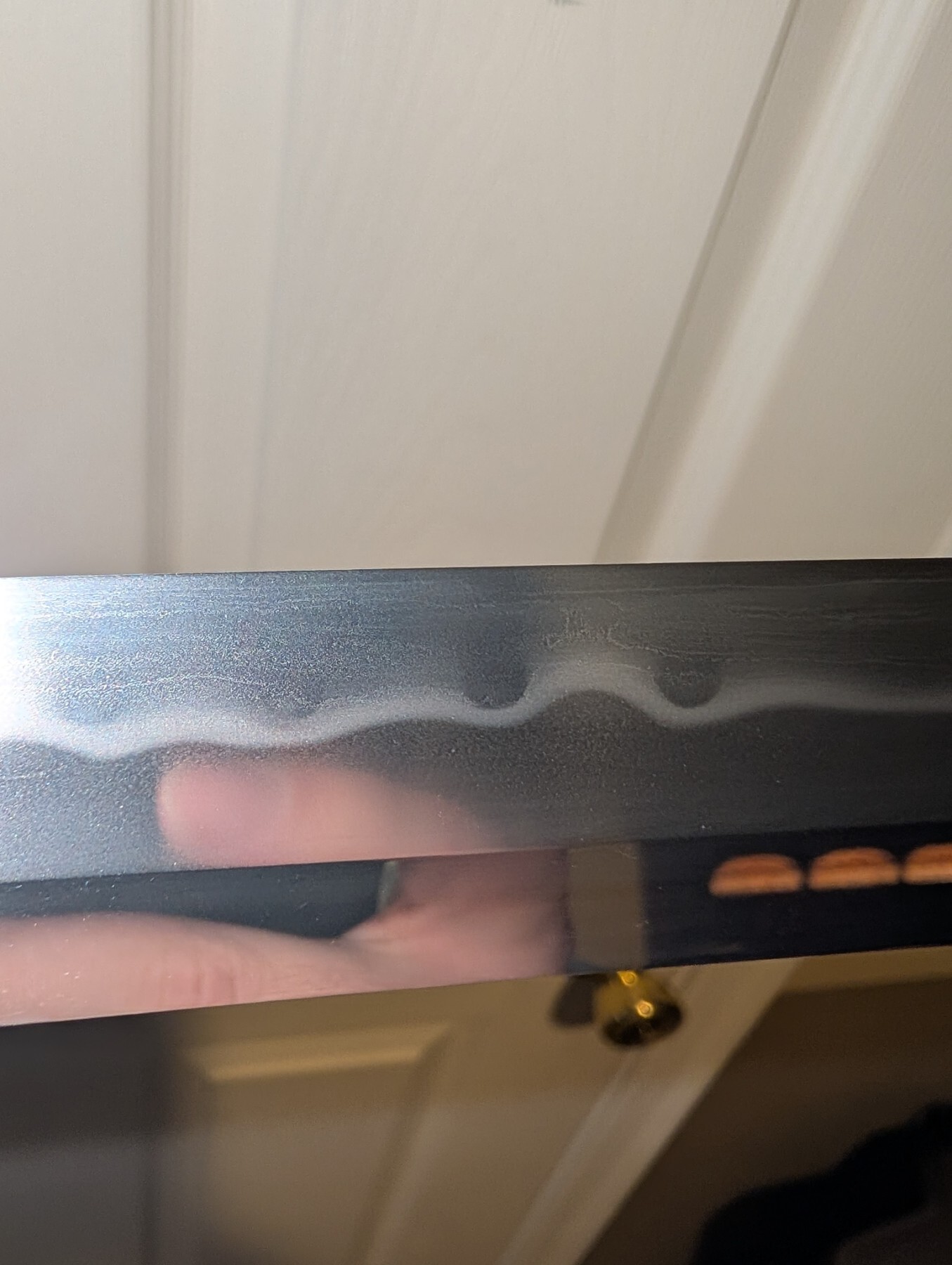
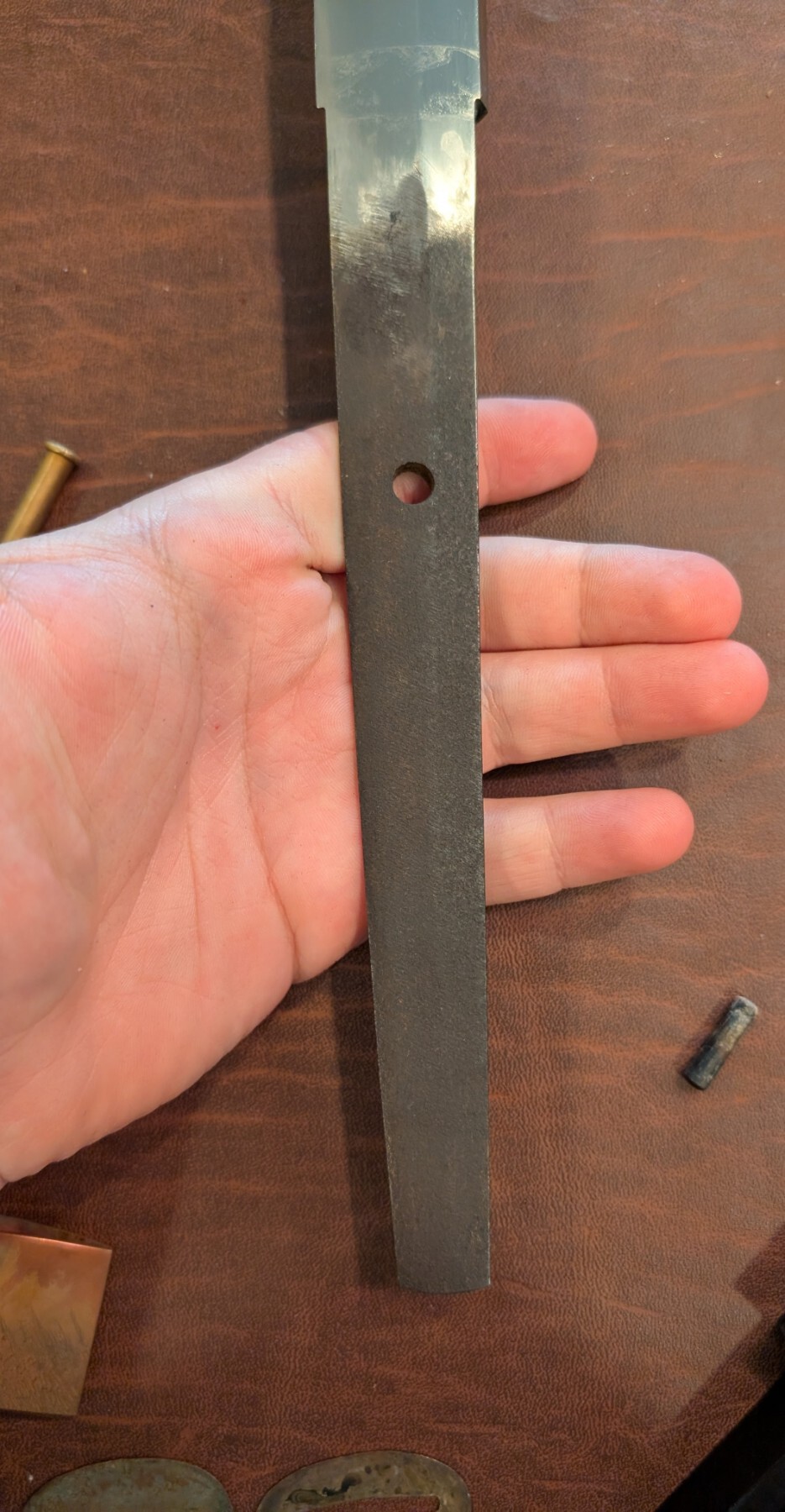
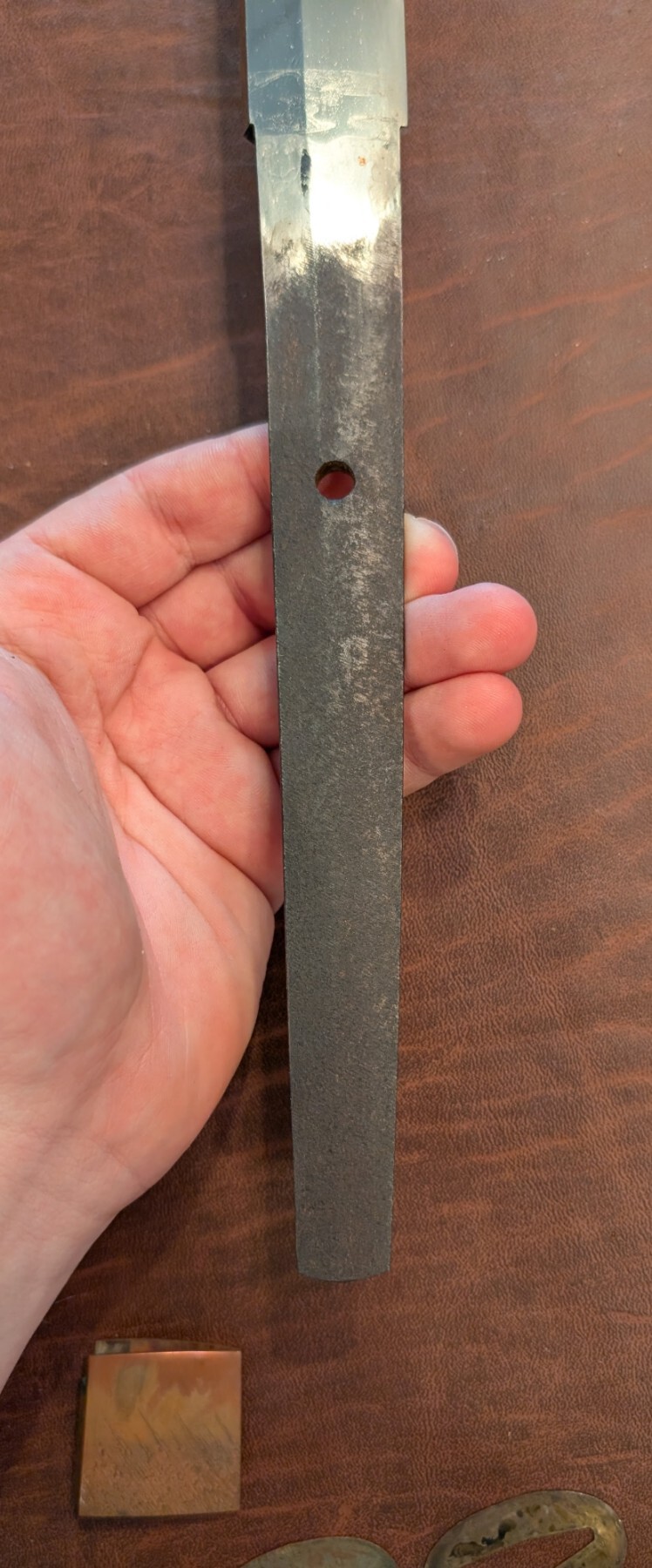
Selling an unpapered daito signed Takahashi Naganobu dated to 1845. Very robust with nice late edo period fittings. Has a jigane that almost looks muji, but upon closer inspection it appears to be mokume. Very nice sanbonsugi hamon in an old rustic polish. No guarantee on the mei. Koshirae fits perfectly, no movement or rattle. Sword is very sharp. Specs: Nagasa: 68.9cm Motokasane: 9mm Sakikasane: 6mm Motohaba: 3.1cm Sakihaba: 2.1cm sorii: 1.8cm Looking to get 2200 shipped, price negotiable. Pictures: https://photos.app.goo.gl/uKQcFRSSmHRh15ne7-
- 1
-

-
It probably isn't lost. I've had items sit in the Jamaica ny facility for 2 weeks before seeing movement. Good idea to harass them to get it moving, but imo it's rather rare for a nihonto to be outright stolen, you just tend to hear about it as when it does happen people kick up a storm.
-
I mean the thing is the whole "mt fuji" hamon thing is very much a generalization. Not all Shinto smiths focused on pure aesthetics. In fact ohmura even makes note of this, pointing at that for the most part blades made in kyushu seemed to perform rather well. For example, take a shodai tadayoshi blade and compare it to a tadayoshi 8: yeah the shodai will have nice jigane and may have cleaner lines, but the overall sugata and features of the blade are almost identical. Same can be said with ishido smiths. Are there exceptions? Of course, there always are, but the blanket statement that all of them were made for art isn't really true. They were still carried regularly, and tons of people relied on them for personal defense. The priorities shifted. It's like taking a modern pietta Colt single action army and comparing it to the original: they're made for completely different purposes. Also I'm in the camp that Japanese swords are primarily designed with unarmored or lightly armored targets in mind to begin with. Yeah there are swords that may be more robust, but at the end of the day it's a sidearm. Like owning a Glock 17 and expecting it to do the work of an ar15. Yeah there were definitely flaws with the cutting tests, but there were also destructive tests done. I'm sure you've read the sesko writeup on the masao vs naotane test.
-
Not so sure about the swinging sabers at nails statement lmao but yeah I agree pretty much with everything else you said. The Japanese sword in general lends itself more effectively towards a proficient user rather than a random grunt who will try to use the kissaki to pry at stuff.
-
The thing is you can't really quantify what type of blows caused kirikomi, so even that is hardly scientific. Obviously if a blade survived with multiple deep kirikomi, it did its job well, but I guess the main point I was getting at is there isn't really a solid way to tell besides time travel whether something like an onizuka Yoshikuni or kunihiro would perform just as well in such a situation. Also, people like to waive around random mumei swords they own with kirikomi as if that is some sign of them surviving battle, but as a kenjutsu practitioner I can guarantee that at least some of those kirikomi could've been caused by martial arts use. This is different of course if a blade has solid documentation showing it saw usage however.
-
Ive seen that before, as well as the obata kabutowari with what I think was a yoshihara if I remember correct. It's pretty difficult to do, especially if you like nihonto 😂
-
So reading through the forums, and talking to older enthusiasts(as well as reading literature), there is obviously an established notion that koto swords are just higher quality and better swords then shinto/shinshinto/gendaito/shinsakuto. Usually it boils down to activity in the jigane, "long lost smithing techniques", regional steels, or that they were made for battle. However, there has not actually been any actual testing done to see what makes certain swords better then others. Basically all of this information is anecdotal. For example, in suishinshi masahide's report on sword damage, much of his tales are based off rumors. There is not any note of any pre-existing kizu on the sword, or if they may have had a hagire to begin with. To add to this, survivorship bias could be playing a huge role here. Of course koto swords would be better when all of the bad koto swords broke with use. Shinto and shinshinto swords did not see any mass conflict that would thin their ranks(besides maybe ww2, but nowhere near the scale of the sengoku, nanbokucho, onin war, etc.), so a lot of the "bad" swords are most likely still out there somewhere. What do we know for certain? Well not all shinto, shinshinto, or gendaito smiths made the same work. For example, Inoue Shinkai made both swords with chu suguha hamon, some of which are rather normal in their temper thickness, as well as wider gunome midare and notare hamon. Specifically in Ohmura's accounts, he talks about how Shinkai's blades performed badly. He mentions this repeatedly. However he leaves out what could arguably be the most important information: What temper line did these Shinkai blades have, and what kizu were present(if there were any). Another funny thing about Ohmura is that he has endless praise for Sue Bizen, Hizen, and Onizuka Yoshikuni blades ironically enough, but I will get back to that. Another good example of this variation in work you see in shinto and shinshinto swords is Suishinshi Masahide himself. Plenty of his early work is in toran midare, wide hamon that he would later go on to criticize, while in his later work you see alot more chu suguha. Another common point I see that is always brought up here is that the shinto swords and shinshinto swords were sold for their looks, not performance. Honestly this is the most ridiculous thing I have ever read on the topic, especially with the prevalence of saidanmei and the existence of wazamono ratings. Completely ignoring the slew of accounts of destructive sword tests that individual han undertook as well as individual smiths. Regardless of era, the majority of swordsmiths were trying to make the best sword they could functionally, while also making it artistically valuable. If this was not the case, every other contemporary of Suishinshi Masahide would not have followed his trend of reducing temper width for the sake of performance. Were there smiths that made swords which mostly server as art work? Of course, however one could say this is not specific to the edo period, especially if the definition of "art sword" is something with a wide hamon(which it usually is). Examples of swords made for use can be found in basically every province during the edo period. I will go back to Ohmura's fondness for Hizen and Yoshikuni. He specifically recalls accounts of soldiers with 30 yen(this is most likely military yen, currency produced during the war) Hizento being able to cut through barbed wire and ammunition belts without the swords breaking. At the same time he mentions Shinkai blades getting cracks the size of red beans performing the same tasks. For one, swords in general are not great at cutting through metal. Should they be able to do it without breaking? Yes obviously, but there is a very good reason most kenjutsu ryuha have very few edge on edge techniques. It is known to not be very good for the sword. Assuming the shinkai blades in question were harder, it makes sense they would get large chips when used against steel objects. This is not very indicative of the quality of the sword, as long as they do not develop hagire from doing so. A harder edge is known to chip easier than a softer edge, with the tradeoff being that the harder edge will hold a sharp edge longer while the softer edge will have to be touched up more often. Another interesting point when going over Ohmura's accounts is that there are very few cases of the shinto swords outright breaking. He lists the percentage of which they return to receive repairs, but even makes a note that most of these swords being returned were work of second or third rate smiths. He also includes an account of an officer who had a large oei bizen tachi in shin gunto mounts use it and get a large chip in the edge. However none of these tests are scientific. Even Ohmura's accounts are anecdotal: he does not provide specific details, and there are not any control groups present and obviously the environment that these tests were recorded was not consistent. This can be said for all of the stories surrounding koto swords. We have similar accounts of blades from some smith breaking, of blades from another smith bending, while also having surviving examples of swords that saw use and held up nicely. However the lack of use that shinto and shinshinto swords saw does not somehow mean lack of quality. If they were made during a major conflict, I am sure you would have similar blades around riddled with kirikomi, shinae, or chips in the cutting edge. Basically the lack of these survivors does not mean that there would not be any. I know this post is kind of just a mess of thoughts, but just thought I would provoke some sort of retrospective thinking in other members of the forum of what constitutes as proof and what doesn't. Also I should state I am not trying to start arguments with people, more so promote appreciation of all nihonto, regardless of era that they were made. http://ohmura-study.net/133.html
-
Single mekugi ana Kunisuke Katana
jdawg221 replied to Rawa's topic in General Nihonto Related Discussion
Also should reiterate that the blade weight with 1 mekugi should not matter. For about half a year before I went to a sword with a sugata that was more my liking I used a gendaito by kanenobu regularly that weighed upwards of 1400 grams. It only had 1 rather thin mekugi, and not once did I have to change it out, even after cutting with it and doing paired work. There should not be any issue with this sword having 1 mekugi, theyre much stronger then most think. -
https://photos.google.com/share/AF1QipNZM-m5hEw2AnROsIBVDGJzaEiTtjBViVorMkdGYgUKyvdcndR3sbSyvrCS1UMedw?key=NzV2eHJkeXpiYXg5WlVqY2NRdi15UWd3SC1YVGxB here is an album of improved photos that I took with better lighting and a solid background
-
Single mekugi ana Kunisuke Katana
jdawg221 replied to Rawa's topic in General Nihonto Related Discussion
Probably a period modification. I have seen it done on plenty of shinshinto swords. As others have said, as long as the mekugi applies pressure to the bottom of the redrilled mekugiana, you should be fine. Also fabricating new mekugi is easy enough. How beefy is the blade? -


-
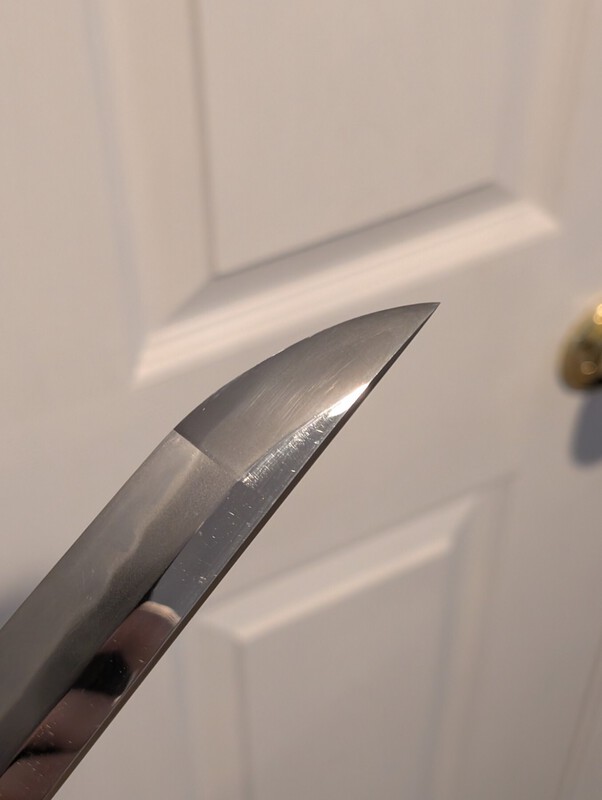
And here is some of the boshi. Looks midare komi


-
Here are more. Thank you for all replying!


-
Hi! The boshi seems to be a combo of kaen and midare komi. The hada does not appear in the shinogi, which I assume is due to how it is polish. Here are natural lighting pics of the sword.


-
You can see the hada in multiple pictures that I sent. Here's another one just in case. Also isn't chikei referred to as black nie?

-
Im rather certain the ko itame hada is pretty obvious in multiple photos that I shared. I do see what I believe is kinsuji, however I could be wrong on that. Also the dark peaks of the hamon seem to be composed of black nie. With this information, what shinshinto(or even shinto) schools come to mind?

-
Here's a link to the original listing: https://giheiya.com/product/01-2311/

-
I see. How does this sword stick out as an oil quenched showato? It has a nagasa of 71cm and I bought it from giheiya in case you are wondering.
-
Do you have any examples of oil quenched showato that look similar to this? I have owned one before and it quite literally looked nothing like this.
-
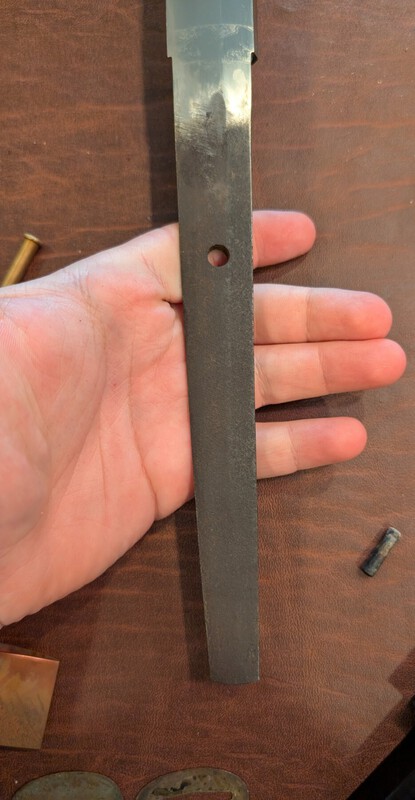
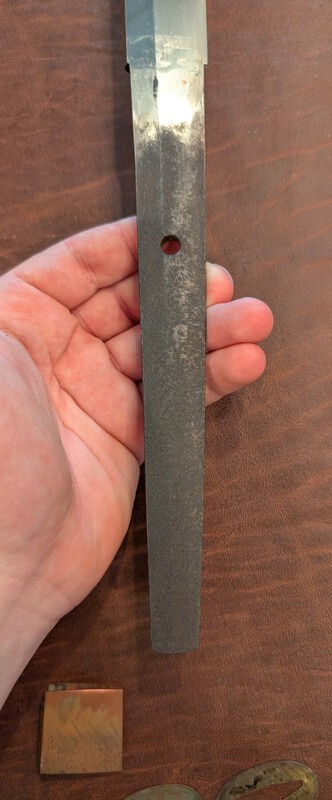
Here are more pics. Sword isn't suriage and doesn't appear to be machiokuri either.
-
Could use some help identifying this shinshinto sword. Hamon reminds me of shinshinto ishido school, but it has ko itame hada rather than masame, and the nakago jiri is throwing me for a loop. Any ideas? Fyi the boshi is rather hard to see(seems the previous togishi didn't do a great job burnishing it) but it is present.
.thumb.jpg.838290d4f53cccf19ebddd758ddae6d6.jpg)



.thumb.jpg.fa64376bd8413f3fb41b9f6925219531.jpg)
.thumb.jpg.eeea2868c116fab5a4a2942ee292330e.jpg)
-
Two swords I purchased from giheiya have been stuck on hold by Japanese customs for over 15 days now. Curious if any others are having issues with Japanese customs currently. Talked with Imazu about it and he stated that he called them and it has something to do with weapon export confusion regarding the Iran war in the USA, hence why they are being held.
-
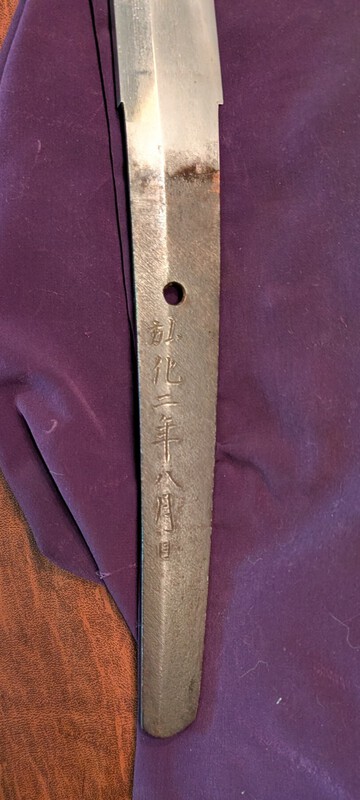
Thought I'd contribute. I have a Daito signed by one of these two naganobu, guessing the mei is for Takahashi naganobu from izumo. Unpapered, hence I'm a bit suspect. It's a nice sword, however extra input on the legitimacy of the mei would be appreciated.

-
Thought I would update this thread. Imazu responded and it seems the lack of communication was as others in this thread stated, issues with shipping related to ocs that he just figured out. He informed me that my swords should be out around wednesday this week.
-
I see. I have experience with maeda and aoi, neither of which have this issue, although perhaps that has more to do with higher english proficiency.




.jpg.1e5e42c6f9529acd593662c7733bd483.jpg)


.jpg.10affd7c8377d60a4cd98fafa5070e71.jpg)
.jpg.5e4b11e82c207794eb02a85822acc0b5.jpg)