Scogg
-
Posts
1,810 -
Joined
-
Last visited
-
Days Won
19
Content Type
Profiles
Forums
Events
Store
Downloads
Gallery
Everything posted by Scogg
-
@Bruce Pennington
-

I need your opinion for my Suriage / Wakizashi
Scogg replied to Catalin's topic in General Nihonto Related Discussion
Hi Catalin, Your observation that the engravings will not identify a swordsmith is correct. This is one of those blades, that due to suriage and condition, it's really hard to ID - especially from photos. You may not be satisfied with any ID we can offer - short of sending it to an expert. Muromachi jidai is believable to me. Still hoping someone else comments and offers some more insights. All the best, -Sam -
WWII Officers Sword - Tell me what I have?
Scogg replied to BurtMayer's topic in Military Swords of Japan
Here’s an ongoing thread right now with a World War Two sword that has some “old” looking nakago corrosion -
WWII Officers Sword - Tell me what I have?
Scogg replied to BurtMayer's topic in Military Swords of Japan
Burt, I’d be curious to see the results of any testing you do. That being said, I see nothing to suggest this sword is any older than what mecox’s original translation purports. Of all the World War Two swords I’ve handled, they’ve all had varying degrees of rust on the nakago from very pitted to shiny clean. The hash marks you see on the nakagojiri is a typical wartime method of keeping the blade and fittings organized during manufacture or assembly. See below a sword I handled this week. A wartime blade with hash marks to match it to some fittings. Your sword looks very nice and personally, I’d be proud to own it. All the best, -Sam
-
Officer Type 98 with Type 95 Blade
Scogg replied to Bruce Pennington's topic in Military Swords of Japan
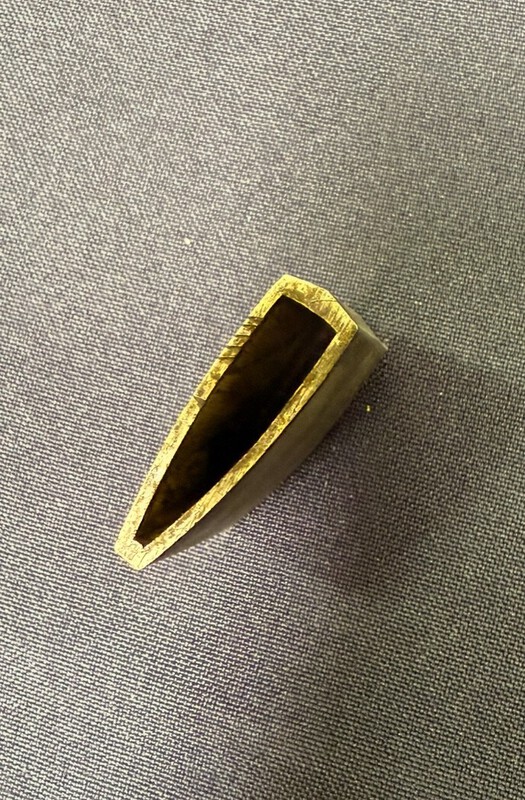
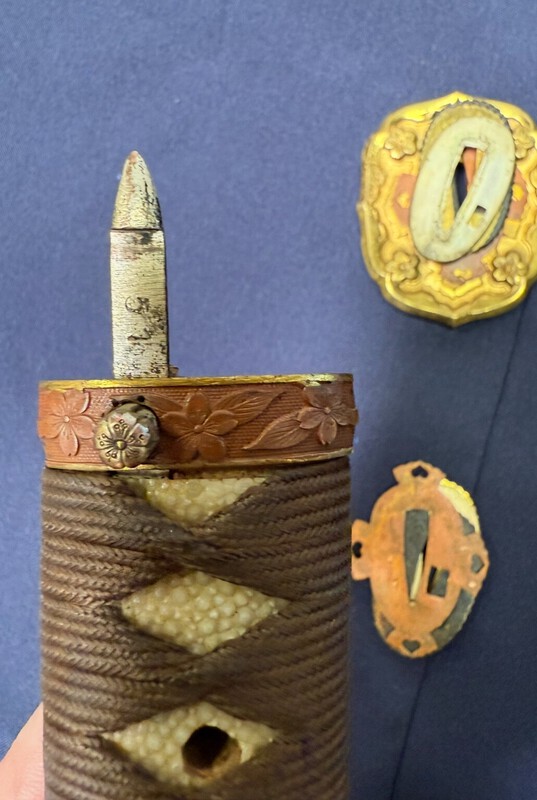
Thank you Bruce! I would have thought this were a frankensword if the fittings weren’t so well fitted. But also, the hashmarks found on the spine of the nakago and on the habaki (5 and 1), match the numbered fittings (51). Nakago also has TO stamp, and blade is numbered 857. Pretty interesting! -Sam
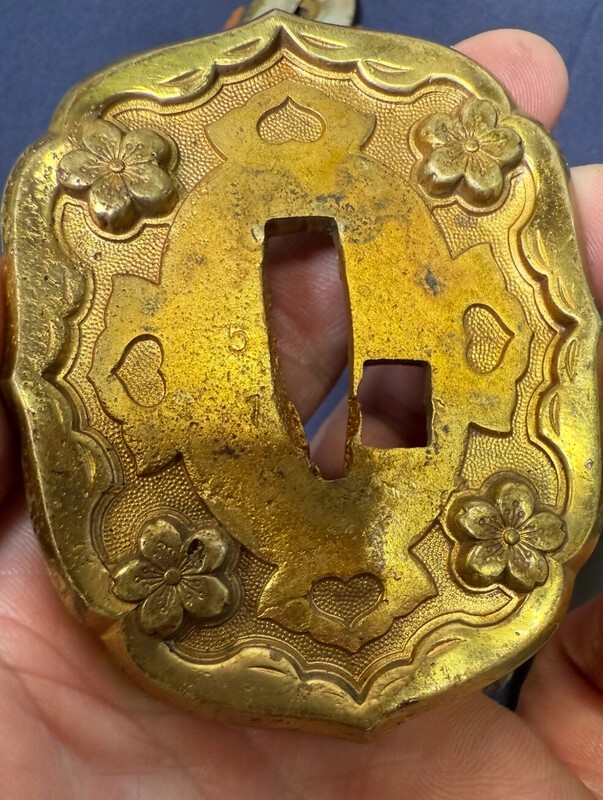
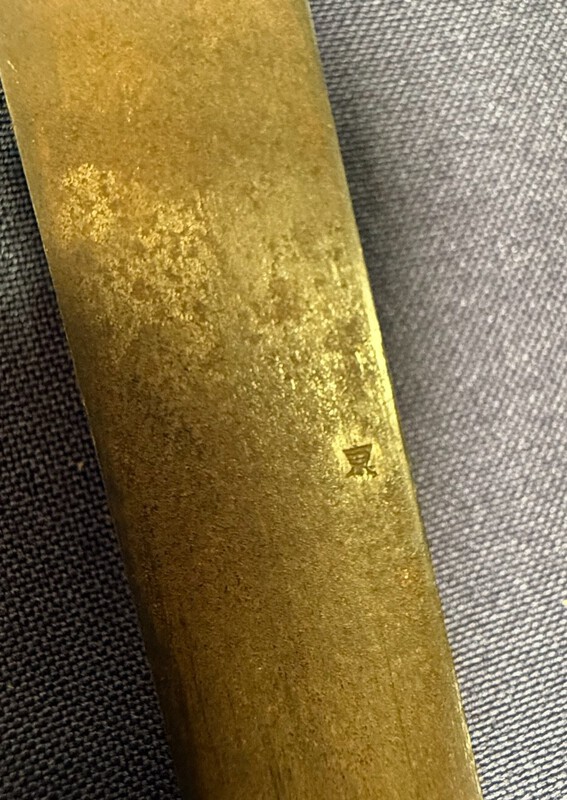


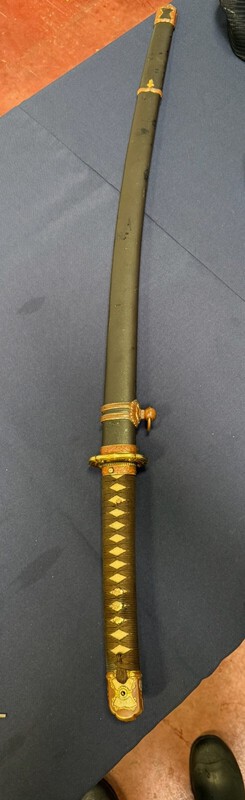
-
I need your opinion for my Suriage / Wakizashi
Scogg replied to Catalin's topic in General Nihonto Related Discussion
Thank you for the comparison. When seeing them side-by-side like that, I would agree, it does seem most likely -
I need your opinion for my Suriage / Wakizashi
Scogg replied to Catalin's topic in General Nihonto Related Discussion
SUKEN horimono on one side, Bonji characters on the other - and suriage. Sounds like you've got that part understood The bonji character is hard to identify. I think your guess of Monju Bosatsu is as good as any. Maybe Dianichi myorai, Kwannon, or Marichiten? Really hard to tell, and I am just pulling from the link below... I'm not very familiar with BONJI, and they are typically just religious symbolism as far as I understand. Here's the link to compare some bonji characters, from Ray's website (a great resource). https://swordsofjapan.com/nihonto-library/Japanese-bonji/ I'd recommend against using lemon juice, or any other acidic solutions or chemicals on your blade. It can cause problems, damage, and promote rusting. What's done is done, but it's generally taboo and should be avoided. High proof isopropyl alcohol with a non abrasive cloth, wiped dry, and followed with and a very light coating of light oil should be used instead (blade only). https://www.militaria.co.za/nmb/faq/1-care-and-maintenance/ Very hard to judge a blade based on photos, especially if the condition is not superb. This might be a candidate that you'll have to get into the hands of someone knowledgable to learn more. All I can really say with any confidence is what has already been shared: I believe it's a genuine nihonto that's been greatly shortened. If I had to guess based on just the images, I'd probably go SHINTO period - but that's really a shot in the dark. Hope others provide some interesting feedback. All the best, -Sam -
Let’s keep it civil, and not allow this to devolve into a battle of egos. Jacques is who he is, and nobody is going to change him. I’ve struggled with him too; but he’s very knowledgable, and I absolutely believe he’s held and studied many good swords, with a far better memory than I will ever have. We can go back and forth and disagree all we want, so long as we keep focus. Sincerely, -Sam
-
A very nice Type 98 showato nonetheless. A complete package with tassel, extended kissaki, and in good condition. I wonder… did you think that the clasped hands sarute was standard? It’s not a typical feature, and to see so many from one person is kind of wild. It must have been something that was sought out. Very cool! -Sam
-
Hi Caitlin, I believe that you have a genuine Nihonto. Like you suggest, it appears to be o-suriage (greatly shortened). It's hard to put a date on your item, especially from photos. It's made even more difficult because it's been shortened, and the original shape has been lost to time. If you are interested in restoration, please keep in mind that it's a very expensive and long process. I would recommend finding a well respected and recommended TOGISHI to have a look at your sword, and help you determine if it's worth the price to restore or not. Unfortunately, I am in the USA and not the UK, and am unfamiliar with togishi over there. Maybe someone can chime in, and help. Best of luck, cool sword, and welcome to the forum! All the best, -Sam
-
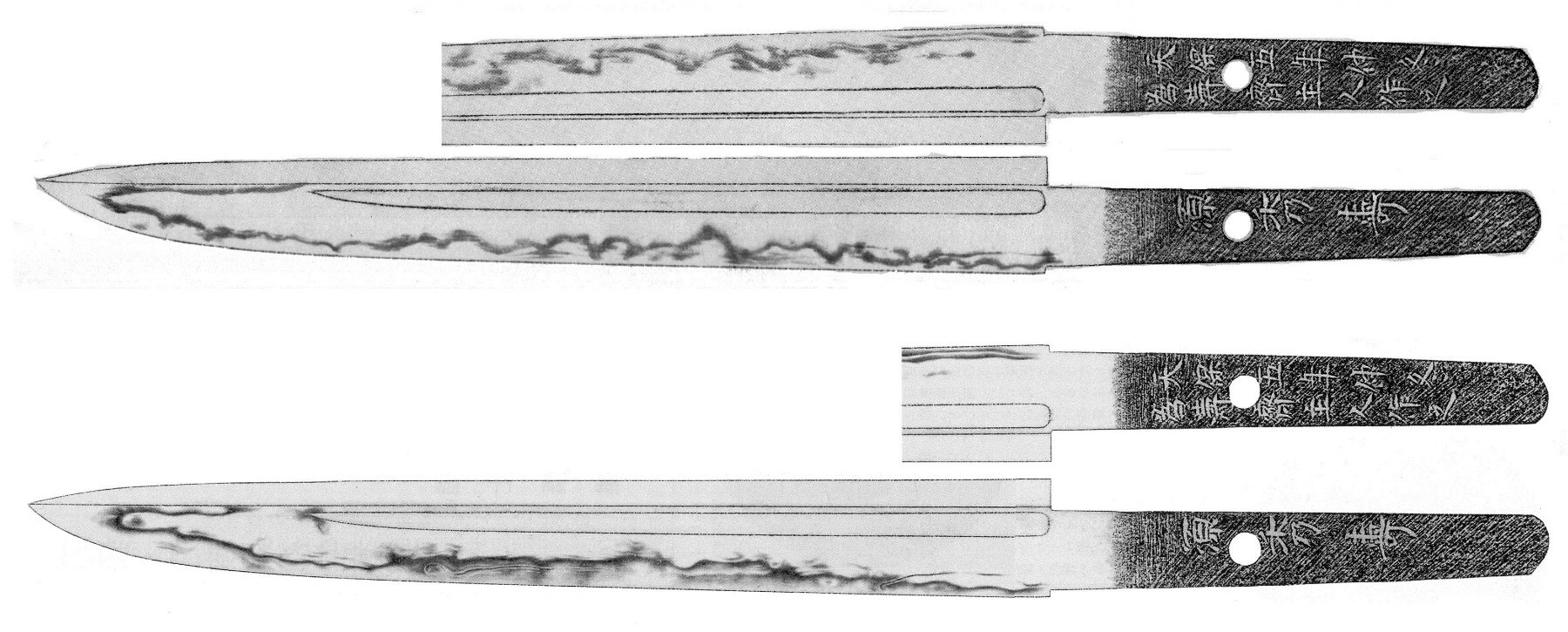
It's my understanding that it's not a distinct mune-machi, but rather the oshigata showing what the style of mune is, by "unfolding" it on the illistration. See other example below:
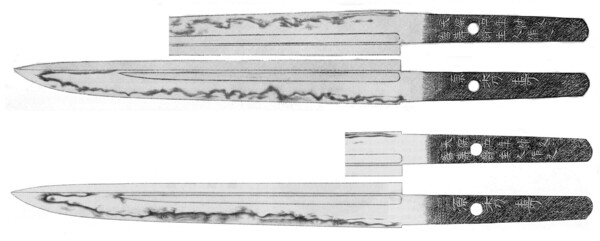
-
Here is an interesting thread about museums and tsuba. All the best, -Sam
-
I imagine it’s frustrating for those of you involved in the discussion - but the back and forth is actually pretty interesting, a learning opportunity for the rest of us
-
WW2 Japanese Sword "Noshu Seki ju Yoshimitsu Saku"
Scogg replied to Swords's topic in General Nihonto Related Discussion
A lot of red flags with that one, Steve. The nakago and mei really doesn't look right. The hamon looks bad, either faked or an amateur polish. The yakote is gone. Fittings look late war OK, but the leather looks new... Personally, I don't see enough positive to overcome the negative. -Sam -
Amazing work Markus and Rayhan That was quite an addition to my digital library, and it's going to take some time for me to digest Much appreciated! -Sam
-
Speaking personally; absolutely! Of all the WW2 koshirae types, I've always admired the "Type 3" fittings
-
Bruce got you covered Just to add, "SAKU" basically means "Made By". So the smith name is simply KANEYUKI. Muromachi period is believable based on what I can see. I would think the later half of the Muromachi period. Looks like an older blade, fitted with the leather saya cover, to be carried during WW2. The menuki is not clear enough for me to determine what it might be. I see where you're coming from with "volcano", but it's just a little too small/blurry for me to confidently identify. Might be a good question for the TOSOGU section, if you can get some good photos. All the best, -Sam
-
Much appreciated @Soshin David! Thank you so much for the kind words, and the image donations. Still working on some minor formatting, and editing my words - but I think the website is nearly done. I've already gotten a couple contact form inquiries, so I have confirmation that it works . Thank you for the offer though! I hope to establish membership, and then poll members for the most convenient meeting dates/location. Hoping to schedule our first meeting before too long, even if it's just a few of us. Thanks for all your help everyone! All the best, -Sam Edit, I just saw Stephens comment: Haven't done anything to fix Thomas's issue... Curious if it's working for him now or not. Glad it's working for you! Thank you for letting me know, I am hoping that it's just a "new website" problem and it fixes itself.
-
If all you read is peer reviewed academic sources, then stick with peer reviewed academic sources. This isn't that. It's a sword collectors guide, for Pete's sake I personally found it really helpful and informative. Thank you for putting it together, awesome work!
-
Dang! Hopefully I can figure this out. A bit of a learning curve for me Try again if you get the chance. It seems to be working for me, and I’ve already got an inquiry from the “contact form” from another member. Hoping I can smooth out hiccups like this before the end of the day. Thank you for letting me know, -Sam
-
Authentic? Put together
Scogg replied to William Jennings's topic in General Nihonto Related Discussion
Likely authentic. Likely put together... Definitely appears low quality; and I really don't like the look of the nakago. Looks like the habaki is mismatched, or the blade has had so much material removed that it no longer fits properly. If I were in your shoes, I would keep shopping. Just my thoughts, others may vary. -Sam -
Hi William, Judging from just these photos, it looks authentic to me. This is a very late war "Pattern 5" Type 95, with the wooden handle and steel saya. I'd be curious to know if there's a serial number on the saya; and if you are able to see any stamps anywhere on the blade, or saya. Here is a good discussion from years ago, that shows both authentic and fake examples https://www.militaria.co.za/nmb/topic/20454-wooden-handled-type-95s/ All the best, -Sam
-
Well... Here goes nothing! Looks better on computer over a phone. Still working on some minor formatting, and potentially adding some more info and pictures. https://www.pnwtokenkai.com/ Would love any feedback. All the best, -Sam
-
Well, here goes nothing! Still a work in progress - I hope to add more photos and information as I continue to develop the website. Hopefully I can establish a solid small group of members. It looks a lot better on a computer over a phone - I am trying to format that better. https://www.pnwtokenkai.com/
-
Working on making a website for a local sword club today. I have a few photos that have been generously donated - but I need some more high definition photos of Nihonto, and Nihonto related items/subjects for the website. I'd love to use donated photos taken from NMB members, rather than pulling them from google without the owners permission. Theme's I'm hoping to source: Rain Dragons Mountains Trees/Nature Frogs? Some blade/nakago photos would be great Hoping ya'll can help! My only criteria are that the photos belong to you, and you grant me permission to use them on a local (free)club website. Thanks for reading, -Sam