Scogg
-
Posts
1,848 -
Joined
-
Last visited
-
Days Won
20
Content Type
Profiles
Forums
Events
Store
Downloads
Gallery
Everything posted by Scogg
-

ID Help Please (Type 98, Shin Gunto, Officer's Sword?)
Scogg replied to EryrWen's topic in Military Swords of Japan
@EryrWen I’m going to move this discussion over to the “Military Swords of Japan” section, because I think it fits better there and you may get more feedback. All the best, -Sam -
Your sword is the Pattern 2 configuration, with aluminum handle and brass tsuba. Based on it's serial number and stamps, I would say it's not particularly early or late. It's my belief that the pattern 2 configuration was continued into the later parts of the war at least from the Iijima factory. It is not entirely clear what date the transition from Pattern 2 to Pattern 3 happened at every arsenal or sword shop. Some of these finer details and transitional dates are what I am committed to investigating. @Kiipu may or may not have more information for us. Cool sword! -Sam
-
Hi Domi, Yes, this is possible. If the sword underwent a field repair/replacement the scabbard may not have been re-serialized. I actually have a Type95 in my collection without a number on the scabbard. The Type95 in your photos is a Nagoya Arsenal blade, bearing the fuchi stamps: 'Sakura Ichi', Nagoya 名, and the Kokura arsenal four stacked cannonballs. Because it was still under the Kokura arsenal it dates prior to September 1942... Someone else might be able to narrow it down, but I would conservatively say between June 1939 and September 1942. The Orange/Brown tassel is pretty desirable too, but I'll allow someone who's more familiar on those to comment about that. All the best, -Sam
-
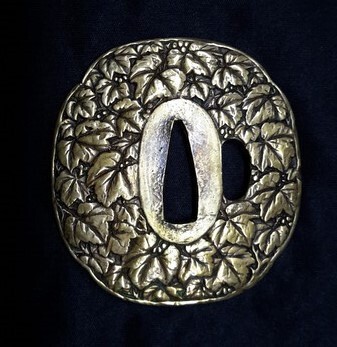
It is not for an NCO gunto. I have seen a near identical one in reference to Civilian Gunto. I've attached a photo of it - listed as "fig leaf". See comments from @Bruce Pennington on the thread linked below: https://www.militaria.co.za/nmb/topic/32654-iron-civilian-gunto-tsuba/ Hope this helps, -Sam
-
These types of fittings are often called "Kyu Gunto" (old military sword) fittings, and they were made from around 1875 to 1934 - when it was replaced by the more traditional looking shin gunto. I am not familiar with that stamp, but will be following along to learn about it! Thanks for sharing this big collection with us. It's been fun seeing all your clasped hands sarute, and your variety of swords. I'll miss it when you run out of blades! All the best, -Sam
-
Not sure if your fall dates will line up... If they do, this is on my bucket list of sword events to attend: https://nihonto.com/2025-dai-token-ichi-tokyo-Japan/
-
My pleasure @TBSM! It's a really nice looking replica, and the photographs are conveniently 'far away'... I think it would fool many. Feel free to inquire about any future Japanese swords that you're interested in. We're always here and happy to help All the best, -Sam
-
Hi Matei, welcome to the forum, I am confident that the sword in your photos is a fake or a replica. The telltale signs are the bohi terminating early, the indented rather than raised samegawa, the large sarute, and like Rawa said - the stamps on the blade and fuchi are a bit off. All the best, -Sam
-
Thanks guys. This one threw me for a loop. It helps to get some knowledgable views outside the peanut gallery that is Facebook Much appreciated, -Sam
-
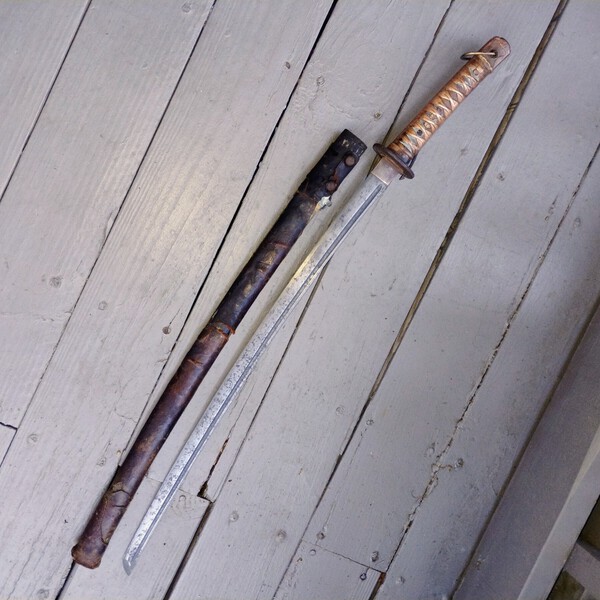
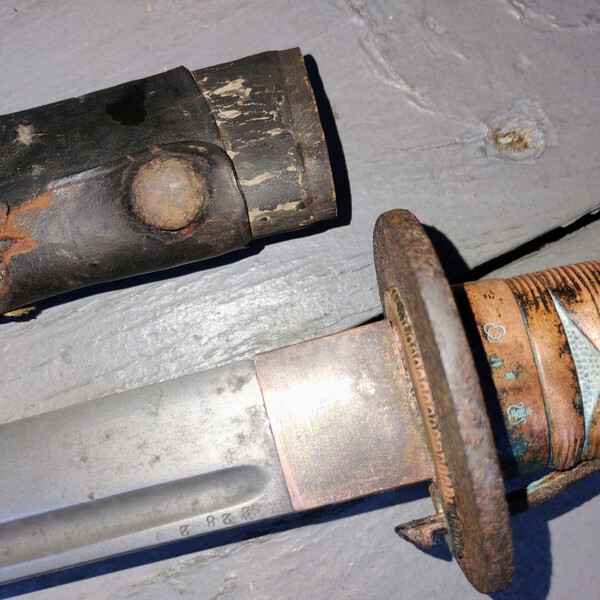
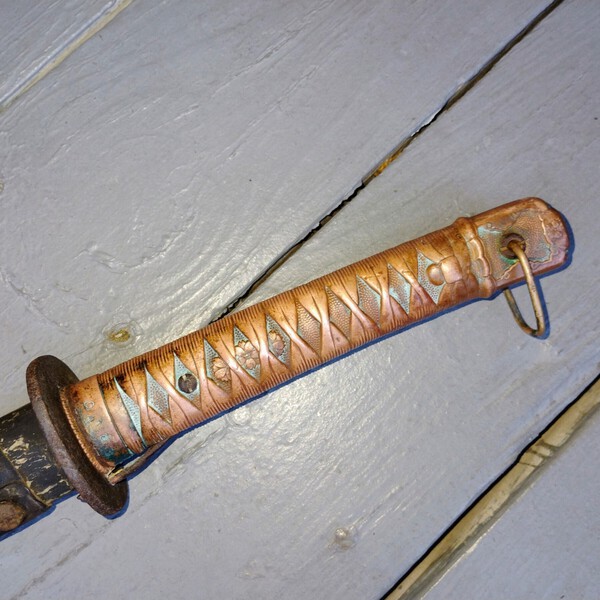
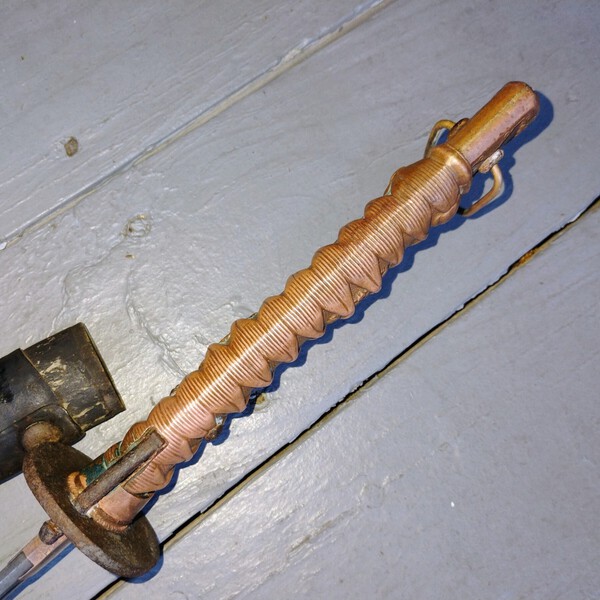
I think the blade is real, but the heavily modified nature of the whole piece made me more suspect than hopeful. With the steel tsuba and very corroded clip, and the pierced ito with the mekugi like the pattern 2 transitional variants. The big exaggerated sarute is typical of many fakes too. I’m on the fence about a lot of it, primarily the tsuka/sarute. But you could be totally right; it could be an authentic but heavily repaired/modified example
-
Really bummed I won’t be able to make it to this show to see the Yamashiro exhibit. One of these years I hope to attend. Still got to do both the Chicago, and Orlando shows to complete my USA sword show circuit Already booked SF though, so there’s something to look forward to -Sam
-
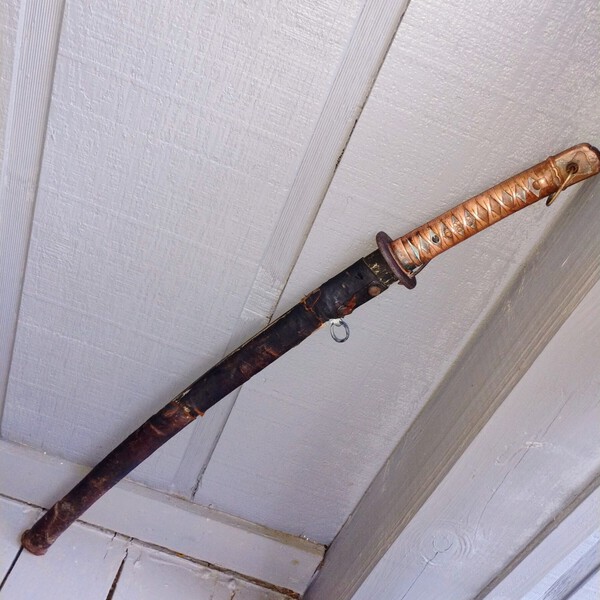
Here is one that was recently shared to the facebook military swords of Japan group. A tricky one, but look closely. Wrong tsuba for the #, wrong large sarute, mekugi in the pattern2 placement. I believe it may be a mix of real and fake parts. What are your thoughts and observations? -Sam
-
You’re always welcome to share photos here of your sword. I think we’ve got some members from the Indiana area. Also, it might be worth contacting the Indiana token kai https://indianatokenkai.wixsite.com/indiana-token-kai Best of luck, -Sam
-
Bummer! Maybe you can locate it on the ground somewhere. If it just fell out easily, it probably was unthreaded or possibly damaged. You can find a replacement or a copy. Not ideal, but the screw is a pretty minor part so I wouldn't sweat it too much. If you were to sell it, I'd just disclose that you replaced the missing mekugi screw. I don't know anything about this particular seller, but this is the part you're looking for: https://www.ebay.com/itm/196866959064?
-
My apologies, I see now that was a rather cryptic statement on my part. Nothing to worry about, in my opinion. I recently started cataloging type 95 swords that I encounter. I don’t have any others that have those three stamps in that general serial number range. Most around 117k that I have listed have stamps from Tokyo arsenal and Suya sword company. I believe it’s simply because my list is not complete or all encompassing. Your stamps indicate that it was made in nagoya arsenal by the seki sword co. Kiipu’s warrelics link helps explain that a little better then I can. It’s a rabbit hole of info learning about these. I see these swords sell between $750 and $1500 lately. All the best, -Sam
-
You've got the stamps correct : Seki Corporate Logo, Nagoya 名 , and the Kokura four stacked cannonballs. The kokura stacked cannonball stamp changed in September 1942, so your sword was presumably made prior to that date.. My cataloging and knowledge is far from complete; but your serial number and stamps stand alone on my list - making it difficult to compare to others. That being said, it looks good and in nice condition. A nice looking example, Thanks for sharing! -Sam
-
ARMY MOUNT WAKASASHI- SHIN SHINTO PERIOD ?
Scogg replied to Dogditcher's topic in Military Swords of Japan
Thanks for those photos Steve, While I am no expert, and being able to identify Mumei blades is challenging for me. It REALLY reminds me of a Type 98 Sue Bizen (late muromachi period, bizen school) blade that I once owned. Below are photos of the one that I had. I sold it a while back. Therefore, I'd put my money on Sue Bizen, . https://nihonto.com/a-brief-study-of-bizen-blades-of-the-muromachi-era/ Other, more experienced opinions may vary, -Sam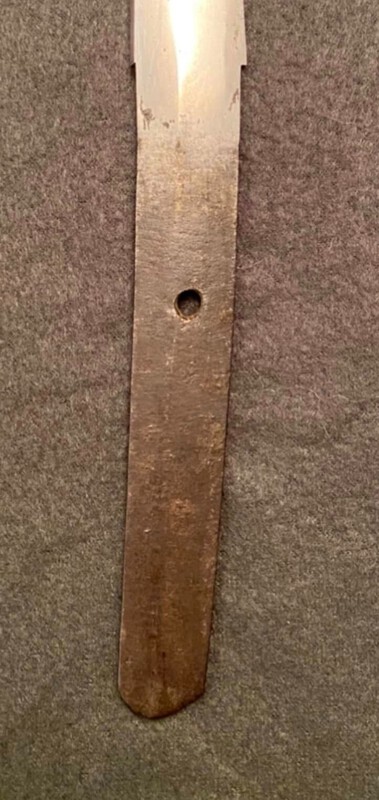

-
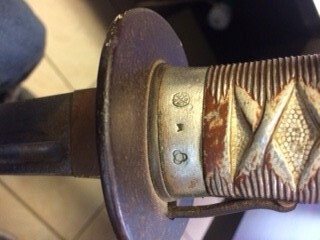
There may be (or may not be) stamps on the FUCHI, which is the collar piece on the top of the handle, under the Tsuba. It looks like your FUCHI is copper, so there should be some stamps visible. I think I can just barely see one of them on your first images. Here's a photo example of the stamps I am interested in - (Not my photo. I pulled this image from google.)
-
Cool indeed! These swords are pretty neat, and have become pretty desirable to collectors. Yours has the (NA = 名) NAGOYA STAMP near the serial number , meaning it's a Nagoya arsenal sword. Judging by your serial number, without seeing the stamps, and comparing on my list. Closest date range I can guestimate would be around 1942... Keeping the blade very lightly oiled (sewing machine oil / tsubaki oil / light pure clear unscented mineral oil) will help prevent rust from forming in a non invasive and safe way. Thank you for sharing, All the best, -Sam
-
Hi Rob, welcome to the forum! Very cool sword. What you have is not a Type 98 - but rather a Type 95 NCO Shin Gunto These swords were machine made between 1937 and 1945, yours is the "Pattern 3" version, with Aluminum handle and Steel Tsuba. If you can show me the serial number, and the stamps on the copper fuchi, I can likely share some more information about it's manufacture and maybe give you a rough date estimate. All the best, -Sam
-
To address the original question; and apologies if I am preaching to the choir here... I see areas of O-Mokume amongst a lot of Itame. It's my understanding that mokume is accompanied by itame. From Marcus Sesko's site: https://markussesko.com/2015/05/13/kantei-2-jigane-jihada-2/ "Again, I for my part say for the time being that a hada is itame unless there are some obvious burls and then it might be itame mixed with mokume. So please don’t get too much confused about when it is itame and when it is mokume as it is in many cases a mix anyway." And below, an excerpt from Facts and Fundamentals:

-
Flexing my moderator privileges, and deleting the off-topic back-and-forth arguments. Let's keep name calling off the forum; whether that be in private message or public. Let's stick to the topic at hand, and remember why we're here. Differences of views/opinions/experience and observations is no excuse for hostilities. -Sam
-
Hi @Jammil, cool sword, and welcome to the forum! Admittedly, I'm a bit less privy to the late-war wood handle variants - I know a lot more about the aluminum handle versions. That being said: Your Type 95 NCO sword is known as the "Pattern 5" version, with the wooden handle (sometimes called a pineapple handle), and metal scabbard. These were manufactured late in the war as resources in Japan became more scarce. I think, conservatively, your sword would date between ~1944 and 1945... B29 bombers took out production by April 1945; and the war ended in the pacific in September. Your blade has the SEKI stamp ( 関 ), from the "Seki Supervisory Unit of Nagoya Army Arsenal". I'd take Conway's and Bruce’s advice about restoration. I am curious though, does it have a matching serial number on the scabbard mouth? Also, is that a silvery paint on the sword? Or is it an eggshell whiteish color? Looks like silver spray paint from the photos, but it's hard to tell. Pretty common to find these NCO swords with an after-war paint job. Thanks for sharing your sword with us, I hope I answered some questions for you. Condolences about your late grandfather, All the best, -Sam
-
Hi Lev, Cool sword! I’ve always been attracted to these mumei older blades in WW2 fittings. I’ve had a few in my collection over the years. Tough to say much in its current condition, but when I zoom in on some of those photos I can see some activities in the steel. Do you have a good vertical photo of both sides of the nakago? And maybe one that highlights the boshi/kissaki area? All the best, -Sam
-
Hi Carmine, welcome to the forum! For what it's worth, I am not an expert; I'm just a collector/enthusiast. Your sword appears to be UBU (original length), SHINOGI-ZUKURI (general shape), and MUMEI (unsigned). Based on it's subtle curvature and general profile, my guess would be shinto period - perhaps KANBUN SHINTO (1661-1673) or whereabouts. Unfortunately the condition is poor, and seeing any activity in the steel may not be possible. Brian beat me to it, and like he said, it's hard to say much about it. A great book to begin your journey into Nihonto is: "The Connoisseur's book of Japanese Swords by Kokan Nagayama". All the best, -Sam