Baka Gaijin
-
Posts
593 -
Joined
-
Last visited
-
Days Won
34
Content Type
Profiles
Forums
Events
Store
Downloads
Gallery
Everything posted by Baka Gaijin
-
Good afternoon Gentlemen, The image of the Skull Bones and Summer Grasses suggests that the inscription on the other side, is possibly a Death Poem, of either Jisei 辞世 or Jisei - Ei 辞世詠 format. It is beautifully cut.
-
There is a list of Bonji here on NMB thread title Bonji : Fudo Myoo?
-

Shirasaya in the UK
Baka Gaijin replied to DrussTheAxe's topic in General Nihonto Related Discussion
Absolutely Agree. His Urushi work on Saya is also worth noting. -
Good evening Gentlemen Thank your for all your comments. The title of the thread was Buyer Beware. As an Antiques Dealer, of 35 years standing, known to have an interest in Japanese arms and armour, with a large Gallery in the City of Bath, UK. I have been offered suitably distressed versions of the type 98 that was produced in Hanwei a few years ago. These new ones are currently available on the manifest of the manufacturer in China, according to their website. The thread was no more than a heads up to the membership here, thirty years down the line, the next generation of collectors will encounter them. I believe that the Royal Armouries in Leeds often includes examples of fakes in its archive, to show as a teaching example to future generations of curators.
-
Just got sent this link:
-
Why... just... why....
Baka Gaijin replied to JH Lee's topic in Auctions and Online Sales or Sellers
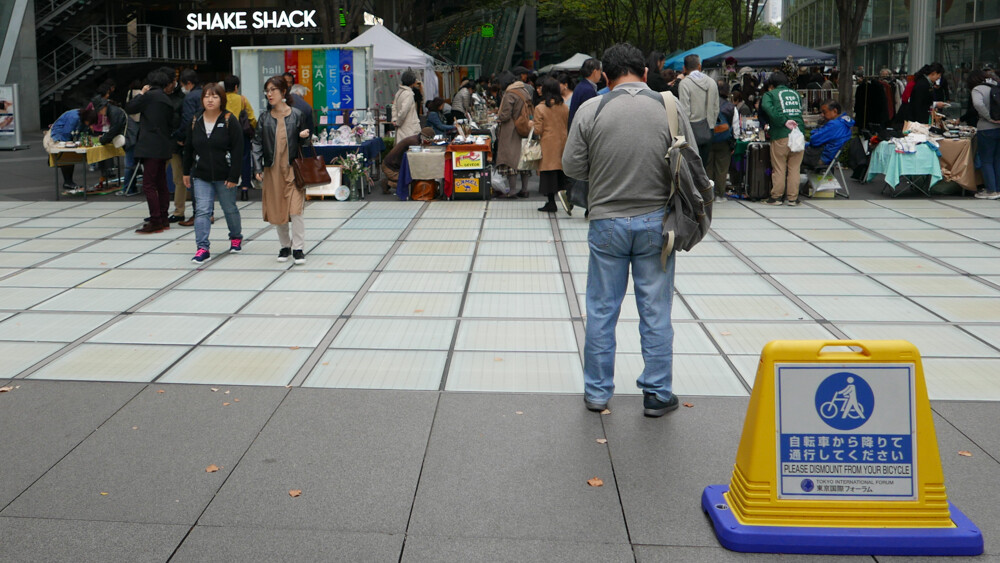
"go to the international forum markets in tokyo and there are always nakago for sale. $30 " That sounds like the Oedo Nominoichi (Flea Market), between Yurakucho and Tokyo stations. 1st and 3rd Sundays of the month, unless its raining (Sometimes on a Saturday, if clashes with events at the International Forum).


-
"Artifact" from the Iga Ninja Museum
Baka Gaijin replied to PxN13's topic in Auctions and Online Sales or Sellers
Mornin' Oyabun I know it says FREE SHIPPING!!!!!!!! But he will not ship to the UK. I'll have to make do with the 4,000 sets of original Daimyo Armour worn by Tokugawa Iyeyasu, when he was helping out the Spartans at Thermopylae, that I was recently offered in an email, from Lord Chief Justice Michael Mainwaring V.C. , of The Lord Chief Justices' Palace, 131a Omugo Avenue, Lagos, Nigeria. As I only need one suit, would anyone like to take the remaining 3,999 off my hands for a reasonable price? PS, Any Yoruba Speakers on the Board will understand the address. -
Regarding the Kodzuka handles being repurposed. I was told that they were also stamped out specially to be mounted in cutlery sets by makers like Komai in the 1870's. You may find this link amusing: http://www.smokingsamurai.com/KOMAI_OTOJIRO.html
-
I bought my Borescope on ebay for £5.95. $8.07 US including Free UK Delivery. Comes with a neat 45% attachment.
-
Used by both Sakamoto Ryoma and Yamaoka Tesshu.
-
Here's an easy one to take John's example further: Signed Seishu Meiji era Sold for £6875 inc Premium at Bonhams London 17 May 2012
-
Good morning Gentlemen, Excellent idea for Chrimbo morning John, though, I suspect as the day progresses, with the time zones of the NMB Krew, chiming in, the combined effects of: Umqombothi & Witblits Surprise Campari with distilled Pontefract Cake essence Sake & Shochu Challenge (The challenge being to speak or perform anything related to hand eye coordination, after two glasses) Bollinger, Premier Grand Cru & Stolychnaya (Stolly / Bolly) Tokai Chateau D'Yquem 1847 (In Pint Glasses Of course) Albanian Rocket Fuel Absinthe (Which alledgedly makes the Heart grow Fonder) Poteen, White Lightning, Lighter Fluid & Metal Polish Frappe etc May make the comments somewhat "Idiosyncratic". If anyone wants a crib sheet, here's the complete "Legend in Japanese Art" by Joly, courtesy of those good ol' Boys at the Internet Archive: https://archive.org/details/legendinjapanese00joly_1 So, Let's Start loading Images: Let the Games Begin......
-
Www.studyingjapaneseswords.com
Baka Gaijin replied to yurie's topic in General Nihonto Related Discussion
Good morning Yurie san, Thank you for your diligence. Truly, the concept of a Book is daunting, placing your heart on display for all to see. Respectfully, please have the courage to fail. If the sum total of all you have so freely shared with us here on NMB over the past few years is a gauge by which to assess the Book, then it is surely destined to become an important resource for future generations to come. As an eyewitness to a specific aspect of History, your position is unique, your observations hold a validity which truly deserves to be recorded. 頑張ってください -
Good morning Steve, Brian and Piers That's an Interesting process to get the 3D. What would Sharaku have made of it? Kuniyoshi would have been making Cats!!!! 良いお年をお迎え下さい。
-
Japanese style reproduction friend won’t accept it!
Baka Gaijin replied to Bjj's topic in General Nihonto Related Discussion
Good Evening Christian, Perhaps suggest to your chum, that if he is convinced of its quality, then he should perhaps put it on Japanese Ebay, where serious Samurai and Ninja experts, who are also Medal of Honour recipients, and ex French Foreign Legion, Special Air Service and U.S. Navy Seal Operatives, who clandestinely protect the Emperor and the hidden gravesite of Hattori Hanzo, would see it, and be so impressed by its quality and rarity, that they may bid it to a final value in excess of $100,000,000,00. Just to bring this cultural icon Home. Worth a try......... -
る ?
-
Hi Bruce, There are also examples of a coded version of Bonji inscribed into the stones used in Castle Walls.
-
Sometimes, Bonji were cut into a Blade, Tsuba or Armour, for Talismanic purposes, specific to the original user's belief system. If you look at Steve M's s example above, the Katakana on the right hand side of the Bonji gives the Seed Syllable Sound , which was usually the last syllable of their individual Invocation Mantra. Fudo no Myoo - Kan Jizo Bosatsu - Ka Fugen Bosatsu - An So it was like a shorthand way of drawing down the influence from the respective Deities A little like the Omamori amulets that are available at Temples and Shrines today:
-
Good morning Gentlemen, The term used for hanging Tsuba etc under the eaves for natural patination is Nokishita 軒下 のきした
-
On the modern dual thread mekugi nuki, a simple application of a thread locking gel to the part that goes into the hammer head sorts the issue out.
-
"In Memoriam" section?
Baka Gaijin replied to Mark S.'s topic in Forum Technical Details and Maintenance
How about links to their contributions and articles maybe? Lest we forget? Gratitude can have a half life in seconds to future generations. -
Samurai history books
Baka Gaijin replied to Robbie Tsunami's topic in General Nihonto Related Discussion
It is really quite a remarkable resource. -
Samurai history books
Baka Gaijin replied to Robbie Tsunami's topic in General Nihonto Related Discussion
Hi Kirill, Try Pre Modern Japanese Studies (PMJS). There are many of the articles available here: https://groups.google.com/g/pmjs?pli=1 -
Ages back, there were folding Concho style bootlace ties in the form of a minature Tsuba, with a folding drift a bit like Piers example, available at DTI. I can't find an image, but I think they were also available at the old NBTHK Hakubutsukan shop.