Bugyotsuji
-
Posts
14,912 -
Joined
-
Last visited
-
Days Won
315
Content Type
Profiles
Forums
Events
Store
Downloads
Gallery
Everything posted by Bugyotsuji
-
This Week's Edo Period Corner
Bugyotsuji replied to Bugyotsuji's topic in General Nihonto Related Discussion
Many thanks Eric. Noel Perrin takes a rather extreme position with which some people disagree, but his book is well worth reading. Food for thought. I must go back and read my copy again! Interestingly, in light of Mr Jones above mentioning Western 'threaded breech plugs', the Japanese word Bisen actually means 'tail plug' even though it is threaded as a giant screw. -
Over use of the word 'authentic' tends to drive me away. Some things on that site are... well, but the box you mention does look genuine.
-
Many thanks everyone for your replies, with some fresh angles on this. A child? Hmmm... .
-
Thanks John. Just inquiring for a friend in need!
-
Whoops, excuse me, yes! Thank you. Is such a link possible?

-
不忘勇子 This was written on two sides of a skull Netsuke. 不忘 on one side and 勇子 on the other. Can anyone help me discover who is Yuko, or Isako? Surely not Hatakeda Yuko?
-
This Week's Edo Period Corner
Bugyotsuji replied to Bugyotsuji's topic in General Nihonto Related Discussion
Yes, it is interesting when you put it so clearly like that, MrJones. Sakai guns may be a third way, closer to the West, highly decorated possessions of the rich merchant class. -
This Week's Edo Period Corner
Bugyotsuji replied to Bugyotsuji's topic in General Nihonto Related Discussion
Tanegashima have followed many paths up to the present day, Eric. Many are still as they were, or have been taken back from modernization to their original look. These will all have their paperwork and stay happily within the Japanese context, registered as works with historical or artistic value. The Tanegashima stock and barrel is pretty sturdy, so with a quick lock and pan fix they were able to evolve and be pressed into service with a temporary patch measure on many occasions. All you needed was a Teppo-kaji blacksmith and the know-how. I have seen all kinds of 'modernized' locks, but bolt action, not a lot, Eric. We must remember however, that they were all smooth bore. Perhaps by the advent of bolt action, rifling was a prerequisite, so only as a last measure or as an interesting mental challenge would they be made into bolt action. It would require too much work to change it into a breech loader and add the mechanism. Japan has occasionally fallen on hard times and the family Tanegashima was pressed into service for bagging game in the mountains, I guess. I once owned a leather powder flask with remnants of blackpowder inside. The powder scoops were old brass rifle cartridges, with the edges worn on one side. What does this tell you about how late it was still in use? -
This Week's Edo Period Corner
Bugyotsuji replied to Bugyotsuji's topic in General Nihonto Related Discussion
There were many kinds of shot. What the farmers used I do not know, but this distinction between military and agricultural guns may carry on psychologically the tradition of rank separation between samurai at the top, and farmers in the next rank...ie 仕農工商 -
This Week's Edo Period Corner
Bugyotsuji replied to Bugyotsuji's topic in General Nihonto Related Discussion
Carlo, yes. Strangely among my friends here no-one will touch what they deem a Ryo-ju 'hunting' gun. They are looked down upon as being somehow inferior. Everyone wants a Gun-yo-zutsu or military gun. To tell you the truth, out of hundreds of Tanegashima matchlocks, I cannot actually recall ever having seen a 'hunting' gun per se. :lol: Perhaps it just means long guns of small caliber for small game? -
This Week's Edo Period Corner
Bugyotsuji replied to Bugyotsuji's topic in General Nihonto Related Discussion
Eric, yes, the Hayago were sometimes called apostles in English. You could pre-pack these early cartridges with a known amount of powder and ball in the lull before action, and they could be used over and over subsequently. Most Japanese Tanegashima matchlocks have a big fat screw that sits in the back of the barrel. It is called a Bisen. You can remove it for easy cleaning of the bore, once you can untighten it. They lock up after a few shots, with powder residue etc. and can be tough to open without a key of some sort. PS You can see my Bisen removed, about 1/3 of the way down the below page of this thread: viewtopic.php?f=9&t=2554&st=0&sk=t&sd=a&start=90 -
This Week's Edo Period Corner
Bugyotsuji replied to Bugyotsuji's topic in General Nihonto Related Discussion
Came across these matchlock accoutrements/accouterments about three weeks ago, but since they are not of high quality I hadn't really considered posting them. Just out of interest, then, as something to feed the thread, here they are. As you can see, there are two loops of greasy blackened rope. One loop has a simple eyed spike hanging from it, probably for opening the type of Bisen breech screw having a transverse hole through the head. Perhaps for a peg on a wall upright. The other has four wooden Hayago apostles, attached separately by both body and plug, and a spanner type Bisen opener for those with no hole. For the neck. There were a couple of other Hayago in the box and a small leather pouch, probably for a striker, iron or flint. Varying condition. The plugs are made of tightly-wrapped cloth. For how long would these stoppers have kept the powder dry in bad weather? Quite rustic, but look as they they lived a long and useful life. Hoping that by viewing, you may get some insight, or a flavor/flavour of their cultural background. Are they military or for hunting guns? The internal size of the Bisen spanner suggests one gun at least had quite a large caliber.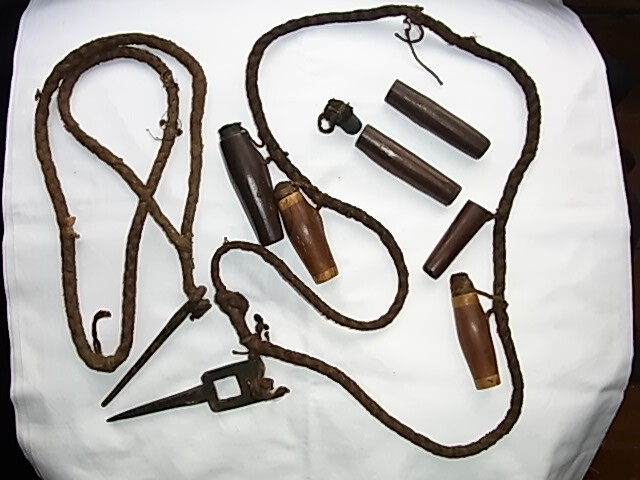


-
A good-looking collection. Congratulations.
-
I like it when you discover such words where you least expect. Japanese and Korean are so different, but so similar. Like English and French, so close, but also so far away.
-
Other woods were used, but by far the most common is Kashi, particularly Akagashi or red oak. Quercus acuta as Thomas says above. Shiragashi or white oak was also used. Quercus myrsinaefolia See for red oak: http://ja.wikipedia.org/wiki/%E3%82%A2% ... C%E3%82%B7 See for white oak, all oaks: http://ja.wikipedia.org/wiki/%E3%82%AB%E3%82%B7 As to the slit below the ramrod, I have read that the cross-section of the stock acts as a pair of pincers. Removing the ramrod makes it easier to remove the barrel. Conversely, insertion of the barrel widens the top of the stock and at the same time narrows the ramrod hole below, making for a tighter fit.
-
This Week's Edo Period Corner
Bugyotsuji replied to Bugyotsuji's topic in General Nihonto Related Discussion
And now Pierce? from the syntax used, it must mean that they have increased in price. No Jean, I didn't ask, but from the context and tone of voice I believe they must be cheaper. -
Just for quick clarification. (Thank you for posting your good-looking gun, Ron.) Earlier I suggested that there were even elements of Sendai in it, and gave as an example the hollow loop trigger. Well, today I was shown a pair of special Tokugawa pistols made by the famous Kunitomo Ikkansai, and I was surprised to see that they both had looped triggers. Whether this was a weight-saving feature that gradually became common throughout Japan or not, I do not know, but it is now clearer to me that such Sukashi triggers were certainly not limited to Sendai. As an aside, I also noticed at once that they had snuffer hollows very similar to my late Edo long gun, and quite different to some of those highly-decorated medallion holes that we often associate with Sakai etc. Why these should be on the left side of the gun had me thinking, and if all the logic so far holds up, then I would like to suggest that it is a Japanese psychological thing to separate lighting a fire, and extinguishing a fire, by a wall or barrier. Say you are about to fire, and suddenly the order is rescinded. You would shut the pan, remove your matchcord, and you might be required to turn the 'dangerous' side of the gun away from you, ie downwards, in order to demonstrate to all and sundry a deliberate act of snuffery. Shades of martial arts and judges, & schools of gunnery. (Idle thoughts on a Saturday afternoon.)
-
This Week's Edo Period Corner
Bugyotsuji replied to Bugyotsuji's topic in General Nihonto Related Discussion
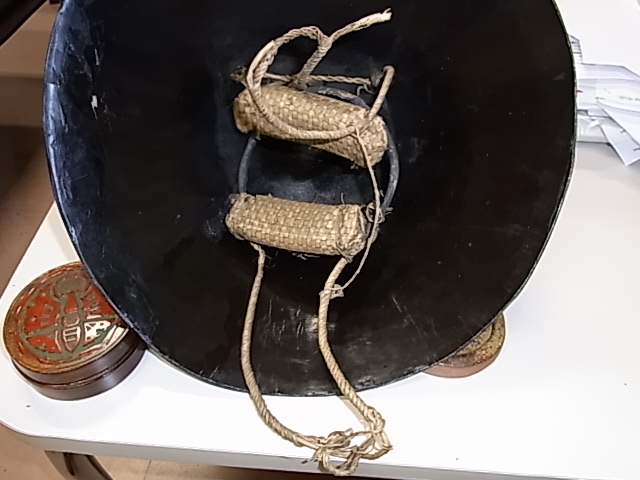
Here is the Jingasa from inside. It is not obvious, to me anyway, which was the front and which was the back. Perhaps it was designed to be worn depending on the day and who was leading!!! Just been shown a pair of magnificent matchlock pistols by Kunitomo Ikkansai, the go-between for the Tokugawas and the smiths of Kunitomo. They were once worth 60,000 USD before the bubble. As I will post over on Ron's other thread in a minute, I was surprised to see the triggers were loops, just like his gun, which I had supposed was a feature of Sendai guns. They both had Hi-keshi-ana snuffers very like my long gun, so these pistols must be fairly late Edo, if our logic holds.
-
Swordsmith Scroll Translation Help
Bugyotsuji replied to Aloof Pegasus's topic in Translation Assistance
Morita sama, I have no idea how you can do that, but it's a wonderful and rare talent you have and should be taught to more young people! -
Swordsmith Scroll Translation Help
Bugyotsuji replied to Aloof Pegasus's topic in Translation Assistance
Can't read it, but I'm liking the scroll and looking forward to the reading! -
An Interesting 8 Monme Tanegashima
Bugyotsuji replied to watsonmil's topic in Tanegashima / Teppo / Hinawajū
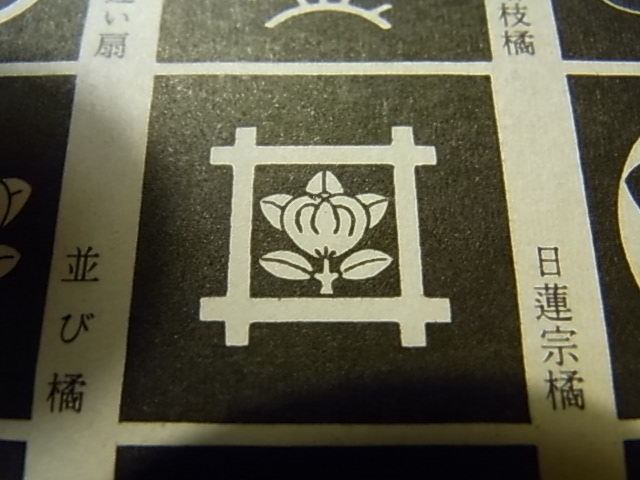
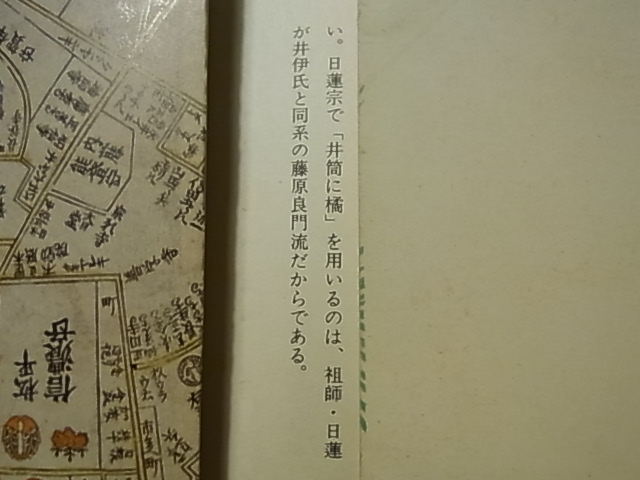
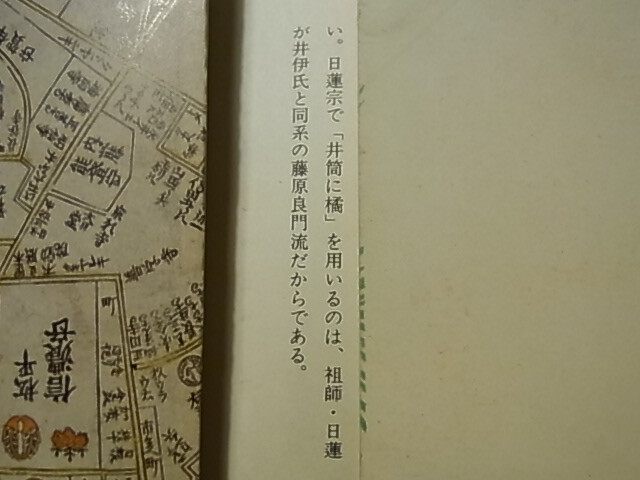
This will be full of holes, but perhaps Koichi san, Morita san or someone can help me. "The reason that Nichiren-shu uses the Izutsu-no-Tachibana is that the founder, Nichiren, was of the same strand/line of Fujiwara Ryomon Ryu as the Lord Ii. (?) -
An Interesting 8 Monme Tanegashima
Bugyotsuji replied to watsonmil's topic in Tanegashima / Teppo / Hinawajū
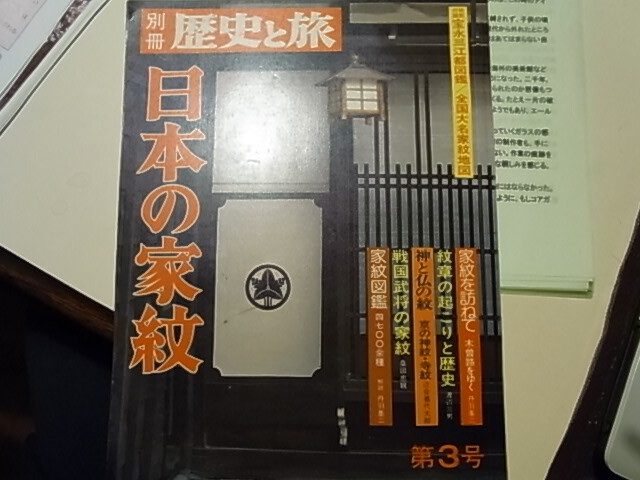
Just found another Ka-Mon source confirming a link between Nichiren and the ii family. This book, p156 The two last lines of the explanation say:
-
This Week's Edo Period Corner
Bugyotsuji replied to Bugyotsuji's topic in General Nihonto Related Discussion
John, it's in my study at work. I'll go back and have a closer look and see if it is obvious, from the bindings, which is the front and which is the back. The person who had it before me several years ago said it was a Teppo-tai (musketeer's) Jingasa. I've always wondered about it. In fact I had sort of imagined it might be from Saigo Takamori's Satsuma Rebellion. -
This Week's Edo Period Corner
Bugyotsuji replied to Bugyotsuji's topic in General Nihonto Related Discussion
Much appreciated, John. Wow, it's complicated isn't it! Now I am looking at this Jingasa in a new light! (It's got very tatty straw bolsters and drawstrings underneath) :lol: -
This Week's Edo Period Corner
Bugyotsuji replied to Bugyotsuji's topic in General Nihonto Related Discussion
Thank you John! Yes, that brings on my next harder question. Who would have had an Omote Mon and an Ura Mon in combination like this? Hoping someone can help, as for sure I do not know. Oh, and thanks to Koichi sama too! PS Kuyo-Mon was used not only by Hosokawa, John, so 'Hosokawa' is not a given, especially if it is an Ura Mon.