Jussi Ekholm
-
Posts
2,279 -
Joined
-
Last visited
-
Days Won
44
Content Type
Profiles
Forums
Events
Store
Downloads
Gallery
Everything posted by Jussi Ekholm
-

1798 Ozaki Gengomon Suketaka
Jussi Ekholm replied to Frye1001's topic in General Nihonto Related Discussion
I think currently the highest ranked Ozaki Suketaka swords are the 4(5 as one is daishō) that have passed NBTHK Jūyō evaluation. They are dated 1794, 1802, 1802, 1803. Shinshintō in general are outside my knowledge range but I think he was a good smith and produced good quality swords before and after receiving the title. -
It is nice looking item, and an interesting one. I am definately not a Sōshū fan, so I cannot identify the small details. However I am shape and size guy and to me the hi at the bottom is throwing me completely off. I do think in my references I should have hundreds of examples of this type of horimono and I cannot remember single one that would have another hi under the main carving, as usually the placement for this type of horimono is pretty standard. The presence of the lower hi would also indicate the sword would have been much longer than it is in it's current form. I am liking the item but I admit the carvings have me completely puzzled out.
-
I am not a fittings guy but my guess would be it had been fitted for wooden sword, bokutō/bokken.
-
I do think it is a tricky item. It supposedly has a Hon'ami Kinpun mei to Horikawa Kunitomo. However I don't think either organization sees that one as legitimate. You have the old NBTHK papers just stating there is a kinpun mei Kunitomo, this often (not always) sees them questioning the authencity of the kinpun mei. Likewise NTHK mentions the kinpun mei in their paper but in their opinion their attribution is to a different smith. Horikawa Kunitomo is very good smith, and unfortunately I wouldn't see this as his work either. I do like the size and shape as I like big hirazukuri blades but the quality and details for what I can see from the pictures would not push me towards good smiths of Horikawa lineage. I am not good at kantei and I think most of my references are for the very good smith 1st Sadakuni but they specify 2nd generation in their attribution.
-
@Wah Thank you for this information Stephen, I have not heard about these magazines. They seem extremely interesting and it could be a fun project trying to get these magazines from Japan. This thread is wonderful, so much information that is not easily available. I believe this one would be the tachi you posted above. The 99,1 cm length listed in the Japanese site: https://www.bunka.go.jp/seisaku/bunkazai/torimodosou/kunishitei/106.html would actually be the total length of the item and not the blade length as I thought it would be.
-
Very interesting information Brett I had not heard that before but that is extremely interesting. All of these 5 seem to be privately owned in Fukushima prefecture and they are indeed the last swords designated as Jūyō Bunkazai. I have visited Futarasan Jinja several times and have been lucky to see many of their amazing ōdachi and naginata. I have visited few times since they have made these naginata Jūyō Bunkazai as part of the Mikoshi set. Unfortunately so far both times I have just seen the 2 Hōjōji naginata on display, haven't yet seen the other 3. Hopefully some year I can see them too. Still I must say that individually I wouldn't think these items would be quality or historical importance needed to achieve Jūyō Bunkazai but as a part of the set I understand it. I do think the Jūyō Bunkazai panel could also be extremely biased. Ōyamazumi jinja is one of my favorite places in Japan and they do house the most impressive naginata collection in the world. However all their Jūyō Bunkazai naginata are just all grouped under weapons dedicated to the shrine category in 1966. Yet all viable swords are individually classified as Bunkazai or National Treasures. Of course as a ōdachi and naginata fan my view is biased but I would see their naginata as extremely important historical items, even more so than the swords the shrine has. Yes they do have several ōdachi too, 2 of which are National Treasures. Yes both of them are absolutely wonderful swords, but still there are some amazing unclassified ōdachi in the shrine collection too.
-
It is actually sometimes very difficult to track down info on some of the old swords that are currently missing or unknown. As I have the 16 book set Kokuhō Tōken Zufu that was complied in I believe 1936 to 1938, for many years I have thought it had all the former Kokuhō from the old designation. However I now understand that it is missing some former National Treasures. For example the above posted Hotarumaru was made National Treasure in 1931 but it is missing from this book. Likewise the Norishige that was found by Ian Brooks is not featured in this book either even though it was made National Treasure in 1918. And there might most likely be other former National Treasures that are not featured in this book set. Here are picture and measurements for the Tadayoshi tachi that Brett posted earlier with the story how it was stolen. Nagasa: 74,5 cm Sori: 2,4 cm Motohaba: 2,8 cm Sakihaba: 1,6 cm Kissaki: 2,5 cm I was trying to read the old entry from 1930's but there might be few kanji that are not commonly used anymore so I hope I got the modern versions correct. There seems to be lot of history for this sword if I understood correctly. It was dedicated to the shrine by Tokugawa Tadateru (忠輝) in 1667, and the sword has/had itomaki tachi koshirae. However during the years it seems to have been mixed as the property of 大祝 (Ōhōri) family. From wikipedia I was able to understand the Ōhōri were lineage of high priests that were connected to Suwa shrine. It is written that in Tenpō (c.1830's/40's) it changed ownership from the family to someone else, then it changed hands many times until it was returned to the shrine in 1906.

-
Also taken from Aso Jinja after WWII is the famous Rai Kunitoshi ōdachi dated 1297, named sword 蛍丸 (Hotarumaru), it was former National Treasure. You can find info in Japanese for example at these sites https://ja.wikipedia.org/wiki/蛍丸 https://www.tsuruginoya.net/stories/hotarumaru/ Nagasa: 101,4 cm Sori: 3,4 cm Motohaba: 3,7 cm Sakihaba: 2,1 cm Motokasane: 9 mm Sakikasane: 5,7 mm Nakago: 34,2 cm Unfortunately there are extremely few images of the sword surviving. There has been a replica sword made for the shrine by modern smith. Here it is featured in Youtube video


-
What an amazing project Piers, I'll send you a PM
-
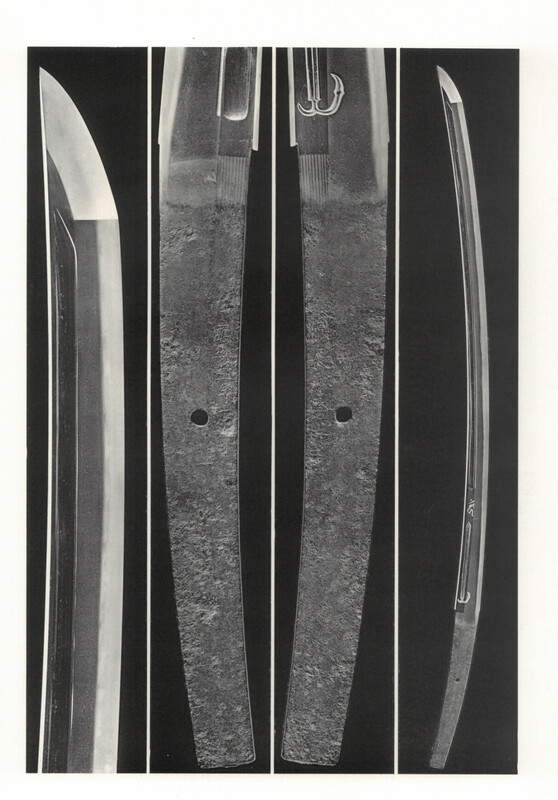
Tachi by Osafune Hidemitsu, dated 1371 designated as Jūyō Bunkazai 31.3.1953, item number 01658. Nagasa: 81,6 cm Sori: 3,0 cm Motohaba: 3,7 cm Sakihaba: 2,7 cm Motokasane: 6,5 mm Sakikasane: 4,5 mm Kissaki: 6,0 cm Nakago: 23,9 cm Nakago sori: 0,6 cm Item is featured in Nihontō Taikan, Tōken Bijutsu 362 as feature sword, Tanobe big book, Osafune Chōshi, Jukken Historically this sword has been in collection of 村上 (Murakami) family. This is just my type of sword and seems to be absolutely wonderful item. It is fun to look into these and probably the first time in 2 years I opened the big Tanobe book.

-
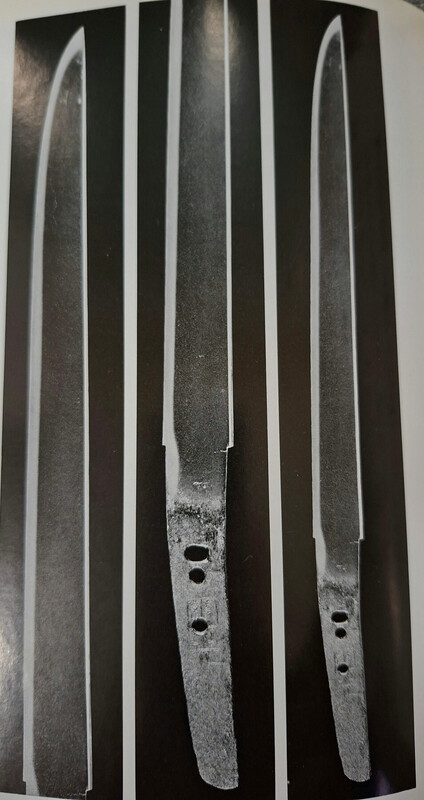
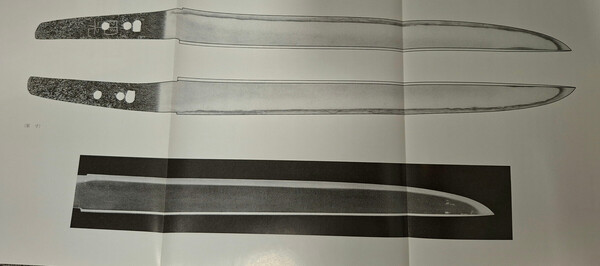
Tantō by Shintōgo Kunimitsu designated as Jūyō Bunkazai 27.6.1959, item number 01825. Nagasa: 27.6 cm Sori: uchizori Motohaba: 2,3 cm Motokasane: 6 mm Nakago: 11,1 cm Nakago sori: slight (some books have 0,2 cm) Item is featured in Nihontō Taikan, Tantō Book (1969) by Suzuki, Tōken Bijutsu 127 as the feature sword, Tōken Bijutsu 574 as the feature sword. Historically this sword has been in collection of 山内 (Yamauchi/Yamanouchi) family.
-
Sugata help: Muromachi, Yamato-den, Fujiwara-ju Nagayuki
Jussi Ekholm replied to gkfalk's topic in Nihonto
Looking at the mei I would think this would be from quite unknown group of makers who resided in Fujiwara area in Yamato. By extremely unlikely timing coincidence you should take a look on this thread that was started yesterday: -
Another good post Brett, I really enjoyed reading about Buzen-Gō I took a quick look and I think I should have pictures/oshigata and old information on 42 of the still missing swords. I do think Agency for Cultural Affairs know a lot more about the items than they wrote out on the page. I think they protect privacy of people & shrines.
-
I think there are always compromises that you need to make in sword viewing unless you can hold the actual item in person. I am happy I am not interested in small details so I can easily enjoy displays in museums & shrines even if the lighting for example would not allow viewing finer details. Most often we can only view one side of the item in museum displays. I really like the displays where you can view both sides but then the backside is often not lit well. I am not a photographer but I would think you would need several videos to capture the various details because you would need to film at various angles. As you will often need to perform lot of moving around and shifting positions when looking at items in museums. Sometimes the museums in Tokyo for example can be crowded and in good manners the view time for a sword can be bit limited in one go. That is why I love some of the rural shrines as they have items I love and I can spend the whole day looking at them if I want. One extremely good thing about oshigata is that the published ones are mostly made by experts with an expert eye. They can identify small details that I don't see or grasp and feature them in the oshigata. In ideal world I could see all the things featured in oshigata but in reality I am not at that level.
-
Maybe Bruce is referring to this 本阿 (花押) - Hona (Kao). I dont know my Honami lineages too well but I believe one doing the kinzōgan was family member 光温 in 1600's.
-
Video that Brano took of the sword is incredible. I have viewed the sword in its normal residing place and it is a wonderful sword. The video shows the details very nicely. I think sometimes with high quality video I can see more details than with my own eyes. However as for me the size and shape is the driving factor with swords, seeing them in person can create different effect than seeing oshigata, photos or videos.
-
I feel one big problem on featuring the item in publications is item accessibility. Some items just don't get much exposure to public and for some I think it might be a rare occasion even to sword experts in Japan to see the item. Aizu Shintōgo on the other hand is on the easy viewing side, as it is on display. I've seen it and it is remarkable sword even though I am personally not a huge fan of that very fine workmanship, I prefer rougher items with more "character". Of course hands on viewing of a such an item is probably only possible for very selected few experts.
-
Emperor Meiji's Swords
Jussi Ekholm replied to MassiveMoonHeh's topic in General Nihonto Related Discussion
Thank you for another wonderful article Brett. I have seen the Chōgi at Tokyo National Museum and it is marvellous sword. I wondered how a sword like this did not have a high national designation but as your other article explained that these former Imperial collection pieces are above designating them, it all makes perfect sense. -
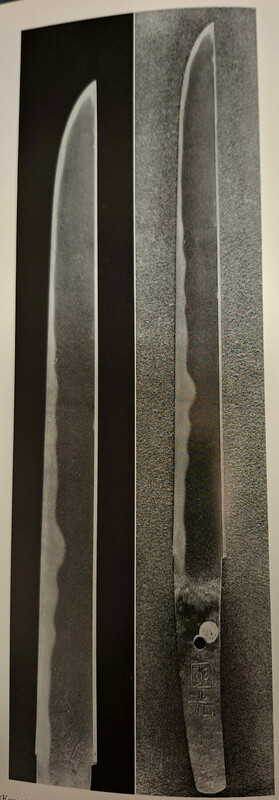
I believe it should be this Jūyō Bijutsuhin tantō.

-
This is excellent book as was said above. It offers some "hidden" insight on things that really cannot be found anywhere. There is so much interesting information in the book and it creates an image of how things were in past, I admit I have been scratching my head a lot when trying to understand some of the information provided by the book.
-
Looking for opinions: Den Omiya Nanbokucho Katana
Jussi Ekholm replied to RockyRaccoon's topic in Nihonto
For me personally that sword does not make a huge impact of Nanbokuchō period, as it is small and slender sword. I do of course agree that NBTHK Ōmiya call might most likely be the most plausible one. If I would seek to get one Nanbokuchō period blade I would hope it would be "stereotypical" example. The huge swords were of course only a part of what was made during that time and plenty of normal sized and small swords were made during that period. Here are some reference items of wider swords that got attributed to Ōmiya and were cheaper than the offering in the OP and got sold somewhat recently. https://www.nipponto.co.jp/swords6/NT330431.htm https://web.archive.org/web/20240201012326/https://www.aoijapan.com/katana-mumei-omiya-nbthk-tokubetsu-hozon-token/ https://web.archive.org/web/20220226151328/https://www.aoijapan.com/katanamumei-den-omiya/ I am fixated on shape and size but I understand it is probably a minority thing. However be it size, fine details in blade, complete package in koshirae etc. whatever you are looking for I would try to look into Nanbokuchō Bizen as the big picture and not just limiting the search to Ōmiya. You have a fairly large budget and will find lots of fine offerings for that budget. -
The last of the Gyobutsu swords
Jussi Ekholm replied to MassiveMoonHeh's topic in General Nihonto Related Discussion
Thank you for this amazing research Brett. It cleared some questions I have had about this subject. -
Now that is bit hefty topic line and I do not really have a standing theory ready for it, nor perfectly accurate formula for calculations. However I have done some measuring in old school way from books and done my own reasoning and thinking. A recent post by Arnaud made me remember what I had tried to do a while ago for few smiths. As many forum members might know ōdachi are the most interesting thing for me alongside big naginata and when I go to Japan those are pretty much the things I seek to look at shrines, museums etc. They are however unfortunately very rare. Of course many of them were shortened into regular sized blades later on. However that brings me to the second problem, there are just huge amounts of long ō-suriage mumei katana attributed to some of the top smiths (and to other smiths as well). In overall so many of them that it will leave me scratching my head. Some massive ōdachi and massive naginata/nagamaki were definately used, however I would dare to believe they were not ordinary weapons that were common to encounter. This is not in any way really accurate data, so do not take it as the truth. However it will give some insight on what I personally feel. For some old tachi it is relatively easy to try to figure out the original length, for some it is much more difficult. For this data I needed to have relatively specific data in order to do the calculations, and of course I do have pictures or oshigata of each and every sword. Now of course for best results I would take pictures of every sword, then put the picture collage to computer and scale it counting pixel to match real life size. I have done this type of thing for naginata in past and it takes quite a bit of time. Someone or AI might succeed in it much faster but sometimes doing stuff like that is fun. I only could of course use signed tachi for this data (I counted in partially signed though if they filled the other criteria). Then I must have the nakago length measurement for the item (this is because many pictures are not 100% in scale in books so I needed to calculate the actual measurements I took) I did measure the gap from munemachi to start of the signature for each ubu sword to be a reference point. There were of course few outliers but I believe smiths signed relatively often in similar placement, and the data would also correlate with this. I also tried to look the signature in relation to ana but I must confess it was getting bit too complicated for me, so as I was not looking that deeply into this I did not have time for everything. Then tried to use logical applying on suriage swords to determine the possible original length. While not perfectly accurate I did get very similar results with my personal method than is listed for few swords by Japanese experts. I did select Tomomitsu and Kanemitsu basically as I like them so much. Rai Kunimitsu was just something I was curious about as there are so many swords (signed and mumei) for Rai Kunimitsu. First up is Tomomitsu there are the 2 ubu ōdachi, and I had only 5 suriage tachi that fill the criteria. As can be seen in graph they weren't ōdachi sized originally. Then for Kanemitsu the first entry is the famous ōdachi Ō-Kanemitsu. In my eyes it was originally slightly bigger than it currently is, my estimate was pretty much the same I have seen by experts in books, amazing sword that I hope to see it at TNM some year. The second ubu is the magnificent JūBū tachi at Fukuyama Museum of Art, tiny bit short of being an ōdachi. As I have not yet seen Ō-Kanemitsu this is so far my favorite Kanemitsu. For Kanemitsu there were 17 other suriage swords and only 1 of them came close to being an ōdachi but it didn't really pass as it was tiny bit short. Lots of very large amazing tachi though. For Rai Kunimitsu there was actually one suriage tachi that was still very long, and by my calculations and observations would have been originally c. 95 cm ōdachi. This is the National Treasure that is held in Kyushu National Museum, I was around 1 cm of the expert length estimate so while not perfect it gets rather close. Other than that one, all were just long tachi that of course many of them were really awesome. This doesn't really give any definitive answers and for myself it just maybe raises more and more questions. I hope someone finds this interesting.


- 1 reply
-
- 10
-

-

-
Dictionary of Famous Swords
Jussi Ekholm replied to MassiveMoonHeh's topic in General Nihonto Related Discussion
This is absolutely amazing resource I have used it so much over the years. There is a lot of information on that site I have not easily found anywhere else. -
I believe it is still a custom. I have had few friends who have these swords. I believe they are pretty much always ceremonial swords made by WKC Solingen in Germany: https://www.wkc-shop.de/en/ceremonial-swords-sorted-country/finnland/finnish-doctoral-sword-tohtorinmiekka-finnish-university-crest-options I've never been to university so I have no clue about the doctorates that grant you the sword. I know that universities have different emblems that are engraved on the design.