Bruce Pennington
-
Posts
14,165 -
Joined
-
Last visited
-
Days Won
169
Content Type
Profiles
Forums
Events
Store
Downloads
Gallery
Everything posted by Bruce Pennington
-
Michael, Is the writing only on one side? Dates are usually on the other side from the smith name. If made in '39 or anytime during the war, it wasn't a "family" sword. Those are much older. The leather on the scabbard is simply leather. It's called a combat scabbard. The weekends tend to be slower around the forum, so if you don't get a confirmation on the smith name soon, someone with chime in by Monday, ususally.
-
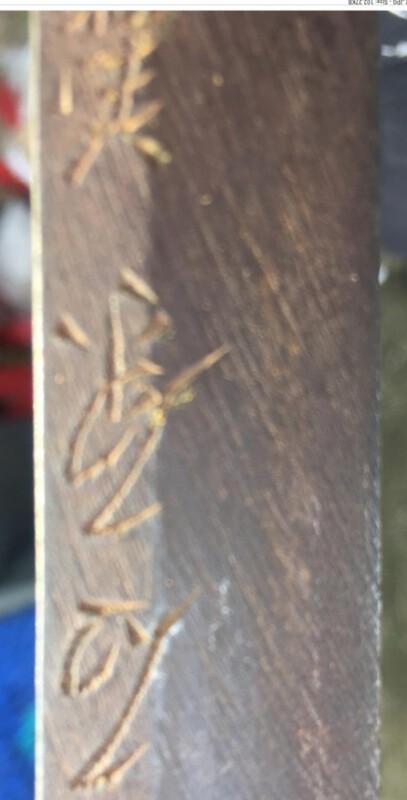
Michael, I can't translate, someone will come along. But I can tell you this is a Type 98 Officer sword in combat scabbard. Japanese smiths sign the tangs with the blade tip pointed up, so I flipped your pics for readability.
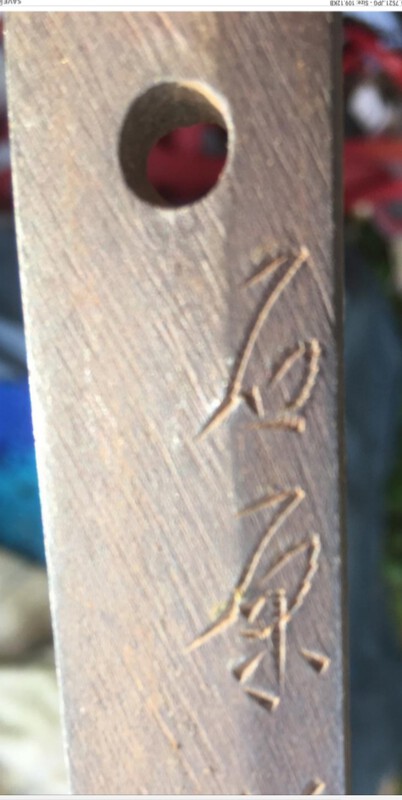
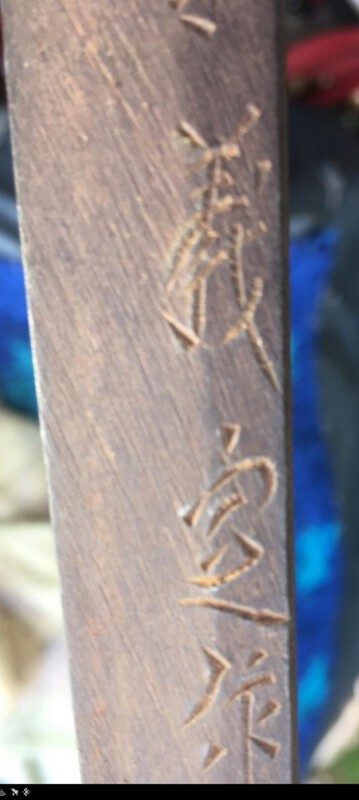
-

Star Stamped Tsutsui Kiyokane Blade
Bruce Pennington replied to cisco-san's topic in Military Swords of Japan
George, regarding "contract numbers" - does this mean each number was tied to a custom contract with an individual, or does it refer to the smith's contract with the army; and/or are the numbers representative of how many blades he's made for the army under contract? -
Star Stamped Tsutsui Kiyokane Blade
Bruce Pennington replied to cisco-san's topic in Military Swords of Japan
Klaus, As I understand the history of the star stamp, it didn't really get into widespread use until after 1942 (trial runs began in 1940, so some dated between '40 and '42 are around). So, it's possible your smith was making swords before and after the star stamp was established. BTW, is there no date on the other side? If not, it simply means the blade was made "off-site" at a non-arsenal forge. -
Beautiful Type 98, dated April 1943.
-
Thanks Joe! So my record is still perfect - 0/10!
-
Augusto, I'm not skilled at this, so take this for what it's worth (at least until the real experts step in!) Looks like "Kanefumi" http://japaneseswordindex.com/oshigata/kanefumi.jpg Fukuda Kanefumi Things are usually slow on the weekends. Someone who knows better will chime in on Monday, hopefully!
-
Yes, Toyokawa Navy Arsenal. Many of the navy blades were made of an “anti-rust” steel. A forrunner of out modern stainless steel.
-
Looks nice. 1943 is all I can tell you.
-
us... can we have a first name to talk to? We LIKE pictures. It's the best way to live vicariously through other peoples' aquisitions! So bring on the pictures of your other sword too! I would say the majority of WWII swords were signed. Plenty weren't but I'd say most were. The smiths had several appretices that could sign for him, and also, sometimes the polisher could affix the smith's signature. With a better picture of the anchor stamp I can tell you which one it is. There were only 2, and yours seems it was the Toyokawa Navy Arsenal stamp, but a better pic will tell.
-
Rusty, also, the stamp on the throat of the saya is faint, but appears to be that of the: Shoheikan Gunso Kabushiki Gaisha This company made army and navy koshirae. They also advertise a wood saya gunto koshirae. The company was located in Tokyo and owned by Mr. Saito. You can see the logo here: http://japaneseswordindex.com/logo/logo.htm
-
For the "what it's worth" category, the mon is similar to the "Asano" Samurai family crest here: http://www.samurai-archives.com/crest1.html Though, Nick Komiya, at Warrelics, points out that by WWII any family could have a crest. Families without a crest could modify an original one very slightly to make it their own. I have also read somewhere, that gunto shops sometimes had a book of mons and an officer could simply choose one! But it's fun to imagine the possibility that a gunto, in hand, COULD have been owned by someone with actual Samurai heritage!
-
Nice example Augusto!
-
Hoanh, It only took me 2 years to get to you on this! But both are arsenal inspector marks. Top on is "Na" of Nagoya arsenal, and "Ho" of Kokura 1st Arsenal Bottom is "Ko" of Kokura, and "Ho" of Kokura 1st Arsenal
-
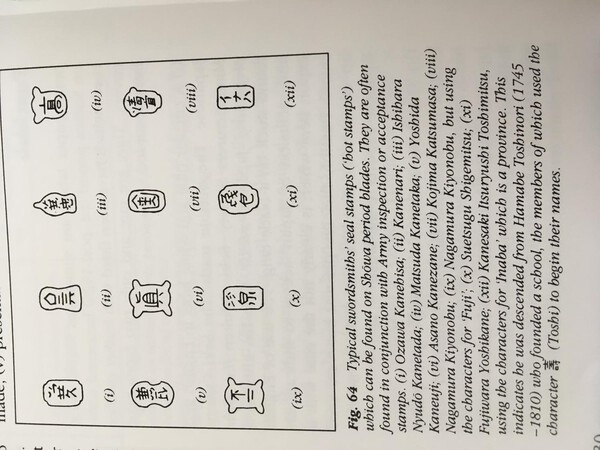
Stephen, don't know how I missed it, but this hot stamp is actaully listed in Fuller & Gregory's kokuin chart - as a Matsuda Kanetaka stamp! (item iv)
-
Peter, Is yours the Ko or Otsu? Finger loop present? How about some pics (serial numbers, stamps on handguard, etc).!
-
Koa Isshin Mantetsu Odd Fittings?
Bruce Pennington replied to sebastian33's topic in Military Swords of Japan
Sebastian, I paid about $2,300 USD. I got the Koa from my Dad, so free. So, with the polish and the purchased items to refit the saya's missing parts, I'm still under the market value. But it was Dad's so I would have done it anyway! -
Koa Isshin Mantetsu Odd Fittings?
Bruce Pennington replied to sebastian33's topic in Military Swords of Japan
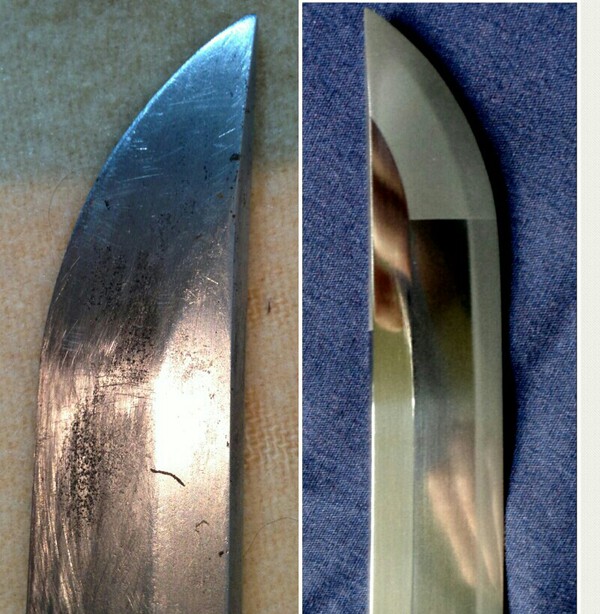
Yes, and worth it! Yours looks so good, it hardly seems to need a polish, though!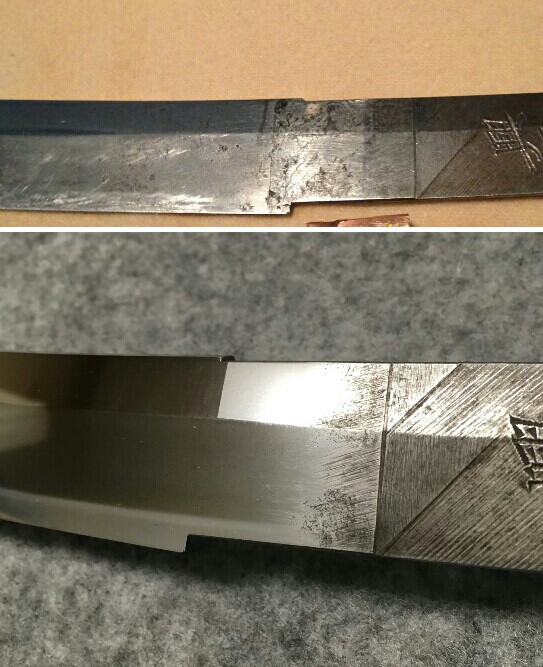
-
Koa Isshin Mantetsu Odd Fittings?
Bruce Pennington replied to sebastian33's topic in Military Swords of Japan
Steve, It matched the replacement cord, both color and style. Plus it stuck out the screw hole as if ripped off. The other end was missing. -
Koa Isshin Mantetsu Odd Fittings?
Bruce Pennington replied to sebastian33's topic in Military Swords of Japan
This is what the nub looks like removed. The brass "wedge" pokes into the end of the fabric saurte wedging into the inside-end of the barrel screw.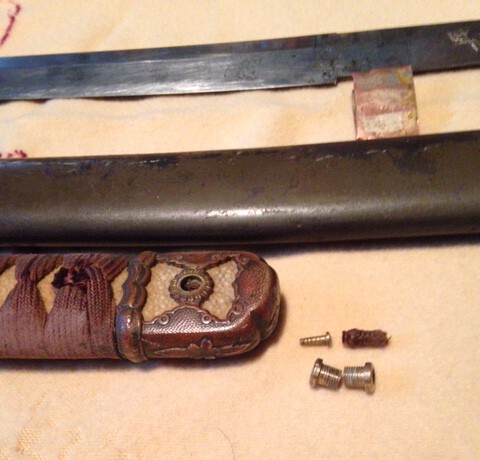
-
Koa Isshin Mantetsu Odd Fittings?
Bruce Pennington replied to sebastian33's topic in Military Swords of Japan
Sebastian, I noticed from your last picture - it looks like the nub of a cloth sarute still imbedded in the tsuka. My Dad's Koa had the same thing! I searched for a cloth one to replace it, and wound up buying ($200) a tsuka from ebay that had one in it, and swapped it into my dad's tsuka once I got it home. -
Nice one Chris! I'm very proud to own one too. The blades are substantial, and I love how they put a bit more curve to the tsuka, as if there were a really old-styled blade in it! My saya has no number at all! So I assume the original was damaged and replaced. Probably the same for yours. I seriously doubt that a G.I., returning home, would know enough about the copper-handled 95 to search and scour the piles of swords to find the right kind of saya for a blade.
-
Yeah, I love it! But it’s so many pages and most of them are filled with conversation. I have condensed the stamps from that thread and combined them with stamps from Fuller and Gregory and from Swordindex.com. I’ll need to contact the authors to get their permission to use their material of course, but I doubt that anyone will mind as long as I credit them with the applicable pieces.
-
Chris, I’ve been compiling one, from the various sources. I was wondering how to post it to make it available to anyone. It’s in the beginning stages, but growing.
-
I don't know why it's sideways, but its 2 poorly struck "Ko" stamps. You can see the "feet" of the top one, and faintly see it on the bottom one. Then you can see the "box" well on the bottom one, but neither are showing the "+" at the top.